
You’re at checkout, and the screen offers “4 payments of $100.” Your credit card is right there too. The buy now, pay later vs credit card question sounds simple, but the wrong pick can mean surprise fees, weaker purchase protection, or an unexpected mark on your credit report.
The short answer: neither option is always better. The cheaper and safer choice depends on the size of your purchase, how sure you are about repaying on time, and whether you need strong dispute rights.
Below, you’ll find real cost math for a sample purchase, a 2026 provider-by-provider look at credit reporting, and a simple checklist you can run through before any checkout.
Key Takeaways
This guide compares BNPL vs credit card costs, credit score effects, and purchase protections, including a modeled $400 purchase scenario, 2026 provider-specific credit bureau reporting, and a five-question decision checklist for checkout.
Core Facts:
- A $400 purchase paid on time costs $400 whether split into a BNPL pay-in-4 plan or paid in full on a credit card before the due date, with a credit card also potentially earning rewards.
- Missing one $100 BNPL installment can add a late fee of roughly $7 to $8, while carrying a $400 credit card balance for 12 months at about 22% APR adds close to $89 in interest.
- As of 2026, Affirm reports Pay in 4 and other pay-over-time plans to Experian and TransUnion; Klarna reports longer financing plans to TransUnion and Experian but generally not Pay in 4; Afterpay does not currently report to U.S. credit bureaus.
- Federal law caps credit card fraud liability at $50, and most major issuers advertise $0 liability, while BNPL fraud handling varies by provider and is less standardized.
- BNPL plans have no single consolidated statement across providers, and research cited in the article found BNPL users carry higher credit card utilization and more overdrafts than non-users.
- Longer-term BNPL loans stretched over 6 to 24 months can carry real interest rates up to 36% APR, sometimes costing more than a standard credit card.
Best for:
- Shoppers deciding how to pay for a specific upcoming purchase and comparing BNPL versus a credit card for that transaction.
- Readers who currently use BNPL regularly and want to understand credit reporting and fee risks by provider.
- Anyone planning a mortgage or auto loan application in the next 6 to 12 months who wants to understand how BNPL or card habits may affect underwriting.
How BNPL and Credit Cards Actually Work
The two options feel similar at checkout, but they’re built very differently.
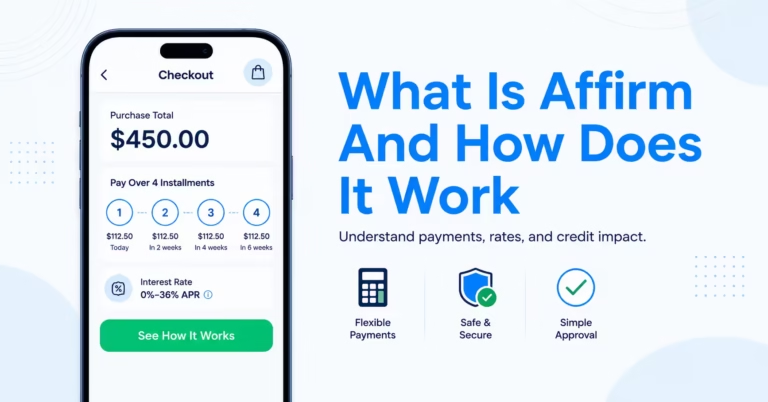
BNPL is a small installment loan tied to one purchase. A third-party provider, like Affirm, Klarna, Afterpay, or PayPal Pay in 4, pays the store for you. You repay that provider in fixed chunks, usually four payments over six weeks. When the last payment clears, the loan is done. It disappears.
A credit card is revolving credit. You get a reusable credit line, and it stays open whether you use it or not. There’s no fixed end date, and your minimum payment can be small enough that a balance lingers for years if you let it.
One more wrinkle: the line between the two products is blurring. Some card issuers now offer their own point-of-sale financing features, like Amex Plan It, Citi Flex Pay, and My Chase Plan. These let you split a card purchase into installments after the fact.
Why does the structure matter for your decision? Because everything else in this article flows from it. BNPL’s fixed schedule makes each loan simple but makes multiple loans hard to track. A card’s open-ended line makes tracking easy but makes debt easy to stretch out.
Approval and Eligibility Requirements
BNPL is easier to get. Most providers use a soft credit check, or no check at all, for short pay-in-4 plans. A soft check doesn’t affect your credit score. Approval happens in seconds at checkout.
Credit cards ask for more. Issuers review your credit score, income, and existing debts, and the application triggers a hard credit check. That hard inquiry can trim a few points off your score for a short time.
The practical takeaway: if your credit file is thin or your score is low, BNPL will likely say yes when a card issuer might not. But easier approval isn’t the same as a better deal, as the next sections show.
Total Cost Comparison: A Real Purchase Scenario
Marketing says BNPL is “interest-free.” That’s true only part of the time. So let’s run one purchase through both options and look at the actual dollars.
Say you’re buying a $400 pair of headphones and a speaker bundle. You could split it into 4 payments of $100 with a pay-in-4 plan, or put it on a credit card.
| Scenario | BNPL pay in 4 | Credit card |
|---|---|---|
| Paid on time / in full | $400 total | $400 total (plus possible cash back) |
| One missed payment | About $407 to $408 with one late fee | About $400 to $435, depending on timing and fees |
| Balance carried 12 months | Not possible with pay in 4 | Roughly $489 at a ~22% APR |
Best-Case Scenario (Paid On Time or In Full)
If you make all four BNPL payments on schedule, you pay exactly $400. No interest, no fees.
If you charge $400 to your card and pay the statement in full by the due date, you also pay exactly $400. The grace period means no interest at all.
But here’s the part BNPL ads leave out. If your card earns 2% cash back, that $400 purchase actually nets you $8. In the best case, the card doesn’t just tie BNPL. It beats it.
💡 Pro Tip: A card paid in full is the only option that can cost less than the sticker price. If you’re confident you’ll pay it off, check whether your card earns rewards before tapping the BNPL button.
Worst-Case Scenario (Missed Payment or Carried Balance)
Now the messy version.
Miss one $100 BNPL installment and you might owe a late fee of up to $7 or $8, depending on the provider. That’s like paying 7% to 8% extra on a single two-week payment. It isn’t technically an APR, but it shows how expensive a small slip can be on a small purchase.
With a card, the bigger risk is carrying the balance. At roughly 22% APR, $400 left unpaid for a year adds close to $89 in interest, assuming no new purchases. Add a late fee of up to about $30 to $41 if you miss a due date entirely, and the card’s worst case grows faster than BNPL’s.
The honest conclusion: neither is “always cheaper.” Your repayment behavior decides the winner.
Credit Card Interest Rates and Costs in 2026
If there’s any chance you’ll carry a balance, this number matters more than anything else in the article.
Data from the Federal Reserve’s G.19 consumer credit release puts the average APR on card accounts that actually assessed interest at about 22% as of mid-2026. The average across all accounts is a bit lower, closer to 21%, because it includes cards people pay off monthly.
Your actual rate depends on your credit tier. Borrowers with excellent credit may see APRs in the high teens. Fair or poor credit often means 25% to 30% or more. Store cards tend to sit at the top of that range.
The grace period is the escape hatch. Pay your full statement balance by the due date, and you owe zero interest on purchases. Carry even a small balance into the next cycle, and new purchases often start accruing interest right away.
Watch for two other card costs:
- Late fees: Federal rules cap these at safe-harbor amounts, generally around $30 for a first miss and $41 for a repeat miss within six billing cycles.
- Penalty APR: Many issuers can raise your rate to near 30% if a payment runs 60 days late, though practices vary by issuer.
BNPL Fees and Hidden Costs
Used perfectly, short-term BNPL really is free. The catch is that fee structures differ sharply by provider, and “interest-free” only describes the on-time scenario.
Here’s where the major providers stand as of 2026:
| Provider | Pay-in-4 interest | Late fee |
|---|---|---|
| Affirm | 0% | None |
| Klarna | 0% | Up to $7 per missed payment |
| Afterpay | 0% | Up to $8, capped at 25% of the order value |
Two less obvious costs deserve attention:
Longer BNPL loans aren’t free. Stretch a purchase over 6, 12, or 24 months, and many providers charge real interest. Affirm’s longer loans, for example, carry rates from 0% to 36% APR based on your credit. A high-APR BNPL loan can cost more than a decent credit card.
Refund friction is an indirect cost. Return an item bought with BNPL and your installments may still come due while the refund processes. That ties up your cash for weeks, even though the fee schedule looks clean.
What Happens If You Miss a Payment
This is where the two products feel most different, and where a “small” BNPL installment can surprise you.
Both paths start with a fee. Where they diverge is timing and credit impact. A missed card payment typically needs to be a full 30 days late before it reaches your credit report. With BNPL, the rules depend on the provider, and in 2026 some missed payments reach the bureaus much sooner.
Missing a BNPL Payment
The escalation usually looks like this:
- A late fee applies where the provider charges one (Klarna and Afterpay do; Affirm doesn’t).
- The provider may freeze your account. Miss a payment, and you’ll often be blocked from new plans until you’re current.
- The miss may reach a credit bureau. Affirm now reports all its payment plans to Experian, so a late payment can show up there. More on this in the credit score section below.
- Unresolved debt can go to collections. A collections account over what started as a $100 installment is disproportionate, but it can happen.
Missing a Credit Card Payment
The card path is more predictable:
- A late fee applies, generally up to about $30 to $41 under federal safe-harbor amounts.
- You may lose a promotional 0% intro APR if your agreement says so.
- If the payment stays unpaid for 30 days past the due date, the issuer typically reports it as late to Experian, TransUnion, and Equifax.
- Keep missing payments, and the issuer can apply a penalty APR near 30%, then eventually charge off the account.
⚠️ Mistake to Avoid: Don’t treat a $25 BNPL installment as low stakes. A miss can freeze your account, add a fee that’s large relative to the payment, and with some providers land on your credit report. Set autopay to a debit account you know will have funds.
How Each Option Affects Your Credit Score
You’ve probably heard that “BNPL doesn’t touch your credit.” That was mostly true a few years ago. In 2026, it’s provider-specific, and the scoring models themselves are changing.
FICO launched FICO Score 10 BNPL and FICO Score 10 T BNPL, the first versions of its score built to factor in BNPL repayment data. VantageScore 4.0 can also consider BNPL information. But adoption takes time. Most lenders still pull older score versions that ignore BNPL entirely.
So the honest answer is layered: BNPL activity can appear on your credit report today, depending on the provider, but it often isn’t scored yet.
BNPL Credit Reporting by Provider (Affirm, Klarna, Afterpay)
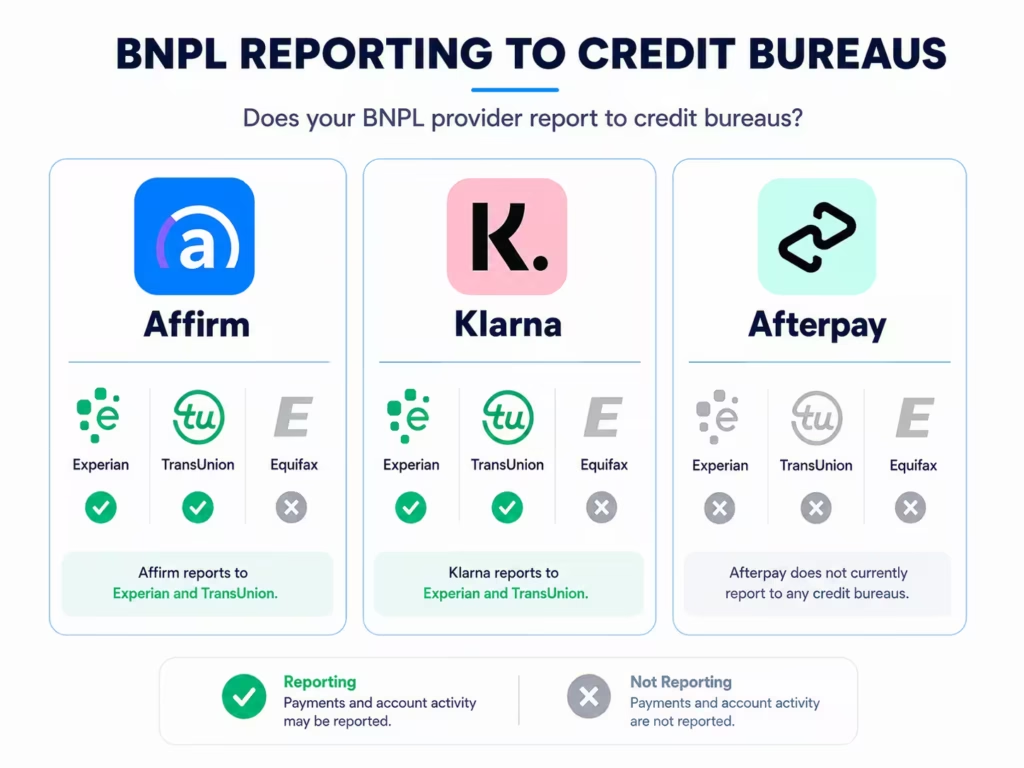
The current picture, based on each company’s own policies:
- Affirm reports all pay-over-time plans issued on or after April 1, 2025, including Pay in 4, to Experian, and it also furnishes data to TransUnion. Affirm’s credit reporting policy confirms the April 2025 start date, and Experian’s announcement covers the partnership.
- Klarna shares loan and repayment data with TransUnion and Experian, per Klarna’s credit bureau help page. Its short Pay in 4 plans have generally not been reported, while longer financing is.
- Afterpay states that it does not currently report to U.S. credit bureaus.
Two caveats matter. First, this landscape changes fast, so confirm a provider’s current terms before you rely on any of this. Second, reported doesn’t mean scored. BNPL data can sit on your Experian or TransUnion file without moving a traditional FICO score, at least for now.
📌 Did You Know: A BNPL loan can show up on your credit report without changing your credit score at all. Whether it counts depends on which score version a lender pulls, and most still use models that ignore BNPL data.
How Credit Cards Affect Utilization and Score
Cards feed the scoring system directly, every month, in two big ways.
Payment history is the heavyweight. It makes up about 35% of a FICO score, according to myFICO’s breakdown of score factors. Every on-time card payment builds it. Every 30-day late payment dents it.
Credit utilization is second. That’s the share of your available revolving credit you’re using. Maxing a card with a $1,000 limit looks risky to scoring models even if you pay it off later, because utilization is typically measured when your statement closes.
Responsible card use is a reliable way to build credit, but BNPL’s impact on credit varies by provider and might not be scored at all.
Purchase Protections and Dispute Rights
This is the section most people skip and later regret.
With a credit card, federal law gives you chargeback rights. If an item arrives damaged, never arrives, or the seller ghosts you, you can dispute the charge with your card issuer. The FTC’s guide to disputing credit card charges explains the process. While the issuer investigates, you generally don’t have to pay the disputed amount.
With BNPL, the dispute path usually runs through the retailer first. The BNPL provider often can’t refund you until the merchant confirms the return. If the merchant doesn’t cooperate, you’re in a slower, murkier process.
Regulators tried to close this gap. The CFPB issued a 2024 interpretive rule extending certain credit-card-style dispute and refund rights to BNPL lenders, as described in the Federal Register.
But the Bureau later declined to reissue the rule after procedural problems, per legal analysis from Ballard Spahr, so as of 2026, protection levels still depend mainly on each provider’s own policies.
Many cards also add extended warranty and purchase protection perks that BNPL plans simply don’t match.
Fraud Liability Differences
Federal law caps your credit card fraud liability at $50, and most major issuers advertise $0 liability. Card fraud claims are a well-worn process with clear timelines.
BNPL fraud handling is less standardized. Each provider sets its own process, and resolution can depend on how quickly you report the problem and how the merchant responds. For a big purchase from an unfamiliar seller, that difference matters.
Returns and Refund Handling
Card refunds are simple. The money posts back to your account, your balance drops, and your available credit rises.
BNPL returns take coordination. You typically work with the retailer, the retailer tells the BNPL provider, and only then does your payment schedule adjust. Meanwhile, installments can keep coming due on the original timeline. Keep paying until the provider confirms the adjustment, or you could rack up late fees on an item you already returned.
The Hidden Risk of Stacking Multiple BNPL Plans
Each BNPL plan looks affordable on its own. Four payments of $50 here, four payments of $75 there. The danger is structural: no provider shows you your total obligations across all providers. There’s no single monthly statement like a credit card gives you.
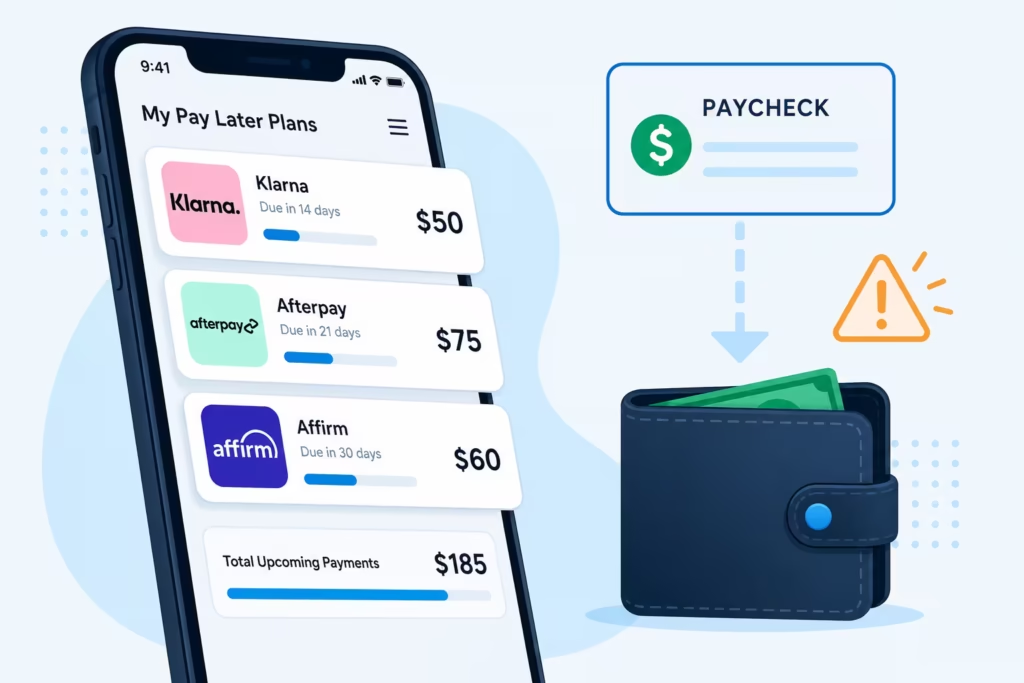
That fragmentation makes overspending invisible until it hits your bank account. Research from the CFPB’s Making Ends Meet survey, still the Bureau’s most comprehensive look at BNPL borrowers, found that BNPL users carry higher credit card utilization and more overdrafts than non-users.
A separate CFPB study found many borrowers held several pay-in-4 loans at the same time. The math adds up against your paycheck, not your purchase. Three “small” plans can eat a few hundred dollars of every biweekly check.
A quick self-check before any new plan:
- Add up every active BNPL payment still due.
- Compare that total to your next paycheck after rent, food, and essentials.
- If the remainder feels tight, skip the new plan. No discount is worth an overdraft.
Rewards, Cash Back, and Other Perks
Every BNPL checkout is a checkout where your rewards card earned nothing.
The gap is real. A flat 2% cash-back card turns $3,000 of annual online shopping into about $60 back. Travel cards can do better. BNPL providers generally offer no equivalent loyalty mechanism, though some run occasional merchant discounts.
Run the net comparison honestly. BNPL’s genuine perks are simplicity, fixed payments, and access without a hard credit inquiry. For a $150 purchase where rewards would earn you $3, simplicity may win. For a $1,200 laptop where rewards mean $24 or more, plus warranty coverage, the card’s perks start to outweigh BNPL’s convenience.
One card perk deserves special mention for big purchases: a 0% intro APR credit card. If you qualify, you can spread a large purchase over 12 to 18 months with no interest at all, which beats most longer-term BNPL loans that charge up to 36% APR.
How to Decide Which to Use for a Specific Purchase
Forget the idea of being a “BNPL person” or a “credit card person.” Decide per purchase. Run these five questions in order:
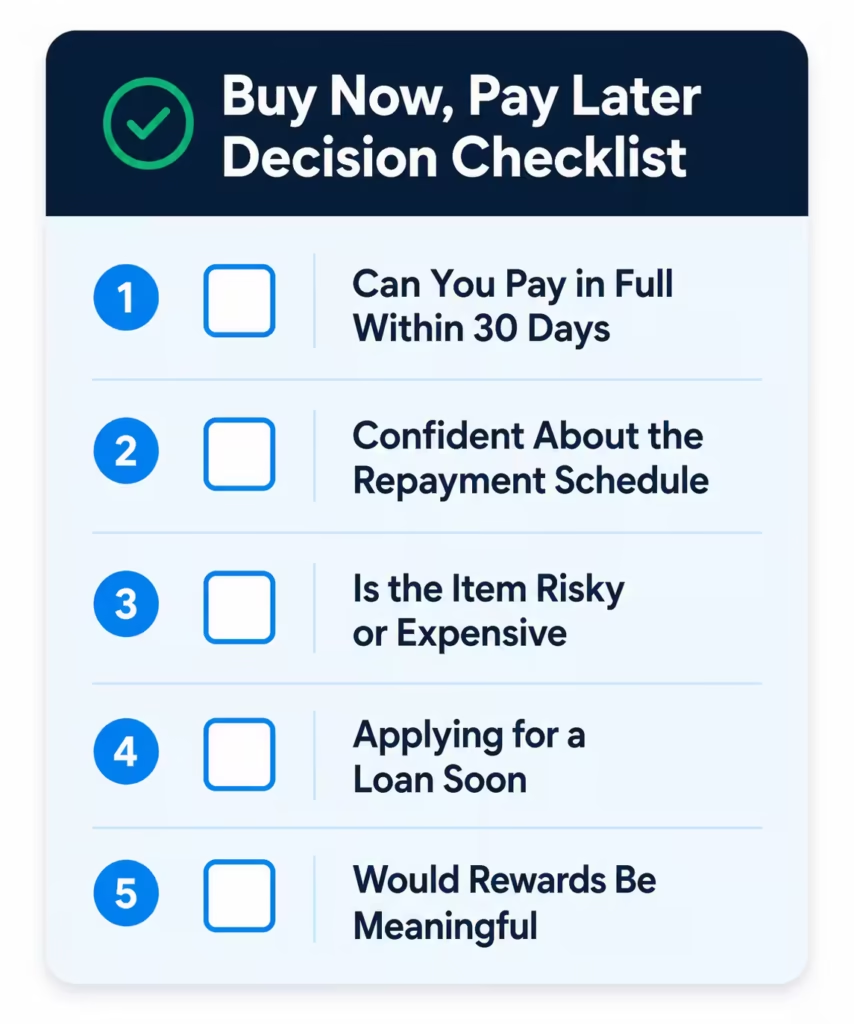
- Can you pay in full within about 30 days? If yes, use the card. You get $0 interest, possible rewards, and full protections. Nothing beats it.
- Do you need to spread the cost, and are you confident about the repayment schedule? If yes, a 0% pay-in-4 plan works well. So does a 0% intro APR card for bigger amounts.
- Is the item risky or expensive, like electronics, travel, or a purchase from a new seller? Lean toward the card for chargeback rights and purchase protection.
- Are you applying for a mortgage or auto loan in the next 6 to 12 months? If yes, keep your credit file quiet. That means limiting new BNPL plans that report to bureaus and keeping card utilization low.
- Would rewards on this purchase be meaningful? On large purchases, cash back can tip a close call toward the card.
If a purchase fails questions one and two, meaning you can’t pay it off soon and aren’t sure about the schedule, the honest answer is to wait. Both products punish shaky repayment, just in different ways.
💡 Pro Tip: Screenshot your checkout total and repayment schedule whenever you use BNPL. Without a consolidated statement, your own record is the only place all your plans exist in one view.
Using a Credit Card and BNPL Together
Combining the two isn’t automatically reckless, but the combination can quietly double your risk.
The reasonable version: using a 0% pay-in-4 plan for one purchase so you don’t run up a card balance you’d carry at 22% APR. That’s legitimate cash-flow management, as long as the BNPL schedule truly fits your budget.
The risky version: funding BNPL payments with a credit card. Some providers allow a card as the repayment method. That converts a fixed, interest-free installment into revolving debt if you don’t pay the card in full. You’ve stacked one form of debt on top of another, and the protections get muddier too.
The rule of thumb: combining makes sense when BNPL replaces card debt you’d otherwise carry. It backfires when the card becomes the way you service BNPL debt. If you’re putting installments on a card you can’t pay off monthly, both products are being used as a bridge your income can’t support.
Impact on Future Credit Applications (Mortgage, Auto Loans)
If a mortgage or auto loan is on your horizon in the next year, this section is for you.
Even where BNPL never touches your credit score, it can still surface in underwriting. Mortgage lenders commonly review bank statements, and recurring Klarna or Affirm debits are visible there. Some lenders may treat them as monthly obligations when sizing your loan.
The scoring side is shifting too. Fannie Mae has moved to allow VantageScore 4.0 in mortgage underwriting, and that model can consider BNPL data. FICO’s BNPL-aware scores are rolling out as well. The direction is clear: BNPL history will count for more over time, not less.
Card habits matter as much as ever. High utilization is a standard red flag in mortgage and auto underwriting, so pay balances down well before you apply, not the week of.
Practical prep before a major application:
- Pay off and close out active BNPL plans a few months ahead.
- Get card utilization low, ideally under 30% and lower if possible.
- Avoid opening new credit of any kind in the months before you apply.
- Pull your own reports from all three bureaus so nothing surprises you.
Frequently Asked Questions (FAQs)
Which is better, credit cards or buy now, pay later?
Neither wins in every case. A credit card paid in full costs $0 and may earn rewards, while a 0% BNPL plan also costs $0 if you pay on schedule. The safer pick depends on your purchase size, repayment confidence, and whether you need strong dispute rights.
Is there a downside to buy now, pay later?
Yes. Missing even a small BNPL payment can trigger a fee that’s disproportionately high relative to the installment, freeze your account, and in some cases reach a credit bureau. Multiple active plans are also easy to lose track of since there’s no single combined statement.
What brings up your credit score the most?
Consistent on-time payments help the most, since payment history is the single largest scoring factor at roughly 35% of your FICO score. Keeping credit card utilization low also supports your score every month.
What loans should you avoid?
Be cautious with long-term BNPL loans stretched over 6 to 24 months, since some carry real interest rates up to 36% APR. That can end up costing more than a standard credit card, despite BNPL’s interest-free reputation for short pay-in-4 plans.
Is it bad to have multiple BNPL plans at once?
It can be risky, since no provider shows your total obligations across all your active plans. Three “small” plans of $50 to $75 each can quietly consume a big chunk of your paycheck before you notice the strain.
Does using BNPL hurt your credit score if you always pay on time?
Usually not, and it may not even register. Some providers like Affirm report on-time BNPL activity to credit bureaus, but most lenders still pull older FICO score versions that don’t factor BNPL data into the score at all yet.
The Bottom Line
The buy now, pay later vs credit card choice comes down to your behavior, not the product. Paid on time, a 0% BNPL plan and a card paid in full both cost $0, but the card adds rewards and stronger dispute rights.
When repayment slips, BNPL late fees hit hard on small purchases, while carried card balances grow at roughly 22% APR. Credit reporting now varies by provider, with Affirm reporting widely and Afterpay not at all. A practical approach: always use a fully paid card. Save Pay in 4 for cases where spreading the cost really helps.
Know someone staring at a checkout screen right now? Share this guide so they can pick the cheaper, safer option too.