
If you’re trying to understand what a credit card is, you’re not alone. Many first-time applicants worry about debt, don’t know which type to get, or aren’t sure how the whole system works.
A credit card is a short-term borrowing tool that lets you spend now and repay later, with zero interest if you pay in full each month.
This guide breaks it all down step by step. You’ll learn how billing cycles work, which card fits your profile, how your credit score is affected, and exactly how to apply with confidence.
Key Takeaways
This guide explains what a credit card is and how it works, covering billing cycles, interest mechanics, card types by credit profile, how credit scores are affected, step-by-step application guidance, and what to do if your application is denied.
Core Facts:
- A credit card is a revolving line of credit issued by a bank; paying the full statement balance by the due date eliminates all interest charges entirely.
- Credit card billing cycles run approximately 30 days, followed by a 21-to-25-day grace period during which full payment avoids any interest.
- Carrying a $1,000 balance at a 22% APR and paying only the minimum results in roughly $650 to $700 in total interest paid over 5-plus years.
- Credit utilization (balance divided by credit limit) accounts for 30% of a FICO score; keeping it below 30% is the standard benchmark for score protection.
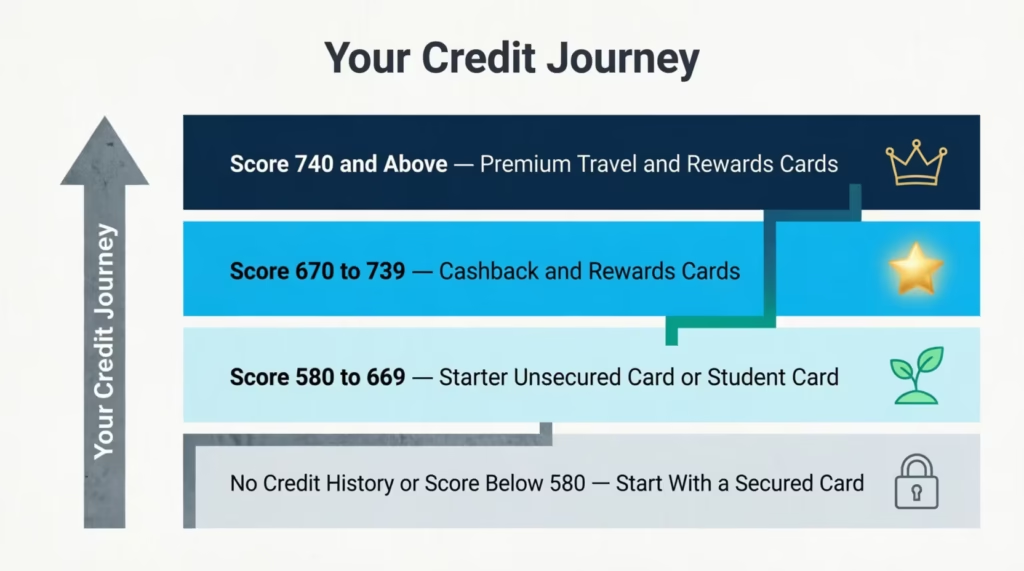
- Card types are matched to credit profiles: secured cards for scores below 580, student cards for enrolled college students, starter unsecured cards for scores of 580 to 669, and rewards cards for scores of 670 and above.
- Under the Fair Credit Billing Act, maximum liability for unauthorized credit card charges is capped at $50, compared to potentially unlimited exposure with a debit card during an active fraud dispute.
Best for:
- First-time applicants with no credit history who need to understand how credit cards work before choosing and applying for their first card.
- People with scores below 670 who are unsure which card type matches their current credit profile.
- Anyone who has received a credit card denial and needs a clear action plan to qualify within 6 to 18 months.
What Is a Credit Card?
A credit card is a payment card issued by a bank or financial institution. It gives you access to a revolving line of credit, which means you can borrow money up to a set limit, repay it, and borrow again. You use that borrowed money to pay for things. Then, at the end of each billing period, you pay the bank back.
If you already have a debit card, this distinction matters a lot. When you swipe a debit card, the money leaves your bank account immediately. When you use a credit card, nothing leaves your account at all. Instead, the card issuer pays the merchant on your behalf. You then owe that amount to the issuer, and you repay it later.
Here’s the key point: the money you spend on a credit card isn’t yours. It’s a short-term loan. The bank is trusting you to pay it back. If you pay the full amount back within the billing period, that loan costs you nothing. If you don’t, the bank charges you interest.
It’s also worth knowing who is actually involved when you use a card. There are two separate parties:
- The card issuer – This is the bank or lender, such as Chase, Bank of America, or a credit union. They set your credit limit, charge your interest, and are the company you actually owe money to.
- The card network – This is Visa, Mastercard, American Express, or Discover. They run the payment infrastructure that connects you to merchants. They don’t lend you money.
So when you hold a Visa card from Chase, Chase is your lender. Visa is just the highway the payment travels on. Most merchants accept Visa and Mastercard almost everywhere. American Express and Discover have slightly smaller acceptance networks, though both are widely accepted in the United States.
Understanding this from the start helps you avoid confusion later, especially when comparing cards and understanding your billing statement.
How Does a Credit Card Work?
Many people use credit cards for years without fully understanding the mechanics behind them. That gap is exactly where costly mistakes happen. Here is a clear breakdown of the full cycle, from the moment you make a purchase to the moment interest does or doesn’t apply.
The Billing Cycle
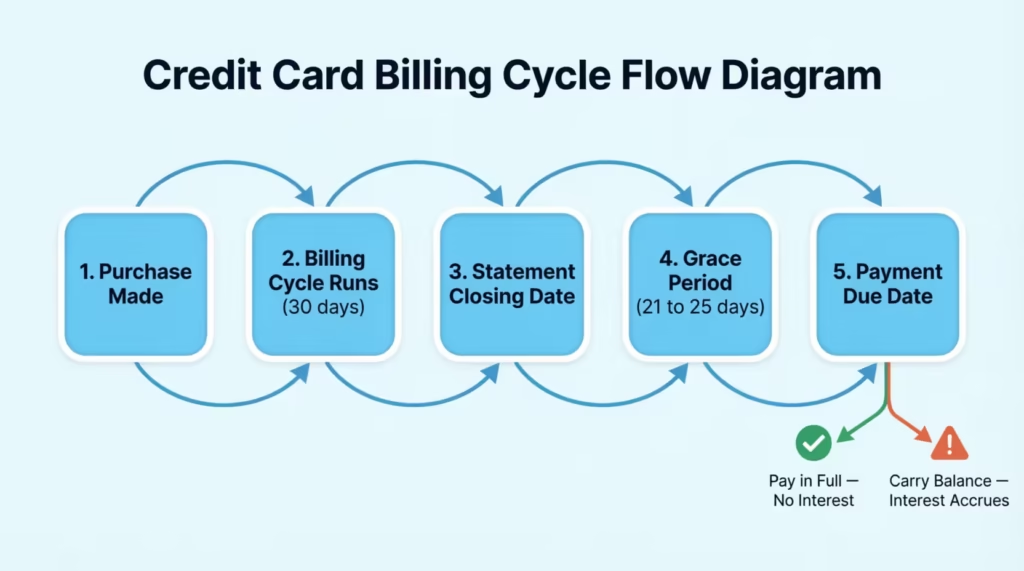
Every credit card operates on a billing cycle, which is typically about 30 days. During that cycle, every purchase you make gets added to your running balance. At the end of the cycle, your billing period closes. The date this happens is called the statement closing date.
Once the statement closes, you get a bill. That bill shows:
- Your total balance (everything you spent during the cycle)
- Your minimum payment due
- Your payment due date, which is typically 21 to 25 days after the closing date
That window between the closing date and the payment due date is called the grace period. This is crucial. If you pay your full balance before the due date, no interest is charged. The bank effectively gave you a short-term, interest-free loan for the entire billing period.
The Three Payment Options
When your bill arrives, you have three choices. Each one leads to a very different financial outcome.
The APR (Annual Percentage Rate) is the interest rate the card charges on any balance you carry past the due date. It’s expressed annually, but interest is actually calculated daily. A card with a 22% APR charges roughly 0.06% per day on any unpaid balance.
What Happens If You Don’t Pay in Full
This is where the biggest misconception lives. Many first-time cardholders assume that paying the minimum is a safe habit. It isn’t. It’s one of the most expensive financial habits you can develop.
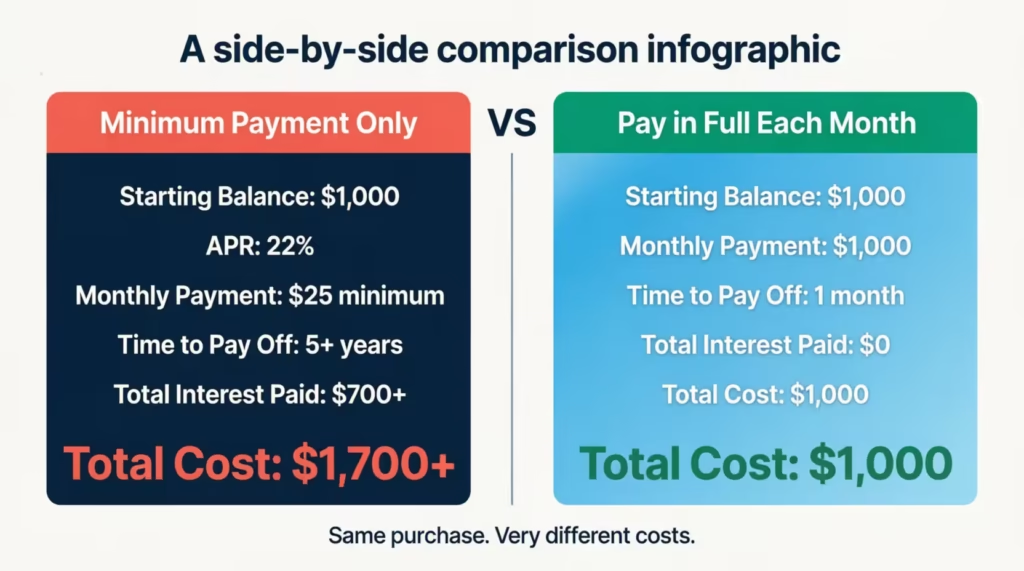
Here’s a concrete example. Suppose you carry a $1,000 balance on a card with a 22% APR. Your minimum payment is set at 2% of the balance, or $25, whichever is greater.
If you only ever pay the minimum each month, it takes over 5 years to pay off that $1,000. By the end, you’ve paid roughly $650 to $700 in interest on top of the original $1,000. That means a $1,000 purchase actually cost you about $1,700.
Pay that same $1,000 balance in full the next month? Interest paid: $0.
The minimum payment exists to keep your account in good standing, not to protect your finances. It’s the floor, not the strategy.
A Note on Cash Advances
Using your credit card to withdraw cash from an ATM is called a cash advance. It works very differently from a regular purchase. There’s no grace period on cash advances, meaning interest starts accruing the day you take the money out. The APR is also typically higher than your regular purchase rate, and most cards charge an upfront fee of 3% to 5% of the amount withdrawn. Cash advances are generally a last resort, not a routine option.
⚠️ Mistake to Avoid: Don’t confuse the minimum payment with a smart payment strategy. Paying only the minimum keeps your account current, but it costs far more in interest over time than most people realize. Whenever possible, pay the full statement balance.
What’s on a Credit Card – and Why Each Feature Matters
A physical credit card holds more information than it might seem at first glance. Each element serves a specific purpose, whether that’s processing a transaction, verifying your identity, or protecting you from fraud. Knowing what each piece is for helps you use your card safely online and understand when to share certain details – and when to be careful.
| Card Feature | What It Is | Why It Matters |
|---|---|---|
| Card Number | A 16-digit number unique to your account | Used to process every transaction. Needed for online purchases. Never share this freely. |
| Expiration Date | Month and year the card is valid until | Confirms the card is current. Required for online checkout. The card is reissued before it expires. |
| CVV / Security Code | A 3-digit code on the back (4 digits on Amex, on the front) | Proves you physically have the card. Required for online transactions. Never enter it on an unsecured site. |
| Cardholder Name | The name of the authorized account holder | Identifies who the card belongs to. Helps with fraud disputes. |
| Card Network Logo | Visa, Mastercard, Amex, or Discover symbol | Shows where the card is accepted. The network processes the payment; your bank lends the money. |
| Issuer Logo | Your bank or lender’s branding | Identifies who you owe money to and who to call with account questions. |
| EMV Chip | The small gold or silver chip on the front | Encrypts each transaction at physical terminals. Far more secure than the older magnetic stripe on the back. |
For online shopping, the combination of your card number, expiration date, and CVV is all a merchant needs to process a charge. That’s exactly why the CVV should never be stored or shared casually. It’s designed to confirm that you have the card in hand, and it’s the first layer of protection against someone who has stolen only your card number.
At physical terminals, the EMV chip generates a unique code for each transaction. That means even if someone captured your chip data, they couldn’t reuse it. The old magnetic stripe didn’t offer that protection, which is why chip cards became the standard.
Types of Credit Cards – Matched to Where You’re Starting From
Most articles list credit card types alphabetically and leave you to figure out which one applies to you. That approach isn’t helpful when you’re trying to make a real decision. The type of card that makes sense depends almost entirely on your current credit profile. Here’s how to match them.
Secured Credit Card – Best Starting Point With No Credit or Poor Credit
A secured card is designed for people who have no credit history or a damaged score (typically below 580). To get one, you put down a cash deposit – usually $200 to $500 – which becomes your credit limit. The card works exactly like a regular credit card. You spend, get a bill, and pay it off. The deposit just protects the issuer in case you don’t pay.
After 12 to 18 months of responsible use, most issuers will upgrade you to an unsecured card and return your deposit. It’s the most reliable path from zero credit to an established credit history.
Student Credit Card – Best for College Students With Limited History
Student cards are designed specifically for people who are new to credit but can demonstrate enrollment in an accredited school.
They have lower approval requirements than standard cards, lower credit limits, and simple terms. Many don’t charge an annual fee. They’re not as rewarding as premium cards, but they exist to give students a safe, structured way to start building credit.
Starter Unsecured Card – Best for Thin Credit Files (1 to 2 Years of History)
Once you’ve built a thin but positive credit history, often through a secured card or as an authorized user, you may qualify for a basic unsecured card.
These cards don’t require a deposit. They carry lower credit limits and modest rewards, but they mark the transition from “no credit” to “building credit.” A credit score in the 580 to 669 range is often enough to qualify.
Cashback and Rewards Cards – Best for Established Credit (Good to Excellent)
Rewards cards, including cashback, travel miles, and points cards, are built for people with good to excellent credit, typically a FICO score of 670 or higher.
They offer the most valuable perks, but they also come with stricter approval requirements. Applying for a rewards card before you’re ready is one of the most common first-timer mistakes. A rejection damages your credit score and leaves you no better off.
If you’re just starting out, a rewards card is the goal, not the first step.
Balance Transfer Card – For Existing Cardholders Managing Debt
Balance transfer cards allow you to move an existing balance from a high-interest card to one with a 0% introductory APR, typically for 12 to 21 months.
These are tools for debt management, not for first-time applicants. They require established credit and are best evaluated only after you already have experience managing a card.
What If You Can’t Qualify for Any Card on Your Own?
If your credit history is too thin or too damaged to qualify for even a secured card right now, becoming an authorized user on a trusted family member’s or partner’s account is a practical starting point.
The primary cardholder adds you to their account. Their payment history and account age then appear on your credit report, building your history without requiring a separate application. You don’t even need to use the card for it to help your score.
💡 Pro Tip: Before applying for any card, check whether the issuer offers a pre-qualification tool on their website. Pre-qualification uses a soft inquiry, which doesn’t affect your credit score, and gives you a realistic read on your approval odds before you formally apply.
How Credit Cards Affect Your Credit Score
A credit score is a three-digit number that ranges from 300 to 850. It’s calculated by credit bureaus using your financial behavior over time. Lenders use it to decide whether to approve you for loans, credit cards, apartments, and sometimes even jobs. The higher your score, the less risk you appear to represent, and the better the terms you’ll be offered.
Credit cards affect your score in several ways. Some behaviors push your score up. Others pull it down. Knowing which is which lets you use a card as a credit-building tool rather than a credit-damaging one.
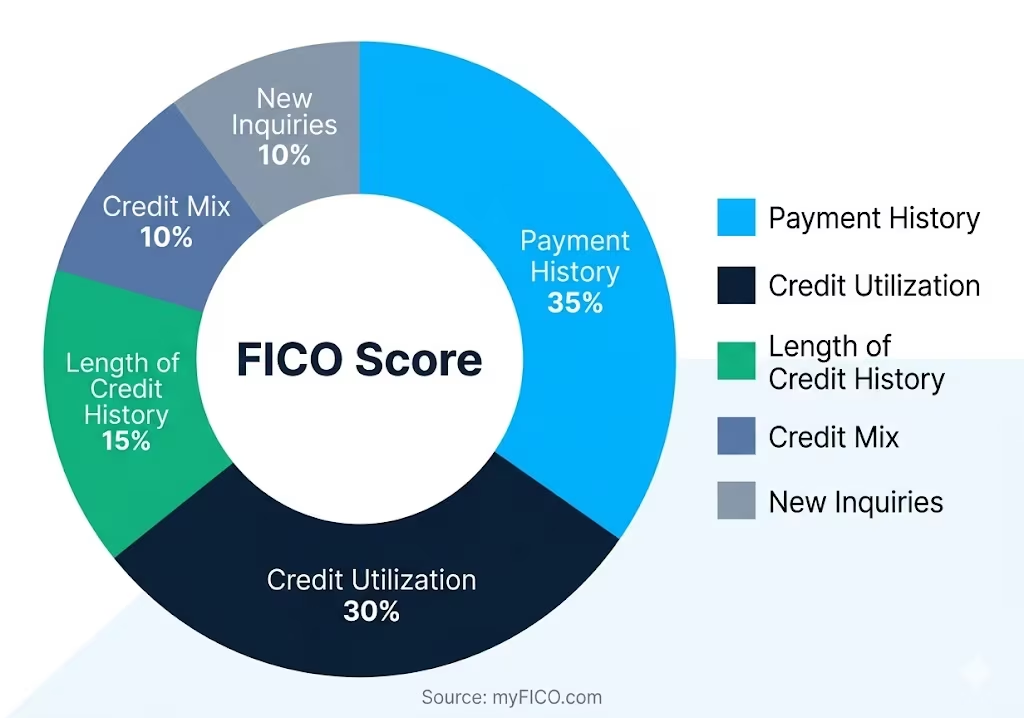
Payment History – 35% of Your FICO Score
This is the single biggest factor in your score. Paying your bill on time, every month, is the most powerful thing you can do for your credit. Even one missed payment can cause a noticeable drop, and it stays on your credit report for up to seven years.
You don’t need to pay the full balance to protect this factor. Paying at least the minimum by the due date keeps your payment history clean. Paying in full keeps your history clean and avoids interest.
Credit Utilization – 30% of Your FICO Score
Credit utilization is the ratio of your current balance to your credit limit. If your card has a $1,000 limit and you’re carrying a $400 balance, your utilization is 40%. FICO data consistently shows that people with the highest credit scores tend to keep their utilization below 30%.
In practice, that means:
- $500 credit limit: keep your balance below $150
- $1,000 credit limit: keep your balance below $300
- $2,000 credit limit: keep your balance below $600
Here’s something many beginners don’t know: issuers typically report your balance to the credit bureaus on your statement closing date, not on the payment due date.
So even if you pay in full every month, a high balance on the closing date can temporarily hurt your score. If you want the best utilization reading, either pay down your balance a few days before the statement closes or make multiple small payments throughout the month.
Paying your statement balance in full each month almost automatically keeps your utilization low, which is one reason full payment is consistently the smartest habit.
Length of Credit History – 15% of Your FICO Score
The longer your accounts have been open, the better. Opening your first credit card starts the clock on your credit history. This is one reason financial experts generally recommend keeping your first card open, even if you upgrade to a better one later. Closing an old account shortens your average account age, which can lower your score.
Hard Inquiries – 10% of Your FICO Score
Every time you apply for a new credit card, the issuer runs a hard inquiry on your credit report. This typically lowers your score by a few points and stays on your report for two years, though the impact fades after about 12 months. Applying for multiple cards in a short window compounds this effect, so it’s worth being selective rather than applying broadly and hoping something sticks.
What Does NOT Affect Your Score
Checking your own credit score doesn’t hurt it. That’s called a soft inquiry. Making small purchases on your card and paying them off in full doesn’t hurt it either. Regular, responsible card use combined with on-time, full payments is exactly what credit bureaus reward.
The Real Benefits and Risks of Using a Credit Card
A lot of people approach credit cards with either too much fear or too much confidence. The truth is more practical. A credit card is a neutral financial tool. How it affects your life depends entirely on how you use it. Here’s an honest look at both sides.
The Genuine Benefits
Fraud protection that a debit card can’t match.
This is one of the most underrated advantages. Under the Fair Credit Billing Act, your maximum liability for unauthorized credit card charges is $50, and most major issuers offer zero-liability policies that bring that to $0.
With a debit card, fraud can drain your actual bank account while the dispute is being investigated, sometimes leaving you without access to your money for days or weeks. A credit card creates a buffer between fraudsters and your real funds.
Purchase protection and extended warranties.
Many credit cards automatically extend the manufacturer’s warranty on eligible purchases, often by one additional year. Some also cover accidental damage or theft on items bought within the last 90 to 120 days. These protections come with the card at no extra cost and are easy to overlook until you actually need them.
Credit-building, as a byproduct of regular use.
Every on-time payment gets reported to the major credit bureaus, slowly building the history that opens doors to lower interest rates on car loans, mortgages, and future credit products. As covered earlier, this is something debit cards and prepaid cards simply don’t offer.
Rewards on everyday spending.
Cashback, travel miles, and points are genuine value when earned on purchases you’d make anyway. A 2% cashback card on $1,500 of monthly spending returns $360 per year in cash.
These rewards don’t require any change in behavior, only redirecting existing spending through the card instead of a debit card, and paying the balance in full each month.
Payment flexibility and cash flow management.
A credit card gives you a 21 to 25 day window between a purchase and when you actually need to pay for it. For someone managing irregular income or timing a large purchase, that buffer has real practical value.
The Real Risks
Carrying a balance is expensive.
This connects directly to what was shown in the mechanics section. At a 22% APR, a $1,000 balance carried month-to-month generates roughly $220 in interest over a year. The card that seemed free becomes one of the most expensive ways to borrow money if the balance isn’t cleared regularly.
Overspending beyond what you can repay.
Credit cards make spending feel less concrete than handing over cash or watching a debit card drain your account. That psychological distance can lead to spending more than intended. The limit on a card isn’t a spending target. It’s a ceiling that protects the issuer, not you.
Late payment fees and score damage.
Most issuers charge a late fee of up to $30 to $40 for a missed payment. More importantly, a payment that’s 30 or more days late gets reported to credit bureaus and can drop a credit score significantly, sometimes by 50 to 100 points depending on your starting score and credit history.
Annual fees that outpace rewards.
Some rewards cards charge $95 to $695 per year. That’s justified if you’re actually using the card’s benefits. It’s a loss if the card sits in a drawer or if your spending patterns don’t generate enough rewards to cover the fee.
📌 Did You Know: Credit card fraud protections are significantly stronger than debit card protections by law. The Fair Credit Billing Act limits your credit card liability to $50 for unauthorized charges. Debit card liability can be much higher if you don’t report fraud promptly.
How to Choose the Right Credit Card for You
Walking into the credit card market without a framework is how people end up with the wrong card, rejected applications, and fees they didn’t expect. These five steps narrow the decision down to something manageable.
Step 1: Check Your Credit Score First
Before looking at any card, look up your credit score. Many banks offer free score access through their apps, and services like Credit Karma or AnnualCreditReport.com let you check without any impact on your score. This one step tells you which cards are realistic options for you right now, and saves you from applying for cards you’re unlikely to get.
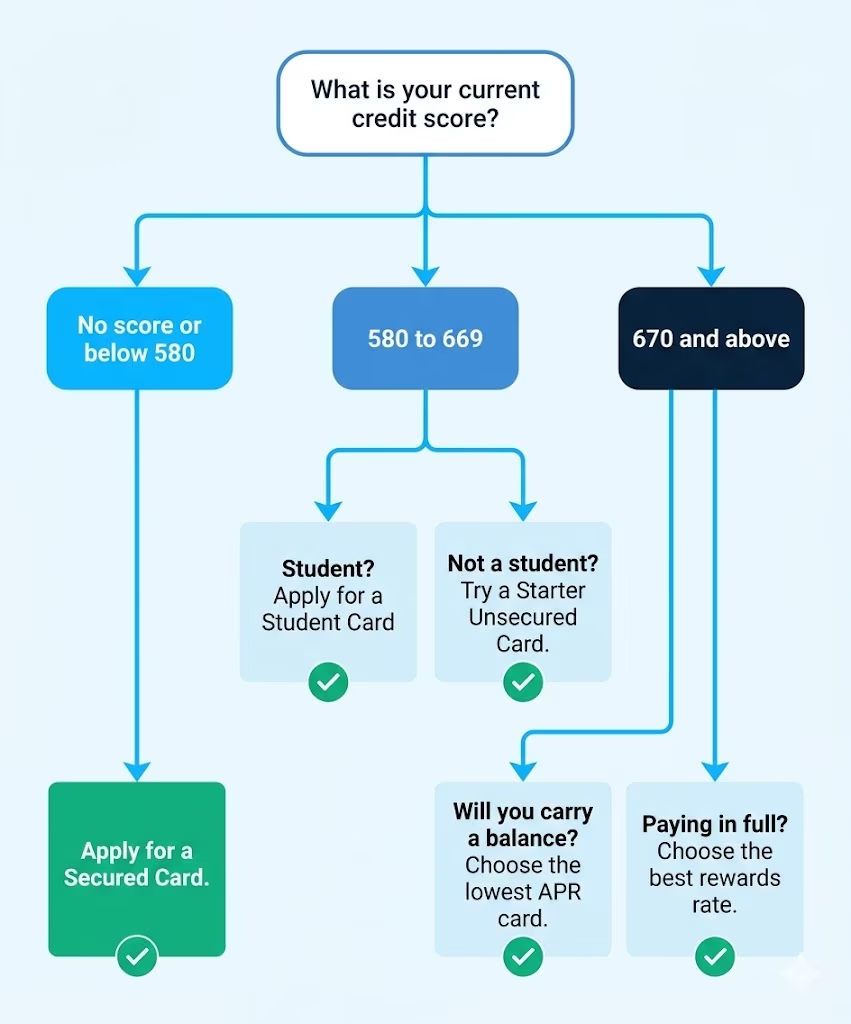
Step 2: Match the Card to Your Credit Profile
Use the card-type guidance from the earlier section and apply it directly:
- No credit or score below 580: Start with a secured card
- Student enrolled in college: Look at student-specific cards
- Score between 580 and 669: A starter unsecured card with no annual fee is the right range
- Score 670 and above: Rewards and cashback cards become realistic options
Step 3: Evaluate the APR If You Might Ever Carry a Balance
If you’re fully confident you’ll always pay in full, the APR matters less. But if there’s any chance you’ll ever carry a balance, even for a month or two, the interest rate should be a primary factor. A card with a 28% APR and a 2% cashback rate is a bad financial trade the moment you carry $500 into the next billing cycle. The interest cost will quickly exceed the rewards earned.
Step 4: Run the Math on the Annual Fee
A card with an annual fee isn’t automatically a bad deal. It just requires a quick calculation. If a card charges a $95 annual fee and offers 2% cashback, you need to spend $4,750 per year on that card just to break even. Spend more than that, and it’s worth it. Spend less, and a no-annual-fee card almost certainly serves you better.
For most first-time applicants, a card with no annual fee is the right starting point. You can always upgrade once you’ve built history and can realistically use a premium card’s benefits.
Step 5: Use Pre-Qualification Tools Before Applying
Most major issuers, including Chase, Capital One, and Discover, offer a pre-qualification or pre-approval check on their websites. This uses a soft inquiry, meaning your credit score is not affected.
It gives you a reasonable read on whether you’re likely to be approved before you submit a formal application. Start here rather than applying blind and triggering a hard inquiry on a card you’re unlikely to get.
How to Apply for Your First Credit Card
Real-Life Example:
Maya graduated college with no credit history. She opened a secured card ($300 deposit, no annual fee) and used it for one recurring charge per month. She set up autopay. Six months later her FICO score appeared at around 650. Total cost: $0 in interest, $300 deposit returned after 12 months.
The application process is simpler than most people expect. The most important part is what happens before you apply: choosing the right card for your current profile, as covered above. Once you’ve done that, here’s what the process actually looks like.
What You’ll Need to Have Ready
- Full legal name
- Social Security Number or ITIN – required for the credit check
- Date of birth
- Current address
- Annual income – this includes all sources: part-time work, freelance income, allowances from a partner or parent if you have access to those funds, and investment income. Issuers want to know you can repay what you borrow. For starter cards, income requirements are generally low, and issuers typically don’t verify the figure for smaller credit limits.
- Employment status – employed, self-employed, student, or unemployed
Where and How to Apply
Online applications are the fastest option. Most major issuers give you an instant decision after submitting the form. In some cases, the application goes to manual review, which can take 7 to 10 business days. You’ll receive a decision by email or mail.
Branch applications are an option if you prefer to speak with someone in person, particularly at a bank where you already have a checking or savings account. Having an existing relationship with a bank can sometimes improve your approval odds for their entry-level cards.
What Happens During the Application
Once you submit, the issuer runs a hard inquiry on your credit report. This is a brief, small hit to your score, typically 3 to 5 points. It fades within 12 months.
Don’t let the fear of a hard inquiry stop you from applying for the right card. What you want to avoid is applying for multiple cards at once, which stacks several hard inquiries in a short window and signals financial stress to potential lenders.
Tips to Improve Your Approval Odds
- Use the pre-qualification tool first to confirm the card is a realistic option
- Apply for one card at a time, not several at once
- Choose a card category matched to your actual credit score range
- If you have no credit history at all, a secured card or authorized user path is the right starting point
The Authorized User Path
If you’re not ready to apply on your own, ask a trusted family member or partner whether they’d be willing to add you as an authorized user on their credit card. You don’t need to have or use a physical card for this to benefit your credit.
Their account’s history, including on-time payments and account age, begins showing up on your credit report. Over 6 to 12 months of being on a well-managed account, your score can rise enough to qualify for your own card independently.
This approach works best when the primary account holder has a clean payment history and keeps their utilization low. Their good habits become part of your credit file.
What to Do If Your Credit Card Application Is Denied
A rejection stings, but it’s not a dead end. It’s information. The key is to use that information correctly rather than making the common mistake of applying again immediately.
Read the Adverse Action Notice
When an application is denied, issuers are legally required to send you a written explanation called an adverse action notice. This notice will tell you the specific reason, or reasons, for the denial. Don’t ignore it. It’s the most direct answer you’ll get, and it tells you exactly what to work on.
Common reasons listed on adverse action notices include:
- Credit score too low for the product applied for
- Insufficient credit history (thin file)
- Too many recent hard inquiries
- Income too low relative to the requested credit limit
- Negative marks such as late payments or collections on the credit report
Do Not Apply Again Right Away
This is the most important rule after a denial. Applying again immediately triggers another hard inquiry and almost certainly leads to another rejection. Each additional rejection compounds the damage. Instead, take 30 days to understand the reason, then create a plan before you try again.
Actionable Steps Based on the Denial Reason
| Denial Reason | What to Do | Realistic Timeline |
|---|---|---|
| Credit score too low | Apply for a secured card instead. Focus on on-time payments and keeping utilization below 30%. | 6 to 12 months to build enough history |
| Thin credit file | Become an authorized user on a trusted person’s account. Or apply for a card designed for thin files (secured or student). | 6 to 12 months of authorized user history |
| Too many recent inquiries | Wait at least 6 months before applying again. Limit any new credit applications in the meantime. | 6 months minimum |
| Negative marks (late payments, collections) | Check your credit report for errors and dispute any inaccuracies. Pay down existing balances. Let time and good habits improve the picture. | 12 to 24 months for meaningful improvement |
| Income too low | Apply for a card with a lower credit limit requirement, typically a secured card where your deposit sets the limit. | Immediate alternative option |
The Reconsideration Option
Some credit card issuers have a reconsideration line, a phone number you can call to speak with a human underwriter about your application. This isn’t a guaranteed solution, but it occasionally works when the denial is borderline.
A brief, calm explanation of your financial situation (steady employment, the reason for a past delinquency, plans to use the card responsibly) can sometimes tip a decision. It’s worth one polite attempt if the denial was close.
With consistent habits, most people with no credit or poor credit can qualify for a basic secured card within a few months, and then for a standard unsecured card within 12 to 18 months of responsible use.
Common Credit Card Terms You Need to Know
Credit card applications, agreements, and billing statements are full of terminology that can feel opaque the first time around. Each term below is defined the way it actually affects your decisions and your wallet, not just as a dictionary entry.
APR (Annual Percentage Rate)
The yearly interest rate charged on any balance you carry past the payment due date. A 22% APR doesn’t mean you’re charged 22% once a year. It means interest accrues daily on any unpaid balance at a rate of about 0.06% per day. The APR matters most if you ever carry a balance. If you always pay in full, the APR is almost irrelevant.
Cards can have different APRs for different transaction types: one rate for regular purchases, a higher rate for cash advances, and sometimes a promotional 0% rate for a limited introductory period.
Penalty APR
If you miss a payment, some issuers raise your rate to a penalty APR — often 29.99% or higher. This can apply to your existing balance and future purchases. One missed payment can trigger this.
Grace Period
The window between your statement closing date and your payment due date, typically 21 to 25 days. During this window, you can pay your full balance and owe no interest on purchases. The grace period is your main tool for using a credit card completely interest-free. If you carry a balance from the previous month, the grace period on new purchases may be suspended until the balance is cleared.
Credit Limit
The maximum amount you’re allowed to borrow on a single card. Issuers set this based on your income, credit score, and existing debt. Exceeding it can result in declined transactions, over-limit fees, and a hit to your credit score. Keeping your balance well below the limit is both financially smart and good for your credit utilization ratio.
Minimum Payment
The smallest amount the issuer will accept to keep your account current and avoid a late fee. It’s usually calculated as either a flat amount (often $25 to $35) or a percentage of your balance (typically 1% to 2%), whichever is greater. Paying only the minimum prevents a late mark on your credit report, but it lets interest accumulate on the rest of the balance. It’s the floor of acceptable behavior, not a strategy.
Statement Closing Date vs. Payment Due Date
These are two separate dates that beginners often confuse. The closing date is when your billing cycle ends and your statement is generated. The due date is the deadline for your payment, typically 21 to 25 days after the closing date. Charges made after the closing date appear on your next statement, not the current one.
Annual Fee
A yearly charge for holding the card, billed once per year to your account. Not all cards have one. Entry-level and no-frills cards are typically fee-free. Premium rewards cards can charge anywhere from $95 to $695 annually. The fee is only worth paying if the value you get from the card’s benefits (rewards, travel credits, perks) clearly exceeds the cost.
Cash Advance
Using your credit card at an ATM or bank to withdraw physical cash. This isn’t the same as a regular purchase. There’s no grace period, so interest starts the day you take the money out. The APR is higher than the standard purchase rate. And there’s usually an upfront fee of 3% to 5% of the amount withdrawn. Cash advances are costly and should only be used as a last resort.
Credit Utilization
The percentage of your available credit that you’re currently using. Calculated as: balance divided by credit limit, multiplied by 100. A $300 balance on a $1,000 limit equals 30% utilization. Keeping this below 30% is a widely recommended benchmark for protecting your credit score. Paying in full each month naturally keeps this number low.
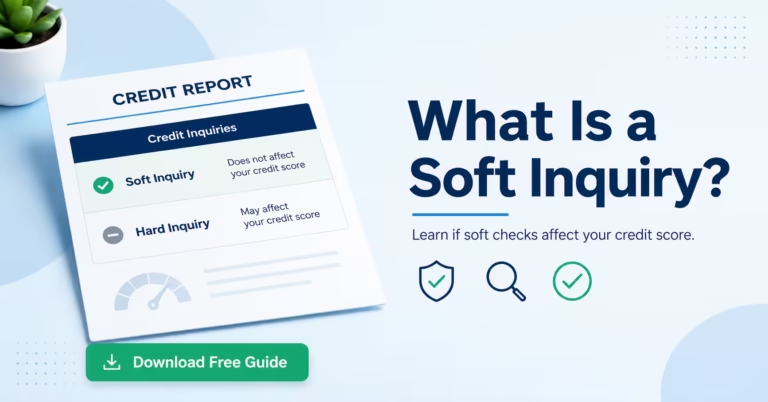
Hard Inquiry vs. Soft Inquiry
A hard inquiry happens when you formally apply for credit. It temporarily lowers your score by a few points and stays on your report for two years.
A soft inquiry happens when you check your own score, get pre-qualified, or when a company checks your credit for a non-lending purpose such as employment screening. Soft inquiries do not affect your score at all. Always check whether an offer involves a hard or soft inquiry before proceeding.
Frequently Asked Questions (FAQs)
What kills credit scores fastest?
Missing a payment is the fastest way to hurt your credit score. High credit utilization, especially above 30% of your credit limit, can also significantly lower your score.
What happens if I use 90% of my credit card?
Using 90% of your credit limit signals high financial risk to credit bureaus and can significantly lower your credit score, even if you pay on time each month. Keeping your balance below 30% of your limit is the standard benchmark for protecting your score.
Do I have to pay my credit card every month?
Yes, you must make at least the minimum payment each month to avoid late fees and keep your account in good standing. Paying only the minimum prevents delinquency but allows interest to accumulate on the remaining balance.
What’s the minimum payment on a $500 credit card?
Most issuers set the minimum at either a flat amount (typically $25 to $35) or a percentage of your balance (usually 1% to 2%), whichever is greater. On a $500 balance, that flat floor of around $25 would likely apply since 2% of $500 is only $10.
Which is safer: debit or credit card?
Credit cards are generally safer because they offer stronger fraud protection and keep unauthorized charges from directly affecting your bank account.
Is it better to pay bills with a credit card or a bank account?
Paying bills with a credit card can earn rewards, provide an interest-free grace period, and offer stronger fraud protection—but only if you pay the balance in full each month.
What is the main purpose of having a credit card?
The main purpose of a credit card is to provide convenient short-term financing for purchases while helping you build a credit history for future borrowing.
What are the 4 main credit cards?
The four major credit card networks are Visa, Mastercard, American Express, and Discover. Visa and Mastercard have the widest global acceptance, while American Express and Discover are accepted at many merchants, especially in the United States.
What happens if your credit card application is denied?
If your application is denied, the issuer will send an adverse action notice explaining why. Use it to address the issue and wait at least 30 days before reapplying.
Bottom Line
Understanding a credit card fully, from how interest accrues during a billing cycle to which card type matches your credit profile, puts you in control of the decision rather than guessing through it. This guide covered the mechanics, the benefits and risks, how your score is affected, and how to apply or recover from a denial.
Based on the cost evidence in this article, paying your full statement balance every month is the single habit that eliminates interest entirely and builds credit at the same time.
If someone you know is considering their first card, share this with them. It could save them from a costly mistake.