
Many shoppers see cards that promise cash back, points, or free flights and wonder if the perks are real. The offers sound great, but the fine print feels confusing. It’s easy to sign up for a rewards credit card and later feel let down when the fees, interest, or rules eat into the value. A lot of people don’t know if these cards fit their spending or just look shiny in ads.
A rewards credit card gives you cash back, points, or miles on eligible purchases, so part of your normal spending comes back to you as value.
Below, we’ll walk through how these cards earn, redeem, and lose value, plus a simple test to see if one is right for your wallet.
KEY TAKEAWAYS
A rewards credit card returns value from eligible purchases through cash back, points, or miles, while fees, interest, redemption choices, and spending habits determine its actual financial value.
Core Facts
- A rewards credit card works like a regular credit card but adds cash back, points, or miles on eligible purchases.
- Cash back is directly priced, while points and miles require comparing redemption value because the same balance can have different values.
- The article’s formula is: reward value divided by the number of points or miles equals value per point or mile.
- Most points in the article’s examples are worth 1 to 2 cents each, making 1,000 points roughly $10 to $20.
- Carrying a balance can overwhelm rewards because a 2% reward produces $2 on $100, compared with a $22 interest charge at 22% APR.
- The article’s worth-it test is to estimate yearly rewards, subtract the annual fee, and confirm the balance can be paid in full each month.
Best for
- People who want to understand how cash back, points, and miles work before choosing a rewards card.
- Readers who need to compare reward value against annual fees, interest, redemption choices, and their normal spending.
- Consumers deciding whether a rewards card can provide positive net value without changing their spending habits.
What Is a Rewards Credit Card?
A rewards credit card is a credit card that pays you back for eligible purchases. You earn cash back, reward points, or airline miles each time you swipe. It works like a normal credit card for buying things, but it adds a return on your spending. That return is the main reason people pick one.
A regular card just lets you borrow and pay later. A rewards card does the same job, but it also gives value back. Think of it as a small refund on things you already buy, like gas, food, or travel. Some issuers, like Visa, Mastercard, or American Express, run their own rewards card networks and perks.
The value proposition is simple. You spend money you already planned to spend. In return, the issuer shares a small slice with you. For example, a 2% cash back card gives you $2 for every $100 you spend. That can add up over a year.
But rewards are not free money. Many cards charge an annual fee. Most also have a variable APR, which is the interest rate on unpaid balances. If you carry a balance, the interest can wipe out your rewards fast. So a rewards credit card works best for people who pay in full each month.
How Do Rewards Credit Cards Work?
Rewards cards follow a clear cycle. You buy something, the card checks if it qualifies, you earn a rewards rate, your rewards build up, you redeem them, and then you pay your bill. Each step matters.
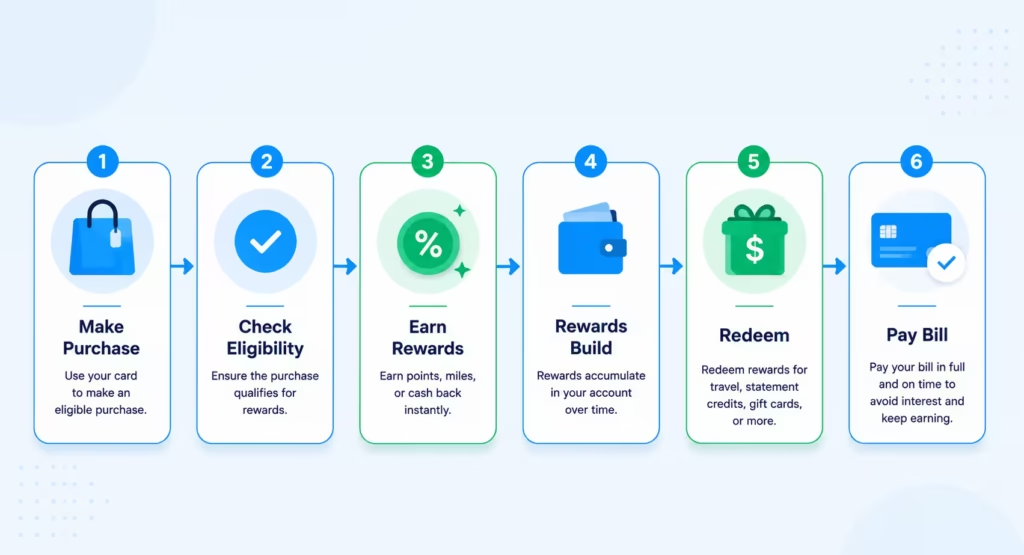
First, you make a purchase. Not every buy counts. Cash advances, balance transfers, and fees often don’t earn rewards. Only eligible purchases do. The card’s terms will list what counts and what doesn’t.
Next, the card applies a rewards rate. This is the percent or points per dollar you earn. A flat card might give 1.5% on everything. A tiered card might give more in bonus categories like dining or gas. So if you spend $50 at a restaurant with a 3% dining rate, you earn $1.50 back.
Your rewards then build up in your account. Some cards post them each month. Others post them after the statement cycle closes. You can view your balance in the app or online.
When you’re ready, you redeem your rewards. You might turn them into a statement credit, gift card, travel booking, or direct deposit. Finally, you pay your bill. If you pay in full, you keep all your rewards. If you don’t, interest charges may cost more than your rewards are worth.
What Types of Rewards Can You Earn?
Rewards come in a few main forms. Each one works a bit differently, and each has its own best use. Picking the right type depends on how you spend and what you want to get back.
Cash Back, Points, and Miles
Cash back is the simplest reward. You earn a set percentage of your spending back as money. So $1,000 in spending at 2% gives you $20. You can use cash back as a statement credit, a check, or a deposit into a bank account. It’s easy to understand and easy to use.
Reward points are a bit more flexible. You earn points per dollar, and their value depends on how you redeem them. One point may be worth 1 cent for cash back but 1.5 cents for travel. Chase Ultimate Rewards is a well-known points program. Points work well if you like options, but the value can shift.
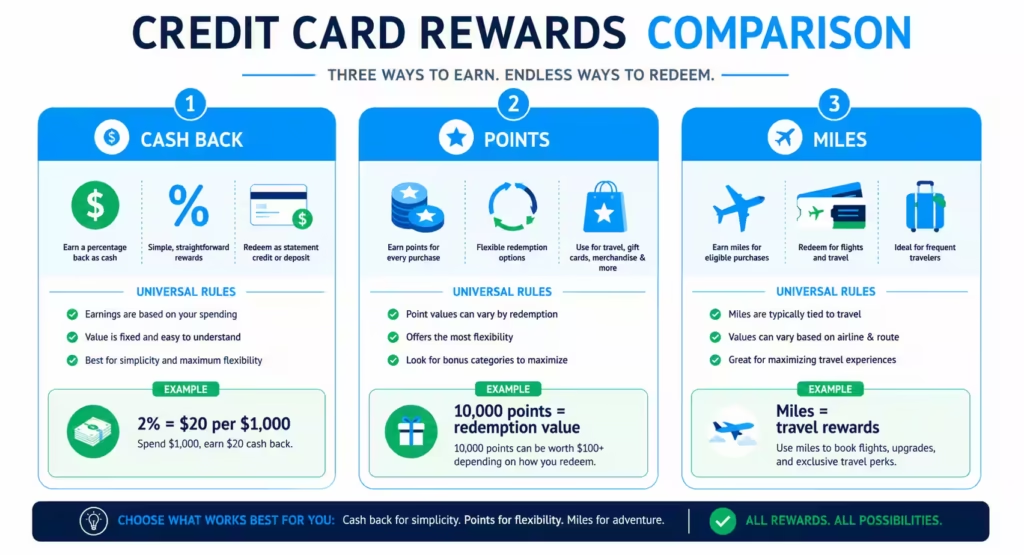
Airline miles are tied to travel. You earn miles per dollar, and you use them for flights, upgrades, or seat perks. Miles come from co-branded cards linked to an airline loyalty program. They can offer big value on flights, but only if you travel often. If you don’t fly, miles may sit unused.
💡 Pro Tip: If you’re new to rewards cards, start with a flat-rate cash back card. It gives clear value without the puzzle of point transfers or blackout dates.
How Do You Earn Credit Card Rewards?
You earn rewards by using your card for daily spending. But not all spending pays the same. The card’s earning rules decide how much you get and where. Two big drivers are bonus categories and welcome bonuses.
Bonus Categories and Spending Rates
Bonus categories are types of spending that earn higher rates. A card might offer 3% on groceries, 2% on gas, and 1% on everything else. So a family that buys a lot of groceries can earn more with a grocery bonus card.
Some cards rotate bonus categories each quarter. You may need to activate them in your account first. If you forget, you miss the higher rate. Other cards let you pick your own bonus category from a list.
There are also caps. A card may cap the 3% grocery rate at $6,000 in yearly spending. After that, groceries drop to 1%. So it helps to know your limits and plan around them.
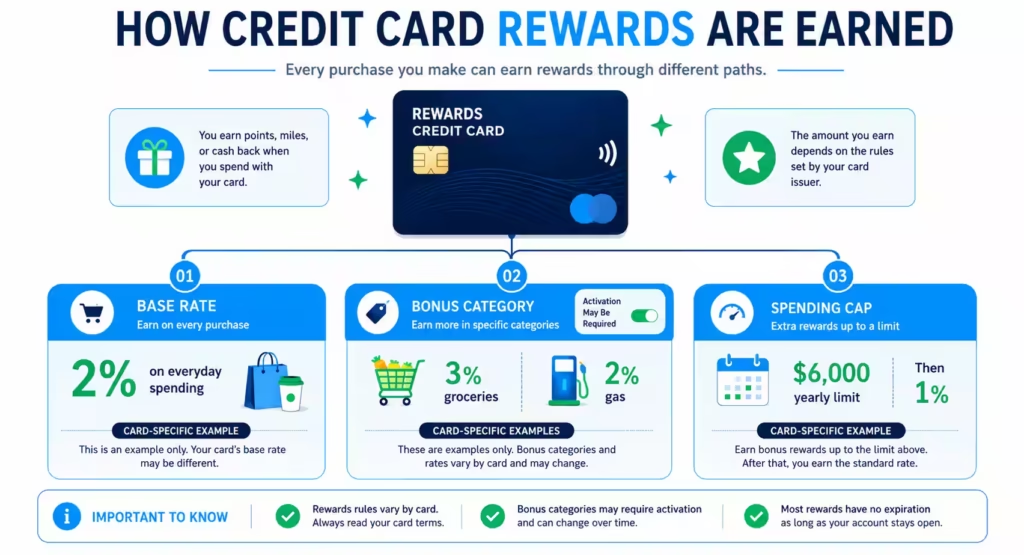
Base rates matter too. This is the rate you earn on all non-bonus spending. A card with a 2% flat base rate can beat a tiered card if your spending is spread out. Match your spending habits to the card’s rate chart to get the most back.
How Do Welcome Bonuses Work?
A welcome bonus is a large reward you earn when you first get the card. But you must meet a spending requirement within a set time. For example, you might need to spend $3,000 in the first 3 months to earn 60,000 points.
The spending must be from eligible purchases. Paying taxes with the card may count, but a balance transfer usually won’t. If you miss the deadline or fall short, you don’t get the bonus.
The bonus can be worth hundreds of dollars. That’s why many people apply for a card just for the welcome offer. But watch out. Don’t overspend just to hit the target. Buying things you don’t need cancels out the value of the bonus.
How Do You Redeem Credit Card Rewards?
Redeeming means turning your rewards into something useful. The path you pick shapes how much value you get. Some paths give more per point than others.
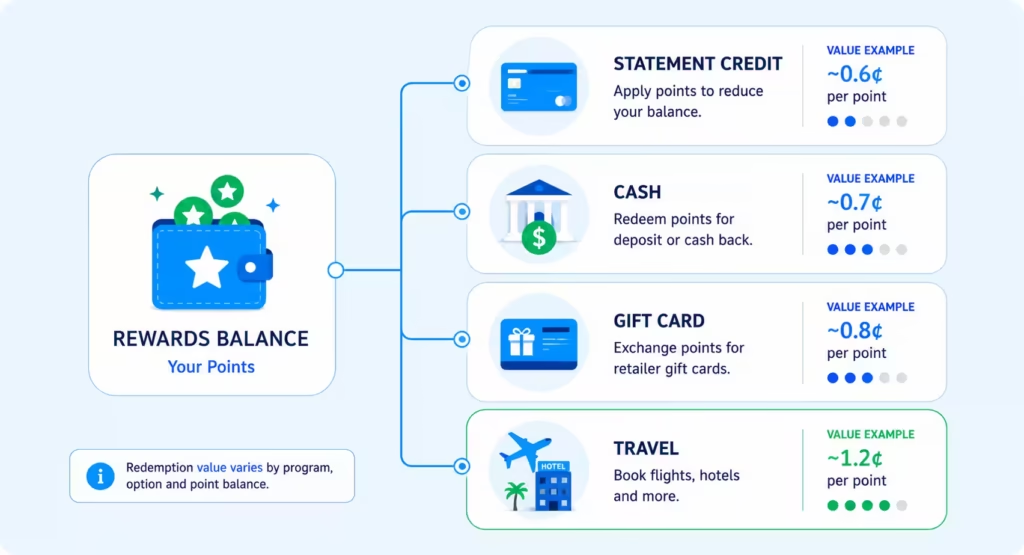
Statement credits are one common choice. Your rewards are applied to your card bill, which lowers what you owe. Cash options let you send funds to a bank account or get a check. Both are simple and give a fixed value.
Gift cards are another option. You trade points for a card at stores or restaurants. Sometimes gift cards offer a small discount, so 10,000 points might get you an $110 gift card instead of $100 cash. But not all gift card deals are a good trade.
Travel is often the highest-value path. You can book flights, hotels, or car rentals through the card’s travel portal. Or you can transfer points to airline and hotel partners. Transfers can boost your point value, but they add complexity. Pick the redemption path that fits your goals and skill level.
How Much Are Credit Card Rewards Worth?
The value of your rewards depends on the type and how you use them. Cash back is easy to price. One dollar back is worth one dollar. Points and miles are trickier.
Here’s a simple formula to check point value:
Reward value ÷ number of points or miles = value per point
So if you redeem 10,000 points for a $120 flight, each point is worth 1.2 cents. If the same points give you $100 cash back, each is worth 1 cent. Travel is worth more in this case.
Most points are worth 1 to 2 cents each. Airline miles vary a lot. A basic flight may give 1 cent per mile, but a premium seat can push value up to 4 or 5 cents per mile. The trick is to check the value before you redeem.
Don’t judge a card by the number of points alone. A card that gives 3 points per dollar may seem better than one giving 2%. But if those points are worth only 0.5 cents each, you actually earn less. Always convert points to real dollars to compare.
What Costs Can Reduce Your Rewards?
Rewards are only half the story. Costs on the other side can eat away at what you earn. Three high costs to watch are interest, fees, and lost rewards.
APR and Interest Can Outweigh Rewards
APR stands for annual percentage rate. It’s the interest charged on balances you don’t pay off. Most rewards cards have a variable APR, which shifts with the market. The Federal Reserve tracks the average credit card APR, and it has often stayed above 20% in recent years, per the Federal Reserve consumer credit report.
Consider this. A 2% cash back card gives $2 back on $100. But if you carry that $100 as a balance for a year at 22% APR, you owe $22 in interest. That’s $20 more than your reward. So carrying a balance turns a rewards card into a losing card fast.
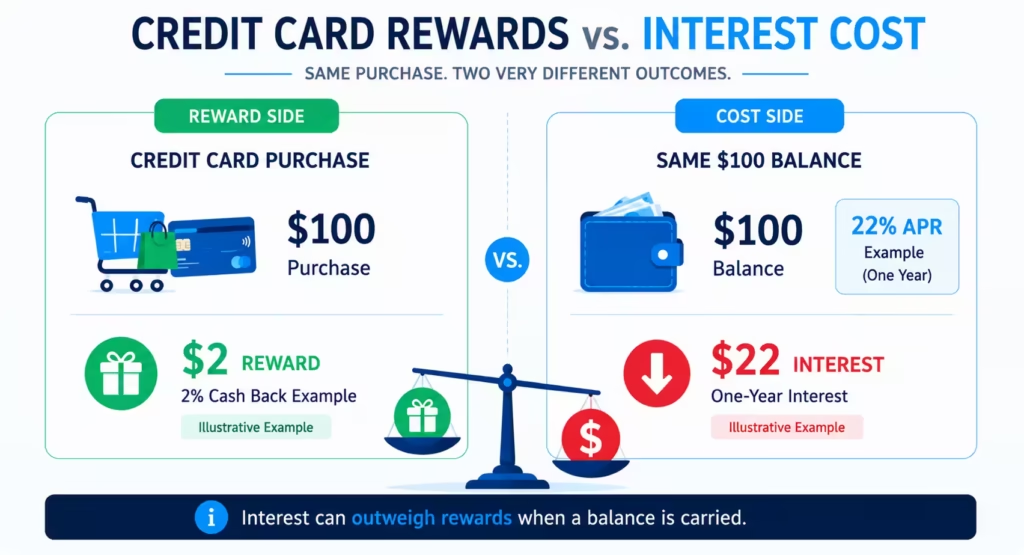
The rule is simple. Pay your statement balance in full each month. If you can’t, the rewards don’t matter. A no-frills low-APR card may serve you better.
Annual Fees and Other Costs
Some rewards cards charge an annual fee. This is a yearly cost just to hold the card. Fees can range from $0 to $95 for basic cards, and $250 to $700 or more for premium travel cards.
A fee is fine if your rewards earn more than the fee costs. For example, a $95 fee is worth it if you earn $300 in rewards. But if you earn only $50 in rewards, the fee eats your gains.
Other costs also matter. Foreign transaction fees hit you when you buy from stores outside the U.S. Late fees and cash advance fees add up too. Read the card’s terms so you know all the charges before you apply.
⚠️ Mistake to Avoid: Signing up for a premium card with a $550 annual fee when you rarely travel. The perks look good, but if you don’t use them, the fee costs more than the rewards you earn.
When Rewards Can Be Lost
Rewards are not always locked in. You can lose them in a few ways. If you miss a payment, some issuers pause or clear your rewards. If your account is closed, you may forfeit all unredeemed rewards.
Returns also affect rewards. If you buy a $200 item and later return it, the rewards from that purchase are taken back. This is normal, but it can surprise new users.
Some rewards expire if you don’t use them for a set time. Airline miles often expire faster than points from bank programs like Chase Ultimate Rewards. Check the terms of your card so you don’t lose what you earned. Under Regulation Z, issuers must disclose these rules clearly in your cardholder agreement.
Who Is a Rewards Credit Card Best For?
A rewards card is not for everyone. It works best for people who fit a clear profile. If you match this profile, the card can add real value to your budget.
You should be able to pay your full bill each month. This is the number one rule. If you carry a balance, the interest will beat any reward you earn. So a rewards card works best for people with steady income and good money habits.
Your spending habits should match the card’s earning power. A person who spends a lot on groceries gets more from a grocery bonus card. A frequent flyer gets more from a miles card. If your spending is spread out, a flat-rate card is a smart pick.
You should also be okay with a small learning curve. Rewards programs have rules, tiers, and terms. If you like to track things and read the fine print, you’ll get more value. If not, stick with a simple cash back card.
Finally, you should be able to afford the card’s costs. If the annual fee stresses your budget, the card is not worth it. Only pick a card whose fee you can easily cover with rewards.
What Should You Compare Before Choosing a Rewards Card?
Picking a card takes a bit of homework. Compare a few key features to find the best fit. Don’t just chase the biggest welcome bonus. Look at the full picture.
Start with the reward type. Do you want cash back, points, or miles? Match it to how you plan to use the rewards. Cash back is easy. Points offer flexibility. Miles are best for travelers.
Look at the base rewards rate. This is the rate you earn on non-bonus spending. Then check the bonus categories. See if they match your top spending areas. Also check any earning caps.
Here’s a simple comparison chart:
| Feature | What to Check | Why It Matters |
|---|---|---|
| Reward type | Cash back, points, or miles | Fits your goals |
| Base rate | Percent earned on all spending | Sets your minimum return |
| Bonus categories | Top rates and spending caps | Matches your habits |
| Welcome bonus | Amount and spending target | Boosts first-year value |
| Annual fee | Cost to hold the card | Must be less than rewards |
| APR | Rate on unpaid balances | Costs you if you carry debt |
Finally, check the redemption options. A card with limited redemption paths gives you less flexibility. Look for cards that let you use rewards in ways that fit your life.
Are Rewards Credit Cards Worth It?
The answer depends on you. Here’s a simple test to find out.
Add up the yearly rewards you’d likely earn. Then subtract the annual fee. If the result is positive and you can pay your bill in full, the card is worth it. If it’s negative or you carry a balance, it’s not.
Let’s use a real example. Sarah, a marketing manager, spends about $2,000 a month on her card. She picks a 2% flat cash back card with no annual fee. In a year, she spends $24,000 and earns $480 in cash back. Since there’s no fee and she pays in full, she nets $480. That’s real value.
Now take David, a graphic designer. He spends $1,000 a month. He picks a card with a $95 annual fee that earns 3% on dining and 1% on everything else. He spends $200 a month on dining and $800 on other things. That gives him $72 on dining and $96 on other spending, so $168 total. After the $95 fee, he nets $73. Still worth it, but less than a simple no-fee card would give.
📌 Did You Know: The average U.S. consumer credit card balance was $6,371 in the fourth quarter of 2024, according to Experian’s State of Credit Cards report. If you carry a balance that size, no rewards program can outrun the interest costs.
The decision rule is clear. A rewards card is worth it if you pay in full, if your rewards beat the fee, and if the card fits how you spend. If any of those are off, look for a simpler card or skip rewards for now.
Frequently Asked Questions (FAQs)
How do I cash out my rewards card?
You can typically redeem cash rewards as a statement credit, bank deposit, or check, depending on the card. Points may also convert to cash, but the value can differ by redemption method, so check how many dollars your points produce before cashing out.
How do I convert my rewards to cash?
Look for a cash-back or cash-redemption option in your card’s rewards account, then choose a statement credit, bank deposit, or check when available. A points balance may convert at a fixed rate, such as 10,000 points becoming $100, while another redemption could provide more value.
How much is 1000 points in credit cards?
There is no universal value, but the article says most points are worth about 1 to 2 cents each. That puts 1,000 points at roughly $10 to $20, depending on how you redeem them.
How much money are 20,000 credit card points worth?
Using the article’s typical range of 1 to 2 cents per point, 20,000 points are worth about $200 to $400. The exact amount depends on the redemption method, because travel or other options can provide more value than straightforward cash redemption.
Do you get credit card points if you pay it off immediately?
Yes. Rewards are earned when an eligible purchase is made, so paying the balance immediately does not prevent the purchase from earning rewards. Paying in full also helps preserve the reward’s value by avoiding interest charges on the balance.
What are the downsides of rewards cards?
The main downsides are interest, annual fees, complicated reward rules, and the possibility of losing unredeemed rewards. A 2% cash-back reward can quickly be outweighed by a 22% APR balance, making the rewards far less valuable.
Can you lose credit card rewards?
Yes. You may lose rewards after certain missed payments, account closure, or returned purchases, depending on the program’s terms. Some rewards can also expire, so checking the card’s reward rules can prevent a balance from disappearing before you redeem it.
What is the biggest mistake with credit card rewards?
The biggest mistake is spending more than planned to earn rewards or a welcome bonus. For example, spending $3,000 within 3 months just to earn a bonus can backfire if the extra spending creates debt or interest charges.
What is the difference between a credit card and a rewards credit card?
A regular credit card lets you borrow and repay, while a rewards card adds cash back, points, or miles on eligible purchases. For example, a 2% cash back card returns $2 for every $100 spent, provided the purchase qualifies for rewards.
Wrapping Up
Rewards credit cards can turn everyday spending into real value, but only when used the right way. We covered what makes a card a rewards card, the types of rewards, how you earn and redeem them, the costs that can wipe out your gains, and how to decide if one fits your life.
Based on the math in this guide, the most effective approach is to pick a no-fee or low-fee card that matches your top spending, pay your bill in full each month, and redeem in ways that give the highest per-point value.
If you know a friend or family member weighing their first rewards card, share this guide so they start with the right one.