
You open your card app and see two or three different balances. One says “statement balance.” Another says “current balance.” A third tells you the minimum due. Which one are you actually supposed to pay? This confusion is common, and picking the wrong number can cost you real money in interest.
Here is the short answer. Your statement balance is the total you owed on the last day of your billing cycle, and paying it in full by the due date is what keeps you interest-free.
Below, you will learn exactly how this number is calculated, how it differs from every other balance on your account, and which one to pay based on your goal.
Key Takeaways
This guide explains what a statement balance is, including how it’s calculated, how it differs from your current balance and minimum payment, and how it affects interest charges and your credit score.
Core Facts:
- A statement balance is the total amount owed on the closing date of your last billing cycle, and it stays fixed until the next cycle closes.
- The formula is: previous balance plus new charges plus fees plus interest minus payments and credits equals the statement balance.
- Paying the full statement balance by the due date avoids interest entirely, while paying only the minimum leaves the remainder collecting interest at your card’s APR.
- Paying less than the full statement balance causes you to lose your grace period, so new purchases start accruing interest immediately instead of during an interest-free window.
- Credit card issuers typically report the statement balance, not the current balance, to the credit bureaus, and this figure drives your credit utilization ratio.
- Overpaying creates a credit balance shown as a negative number, which automatically applies to future purchases or can be requested back as a refund.
Best for:
- Cardholders confused about which balance shown in their account or app they need to pay.
- New cardholders trying to understand their first billing statement and grace period.
- Anyone wanting to avoid interest charges or lower their reported credit utilization.
What Statement Balance Means
So what does statement balance mean in plain words? It is the total amount you owed on your credit card on the closing date of your last billing cycle. Think of it as a snapshot. On that one day, your card issuer adds everything up and locks in the number.
The statement balance meaning becomes clearer when you see what goes into it:
- Your previous balance left over from the last cycle
- All new posted transactions, like purchases and cash advances
- Any fees, such as an annual fee or late fee
- Interest charges, if you carried a balance
- Minus any payments or credits, like refunds
Once the cycle closes, this number does not change. It stays fixed until the next cycle ends. New purchases, payments, or refunds after the closing date do not touch it. They roll into the next statement instead.
That locked-in quality is what makes the statement balance so important. It is the official bill for that cycle, and it is the number your payment due date is tied to.
Where to Find Your Statement Balance
You can locate this figure in three places:
- Paper or PDF statement. Look near the top of the first page. It is usually labeled “statement balance” or “new balance” inside a summary box, right next to the minimum payment due and the payment due date.
- Online account or mobile app. Log in and check the account summary or home screen. Most issuers show it beside the current balance. If you only see one balance, look for a tab called “Statements” and open the latest one.
- Phone. Call the number on the back of your card. The automated system will read out your statement balance, or a representative can tell you.
How Statement Balance Is Calculated
The math behind your bill follows one simple formula:
Previous balance + new charges + fees + interest − payments and credits = statement balance
Here is how it works with real numbers. Say your cycle just closed, and your account looked like this:
| Item | Amount |
|---|---|
| Previous balance | $1,200.00 |
| Payments and credits | −$700.00 |
| New purchases | $385.60 |
| Fees | $0.00 |
| Interest charged | $12.71 |
| Statement balance | $898.31 |
Notice two things in this example. First, interest is part of the total, not just purchases. Because the full previous balance was not paid off, interest accrual added $12.71 to the bill. Second, the $700 payment reduced the outstanding balance, but it did not erase the cost of carrying debt the month before.
Knowing this formula lets you sanity-check every bill. If your statement balance looks too high or too low, walk through each line on your statement. You can quickly spot a charge you do not recognize or a payment that was not credited yet.
What to Do If Your Statement Balance Looks Wrong
If the number on your statement doesn’t match what you expected, there’s usually a simple explanation before you assume it’s an error.
Common reasons for a mismatch include:
- Timing. A purchase or payment you made close to your closing date might not have posted in time to be included. It will show up on your next statement instead.
- A fee or interest charge you forgot about. Annual fees, late fees, or interest charges can add to the total without feeling like a “purchase” you remember making.
- A delayed refund. If a merchant issued a refund but it hasn’t posted yet, your statement balance won’t reflect it until the credit actually processes.
Before contacting your card issuer, check the full transaction list on your statement. It shows every charge, fee, and payment that went into the final number, so you can usually trace the discrepancy yourself. If everything checks out and the number still looks wrong, or you spot a charge you don’t recognize, that’s when it’s worth reaching out to your issuer directly.
Statement Balance vs. Current Balance
This is the single most common mix-up. Here is the difference:
- Statement balance: a locked-in number from the end of your last billing cycle. It does not move.
- Current balance: a live, real-time total of everything you owe right now. It changes with every purchase, payment, or refund.
Your current balance can be higher or lower than the statement balance. Say your cycle closed on June 10 with a statement balance of $546.75. On June 12, you buy groceries for $80. Your current balance jumps to $626.75. Your statement balance stays at $546.75. On June 15, you pay $200. Now the current balance drops to $426.75, while the statement balance still reads $546.75.
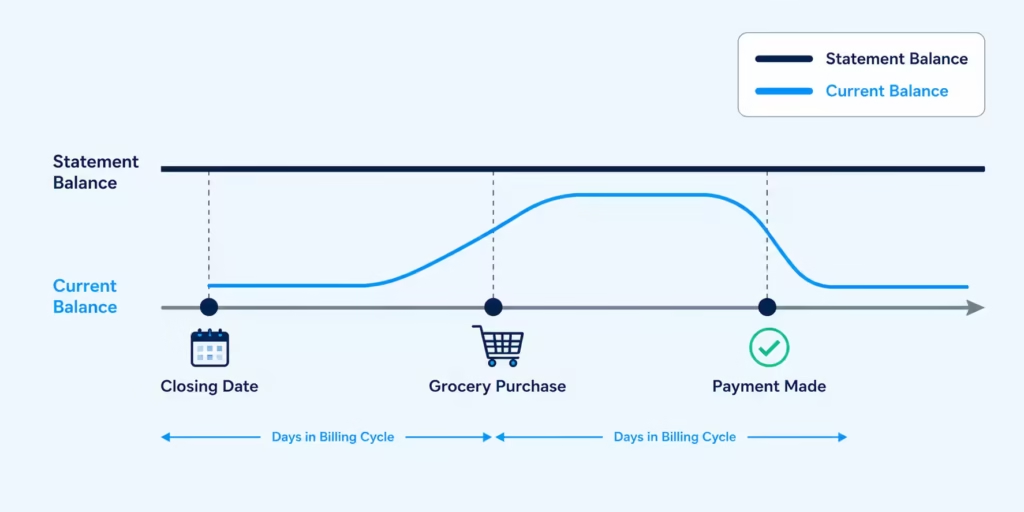
The closing date is the dividing line. Everything posted before it counts toward the statement balance. Everything posted after it only affects the current balance and waits for the next cycle.
What Happens After You Pay the Statement Balance
Paying the full statement balance does not make the number disappear from your statement. It stays printed there until the next cycle closes, because it is a historical record of what you owed.
What does change is your current balance, which drops as soon as the payment posts. Any new spending after that starts building toward the next statement balance. So if you pay in full and then keep using the card, seeing a current balance above zero is normal. It is not a sign your payment failed.
Statement Balance vs. Minimum Payment
The minimum payment is the smallest amount your issuer will accept to keep your account in good standing. It is usually 1% to 3% of your balance or a flat amount like $25, whichever is greater.
Here is the key difference. Paying the statement balance in full avoids interest. Paying only the minimum does not. The minimum protects you from late fees and a missed-payment mark on your credit reports. That is all it does. The rest of your balance carries over and starts collecting interest at your card’s APR.
⚠️ Mistake to Avoid: Treating the minimum payment as “the amount due to avoid interest.” Interest accrual on the unpaid remainder is how a $900 balance quietly turns into years of payments and hundreds of extra dollars in charges.
Why the Billing Cycle Determines Your Statement Balance
A billing cycle is the period your statement covers. Most cycles run about 28 to 31 days, and they rarely line up with calendar months. Your cycle dates depend on when you opened the account, so one card’s cycle might run from the 5th to the 4th, while another runs from the 18th to the 17th.
Two dates matter here:
- Closing date: the last day of the cycle. This is when your issuer totals everything up, and your statement balance is set.
- Payment due date: the day your payment must arrive. Issuers are required to give you at least 21 days between when your statement is delivered and when payment is due.
So your statement balance always covers a specific window of time, and it never includes anything from after the closing date. Once you know your cycle dates, the numbers on your credit card statement stop feeling random.
Your First Statement Balance as a New Cardholder
If this is your first credit card, your very first statement can look a little different from the ones that follow.
Your first billing cycle often isn’t full. Since it starts the day your account opens rather than on a set recurring date, it might run shorter or longer than the standard 28 to 31 days until it lines up with your card’s regular closing date going forward.
Your first statement balance only includes activity from the day you opened your account to your first closing date. Anything you charge after that date rolls into your second statement instead.
Beyond that shortened first cycle, all the same rules apply from day one: you still get a grace period if you pay your statement balance in full, your minimum payment still works the same way, and your due date still falls a set number of days after your closing date.
Statement Balance and the Grace Period
A grace period is the stretch of time between your closing date and your payment due date, usually about 21 to 25 days. During this window, you owe no interest on new purchases. But there is a catch. The Consumer Financial Protection Bureau explains that you generally keep this interest-free period only if you pay your statement balance in full each month.
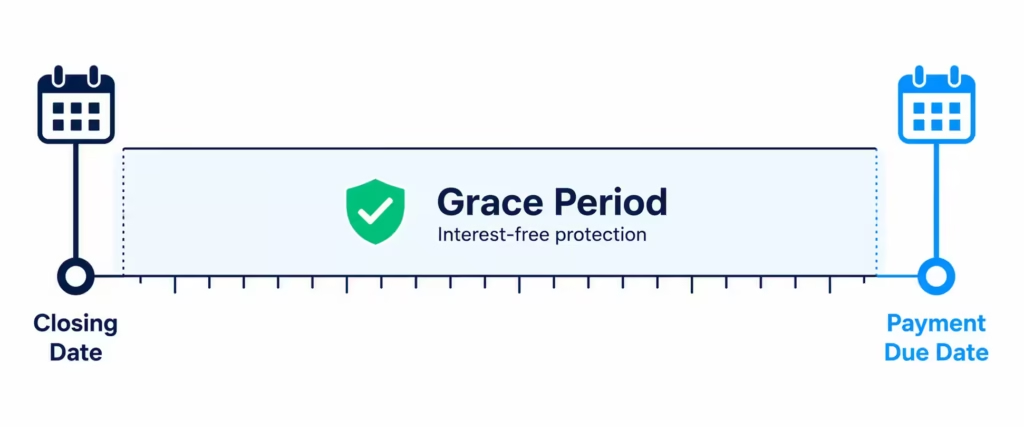
This is why the statement balance is the magic number. Pay it completely, on time, and your card works like an interest-free short-term loan. Pay anything less, and the deal breaks.
What Happens If You Pay Less Than the Statement Balance
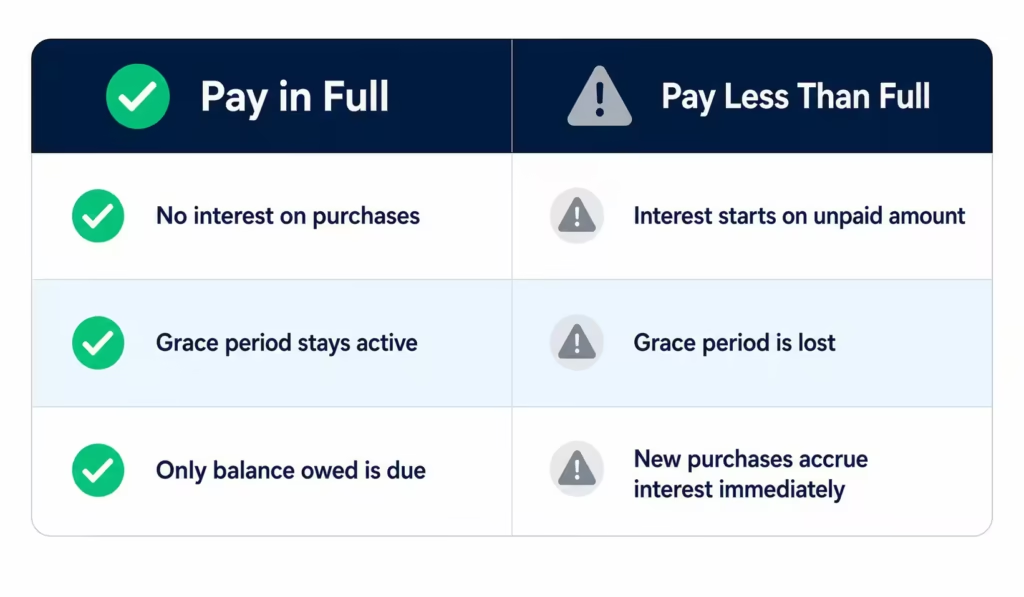
Three things happen, and the third one surprises most people:
- Interest starts on the unpaid portion. The leftover balance begins collecting interest at your card’s APR.
- You lose the grace period. New purchases can start accruing interest immediately, from the day each one posts. There is no interest-free window at all.
- Your account stays in good standing as long as you pay at least the minimum by the due date, so no late fee applies.
Sarah, an operations manager at a tech startup, learned this the expensive way. Her statement balance was $1,750, and she paid $1,400, figuring she would catch the rest next month.
She expected a small interest charge on the $350 shortfall. Instead, her next bill showed interest on the unpaid $350 and on all $610 of new purchases she made that month. Losing the grace period cost her about $42 in a single cycle, on spending she thought was interest-free.
What Happens If You Overpay Your Statement Balance
Paying more than you owe creates a credit balance, which shows up as a negative number on your account. Say your statement balance is $546.75 and you accidentally pay $600. Your balance now reads −$53.25.
That extra money is not lost. It sits on your account as a credit and automatically applies to your future purchases. Your next $53.25 in spending is essentially prepaid. You can also request a refund check from your issuer if the credit is large. Nothing about overpaying hurts your credit score. It just means your money is parked with the card company instead of in your bank account.
Which Balance Should You Actually Pay
The right number depends on your goal:
- To avoid interest: pay the full statement balance by the due date. This is the habit that keeps your card free to use.
- To lower your reported balance before the closing date: pay down your current balance a few days before the cycle closes. This shrinks the number that gets recorded for that month.
- If you cannot pay in full: always pay at least the minimum payment due, on time. This avoids late fees and credit damage. Then pay as much above the minimum as you can to slow interest costs.
💡 Pro Tip: Set up autopay for the full statement balance, not the minimum. You will never miss a due date, never pay a cent of purchase interest, and you can always make extra manual payments on top of it.
Statement Balance and Your Credit Score
Here is the chain that connects your payment habits to your credit score, step by step.
Each month, your card issuer reports your account to the credit bureaus: Experian, Equifax, and TransUnion. The balance they typically report is your statement balance, the figure recorded on your closing date. It is not your current balance and not the balance on the day you paid.
That reported number feeds your credit utilization ratio, which is the share of your credit limit you are using. If your limit is $5,000 and your statement closes at $2,500, your reported utilization is 50%, even if you paid the card to zero two days later. FICO says that the amounts you owe make up about 30% of your FICO Score, so a high reported balance can drag your score down even when you pay in full every month.
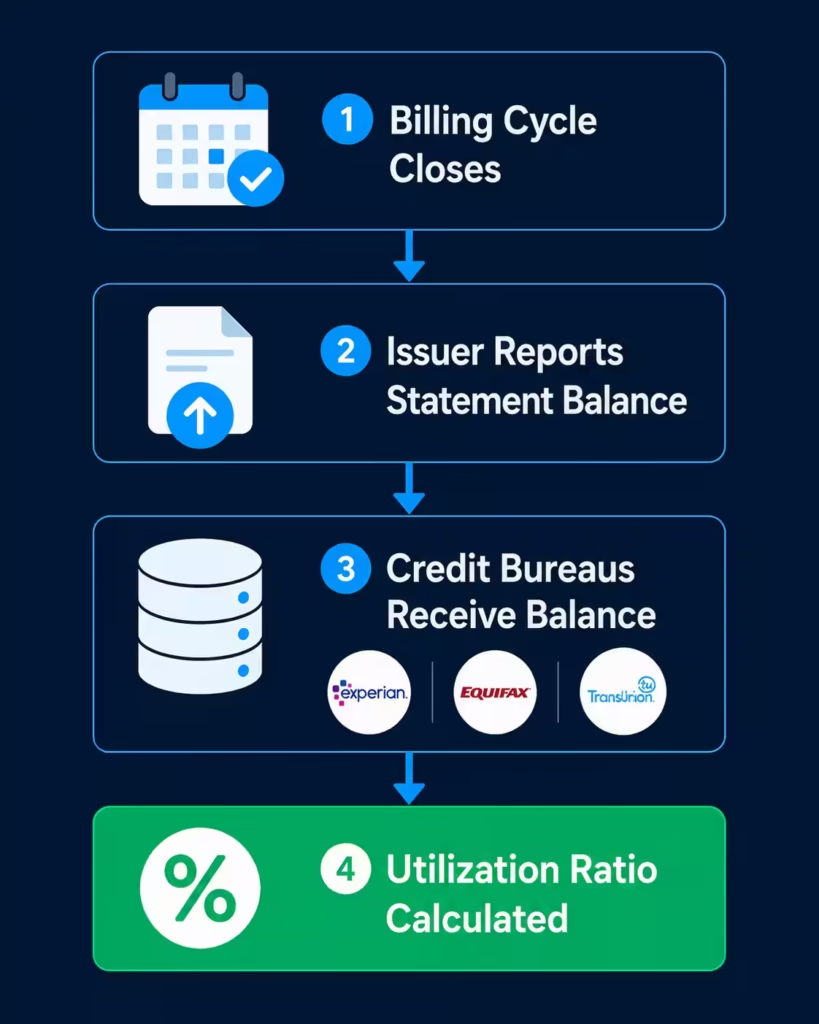
The practical fix is timing. If you want a lower number reported, pay down your balance before the closing date, not just before the due date. You can check what the bureaus actually have on file for free at AnnualCreditReport.com, the only site authorized by federal law for free credit reports.
📌 Did You Know: You can pay your card in full every month and still show high utilization on your credit reports. The bureaus see the closing-date snapshot, not your payoff habits.
Frequently Asked Questions (FAQs)
Should I pay statement balance or current balance?
Pay the full statement balance by the due date to avoid interest entirely. If you also want lower reported utilization, pay down your current balance a few days before the closing date.
What happens if I only pay the statement balance?
Paying the full statement balance means you owe no interest on that cycle’s purchases. Any new spending after the closing date rolls into your next statement and stays interest-free too, as long as you keep paying in full.
What happens if I pay less than the full statement balance?
Interest starts accruing on the unpaid portion at your card’s APR, and you lose your grace period entirely. New purchases begin collecting interest immediately from the day they post, with no interest-free window at all.
Does a statement mean you owe money?
Not necessarily. Your statement balance is a locked-in snapshot of what you owed on your closing date, but if you already paid it off, your current balance could be zero even though the statement still shows the old figure.
What does a $400 statement credit mean?
A statement credit reduces your balance the same way a refund or overpayment does. If you overpay your statement balance, the extra amount shows as a negative balance and automatically applies to your future purchases.
Why is my statement balance so high?
Common causes include a large previous balance carried over, interest charged from an unpaid prior cycle, fees like an annual charge, or a bigger batch of purchases posting before your closing date than you remembered.
Is it better to clear a credit card or keep a small balance?
Clearing your balance in full each month is better. Carrying a balance only adds interest charges and doesn’t help your credit score, since FICO weighs your amounts owed heavily without rewarding carried debt.
What is the best day to pay a credit card?
Pay a few days before your closing date if you want a lower balance reported to the credit bureaus, since issuers typically report your statement balance from that closing-date snapshot. Otherwise, any day before your due date avoids interest.
Is owing $500 on a credit card bad?
It depends on your credit limit, since utilization is what matters most. On a $1,000 limit, $500 is 50% utilization, well above the 30% threshold that helps protect your credit score.
What is the biggest factor affecting credit scores from statement balances?
Reported utilization is the key factor, since issuers typically send your statement balance, not your current balance, to the credit bureaus. FICO notes that amounts owed make up about 30% of your score, so a high closing-date balance can hurt you even if you pay in full.
Wrapping Up
Your statement balance is the frozen total from the end of each billing cycle, and it controls two big things: whether you pay interest and what gets reported to the credit bureaus. For most readers, the most effective approach is simple.
Pay the full statement balance by the due date, and pay early if you also want a lower utilization figure reported. That one habit keeps your card interest-free and your credit score healthy.
If you know someone who just got their first credit card, this guide could save them from their first surprise interest charge. Share it with them before their first due date arrives.