
You’ve opened your statement or banking app and spotted a date labeled “closing date” or “statement date.” It’s not the due date you already know, so what is it, and does it actually matter? A credit card closing date is important for your wallet. It affects your interest, statement balance, and credit score. So, it’s good to understand what it means.
Here’s the short answer: your closing date is the last day of your billing cycle, the day your card issuer adds up your activity and creates your monthly statement.
Learn where to find your date, why it shifts monthly, and how to use it to reduce your reported credit balance.
Key Takeaways
This guide explains what a credit card closing date is, how it differs from the payment due date, why it changes monthly, and how paying down your balance before it closes can lower the utilization reported to credit bureaus.
Core Facts:
- A credit card closing date is the last day of the billing cycle, when the issuer tallies activity and creates the statement balance.
- The payment due date must fall at least 21 days after the closing date, as required by the Credit CARD Act of 2009.
- Most issuers report the statement balance from the closing date to the credit bureaus, and paying it off later does not change what was already reported.
- Purchases made after the closing date roll into the next billing cycle instead of the current statement.
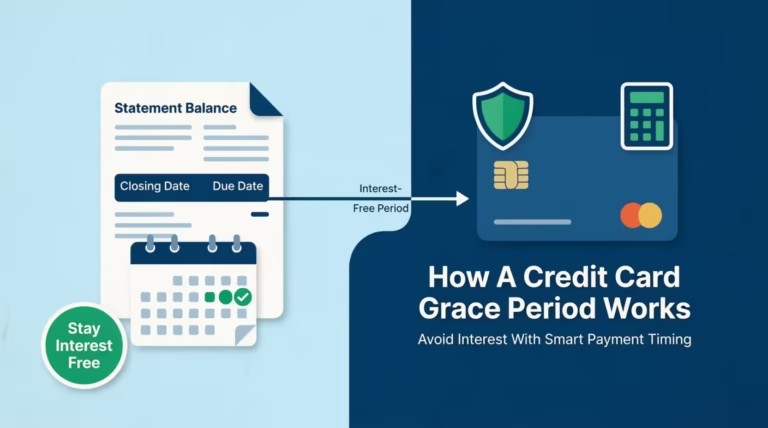
- The grace period is the interest-free window between the closing date and due date, but it only applies if the previous balance was paid in full.
- The closing date is not fixed to the same calendar day each month because billing cycles run about 28 to 31 days while the due date stays fixed.
Best for:
- Readers trying to understand why their credit score didn’t improve even after paying their bill in full and on time.
- People preparing to apply for a mortgage, auto loan, or new credit card who want to lower their reported utilization beforehand.
- Anyone confused about the difference between a credit card’s closing date and its payment due date.
What Is a Credit Card Closing Date?
A credit card statement closing date is the last day of your billing cycle. On that day, your card issuer stops counting new activity for the month, adds up all your purchases, payments, and fees, and generates your statement. The total it lands on becomes your statement balance.
If you’re asking what the closing date means in plain terms, think of it as the day your issuer takes a snapshot of your account. Everything before the snapshot goes on this month’s bill. Everything after it goes on next month’s.
One thing that trips people up: your billing cycle doesn’t follow the calendar month. Your statement won’t always close on the first or the last day of the month. It closes on whatever day your own cycle ends, which depends on when your account was opened.
How the Billing Cycle Works
A billing cycle is simply the stretch of time between two statements. Most cycles run about 28 to 31 days, and the exact length shifts a bit because some months are longer than others.
Your cycle repeats around the same date every month. For example, if your cycle ends on the 12th, your next cycle starts on the 13th and runs roughly another 30 days. Because the cycle length doesn’t match the calendar month perfectly, the closing date lands on a slightly different day from time to time. That’s normal, and there’s more on why below.
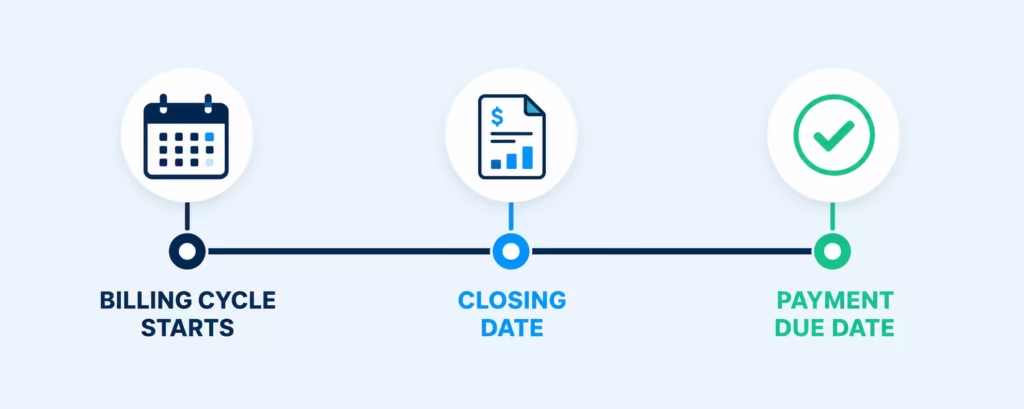
Credit Card Closing Date vs. Due Date
This is the mix-up that costs people money, so it’s worth slowing down here. The two dates look similar on your statement but do completely different jobs.
The closing date ends your billing cycle. That’s when your statement is created, and your balance is tallied. The payment due date is your deadline to pay at least the minimum amount. Under the Credit CARD Act of 2009, issuers must deliver your statement at least 21 days before the due date, so the due date always falls at least three weeks after the closing date.
Here’s how the two dates look on a real timeline:
| What happens | Date |
|---|---|
| Billing cycle starts | May 7 |
| Closing date (statement created) | June 5 |
| Payment due date | July 2 |
Confusing the two causes two real problems. If you think the closing date is your payment deadline, you might pay weeks early for no reason, or panic when you don’t need to. If you think nothing matters until the due date, you miss the fact that your balance was likely already reported to the credit bureaus at closing. The gap between these dates is your grace period, and we’ll cover that shortly.
How to Find Your Credit Card Closing Date
You can’t use your statement closing date strategically until you know where it is. The good news: it’s always printed or displayed somewhere. You just need to know which label to look for.
Finding It on Your Paper or PDF Statement
Pull up your most recent billing statement and look at the first page, near the balance summary at the top. Issuers use a few different labels for the same thing:
- “Statement Closing Date”
- “Billing Period” or “Days in Billing Cycle” (shown as a date range, like 05/07–06/05)
- “Next Closing Date”
- “Statement Date”
If you see a date range instead of a single date, the second date in that range is your closing date.
Finding It in Your Issuer’s App or Online Account
If you never look at paper statements, open your issuer’s app and go to your account summary or the statements section. Most apps from issuers like Chase, Citi, Discover, and Amex show your statement balance along with the date the current cycle ends.
Watch for two different dates. Some apps show your current closing date (the cycle that just ended) and your next closing date (when the cycle you’re in right now will close). For planning purchases or payments, the next one is the date that matters.
If you still can’t find it after checking both places, call the number on the back of your card and ask. A representative can tell you in under a minute.
Why Your Closing Date Isn’t the Same Day Every Month
Once you find your date, you might notice something odd: it was the 30th last month and the 28th this month. Nothing is wrong with your account.
Two things cause this small drift. First, months have different lengths, so a roughly 30-day cycle can’t land on the same calendar date every time. Second, federal rules require your due date to fall on the same day each month, so issuers adjust the closing date slightly to keep that due date fixed.
The shift is small by design, and it can’t move your cycle dates by more than a few days either way. If your date wanders by a day or two, that’s the system working as intended, not an error.
What Happens to Charges Made After the Closing Date
A purchase made after your closing date simply rolls into the next billing cycle. It shows up on your next statement, not the one that was just created.
This timing only affects when the charge appears on a bill. It doesn’t make the purchase free, and it doesn’t delay anything else about it. You still owe the money. You just owe it one cycle later.
Here’s where people get mixed up: an after-closing purchase doesn’t change your current payment due date, either. Say your statement closes on June 5 with a $600 statement balance due July 2. If you buy a $200 item on June 6, that $200 joins the next cycle. Your July 2 bill is still $600. The $200 will be due on the following due date.
📌 Did You Know: If you buy something the day after your closing date, you get the longest interest-free window. This can be nearly 50 days! It covers the full next cycle and includes the grace period before payment is due.
Does the Closing Date Affect Your Credit Score?
Yes, and this is the part most people never learn. Your closing date matters for your credit score because the balance on that date is usually what your issuer reports to the credit bureaus.
“Reported” means your issuer sends your account data to Experian, Equifax, and TransUnion, the three major bureaus. That data includes your balance, and it’s used to calculate your credit utilization ratio, the share of your credit limit you’re using. Utilization is a major factor in your credit score.
The key detail: paying your statement in full by the due date does not erase a high balance that was already reported. If your card had a big balance when the cycle closed, that big number goes to the bureaus even if you pay it to $0 two weeks later. This is exactly why some people pay on time every month yet still see a lower score than they expected.
Worked Example: Reported Balance vs. Paid Balance
Meet Michael, a project manager at a mid-sized manufacturing company. His card has a $5,000 limit, and his cycle closes on the 5th of each month.
- May 20: Michael books flights and a hotel for a work trip, charging $2,500 to the card.
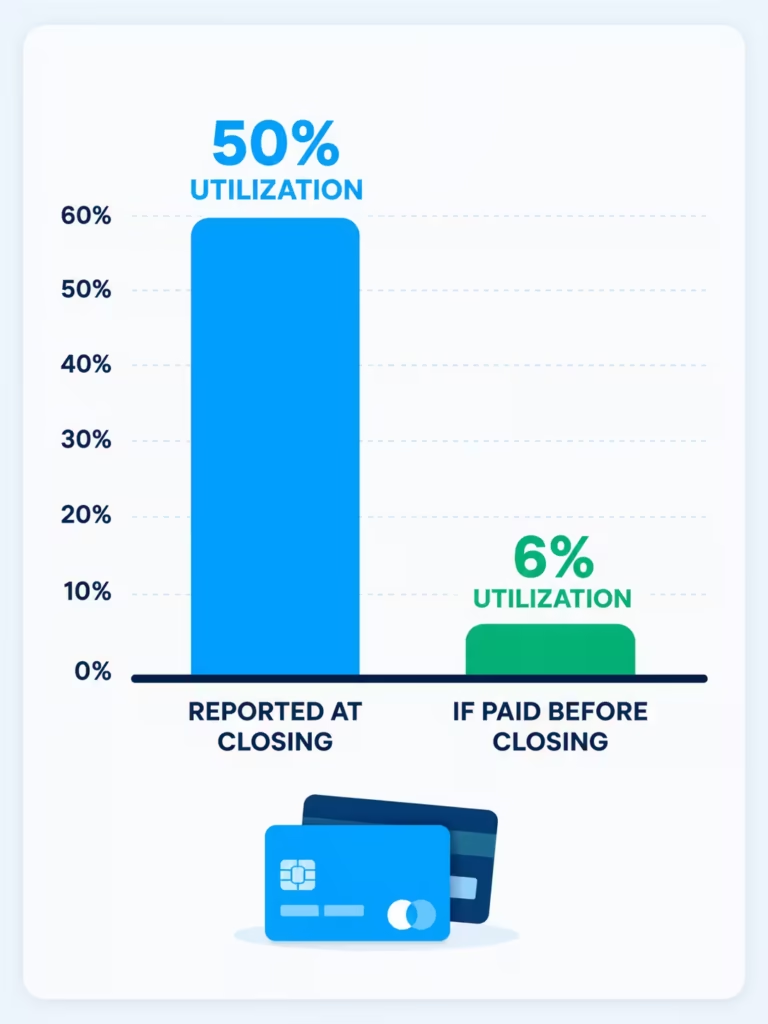
- June 5 (closing date): His statement balance is tallied at $2,500. His issuer reports a $2,500 balance to the bureaus, a 50% utilization ratio on this card.
- July 2 (due date): Michael pays the full $2,500. He owes no interest.
Now compare. Michael’s balance after payment is $0, but the balance the bureaus saw was $2,500. If he’d paid $2,200 on June 3, two days before closing, the reported figure would have been $300 instead, a 6% utilization ratio. Same spending, same full payment, very different number on his credit report.
When Issuers Report to Credit Bureaus
Most issuers report your balance at or shortly after your statement closing date, though the exact timing varies by issuer. Payments typically show up on your credit report around the end of the billing cycle.
The practical takeaway: your due date has no bearing on what’s already been reported. By the time your payment deadline arrives, the closing-date snapshot has usually been sitting on your credit report for weeks.
The Grace Period, Explained
The grace period is the interest-free window between your closing date and your due date. During this stretch, you can pay your statement balance in full and owe zero interest on your purchases.
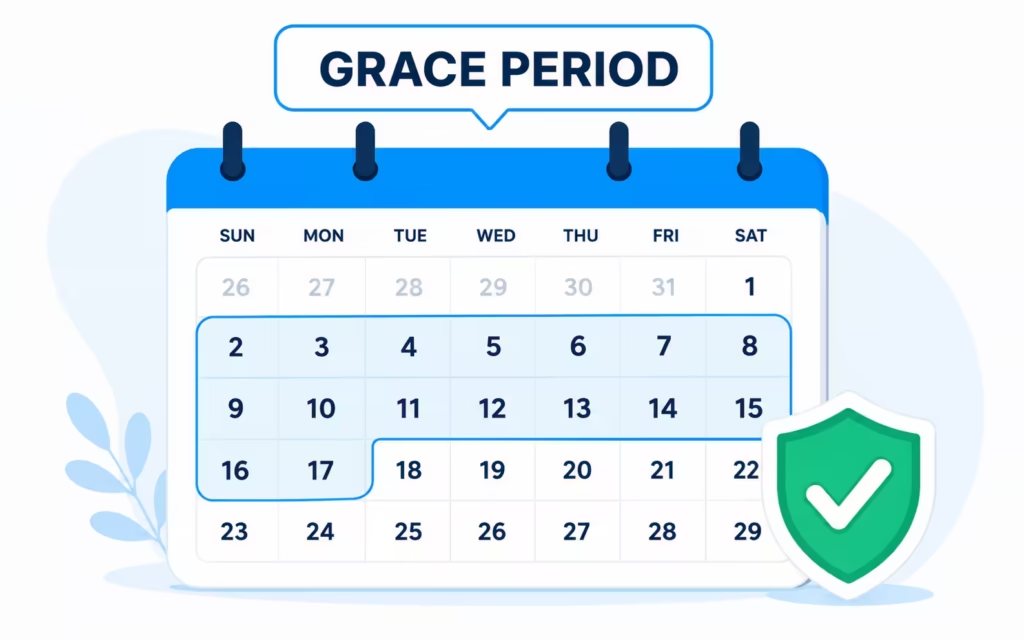
Federal law requires this window to be at least 21 days. That’s why your due date always sits at least three weeks after your statement closes.
There’s one condition that catches people off guard. The grace period only protects you if you paid your previous balance in full. If you carried a balance last month, new purchases can start accruing interest right away, and finance charges build daily until you pay the balance down. Paying only the minimum payment keeps your account in good standing, but it doesn’t stop interest accrual on the rest.
How to Use Your Closing Date to Lower Reported Utilization
Now the strategy. To boost your credit score, pay down your balance before the closing date. This balance is what the bureaus see, not just the due date.
When you pay early, the snapshot taken at closing shows a smaller number. That lowers the credit utilization ratio reported to the bureaus, which can lift your score within a cycle or two. The best approach is to keep the reported figure low. This is important because utilization is based on that snapshot, not on later payments.
This matters most in the months before you apply for new credit, like a mortgage, an auto loan, or a new card. A lender pulls your credit report as it stands on application day, so a lower reported balance works in your favor at exactly the right moment.
💡 Pro Tip: Set a calendar reminder three to four days before your closing date. Payments can take a day or two to post, and only posted payments reduce the balance that gets reported.
Timing Large Purchases Around Your Closing Date
The same logic works in reverse when you’re the one spending. A large purchase made right before your closing date lands on this cycle’s statement and spikes your reported utilization immediately.
Waiting a day changes everything. If you make that same purchase after the closing date, it rolls into the next cycle, and the higher balance won’t be reported for another month. That buys you roughly 30 extra days to pay it down before it ever touches your credit report.
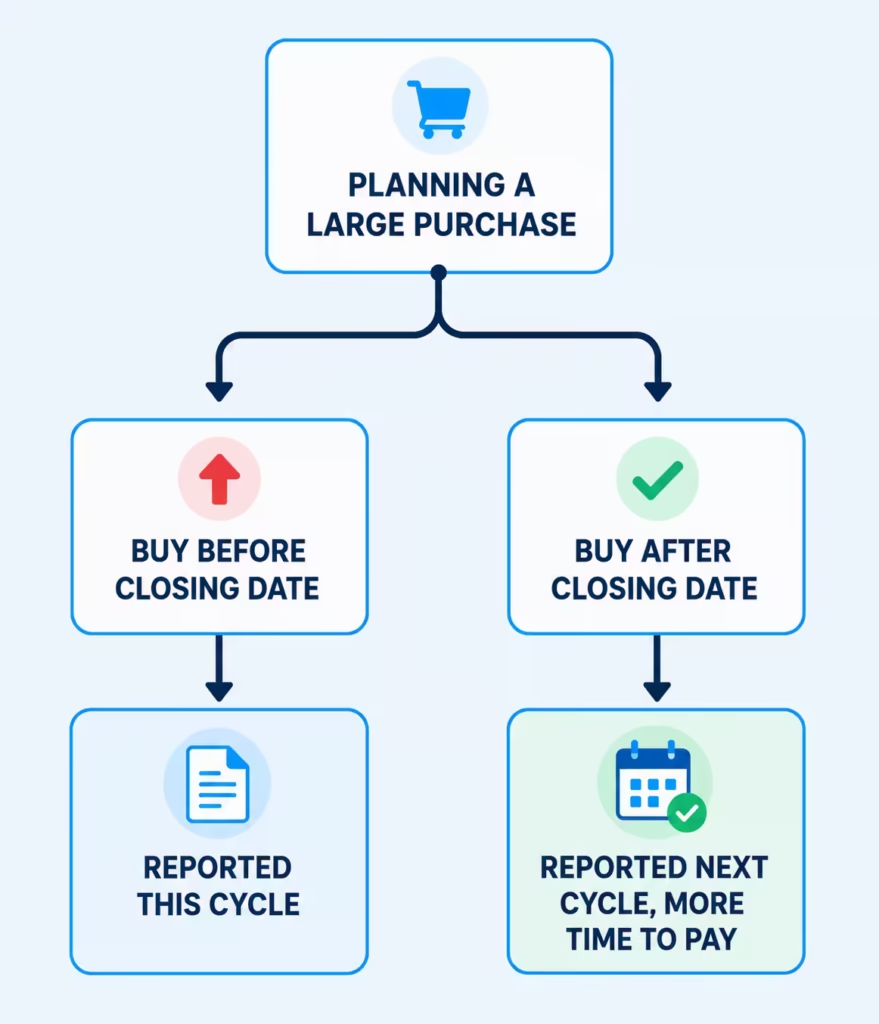
This timing trick is especially useful in the weeks before a credit application. If a big expense can wait a day or two, let it.
⚠️ Mistake to Avoid: Don’t charge a large purchase two days before closing and assume your on-time full payment will protect your score. The spike is reported before your payment ever happens. Pay the charge down before the cycle closes, or wait until it closes to buy.
Can You Change Your Credit Card Closing Date?
You usually can’t change the closing date directly, but there’s an easy workaround: it shifts automatically when you change your payment due date. Since the closing date and due date move together, picking a new due date repositions your whole billing cycle.
Requesting a change takes minutes. Most credit card issuers let you do it in the app or online account settings, and every issuer handles it by phone if you call the number on your card. Some issuers limit how often you can switch, such as once every few months, and the new date typically takes effect within one or two cycles.
Why bother? Two common reasons. First, aligning your due date with payday makes cash flow far easier to manage. Second, if you carry multiple cards, spacing their due dates apart keeps several bills from landing in the same week. Change the due date, and the closing date follows.
Frequently Asked Questions (FAQs)
What is the 3-day rule for credit cards?
There’s no universal “3-day rule” for credit cards. What matters is the 21-day grace period required by law between your closing date and due date, giving you at least three weeks to pay your statement balance without interest.
Is closing date the same as due date?
No, they’re different dates with different jobs. The closing date ends your billing cycle and creates your statement, while the due date is your deadline to pay, always at least 21 days later.
What happens if I make a purchase on my credit card closing date?
It depends on whether the transaction posts before or after the cutoff that day. If it posts before closing, it’s included in the current statement; if it posts after, it rolls into the next billing cycle.
Can I use my credit card 2 days before closing date?
Yes, but that purchase will be included in your current statement balance, which is what gets reported to the credit bureaus. If you’re trying to keep your reported utilization low, waiting until after the closing date keeps that charge off this cycle’s snapshot.
Should I pay my credit card on the closing date or before?
Paying before your closing date is smarter if you want a lower balance reported to the bureaus. Since the statement balance on your closing date typically becomes your reported utilization, paying it down beforehand can boost your score even before the due date arrives.
Is it bad to pay off a credit card before closing?
No, paying off your card before the closing date is a smart strategy, not a mistake. It lowers the balance your issuer reports to the bureaus, which can reduce your credit utilization ratio and improve your score.
Does it hurt your credit score if you pay early?
No, paying early doesn’t hurt your score and can actually help it. A lower balance at your statement closing date means a lower reported utilization ratio, which is a positive factor in your credit score.
How long after closing date is payment due?
Your due date falls at least 21 days after your closing date, as required by the Credit CARD Act of 2009. For example, if your statement closes on June 5, your payment would be due no earlier than June 26.
What’s the smartest way to pay off a credit card?
The best way to avoid interest is to pay your full balance by the due date. Also, pay down your balance before the closing date to lower your reported utilization. This two-step timing protects your wallet and your credit score at the same time.
Can you change your credit card closing date?
You can’t change the closing date directly, but changing your payment due date shifts it automatically since the two move together. Most issuers let you request a new due date online, by app, or by phone, with the change taking effect within one or two cycles.
Wrapping Up
Your closing date ends the billing cycle. It creates your statement and sets the balance reported to credit bureaus. Your due date shows when payment is due, which is at least 21 days later.
For most readers, the best way is to pay down the balance before the credit card closing date. This habit lowers reported utilization, even if the bill is paid in full later.
Check your statement or app tonight, find your date, and set one reminder. If you know someone working on their credit score, share this with them. It could be the simplest score boost they ever get.