
Juggling balances on two or more cards is exhausting. You track different due dates, watch interest pile up, and wonder if you will ever get ahead. If that sounds familiar, you have likely asked: What is credit card debt consolidation, and does it actually work?
Here is the short answer. It combines several card balances into one monthly payment, often at a lower rate, so you can pay debt down faster and with less stress.
This guide covers every option, the real costs, the effect on your credit score, and the one mistake that ruins most consolidation plans.
Key Takeaways
This guide explains what credit card debt consolidation is, including the main methods (balance transfer cards, personal loans, home equity products, and debt management plans), how each affects credit scores, and the mistake that causes most plans to fail.
Core Facts:
- Credit card debt consolidation combines multiple card balances into one monthly payment, usually at a lower interest rate, without reducing the total amount owed.
- Balance transfer cards offer a 0% interest period lasting 12 to 21 months but charge a transfer fee of 3% to 5% of the balance moved.
- Personal loan rates range from about 6% to 9% for excellent credit up to 28% or more for poor credit, plus a possible 1% to 8% origination fee.
- In a worked example, moving $10,000 from 24% APR cards to a 12% personal loan reduced total interest from about $4,000 to about $1,960.
- Debt management plans run through nonprofit credit counseling agencies, involve no new loan or hard credit check, and typically last three to five years.
- Consolidation differs from debt settlement: consolidation reorganizes the full balance at a lower rate, while settlement attempts to reduce the amount owed and carries more credit risk.
Best for:
- Borrowers whose new consolidation rate is meaningfully lower than their current card rates after accounting for fees.
- People with steady income and a manageable debt-to-income ratio who are ready to stop adding new card debt.
- Readers deciding between consolidation methods based on their current credit score range.
What Credit Card Debt Consolidation Means
Credit card debt consolidation means combining several card balances into a single monthly payment. Most people do this through a balance transfer card, a debt consolidation loan, or a debt management plan. The point is to trade many due dates and several interest rates for one payment and, usually, one lower rate.
Consolidation does not make the debt disappear. It restructures how the debt is owed. The balance stays the same. Only the shape of the repayment changes.
That detail matters because it separates consolidation from debt settlement. Settlement tries to cut the balance itself. Consolidation keeps the full balance but reorganizes it. Keep that difference in mind. It drives the entire decision.
How the Consolidation Process Works
Every method follows the same basic shape. First, you apply for a new account or a program. A lender or a credit counseling agency reviews your income, your debts, and your credit. If you are approved, the new funds or the plan pays off your card balances. Then you begin making one payment each month to the new lender or program.
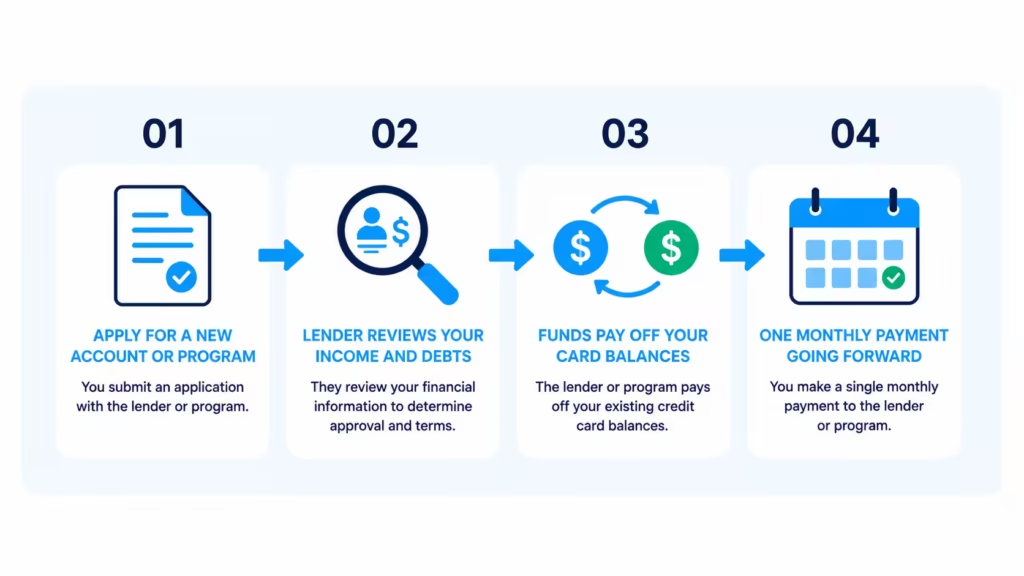
The benefit is structure. Instead of several interest rates, you track one. A lower interest rate means more of each payment goes toward the principal instead of interest.
The details do change by method. A balance transfer moves debt to a card with a temporary zero percent period. A personal loan pays the cards in full and replaces them with one fixed loan. A debt management plan sends one payment through an agency. The next sections explain how each one actually works.
Balance Transfer Credit Cards
A balance transfer card lets you move existing card debt onto a new card that charges zero percent interest for a set time. That window usually lasts from 12 to 21 months. While it lasts, every payment reduces the balance directly, because no interest is added.
The catch is the fee. Most cards charge a balance transfer fee of 3 percent to 5 percent of the amount moved. On a $6,000 balance, a 3 percent fee costs $180. That fee is usually worth it if you can clear the whole balance before the zero percent window ends. After the promotional period closes, the standard rate applies to whatever remains, and that rate can be steep.
You generally need good to excellent credit to qualify, often a score in the high 600s or above. Lenders also weigh your income and your existing debt.
Best fit: a borrower with strong credit and a firm plan to pay the balance in full before the promotion ends. Worst fit: someone who can only manage minimum payments and is likely to still owe money when the window closes.
⚠️ Mistake to Avoid: Paying only the minimum during the zero percent period is the classic error. The balance barely moves, and the full rate kicks in on what is left.
Debt Consolidation Loans (Personal Loans)
A debt consolidation loan is usually an unsecured personal loan. You borrow one lump sum, use it to pay off your cards, and repay the loan in fixed monthly installments over a set term, often two to five years. This turns revolving credit into installment debt with a clear end date.
Your rate depends heavily on your credit. Borrowers with excellent credit may see rates around 6 percent to 9 percent. People with poor credit can face rates of 28 percent or more. Many lenders also charge an origination fee, often 1 percent to 8 percent of the loan amount, taken out before you get the funds.
Lenders typically look for a credit score around 600 to 640 or higher and a debt-to-income ratio they consider manageable. The fixed payment and fixed end date make this the most predictable option of the bunch.
Home Equity Loans and HELOCs
A home equity loan or a home equity line of credit, or HELOC, borrows against the value you own in your home. The money pays off the cards, and you repay the new loan over a long term.
Rates run lower than credit cards and unsecured loans because the home backs the debt. That same backing is the biggest risk. If you fail to repay, the lender can move toward foreclosure.
With an unsecured card or personal loan, a missed payment hurts your credit but does not directly threaten your house. Trading unsecured card debt for secured home debt is a real tradeoff.
This option fits a homeowner with enough equity, steady income, and a clear understanding that the home is on the line.
Debt Management Plans Through Credit Counseling
A debt management plan, or DMP, works through a nonprofit credit counseling agency. The agency talks to your card issuers and tries to lower your interest rates and set a fixed monthly payment. You send one payment to the agency each month, and the agency distributes the money to your creditors.
There is no new loan and no hard credit check. Most plans run three to five years. The goal is a lower interest rate and a payment you can actually keep up with.
Two points matter before you commit. Missing payments on the plan can cost you the negotiated benefits. Leaving the plan early usually brings the old rates and terms back. A DMP is a commitment, not a quick fix.
How Debt Consolidation Differs From Debt Settlement
These two ideas get mixed up constantly, but they are not the same thing.
Consolidation restructures debt. You keep the full balance and reorganize it into fewer payments, usually at a lower rate. Over time, your credit can improve because you are paying down what you owe on schedule.
Debt settlement negotiates the balance down. The Consumer Financial Protection Bureau explains that a settlement company often asks you to stop paying your creditors and save toward a lump sum instead. That can mean fees and interest keep adding up, your credit takes more damage, and collection efforts or even lawsuits become possible.
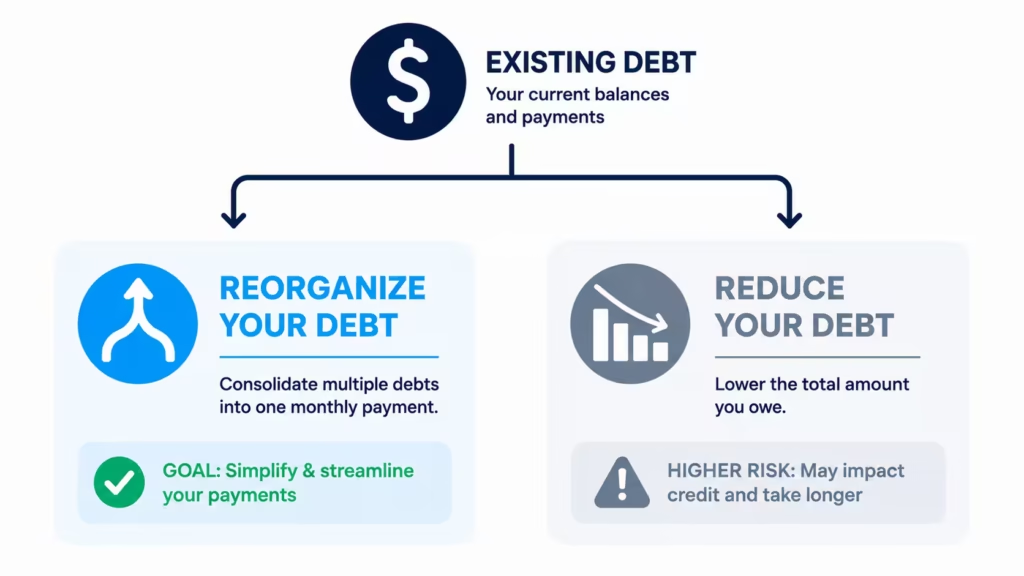
Settlement tries to cut what you owe and carries serious credit risk. Consolidation keeps what you owe but reorganizes it. Mistaking settlement for consolidation is the fastest way to sign up for something you did not intend.
Which Consolidation Method Fits Your Credit Profile
Your credit score points you toward the options that are actually open to you.
| Credit score range | Realistic options |
|---|---|
| Roughly 690 and above | Balance transfer cards, low-rate personal loans |
| Roughly 620 to 689 | Personal loans at higher rates, home equity if you own |
| Below about 620 | Debt management plan |
Excellent or good credit unlocks the cheapest paths: balance transfer cards and low-rate loans. Fair credit can still find personal loans, though at higher rates, and home equity may be worth comparing for homeowners.
Poor credit makes new loans and cards hard to get, which is why a debt management plan often becomes the most realistic route. It does not require a high FICO score or a fresh loan.
Your score is not the only factor. Lenders also weigh income against debt.
Credit Score and DTI Requirements
Different paths have different entry points. Personal loans usually need a score around 600 to 640 or higher. Balance transfer cards often want roughly 690 or more. A debt management plan has no credit score minimum.
Most lenders also prefer a debt-to-income ratio, or DTI, below 40 percent to 43 percent. That is the share of monthly income that goes to debt payments.
To calculate yours, add up your monthly debt payments and divide that by your gross monthly income. If rent, a car loan, and card minimums total $2,000 and your gross pay is $5,000, your DTI is 40 percent. A lower number improves your odds.
Will Consolidation Actually Save You Money
This is the question that matters most. The answer depends on the gap between your current rate and the new one, minus the fees you pay to move.
Here is a worked example: Suppose you owe $10,000 on cards at 24 percent and pay $400 a month. You would clear it in about 35 months and pay roughly $4,000 in interest.
Move that same $10,000 to a personal loan at 12 percent over 36 months, and the payment drops to about $332 a month with around $1,960 in total interest.
| Item | Cards at 24% | Loan at 12% |
|---|---|---|
| Balance | $10,000 | $10,000 |
| Monthly payment | $400 | about $332 |
| Time to pay off | about 35 months | 36 months |
| Total interest | about $4,000 | about $1,960 |
That is more than $2,000 saved, along with a lower monthly payment.
Now the contrast. If your cards sit at 22 percent and a new loan is 20 percent with a 4 percent origination fee on $10,000, that fee alone is $400. A two-point rate gap may not beat it. Consolidation makes sense when the rate drop is meaningful, not when it is marginal.
Federal Reserve data shows card accounts that are actually charged interest averaged about 22.15 percent as of June 2026, while a two-year bank personal loan averaged about 11.86 percent. A gap that size is worth chasing. A gap of one or two points usually is not. Always add the fees to the math, not just the rate.
💡 Pro Tip: Ask the lender for the loan’s total cost, including every fee, before you decide. The rate alone is not the whole price.
How Consolidation Affects Your Credit Score
Consolidation touches your score twice: a small dip up front, then a real climb if you stick with the plan. Understanding why makes the dip far less scary.
Short-Term Impact
When you apply, the lender runs a hard credit inquiry, which can shave a few points off your score. That drop is small and passes quickly. The new account also lowers the average age of your accounts, another modest and short-lived effect. Neither one is lasting damage.
Long-Term Impact
The long-term picture is better. Paying down your cards lowers your credit utilization ratio, which is the share of your available limit that you are using. That factor carries real weight in your score. A personal loan also adds an installment account to your mix, showing lenders you can handle different kinds of credit. Every on-time payment on the new plan builds positive history.
📌 Did You Know: Paying cards down before the statement close date can lower the balance that gets reported, which may help your score faster.
Risks and Common Mistakes
The single biggest way consolidation fails is running the balances back up. You pay off the cards, they sit at zero, and the open credit starts to feel like free money. It is not. Charge them up again, and you now carry the new loan payment plus fresh card debt, leaving yourself worse off than before.
Take Jenna, a marketing coordinator who consolidated $8,400 of card debt into a personal loan. Two months later, she used the freed-up cards for a $3,100 trip. Within six months, the loan remained, and nearly half the card balance had returned.
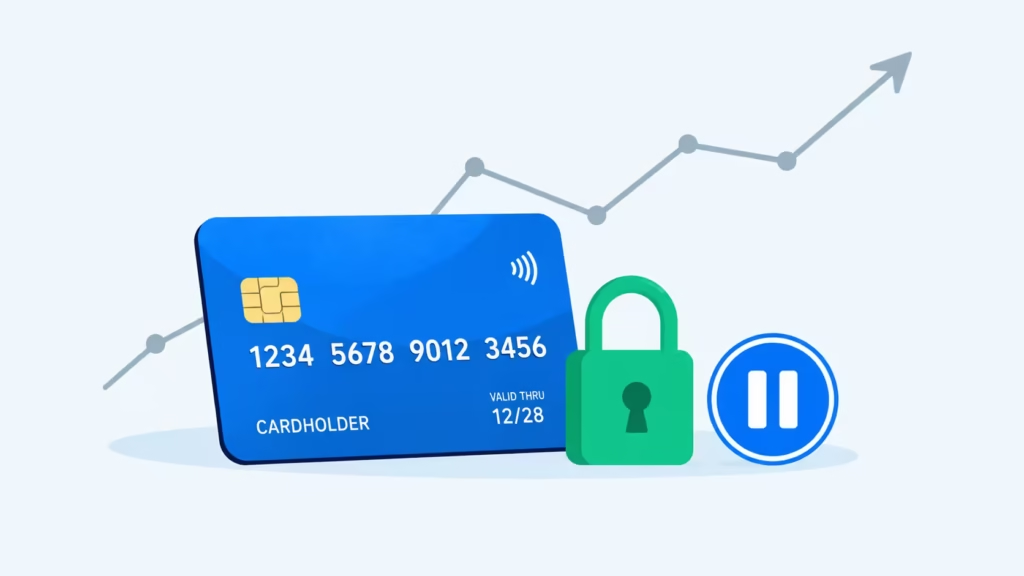
The fix is simple and should come before the temptation. After balances clear, close some cards, freeze others, or stop carrying them. Keep one card for regular spending and pay it in full each month.
Two smaller traps follow. A rate cut too small to beat the fees is not worth the paperwork. And if you enter a debt management or settlement program, missing payments can end the benefits and restart the trouble you were trying to escape.
How to Decide If Consolidation Is Right for You
Consolidation fits when three things line up: the new rate is meaningfully lower than what you pay now, your income is steady, and your debt-to-income ratio supports a new payment. Most importantly, you must be ready to stop adding new card debt. If all three hold, the plan has a real chance to work.
It is not the right move yet when the rate drop is tiny, your income is unsteady, or overspending is still the root cause. Restructuring does not fix spending. It only changes where the debt lives.
A credit score on the lower end may also push you toward a debt management plan instead of a loan. If consolidation does not fit, you still have options.
Alternatives to Consolidation
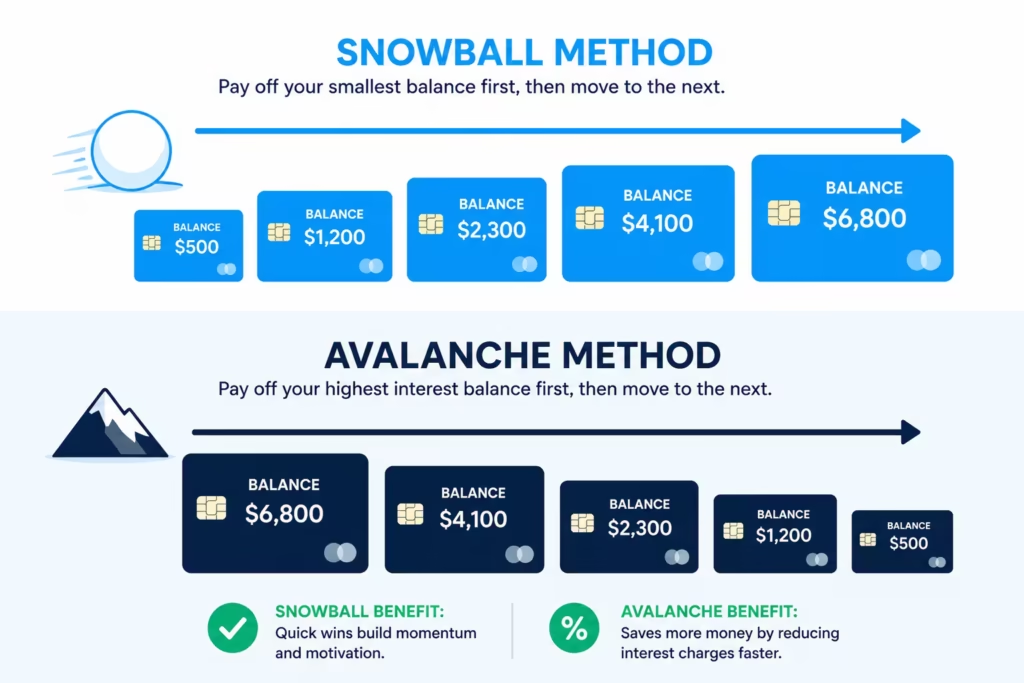
Consolidation is not the only way out. Two payoff strategies work with the cards you already hold, with no new loan, no hard credit inquiry, and no fees. They are the debt snowball and the debt avalanche.
The Debt Snowball Method
List every card from the smallest balance to the largest. Pay the minimum on all of them, then send every extra dollar to the smallest balance. When the smallest card hits zero, roll its payment onto the next smallest. The list shrinks fast, and each paid-off card works as a small win that keeps you going.
Marcus carries three cards at $1,800, $4,200, and $9,600. He adds $250 a month toward the $1,800 card. That card clears in about seven months, and the win frees up more money to attack the next one.
The snowball fits people who need momentum. It runs on psychology more than math, because the first victories come quickly.
The Debt Avalanche Method
List every card from the highest interest rate to the lowest. Pay the minimum on all of them, then send every extra dollar to the highest-rate card first. This order costs the least in total interest.
With those same three cards, if the $9,600 card charges 26 percent while the small one charges 16 percent, the avalanche targets the $9,600 card first. It is the most expensive debt to hold.
The avalanche saves the most money, but it tests patience. When the highest-rate balance is also the largest, you may not feel a win for a long while.
How to Choose
Pick the snowball when early motivation matters more than a few dollars of interest. Pick the avalanche when you want the lowest total cost and can stay disciplined without quick wins. Both keep you in full control and add no new accounts.
Snowball and avalanche differ from consolidation in one key way. Consolidation lowers the interest rate, which is where its power comes from. These two strategies do not change your rates at all. They only change the order in which you attack the debt. That is why they fit smaller balances or a credit profile that does not yet qualify for a better rate.
What to Expect During the Application and Approval Process
Once you choose a path, the process follows a standard pattern. You will usually need proof of identity, proof of income such as pay stubs, and a list of your current balances and payments.
Many lenders offer a prequalification check first. It uses a soft inquiry and gives you an estimate without hurting your credit score. The full application then triggers a hard credit inquiry. Approval can take anywhere from minutes to a few days, depending on the lender.
After approval, the new loan or card pays off your old balances, either directly to your card issuers or through a check you apply yourself. Confirm every old account reports a zero balance so nothing slips through unnoticed.
How Long Consolidation Takes
Consolidation runs on two clocks. The first is setup time, or how long it takes to get approved and funded. The second is payoff time, or how long you carry the new payment. Knowing both ends helps you plan instead of guessing.
Setup times vary by method. A balance transfer card often takes one to three weeks from application to the balances being moved. A personal loan can be approved the same day, with funds arriving in a few business days, though some lenders take up to a week.
A home equity loan or HELOC usually takes a long time. It can take several weeks to over two months. This delay happens because the lender needs to appraise the home and underwrite the loan. A debt management plan takes a few weeks to about a month while the agency negotiates with your creditors.
Payoff times differ just as much. A balance transfer targets the zero percent window, usually 12 to 21 months, as the deadline to clear the full balance.
A personal loan runs its term, often two to five years. A home equity product can stretch to 10 or 15 years, which is why the goal should be to pay it down well before then. A debt management plan typically runs three to five years.
| Method | Setup time | Payoff time |
|---|---|---|
| Balance transfer card | 1 to 3 weeks | 12 to 21 months (the 0% window) |
| Personal loan | Same day to about a week | 2 to 5 years |
| Home equity loan or HELOC | Several weeks to 2+ months | Often 10 to 15 years |
| Debt management plan | A few weeks to about a month | 3 to 5 years |
The fastest setup comes from a personal loan or a balance transfer. The fastest full payoff, though, is whichever plan you actually complete on schedule.
Frequently Asked Questions (FAQs)
Is it better to pay off credit card debt or consolidate it?
Consolidation makes sense only if the new rate is meaningfully lower than your current rate after fees, your income is steady, and you stop adding new card debt. If those three don’t line up, working directly on your existing cards may be the better path.
What is the downside to debt consolidation?
The biggest risk is running your credit cards back up once they’re paid off and sitting at zero. One case in the article involved an $8,400 consolidation followed by $3,100 in new card spending within two months, leaving the borrower with both a loan payment and fresh card debt.
Does debt consolidation hurt your credit score?
It causes a small, short-lived dip from the hard credit inquiry and a lower average account age. Over time, scores typically improve as utilization drops and on-time payments build positive history on the new account.
Why does Dave Ramsey say not to consolidate debt?
Ramsey’s core objection is that consolidation reorganizes debt without fixing the spending habits that created it. The article backs this up: restructuring only changes where debt lives, not why it built up, so unresolved overspending can lead to the cards filling back up.
How long does debt consolidation take to set up?
Setup time varies by method: a personal loan can fund in as little as a day to a week, a balance transfer takes 1 to 3 weeks, and a home equity loan can take several weeks to over two months due to appraisal and underwriting.
What credit score do I need to qualify for debt consolidation?
Personal loans typically require a score of 600 to 640 or higher, while balance transfer cards usually require 690 or higher. A debt management plan has no credit score minimum, making it the most accessible option for lower scores.
How much can debt consolidation actually save you?
In one example, moving $10,000 from 24% APR cards to a 12% personal loan cut total interest from about $4,000 to about $1,960, a savings of over $2,000. Savings shrink or disappear when the rate gap is small, or fees are high, so the math should always include fees.
What’s the difference between debt consolidation and debt settlement?
Consolidation keeps your full balance but reorganizes it into one payment, usually at a lower rate. Debt settlement instead tries to reduce what you owe, often by having you stop paying creditors while fees and interest continue to accrue, which carries more credit risk.
What’s the fastest way to pay off credit card debt without a new loan?
The debt snowball pays off the smallest balance first for quick motivational wins, while the debt avalanche targets the highest interest rate first to minimize total interest paid. Neither requires a new account, a hard credit inquiry, or fees.
Wrapping Up
Consolidation succeeds when the math and the habits both support it. This guide explained credit card debt consolidation. It discussed the main methods, short- and long-term credit effects, real costs, and the common mistake that catches many people off guard.
The best way is to secure a lower rate. Keep paid-off cards closed or frozen. Then, follow a fixed payoff plan. Do that, and consolidation works as intended.
If this helped, share it with someone juggling multiple card balances. A friend staring at several due dates each month may be one clear plan away from paying off their debt faster.