
If you’re falling behind on credit card payments, or you can already feel the balances slipping out of reach, we understand how heavy that stress can be. You may have seen ads promising to wipe out debt for “pennies on the dollar,” and now you’re wondering if credit card debt settlement is a real fix or just another trap. It’s a fair question, and the answer matters for your money and your credit.
Credit card debt settlement involves negotiating with your creditor. You or a company can agree to pay a lower lump sum. The rest of your balance is then forgiven.
In this guide, we’ll walk you through how the process actually works, what it costs, how it hits your credit, and how to tell a real service from a scam.
Key Takeaways
This guide explains what credit card debt settlement is, including how the negotiation process works, typical settlement percentages, credit score and tax consequences, and how to identify a legitimate versus predatory settlement company.
Core Facts:
- Credit card debt settlement is a negotiated agreement where a creditor accepts a lower lump sum payment and forgives the remaining balance, then closes the account.
- Settlement negotiations typically begin once an account is 90 to 180 days past due, since creditors rarely reduce a balance on a current account.
- Realistic settlements usually fall between 40% and 60% of the original balance, depending on the debt’s age and the creditor’s policies.
- Debt settlement companies generally charge fees of 15% to 25% of enrolled debt, and under FTC rules, cannot charge upfront fees before settling at least one debt.
- The “settled” status stays on a credit report for 7 years from the date of first delinquency, and scores typically recover within 12 to 24 months after settlement.
- Forgiven debt of $600 or more is generally treated as taxable income by the IRS and reported on Form 1099-C, unless an insolvency exception applies.
Best for:
- People with unsecured debt too high to repay within about five years who are already 90 or more days behind on payments.
- Readers weighing debt settlement against alternatives like consolidation, credit counseling, or bankruptcy before choosing a path.
- Anyone trying to distinguish a legitimate settlement company from a scam before enrolling or paying any fees.
What Credit Card Debt Settlement Means
Credit card debt settlement is a deal between you and your credit card company. You pay less than the full balance you owe. In return, the creditor agrees to forgive the rest and close the account. It’s not a payment plan. It’s not a lower interest rate. It’s the creditor accepting partial payment as full and final resolution.
Here’s a simple example. Say you owe $10,000 on a maxed-out card. You can’t keep up with the minimums. You offer $6,000 as a one-time payment. If the creditor agrees, you send $6,000, and the remaining $4,000 is wiped away. That’s a settled account.
Three parties usually start this process. The cardholder can call the creditor directly and ask to negotiate. A debt settlement company can be hired to do it for you. Or a collections agency, after buying or being assigned your debt, may offer a reduced payoff on its own.
Once the deal closes, your account shows up on your credit report as “settled” or “settled for less than the full balance.” This is different from “paid in full.” It signals to future lenders that you didn’t repay the original amount. The account is also closed, so you can’t use the card again.
Most settlements are paid as a lump sum. You save up cash, then pay it all at once when the creditor agrees. Some creditors allow structured payment plans over several months. However, lump sums often receive the biggest discount. This is because creditors prefer quick cash.
💡 Pro Tip: Always get the settlement offer in writing before you send a single dollar. A verbal promise from a call-center rep won’t protect you if the paperwork later shows the wrong amount or missing “account closed” language.
How the Credit Card Debt Settlement Process Works
The debt settlement process rarely starts with a phone call. It usually starts with missed payments. Understanding the full sequence helps you know what to expect and what could go wrong along the way.
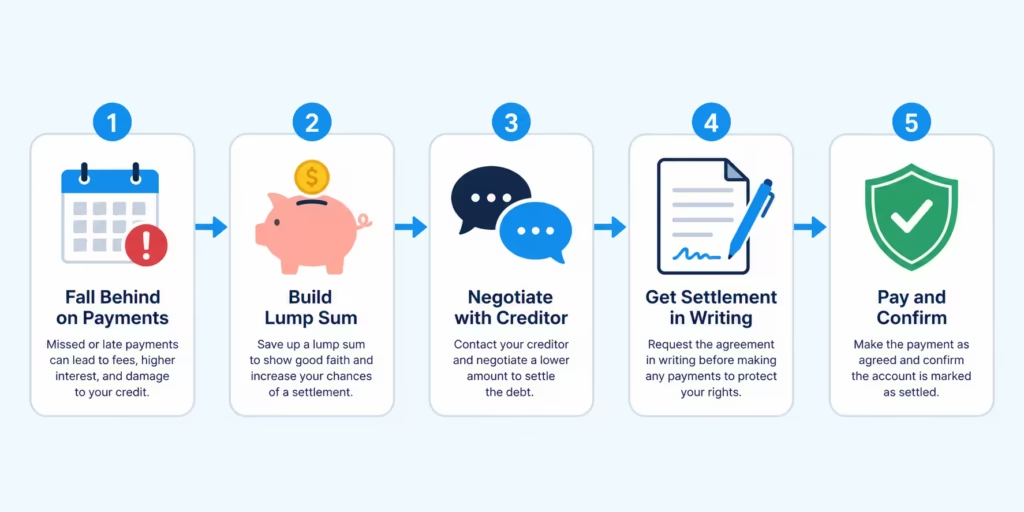
Step one is falling behind. Most creditors won’t discuss reducing a balance while the account is current. They have no reason to. You’re still paying, so the debt still has full value to them. Settlement talks typically start when an account is 90 to 180 days overdue. They often happen after the account is “charged off.” This means the creditor considers it a loss.
Step two is building the lump sum. You need real cash to make a real offer. If you’re doing this yourself, you set aside money each month in a separate savings account. If you use a debt settlement company, that money usually goes into a dedicated escrow account in your name, not the company’s. You keep control of the funds until a settlement is reached.
Step three is the negotiation. You (or the company) call the creditor or collector and make an offer. First offers are often rejected. Counteroffers go back and forth. A realistic settlement usually falls between 40% and 60% of the original balance. The exact amount varies based on the debt’s age, the creditor’s policies, and how much cash you can offer.
Step four is getting the settlement letter in writing. This is the most important document in the entire process. It must state the amount you’re paying, that this amount fully resolves the debt, and that the account will be reported as “settled” and closed. Never wire money based on a verbal deal.
Step five is payment and confirmation. You send the agreed amount by the deadline. After 30 to 60 days, pull your credit report and confirm the account shows “settled” with a $0 balance. Keep the settlement letter and payment proof for at least seven years in case a collector ever tries to revive the debt.
Why You Often Have to Stop Paying First
This part surprises people the most. A creditor usually won’t negotiate while you’re still paying, even the minimum. From their view, if payments keep coming, the account is performing. Why would they take less?
Negotiation power comes from the creditor’s fear of getting nothing at all. When an account is seriously delinquent, usually 90 to 180 days late, the creditor gets concerned. They fear the debt might be written off, sold to a collector for a small amount, or lost in bankruptcy. That fear is your leverage.
This creates a hard tradeoff. To create the leverage you need, you often have to stop paying, which itself damages your credit and can trigger collection calls. Some debt settlement companies tell clients to stop paying right after they enroll. This is why many people see their credit scores drop unexpectedly.
Risk of Being Sued While You Save
While you’re saving for a lump sum, the debt doesn’t sit quietly. Creditors and collectors can, and sometimes do, file a lawsuit for the full balance.
If you’re sued, you’ll be “served” with a court summons, either in person or by mail depending on state rules. You typically have 20 to 30 days to respond. Ignoring the summons is the worst move. A default judgment can lead to wage garnishment, a bank levy, or a lien, depending on where you live.
This is why record-keeping matters. Save every letter, every settlement offer, and every payment confirmation. If you’re sued, having a clean paper trail of your negotiation efforts can help your attorney or you personally respond in court.
⚠️ Mistake to Avoid: Don’t ignore court papers hoping the problem will pass. A default judgment turns a negotiable debt into a court order that follows you for years and can drain your paycheck directly.
Who Actually Qualifies for Credit Card Debt Settlement
Not everyone is a fit for settlement. Before you commit, run through a short qualification check to see if the math and the situation actually work in your favor.
The first requirement is delinquency, or being close to it. Creditors negotiate seriously when the account is already 90 to 180 days past due. If you’re current and can keep paying, most creditors will simply tell you to keep paying.
The second requirement is the type of debt. Settlement works on unsecured debt. That means credit cards, personal loans, medical bills, and some old private student loans. Secured debts, like your mortgage or auto loan, are backed by property. The lender can take the house or the car instead of settling. Federal student loans and most tax debts follow their own rules and aren’t candidates for standard settlement.
The third requirement is cash. A settlement needs a real lump sum, or at least enough monthly savings to fund one within a reasonable time. If you can’t save a meaningful amount each month, your settlement will stall. The credit damage will keep piling up, and nothing will get resolved.
Settlement is unlikely to work if the debt is small enough that you could pay it off in 12 to 24 months through a budget or a balance transfer. It’s also a poor fit if your income is so unstable that you can’t reliably save, or if you’re already being sued and a judgment is imminent. In that last case, a bankruptcy attorney is a smarter first call.
DIY Settlement vs. Using a Debt Settlement Company
You have two realistic paths to settle: negotiate on your own, or hire a company to do it. Each has real tradeoffs.
DIY settlement means you call the creditor yourself, make offers, counter, and finalize the paperwork. It costs nothing beyond the settlement itself. You keep every dollar the creditor forgives. The downside is time and stress. You’ll be on hold for hours. The reps are trained to reject first offers. Plus, you’ll have to handle the stress of negotiating your own debt.
A debt settlement company handles those calls for you. You send monthly deposits into an escrow-style account, and once enough money builds up, the company negotiates with each creditor. In exchange, the company charges a fee, usually a percentage of the debt you enrolled in or the amount they saved you.
DIY tends to make sense when you have one or two accounts, you’re comfortable on the phone, and you have the discipline to save on your own. It’s also the right pick when the balances are small, because company fees can eat most of the savings on a small debt.
A company makes sense if you have four or more accounts with different creditors. It’s helpful when the total balance is high enough that pro negotiation could save you money. It’s also a good option if you can’t manage the calls yourself.
Just remember that the FTC prohibits legitimate telemarketed debt relief firms from charging fees before a settlement is actually reached, per the FTC’s Telemarketing Sales Rule.
| Feature | DIY Settlement | Settlement Company |
|---|---|---|
| Cost | $0 in fees | 15% to 25% of enrolled debt |
| Time investment | High (you make the calls) | Low (they handle calls) |
| Best for | 1–2 accounts, confident negotiator | Multiple accounts, high total balance |
| Fee timing | None | Only after each settlement |
| Control | Full | Shared with the company |
How Much Credit Card Debt Settlement Costs
The cost of settlement has two parts: the settlement amount itself, and any fees paid to a settlement company.
If you go the DIY route, your only cost is the lump sum you agree to pay. If a $10,000 balance settles for $6,000, your total out-of-pocket is $6,000. No fee. No commission. The forgiven $4,000 goes straight to your benefit (before taxes, which we’ll get to).
If you use a settlement company, expect fees in the range of 15% to 25% of enrolled debt or of the savings, depending on the state and the company’s fee model. Here’s what that looks like in practice. Say you enroll $20,000 across three cards.
The company settles them all for a total of $11,000. With a 20% fee on enrolled debt, you’d pay the company $4,000 on top of the $11,000. Your total cash out is $15,000, and you saved $5,000 versus paying in full, before taxes.
A crucial rule protects you here. Under the FTC’s advance fee ban, a for-profit debt settlement company can’t charge you until they settle or reduce at least one of your debts. You must also make a payment based on that agreement. Any company asking for money upfront is violating federal rules, according to the FTC.
You should also budget for indirect costs. Late fees and interest keep piling on during the months you’re saving. And if a lawsuit is filed, you may need to pay a consumer attorney to respond.
How Debt Settlement Affects Your Credit Score
Settlement damages your credit, and it’s important to understand exactly how much and for how long.
The biggest hit usually comes before the settlement itself. Missing payments cause the largest drop. A single 30-day late payment can knock 60 to 110 points off a good score. By the time you’re 180 days late and the account is charged off, the total drop can easily exceed 100 to 150 points, depending on where your score started.
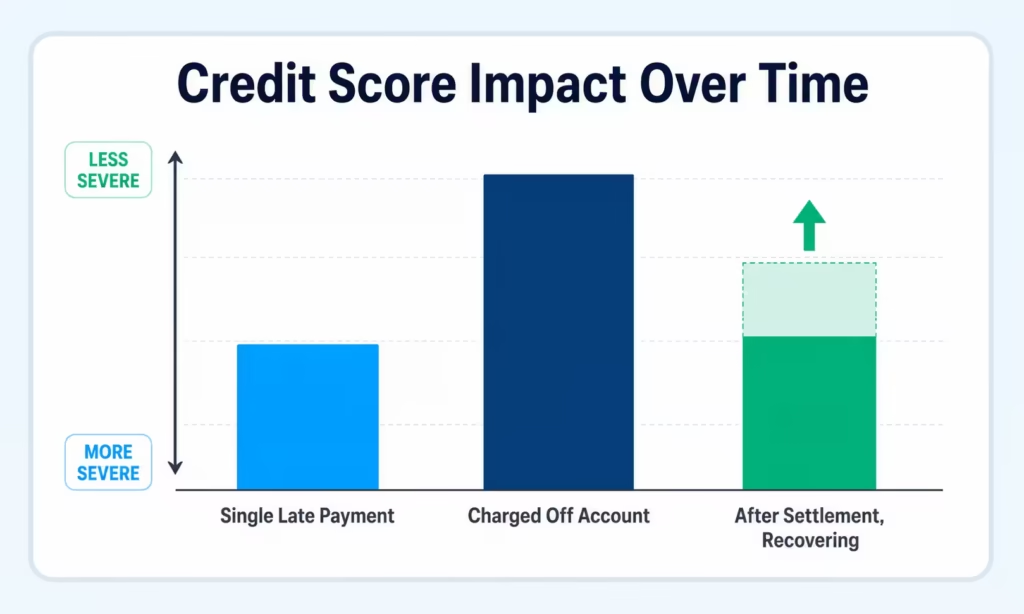
Once the account settles, the status changes from “charged off” to “settled” or “settled for less than the full balance.” That’s still a negative mark, but it signals resolution. The mark itself stays on your credit report for seven years from the date of first delinquency, per federal credit reporting rules.
Two credit factors get hit hardest. Payment history takes the biggest blow, because it’s the largest factor in your FICO score and every missed payment is recorded. Credit utilization also spikes as balances grow and available credit shrinks after the account is closed.
The damage isn’t permanent. Scores typically bounce back within 12 to 24 months after settlement. This is true if you keep other accounts up to date and lower usage on any remaining cards.
What “Settled” Status Looks Like on Your Report
The wording on your credit report matters more than most people realize. After settlement, the account will typically read “Settled,” “Settled for less than the full balance,” “Account paid in full for less than the full balance,” or “Charged off, settled.”
To a future lender, “settled” is not the same as “paid in full.” It shows that you couldn’t repay the original amount agreed to. Mortgage underwriters, auto lenders, and even some landlords look at this closely. Some may require an explanation letter. Some may still approve you, but at higher rates.
The account is also closed after settlement. You can’t reopen it or use the card again, even if it was your oldest account. That closure can shorten your average credit age, which is another small hit to your score.
Tax Consequences of Settled Credit Card Debt
Forgiven debt is one of the most overlooked costs of settlement. The IRS generally treats canceled debt as taxable income.
When a creditor forgives $600 or more, they’re required to send you a Form 1099-C, Cancellation of Debt, and file a copy with the IRS. Even if you don’t receive the form, the IRS still expects you to report the forgiven amount as gross income unless an exception applies.
Here’s a concrete example: Sarah, a 38-year-old operations manager, owed $18,000 across two cards. She settled them for $9,500 total. Her creditor forgave $8,500. If Sarah is in the 22% federal tax bracket, she could owe roughly $1,870 in extra federal income tax that year, plus any state tax that applies. That amount lands as a real bill on her next return.
There’s an important exception called insolvency. If your total debts were greater than your total assets right before the debt was canceled, you can exclude some or all of the forgiven amount from income.
To claim it, you file IRS Form 982 with your return and keep documentation of your assets and liabilities on the cancellation date. This exception saves many settlement clients from a painful surprise, but it takes careful math, so working with a tax preparer is smart.
📌 Did You Know: Even if your creditor doesn’t mail you a 1099-C, the IRS may still have a copy on file. Skipping the report doesn’t mean the tax disappears. It usually means a letter from the IRS a year or two later, with penalties added on.
How to Spot a Credit Card Debt Settlement Scam
The debt settlement industry has legitimate operators and predatory ones. Knowing the red flags protects your money and your credit.
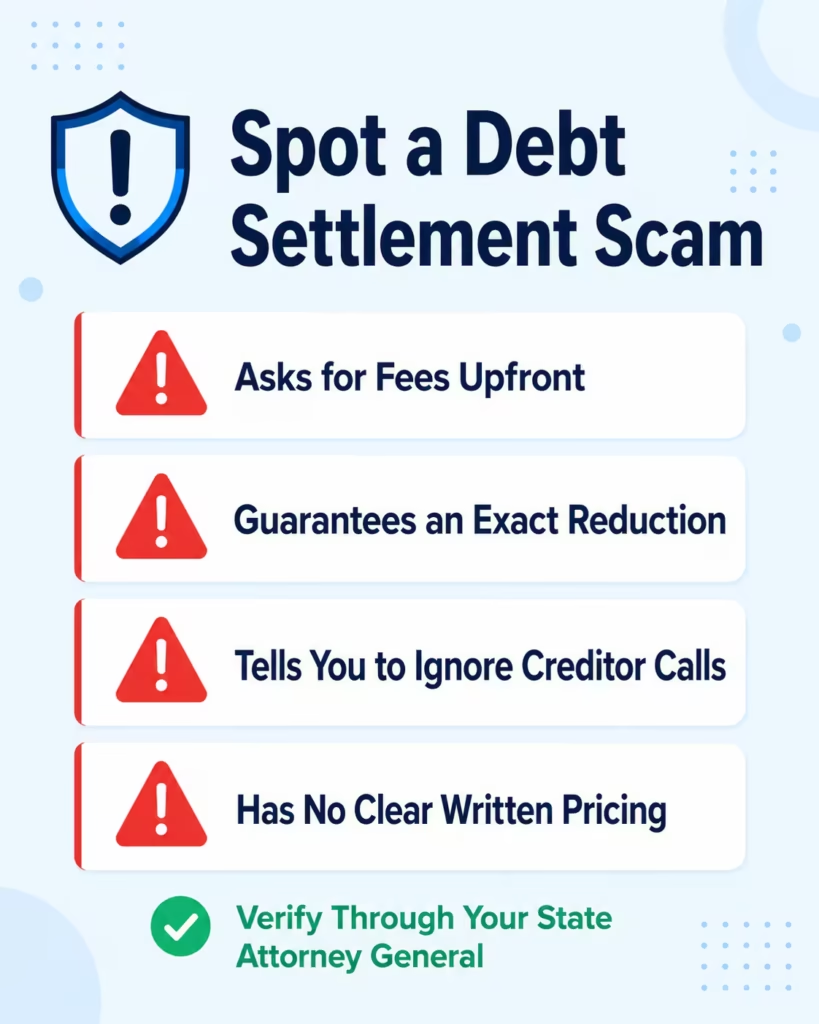
The biggest red flag is upfront fees. Any for-profit company that sells debt relief over the phone and asks for a fee before settling any of your debts is breaking federal law. The FTC’s Telemarketing Sales Rule makes this clear. If a rep says “we just need a $500 enrollment fee to get started,” hang up.
Another red flag is any guarantee of a specific reduction. Legitimate negotiators can quote typical ranges, but nobody can guarantee a creditor will accept 40 cents on the dollar. Creditors decide case by case. Anyone promising an exact percentage is either misleading you or planning to.
Pressure to stop all creditor contact is a third warning sign. A scam company will tell you to ignore every call and letter, sometimes even court summons. That advice can turn a manageable situation into a default judgment against you. A real firm helps you triage the mail, not hide from it.
Vague pricing is another tell. If you can’t get a clear, written fee schedule before signing anything, walk away. The same goes for missing licenses. Many states require debt settlement companies to be registered. Verify status through your state attorney general’s office.
To confirm legitimacy, cross-check the company against three sources. Look up complaints and enforcement actions in the CFPB’s consumer complaint database. Check the FTC for recent actions. Finally, contact your state attorney general to confirm the license.
Debt Settlement Compared to Other Debt Relief Options
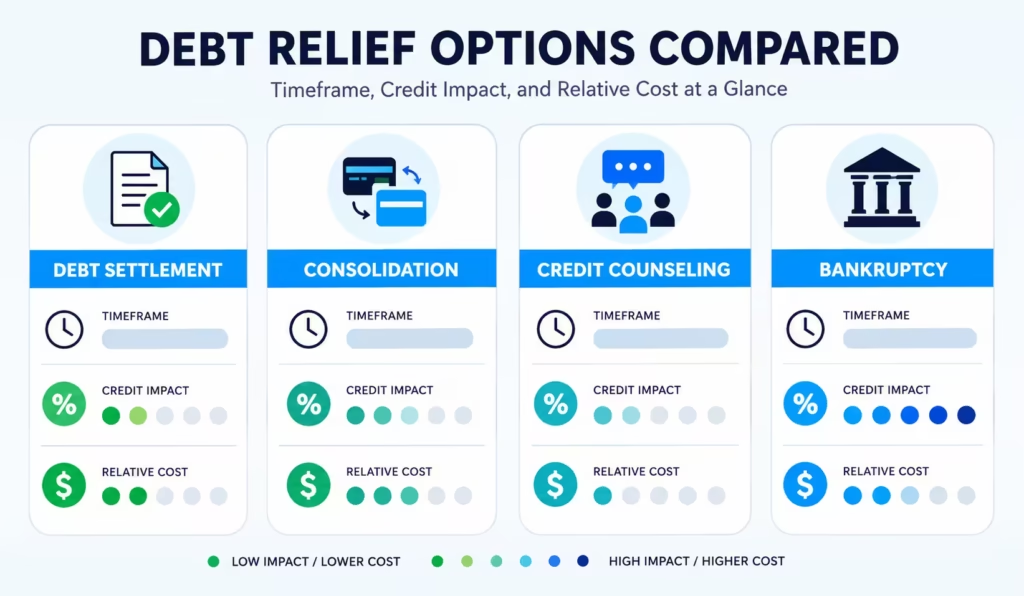
Settlement is one path out of debt, not the only one. Comparing it side by side with the main alternatives helps you pick the right tool.
| Option | How It Works | Credit Impact | Typical Cost | Timeline |
|---|---|---|---|---|
| Debt settlement | Pay less than owed | Major, 7 years on report | 40–60% of balance + 15–25% fee if using a company | 2–4 years |
| Debt consolidation | Combine debts into one loan | Small to moderate | Loan interest, 8–20% APR | 2–5 years |
| Credit counseling (DMP) | Lower interest, single monthly payment | Minor | $25–$75/month | 3–5 years |
| Bankruptcy (Ch. 7) | Legal discharge of debt | Severe, 10 years on report | $1,500–$3,000 attorney fee | 3–6 months |
Debt Settlement vs. Debt Consolidation
Consolidation combines several debts into one new loan or balance-transfer card with a single monthly payment. You still owe every dollar. Nothing is forgiven. The benefit is a simpler payment and often a lower interest rate.
The credit impact of consolidation is far smaller. You don’t have to go delinquent. In fact, most consolidation loans require decent credit to qualify. If you can still get approved for a consolidation loan at a reasonable rate, that’s almost always a better first move than settlement.
Consolidation works best if your credit is fair to good. It’s also important that your income can handle the new monthly payment. Lastly, your total balance should be high enough so a lower interest rate cuts down the payoff time.
Debt Settlement vs. Credit Counseling
Credit counseling works through a nonprofit agency. A counselor reviews your budget, then sets up a Debt Management Plan (DMP) with your creditors. The DMP typically lowers interest rates and waives some fees, but the principal balance stays the same.
You don’t need to be delinquent to qualify. The credit impact is minor because you’re still paying what you owe, just on better terms. Accounts on a DMP are usually marked as such on your credit report, but the mark is far less damaging than a settlement notation.
Credit counseling fits when you can afford the full principal at reduced interest, but the current interest rates make it feel impossible. It’s often the right first stop before considering settlement.
Debt Settlement vs. Bankruptcy
Chapter 7 bankruptcy legally discharges qualifying unsecured debts through the court system. Settlement is a private deal with your creditors. Both wipe out debt, but the mechanics and long-term effects are different.
Bankruptcy is faster. A Chapter 7 case usually wraps up in three to six months. Settlement takes two to four years. Bankruptcy also stops lawsuits, wage garnishments, and collection calls the moment you file, thanks to the automatic stay.
The credit report impact of Chapter 7 lasts up to 10 years, longer than the 7 years for a settled account. But the total damage is often similar. Many people rebuild their credit faster after bankruptcy because they become debt-free.
Bankruptcy is a good option if:
- your debt is too high to save a lump sum,
- you are already facing lawsuits, or
- your income only covers basic living expenses.
Pros and Cons of Credit Card Debt Settlement
Before deciding, weigh the real tradeoffs.
The main advantages:
- You pay less than you owe, often 40% to 60% of the balance.
- You resolve the debt faster than a long minimum-payment schedule.
- You avoid the more severe long-term marks of bankruptcy.
- You can regain financial breathing room in 2 to 4 years.
The main drawbacks:
- Your credit score can drop 100 or more points before and during the process.
- The “settled” mark stays on your report for 7 years.
- Settlement companies may charge 15% to 25% of the enrolled debt in fees.
- You may be sued during the savings phase.
- Forgiven debt over $600 can be taxable income.
- No creditor is legally required to accept a settlement offer.
The honest summary: settlement can save real money on paper, but you pay for it in credit damage, fees, tax liability, and stress. It’s a tradeoff, not a free win.
How Long Credit Card Debt Settlement Takes
Most settlement programs run 2 to 4 years from enrollment to full completion. The timeline depends on three factors.
The first is how fast you can save. A settlement needs cash. If your budget only supports $200 a month in savings, it will take much longer to reach the lump sums your creditors want than if you can put away $600 a month.
The second is how many accounts you’re settling. One account can sometimes settle in 6 to 12 months. Five or six accounts stagger over years because creditors won’t all agree at once, and you may need to prioritize the ones most likely to sue.
The third is creditor behavior. Some creditors have internal policies to settle at charge-off. Others sell debts to collectors quickly, which restarts the negotiation clock. A few refuse to settle at all, and you may end up in court or with a paid-in-full result instead.
To shorten the timeline, save aggressively. Focus on the largest and oldest accounts first. Always be ready to close a deal when a creditor offers something reasonable. Waiting too long for a “perfect” number can cost you the offer entirely.
Is Credit Card Debt Settlement Worth It for You
Settlement makes sense in a narrow but real set of situations. It’s rarely the first choice, and it’s not the only choice. Here’s how to decide.
Settlement is a good option if:
- Your unsecured debt is too high to pay off in five years, even on a tight budget.
- You’re 90 days or more behind on at least one account.
- You can save for a lump sum but can’t catch up on original balances.
- Bankruptcy seems too early, or your assets block you from Chapter 7.
Settlement may not be a good choice if you’re up to date on payments. You might qualify for a consolidation loan or a debt management plan (DMP) through credit counseling instead. It’s a bad choice if your debts are secured, your total balance is small enough to handle directly, or you’re facing a lawsuit that could turn into a judgment.
Ask yourself four honest questions before you commit. Can you actually save the lump sum needed? Are you prepared for a 100-plus point credit score drop? Can you handle possible lawsuits and collection calls for two to four years? Do you have a plan for the tax bill on forgiven debt?
If you can’t answer yes to all four, talk to a nonprofit credit counselor or a bankruptcy attorney before signing with a settlement company. Both consultations are usually free, and they often reveal a smarter path than the one you first considered.
Frequently Asked Questions (FAQs)
Is credit card debt settlement a good idea?
It’s a good option if you’re 90+ days behind, can save toward a lump sum, and bankruptcy feels premature. It’s a poor fit if you’re current on payments or your total balance is small enough to pay off within 12 to 24 months.
What are the disadvantages of credit card settlement?
Your credit score can drop 100 or more points, and the “settled” mark stays on your report for 7 years. You may also face lawsuits during the savings phase, company fees of 15% to 25%, and taxes on any forgiven amount over $600.
How much will credit cards usually settle for?
Most settlements land between 40% and 60% of the original balance. The exact percentage depends on the debt’s age, the creditor’s internal policies, and how much cash you can offer upfront.
What happens if you settle credit card debt?
The creditor accepts a reduced lump sum and forgives the rest, then closes the account. Your credit report shows the account as “settled” or “settled for less than the full balance” rather than “paid in full.”
Does debt settlement hurt your credit?
Yes, mainly from the missed payments leading up to it. A single 30-day late payment can cost 60 to 110 points, and by 180 days delinquent the total drop can exceed 100 to 150 points.
What happens if a credit card company sues you and you can’t pay?
You’ll be served a court summons and typically have 20 to 30 days to respond. Ignoring it can lead to a default judgment, which can trigger wage garnishment, a bank levy, or a lien depending on your state.
Is it better to settle a debt or pay it off?
Paying it off in full avoids credit damage, fees, and tax consequences entirely. Settlement only makes sense when the balance is too high to repay within about five years on a realistic budget.
Will my credit score increase after settlement?
Yes, scores typically recover within 12 to 24 months after settlement. This happens fastest if you keep other accounts current and lower utilization on any remaining open cards.
Will creditors accept a 50% settlement offer?
A 50% offer falls within the typical 40% to 60% range creditors accept, so it’s realistic but not guaranteed. No creditor is legally required to accept any settlement offer, and first offers are often rejected before a deal closes.
Is forgiven credit card debt taxable?
Yes, the IRS generally treats forgiven debt of $600 or more as taxable income, and the creditor files a Form 1099-C. An insolvency exception, claimed via IRS Form 982, can exclude some or all of it if your debts exceeded your assets at the time.
Can I settle credit card debt myself instead of hiring a company?
Yes, DIY settlement costs nothing beyond the settlement amount itself, since you keep every dollar the creditor forgives. It works best with one or two accounts and the time to handle negotiation calls yourself, while settlement companies suit four or more accounts with high total b
Wrapping Up
Credit card debt settlement can lower your balance, but it has real costs. These include damage to your credit, fees, potential lawsuits, and taxes on any forgiven debt. We’ve covered how the process works, who qualifies, what it costs, and how it compares to consolidation, credit counseling, and bankruptcy.
Most readers should first try lower-impact options, like a Debt Management Plan or consolidation. Use settlement only when the math and situation clearly support it.
If you know someone drowning in card balances and confused about their options, share this guide. It could save them thousands and years of unnecessary credit damage.