
Credit card balances can feel like quicksand. You pay, and the balance barely moves. You skip a month, and the interest snowballs. If you’ve searched for credit card debt relief, you’re likely stressed, tired of minimums, and worried about scams, credit damage, or making the wrong call.
Credit card debt relief is not one product. It’s an umbrella term for several very different paths, and the right one depends on your numbers, not on which company advertises the loudest.
Below, you’ll get a clear map of every legitimate option, how each affects your credit and taxes, what things really cost, and how to spot a scam before it costs you.
Key Takeaways
This guide explains what credit card debt relief means, comparing six legitimate paths including settlement, consolidation, and hardship programs, along with their credit score and tax consequences.
Core Facts:
- Credit card debt relief is an umbrella term covering six paths: settlement, consolidation, debt management plans, hardship programs, creditor forgiveness, and bankruptcy, not a single product.
- Debt settlement companies typically charge 15% to 25% of enrolled debt and cannot legally collect fees until a debt is actually settled, under the Telemarketing Sales Rule.
- Debt settlement can drop credit scores by 100 points or more in the first year, while hardship programs and debt management plans usually cause smaller, often temporary dips.
- Forgiven debt of $600 or more triggers Form 1099-C, and the IRS generally treats the canceled amount as taxable income unless an exclusion like insolvency applies.
- Credit card hardship programs are free and require only a direct call to the card issuer, offering temporarily lower APR, waived fees, or adjusted due dates.
- Negative credit report items like charge-offs and settled accounts generally fall off after seven years under the Fair Credit Reporting Act, while Chapter 7 bankruptcy can remain for up to ten years.
Best for:
- Readers with unmanageable credit card balances trying to understand the difference between settlement, consolidation, and other relief options before committing to one.
- Anyone worried about credit score damage or a surprise tax bill from a debt settlement offer.
- Readers trying to distinguish a legitimate debt relief company from a scam before signing a contract or paying any fees.
What Credit Card Debt Relief Actually Means
Credit card debt relief is a broad term. It covers any strategy that changes how you repay unsecured debt, so the burden becomes manageable again. It is not a single service you sign up for. It is a category that includes several paths, each with its own rules, costs, and trade-offs.
“Relief” can look like a lower interest rate, a smaller monthly payment, a restructured payoff plan, or in some cases a reduced balance. It rarely means the debt just disappears. Full credit card debt forgiveness outside of bankruptcy is uncommon. A creditor might accept less than what you owe, but this usually happens after months of missed payments. They often report the account as settled for less than the full amount.
The main point is this. Debt relief programs give you tools to get out from under unsecured debt. But no program erases the debt with a wave of a hand.
The Main Categories of Relief at a Glance
Six paths cover almost every legitimate option:
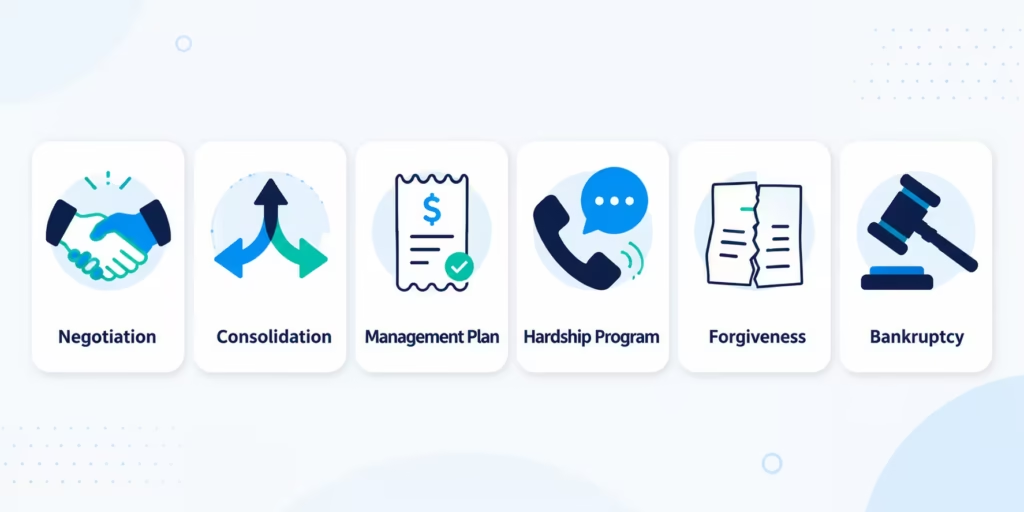
- Debt settlement. You (or a company you hire) negotiate to pay less than the full balance.
- Debt consolidation. You combine multiple balances into one loan or one card with a lower rate.
- Debt management plan (DMP). A nonprofit credit counselor sets up one monthly payment with reduced interest.
- Hardship program. You call your card issuer directly and ask for temporary relief.
- Creditor forgiveness. A creditor cancels part of the debt, usually as the result of settlement.
- Bankruptcy. A legal reset when nothing else can work.
Each path is explained in full below.
Debt Settlement
Debt settlement is the option most people picture when they hear “debt relief.” You stop paying your creditor, save up cash, then offer a lump sum that is smaller than the full balance. If the creditor accepts, the rest is written off.
Here is how the process usually works in practice.
You (or a settlement company) tell the creditor you can’t keep paying in full. Instead of sending your monthly payment to the card issuer, you deposit money into a dedicated savings account. As the account grows, the negotiator waits.
Most creditors won’t talk about a lump-sum settlement until your account is several months overdue. This usually happens when it’s close to charge-off status, which is around 180 days of missed payments.
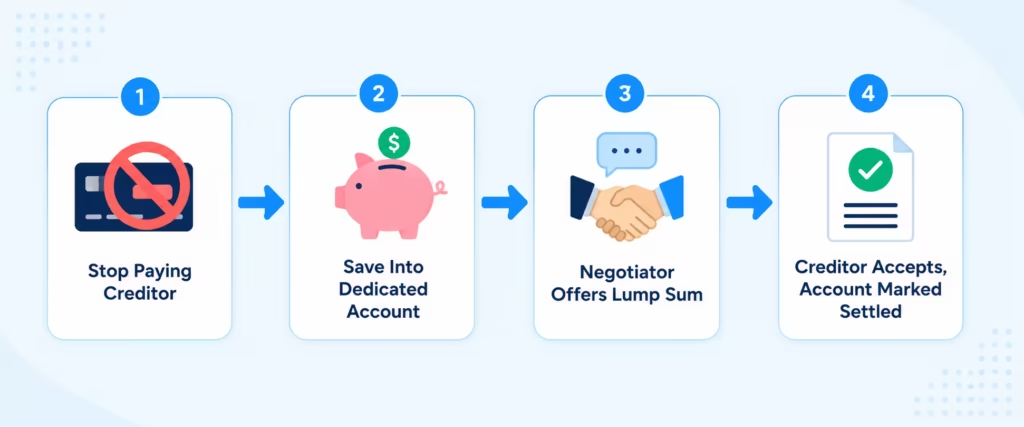
Once enough cash is saved, the negotiator offers a settlement, often between 40% and 60% of what you owe. If the creditor agrees, you pay the lump sum, and the account is marked “settled” on your credit report.
This works best if you have a real hardship, some ability to save cash each month, and you’re already behind or about to fall behind. It doesn’t work well if you’re still current, still have decent credit, and want to protect your score.
You can do creditor negotiation yourself for free. Third-party settlement companies charge fees (usually 15% to 25% of the enrolled debt) and can help if you don’t want to negotiate directly. But they can’t do anything you can’t do on your own with a phone call and patience. And under federal rules, they cannot charge you a penny before they actually settle a debt for you.
Debt Consolidation
Debt consolidation is often confused with settlement, but it is a very different animal. Consolidation restructures your debt. It does not reduce the balance. You still owe every dollar. You just owe it in a simpler, cheaper form.
A debt consolidation loan works like this. A lender gives you one personal loan large enough to pay off your credit card balances. You now owe that lender instead of the card issuers. The loan usually has a fixed rate, fixed monthly payment, and a payoff date, often three to five years out.
Two things make consolidation attractive. The first is interest rate reduction, since personal loan rates are often lower than credit card APRs. The second is monthly payment reduction, since spreading the balance over a longer term shrinks each payment.
The trade-off is qualification. To get a good rate, you usually need decent credit. This often means a score in the mid-600s or higher. You also need a stable income and a manageable debt load that lenders will accept. If your credit is already damaged, consolidation loans may come with rates so high the math doesn’t work.
Consolidation works well if you’re up to date on payments, have a reasonable debt amount, and want lower interest rates with a clear payoff plan.
Balance Transfer Cards as a Consolidation Option
A balance transfer card is a special type of consolidation. You open a new credit card with a 0% introductory APR (usually 12 to 21 months) and move your existing balances onto it. During the intro period, every dollar you pay goes to principal, not interest.
This works best if you have good credit to qualify for the card. You should also have a balance you can pay off before the intro rate ends. Plus, you need the discipline to stop using your old cards. Most cards charge a transfer fee of 3% to 5% of the moved balance, so factor that in. If the balance is still there when the intro period expires, the rate can jump into the mid-20s.
Debt Management Plans
A debt management plan sits between consolidation and settlement. You still repay the full balance, but under new, easier terms negotiated by a credit counseling agency.
Here is how a DMP works. You meet with a nonprofit counselor, who reviews your budget and lists your unsecured debts. The agency contacts each creditor. They ask for concessions like a lower interest rate, waived fees, and one manageable monthly payment. You send one payment to the agency each month. The agency distributes the money to your creditors on your behalf.
Most DMPs run three to five years. The interest rate reduction is the main benefit. Credit card rates on a DMP often drop into the single digits or low teens, which can save thousands over the life of the plan.
A DMP is different from a consolidation loan because no new loan is created. It is different from settlement because you pay every dollar you owe. The account balance doesn’t shrink. The math around it just becomes fair again.
This works if you can pay off your debt fully. It’s best if the interest rate is fair. You also get professional help without the risks of settlement.
Why Nonprofit Credit Counseling Is Often the Starting Point
Nonprofit credit counseling agencies usually offer a free initial consultation. A counselor reviews your income, expenses, and debts, then walks you through your realistic options. Sometimes the answer is a DMP. Sometimes it is just a better budget. Sometimes it is a referral to a bankruptcy attorney.
The point is this. A free consultation with an accredited nonprofit can help you rule options in or out before you spend anything. To confirm an agency is legitimate, check that it is a member of the National Foundation for Credit Counseling, the largest nonprofit financial counseling network in the country.
Credit Card Hardship Programs (Going Directly to Your Issuer)
This is the option most articles skip, and it’s often the best first step. Every major card issuer runs some form of internal credit card hardship program. You just have to call and ask.
A typical financial hardship program offers one or more of these:
- A temporarily lower APR (sometimes 0% for a few months)
- Waived late fees or annual fees
- A pause on minimum payments
- A short-term repayment plan
- Adjusted due dates to match your paycheck cycle
These programs are designed for real, temporary setbacks like job loss, illness, divorce, or a big medical bill. They cost nothing to enroll in. You don’t need a third party. You just call the number on the back of your card, ask to speak with the hardship or customer assistance team, and explain your situation honestly.
The credit impact is usually mild. Some issuers report your account as being on a hardship plan, which can affect new credit applications. But there’s no charge-off, no missed payment cascade, and no fee to a middleman.
If you’re still current on payments but starting to slip, this is almost always the smartest first call to make. Even if it doesn’t fully solve the problem, it often buys you time to plan a bigger move.
💡 Pro Tip: Before you agree, ask the hardship rep to send you the terms in writing. Make sure it includes how the account will be reported to the credit bureaus. Verbal promises don’t count if the account status changes later.
When Creditors Actually Forgive or Cancel Debt
Many people search for “debt relief” hoping to find real debt forgiveness. It exists, but it is narrower than the ads suggest.
Outside bankruptcy, creditors rarely erase 100% of a balance. What usually happens is partial forgiveness through a negotiated settlement. A creditor writes off the difference between what you owed and what you paid. That written-off portion is the “forgiven” part.
For example, if you owed $12,000 and settled for $5,000, the remaining $7,000 is canceled. The account closes as “settled for less than the full amount.” That $7,000 becomes a cancellation of debt event, which can trigger tax paperwork (more on that below).
Full forgiveness of the entire balance, without you paying anything, is very rare. It usually happens when the creditor thinks you can’t pay. It can also occur if the debt is very old, making it not worth pursuing. Even then, it is not automatic, and it is not something you can request as a program.
Bankruptcy as a Last-Resort Option
Bankruptcy is a legal process, not a marketing product. It exists as a last-resort reset when no other path is realistic. For credit card debt, two types matter.
Chapter 7 bankruptcy is often called “liquidation.” Qualifying unsecured debts, including most credit card balances, are wiped out in a few months. To qualify, your income has to fall below a state-based means test. Some assets can be sold to repay creditors, though many people qualify to keep nearly everything they own thanks to exemptions.
Chapter 13 bankruptcy is a court-supervised repayment plan. You keep your assets. You repay a portion of your debts over three to five years based on your income. Any remaining qualifying balance is discharged at the end.
Bankruptcy is a good option if:
- Your debt is much higher than your income.
- You can’t realistically pay it back in five years.
- You’re dealing with lawsuits or wage garnishment.
The credit impact is serious. A Chapter 7 filing can stay on your credit report for up to 10 years, and a Chapter 13 for up to 7 years. But the reset is real, and for some households, it is the only honest path forward.
Talk to a licensed bankruptcy attorney before deciding. Most offer a free initial consultation.
How to Know Which Option Fits Your Situation
This is the question every reader really wants answered. The right path depends on four things:
- How much you owe compared to your income. Divide your total unsecured debt by your annual gross income. If that ratio is under 15%, most people can dig out with a hardship program, DMP, or consolidation. If it’s between 15% and 40%, settlement or a DMP is often more realistic. Above 40%, bankruptcy usually needs to be on the table.
- Whether you can still make some payment. If yes, keep options that preserve your credit (hardship, DMP, consolidation). If no, settlement or bankruptcy become more likely.
- How much your credit score matters right now. If you plan to buy a home or car in the next year or two, avoid paths that trigger a charge-off. If not, the score damage from settlement is temporary and recoverable.
- Urgency. Are creditors calling? Have you been sued? Is a wage garnishment on the way? Real legal pressure changes the math and often points toward bankruptcy or fast settlement.
A simple way to think about it:
| Your Situation | Best First Path to Explore |
|---|---|
| Still current, decent credit, temporary setback | Hardship program with the issuer |
| Still current, decent credit, ongoing high interest | Consolidation loan or balance transfer |
| Struggling but can afford some payment | Debt management plan (DMP) |
| Already behind, can’t pay in full, can save cash | Debt settlement |
| Sued, garnished, or debt exceeds 40% of income | Bankruptcy consultation |
Your debt-to-income ratio and your ability to pay right now should drive the decision, not a commercial you saw on late-night TV. Among all credit card debt relief programs, no single choice is the “best way to get out of credit card debt” for everyone. Fit matters more than name recognition.
How Each Option Affects Your Credit Score
Fear of credit damage is often what freezes people in place. Here is what each path actually does to your score.
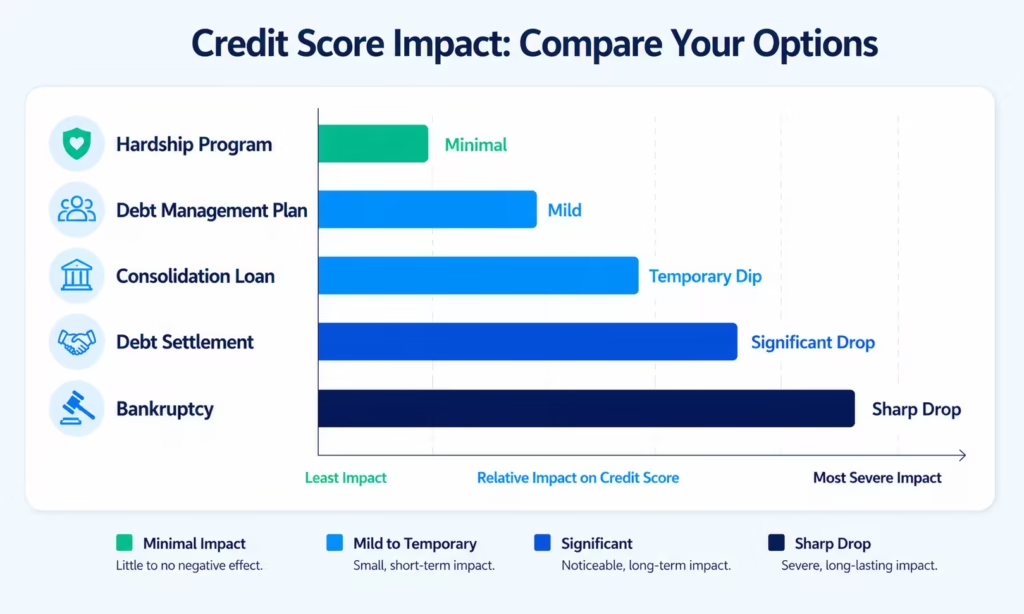
Hardship programs usually cause the smallest damage. Some issuers report the account as current under a modified plan. Others flag it as being in a hardship program, which future lenders can see but doesn’t count as a missed payment.
Consolidation loans and balance transfers can actually help your score over time. Your credit utilization drops when the cards get paid off, which can push scores up within a few months. The main short-term risk is the hard inquiry from applying and a slight dip from opening a new account.
Debt management plans rarely hurt scores in a lasting way. Some scoring models highlight DMP participation. By the end of the plan, most people have a higher score than when they began. This happens because their balances decreased and payments were made on time.
Debt settlement causes real damage. To settle, you usually stop paying, which triggers late payments, then a charge-off at around 180 days. Both hit your credit report hard. Scores can drop 100 points or more in the first year, sometimes more if you started with strong credit.
Bankruptcy produces the sharpest single-event drop. But because the debts are discharged, many people actually start rebuilding within a year or two of filing.
The FCRA seven-year reporting rule matters here. Under the Fair Credit Reporting Act, most negative information, including late payments, charge-offs, and settled accounts, must be removed from your credit report seven years after the original delinquency date. Chapter 7 bankruptcy can remain for up to 10 years.
Recovery is real. Most people who settle or file for bankruptcy often see score gains in 12 to 24 months. This happens if they stay current on new bills and keep their balances low.
Tax Consequences of Forgiven Credit Card Debt
This is the surprise that catches people at tax time. When a creditor forgives part of a debt, the IRS often treats the forgiven amount as taxable income.
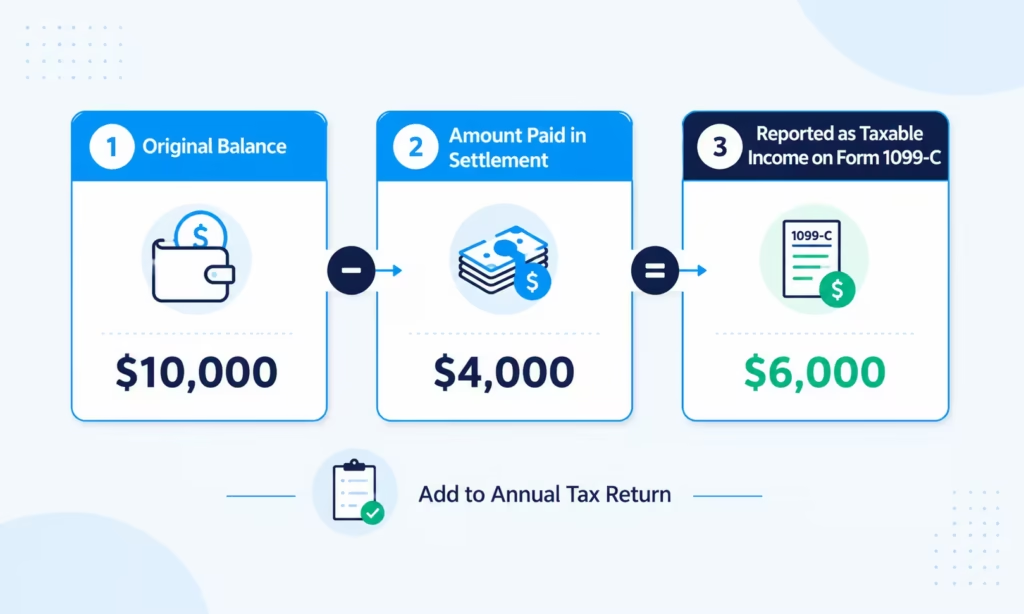
Here is how it works. If a lender cancels $600 or more of your debt in a year, the lender is required to send you Form 1099-C, Cancellation of Debt. According to the IRS instructions for Form 1099-C, you have to report that amount as cancellation of debt income on your tax return unless an exclusion applies.
A worked example makes this real: Say you settle a $10,000 credit card balance for $4,000. The remaining $6,000 is forgiven. Come tax season, you may receive a 1099-C for $6,000. Depending on your tax bracket, that could add roughly $700 to $1,500 to your federal tax bill. State income tax may add more.
Not every 1099-C leads to a tax bill. The most important exception is the insolvency exclusion. If your debts were more than the fair market value of your assets just before the debt was canceled, you might exclude some or all of the forgiven amount from your taxable income. Bankruptcy discharges are also excluded.
⚠️ Mistake to Avoid: Don’t ignore a 1099-C. If you got one, the IRS got a copy too. Skipping it can lead to an automatic assessment, penalties, and interest. If you think you qualify for the insolvency exclusion, file IRS Form 982 with your return. Also, keep records of your assets and debts on the cancellation date.
Talk to a tax professional before you accept a big settlement offer. Sometimes the after-tax cost changes which path really saves you the most money.
Cost, Fees, and Realistic Timelines
Every path costs something, in dollars, time, or both. Here is what to expect across the main options.
Hardship programs are free. There are no enrollment fees and no third-party charges. The trade-off is time. Most programs run three to twelve months, and any interest reduction is temporary.
Nonprofit DMPs usually charge a small setup fee (often $0 to $75) and a modest monthly service fee (typically $25 to $75), often waived for hardship cases. Programs generally last three to five years.
Consolidation loans don’t charge a “relief fee,” but they have real costs. Interest over the life of the loan, plus any origination fee (often 1% to 8% of the loan amount) rolled into the balance. Payoff terms are usually 24 to 60 months.
Balance transfer cards charge a 3% to 5% transfer fee, plus the standard APR on any balance still remaining when the promo period ends.
Debt settlement companies typically charge 15% to 25% of the enrolled debt. Settlement programs often run 24 to 48 months, since you have to save enough cash to fund actual settlements.
Bankruptcy has attorney and filing fees. A Chapter 7 filing typically costs $1,500 to $3,500 in attorney fees plus court filing costs. Chapter 13 runs higher, often $3,000 to $6,000 in fees, spread through the repayment plan. The Chapter 7 process takes about four to six months. Chapter 13 lasts three to five years.
The time to fully clear credit card debt with debt relief programs varies. It can take a few months with hardship plans, or up to five years with Chapter 13. No legitimate program clears serious debt overnight.
Why Debt Relief Companies Can’t Legally Charge Upfront Fees
This is one of the strongest consumer protections in the industry, and most people don’t know it exists. Under the FTC’s Telemarketing Sales Rule, for-profit debt relief companies that sell services over the phone are prohibited from collecting any fee until three things happen.
They must actually renegotiate or settle at least one of your debts. You must agree to the new terms. And you must have made at least one payment under the new arrangement.
That means any company demanding hundreds or thousands of dollars upfront, before settling anything, is breaking federal law. Fees can be earned only after real results.
How to Spot a Scam or Illegal Debt Relief Company
Debt relief scams tend to share the same fingerprints. If you learn the red flags, you can screen out most bad actors in a single phone call.
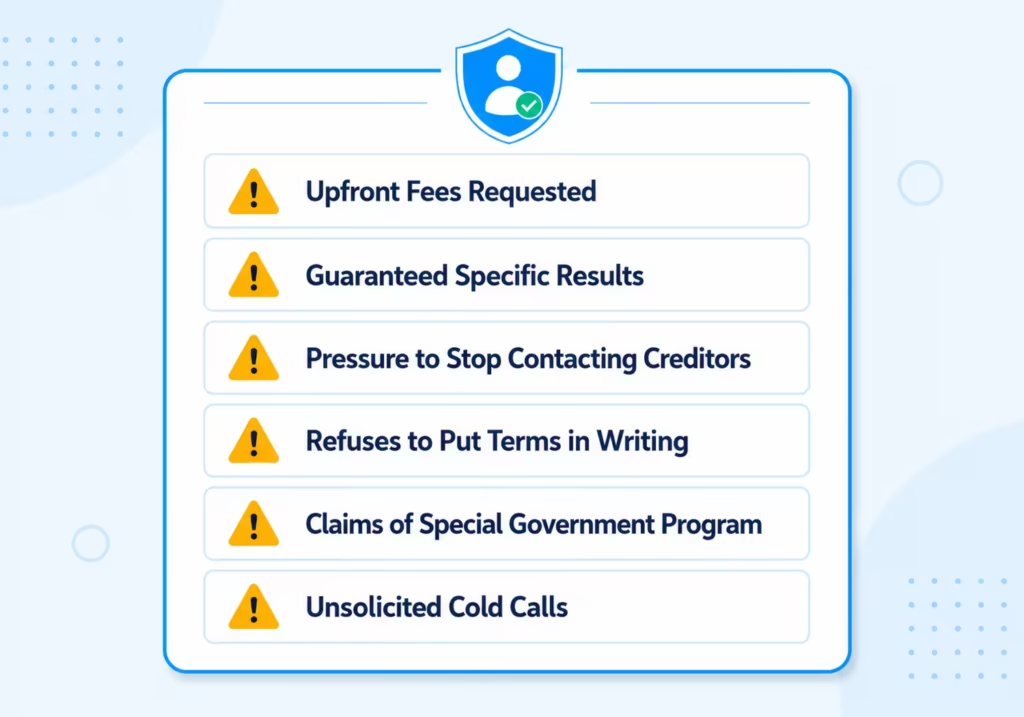
Watch for these warning signs:
- Upfront fees demanded before any debt is settled. This is illegal under the Telemarketing Sales Rule.
- Guarantees of specific results, such as “we can settle your debt for 40 cents on the dollar” or “you’ll be debt-free in six months.” No legitimate company can promise a specific outcome, because creditors, not the company, decide what to accept.
- Pressure to stop talking to your creditors. Some scammers tell clients to route all communication through the company so they can “handle it.” Real advisors want you informed, not silenced.
- Refusal to explain fees or contracts in writing. Anything a company won’t put in writing is not a promise.
- Claims of a “new government program” or a special federal debt forgiveness plan. No such general federal program exists for private credit card debt.
- Cold calls or aggressive texts promising quick relief. Legitimate agencies rarely cold-contact consumers.
The Consumer Financial Protection Bureau has taken enforcement action against multiple debt relief operations for charging illegal advance fees and misrepresenting savings. Real cases have resulted in millions of dollars in restitution ordered to consumers who were misled.
Before you hire anyone, verify legitimacy. Check the Better Business Bureau (BBB) for the company’s rating and complaint history. For nonprofit credit counselors, confirm membership with the National Foundation for Credit Counseling.
Confirm the company is licensed to operate in your state (many states require debt settlement companies to hold a specific license). And read the full contract, including the fee schedule, before you sign anything.
📌 Did You Know: Many complaints about debt settlement firms come from consumers. They paid high fees but never had any debts settled. The upfront-fee ban was created precisely to prevent this outcome. If a company asks for money before results, that’s your cue to walk away.
Frequently Asked Questions (FAQs)
What is credit card debt relief?
Credit card debt relief is an umbrella term for strategies that make unsecured debt manageable again, including settlement, consolidation, management plans, and hardship programs. It rarely means your balance disappears completely outside of bankruptcy.
Is credit card debt relief a good idea?
It depends on your debt-to-income ratio and whether you can still make payments. If your unsecured debt is under 15% of your annual income, a hardship program or consolidation is usually smarter than settlement or bankruptcy.
What is the downside of debt relief?
Settlement and bankruptcy can drop your credit score sharply and stay on your report for up to 7 to 10 years. Forgiven debt over $600 can also trigger a taxable 1099-C, adding an unexpected bill at tax time.
Does debt ever get forgiven?
Partial forgiveness happens through settlement, where a creditor writes off the difference between what you owed and what you paid. Full forgiveness of an entire balance without payment is rare and isn’t something you can request as a program.
How can I legally get rid of my credit card debt?
Legal options include a credit card hardship program, debt management plan, consolidation loan, debt settlement, or bankruptcy. Each has different costs and credit impacts, so the right one depends on your income, balance, and ability to pay.
How much will my credit score drop if I do debt relief?
Debt settlement can drop your score by 100 points or more in the first year, since it usually involves missed payments and a charge-off. Hardship programs and debt management plans cause much smaller, often temporary dips.
How to get rid of $30,000 credit card debt?
Divide $30,000 by your annual income to find your debt-to-income ratio. Above 40%, bankruptcy is often the realistic path; between 15% and 40%, settlement or a debt management plan tends to fit better.
Will I get sued if I stop paying during a settlement?
Creditors can pursue legal action, including a lawsuit or wage garnishment, if payments stop long enough during settlement negotiations. Real legal pressure like a lawsuit often means it’s time to consult a bankruptcy attorney instead.
What’s the difference between debt settlement and debt consolidation?
Settlement reduces the amount you owe by negotiating a smaller lump-sum payoff, usually after falling behind. Consolidation restructures your full balance into one loan or card with a lower rate, without reducing what you owe.
Wrapping Up
Getting out of credit card debt starts with knowing your real choices. We covered every legitimate path, from free hardship programs and DMPs to consolidation, settlement, and bankruptcy, along with how each affects your credit, your taxes, and your timeline.
Start with free, low-risk options like a hardship program or nonprofit credit counseling. Only consider settlement or bankruptcy if the math and pressure truly demand it. Fit matters more than marketing.
If you know someone drowning in credit card balances and confused about their options, share this guide. It could save them from a costly settlement contract, a scam, or a surprise 1099-C.