
You’re about to sign up for AT&T wireless, fiber, or internet, and you’re worried. Maybe your credit score isn’t perfect, or you’ve been denied before, or you just don’t want a surprise hard pull on the wrong report. The tough part is that different websites give different answers about which credit bureau AT&T checks, and that mix-up makes it hard to plan or freeze the right report.
Here’s the short answer: AT&T does not stick to one single bureau, and reports show it pulls from Equifax, Experian, or TransUnion depending on your region, service, and timing.
Below, you’ll get step-by-step help, real tips, and the exact actions to take before you apply, after a denial, or if a collection shows up on your file.
Key Takeaways
This guide explains what credit bureau AT&T uses for wireless, internet, fiber, and business accounts, including hard inquiry impact, security deposit triggers, and steps to avoid denials or collections.
Core Facts:
- AT&T does not use one single bureau; it pulls from Equifax, Experian, or TransUnion depending on region, service type, and application timing.
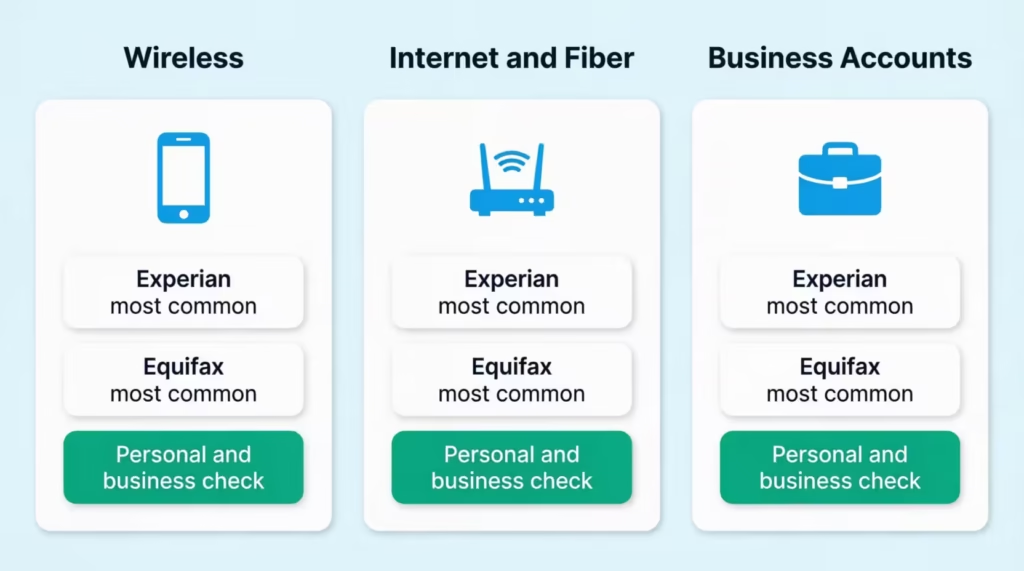
- Wireless applications most commonly pull Experian, while internet and fiber sign-ups more often show Equifax, though this pattern is not guaranteed.
- Business accounts can trigger both a personal credit check (Equifax or TransUnion) and a separate business credit check (D&B, Experian Business, or Equifax Business).
- A hard inquiry from AT&T typically lowers a FICO score by less than five points, and the impact fades from scoring within 12 months.
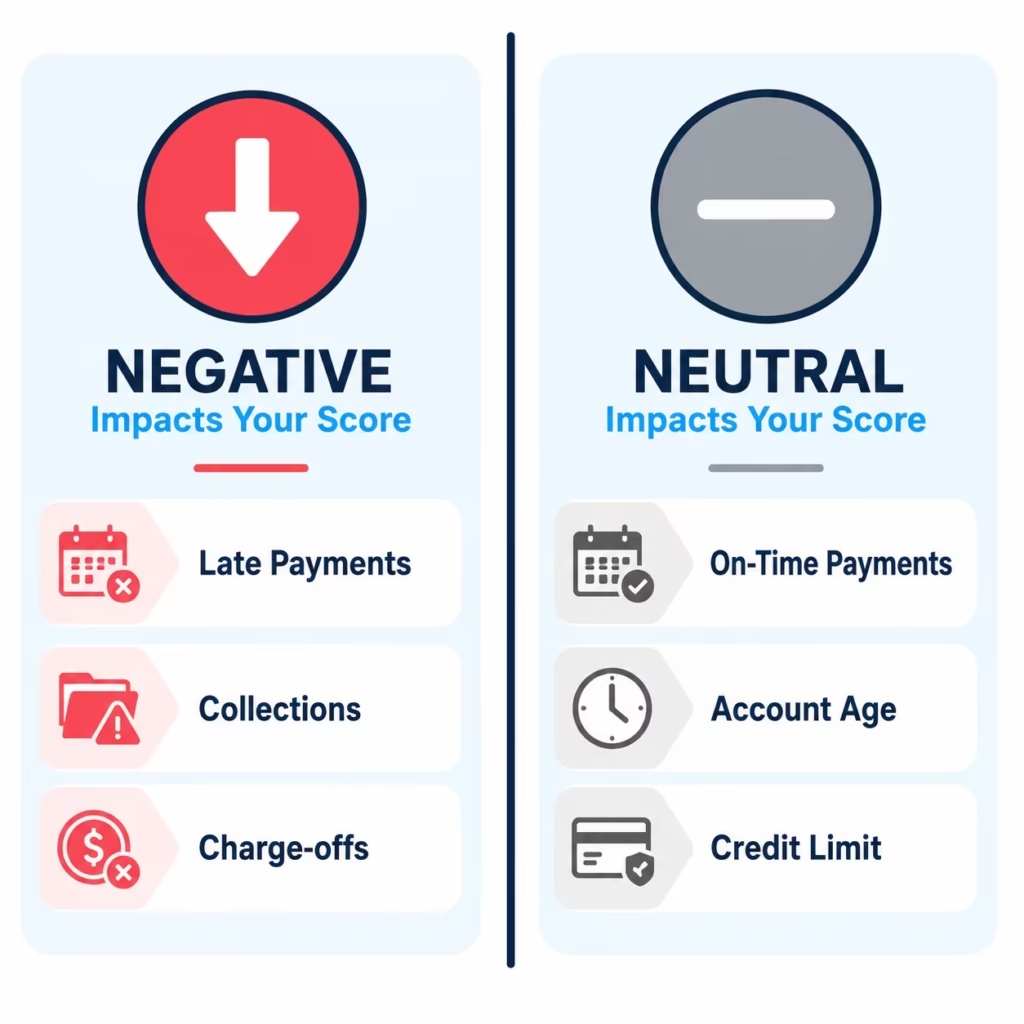
- AT&T only reports negative account activity to credit bureaus, such as late payments and collections; on-time payments are never reported.
- Security deposits typically range from $100 to $750 per line and are refunded after about 12 months of on-time payments.
Best for:
- Readers about to apply for AT&T wireless, internet, or fiber service who want to know which bureau might be checked.
- Readers who were denied AT&T service or asked for a deposit and want to understand why and what to do next.
- Readers with an unfamiliar collection agency on their credit report tied to an AT&T account who want to verify it and dispute errors if needed.
Which Credit Bureau AT&T Actually Uses
AT&T does not publicly commit to using just one credit bureau. That’s the truth, and it’s why you’ll see three different answers online. Some customers report Equifax was pulled. Others swear it was Experian. A few say all three got hit at once. All of these can be true, because the bureau AT&T uses can shift based on your state, the type of service you want, and even the store or website you apply through.
Here’s what to know. AT&T works with all three major bureaus: Equifax, Experian, and TransUnion. Any one of them, or more than one, may be checked when you apply. Reddit users on the r/ATT forum have shared that unfreezing just one bureau sometimes worked, while others had to unfreeze all three before the application went through.
So what does this mean for you? If you plan to freeze your credit before shopping, or if you want to dispute an error before applying, don’t guess. Unfreeze all three bureaus to be safe, or ask the AT&T rep directly at the point of sale which bureau they’re pulling from.
The most reliable way to find out which bureau AT&T actually pulled for your application is the adverse action notice. If you’re denied service or asked for a deposit, federal law requires AT&T to send you a written notice within 30 days. That notice must name the specific credit bureau used. You can request the notice by phone or mail if you don’t receive it.
📌 Did You Know: Under the Fair Credit Reporting Act, you can request a free copy of the exact credit report AT&T used within 60 days of any adverse action, straight from the bureau they pulled.
Does the Bureau Differ by AT&T Service Type
Yes, and this trips up a lot of people. What credit bureau AT&T pulls from can change depending on whether you’re signing up for a phone line, home internet, or fiber. The difference isn’t guaranteed or set in stone, but the pattern shows up often enough that it’s worth planning for.
Wireless Accounts
For AT&T Wireless, most user reports and third-party trackers point to Experian as the most common bureau pulled. That’s especially true if you’re financing a phone through AT&T Next or opening a postpaid line with autopay.
Some customers, though, report an Equifax pull instead, and a smaller group has seen TransUnion checked. If you’re planning to finance a device, expect a full hard credit check. If you bring your own phone and go prepaid, no check is needed at all.
Internet and Fiber Accounts
Sign-ups for AT&T Fiber, AT&T Internet, and older AT&T Uverse plans often show a slightly different pattern. Users have reported pulls from Equifax most often for fiber and home internet, but Experian pulls also happen.
Business fiber accounts sometimes trigger a TransUnion pull instead. Because installation and equipment leases carry more risk for AT&T, the check tends to be a hard inquiry unless you skip financing and pay any deposit upfront.
Business Accounts and Credit Checks
Small business owners face a slightly different process. When you apply for AT&T Business Wireless, Business Fiber, or an equipment lease, AT&T often runs both a personal and a business credit check. The personal check may go through Equifax or TransUnion, while the business side commonly uses D&B (Dun & Bradstreet), Experian Business, or Equifax Business.
If you’re a sole proprietor with no established business credit, expect AT&T to lean on your personal report. LLCs and corporations with a few years of trade history may get approved based on the business file alone. Ask the AT&T Business rep which reports they plan to pull, and get it in writing when possible.
Hard Inquiry vs. Soft Inquiry: What AT&T Actually Does
When you apply for postpaid AT&T service, expect a hard inquiry. A hard pull, also called a hard credit check, is what lenders and service providers do when they’re deciding whether to extend credit or a contract. Prepaid service, on the other hand, does not involve a credit check at all.
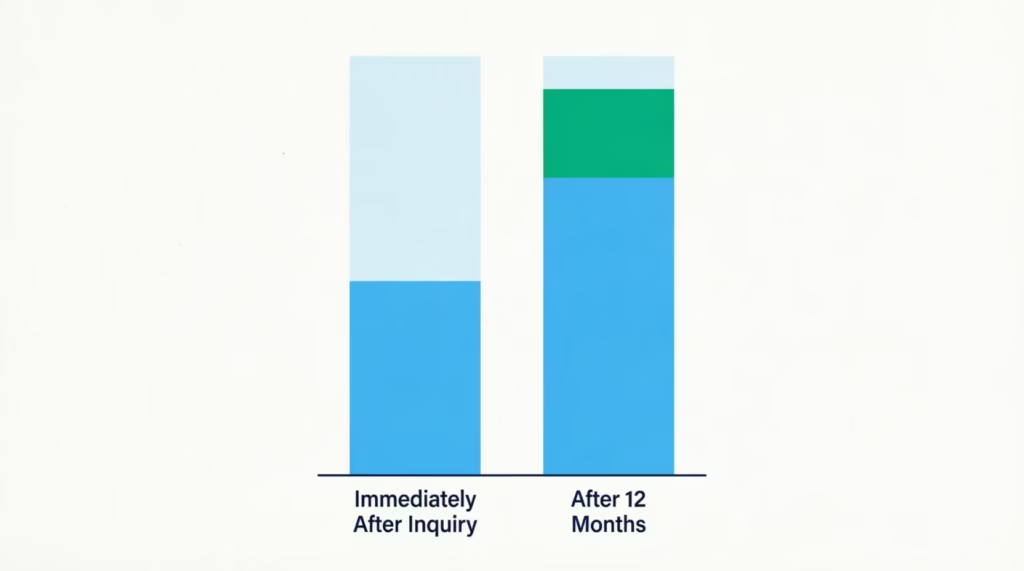
How much does a hard inquiry hurt your score? Not as much as many people fear. A hard inquiry usually drops your FICO score by less than five points, and the impact fades within a few months. The inquiry itself stays on your credit report for up to two years, but FICO scoring models only count inquiries from the last 12 months.
One hard pull isn’t a big deal. Several pulls in a short window can add up, though, especially if you’re also opening new credit cards or loans at the same time.
Applying to Multiple Carriers
Comparison-shopping between AT&T, Verizon, and T-Mobile can hurt more than you’d expect, because unlike auto loans or mortgages, cell carrier inquiries do not get grouped into a single “rate shopping” window. Each carrier application counts as its own hard pull.
Instead of applying at three carriers at once, check each one’s known bureau pattern first. Freeze the bureaus you don’t want touched. Or better yet, ask each carrier’s rep to run a soft pre-qualification before submitting a full application. Not every store offers this, but it’s worth asking.
💡 Pro Tip: If you’re planning a big purchase like a mortgage in the next 6 months, delay your AT&T application until after closing. Even a small dip from a hard inquiry can bump your rate up on a home loan.
Does AT&T Affect Your Credit Score Long-Term
Here’s a surprise that catches most people off guard. Paying your AT&T bill on time every single month does not build your credit score. That’s because AT&T does not report positive payment activity to the credit bureaus. On-time payments simply keep your account in good standing with AT&T, but they don’t show up on your Equifax, Experian, or TransUnion reports as a helpful trade line.
Miss a payment, though, and things change fast. If your bill goes 30, 60, or 90 days past due, AT&T can send the debt to a collection agency, and that agency will report the collection to the bureaus. A single collection entry can drop your score by 50 to 100 points, depending on your starting score and credit history.
So the risk is one-sided. You can lose points for missing payments, but you can’t earn points for paying on time. That’s a big reason to set up autopay on any AT&T account, especially if you’re rebuilding credit.
What AT&T Reports to the Bureaus
To be clear, AT&T reports only negative account activity, not positive. That means:
- Reported: Late payments sent to collections, charge-offs, unpaid balances after service cancellation.
- Not reported: On-time monthly payments, account age, credit limit, or usage.
If you want your phone or internet bill to actually help your score, look into services like Experian Boost, which can add your utility and telecom payments to your Experian file. This won’t affect your Equifax or TransUnion reports, but it’s a free way to squeeze a few points out of bills you’re paying anyway.
AT&T Security Deposits and Credit Requirements
A security deposit is AT&T’s way of protecting itself when your credit doesn’t quite hit the mark for standard approval. Instead of denying you outright, AT&T often offers service in exchange for a refundable deposit.
What triggers a deposit? Common reasons include a low credit score, a thin credit file (not much history to judge), recent collections, past unpaid balances with AT&T, or an address that doesn’t match your credit file. If you’ve had AT&T before and left with an unpaid bill, expect a deposit even with good credit today.
Deposit amounts usually range from $100 to $750 per line for wireless, and can go higher for internet or fiber with equipment. AT&T holds the deposit for about 12 months of on-time payments, then refunds it as a credit on your bill or a check. Ask the rep for the exact terms in writing before you agree.
How to Avoid or Lower the Deposit
You have real options here. Try these steps in order:
- Add a co-signer. A family member or friend with strong credit can co-sign, and their score is used instead of yours. This often erases the deposit.
- Apply with autopay and paperless billing. AT&T sometimes waives or reduces deposits for autopay enrollment.
- Start with fewer lines or a smaller plan. Deposits scale with your total commitment. One line often triggers a smaller deposit than four.
- Wait 30 to 60 days after paying down debt. If you can lower your credit card balances first, your score often jumps enough to skip the deposit.
- Try AT&T Prepaid instead. No deposit, no credit check, same network.
⚠️ Mistake to Avoid: Don’t pay the deposit in cash at a retail store without a receipt showing the refund terms. Some third-party AT&T resellers structure deposits differently, and you may not get the full refund AT&T corporate would offer.
Getting AT&T Service With Bad Credit
Bad credit does not lock you out of AT&T. It just changes which door you use.
The easiest path is AT&T Prepaid. There’s no credit check, no annual contract, and no deposit. You pay for the month upfront, use the service, and refill when you’re ready.
Plans start around $30 a month, and you can bring your own phone (BYOP) or buy one outright. The trade-off is that financing a new phone through prepaid isn’t as flexible as postpaid, and some perks like international roaming or family plan discounts are limited.
Another option is Cricket Wireless, which is owned by AT&T and runs on the AT&T network. Cricket also skips the credit check and offers multi-line discounts that beat AT&T Prepaid in some cases.
If you want postpaid AT&T for the full perks, a co-signer with good credit is often the fastest fix. Some readers also succeed by starting with a smaller commitment, like a single line with BYOP, then adding lines and financing later once their account has 6 to 12 months of clean history.
What Happens If You’re Denied
If AT&T denies your application, don’t panic. Take these steps:
- Wait for the adverse action notice. AT&T must mail it within 30 days. It names the bureau used and the specific reason for denial.
- Pull your free credit report from that bureau at AnnualCreditReport.com, the only federally authorized site for free reports.
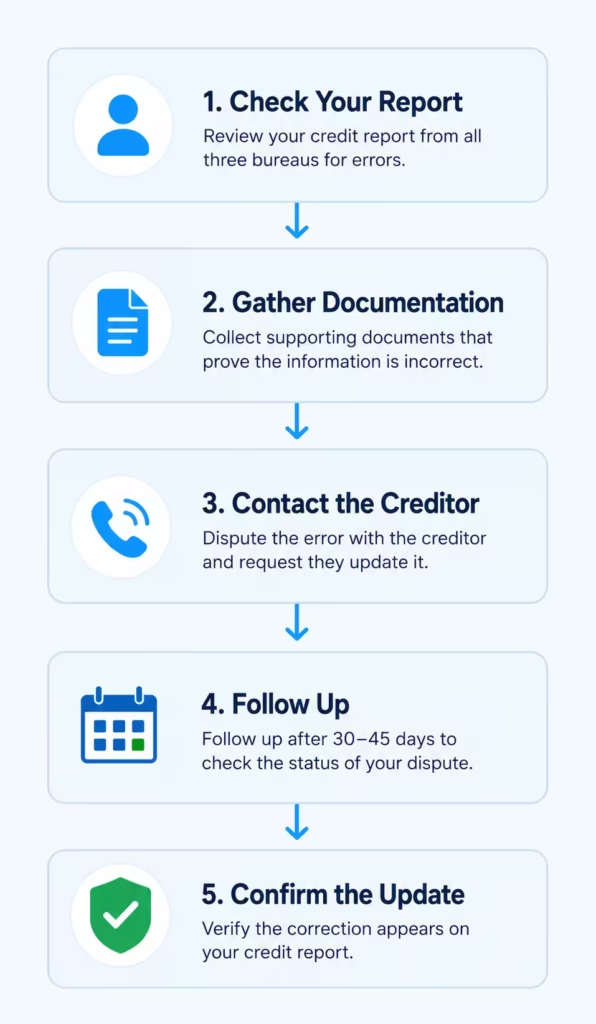
- Look for errors. Wrong addresses, accounts that aren’t yours, or paid collections still showing as unpaid are all disputable.
- File a dispute with the bureau if you find an error. They have 30 days to investigate.
- Consider prepaid in the meantime so you’re not stuck without service while you fix your credit.
AT&T and Debt Collections
If you see “AT&T” or a collection agency on your credit report and you’re confused, you’re not alone. AT&T does not collect old debts in-house. Instead, it sells or assigns unpaid accounts to third-party collection agencies, and those agencies are the ones reporting to the bureaus.
Common agencies that have collected on AT&T accounts include AFNI, Enhanced Recovery Company (ERC), Diversified Consultants, and Convergent Outsourcing. The list changes over time, and AT&T can rotate agencies, so the name on your report may not be one you recognize.
Verifying a Legitimate AT&T Collector
Before you pay any collector claiming to represent AT&T, verify them. Legit collectors must:
- Send you a written debt validation notice within 5 days of first contact, listing the original creditor, the amount owed, and your right to dispute.
- Provide their company name, address, and license info on request.
- Not threaten arrest, lawsuits without intent, or wage garnishment without a judgment.
Scam callers pretending to collect on AT&T debts are common. Never give bank info or Social Security numbers over the phone until you have written validation. Call AT&T directly at 1-800-288-2020 and ask if the debt is legit and which agency owns it.
Disputing an Inaccurate AT&T Collections Account
If the collection is wrong (not your account, wrong amount, already paid, or too old), you have rights under the Fair Debt Collection Practices Act (FDCPA) and the Fair Credit Reporting Act.
Send a written debt validation letter to the collector within 30 days of their first contact. Ask them to prove the debt is yours and accurate. If they can’t validate, they legally cannot keep reporting it, and you can dispute it with the credit bureau to have it removed.
Also file a direct dispute with Equifax, Experian, and TransUnion. Each bureau has a free online dispute portal. The bureau has 30 days to investigate and respond.
How to Check Your Credit Before Applying to AT&T
Checking your own credit before you apply is the smartest move you can make. It’s free, it doesn’t hurt your score, and it tells you exactly what AT&T will see.
Follow these steps:
- Pull all three reports from AnnualCreditReport.com. This is the only site authorized by federal law for truly free reports from Equifax, Experian, and TransUnion. You can access reports weekly at no cost.
- Check for red flags that trigger deposits or denials: recent collections, late payments in the last 24 months, an unpaid past AT&T balance, or an address mismatch.
- Dispute any errors through each bureau’s online portal. Fixing a single incorrect collection can raise your score enough to skip a deposit.
- Check your score through free tools like Credit Karma (TransUnion and Equifax), Experian’s free score, or your bank’s built-in score tracker. Aim for a score above 650 to increase approval odds without a deposit.
- Freeze the bureaus you’re not using if you want extra protection. Just remember to lift the freeze on all three before applying to AT&T, since you don’t know which one will be pulled.
Taking 20 minutes to run this check before you walk into an AT&T store can save you a deposit, a denial, or a hard inquiry on the wrong report.
Frequently Asked Questions (FAQs)
What credit bureau does AT&T use?
AT&T doesn’t rely on one single bureau. It pulls from Equifax, Experian, or TransUnion depending on your region, the service you’re applying for, and where you apply.
Does AT&T use TransUnion or Equifax?
AT&T uses both, along with Experian. Wireless applications lean toward Experian most often, while internet and fiber sign-ups more commonly pull Equifax.
Can I get an AT&T account with bad credit?
Yes. AT&T Prepaid and Cricket Wireless both skip the credit check entirely and run on the AT&T network, with prepaid plans starting around $30 a month.
Does AT&T run a hard credit check?
Postpaid AT&T applications trigger a hard inquiry, which typically drops your FICO score by less than five points and fades from scoring within 12 months. Prepaid service skips the credit check entirely.
What debt collection agency does AT&T use?
AT&T doesn’t collect old debts itself. It assigns unpaid accounts to third-party agencies like AFNI, Enhanced Recovery Company, Diversified Consultants, or Convergent Outsourcing, and the specific agency can change over time.
Does AT&T report to the credit bureau?
AT&T only reports negative activity, such as late payments, collections, and charge-offs. On-time payments are never reported, so paying your bill won’t help build your credit score.
What happens if an AT&T bill goes to collections?
Once a bill is 30, 60, or 90 days past due, AT&T can send it to a third-party collection agency, which then reports it to the credit bureaus. A single collection entry can drop your score by 50 to 100 points.
What credit score does AT&T require?
AT&T doesn’t publish an exact minimum, but aiming for a score above 650 improves your odds of approval without a security deposit.
Will an AT&T credit check affect a mortgage application?
A hard inquiry from AT&T can shave a few points off your score, which is usually minor but can still affect your rate on a loan you’re actively shopping for. If you’re closing on a mortgage within 6 months, it’s safer to delay the AT&T application until after.
How do I find out which bureau AT&T will pull for my application?
You can ask the AT&T rep directly at the point of sale, or check the adverse action notice if you’re denied or asked for a deposit, which legally must name the exact bureau used.
The Bottom Line
We covered which credit bureau AT&T uses, why the answer changes by service and region, and how hard inquiries, deposits, denials, and collections really work. The most effective approach is simple: pull all three of your credit reports before applying, unfreeze each bureau, and know your score.
If your credit isn’t strong, start with prepaid or bring a co-signer, and set up autopay to protect yourself from future collections. For most readers, checking your reports at AnnualCreditReport.com before shopping delivers the best results because it kills every surprise before it happens.
If you know someone about to sign up for AT&T or worried about a credit check, share this guide with them. It could save them a deposit, a denied application, or months of frustration untangling a collection on their credit report.