
You probably know Experian, Equifax, and TransUnion. Then a breach letter, a privacy policy, or a “we report to all four bureaus” line hands you a name you’ve never seen. That’s usually how people first encounter the Innovis credit bureau, and it can feel unsettling. You start to wonder if you left a gap open.
Innovis is a real, legitimate consumer credit reporting agency, and you can get your report, freeze it, and dispute errors directly through Innovis for free.
We’ll walk through what it holds, why it matters even without a score, and the exact steps for each action below.
Key Takeaways
This guide explains what the Innovis credit bureau is, how it differs from Experian, Equifax, and TransUnion, and the exact steps to request, freeze, and dispute an Innovis credit report for free.
Core Facts:
- Innovis is the credit reporting division of CBC Companies, based in Columbus, Ohio, and is listed by the Consumer Financial Protection Bureau as a consumer reporting company.
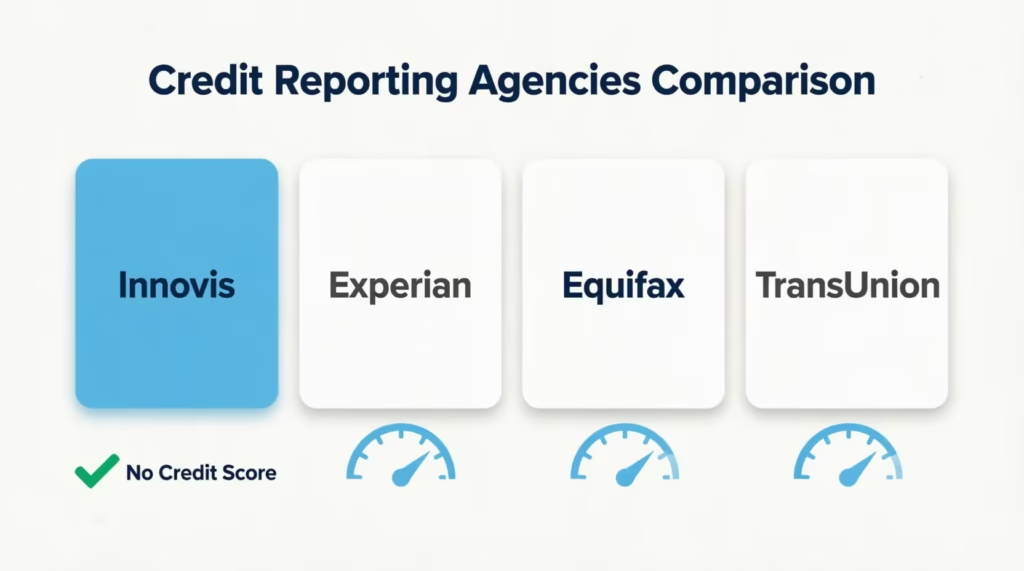
- Innovis does not calculate or sell a credit score, unlike Experian, Equifax, and TransUnion, which all produce scores.
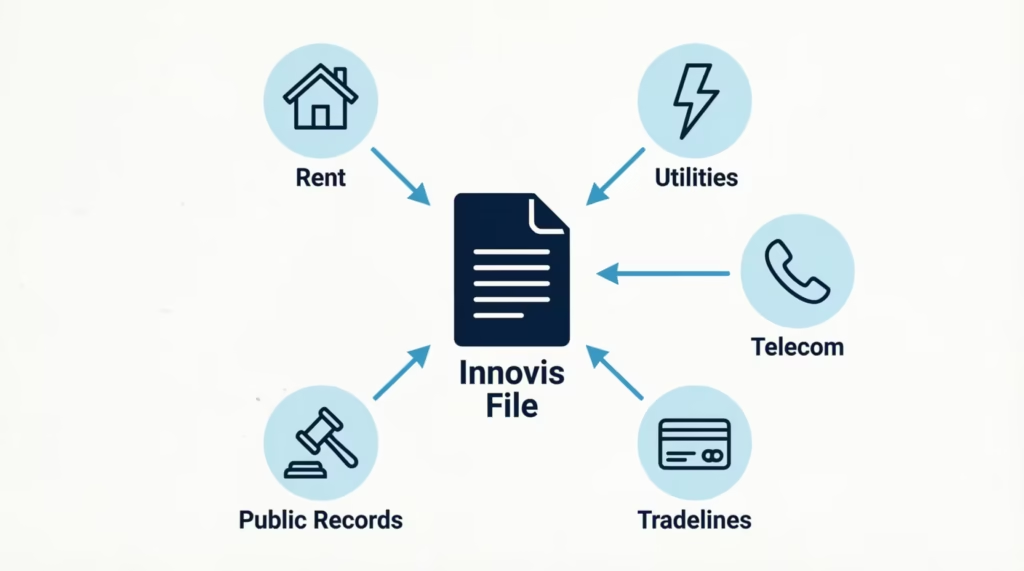
- Innovis commonly collects rental payment history, utility and telecom payments, and public records such as judgments and bankruptcies, in addition to standard lender tradelines.
- A free Innovis credit report can be requested online, by phone, by mail, or in person, and typically arrives by mail within 7 to 10 business days.
- A security freeze on Innovis is free to add, lift, or remove, is typically placed within three business days, and includes a 10-digit Security Freeze PIN for managing access.
- Disputes filed with Innovis are handled separately from disputes filed with Experian, Equifax, or TransUnion, and most investigations are completed within 30 days of receipt.
Best for:
- Readers who encountered the name Innovis in a data breach letter, a company disclosure, or fraud protection advice and want to confirm it is legitimate.
- People who have frozen the three major credit bureaus but have not yet frozen Innovis.
- Anyone who wants to check, freeze, or dispute information on their Innovis file using free, direct methods.
What Innovis Is and Why You’re Hearing About It
Innovis is a genuine consumer credit reporting agency. It isn’t a scam, and it isn’t a fake name used in phishing letters. The company is the credit reporting division of CBC Companies, and it sits in Columbus, Ohio.
It has been around a long time. It started in 1970 as ACB Services, a project of Associated Credit Bureaus. The name changed a few times after that. First Data Corporation renamed it Innovis, Inc. in 1997. CBC Companies bought Innovis in 1999, and it still owns the business today.
The Consumer Financial Protection Bureau lists Innovis in its official list of consumer reporting companies, right alongside the big three. That’s the simplest legitimacy check you can make. A federal regulator names the company, gives its phone number, and tells you it must hand over your file when you ask. So if a letter told you to contact Innovis, that advice was sound.
People often call it the fourth credit bureau. That label fits. It’s the fourth largest consumer credit reporting agency in the country, behind Experian, TransUnion, and Equifax. It’s smaller than those three. It’s also quieter, because it doesn’t run ads or sell you monitoring subscriptions. That silence is the whole reason the name feels strange the first time you read it.
One thing to settle right away: you have the same core rights here as you do with the big three. Under the Fair Credit Reporting Act, you can see your file, dispute what’s wrong in it, and lock it down. Innovis follows those rules. The steps just live on a different website than the one you’re used to.
📌 Did You Know: Innovis has no credit score at all, so there’s nothing to “check” in the usual sense. Its data still shapes real decisions, which is exactly why a quiet bureau can cause loud problems.
Common Reasons People Discover Innovis
Most readers land here from one of a few specific moments. See if one of these sounds like your week.
A data breach notification letter
Your employer, a retailer, or a health system got hit. The letter tells you to place a freeze at the credit bureaus and lists four names instead of three. Innovis is the one you didn’t recognize.
A “we report to all four credit bureaus” disclosure
Phone carriers and utility providers use this phrasing often. Verizon’s credit reporting department has pointed customers to Innovis by name for years. You read the fine print on a service agreement, and there it was.
Fraud or identity theft advice
After someone opens an account in your name, it is best practice to freeze everything. A lot of that guidance skips Innovis. Better guidance names it, and that’s the version you found.
A state notice you didn’t expect
Colorado law requires an annual notice to consumers when eight or more inquiries or negative items are added to their reports. If you live in Colorado and got mail from a bureau you’ve never used, that rule may be why.
None of these mean something is wrong. They mean a company that reports to Innovis has your data, or a letter writer was thorough. Either way, the fix is the same set of steps in this guide.
Innovis vs. CBCInnovis, Don’t Confuse the Two
This trips people up constantly, and it wastes real time. There are two similar names under one parent company. Only one of them is for you.
Innovis is the consumer side. It’s the bureau that keeps a file on you. Your report, your freeze, and your dispute all happen at innovis.com. Consumer Assistance is 1-800-540-2505.
CBCInnovis is the business side. It sells credit reports and verification services to lenders, mostly in the mortgage world. It merged with mortgage credit reporting agency Factual Data in 2019. It has no consumer request portal, no freeze form for you, and no dispute process for your personal file.
Both companies share CBC Companies as a parent, which is why search results mix them. If you land on a site talking about mortgage credit solutions, tri-merge reports, or “verification services for lenders,” you’re on the business page. Back out and go to innovis.com instead.
How Innovis Differs From Experian, Equifax, and TransUnion
The differences are small in number but big in effect. Three of them matter most.
There is no credit score
This is the sharpest break from the big three. Innovis does not calculate a score, and it does not sell one. Its own Learning Center states plainly that the company doesn’t offer mortgage or educational credit scores, and points people to myFICO for FICO scores instead. So when you pull your file, expect data and history. Don’t expect a three-digit number.
There’s almost no direct-to-consumer business
Experian, Equifax, and TransUnion all sell products to you. Free score dashboards, paid monitoring, credit lock apps. Innovis sells to businesses. It doesn’t market to you, so it never builds name recognition with you. That’s not a red flag. It’s a business model.
The lender network is smaller, but it grew
Fewer companies pull Innovis reports than pull Experian or Equifax. Still, the list is meaningful, and interest jumped after the 2017 Equifax breach. Coverage at the time pushed consumers to look past the big three, and Innovis kept showing up in those “there’s a fourth bureau” stories.
Does Innovis have a credit score? No. But here’s the practical takeaway. A missing score doesn’t mean a harmless file. Your Innovis data still gets pulled, sorted, and acted on. It just gets acted on by a narrower group of companies, often for a narrower set of purposes.
Here’s a quick side-by-side view.
| Feature | Innovis | Experian, Equifax, TransUnion |
|---|---|---|
| Produces a credit score | No | Yes |
| Free report through AnnualCreditReport.com | No, request direct | Yes |
| Sells monitoring to consumers | No | Yes |
| Security freeze available free | Yes | Yes |
| Own dispute process required | Yes, separate | Yes, each separate |
| Common uses | Prescreening, identity checks, fraud tools | Lending decisions, scoring, tenant and insurance screening |
What Data Innovis Collects That the Big Three Often Don’t
This is the part most articles skip. They say Innovis is “similar to the big three” and move on. The specifics are what tell you whether an error could hide here and nowhere else.
Rental payment history
Innovis takes in non-traditional payment data, and rent is a big piece of it. Property management platforms and rent reporting services can pass along your monthly payments. If you rent and your landlord uses a reporting service, your payment record can show up in this file.
Utility and telecom payments
Electric, water, gas, cable, and phone accounts are commonly reported. Cell service providers use Innovis heavily, both to check new applicants and to report existing accounts. This is why the name shows up in wireless carrier disclosures so often.
Other non-traditional accounts
Magazine subscriptions and similar recurring accounts have historically appeared in Innovis data too. These rarely reach the big three at all.
Standard tradelines
Credit cards, mortgages, auto loans, and personal loans get reported here by lenders who participate. This is the same kind of data the big three hold, just from a smaller set of furnishers.
Public records and collections
Collection accounts, judgments, liens, and bankruptcies can appear. Negative information generally stays on an Innovis report for about seven years, matching the standard retention window used across the industry.
Now connect the dots. Suppose your old apartment reported a rent payment late, or a canceled cable account got sent to collections by mistake. That item might never touch Experian.
It can still sit in your Innovis file, unfixed, because you never knew to look. Alternative credit data cuts both ways. It can help a thin file, and it can hurt you in places you don’t check.
What’s Actually in Your Innovis Credit Report
When your report arrives, it breaks into a few clear parts. Knowing them ahead of time makes the document much easier to read.
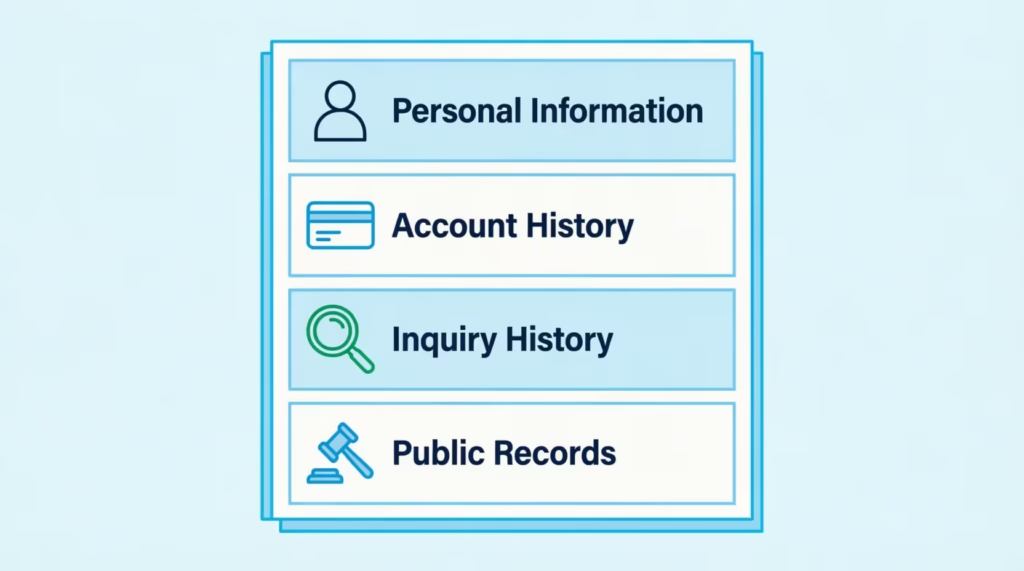
Personal identifying information. Your name, current and past addresses, Social Security number, date of birth, and phone number. Read this first. Mismatched addresses or a wrong middle initial are how files get mixed with someone else’s.
Account and tradeline history. Accounts you hold now and accounts you held in the past, with balances and payment status. This is where rent, utility, telecom, and lender-reported accounts show up.
Inquiry history. A list of companies that reviewed your file. This section is useful during a fraud scare. An inquiry from a lender you never applied to is a warning sign worth chasing.
Public records. Judgments, liens, and bankruptcies, when present.
Required notices. Your report also includes your rights under the Fair Credit Reporting Act, plus any extra rights tied to your state of residence. Skim these. State rules change freeze timing and notice requirements in real ways.
What you won’t find is a score, a rating, or a grade. Nothing on the last page ranks you.
Does Innovis Affect Your Credit Score?
Not directly, and this confuses a lot of people. So take it in two parts.
Innovis does not calculate a FICO score or a VantageScore. It does not sell scores to lenders or to you. There is no “Innovis score” to look up, no matter what a search result implies.
But the data still travels. Scoring models like FICO and VantageScore run on whatever report data gets fed into them. When a company pulls an Innovis file and runs it through a model, the accounts and payment history in that file drive the result. Bad data in means a worse outcome out.
Errors here have real downstream effects even with no visible score attached. A wrong collection account can push a lender to decline you, tighten your terms, or ask for a bigger deposit. You’d never see a score drop, because there’s no score to drop. You’d just see a “no.” That’s harder to diagnose, which is exactly why checking this file has value.
How Pre-Screened Credit Offers Connect to Innovis
Prescreened marketing is the single most common use of Innovis data. Understanding it explains a lot about your mailbox.
Lenders and insurers buy lists of people who meet basic criteria, then mail firm offers of credit. Innovis supplies and screens those lists. Your file gets checked against the lender’s rules before your name goes on the mailing.
That means adverse information can quietly cut you out. If your Innovis file shows a collection or a delinquency, accurate or not, you may simply stop receiving offers. Nobody sends you a denial letter. The offers just never arrive. That’s a silent effect, and it’s a real reason to review the file.
You can also go the other direction and stop the offers on purpose. The industry runs one central opt-out site for all four bureaus. Use OptOutPrescreen.com or call 1-888-567-8688. A five-year opt-out can be done online or by phone. A permanent opt-out requires mailing a signed form. Innovis points consumers to this same service for both opting out and opting back in.
How to Request Your Free Innovis Credit Report
There’s no AnnualCreditReport.com equivalent for Innovis, which is the main reason people give up. You have to request directly from the company. It’s free, and there are four ways to do it.
1. Online. Go to the Innovis credit report request page and fill in the form. You’ll enter your name, current address, date of birth, and Social Security number so the company can verify you.
2. By mail. Print the Innovis Credit Report Request form, complete it, and send it to Innovis Consumer Assistance, PO Box 530088, Atlanta, GA 30353-0088.
3. By phone. Call 1-866-712-0021 and request a copy.
4. In person. Innovis also accepts in-person requests, though few consumers use this route.
What to expect next. There’s no charge for a copy of your Innovis report. Your report gets mailed to you within 7 to 10 business days after your request is received.
Plan around that window, especially if you’re mid-application on a loan or a lease. Under federal law, you’re entitled to a free file disclosure from a nationwide consumer reporting company at least once every 12 months, and Innovis provides free copies on request.
You may qualify for extra free copies in specific situations. If you place an Initial Fraud Alert, you can request a free report while that alert is active. If you place an Extended Fraud Alert, you can request two free copies during the 12 months after it’s placed.
💡 Pro Tip: Order your Innovis report before you place the freeze, not after. A freeze doesn’t block your own access, but doing it in this order gets the file moving during the days you’d otherwise spend waiting.
Small details that prevent rejections. Use the exact name lenders use for you, including suffixes like Jr. Give the address where you actually receive mail. If you moved in the last two years, list the prior address too. Identity verification failures are the most common reason a request stalls.
How to Freeze Your Innovis Credit Report
A security freeze restricts most third parties from viewing your Innovis file when someone applies for new credit in your name. When a request comes in, the company sends back a message that the report is frozen. Your permission is needed to open it. That’s what stops new-account fraud at this bureau.
Some parties still get access even with a freeze in place. Access varies by state, but the general list includes:
- Companies you already have accounts or relationships with
- Collection agencies working for those existing creditors
- Credit monitoring companies
- State and local agencies, including law enforcement and child support agencies
- Federal agencies, as permitted under the FCRA
If you’re hesitant about handing your Social Security number to a company you just learned about, that instinct is healthy. Two things should ease it. First, you’re giving the same data the bureau already has, since a file can only exist if it’s tied to your identifiers. Second, verification is required by law before a freeze can be placed. Just make sure you’re on innovis.com and not a lookalike site.
Three ways to place a freeze:
- Online. Use the Innovis Security Freeze request page. Fastest option.
- By phone. Call 1-866-712-4546, the dedicated security freeze line.
- By mail. Complete the Innovis Security Freeze Request form and mail it to PO Box 530088, Atlanta, GA 30353-0088.
What you’ll need: your full name, address, date of birth, and Social Security number.
Cost: nothing. There’s no charge to add, temporarily lift, or remove a security freeze.
Timing: freezes are typically added within three business days after the request is received, or sooner if state law requires it.
Your PIN: after the freeze is placed, you’ll get a confirmation letter in the mail containing a 10-digit Security Freeze PIN. That PIN is how you manage access later, so store it somewhere you’ll actually find it. A password manager beats a drawer. If you lose it, you can request a replacement PIN online, by phone, or by mail.
How long it lasts: until you ask for it to be removed. It doesn’t expire on its own.
You can still order and read your own report while the freeze is on. That part surprises people. The freeze blocks others, not you.
⚠️ Mistake to Avoid: Freezing three bureaus and calling it done. A creditor that pulls only Innovis can still open an account in your name, because nothing there is locked. The fourth freeze takes about five minutes.
How to Lift or Remove a Security Freeze
You’ll need this the moment you apply for a car loan, a card, or a new apartment. There are two options, and they’re not the same.
Temporary lift. This opens your file for a set length of time, or for one specific creditor you name. It’s the right choice for a single application. When the window closes, the freeze snaps back into place with no extra work from you.
Permanent removal. This takes the freeze off entirely. Use it only if you’re done with freezes for good, which is rare.
Either request can be made online at the Security Freeze page, by phone at 1-866-712-4546, or by mail using the freeze request form. Keep your 10-digit PIN handy for any of these.
Timing matters when you’re on a deadline. Most state laws require a freeze to be lifted within three business days after the request is received. Online requests move faster than mail.
So if a lender says they’ll pull your file tomorrow, don’t mail a form. Handle it online or by phone, and ask the lender which bureaus they use before you lift anything.
Fraud Alert vs. Security Freeze, Which Do You Need?
These get used interchangeably, but they do different jobs.
A security freeze restricts others from viewing your report without your permission. It’s a locked door.
A fraud alert lets others view your report while flagging it. It tells creditors to use extra precaution, such as calling you, before approving new credit in your name. It’s a warning sign on an unlocked door.
Innovis offers two versions of the alert. An Initial Fraud Alert stays on your report for 12 months, and you can request a free copy of your report while it’s active. An Extended Fraud Alert stays for 7 years, removes you from prescreened offer lists for 5 years, and entitles you to two free reports in the 12 months after it’s placed.
There’s also an Active Duty Alert for service members. It lasts 12 months and removes you from prescreened marketing lists for 2 years.
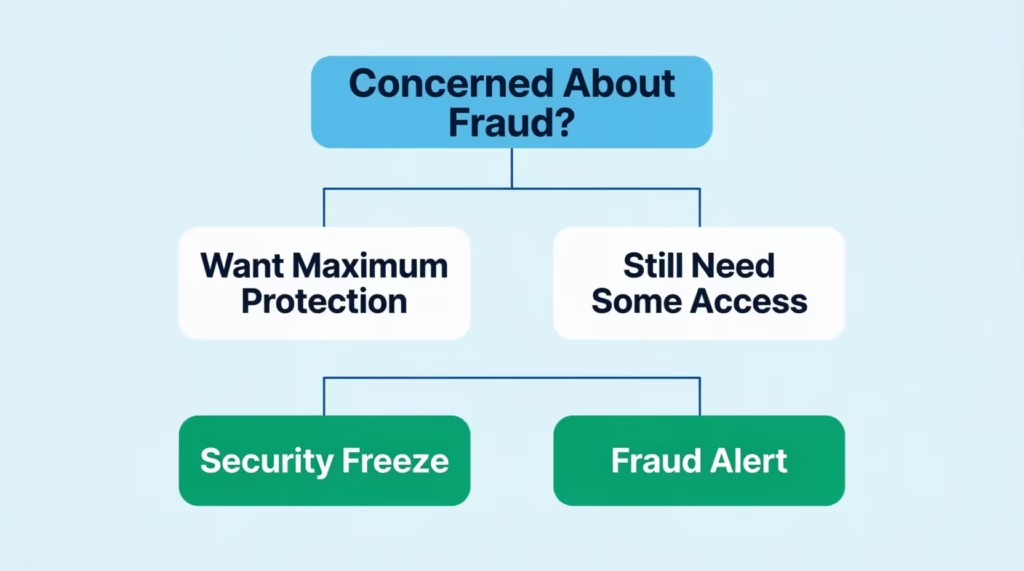
Which one fits your situation:
- Suspect exposure, want maximum protection: use the freeze. Add an alert on top if you want the extra flag.
- Confirmed identity theft victim: the Extended Fraud Alert plus a freeze is the strongest combination.
- Applying for credit soon and can’t manage lifts: an alert keeps things moving while still warning lenders.
- Deploying on active military duty: use the Active Duty Alert.
Add any alert online, by phone, or by mail form.
How to Dispute an Error on Your Innovis Credit Report
A dispute filed with Equifax does not fix Innovis. Each bureau investigates its own file. Michael, a project manager in Cleveland, learned this the hard way.
He cleared a $1,240 phantom cable collection off Experian and TransUnion in about six weeks, then wondered for another year why prescreened card offers had dried up. The same item was still sitting in his Innovis file, untouched, because he never sent a dispute there.
So if you spot a mistake, file it here separately.
Step 1: Pull your report first. You need the exact account names, numbers, and dates to describe the problem clearly.
Step 2: Gather your documents. Payoff letters, bank statements, a police report for fraud, or correspondence showing an account was closed. Copies only, never originals.
Step 3: Choose how to file.
- Online: through your Innovis personal account
- Phone: 1-866-712-0021
- Mail: use the Innovis Dispute Request form, sent to PO Box 530088, Atlanta, GA 30353-0088
Step 4: Include the required details. Your name, address, date of birth, and Social Security number, plus a clear description of the dispute and a list of every item you’re challenging. Say what’s wrong and what the correct information is. “This account isn’t mine” is stronger than “this looks wrong.”
What happens next. Innovis opens an investigation free of charge and forwards the request to the source that furnished the information, along with your supporting documents. The FCRA requires that this reasonable investigation cost you nothing, and the CFPB notes that a furnisher who supplied incorrect data must correct the error and notify every consumer reporting company it sent that data to. That last part is useful leverage. One accurate correction at the source can clean up several files.
Timing. Most investigations finish within 30 days of receipt. If you filed online, results appear online immediately after completion. If you filed by mail, results arrive 7 to 10 business days after the investigation closes.
If you disagree with the outcome. You can add a brief statement of up to 100 words to your Innovis file. Once added, it appears on all future reports. Mail the statement you want included. It won’t remove the item, but it gives context to anyone reading the file.
If your file is mixed with someone else’s. Mixed files happen with common names and similar Social Security numbers. Dispute it the same way, online, by phone, or by mail, and say clearly that you believe the data belongs to another consumer.
What to Do About Innovis After Identity Theft or a Data Breach
Most breach guidance names three bureaus. That leaves a gap. Work through this sequence instead, in this order.
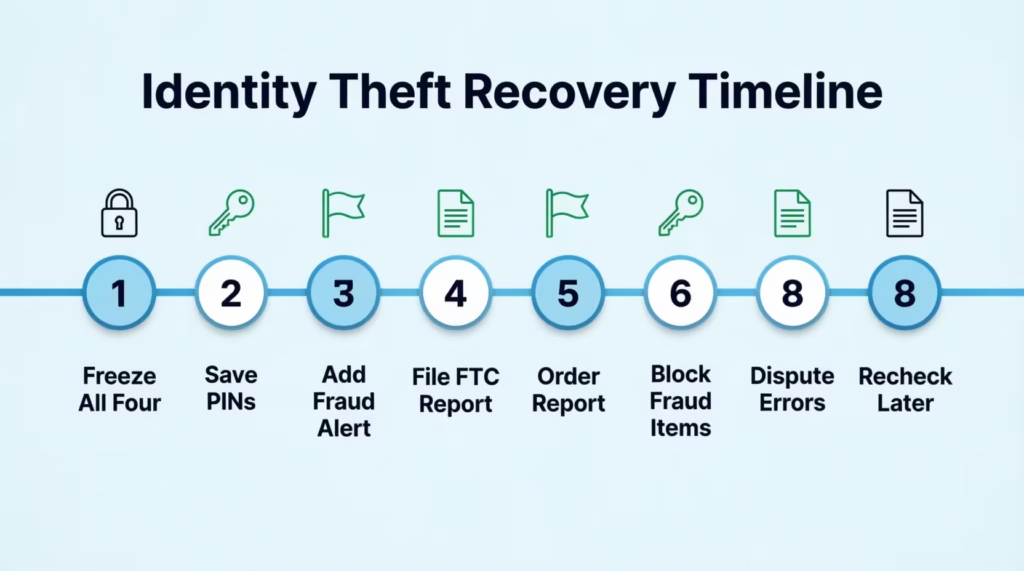
1. Freeze all four bureaus, Innovis included. Order matters here. Freeze first, before you start disputing individual items, because a freeze stops new damage while you clean up old damage. Innovis: online or 1-866-712-4546. Then handle Equifax, Experian, and TransUnion. All four are free.
2. Store all four PINs and logins together. You’ll need them at the worst possible moment, usually when a lender is waiting.
3. Add a fraud alert at Innovis. If theft is confirmed, use the Extended Fraud Alert for its 7-year protection and free report entitlements. If you only suspect exposure, the Initial Fraud Alert covers 12 months.
4. File an FTC identity theft report. Go to IdentityTheft.gov and file. This creates your official identity theft report, which unlocks stronger rights, including the ability to have fraudulent information blocked rather than just disputed.
5. Order your Innovis report. Read the inquiry section closely. Applications you didn’t make show who the thief approached.
6. Block fraudulent items, don’t just dispute them. Innovis offers a block process for information that resulted from identity theft, which is separate from a standard dispute. Blocking removes the item from your report rather than sending it out for verification. Use the block route when you have an identity theft report to support it.
7. Dispute anything else that’s simply wrong. Errors that aren’t fraud go through the normal dispute process described above.
8. Recheck in 30 to 45 days. Fraudulent accounts often surface in waves as new furnishers report. One clean report doesn’t mean it’s over.
Jennifer, a 41-year-old dental office manager, worked this exact sequence after a payroll vendor breach exposed 3,100 employee records. She froze three bureaus in one evening, then found Innovis named on page two of the notification letter. Two weeks later, an inquiry from a wireless carrier she’d never contacted showed up in her Innovis file. The freeze had already blocked the account from opening.
How Often to Check Your Innovis Report and Stay Protected
The initial cleanup is the hard part. Keeping it clean takes far less effort.
Check roughly every 12 months at minimum
Free copies are available on request, so an annual pull costs you nothing but a form. Since reports arrive by mail in 7 to 10 business days, don’t wait until you’re mid-application to ask.
Check more often after specific events
Request a fresh copy after any breach notice naming your data, after a denial you can’t explain, after a move, or after a big drop in prescreened mail. Those are the moments when new data lands.
Keep your personal details consistent
Mismatched entries are a top cause of mixed files. Use the same name format and the same current address with every lender, landlord, and utility. If you use a middle initial on one application and a full middle name on another, files can split or merge in ways nobody intended.
Watch the accounts that feed this bureau specifically
Rent, electric, gas, water, cable, and phone. These reach Innovis more often than they reach the big three. Set autopay or calendar reminders for each one. A single 30-day late on a utility bill can sit in this file for about seven years.
Review your statements monthly
Catching a fraudulent charge on your own statement is faster than waiting for it to appear on a credit file. Bureau data always lags the actual event.
Leave the freeze on by default
Use temporary lifts when you apply for something, then let the freeze return. There’s no fee, and no limit on how many times you lift and reinstate.
Frequently Asked Questions (FAQs)
Is Innovis a legit credit bureau?
Yes. Innovis is a real consumer credit reporting agency listed by the Consumer Financial Protection Bureau, alongside Experian, Equifax, and TransUnion. It’s owned by CBC Companies and based in Columbus, Ohio.
What company is Innovis?
Innovis is the credit reporting division of CBC Companies, operating since 1970 under earlier names before becoming Innovis in 1997. It’s considered the fourth-largest consumer credit bureau in the United States.
How is Innovis different from Experian?
Innovis doesn’t produce or sell a credit score, while Experian does. Innovis also collects rent, utility, and telecom payment data more often than Experian, and it doesn’t market monitoring products directly to consumers.
Who pulls Innovis credit reports?
Wireless carriers, utility companies, rent-reporting services, and companies compiling prescreened credit or insurance offers commonly pull Innovis data. It’s used less for lending decisions and more for identity checks and marketing lists.
Should I freeze my credit at Innovis?
Yes. A creditor that only checks Innovis can still open an account in your name if it’s the one bureau left unfrozen. Freezing all four bureaus, not just the big three, closes that gap.
Where does Innovis get its data?
Innovis collects standard tradelines from lenders, plus rent payments, utility and telecom bills, and public records like judgments and bankruptcies. This mix includes data sources the big three often don’t track.
How long does an Innovis freeze last?
An Innovis security freeze stays in place until you request its removal; it doesn’t expire on its own. Freezes are typically added within three business days of your request.
How long does Innovis keep information on file?
Negative information such as collections, judgments, and late payments generally stays on an Innovis report for about seven years, matching the standard retention window used industry-wide.
How do I get my Innovis credit report?
You can request it free online, by phone at 1-866-712-0021, by mail, or in person; there’s no AnnualCreditReport.com option for Innovis. Reports typically arrive by mail within 7 to 10 business days.
How do I opt out of Innovis prescreened offers?
Use OptOutPrescreen.com or call 1-888-567-8688 to stop prescreened credit and insurance offers for five years online or by phone. A permanent opt-out requires mailing a signed form.
Wrapping Up
Innovis turns out to be a real bureau with a real file on you, one that leans on rent, utility, and telecom data the big three often miss. It produces no score, yet its data still shapes prescreened offers, identity checks, and lending decisions. Everything you need is free: the report, the freeze, the PIN, the dispute, and the alerts.
Based on how quietly a bad Innovis file causes harm, the most effective approach is to pull your report once, freeze the file, and leave the freeze on between applications.
If someone you know just froze three bureaus after a breach letter, share this with them. They’re one freeze short of actually being covered.