
You’re about to apply for a credit card, a car loan, or your first apartment. Then you see your credit score for the first time, and you have no idea if that number is helping you or quietly costing you thousands. Maybe a lender just denied you, or quoted a rate that felt way too high. It’s confusing, stressful, and the explanations online feel either too vague or too technical.
Here’s the simple answer: a credit score is a three-digit number, usually between 300 and 850, that predicts how likely you are to pay back borrowed money on time.
In this guide, I’ll walk you through what the number really means, how lenders read it, what moves it up or down, and exactly what to do next based on where you stand today.
Key Takeaways
This guide explains what a credit score is, how the 300-850 scale works, what the five scoring factors measure, how lenders use score tiers to set interest rates, and how to build or improve your number starting today.
Core Facts:
- Credit scores range from 300 to 850; FICO scores above 740 qualify as “Very Good” and unlock the best rates, while scores below 580 are classified as “Poor.”
- Payment history (35%) and credit utilization (30%) together make up 65% of your FICO score, making them the highest-priority factors to manage.
- The same $30,000 five-year auto loan costs roughly $5,220 in total interest for borrowers above 720 but over $15,000 for borrowers below 600.
- Credit card balances are reported to bureaus on the statement closing date, not the due date; paying down to under 10% of your limit before that date can raise your score within one billing cycle.
- Checking your own credit score is a soft inquiry and never lowers your score; only lender-initiated hard inquiries from new credit applications affect your number.
- The 2025 national average FICO score is 713; scores vary by generation, from roughly 680 for Gen Z to 760 for the Silent Generation.
Best for:
- First-time credit applicants preparing to apply for a credit card, auto loan, or apartment who want to understand what lenders actually see.
- Anyone who received a loan denial or unexpectedly high interest rate and needs to diagnose why.
- People with no credit history looking for the fastest, lowest-risk methods to establish a starting score.
What a Credit Score Actually Is
A credit score is a three-digit number that tells lenders how risky it is to lend you money. It’s not your personal worth. It’s not a measure of how much you earn. It’s a math output. A scoring model looks at your past borrowing behavior and assigns a number between 300 and 850.
Think of it as a snapshot. Today’s score reflects what your credit file looks like at this exact moment. Tomorrow, after a payment posts or a new balance shows up, the number can shift. That’s why the score you saw last week may not match the one a lender pulls today.
The most common version is the FICO Score, built by the Fair Isaac Corporation. It’s used in over 90% of lending decisions in the United States, according to FICO. The other major model is VantageScore, created jointly by the three big credit bureaus. Both models look at the same data, but they weigh things a little differently, which is why your numbers can vary depending on which one a lender uses.
Here’s the key idea most people miss: a credit score is a prediction, not a grade. The model is trying to guess one thing only, which is how likely you are to fall 90 days behind on a bill in the next 24 months. Everything in the formula points back to that single question.
The Credit Score Range and What “Good” Actually Means
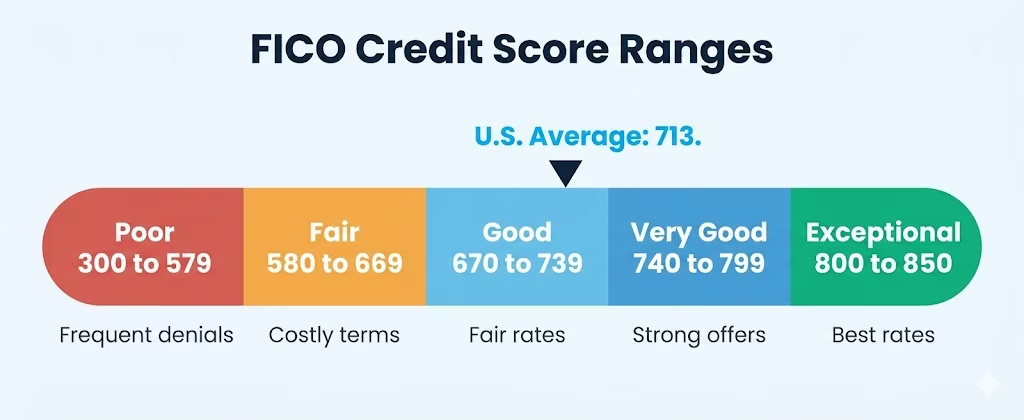
Both FICO and VantageScore use a scale from 300 to 850. Higher is better. But the number alone doesn’t tell you much until you know which band it falls into. Lenders group scores into tiers, and those tiers decide what kind of rates and approvals you’ll get.
Here’s the standard FICO breakdown:
| Score Range | Tier | What Lenders See |
|---|---|---|
| 800–850 | Exceptional | Lowest risk, best rates |
| 740–799 | Very Good | Low risk, strong offers |
| 670–739 | Good | Average risk, fair rates |
| 580–669 | Fair | Higher risk, costly terms |
| 300–579 | Poor | High risk, frequent denials |
The average FICO score in the U.S. sits at 713 in 2025, which Experian places in the “Good” range but just below the all-time high of 715 set in 2023, as the latest Experian Consumer Credit Review reports. So if your number is near 713, you’re in the middle of the pack.
But here’s the part that matters more than the label. A “Good” score and an “Exceptional” score can mean very different monthly bills.
What Each Score Band Means in Real Money
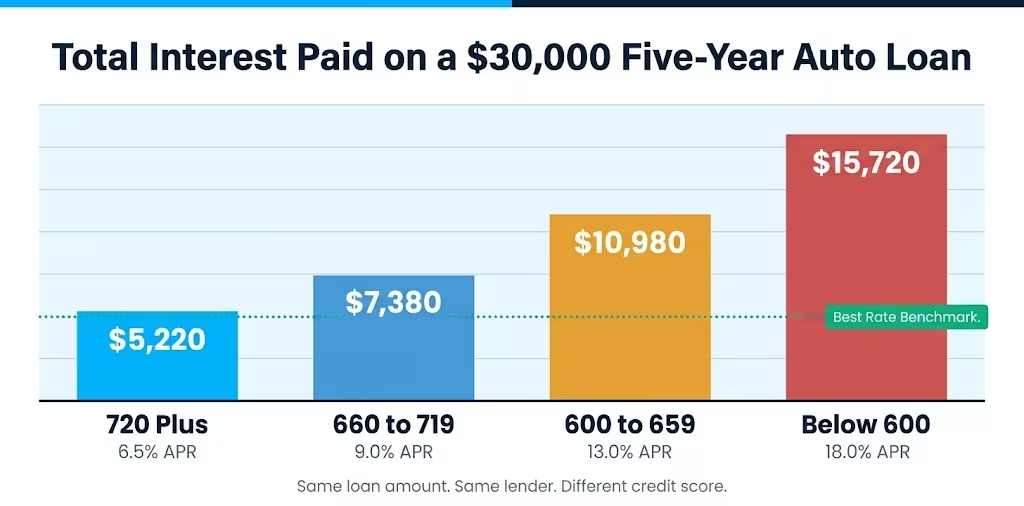
The score band you fall into changes how much you’ll actually pay over the life of a loan. Same loan amount, same lender, very different cost.
Let’s take a $30,000 five-year auto loan as an example:
| Score Band | Typical APR | Monthly Payment | Total Interest Paid |
|---|---|---|---|
| 720+ (Excellent) | ~6.5% | ~$587 | ~$5,220 |
| 660–719 (Good) | ~9.0% | ~$623 | ~$7,380 |
| 600–659 (Fair) | ~13.0% | ~$683 | ~$10,980 |
| Below 600 (Poor) | ~18.0%+ | ~$762 | ~$15,720 |
The gap between an excellent score and a poor one on this one loan is over $10,000. Same car. Same five years. Just a different number on your file.
On a 30-year mortgage, that gap can grow to $70,000 or more in extra interest. On a credit card carrying a balance, a poor score can mean APRs above 29%, while top-tier borrowers see promotional offers under 18%. Renters with low scores often have to pay double security deposits. Car insurance premiums in most states also rise as scores fall.
📌 Did You Know: In most states, your score also affects your car insurance rate, sometimes by hundreds of dollars a year. Insurers use a slightly different version called a “credit-based insurance score,” but it pulls from the same credit file.
Average Credit Score by Age
Comparing your number to your peers gives you a better sense of where you stand than the national average alone. Younger borrowers usually have lower scores, simply because they haven’t had time to build a long history. Here’s the breakdown based on recent FICO data reported by Experian:
| Generation | Age Range | Average FICO Score |
|---|---|---|
| Generation Z | 18–27 | ~680 |
| Millennials | 28–43 | ~690 |
| Generation X | 44–59 | ~709 |
| Baby Boomers | 60–78 | ~745 |
| Silent Generation | 79+ | ~760 |
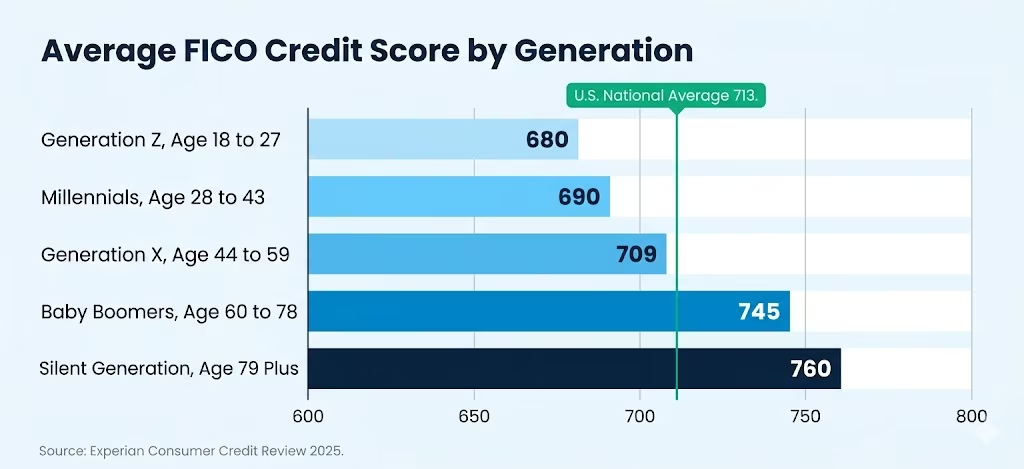
If you’re 24 and you have a 690, you’re already above your age group’s average. If you’re 55 and sitting at 690, you have room to climb closer to your peer benchmark. Age matters because the length of credit history is one of the scoring factors, which we’ll cover next.
How a Credit Score Is Calculated
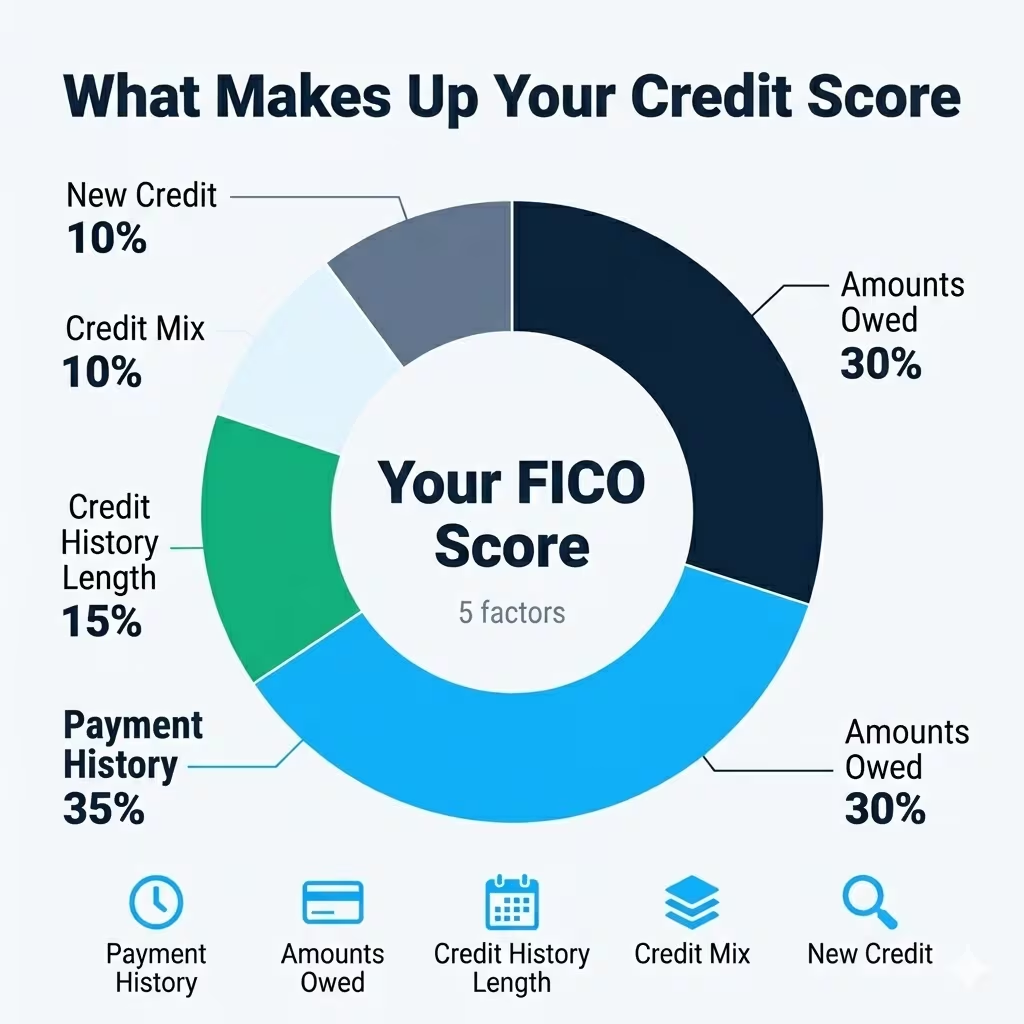
Your number isn’t random. The FICO formula weighs five categories of behavior, and each one carries a fixed share of the total score. Knowing the weights tells you where to focus first if you want the number to move.
According to myFICO, here’s how the five factors split up:
| Factor | Weight | What It Measures |
|---|---|---|
| Payment History | 35% | Whether you pay on time |
| Amounts Owed | 30% | How much of your available credit you use |
| Length of Credit History | 15% | How long your accounts have existed |
| Credit Mix | 10% | The variety of accounts you have |
| New Credit | 10% | Recent applications and new accounts |
Together, the top two factors make up 65% of your score. If you only fix one or two things, fix these.
Payment History (35%)
This is the biggest lever. Payment history tracks whether you’ve paid your bills on time, every time. A single payment that’s 30 days late can drop a good score by 60 to 110 points, and the damage sticks on your credit report for up to seven years.
What counts as on time? Paying at least the minimum due by the due date. The model doesn’t reward paying extra here. It wants you to never miss.
What to do: Set up autopay for at least the minimum payment on every credit account. Then pay the full balance manually each month if you can. Autopay protects the 35%. Manual full payment protects the next 30%.
Amounts Owed and Credit Utilization (30%)
This factor is mostly about credit utilization, which is the percentage of your available credit you’re using right now. If your credit card has a $5,000 limit and you owe $1,500, your utilization is 30%.
The lower, the better. Most experts suggest keeping it under 30%. To get into the top score tier, aim for under 10%. Zero is fine too, as long as you’re using the card sometimes.
There’s a catch most people don’t know about. Card issuers report your balance to the bureaus on the statement closing date, not the due date. So even if you pay in full every month, the balance reported can still look high. To fix this, pay your card down before the statement closes, not just before the due date.
💡 Pro Tip: Check your card’s statement closing date in your online account. Pay the balance down to about 5% of the limit a day or two before that date. Your utilization will report low, and your score can jump within one billing cycle.
Length of Credit History (15%)
This factor looks at how long your accounts have existed. It considers the age of your oldest account, the age of your newest account, and the average age across all accounts. Older is better.
This is why closing your oldest credit card can hurt you. Even if you never use it, that account is dragging your average age up. Keep old accounts open when you can, especially ones with no annual fee.
What to do: If you’re new to credit, just be patient. Time is the only thing that fixes this category. Don’t close old cards just to “clean up” your file.
Credit Mix (10%)
The model rewards borrowers who can handle different kinds of credit. That means a mix of revolving credit (credit cards) and installment loans (auto loans, student loans, mortgages). One of each is enough. You don’t need to take on debt just to diversify.
What to do: Don’t open new accounts just for variety. If you only have credit cards, your mix will improve naturally over time as you take on bigger life purchases.
New Credit and Hard Inquiries (10%)
Every time you apply for new credit, the lender pulls your report. That’s called a hard inquiry, and it can shave a few points off your score, usually under five points per inquiry. The effect fades within a year and drops off your report after two.
The bigger risk is opening several new accounts in a short window. That pattern signals financial stress to the model. Space out applications by at least six months when possible.
What to do: Before applying for any new card or loan, pause and ask if you really need it right now. If you’re planning a major loan like a mortgage in the next 12 months, avoid new credit applications entirely.
Why You Have More Than One Credit Score
If you’ve ever checked your score in two different places and seen two different numbers, you’re not doing anything wrong. You actually have dozens of credit scores, and lenders pick which one they want to use.
There are more than 40 active FICO Score versions alone, plus several VantageScore versions, plus industry-specific scores for auto lending and mortgages. Each model can pull data from any of the three credit bureaus. This means the same model can give you three different numbers, depending on which bureau’s data it reads.
This is the source of most of the confusion people feel. Your bank’s app might show a VantageScore 3.0 based on TransUnion data. Your car dealer might pull a FICO Auto Score 8 based on Equifax data. Those numbers won’t match, and neither one is “wrong.”
FICO Score vs VantageScore
These are the two main scoring families. Here’s the practical difference:
| Feature | FICO Score | VantageScore |
|---|---|---|
| Created by | Fair Isaac Corporation | Three credit bureaus jointly |
| Range | 300–850 (current versions) | 300–850 (3.0 and newer) |
| Minimum file age | 6 months | 1 month |
| Used by lenders | 90%+ of decisions | Mostly free score apps |
| Top factor | Payment history (35%) | Payment history (~40%) |
FICO is what most lenders actually use. Fair Isaac reports its scores are used in over 90% of U.S. lending decisions. VantageScore is what most free apps show you. The VantageScore number helps track your trend, but it’s not always the number a lender will see.
Industry-Specific Score Versions
Some lenders use scores tuned for their type of lending. Auto lenders use FICO Auto Score, which weighs car loan history more heavily. Mortgage lenders typically use older FICO versions (FICO 2, 4, and 5) because Fannie Mae and Freddie Mac require them. Credit card issuers often use the FICO Bankcard Score.
These industry scores use a wider range, 250 to 900, and can read higher or lower than your base FICO. So don’t panic if a car dealer quotes a score that doesn’t match the one in your banking app.
Where Credit Scores Come From
A credit score doesn’t exist on its own. It’s calculated from data sitting in your credit report. Knowing the difference between the two helps you fix score issues more quickly. Often, the score is incorrect simply because the underlying report is wrong.
The Three Credit Bureaus
Three companies collect and store your credit data: Experian, Equifax, and TransUnion. They’re private companies, not government agencies. Lenders, landlords, and utility providers report your account activity to one, two, or all three of these bureaus each month.
Because reporting isn’t required by law, your three reports can look slightly different. One bureau might have a credit card, but the others don’t. One might show an old address that the others have updated. These small gaps explain why your three scores rarely match exactly.
Credit Report vs Credit Score
Your credit report is the full record. It shows all your credit accounts, both current and past. You’ll find your payment history, current balances, any collections, bankruptcies, and a list of recent credit checks.
Your credit score is the number a model spits out after reading that report. The report is the raw material. The score is the summary.
You’re entitled to a free copy of your credit report from each of the three bureaus, once a week, at the only federally authorized site: AnnualCreditReport.com. Pull it, scan it for errors, and dispute anything that doesn’t belong to you. Fixing report errors is the fastest legal way to raise a score.
Does Checking Your Credit Score Lower It?
This is one of the most common myths in personal finance. The short answer: No, checking your own credit score does not lower it.
The reason has to do with the difference between the two types of credit checks:
Soft inquiry
A check that doesn’t affect your score. This includes you checking your own score, a lender pre-approving you for an offer, an employer running a background check, or a credit card issuer doing a periodic review. Soft pulls are invisible to other lenders.
Hard inquiry
A check tied to a credit application you submitted. This is when you apply for a credit card, a car loan, or a mortgage. Hard inquiries can lower your score by a few points and stay on your report for two years, though their score impact fades after about 12 months.
So when you check your score through your bank’s app, your credit card issuer’s dashboard, or a free service like Credit Karma, it’s a soft inquiry. Check it as often as you want.
⚠️ Mistake to Avoid: Applying for several credit cards in the same month to “see which one approves you” creates multiple hard inquiries and can drop your score noticeably. Use pre-qualification tools first, which only use soft pulls.
One useful exception is if you’re shopping for a mortgage, auto loan, or student loan. In this case, many hard inquiries made within 14 to 45 days are usually treated as one inquiry by scoring models. This lets you shop rates without getting punished for it.
How to Check Your Credit Score (for Free)
You should never have to pay to see your score. There are several solid free options, and most people don’t realize how many they already have access to.
The most common ways to check your score for free:
- Your credit card issuer’s app or website. Most major issuers, like Chase, Capital One, Discover, American Express, Citi, and Bank of America, display your FICO or VantageScore in your account dashboard. This score updates monthly.
- Your bank or credit union. Many offer a free credit score tool tied to your checking account.
- Free score apps. Services like Credit Karma, Experian’s free tier, and NerdWallet show your VantageScore based on TransUnion or Equifax data, updated weekly.
- AnnualCreditReport.com. This site gives you your full credit report from each bureau every week for free. The report doesn’t always include the score, but it’s where you check the data that the score is built on.
- Your student loan servicer or auto lender. Some lenders display your FICO score as a free customer benefit.
Pay attention to which version you’re seeing. Free apps almost always show VantageScore. Card issuers usually show FICO. Both are useful for tracking your direction over time, but if a lender is about to pull your file, ask which version they use so you know what to expect.
What to Do If You Have No Credit Score Yet
If you’ve never had a credit card, a loan, or any account that reports to the bureaus, you don’t have a score. You have a thin file or no file at all. The scoring models can’t predict your risk because there’s no data to read.
To get a first FICO score, you need:
- At least one credit account open for six months or more
- At least one account that has been updated to the credit bureaus in the last six months
- No deceased indicator on the file
VantageScore is more forgiving and can generate a score after just one month of activity, which is why some apps show you a score before lenders see one.
Here are the fastest, lowest-risk ways to start a credit file from zero:
- Secured credit card. You deposit, say, $300, and that becomes your credit limit. Use it for one small acquisition a month, pay in full, and the issuer reports activity to all three bureaus. Most users see a first score within six months.
- Credit-builder loan. Offered by many credit unions and online lenders. You make small monthly payments, the lender holds the money, and at the end, you get the cash back plus a payment history on your file.
- Become an authorized user. A family member with a strong, long-standing credit card can add you as an authorized user. Their history on that card gets reported to your file. You don’t even need to use the card.
- Rent and utility reporting services. Tools like Experian Boost or rent-reporting services let your on-time rent, phone, and utility payments count toward your credit history.
Expect a starting score in the 640 to 700 range if your first six months are clean. From there, the score increases primarily with age and consistent on-time payments.
Common Credit Score Myths
A lot of “credit advice” floating around online is wrong, and acting on it can quietly hurt your score. Here are the myths worth retiring today:
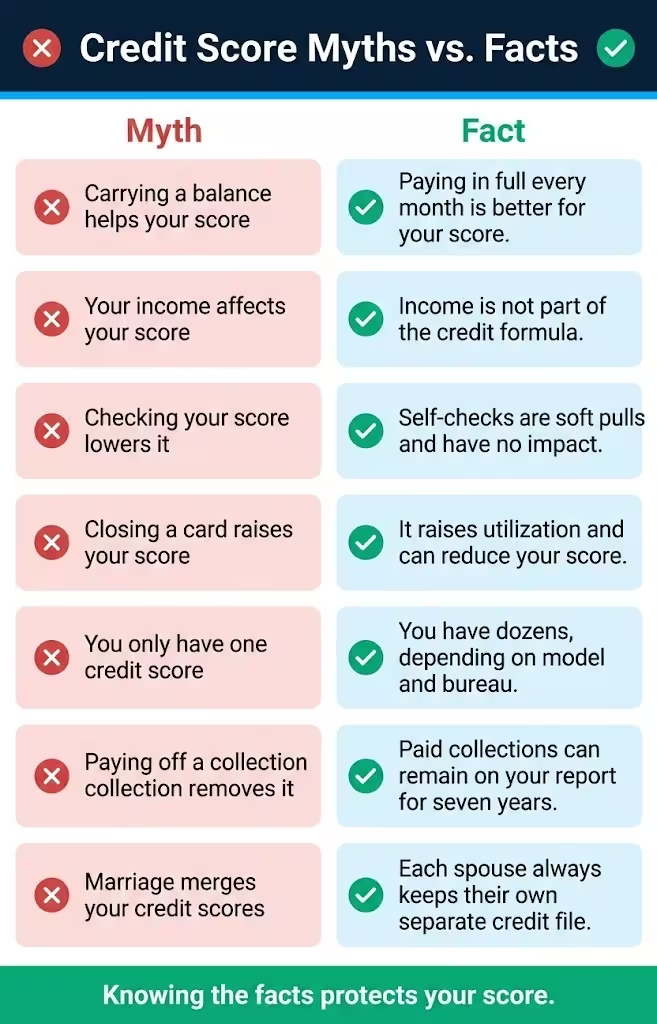
Myth 1: Carrying a balance helps your score.
False. The model doesn’t reward you for paying interest. Pay your statement balance in full every month. The bureaus still see that you used the card, which is what helps you.
Myth 2: Your income affects your score.
False. Income isn’t on your credit report, so it isn’t in the formula. Lenders may ask for income separately to decide if you can afford a loan, but it doesn’t affect your number.
Myth 3: Checking your own score lowers it.
False. As covered earlier, self-checks are soft inquiries.
Myth 4: Closing a credit card raises your score.
Usually false. Closing a card lowers your total available credit, which raises your utilization ratio. It can also shorten your average account age. Both hurt your score.
Myth 5: You only have one credit score.
False. You have many, depending on the model and the bureau.
Myth 6: Paying off a collection removes it instantly.
False. Paid collections can stay on your report for up to seven years, though newer FICO and VantageScore versions ignore paid medical collections.
Myth 7: Getting married merges your credit scores.
False. Credit files stay individual, even after marriage. A joint account will show on both files, but each spouse keeps their own score.
Where Credit Scores Show Up Beyond Loans
A credit score isn’t just for borrowing. It quietly shapes other parts of adult financial life, and most people don’t realize it until they get turned down or quoted a surprising rate.
Renting an apartment
Landlords pull a credit check before signing a lease. A score under about 620 often leads to denial, a larger deposit, or a co-signer requirement.
Car insurance and home insurance
In most states, insurers use a credit-based insurance score to set your premium. Lower credit usually means higher monthly premiums, sometimes by hundreds of dollars a year.
Cell phone contracts
Postpaid phone plans often need a credit check. A weak file can mean a security deposit or a prepaid plan only.
Utilities
Electric, gas, and water companies may charge a deposit if your score is low, since they’re essentially extending you a month of service on credit.
Employment
Some employers, especially in finance, government, and security roles, check your credit report (not your score) as part of background screening. This requires your written permission.
Small business funding
When you apply for a business credit card or a startup loan, lenders almost always pull your personal credit score first, especially if your business is new.
Your score quietly influences hundreds of dollars in monthly costs across all these categories. That’s why understanding the number and managing it well pays back far more than the time it takes to track.
Frequently Asked Questions (FAQs)
Is 620 a poor credit score?
A 620 falls in the “Fair” range (580 to 669), not “Poor.” That means lenders see you as a higher risk and will offer costlier loan terms, but most won’t deny you outright the way they would a score below 580.
What credit score is needed for a $30,000 car?
There is no hard cutoff, but your score band determines your total cost. On a $30,000 five-year auto loan, borrowers above 720 pay roughly $5,220 in total interest, while borrowers below 600 pay more than $15,000 for the exact same car.
Is a 900 credit score possible?
Not on the standard consumer scale, where the maximum is 850 for both FICO and VantageScore. Some industry-specific models, such as those used by auto lenders, do use a 250 to 900 range, but those are separate scoring systems, and lenders don’t use them interchangeably.
Is a 1,000 credit score possible?
No. The highest score on both the FICO and VantageScore scales is 850, and no standard consumer scoring model goes above that. If a tool or app shows a number above 850, it is using a non-standard or proprietary scale.
Can I raise my credit score fast?
The fastest method is paying your credit card balance down before your statement closing date, not the due date. Because issuers report your balance when the statement closes, dropping your balance to under 10% of your limit before that date can improve your score within a single billing cycle.
Is 700 a good credit score?
A 700 score falls in the “Good” range and sits just below the 2025 national average of 713. You will qualify for most loans at that level, but the best rates require a score of 740 or higher, so there is meaningful room to improve.
What is a poor credit score?
Any score from 300 to 579 is classified as “Poor” on the standard FICO scale, with 300 being the lowest possible. At this level, lenders typically deny applications or offer terms with interest rates above 18%, significantly increasing the total cost of borrowing.
Why does my credit score look different on different apps and websites?
There are over 40 active FICO Score versions plus several VantageScore models, and each can pull data from any of the three credit bureaus — creating dozens of possible score combinations. Your bank app typically shows a VantageScore, while most lenders use a FICO model. A difference between them is normal and doesn’t mean either number is wrong.
When does my credit card balance get reported to the credit bureaus?
Issuers report your balance on the statement closing date, not the payment due date. If your balance is high when the statement closes, your utilization will look high on your credit report even if you pay the full amount before it is ever due.
Bottom Line
Your credit score is a snapshot of your borrowing behaviour. It comes from five key factors, with payment history and credit utilization weighing the most. Knowing your score band lets you compare with peers of your age. Understanding why you have different numbers helps you face credit decisions confidently, not with guesswork.
Based on the math behind score tiers, the most effective approach for most readers is to focus first on autopay and keeping utilization under 10%. Those two habits protect 65% of your score and pay back in real dollars on every future loan.
If you know a friend or family member about to apply for their first apartment, car loan, or credit card, share this guide with them. The difference between a “Fair” score and an “Excellent” score can quietly cost tens of thousands of dollars over a lifetime. Most of this gap comes down to a few specific habits explained here.