
If you’ve just realized your Spectrum bill is past due, or you’re staring at a payment reminder wondering how much time you actually have left, you’re not alone. Many customers get stuck between conflicting answers online. Some say 10 days, others say 30, and a few claim 44. That confusion is stressful when your internet, TV, or phone service feels like it’s hanging by a thread.
Here’s the short answer: Spectrum does not publish one fixed grace period, but most customers get about 30 days past the due date before service is cut off.
This guide covers timelines, late fees, disconnection triggers, credit score effects, and steps to take if you can’t pay now.
Key Takeaways
This guide explains Spectrum’s grace period policy, covering the typical 30-day timeline before disconnection, when late fees apply, service differences across internet and mobile, and options if you can’t pay on time.
Core Facts:
- Spectrum does not publish one fixed grace period; most residential customers get roughly 30 days past the due date before service is disconnected.
- Late fees typically begin around day 10 past due, with a standard fee near $8.95 that varies by state and account type.
- Full disconnection is possible between day 30 and day 44, and accounts unpaid 45 or more days risk being sent to collections.
- Spectrum Mobile accounts often stay active for 60 days or more past the due date, longer than home internet or WiFi service.
- Reconnection after disconnection typically costs $4.99 to $10, though a technician visit can increase this cost.
- Unpaid balances left 60 to 90 days after disconnection may be sent to collections, which can appear on credit reports for up to seven years.
Best for:
- Spectrum customers who are past due and want to know their exact disconnection risk window.
- Customers experiencing a failed autopay charge who are unsure if their grace period has already started.
- Anyone deciding whether to call Spectrum support before a due date to avoid late fees or service suspension.
Does Spectrum Have an Official Grace Period Policy?
Spectrum does not publish one fixed, universal grace period number that applies to every customer. Instead, the company uses a flexible past-due status window. This window can shift based on your payment history, the type of service you have, and even the state you live in.
Most residential customers get a soft buffer of roughly 30 days after the due date before Spectrum takes serious action. But this is not a legal guarantee. It’s a company practice that can change without much warning.
You may see different numbers in online forums and older blog posts. That’s because Spectrum’s approach has evolved over the years, and different types of service (internet, TV, mobile) follow slightly different rules. The core idea is simple. Once your bill hits past-due status, a countdown starts. The exact length depends on your account.
Charter Communications, the parent company of Spectrum, sets these internal rules. They also update them from time to time. So the safest move is to always check your own account for the specific date listed on your bill.
How Long Is Spectrum’s Grace Period? (10, 30, or 44 Days)
The most common numbers you’ll see are 10 days, 30 days, and 44 days. Each one refers to a different stage in the late payment process, not three separate grace periods.
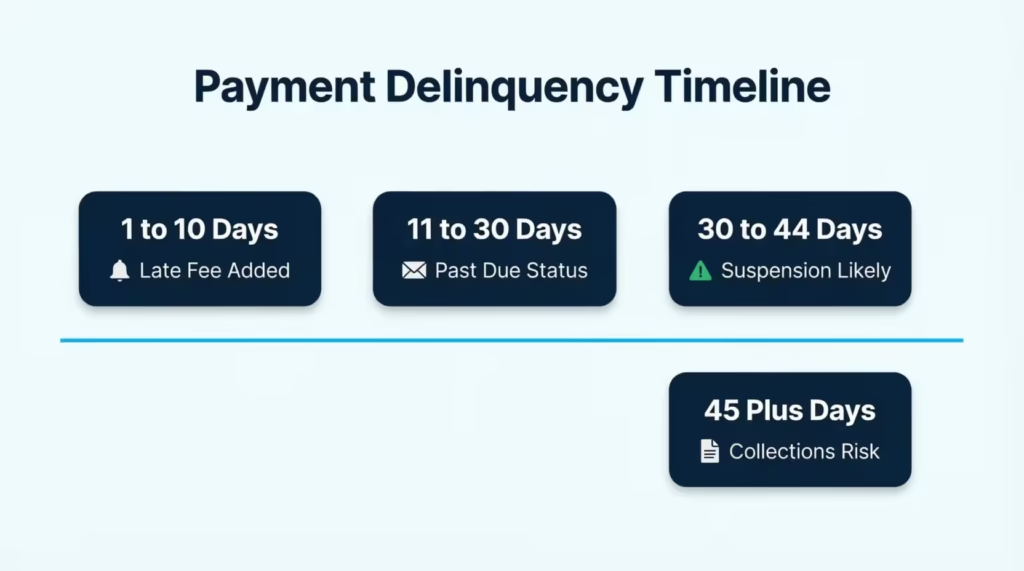
Here’s how the timeline usually breaks down:
| Days Past Due | What Happens |
|---|---|
| 1 to 10 days | Bill is officially late. A late fee may be added around this point. |
| 11 to 30 days | Account moves into full past due status. You’ll get reminders by email, text, and on your bill. |
| 30 to 44 days | Suspension or full disconnection is likely. Service may stop working. |
| 45+ days | Account risks being sent to collections and further credit action. |
So when people ask about grace period days, the honest answer is that Spectrum gives you a rolling window. You have some breathing room, but the risk of service loss grows fast after day 30.
Does Spectrum Have a 10-Day Grace Period?
Yes and no. The 10-day mark is not a true grace period. It’s usually when a late fee first shows up on your account. Your service almost never gets shut off just 10 days after the due date.
Think of the first 10 days as a soft warning zone. You may see a small fee added, and you’ll likely get a friendly reminder. But your internet, TV, or mobile service should still be working normally during this stretch.
Does Spectrum Have a 30-Day Grace Period?
The 30-day mark is the more meaningful one. Once your bill is 30 days past the due date, your account is officially in past-due status. This is when Spectrum starts sending stronger notices and may begin planning a service suspension.
Some customers do lose service right around day 30. Others get pushed to day 40 or even day 44 before disconnection. The exact timing depends on your history and how long you’ve been a customer.
Does the Grace Period Reset Each Billing Cycle or Shrink for Repeat Late Payers?
The window can shrink if you’re late over and over. Spectrum tends to be more patient with a first-time slip. If you’ve been a solid payer for a year or two, one late payment usually gets a longer buffer.
But repeat late payers often see faster action. If you were late last month and last quarter, don’t count on getting the full 44 days this time. Your account may be flagged for quicker suspension.
💡 Pro Tip: If you know you’ll be late, call Spectrum before the due date. A quick heads-up call can protect your buffer and prevent shrinking on future cycles.
Does Spectrum Internet Have a Grace Period?
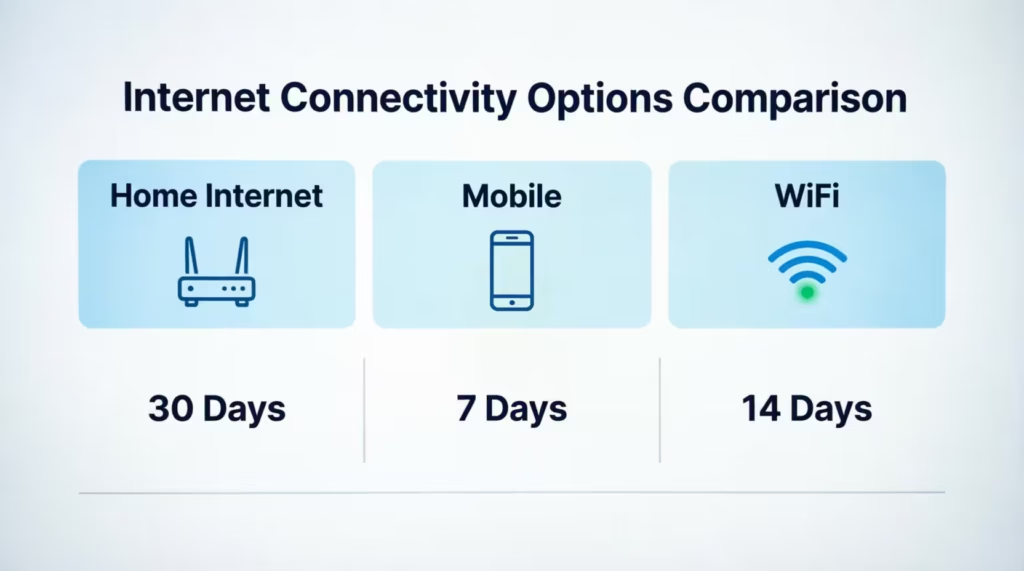
Spectrum Internet follows the same general timeline as the main billing rule. You usually have around 30 days after the due date before your connection gets cut. In some cases, you may get a few extra days if it’s your first late payment in a long time.
During this stretch, your speed and service should stay the same. Spectrum does not usually throttle or slow down your internet as a warning. Instead, they either leave it fully on or shut it off completely once the deadline passes.
If you rent a modem or router from Spectrum, keep it safe. You’ll still need this equipment when you pay and reconnect. Losing or damaging it can lead to extra fees on top of the late balance.
Keep in mind that phone reps sometimes have the power to give you a short extension. If you’re close to the shutoff date and just need a few more days, a polite phone call can go a long way.
Does Spectrum Mobile Have a Grace Period?
Spectrum Mobile gives you more time than home internet in most cases. Mobile accounts often stay active for 60 days or more past the due date before suspension. This is because mobile billing has some built-in flexibility for late payers.
Once your Spectrum Mobile account is suspended, you lose the ability to make calls, send texts, or use mobile data. Wi-Fi calling may still work if you’re at home, but the main line will be cut.
If your mobile bill is bundled with your home internet, the timing can be tricky. Sometimes a missed payment on the internet side affects the mobile side, and the other way around. It’s smart to check both parts of your bill in the My Spectrum app to see the true status.
⚠️ Mistake to Avoid: Don’t assume mobile suspension is the same as full account closure. Your number can still be saved for a while, but waiting too long may risk losing it to another user.
Does Spectrum WiFi Have a Grace Period?
Spectrum WiFi is really just the wireless part of Spectrum Home Internet. So it follows the same grace period rules as internet service. There is no separate WiFi bill or WiFi-only grace window.
If you use Spectrum’s out-of-home WiFi hotspots as part of your plan, those get shut off at the same time as your home connection. Once your account moves past the disconnection date, hotspot access ends too.
For customers on the Spectrum Advanced WiFi plan, the router service is tied to your main internet bill. Missing that payment means both your home network and the extra WiFi features stop working together.
When Do Late Fees Start on a Spectrum Bill?
Late fees usually kick in about 10 days after the due date. The standard late fee is around $8.95, though the exact amount can change based on your state and account type. This fee is added to your next bill, not charged right away.
It’s important to know that a late fee does not mean your service is about to be cut. The fee is just a financial penalty for missing the due date. Your internet, TV, and mobile can still work for weeks after this fee shows up.
If you pay the full past-due balance before the disconnection date, the late fee stays on your account. Spectrum rarely removes it unless you have a strong payment history and ask politely. First-time offenders can sometimes get one late fee waived by calling customer support.
Does Autopay Change the Grace Period or Fee Timing?
Autopay does not extend your grace period. It just tries to pull the money on the due date. If the payment goes through, you’re fine. If it fails because of a bad card, low balance, or expired info, your account moves into late status just like any other missed payment.
A failed autopay can actually feel worse. Many customers don’t notice it right away because they trust the system. By the time they check, they may already be past due and facing a late fee.
To stay safe, check your Spectrum autopay a few days before the due date each month. Make sure your card is current, and your bank has enough funds. If autopay fails, act fast to pay by another method.
What Happens When the Grace Period Ends?
Once the grace period ends, Spectrum moves your account into suspension or full disconnection. Suspension is a soft cutoff. Your service stops, but your account is still active in the system. Full disconnection is stronger. Your account may be closed and sent for collections.
During suspension, you can still log in to your account and pay the balance. In many cases, service comes back within minutes or hours after payment. This is the easier fix.
Full disconnection is harder to undo. Once your account is closed, you may have to set up service again from scratch. This can mean a new install, a new contract, and possible fees to restart. Your old plan and pricing may not be available anymore.
Does Spectrum Warn You Before Disconnecting Service?
Yes, Spectrum sends multiple warnings before cutting off service. You’ll usually get:
- Email reminders starting a few days after the due date
- Text alerts if you’ve signed up for SMS notifications
- Bill messages printed on your paper or online statement
- Automated phone calls as the disconnection date gets closer
The last warning is often a strong, direct message that says service will end on a specific date. If you see this, treat it as your final chance to act. Missing it usually means service stops the next day.
How to Find Your Exact Spectrum Disconnection Date
The best way to know your real disconnection date is to check it yourself. Don’t rely on general timelines from forums or blog posts. Your account has the exact number, and it’s easy to find.
Follow these steps:
- Open the My Spectrum app on your phone. You can download it from the Apple App Store or Google Play.
- Sign in with your Spectrum username and password.
- Tap Billing to see your current balance and past due amount.
- Look for a red or yellow alert. This banner usually shows the disconnection date or a warning message.
- Tap the alert for full details, including how much you owe and by when.
You can also log in at spectrum.net from any web browser. The billing page shows the same info as the app. If you don’t see a clear date, call Spectrum support at 1-833-267-6094 and ask for the exact shutoff day on your account.
Does a Late Spectrum Payment Affect Your Credit Score?
A single late payment to Spectrum usually does not hurt your credit score. Spectrum, like most cable and internet providers, does not report on-time payments to the credit bureaus. So paying late once or twice will not show up on your credit report right away.
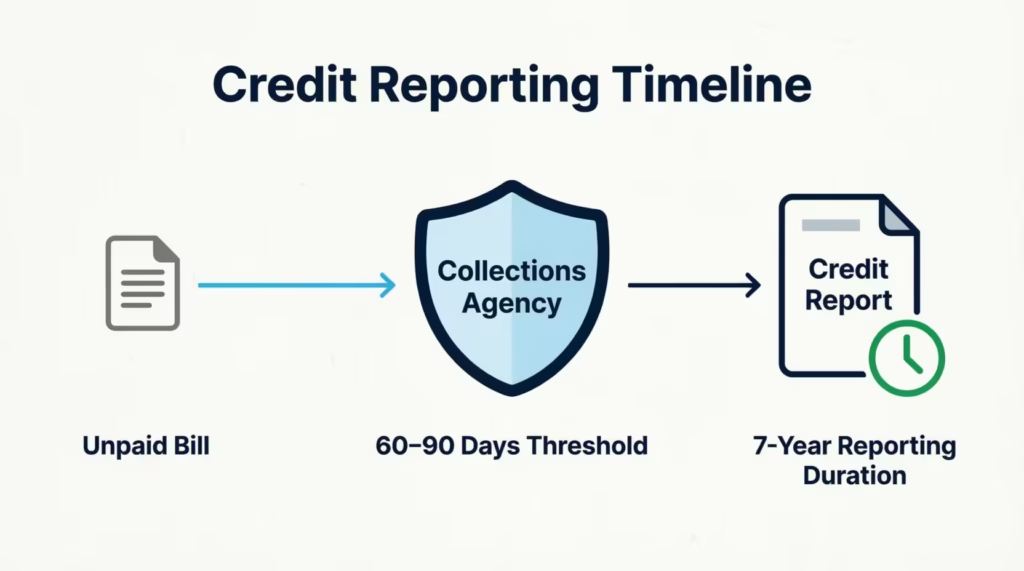
The real risk comes when your account is sent to collections. If you stay unpaid for 60 to 90 days after disconnection, Spectrum may turn the balance over to a collections agency. That agency can report the debt to Experian, Equifax, and TransUnion, which can lower your score.
Collections accounts stay on your credit report for up to seven years. Data from Experian confirms this timeline. Even a small unpaid cable bill can cause damage that lasts years.
To protect your credit, always try to pay Spectrum before the account leaves their internal system. Once it’s with a collections agency, fixing the record gets much harder.
📌 Did You Know: A paid collection is still recorded on your credit report, but some credit scoring models weigh paid collections less heavily than unpaid ones. Paying quickly can lessen the long-term hit.
What Happens After Spectrum Disconnects Your Service
Once Spectrum disconnects your service, a few things happen fast. Your internet, TV, and mobile stop working. Your equipment stays with you, but it becomes useless until you pay. Your account may also get a reconnection fee on top of the past-due balance.
The reconnection fee is often around $4.99 to $10, but it can be more if a technician needs to visit your home. Some customers only need a simple online restart. Others need a full service call, which costs more.
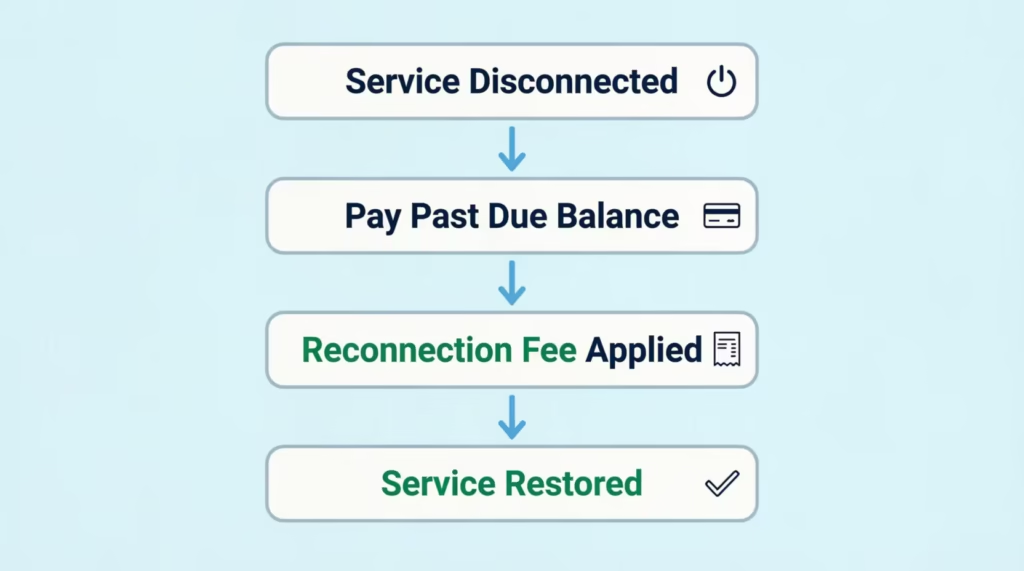
Service restoration usually takes just a few minutes to a few hours after you pay. In most cases, your modem or router will restart on its own and pick up the signal again. If your service does not come back within a day, call support to check the status.
If it’s been more than 30 days since disconnection, you may need to reactivate your account from scratch. That often means:
- Signing a new agreement
- Paying an installation fee
- Losing your old promotional pricing
- Possibly waiting for a technician appointment
To avoid all this, act before the full disconnect date, not after.
What to Do If You Can’t Pay Before the Deadline
If you can’t pay your Spectrum bill on time, don’t panic. There are real options to keep your service on or delay the shutoff. The key is to reach out before the disconnection date, not after.
Here are the best steps to take:
- Call Spectrum customer support at 1-833-267-6094 as soon as you know you’ll be late. Ask about a payment arrangement or extension. Many customers get a few extra days just by asking.
- Set up a payment plan. Spectrum can sometimes split your balance into smaller amounts over the next one or two billing cycles. This lets you catch up without losing service.
- Apply for financial hardship assistance. If you’ve lost a job or faced a medical crisis, mention it. Spectrum may connect you to programs that reduce your bill.
- Check the Affordable Connectivity Program. Federal and state programs can help low-income households pay for internet. Details are available on the FCC’s Lifeline Support page.
- Downgrade your plan. A cheaper plan may cut your monthly bill enough to keep service on. You can always upgrade later.
The most important step is to speak up early. Spectrum reps have more power to help when your account is still in good standing. Waiting until service is cut off makes every fix harder and often more expensive.
Frequently Asked Questions (FAQs)
Does Spectrum have a 10-day grace period?
The 10-day mark is when a late fee first appears, not a service cutoff point. Your internet, TV, or mobile service should keep working normally through this stretch.
Will Spectrum give me an extension on my bill?
Phone reps sometimes have the power to grant a short extension if you call before the shutoff date. Calling early, before the due date if possible, protects your buffer for future billing cycles too.
How long does Spectrum give you before they disconnect service?
Most residential customers get roughly 30 days past the due date before suspension or disconnection becomes likely. Repeat late payers may see this window shrink to faster action.
How late can I be on my Spectrum Mobile bill?
Spectrum Mobile accounts often stay active for 60 days or more past the due date, longer than home internet. Once suspended, calls, texts, and mobile data stop, though Wi-Fi calling may still work at home.
How long does internet take to come back on after paying Spectrum?
Service restoration usually takes just a few minutes to a few hours after payment during suspension. If it doesn’t return within a day, call support to check your account status.
What happens if I pay my WiFi bill late?
A late fee of around $8.95 typically gets added to your next bill about 10 days after the due date. Your WiFi keeps working for weeks after that, following the same 30-day timeline as home internet.
What happens if I don’t pay my last Spectrum bill?
Unpaid balances left 60 to 90 days after disconnection can be sent to a collections agency. That agency can report the debt to Experian, Equifax, and TransUnion, where it stays on your credit report for up to 7 years.
How far behind before Spectrum shuts off service?
Suspension or full disconnection typically happens between 30 and 44 days past due. Full disconnection past 30 days may require signing a new agreement and paying an installation fee to restart service.
Does autopay protect me from late fees or disconnection?
Autopay does not extend your grace period since it only tries to pull payment on the due date. A failed autopay from a bad card or low balance moves your account into late status just like any missed manual payment.
Wrapping Up
Spectrum’s grace period is not a single, fixed number. It’s a rolling window that usually gives you around 30 days after the due date, with late fees starting near day 10 and full disconnection possible by day 44. Mobile service tends to allow more time, while internet and WiFi follow the same tight schedule.
Based on the timeline shown in this guide, the most effective approach is to check your exact disconnection date in the My Spectrum app and call support before you fall too far behind.
If you know a friend or family member juggling a tight budget, share this guide. It could help them keep their internet on when it matters most.