
We know how nerve-wracking it feels to sit at the checkout page, ready to start a new Verizon line, and suddenly worry about the credit check. Maybe your file is thin, your score is low, or a decade-old phone bill is still hanging over you. The confusion grows when you learn that freezing Equifax, Experian, and TransUnion may not be enough, because what credit bureau does Verizon uses is not always one of the big three.
Verizon most often pulls your NCTUE report (a specialty telecom bureau run by Equifax) and, in some cases, one of the three main bureaus.
This guide walks you through every step, so you can apply with confidence.
Key Takeaways
This guide explains what credit bureau does Verizon use, including the role of NCTUE, hard versus soft credit pulls, how to freeze and unfreeze all four systems, security deposit amounts, and what happens with bad credit or missed payments.
Core Facts:
- Verizon most often pulls an NCTUE report, a telecom-specific bureau run by Equifax, and in some cases also checks Equifax, Experian, or TransUnion.
- Freezing your Equifax credit report does not freeze your NCTUE report; the two are separate files requiring separate freeze requests.
- Verizon usually runs a hard credit inquiry for new lines or device financing, which can lower your score by 3 to 5 points for a few months.
- Security deposits per line are commonly reported by customers as $125, $400, or $0, depending on credit profile, and are refunded after 12 months of on-time payments.
- Verizon does not report on-time payments to Equifax, Experian, or TransUnion, but it does report missed payments, which can be charged off around 150 to 180 days late.
- Verizon discontinued its Nova Credit partnership as of April 11, 2025, so new-to-country customers can no longer use international credit history to finance a device.
Best for:
- People preparing to apply for a new Verizon line or device financing who want to know which credit files to check first.
- Readers with a security freeze in place who need to unfreeze all relevant systems, including NCTUE, before applying.
- Applicants with bad credit, a thin file, or past telecom debt who want to understand deposit requirements and denial risks before they apply.
Which Credit Bureaus Verizon Actually Uses
Verizon does not stick to just one credit check bureau. Depending on where you live, what you’re buying, and which system handles your order, the carrier may pull data from Equifax, Experian, or TransUnion. In many cases, it also checks a fourth source most people have never heard of: NCTUE. That fourth pull is often the one that matters most.
The three main bureaus feed Verizon a standard credit score and a snapshot of your loans, credit cards, and public records. Verizon uses that data to judge risk when you open a new account or finance a phone.
If your report shows steady payments and low balances, approval is usually smooth. If it shows missed payments, collections, or a very short history, Verizon may ask for a deposit or decline the request.
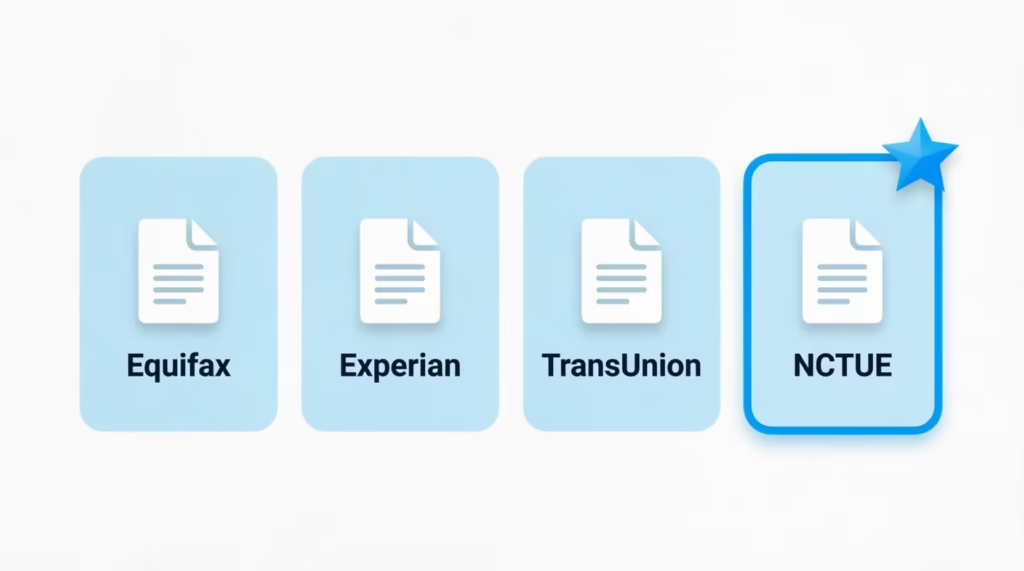
You cannot pick which bureau Verizon pulls. The choice happens on their end, and it can change from one applicant to the next. That is why the smartest move is to prepare all four systems, not just one.
Why There’s No Single Fixed Bureau
Verizon’s credit process shifts based on a few things. The product type matters first. A wireless line, a Fios home internet order, and a phone financing plan can each route to a different bureau. Your region plays a role too. Data coverage varies by state, so a customer in Texas may see a different pull than one in New York.
The system Verizon uses that day also matters. Some orders go through automated decision tools that favor one bureau. Others get reviewed by a human agent who may check a different source. Even the sales channel counts, because in-store, online, and phone orders can follow different paths.
The takeaway is simple. Do not assume Verizon will only touch one file. Prep all four.
What Is NCTUE, and Why It Matters More Than the Big Three
The National Consumer Telecom and Utilities Exchange, or NCTUE, is a specialty consumer reporting agency that few shoppers know about. It collects payment data from phone, cable, internet, and utility companies. Verizon is a member. So are AT&T, T-Mobile, and many power and gas providers.
NCTUE tracks things the big three often miss. If you left a past carrier with an unpaid balance, that debt likely sits in your NCTUE file, even if it never showed up on Equifax, Experian, or TransUnion.
When Verizon runs your credit, NCTUE is often the first stop. A clean NCTUE report can lead to instant approval. A file with old telecom debt can trigger a deposit or a denial, even if your main credit score looks great.
You can request a free NCTUE report once every 12 months. Call 1-866-349-5185 or visit the NCTUE consumer portal to order it. Review the file carefully before you apply to Verizon.
📌 Did You Know: NCTUE is a member-exclusive Fair Credit Reporting Act-compliant data exchange, and it holds telecom and utility payment records on millions of U.S. consumers, per the Consumer Financial Protection Bureau.
How NCTUE Relates to Equifax
Equifax operates NCTUE, but the two are not the same report. Think of it like this. Equifax is the parent company that runs the NCTUE database, yet your Equifax credit file and your NCTUE file live in separate systems.
That split matters for one big reason. Freezing your Equifax credit report does not freeze your NCTUE report. They are separate files, with separate access rules, and Verizon can still pull the NCTUE side even if your Equifax file is locked.
Consumer Federation of America confirms this separation and notes that consumers must freeze each system on its own.
Keep this in mind when you plan your freeze strategy below.
Hard Pull or Soft Pull? What Kind of Credit Check Verizon Runs
Verizon usually runs a hard credit inquiry when you open a new line, add a device financing plan, or sign up for Fios. A hard inquiry shows up on your credit report and can drop your score by a few points, often between 3 and 5. The dip fades within a few months, and the inquiry itself falls off your report after two years.
A soft credit inquiry happens in some cases, such as pre-qualification checks or account reviews. Soft pulls do not affect your credit score at all. They also do not show up to other lenders.
To know which type of pull Verizon will run, look at the checkout page or ask the rep before you submit. Verizon’s own credit check page confirms the check happens before you confirm the order. If you’re comparing carriers, avoid opening several new lines in a short window, because stacking hard pulls can shave more points off your score.
How to Freeze or Unfreeze Your Credit Before Applying
If you froze your credit for security reasons, you need to lift the freeze on all four systems before you apply. Missing one can block your Verizon order and force you to restart. Here is a full checklist.
1. Equifax. Log in at Equifax or call 1-888-298-0045. Ask for a temporary lift, and set a date range that covers your Verizon order.
2. Experian. Visit Experian or call 1-888-397-3742. You can lift the freeze online in a few minutes with your PIN.
3. TransUnion. Go to TransUnion or call 1-888-909-8872. The lift is free and takes effect within one hour when done online.
4. NCTUE. This is the step most people forget. Call 1-866-349-5355 or write to the Security Freeze Exchange Service Center.
Plan to lift each freeze at least one day before you apply. That gives Verizon’s systems time to sync. After your order goes through, you can put the security freeze back in place on each system for free.
💡 Pro Tip: Set a calendar reminder to re-freeze all four systems the day after Verizon approves your order. Freezes are free to place and lift, and they block most identity thieves from opening accounts in your name.
What Happens If You Have Bad Credit or a Thin File
Bad credit approval with Verizon is still possible, but the terms may not be ideal. A thin credit file, meaning very few accounts or a short history, often leads to the same outcomes as a low score.
Here is what you can expect if your file is weak.
Approval with a deposit. Verizon may still let you open a line, but only after you pay a refundable deposit. The amount depends on how risky your file looks.
Approval with a device limit. You may get the line, but not the newest phone. Verizon can cap the total financing amount, forcing you to choose a cheaper device or pay full price upfront.
Denial. If NCTUE shows unpaid prior carrier debt or a recent charge-off, Verizon may reject the application. Old telecom debt is one of the biggest denial triggers.
Prepaid as a backup. If postpaid gets denied, Verizon prepaid does not run a credit check. It costs a bit more per month, but it gets you on the network right away.
Pay any old telecom balance before you apply. Even a small settled account can move your NCTUE file from red to green.
Security Deposits: Amounts and What Determines Them
If Verizon asks for a security deposit, the amount is set per line of service, not per account. Based on customer reports in the Verizon community forum, the deposit amount per line is often $125, $400, or $0, depending on your credit profile. Multi-line orders can add up quickly. A family of four with a $400 per line deposit would owe $1,600 upfront.
Verizon looks at several things to set the amount. Your credit score is the biggest factor. Your NCTUE file comes next, since old carrier debt raises the deposit fast. The number of lines you want and the price of the phone you finance also play a role.
The deposit is refundable, not a fee. It sits with Verizon as a safety net in case you stop paying. You keep full service the whole time. If the deposit is more than you can pay right now, ask about starting with one line instead of four, or picking a cheaper phone. Both moves can cut the deposit or remove it.
How and When the Deposit Is Refunded
Verizon refunds your security deposit after 12 months of uninterrupted service, as long as you paid every bill on time. You can also get the deposit back sooner if you close the account and settle any final balance.
The refund shows up as a credit on your account first. If you have a balance, Verizon applies the deposit to it. If your account is current, you get the cash back. Refunds under $5 come as an account credit. Refunds between $5 and $5,000 arrive as a prepaid card. Anything over $5,000 comes as a check.
One late payment during that 12-month window can reset the clock, so keep autopay on if you can.
Does Verizon Report Your Payments to Credit Bureaus?
Here is a hard truth. Verizon does not report your on-time payments to the big three credit bureaus. Paying your Verizon bill on time every month will not raise your Equifax, Experian, or TransUnion score. Many customers assume it does, and that belief costs them a chance to build credit through other tools.
If credit building is your goal, you need a different tool. A secured credit card, a credit-builder loan, or a rent-reporting service can each add positive data to your file. Verizon simply does not.
There is one small exception. Some third-party services, like Experian Boost, let you link your Verizon bill and add on-time payments to your Experian report only. It does not affect Equifax or TransUnion. And it only helps if your Experian file has room to grow.
What Happens If You Don’t Pay
The rules flip when you stop paying. Verizon does report late payments, especially when the account goes into collections. Most major carriers report unpaid balances, and Verizon is one of them, impacting your credit score significantly.
Here is the timeline: After about 60 days late, Verizon starts calling and sending notices. Around 150 to 180 days late, the account is charged off and sent to a collection agency. That collection can then be reported to the big three bureaus and to NCTUE. The mark can stay on your credit report for seven years.
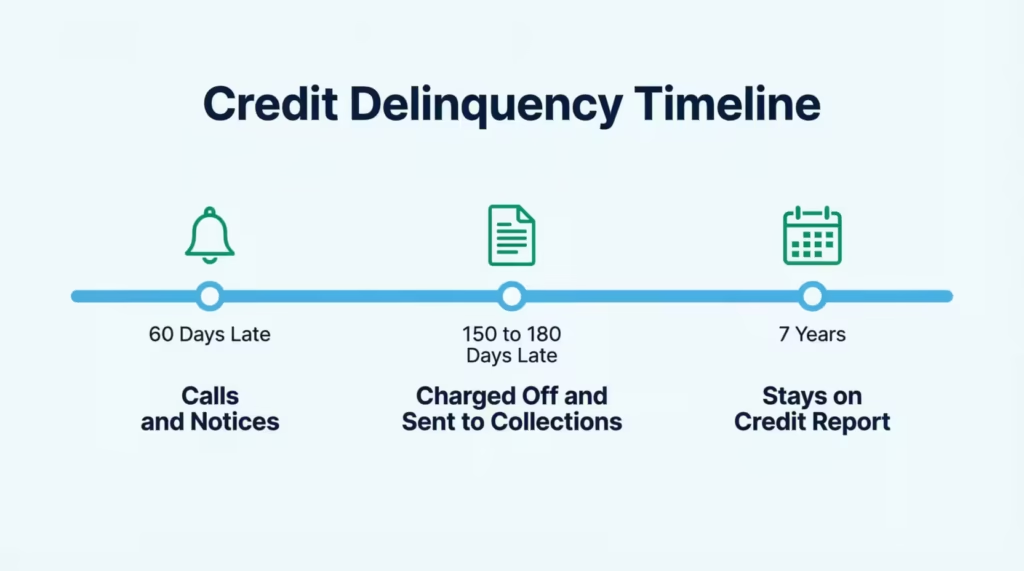
The lesson is clear. Verizon rewards you for staying on the network, not for paying on time. But it will punish you fast if you fall behind.
Understanding a Verizon Adverse Action Notice
If Verizon denies your application or asks for a deposit, they must send you an adverse action notice. This is a legal document required by the Fair Credit Reporting Act. It tells you why the decision was made and which credit factors triggered it.
Read the notice carefully. It should list the credit bureau or specialty agency Verizon used, the score they saw, and the top reasons for the outcome. Common reasons include a low score, too many recent inquiries, past-due telecom debt, or a thin file.
The notice also gives you rights. You have 60 days to request a free copy of the report Verizon used. That is separate from your annual free report. Use this window to check the file for errors, since the data may not match what you see on your regular credit report.
Keep the notice in a safe place. If you plan to dispute anything, you will need the details it contains.
How to Dispute Inaccurate Credit or NCTUE Information
If you spot a mistake on the report Verizon used, you can dispute it under the Fair Credit Reporting Act. The steps are the same for both the big three and NCTUE, but the contact points differ.
Step 1. Get a free credit report. Order your file from the bureau listed on the adverse action notice. For the big three, use AnnualCreditReport.com. For NCTUE, call 1-866-349-5185 or use the online portal.
Step 2. Mark every error. Look for accounts that are not yours, wrong balances, wrong dates, or old debt that should have fallen off. Circle each one.
Step 3. File the dispute in writing. Send a letter to the bureau with copies of any proof. Include your name, address, and the account details. To dispute NCTUE data, mail your letter to the NCTUE Dispute Department, P.O. Box 105161, Atlanta, GA 30348.
Step 4. Wait for the response. The bureau has 30 days to investigate. If they agree the item is wrong, they will remove or fix it. You will get a free updated copy.
Step 5. Re-apply to Verizon. Once the file is clean, submit a new application. The credit decision should improve.
⚠️ Mistake to Avoid: Do not dispute an item just because it hurts your score. Only dispute data that is truly wrong. Filing false disputes can be treated as fraud and can hurt you later.
Financing a Device vs. Opening a Basic Line: Does the Check Differ?
Yes, the check is not the same for both. Opening a basic wireless line involves a lighter review. Verizon still runs a credit check bureau pull, but the bar is lower because you are only signing up for monthly service.
A device financing plan is a bigger deal. A new iPhone or Galaxy on a 36-month device payment plan can add over $1,200 in credit you are asking Verizon to extend. That is a real loan, and it triggers a full review.
Here is what changes when you add device financing to the order.
Deeper credit pull. Verizon may check more than one bureau to confirm your ability to pay over three years.
Higher score threshold. A score that gets you a basic line may not get you the flagship phone.
Larger deposit or down payment. If your file is thin, Verizon may ask for money down on the device, on top of any account deposit.
Financing cap. Verizon can approve the line but limit the phone price. If the cap is $500, you can only pick a mid-tier device.
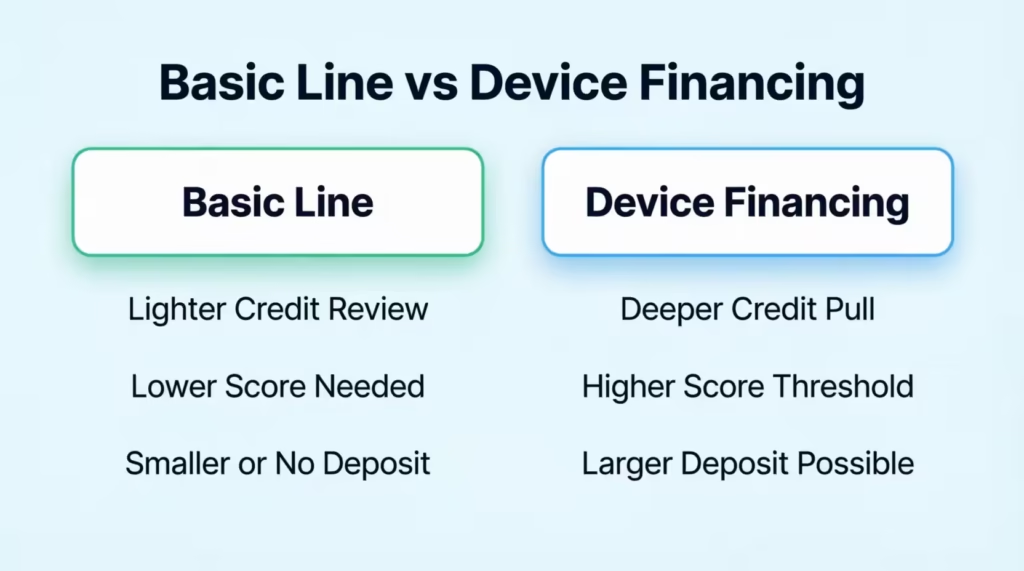
If you want the newest phone but your credit is shaky, buy the phone outright or on a different card, then bring it to Verizon as a BYOD (bring your own device). That way, only the basic line goes through credit review.
New to the U.S.? How Verizon Handles International Credit History
New arrivals to the United States face a tough spot. You may have a strong credit history back home, but U.S. bureaus do not see it. That thin U.S. file can lead to a deposit, a device financing denial, or both.
In the past, Verizon partnered with Nova Credit to let newcomers use their international credit history to finance a phone. That option is no longer offered. Verizon confirms the Nova Credit financing option was discontinued as of April 11, 2025, so new-to-country customers can no longer use this route to finance a device through Verizon.
That leaves a few practical options for newcomers today.
Start with prepaid service. Verizon prepaid skips the credit check. You get on the network right away, and you can switch to postpaid later once you build a U.S. credit file.
Bring your own device. If you can pay for a phone in full or use an unlocked model from home, you skip the device financing step. Only the basic line goes through credit review, which is easier to clear.
Build a thin U.S. file first. A secured credit card, a credit-builder loan, or a co-signed cell plan can build enough U.S. history in six to twelve months to get you approved with lower deposits.
Ask about a deposit. A refundable deposit may still get you approved for postpaid service. It ties up cash for a year, but it opens the door.
Immigration status does not disqualify you. A thin U.S. credit history is the real barrier, and it fades fast once you start using credit tools in the country.
Frequently Asked Questions (FAQs)
What credit bureau does Verizon use for credit checks?
Verizon most often pulls NCTUE, a telecom-specific bureau run by Equifax, along with one of the big three (Equifax, Experian, or TransUnion) depending on the order type and region.
Does Verizon do a hard credit check?
Yes, Verizon usually runs a hard inquiry when you open a new line or finance a device, which can drop your score by 3 to 5 points for a few months. Soft pulls happen only for pre-qualification checks and don’t affect your score.
Does Verizon do a credit check for new customers?
Yes, new postpaid customers go through a credit check that may pull NCTUE and one of the major bureaus. Prepaid service skips this entirely, since it requires no credit check at all.
Will Verizon accept you with bad credit?
Yes, but you may need a refundable deposit of $125 to $400 per line or face a device financing cap. Prepaid is a backup option since it requires no credit check.
Does Verizon report to the credit bureau?
Verizon does not report on-time payments to Equifax, Experian, or TransUnion, so paying your bill won’t build your credit. It does report missed payments and collections after about 150 to 180 days late, which can stay on your report for seven years.
How to get Verizon removed from credit report?
If a Verizon collection account is inaccurate, dispute it with the bureau listed on your adverse action notice within the Fair Credit Reporting Act process. For NCTUE errors specifically, mail your dispute to the NCTUE Dispute Department, P.O. Box 105161, Atlanta, GA 30348.
Who does Verizon use for debt collections?
The article doesn’t name Verizon’s specific collection agency, but it confirms unpaid balances are charged off around 150 to 180 days late and sent to a collection agency, then reported to the big three bureaus and NCTUE.
What carrier does not check credit?
Verizon prepaid service does not run a credit check, making it an option for people with bad credit or a thin file. You pay a bit more per month but get connected immediately without a credit review.
What’s the easiest phone company to get approved for?
Prepaid plans across carriers, including Verizon prepaid, skip the credit check entirely and are the easiest path to approval. Postpaid approval with any carrier depends on your NCTUE file and main credit score.
Is Verizon a hard or soft pull?
Verizon typically runs a hard pull for new lines and device financing, which shows on your credit report and can briefly lower your score. Soft pulls occur only during pre-qualification checks and don’t affect your score.
Wrapping Up
Verizon’s credit check is not a single-bureau event. The carrier can pull Equifax, Experian, TransUnion, and, most importantly, NCTUE. That fourth file often decides the outcome, since it holds telecom debt the big three miss. For most readers, the smartest approach is to check all four reports, lift every freeze, and clear any old carrier balance before you apply.
That step alone can shift you from a large deposit to no deposit at all. Verizon also does not report on-time payments, so build credit through other tools.
If this guide helped you feel ready, share it with a friend who’s about to switch carriers so they don’t get blindsided at checkout.