
That collection account sitting on your credit report feels like a wall between you and the loan, apartment, or credit card you need right now. Maybe you forgot about an old bill, or maybe a debt you don’t even recognize just popped up. Either way, learning how to remove collections from your credit report is the fastest path back to financial breathing room.
The most reliable way to remove a collection is to first validate the debt, dispute any inaccuracies with the credit bureaus, and then negotiate a written pay-for-delete or goodwill removal for anything left.
In this guide, we’ll show you each step. We’ll share expert tips and help you avoid traps that keep collections around too long.
Key Takeaways
This guide explains how to remove collections from a credit report, covering debt validation, FCRA disputes, goodwill letters, pay-for-delete negotiation, medical debt rules, and realistic removal timelines.
Core Facts:
- Collections must be removed from a credit report 7 years and 180 days after the original delinquency date, regardless of whether the debt was sold or paid.
- A debt validation letter must be sent within 30 days of a collector’s first written notice, and the collector must pause collection activity until they provide proof.
- Pay-for-delete agreements must be obtained in writing before any payment is sent, since verbal promises from collectors are not enforceable.
- The CFPB’s 2025 rule banning medical debt from credit reports was vacated by a federal court in July 2025 and is not currently in effect.
- Voluntary bureau policies still remove medical collections under 500 dollars and any paid medical collection, separate from the vacated federal rule.
- Realistic removal timelines range from 30 to 90 days depending on the method, since bureau investigations alone take up to 30 days by law.
Best for:
- Readers who found a collection account on their credit report and need to determine whether it is inaccurate, unpaid, paid, or medical debt.
- People preparing for a mortgage, auto loan, or apartment application who need a realistic timeline for removing a collection before applying.
- Anyone confused about current medical debt reporting rules or considering a pay-for-delete negotiation before making a payment.
Diagnose Your Collection Before You Act
Before you send a single letter or make one phone call, you need to know exactly what you’re dealing with. Rushing into a payment or a dispute without the facts is how most people accidentally make things worse. A collection account can fall into one of four buckets, and each one needs a different game plan.
The four types are:
- Inaccurate collections (wrong amount, wrong person, or debt you never owed)
- Valid and unpaid (the debt is real and still open)
- Valid and already paid (you settled it, but it still shows)
- Medical collections (which have special rules in 2026)
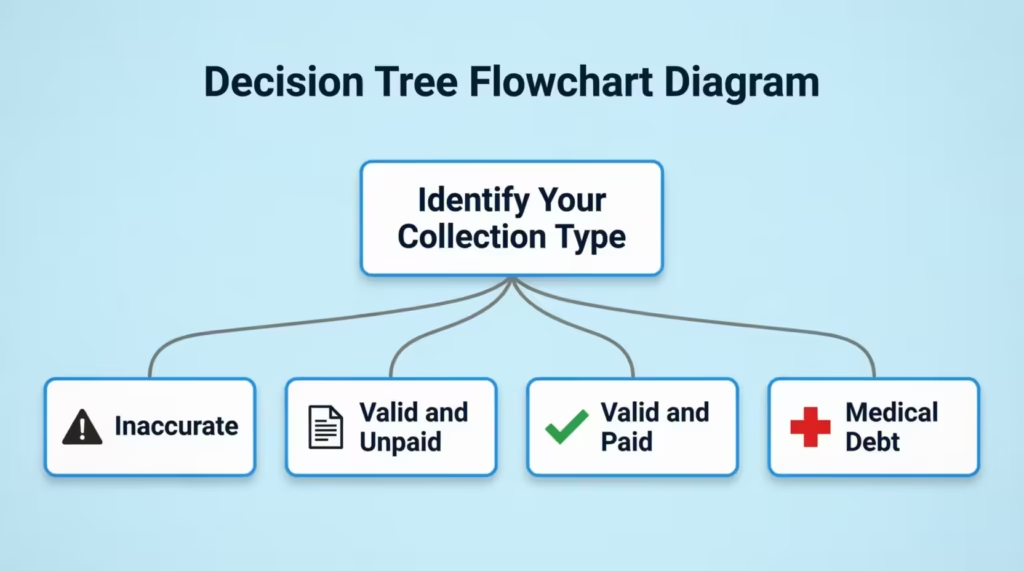
Knowing your bucket saves you time, money, and stress. For example, paying a debt you could have disputed off your report is a costly mistake.
Sending a goodwill letter for a debt you never owed wastes energy you could spend on a real dispute. The Fair Credit Reporting Act (FCRA) gives you strong rights, but you only get to use them if you pick the right tool for the right situation.
⚠️ Mistake to Avoid: Never call the collector to “just ask about” the debt before you’ve pulled your reports. A casual admission on a recorded line can be treated as acknowledgment of the debt and may restart clocks you didn’t want to touch.
Pull Your Full Credit Reports From All Three Bureaus
Start by getting your reports from Experian, Equifax, and TransUnion. The only federally authorized free source is AnnualCreditReport.com, and since 2023 you can request free reports there every week. Skip the “free credit score” apps for this step because they often show only one bureau and leave out key details.
Look at all three reports side by side. A collection may show on one bureau but not the others, or the account may list a different balance on each one. Write down these details for every collection you find:
- The original creditor (the company you first owed money to)
- The current collection agency listed
- The account number
- The original delinquency date (when you first fell behind, not when the collector bought it)
- The balance and status (open, paid, charged off)
- The date reported and date of last activity
These details matter. A wrong original delinquency date can push a collection off your report years sooner. A mismatched balance across bureaus is itself grounds for a dispute.
Identify Who Currently Owns the Debt
Debts change hands. A lot. Your original creditor (say, a hospital or a credit card issuer) may have charged off the debt and sold it to a collection agency. That agency may have then sold it again to a debt buyer, who then hired another agency to collect it. The name on your report is only useful if it matches who legally owns the debt today.
To find the current owner, look at your credit report first. Then check any recent letters you’ve received. If the trail is unclear, a debt validation letter (covered next) will force the collector to prove they have the right to collect.
If they can’t, that’s often enough to get the item deleted. Confirming the true owner also tells you which entity to contact for negotiations. A goodwill letter to an original creditor is very different from a pay-for-delete request to a third-party debt buyer.
Send a Debt Validation Letter
A debt validation letter is your single strongest first move. Under the Fair Debt Collection Practices Act (FDCPA), you have 30 days from the date you receive a debt collector’s first written notice to request validation in writing. Once you send that letter, the collector must stop all collection activity until they provide proof.
The validation period lasts 30 days after you receive the collector’s initial notice, and any dispute during that window triggers strong protections.
Your validation letter should ask for these specific proofs:
- The original creditor’s name and address
- The original account number
- The exact amount owed with an itemized breakdown of the principal, interest, and fees
- Proof the collector has the legal right to collect the debt (assignment or purchase records)
- The date of the original delinquency
- Documentation that the debt is within the statute of limitations
Send the letter by certified mail with return receipt requested. This gives you a legal paper trail. Keep a copy of everything. Save the green certified mail card when it comes back.
If the collector can’t validate the debt, they must stop reporting and stop collecting. Many collections vanish at this stage because debt buyers often lack full paperwork on old accounts. If they do respond with valid proof, you still have your dispute and negotiation options open.
💡 Pro Tip: Send your validation letter within the 30-day window even if the debt looks real. The paperwork trail alone gives you leverage later, and forcing verification often turns up mistakes you can dispute.
Dispute Inaccurate or Unverifiable Collection Information
If any detail on your credit report is wrong, the FCRA gives you the right to dispute it directly with the credit bureaus. Common grounds for dispute include:
- The debt isn’t yours (identity theft or mistaken identity)
- The balance is incorrect
- The account status is wrong (shows unpaid when you paid it)
- The original delinquency date is inaccurate
- The debt is a duplicate listing
- The debt is beyond the 7-year reporting period
- The collector cannot verify the account
File your dispute directly with each bureau reporting the error. You can do this online, by mail, or by phone:
Written disputes sent by certified mail tend to create the strongest record, but online disputes are faster. Include copies (never originals) of any supporting documents. This includes receipts, canceled checks, court records, and identity theft reports.
What Happens After You File a Dispute
Once the bureau gets your dispute, the FCRA requires them to investigate within 30 days (45 days in some cases). They contact the collector, who must verify the account is accurate. Three things can happen next:
- The item is deleted. If the collector doesn’t respond in time or can’t verify the debt, the bureau must remove it. This is the outcome you want.
- The item is updated. The bureau may correct a balance, status, or date without deleting the account. This can still help your score if the fix removes negative details.
- The item is verified. The collector confirms the debt is accurate. If you disagree, you can request the method of verification, add a 100-word consumer statement to your file, or escalate through other options covered later in this guide.
Keep every letter and dated notice. If you find new grounds later (say, the collector’s response contradicts their earlier records), you can file a follow-up dispute.
Remove a Paid Collection With a Goodwill Letter
A goodwill letter is a polite written request asking the original creditor to remove a paid collection as a one-time courtesy. It’s not a legal right. Nothing in the FCRA or FDCPA requires a creditor to grant it. But when it works, it works fast.
Goodwill letters only make sense when three things are true. First, the debt is legitimate, and you actually owed it. Second, it’s already paid or settled. Third, the creditor (not just the collection agency) still has a relationship with you or has a track record of granting goodwill removals.
Keep the letter short, respectful, and human. Take responsibility for the missed payment. Explain the specific reason it happened (job loss, medical emergency, family issue). Mention any positive history you have with them. Then ask, clearly and politely, if they would remove the collection as a goodwill gesture.
For example, Michael, a marketing coordinator at a small tech firm, had one late $340 medical co-pay from 2023 that went to collections. After paying it off, he sent a one-page goodwill letter explaining he had switched insurance plans and missed the bill during the transition. The original creditor agreed to a courtesy deletion within six weeks.
Address the letter to the original creditor, not the collection agency. Third-party collectors rarely have authority to grant deletions this way. Send it by mail with your account number and current contact information. Expect silence or a “no” more often than a “yes,” and be ready to send a polite follow-up 30 to 45 days later.
Negotiate Pay-for-Delete Before You Pay
Pay-for-delete is when a collection agency agrees to remove the item from your credit report in exchange for payment. Done right, it’s one of the most powerful tools available. Done wrong, it’s how people end up paying money and still having the collection on their report.
The single most important rule: get the agreement in writing before you send one dollar. A verbal promise from a rep on the phone is worth nothing. If it’s not on paper (or in an email you can print), it did not happen.
Your written agreement should include:
- The exact amount you’ll pay
- Confirmation the collector will request deletion from all bureaus reporting the item
- A specific timeline for the deletion (usually within 30 days of payment)
- The signature or authorized email of a company representative
- Your account or reference number
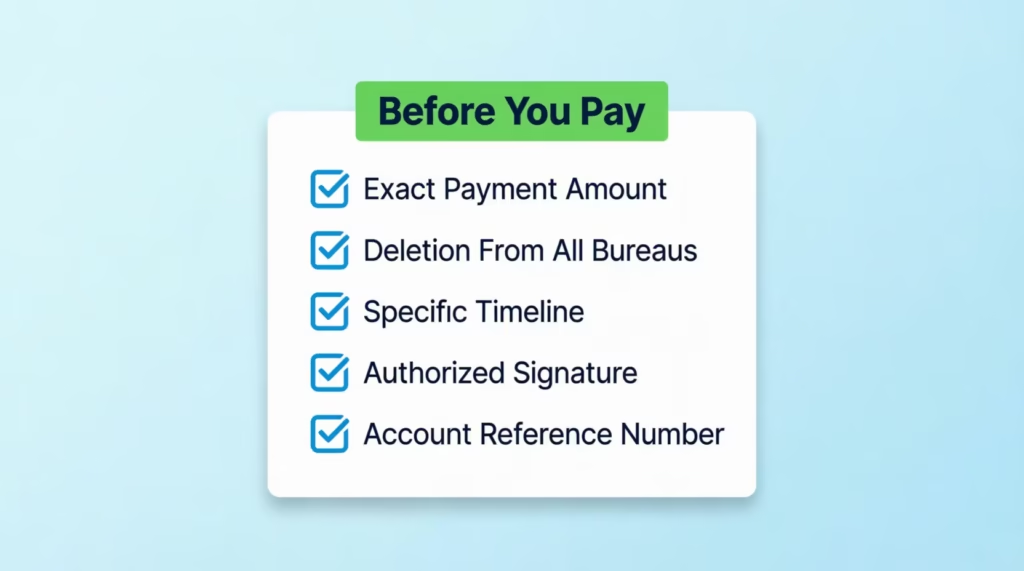
Use certified mail or a documented email thread. Never give the collector access to your bank account through an ACH authorization or post-dated check. Instead, pay by cashier’s check, money order, or a one-time debit card payment so they cannot pull funds again.
After you pay, save the receipt, the written agreement, and your bank records. Wait 30 to 45 days, then pull your credit reports to confirm the item is gone. If it’s still there, contact the collector with your written agreement in hand. If they refuse, you have grounds for a formal dispute and a complaint to the CFPB.
📌 Did You Know: Some collection agencies flat-out refuse pay-for-delete as company policy. If yours does, don’t waste time arguing. Ask for a “paid in full” settlement, then follow up with a goodwill letter to the original creditor.
Understand the Risk of Re-Aging and Reactivating Old Debt
Re-aging is when a collection’s dates get reset so it stays on your credit report longer than the law allows. There are two kinds, and only one is illegal.
Illegal re-aging happens when a collector reports a new “date of first delinquency” that’s later than the real one. This artificially extends the 7-year FCRA reporting window. If the delinquency date on your report changes without a valid reason, you can dispute it. This may also lead to a CFPB complaint.
Accidental reactivation is different. This is when you unintentionally restart the statute of limitations on an old debt. In most states, making a payment, signing a payment plan, or even verbally admitting the debt is yours can restart the clock. That means a debt that was too old to sue over becomes legally collectible again.
For any collection that’s close to falling off, do these two things first. Check your state’s statute of limitations. Then confirm the original delinquency date. If the debt is near the end of either clock, think carefully before contacting the collector, making a partial payment, or entering a payment plan. Sometimes the smartest move is to let the debt age off your report without touching it.
How Long Collections Legally Stay on Your Report vs. When You Can Be Sued
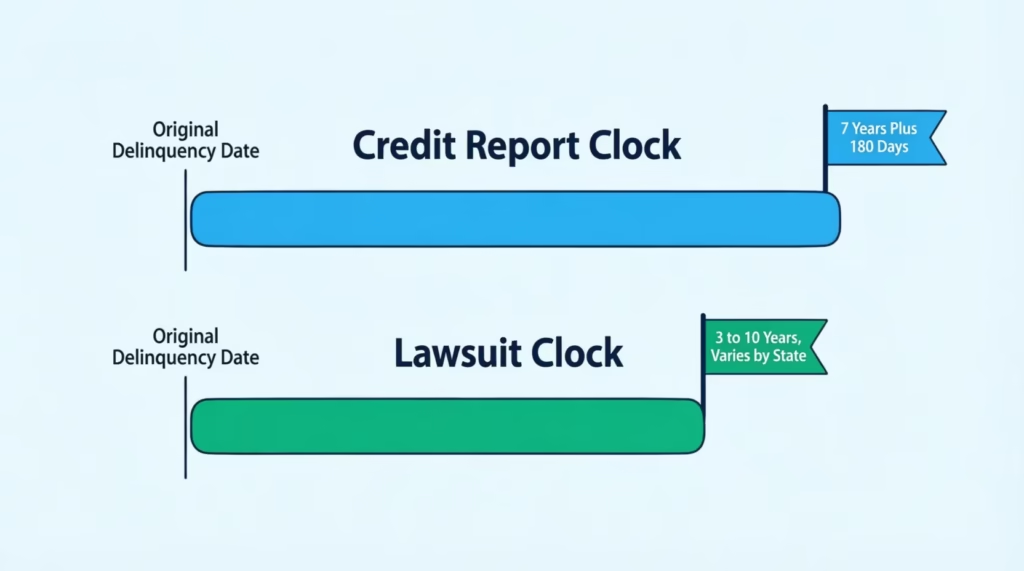
Two different clocks affect old debt, and mixing them up is one of the most common (and costly) mistakes people make.
The FCRA 7-year reporting period controls how long a collection can appear on your credit report. According to the FTC’s official FCRA PDF, the 7-year clock starts from the original delinquency date (the date you first fell behind with the original creditor, plus 180 days). It does not restart when the debt is sold or when you make a payment. After the 7 years plus 180 days, the collection must be removed.
The statute of limitations is completely separate. It controls how long a creditor or collector has to sue you in court. It varies by state (usually 3 to 6 years, sometimes up to 10) and depends on the type of debt. Unlike the FCRA clock, the statute of limitations can be restarted in many states by a partial payment, a written promise to pay, or sometimes just acknowledging the debt.
Here’s the practical takeaway. A debt might be past the statute of limitations (meaning you can’t be sued) but still legally reportable on your credit file. Or the debt might be off your credit report but still collectible in court in some states. Never assume one clock tells you anything about the other. Check both before you act.
| Clock | What it controls | Typical length | Can it restart? |
|---|---|---|---|
| FCRA reporting period | How long a collection stays on your credit report | 7 years + 180 days | No |
| Statute of limitations | How long you can be sued for the debt | 3 to 10 years (varies by state) | Yes, in many states |
What’s Actually True About Medical Collections in 2026
Medical debt rules have shifted quickly, and a lot of the advice online is out of date. Here’s the current picture as of 2026.
In January 2025, the CFPB finalized a rule that would have banned medical debt from credit reports entirely. That rule never took effect. On July 11, 2025, a federal judge in the Eastern District of Texas vacated the rule, finding it exceeded CFPB authority under the FCRA. So the sweeping federal protection people expected does not exist.
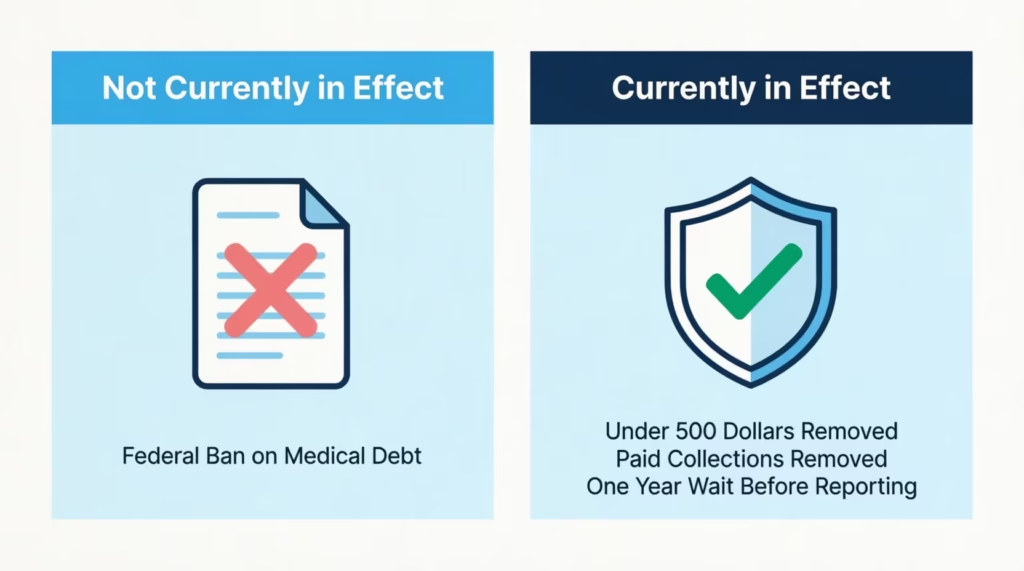
What does still apply are the voluntary bureau practices that started in 2022 and 2023. Equifax, Experian, and TransUnion still voluntarily do the following:
- Remove medical collections with an initial reported balance under $500 from consumer credit reports
- Remove any medical collection that has been paid in full
- Wait one year (instead of the old six months) before a new unpaid medical collection can appear on your report
That means small medical collections and paid medical collections should not be showing up. If one appears anyway, dispute it directly with the bureau. This is often a fast, high-success dispute because the item is not supposed to be there under bureau policy.
For larger unpaid medical debts, you have the same options as with any collection. You can validate the debt, dispute any inaccuracies, negotiate a pay-for-delete, or request a goodwill removal after you pay. Also request an itemized medical bill from the provider. Coding errors, duplicate charges, and insurance billing mistakes are common. A careful review often uncovers grounds for a dispute.
How Long Removal Actually Takes
Ads that promise to remove collections in “24 hours” or “7 days” are misleading. In real life, the timelines are set by federal law and how quickly each party responds. Setting the right expectations helps you plan around a mortgage application, apartment search, or auto loan.
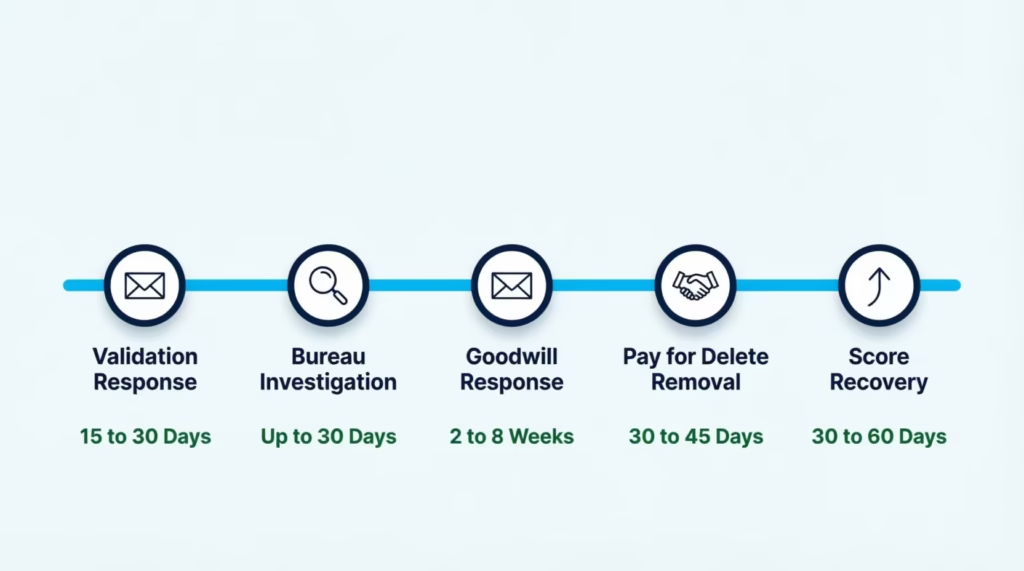
Here’s what to actually expect:
- Debt validation response: The collector must respond before resuming collection activity, which typically takes 15 to 30 days after they receive your letter.
- Credit bureau dispute investigation: 30 days by law, sometimes extended to 45 days if you send new information mid-investigation.
- Goodwill letter response: Anywhere from 2 to 8 weeks. Some creditors never respond at all.
- Pay-for-delete removal: 30 to 45 days after payment, once the collector submits the deletion request to the bureaus.
- Credit score recovery after deletion: Score changes usually show up within one full billing cycle, often 30 to 60 days after removal.
Plan for a realistic 30 to 90 day window from your first letter to the item disappearing. If you’re preparing for a mortgage, start at least three to six months before you plan to apply. Rushing the last few weeks before an application often means paying money you didn’t have to pay just to speed things up.
Should You Do This Yourself or Hire a Credit Repair Company?
In every step in this guide, you can do yourself for the price of postage and some time. Credit repair companies charge anywhere from $79 to $150 per month, sometimes for many months, to send the same letters you can send in an afternoon.
Doing it yourself makes the most sense when:
- You have one to three collections to address
- Your reports contain clear inaccuracies you can point to
- You’re comfortable writing simple letters and tracking responses
- You have a specific timeline and want direct control over the process
Hiring help can make sense when:
- You have many negative items across multiple bureaus and don’t have time to manage them
- The collections involve identity theft, litigation, or complex chain-of-title issues
- You’ve tried the DIY route and hit walls you can’t get past
If you hire someone, watch for these red flags:
- They ask for money before any work starts (this is illegal under the Credit Repair Organizations Act).
- They promise to remove accurate negative information.
- They tell you to stop paying your current debts.
- They refuse to provide a written contract with a three-day cancellation clause.
- They claim to have special connections with the credit bureaus.
None of these hold up.
A credit repair company cannot legally do anything you can’t do yourself. They can save you time. They cannot buy you a better law.
What to Do If the Bureau or Collector Refuses to Remove the Item
Sometimes you follow every step correctly, and the collection still stays put. When that happens, you have real escalation options.
File a complaint with the CFPB. The Consumer Financial Protection Bureau complaint portal lets you file directly against credit bureaus and debt collectors. Companies are required to respond, usually within 15 days. Many disputes that dragged on for months suddenly get resolved once a CFPB complaint lands in the file.
Request the method of verification. Under the FCRA, after a dispute is closed, you can ask the bureau exactly how they verified the debt. If they can’t produce a real answer beyond “the collector said it’s correct,” that’s often grounds for another dispute or legal action.
File with your state attorney general. Most state AG offices handle consumer complaints and have real authority over debt collectors operating in the state. This is especially useful when a collector is violating state-specific rules like licensing or communication limits.
Contact a consumer protection attorney. If the collector or bureau has violated the FCRA or FDCPA, you may be entitled to damages up to $1,000 per violation plus legal fees. Many consumer protection lawyers work on contingency (they only get paid if you win) and offer free consultations. The National Association of Consumer Advocates directory can help you find one in your state.
Escalation works. Collectors and bureaus process millions of accounts every year, and most of them count on consumers giving up. Showing that you know your rights and are willing to file complaints changes their math quickly.
Frequently Asked Questions (FAQs)
How do I remove collections from my credit report ASAP?
There’s no legitimate 24-hour or 7-day removal. Realistic timelines run 30 to 90 days from your first letter, since bureau investigations alone take up to 30 days by law.
How long until a collection falls off my credit report?
A collection must be removed 7 years and 180 days after the original delinquency date. This clock starts with the first missed payment, not when the debt was sold or paid.
Will removing collections improve my credit score?
Yes, deleting a collection typically improves your score within one billing cycle. Most people see the change reflected 30 to 60 days after the item disappears from your report.
Can you negotiate pay for delete for collections?
Yes, but you must get the deletion agreement in writing before sending any payment. A verbal promise from a collector isn’t enforceable, and paying first eliminates your negotiating leverage entirely.
How do I get a goodwill deletion?
Send a short, honest letter to the original creditor explaining why you missed the payment, confirming the debt is already paid. Goodwill removals aren’t guaranteed and typically take 2 to 8 weeks for a response.
Should I pay off a 3-year-old collection?
Check your state’s statute of limitations first, since a payment can restart that clock in many states. If the debt is still within the limitations period, paying is usually safe; if it’s close to expiring, get advice before acting.
Is it better to pay off a collection or have it removed?
Removal is always better than paying, since a deleted account no longer affects your score at all. A paid collection that stays on your report still counts as a negative mark under most scoring models.
Does paying off a collection reset the clock?
It does not reset the 7-year FCRA reporting clock, which is fixed to the original delinquency date. It can, however, restart your state’s statute of limitations for being sued, so check that separately first.
What’s the difference between disputing and validating a debt?
Validation asks the collector to prove they legally own the debt and forces them to pause collection until they do. Disputing asks the credit bureau to investigate specific inaccurate information already on your report.
Wrapping Up
Removing a collection from your credit report isn’t quick, but it’s very doable when you follow the right order. Diagnose the account first. Validate the debt. Dispute anything inaccurate. Then negotiate pay-for-delete or goodwill removal for anything legitimate that’s left. Understanding the FCRA and FDCPA timelines protects you from re-aging traps and rushed decisions.
Start with validation and disputes before spending any money. This is the best approach for most readers. Paid collections that aren’t removed damage scores just like unpaid ones.
If you know someone stressed about a mortgage denial or a stubborn old collection, share this guide with them. It could save them thousands in denied credit and wasted fees.