
You pulled your credit report and spotted an address that isn’t yours, or maybe one from years ago that you don’t want tied to your name. That’s unsettling. A strange address can hint at identity theft, mess up a loan application, or just make your file look sloppy when a lender reviews it. Many people freeze here because they don’t know if the fix is quick or serious, and whether it will hurt their score.
The good news: you can remove an address from your credit report by filing a dispute with each credit bureau that shows the wrong entry, using the right proof and the right process.
This guide walks you through every step, from spotting the issue to escalating a denied dispute. You’ll learn what to send, where to send it, and how to protect yourself if fraud is involved.
Key Takeaways
This guide explains how to remove an address from your credit report, including diagnosing why it appears, gathering required documents, filing bureau-specific disputes, and escalating denied disputes or fraud cases.
Core Facts:
- An address sits in the personal information section of a credit file and is not used in FICO or VantageScore calculations, so it does not directly affect a credit score.
- Common address disputes require a government-issued ID plus two proof-of-address documents dated within the last 60 to 90 days, such as a utility bill or bank statement.
- Experian, Equifax, and TransUnion maintain separate files, so a dispute must be filed with each bureau showing the incorrect address.
- Under the FCRA, credit bureaus have 30 days to investigate a dispute, extending to 45 days if additional documents are submitted.
- Addresses tied to active authorized user or joint accounts typically cannot be removed while the account stays open and reporting.
- If an address indicates identity theft, the recommended order is placing a fraud alert, freezing credit at all three bureaus, filing an FTC identity theft report, and then disputing the address.
Best for:
- Readers who found an unfamiliar or outdated address on their credit report and want to know whether it needs to be fixed.
- People preparing to file a dispute with Experian, Equifax, or TransUnion and need to know what documents are required.
- Readers whose address dispute was denied, or who suspect the unfamiliar address is linked to identity theft rather than a simple data error.
Does an Address on Your Credit Report Actually Affect Your Credit Score
Short answer: no. Your address sits in the personal information section of your file, not in the scoring section. FICO and VantageScore models look at your payment history, balances, credit age, credit mix, and new credit. They do not read your street name or ZIP code. So an odd address will not drop your score by a single point.
That said, address accuracy still matters a lot. Lenders use your address to confirm identity during underwriting. If your file shows three addresses you’ve never lived at, an auto or mortgage lender may flag your application for extra review, delay the loan, or ask for more paperwork. An unfamiliar address can also be an early warning sign of fraud, which is a much bigger issue than a score dip.
The Fair Credit Reporting Act (FCRA) gives you the right to accurate credit report information. That includes your personal details. You can force a bureau to investigate and correct or remove wrong data, usually within 30 days. So while the address itself won’t hurt your score, cleaning it up protects your identity and keeps your file lender-ready.
📌 Did You Know: The Consumer Financial Protection Bureau says that personal information like addresses is not used to calculate your credit score, but it is used to match your identity across accounts.
Why an Unfamiliar or Outdated Address Shows Up on Your Report
Before you fire off a dispute, take a minute to figure out why the address is there. Most strange addresses fall into a few clear buckets, and each one has a different fix.
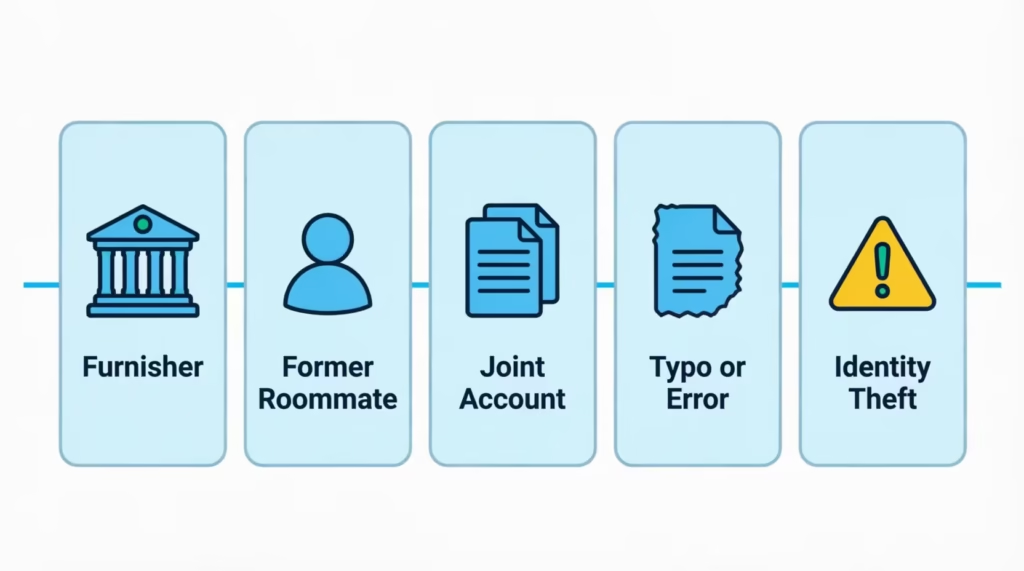
An unfamiliar address on your credit report usually comes from a furnisher. A furnisher is any bank, card issuer, lender, or collection agency that reports data to the bureaus. When you open an account, the furnisher sends your address along with your payment info. If a lender had an old address on file, or if a data entry clerk typed the wrong ZIP, that address lands in your credit file.
Other common sources include:
- A former roommate or family member who listed your address on their own account
- A collections account that was sold and re-reported with a slightly different address format
- A typo or scanning error from a paper application
- An address tied to a joint account or an account where you are an authorized user
- A wrong address that resembles yours but has one digit off
If the address doesn’t match any place you have lived, worked, or received mail, that raises the odds it’s a mix-up between two consumer files, or something worse. Keep reading before you dispute so you file the right kind of claim.
When No Action Is Needed (You Just Moved)
Just moved last month? Seeing your old address on your credit report is completely normal. Bureaus keep a running list of addresses tied to your identity for years. It helps them match new accounts to the right file, and it helps lenders verify you.
You don’t need to remove your old address just because you moved. In fact, removing every past address can make lenders more suspicious, not less. Your file should show a clear history of where you have lived.
The best fix here is simple. Please update the address on your active accounts, such as your credit cards, bank, and loans. Once those accounts report the new address, the bureaus will start showing it as your current one. Old addresses can stay in the file with no impact on your score.
Why You Can’t Remove an Authorized User or Joint Account Address
Here’s a rule that trips up a lot of people. If an address is tied to an account you share with someone else, you usually can’t get it removed on its own.
Say your parent added you as an authorized user on their card years ago, and their home address shows up in your file. That address is linked to a real, valid account. The bureau won’t strip it out because the furnisher keeps reporting it every month.
The same rule applies to joint accounts, like a co-signed car loan or a shared mortgage. As long as that account is active and reporting your co-borrower’s address, that address stays. The only way to remove it is to close or remove yourself from the account, and then wait for the address history to age off.
If the shared account is closed but the address still shows, you can dispute it after several months of no updates. Until then, focus on the addresses you actually can remove.
Signs the Address Points to Identity Theft
Not every wrong address is a typo. Some are red flags for fraud. If a scammer opens an account in your name, they use their own address, not yours, so the statements never reach you. That address then gets reported to the bureaus and shows up in your file.
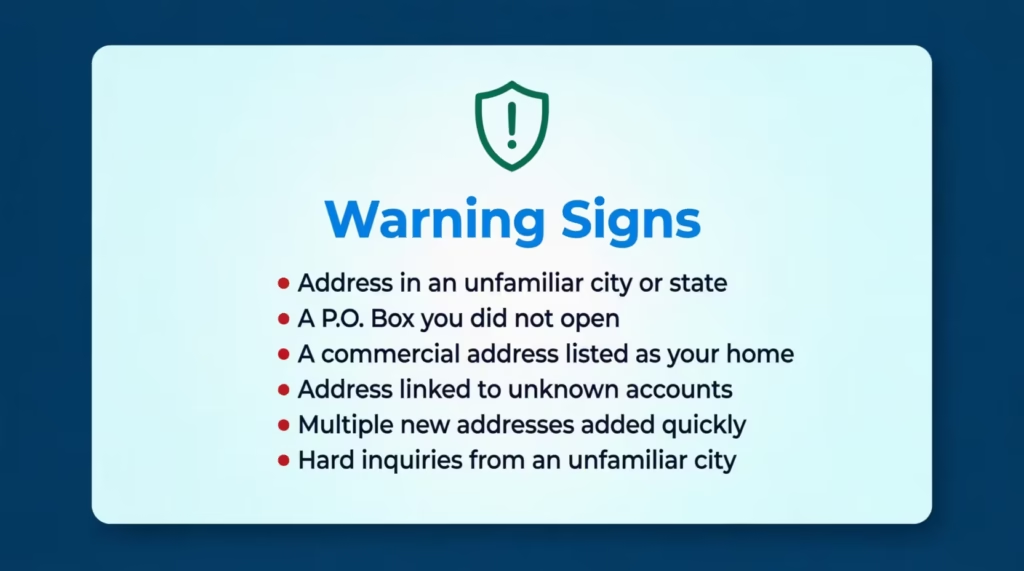
Watch for these fraud signal clues:
- An address in a city or state you have never lived in or visited
- A P.O. Box or mail drop you did not open
- A commercial address, like a warehouse or a storefront, listed as your residence
- An address that appears alongside accounts you don’t recognize
- Multiple new addresses added within a short window
- Sudden hard inquiries from lenders in that same unfamiliar city
If you see one of these, do not just file a simple address dispute. That treats the problem like a clerical error, when it may be identity theft on your credit report. Instead, move to the fraud response steps later in this guide. You’ll want to place a fraud alert, freeze your credit, and file an identity theft report before you argue about the address itself.
Michael, a 38-year-old operations manager in Denver, once found a Miami address on his Equifax file next to a $4,200 store card he never opened. He filed a fraud alert first, then disputed the address. The bureau removed both within three weeks because he treated it as fraud from the start, not as a data mix-up.
What You Need Before Filing an Address Dispute
Getting a dispute approved comes down to proof. Bureaus reject vague or unsupported claims. So gather your paperwork before you open a single portal.
Here’s the core stack of dispute documents you should have ready:
- A recent copy of your credit report from AnnualCreditReport.com, with the disputed address circled or highlighted
- A government-issued ID, like a driver’s license, state ID, or passport, showing your legal name and current address
- Two forms of proof of address dated within the last 60 to 90 days
- A short, clear dispute letter or portal statement explaining which address is wrong and why
For proof of address, use documents that clearly show your name and your correct current address. Strong options include:
- A utility bill for electricity, water, gas, or internet
- A current lease or mortgage statement
- A bank or credit card statement
- A recent pay stub with your address printed on it
- An insurance policy declaration page
- A property tax bill
Avoid handwritten notes, screenshots without headers, or documents older than 90 days. Bureaus want clean, recent, machine-readable proof. If your ID still shows an old address because you just moved, request an address update sticker from your local DMV before you file, or send a lease along with the ID to bridge the gap.
Keep copies of everything you send. If a dispute goes wrong, that paper trail is your best friend.
💡 Pro Tip: Redact your full Social Security number on any document you send. Leave only the last four digits visible. Bureaus don’t need the full number to verify identity, and it lowers your exposure if the mail is ever intercepted.
How to Dispute an Address With Each Credit Bureau
Each bureau handles disputes on its own. Fixing your Experian file does not fix Equifax or TransUnion. You have to file with each one that shows the wrong address. You can dispute online, by mail, or by phone. Online is fastest. Certified mail with return receipt is the strongest paper trail if the case may end up in a legal or CFPB complaint.
Here is a quick comparison of the three bureau processes:
| Bureau | Online Portal | Mailing Address | Typical Response |
|---|---|---|---|
| Experian | Dispute Center | P.O. Box 4500, Allen, TX 75013 | Within 30 days |
| Equifax | myEquifax | P.O. Box 740256, Atlanta, GA 30374 | Within 30 days |
| TransUnion | Service Center | P.O. Box 2000, Chester, PA 19016 | Within 30 days |
Before you file, pull all three reports free at AnnualCreditReport.com so you know exactly which bureau shows the bad address.
Experian
To dispute an address with Experian, log in or create an account at the Experian Dispute Center. Once inside, find the personal information section on your report, select the address you want removed, and choose “This address is not mine” or “This address is inaccurate.”
Upload a scan or photo of your ID and one or two proof-of-address documents. Add a short note like: “This address at 123 Old Street has never been my residence. Please remove it from my file.”
Prefer mail? Send a signed dispute letter with copies (never originals) of your ID and proof of address to:
Experian, P.O. Box 4500, Allen, TX 75013.
Use certified mail with a return receipt so you have proof of delivery.
Equifax
For Equifax, use the myEquifax dispute portal. Sign in, click “Create a new dispute,” and pick “Personal Information.” Select the address you want gone and choose the reason, such as “I have never lived at this address.”
Upload your ID and proof of address. Equifax often asks for two documents, so send both a utility bill and a bank statement if you can.
To dispute by mail, send your letter and copies to:
Equifax Information Services LLC, P.O. Box 740256, Atlanta, GA 30374.
Again, certified mail is worth the small fee.
TransUnion
For TransUnion, log in to the TransUnion Service Center or start a dispute as a guest. Choose the “Personal Information” category, select the wrong address, and pick a reason like “Not my address” or “Outdated address.”
Upload your ID and one proof-of-address document. TransUnion tends to process personal information disputes fast, often within a week or two.
By mail, send your dispute package to:
TransUnion Consumer Solutions, P.O. Box 2000, Chester, PA 19016.
If the wrong address shows on all three bureaus, file three separate disputes on the same day. That way your timelines run in parallel, and you get clean files sooner.
What Happens After You File the Dispute
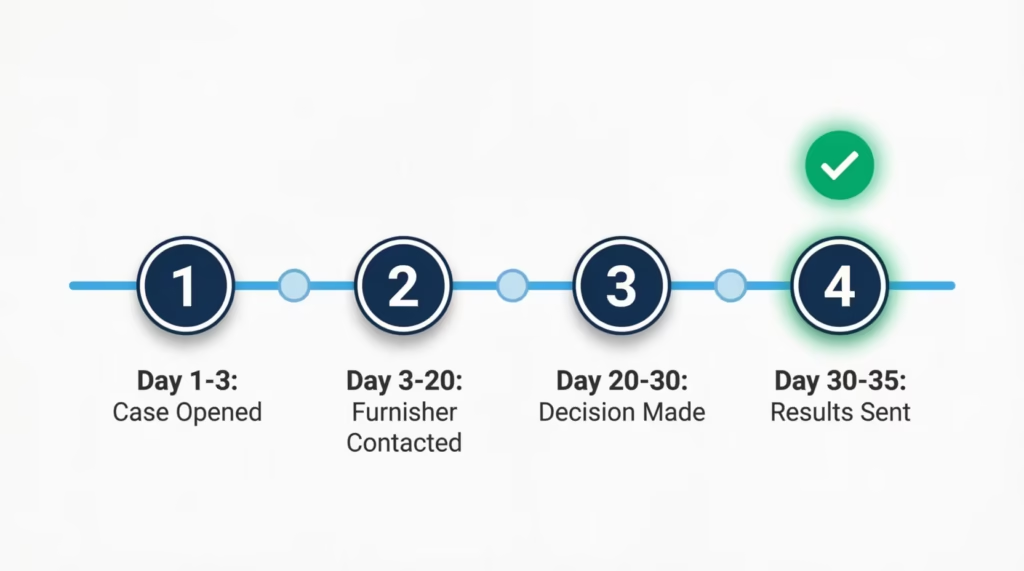
Once you hit submit or drop your envelope in the mail, the clock starts. Under the FCRA, each bureau has 30 days to investigate your claim. If you send extra documents partway through, they can extend it to 45 days.
Here’s the typical dispute investigation timeline:
- Day 1 to 3: The bureau confirms it received your dispute and opens a case number. You should get an email or letter with that number. Save it.
- Day 3 to 20: The bureau contacts the furnisher that reported the address, if one is linked. For addresses with no furnisher, the bureau reviews your proof directly.
- Day 20 to 30: The bureau makes a decision. It will either delete the address, mark it as “unverified” and remove it, correct it, or reject your dispute and keep it on file.
- Day 30 to 35: You receive the dispute results in writing, plus a free updated copy of your credit report showing the change.
If the bureau removes or updates the address, pull your file again a week later to confirm. Sometimes the change takes a few extra days to appear across all lender-facing versions.
If you don’t hear back within 30 days, the bureau is out of compliance. You can push for automatic removal of the disputed item under FCRA rules, or file a CFPB complaint to speed things up. Keep every letter, email, and confirmation number in one folder. That trail matters if you have to escalate.
If the Address Is Tied to Fraud, Do This First
If the strange address looks like identity theft, stop and switch tracks. A standard address dispute is not enough here. You need to lock down your credit and create an official fraud record first, or the scammer will just open more accounts while you argue about one address.
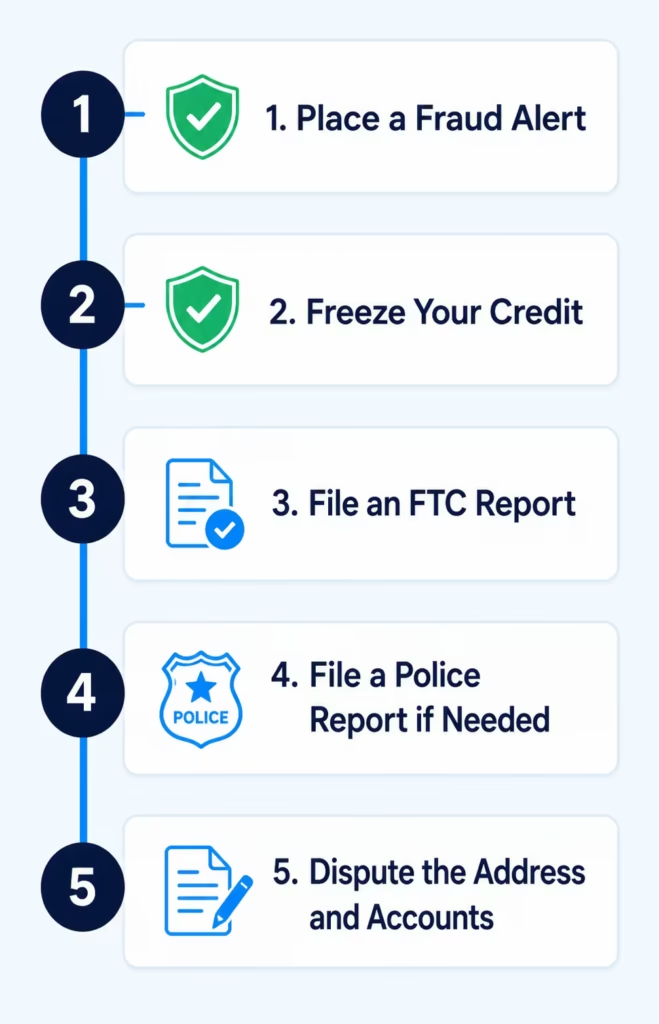
Follow this order:
- Place a fraud alert. Contact one bureau, and it will notify the other two. A free fraud alert lasts one year and forces lenders to verify your identity before opening new credit. If you have an official identity theft report, you can request an extended alert that lasts seven years.
- Freeze your credit at all three bureaus. A credit freeze blocks new accounts entirely until you lift it. It’s free and takes minutes online at each bureau. Freezes stay on until you remove them, so scammers can’t open new lines even if they have your Social Security number.
- File an official FTC identity theft report. Go to IdentityTheft.gov, the FTC’s fraud reporting site. Answer the questions, and it will generate an Identity Theft Report and a personal recovery plan. Print and save both. Bureaus and creditors treat this document as strong proof.
- File a police report if needed. Some creditors will not remove fraudulent accounts without one. Bring your FTC report to your local police station and ask for a copy of the filed report.
- Now dispute the address and any fraudulent accounts. With your FTC report in hand, file a dispute at each bureau. Ask them to block fraudulent accounts and remove the linked address. Under FCRA Section 605B, bureaus must block information you identify as identity theft within four business days of getting a valid report.
Doing these five steps in order shuts down the fraud, then cleans up your file. Skipping straight to the address dispute leaves the door open for more damage.
⚠️ Mistake to Avoid: Do not close your legitimate accounts in a panic. Closing an old card can shorten your credit history and drop your score. Freeze new credit first, then work with your existing lenders to secure current accounts.
What to Do if Your Dispute Is Denied or the Address Comes Back
Sometimes the bureau writes back and says the address was verified. Or the address disappears for a month, then pops right back up. Both are frustrating, but you still have clear next steps.
Start by reading the bureau’s response carefully. It should tell you which furnisher confirmed the address and how they verified it. If the verification looks weak, like “reported by creditor” with no detail, you can push back.
Here’s your escalation path when a dispute is denied:
- Re-dispute with new evidence. Send a second dispute with fresh proof, a stronger letter, or documents you didn’t include the first time. Reference the case number from your first dispute.
- Add a consumer statement. You have the right under the FCRA to add a 100-word statement to your file explaining the disputed address. Lenders will see it during underwriting.
- File a CFPB complaint. The Consumer Financial Protection Bureau forwards your complaint to the bureau and requires a response, usually within 15 days. This often unlocks disputes that a normal appeal can’t.
- Contact your state attorney general. Many states have consumer protection offices that pressure bureaus and furnishers to fix errors.
- Consider an FCRA attorney. If the bureau keeps re-inserting a false address after clear proof, you may have grounds for a lawsuit. Many FCRA lawyers work on contingency.
Bureaus can only add an address back if a furnisher continues to report it. So the real fix often lives with the furnisher, not the bureau. That’s your next step.
Contacting the Furnisher or Creditor Directly
If a specific lender keeps reporting the wrong address, go to the source. Call the customer service number on your account or on the collection notice. Ask for the credit reporting or disputes department, not general support.
Tell them clearly: “You are reporting an address on my credit file that is not mine. Please update your records and stop reporting this address to Experian, Equifax, and TransUnion.”
Follow up in writing. Send a certified letter to the furnisher’s dispute address, which they must give you on request. Include:
- Your account number
- The wrong address they are reporting
- Your correct address
- Copies of your ID and proof of address
- A request that they correct the data with all three bureaus
Under the FCRA, furnishers must investigate direct disputes within 30 days, just like bureaus. If they refuse, add that furnisher to your CFPB complaint. This combined pressure, from you, the bureaus, and the CFPB, usually resolves even stubborn cases.
Jennifer, a 42-year-old finance director in Austin, spent four months fighting a Cleveland address on her TransUnion file. The bureau kept “verifying” it because an old store card had it wrong. Once she called the store card’s back-office team and sent them a certified letter with her lease and driver’s license, the address was gone in 18 days.
Frequently Asked Questions (FAQs)
How can I get an address off my credit report?
File a dispute with each credit bureau showing the wrong address, along with a government-issued ID and two documents proving your current address dated within 90 days. Bureaus typically resolve disputes within 30 days.
Is your credit score tied to your address?
No, your address sits in the personal information section of your file, not the scoring section. FICO and VantageScore only weigh payment history, balances, credit age, credit mix, and new credit inquiries.
How long does it take to remove an old address from a credit report?
Credit bureaus have 30 days to investigate an address dispute under federal law, extending to 45 days if you submit extra documents mid-process. You’ll get written results plus a free updated report once it’s resolved.
How do I remove my address from my Equifax credit report?
Log in to the myEquifax portal, click “Create a new dispute,” select “Personal Information,” and choose the wrong address with a reason like “I have never lived at this address.” Upload your ID plus two proof-of-address documents, since Equifax often requires both.
Can I remove linked addresses tied to authorized user or joint accounts?
Usually not while the account stays open and active, since the furnisher keeps reporting that shared address every month. Removing yourself from the account, or closing it, is the real fix, and the address should age off several months later.
What to do if my address is being used by someone else?
Place a fraud alert, freeze your credit at all three bureaus, and file an identity theft report at IdentityTheft.gov before disputing the address itself. Under FCRA Section 605B, bureaus must block fraud-related information within four business days of receiving a valid report.
Does removing old addresses from a credit report help?
Not necessarily. Lenders use your address history to verify your identity, so omitting every past address can raise more suspicion than leaving a clean, accurate history in place.
Do I need to file a separate dispute with each credit bureau?
Yes, Experian, Equifax, and TransUnion each maintain independent files, so fixing an address on one bureau’s report does nothing to the other two. File all three disputes on the same day so their 30-day timelines run in parallel.
Does disputing an address hurt your credit score?
No, disputing personal information like an address does not affect your credit score, since scoring models don’t factor in your address at all. Only disputes involving account status or balances carry any indirect scoring risk.
Final Thoughts
Cleaning up your credit report starts with knowing what to fix and why. An address does not affect your credit score, but it can slow down loans, confuse lenders, and hide identity theft.
To handle this well, start by diagnosing the address. Next, gather your ID and proof of address. Then, file a dispute with each bureau that lists the error. If fraud is involved, freeze your credit and file an FTC report before disputing. When bureaus stall, escalate through the CFPB or the furnisher directly.
If this guide helped you sort out a confusing report, share it with a friend or family member who just applied for a loan. It could save them weeks of underwriting stress.