
We keep seeing the same worry pop up from shoppers standing at checkout: does clicking “Affirm” quietly damage the credit score you’ve worked so hard to protect? It feels risky because the advice online is all over the place, and one wrong move could show up when you apply for a car loan or a mortgage.
Here’s the short answer: right now, most Affirm activity is reported to two bureaus but is not yet factored into your FICO or VantageScore.
Below, we’ll walk through the exact rules by loan type, which bureaus see what, and what to do if a payment is already late.
Key Takeaways
This guide explains whether Affirm affects your credit score, including which bureaus receive Affirm data, why on-time payments don’t currently raise your score, and what happens if a payment is missed.
Core Facts:
- Affirm reports Pay in 4 and Pay Monthly loans to Experian starting April 1, 2025, and to TransUnion starting May 1, 2025, but not to Equifax.
- Per Affirm’s November 2025 statement, on-time Affirm payments are not currently factored into FICO or VantageScore, so they do not raise your credit score.
- Checking Affirm eligibility uses a soft credit inquiry, which does not affect your score regardless of whether you complete the purchase.
- Some longer Pay Monthly loans can involve a hard inquiry, typically lowering your score by about five to ten points, with effects fading within a few months.
- Missed payments on Affirm loans reported after the April or May 2025 cutoffs can appear on your Experian and TransUnion files once thirty or more days past due.
- Affirm loans taken out before the April 1, 2025 (Experian) or May 1, 2025 (TransUnion) cutoffs generally do not appear on your credit file.
Best for:
- Shoppers deciding whether to use Affirm’s Pay in 4 or Pay Monthly plans and wanting to know the current score impact.
- Anyone who already missed an Affirm payment and needs to understand what to do next.
- Readers comparing Affirm against a credit card for building credit history.
Does Affirm Affect Your Credit Score? The Direct Answer
As of 2026, most Affirm activity does not lower or raise your credit score, even though Affirm now sends loan data to two of the three major bureaus. That gap between “reported” and “score-impacting” is the piece almost every other article gets wrong.
Affirm began reporting new “Pay in 4” loans to Experian on April 1, 2025, and extended that reporting to TransUnion on May 1, 2025. Longer “Pay Monthly” installment loans are also reported to those two bureaus. But per Affirm’s own November 2025 statement, this data is not currently used by FICO or VantageScore to move your score up or down.
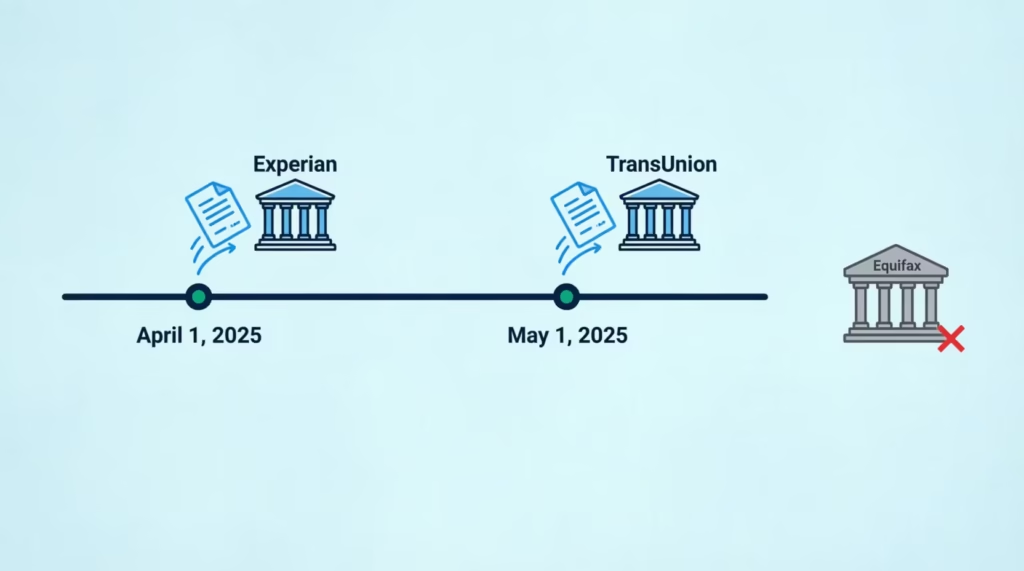
There is one clear exception you still need to care about. Missed or late payments on reported loans can show up on your Experian and TransUnion files. Once a delinquency is on file, it can still affect how lenders view you, even if the scoring models treat the on-time history as neutral. So the “no score impact” rule protects responsible users, but it does not protect careless ones.
If you’re using the Affirm soft credit inquiry check at checkout, that alone won’t touch your score. The nuance is in what happens after you accept the loan and how you pay it back.
Why There’s So Much Conflicting Information Online
Search this topic, and you’ll get answers that flat-out contradict each other. That’s not you being confused. It’s the industry itself that has changed fast.
Before 2025, most buy now pay later (BNPL) providers, including Affirm, kept short-term loan data off your credit report. Older blog posts still describe that world. In April and May of 2025, Affirm started sending loan-level data to Experian and TransUnion. As a result, all articles from before 2025 became outdated overnight.
At the same time, the scoring models built by FICO and VantageScore have not yet updated to treat that new BNPL data as a score input. So Affirm sends the data, the bureau stores it, but the number you see on Credit Karma or your bank app doesn’t move because of it. That is the exact contradiction: reporting is real, score impact is not, and most writers online conflate the two.
There’s also a bureau split people rarely mention. Equifax still does not receive Affirm data. So a lender who pulls only your Equifax file won’t see your Affirm loans at all. Older sites often say “Affirm reports to all three bureaus,” which was never quite right and definitely isn’t right now.
The safest way to read any Affirm article is to check the date. If it was written before spring 2025, treat everything it says about reporting and score impact as stale.
How This Could Change in the Future
This is a moving target, and Affirm has been open about wanting it to move faster. The company has publicly called for industrywide standards so BNPL data is treated consistently across lenders and bureaus.
FICO has also studied how BNPL loans might be built into future scoring models, and Affirm has taken part in that work. When those models update, on-time Pay in 4 and Pay Monthly payments may boost your score. But missed payments could weigh more heavily against it.
For now, the smartest move is to verify the current status yourself before trusting any article, including this one. Check Affirm’s help center for policy updates. You can also pull your free Experian and TransUnion reports to see what’s on your file today.
Soft Credit Check vs. Hard Inquiry: What Happens When You Apply
The check Affirm runs depends on the product you pick at checkout, and knowing which one is coming is the single best way to avoid a surprise on your credit report.
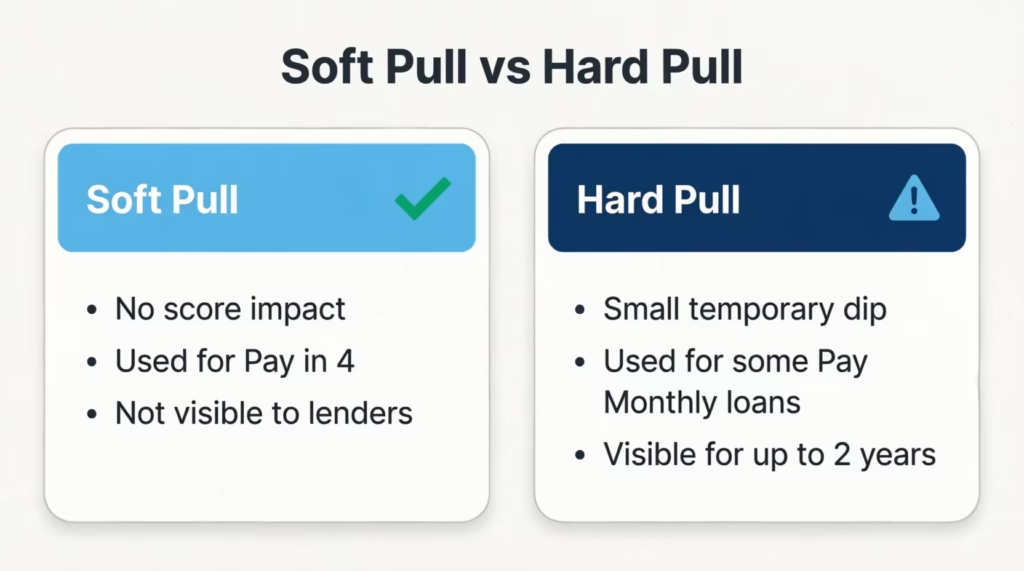
For most short-term plans, Affirm uses a soft credit inquiry. A soft pull confirms your identity and checks your basic credit profile without leaving a visible mark on your credit report. It does not affect your score at all. That’s the check you’ll see for eligibility and for Pay in 4.
For certain longer-term Pay Monthly installment loans, Affirm may run a hard inquiry. A hard pull is visible on your report to future lenders and can cause a small, temporary dip.
Most credit experts put the typical drop at under five points, and the effect usually fades within a few months. The inquiry itself stays visible for up to two years but stops influencing your score after about twelve months.
Here’s how to tell before you click. Affirm’s checkout screen shows the plan details before you accept. Pay in 4 and shorter interest-free plans typically say “checking eligibility won’t affect your credit score.” Longer Pay Monthly plans, especially those with an APR attached, will note that a hard inquiry may apply. If the screen doesn’t say it plainly, tap for the loan disclosure. That is where the inquiry type is spelled out.
The rule to remember: prequalifying is a soft pull, and completing certain longer loans is where a hard pull can enter the picture.
Does Checking Your Affirm Eligibility Hurt Your Score?
No. Checking your Affirm eligibility uses a soft pull, and a soft pull does not lower your score. It’s the same type of check you get when you preview a credit card offer or your own credit report.
This is true whether or not you finish the purchase. You can prequalify, see the plan options, and walk away with zero impact on your credit file. Nothing about the eligibility check appears on the version of your report that lenders see.
The line to watch is when you move from checking eligibility to actually taking out a longer Pay Monthly loan. A hard inquiry can help, but its impact is minor. It usually lowers your score by about five to ten points. This drop often levels out within a few months if you make on-time payments elsewhere.
How Pay in 4 Affects Your Credit Score
Pay in 4 is Affirm’s short, interest-free plan that splits a purchase into four equal payments, usually every two weeks. It’s the most common Affirm product, and for score purposes, the rules are specific.
Applying for Pay in 4 uses a soft credit inquiry only. You can see and accept the plan at checkout without touching your score. Nothing about the eligibility check will show up on your credit report.
Pay in 4 loans issued on or after April 1, 2025 are reported to Experian, and loans issued on or after May 1, 2025 are reported to TransUnion. Older Pay in 4 loans taken out before those dates generally are not on your file. So if you used Pay in 4 in 2024, don’t expect to find it when you pull your report now.
The most important part: per Affirm’s November 2025 statement, on-time Pay in 4 payments do not currently raise your credit score. Neither the loan being on your report nor a perfect payment history on it is factored into FICO or VantageScore right now. So if you’re using Pay in 4 hoping to build credit, that isn’t happening today.
Missed Pay in 4 payments are a different story. If you fall behind on a reported Pay in 4 loan, that delinquency can appear on your Experian and TransUnion files. Once it lands there, it can affect how lenders view you, even if the scoring model doesn’t formally lower your number for the loan itself.
⚠️ Mistake to Avoid: Don’t assume Pay in 4 is a “no consequences” credit builder. On-time payments won’t help your score today, but a single missed payment can still land on your credit file.
How Longer-Term Affirm Loans (Pay Monthly) Affect Your Credit Score
Pay Monthly is Affirm’s installment loan product. Terms typically run from three to sixty months, with APRs ranging from 0% up to about 36% depending on your credit profile and the merchant offer.
Applying for Pay Monthly can involve a hard credit inquiry, especially for larger amounts or longer terms. That means a small, temporary score dip is possible, usually fewer than five to ten points, fading within a few months. Not every Pay Monthly offer triggers a hard pull, so check the disclosure on the checkout screen before you accept.
Once approved, a Pay Monthly loan is reported as an installment loan tradeline to Experian and TransUnion. It shows up on your file with the original loan amount, current balance, monthly payment, and payment status. That looks similar to how an auto loan or personal loan is reported.
Here’s where the same current caveat applies: the tradeline is visible, but scoring models don’t yet use that on-time history to move your score. So paying a 12-month Affirm loan perfectly every month won’t raise your FICO number the way an on-time auto loan would. The exception is delinquency. Missing payments on a Pay Monthly loan can harm your credit. The late-payment marks will affect your Experian and TransUnion files just like any other late installment payment.
If you’re weighing Pay Monthly against a credit card at checkout, the math changes because of this. A Pay Monthly loan may lead to a hard inquiry and delinquency risk. However, it doesn’t help build positive credit history like a credit card does.
Which Credit Bureaus Does Affirm Report To?
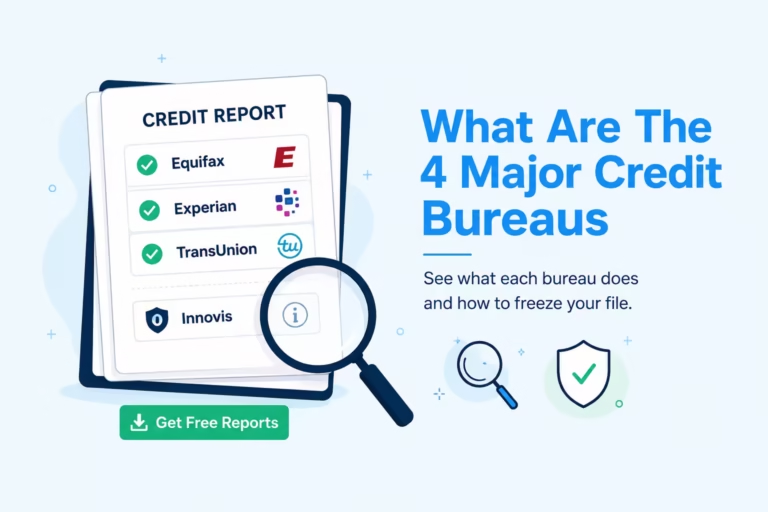
Affirm reports to two of the three major consumer credit bureaus. The split matters because different lenders pull different bureaus.
Experian: Yes. Affirm began reporting Pay in 4 and Pay Monthly loans to Experian on April 1, 2025.
TransUnion: Yes. Reporting to TransUnion started on May 1, 2025.
Equifax: No. As of Affirm’s November 2025 statement, Affirm does not send loan data to Equifax.
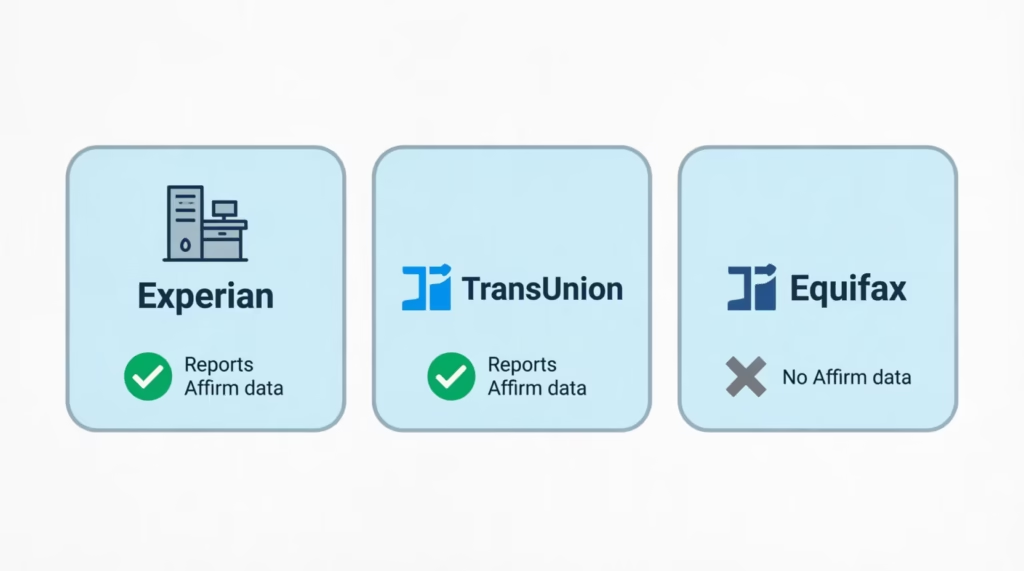
The practical implication is worth thinking through. If you’re applying for a mortgage or an auto loan, the lender chooses which bureau or bureaus to pull. A lender who pulls only your Equifax report won’t see any of your Affirm activity, good or bad. A lender who pulls Experian or TransUnion will see your Affirm tradelines, including any missed payments.
That split can cut both ways. If you have clean Affirm history, it’s essentially invisible on Equifax pulls. A missed Affirm payment might show up on Experian and TransUnion, but not on Equifax. So, a lender checking different bureaus could see different results about you.
This lineup can change. Affirm has said it wants industrywide reporting, and Equifax may be added in the future. Treat the list above as a 2026 snapshot, and re-check before you apply for a big loan.
What Affirm Itself Says About Credit Score Impact Right Now
Most articles guess at what Affirm activity does to your score. Affirm’s own November 2025 statement removes the guesswork, and it’s the clearest source available.
Affirm has said directly that, at this time, paying an Affirm loan on time or paying it off early does not raise your credit score. Missing a payment doesn’t automatically lower your score like a missed credit card payment.
This is because Affirm’s on-time and delinquency data isn’t included in FICO or VantageScore models yet. The data sits on your Experian and TransUnion files, but the scoring formulas don’t currently pull from it.
The reason is technical, not political. Scoring models decide which fields on your credit report count and how much. Until FICO and VantageScore update their models to include BNPL loan data, the loan-level data Affirm sends doesn’t move your score up or down on its own.
That said, Affirm has been clear this is a stated current position, not a permanent guarantee. The goal of Affirm’s reporting effort is to push the whole industry toward including BNPL activity in mainstream credit scoring. Once that happens, on-time payments could start helping and missed ones could start hurting through the score itself, not just the underlying record.
The practical takeaway: treat every Affirm payment seriously anyway. The data is being recorded, lenders can see it when they read the report by eye, and the rules can change without much warning.
Does Paying Affirm On Time Help Your Score?
Not right now. Per Affirm’s November 2025 statement, on-time Affirm payments are not currently factored into FICO or VantageScore, so they do not raise your score.
This can be a hard idea to accept, especially for readers with thin credit files who chose Affirm hoping to build history. The reporting effort is aimed at future industry change, not current score gains. If you want to build credit today, a starter credit card or credit-builder loan is better for your score than perfect Affirm payments.
That doesn’t mean paying on time is useless. Lenders can easily spot your clean payment record on your Experian or TransUnion report. This helps when they manually review your applications for small personal loans or apartments.
How an Affirm Loan Affects Credit Mix and Account Age
Credit mix and account age are smaller scoring factors that reward a variety of credit types and long account histories. A Pay Monthly installment loan adds an installment tradeline to your file. This is different from the revolving credit card accounts that many people already have.
In theory, that could help credit mix a little. In practice, it only starts to matter if and when the scoring models begin counting Affirm activity, which they don’t do today. So while your credit report shows more diversity of account types, your score isn’t yet rewarded for it through the Affirm loan itself.
Account age works the same way. An older Affirm loan sits in your file, but until the scoring model uses it, the age of that tradeline doesn’t lift your score. Once BNPL data is folded into FICO or VantageScore, these secondary factors could start to add up.
What Happens If You Miss an Affirm Payment
This is the piece that catches people off guard, because it’s the clear exception to the “Affirm doesn’t affect your score” rule.
If you miss a payment on an Affirm loan reported after April 1, 2025 (for Experian) or May 1, 2025 (for TransUnion), the delinquency may show up on those bureau files. A late payment usually isn’t reported until you’re at least thirty days late. This is the standard rule for most consumer credit reporting.
Affirm does not charge late fees on missed payments, which is unusual for a lender. But no late fee doesn’t mean no bureau reporting. Once a Pay in 4 or Pay Monthly loan is thirty-plus days past due, Affirm can report the delinquency to Experian and TransUnion.
The Consumer Financial Protection Bureau has explained that late payments on installment loans typically stay on your credit report for up to seven years from the date of the original delinquency.
The 2026 nuance is important. Affirm’s on-time reporting isn’t included in FICO or VantageScore yet. However, lenders see delinquency data similarly to traditional late-payment data when they review files. A missed Affirm payment can affect mortgage or auto loan decisions. This happens when the underwriter reviews the tradeline. Even if the three-digit score stays mostly the same, the missed payment still matters.
If you took out your loan before the April/May 2025 cutoffs, it usually won’t show on your file. So, a missed payment on that older loan won’t appear on your credit report like it would for newer loans. But newer loans absolutely can, and Affirm has been reporting them ever since.
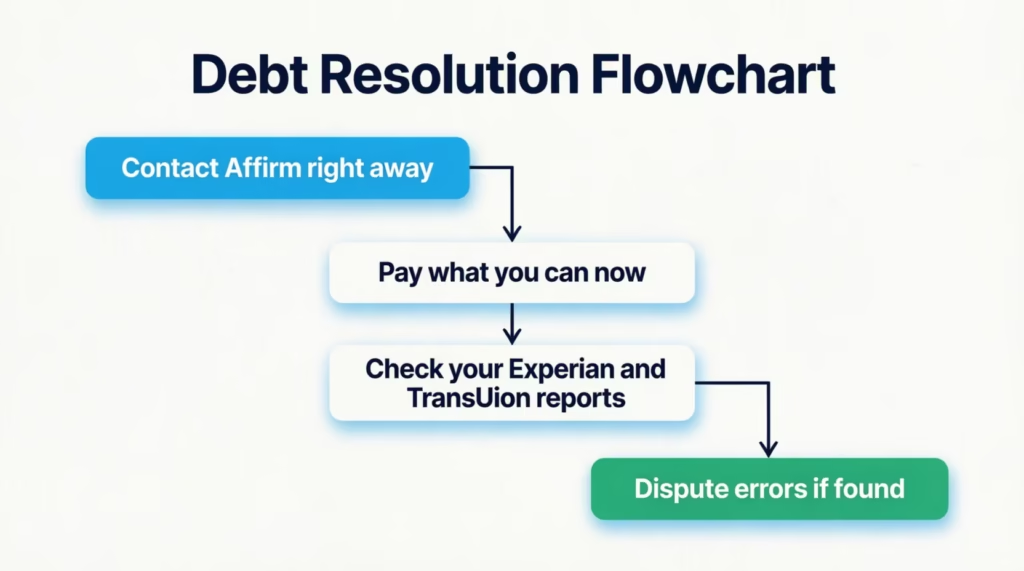
What to Do If You Already Missed a Payment
Fast action is the difference between a fixable slip and a seven-year mark on your credit file. Take these steps in order.
- Contact Affirm right away. Log into the Affirm app or visit the Affirm Help Center and request payment options. Affirm often lets you reschedule the payment, switch the payment method, or catch up in installments. Reach out soon. The earlier you do, the better chance you have to settle before the loan hits thirty days past due. That’s when it starts reporting to the bureau.
- Pay what you can as soon as you can. Even a partial payment can shift the loan’s status and buy you time. If the full amount is out of reach, at least pay enough to move the account out of the immediate risk window.
- Check whether the missed payment already posted to your credit file. Pull your free Experian report at AnnualCreditReport.com and look for the Affirm tradeline. Do the same for TransUnion. If the missed payment is not yet showing, catching up now may keep it from ever appearing.
- If the reported information is wrong, dispute it through the bureau. If the tradeline shows the wrong balance, wrong payment date, or a late payment you know you actually made, formal disputes go through Experian and TransUnion directly. That is a full topic on its own, and worth exploring further if you find a real error.
💡 Pro Tip: Turn on autopay from a checking account with a buffer of at least one payment amount. Most Affirm delinquencies come from a missed reminder or an empty account on the due date, not from an inability to pay.
Sarah, a project coordinator at a mid-sized marketing agency, missed a $92 Pay in 4 payment by nineteen days after her card expired. She logged into the Affirm app, updated her payment method, and paid the full balance the same evening. Because she acted before the thirty-day mark, nothing hit her Experian or TransUnion file, and her score never moved.
How to Check If Affirm Is Already on Your Credit Report
Verifying what’s actually on your file takes about ten minutes and costs nothing. This is the single best way to end the guesswork.
Start with your two free reports. Federal law entitles you to a free copy of each of your three bureau reports every week through AnnualCreditReport.com.
Pull your Experian and TransUnion reports first, since those are the two bureaus Affirm reports to. Equifax is optional to check for Affirm, since Affirm does not send data there.
Scan the “Installment Loans” or “Accounts” section of each report.
If you have a recent Pay in 4 or Pay Monthly loan, you’ll find an entry like this:
- Creditor name: “Affirm” or “Affirm Loan Services”
- Account type: “Installment”
- Original loan amount
- Current balance
- Monthly payment amount
- Payment status: “current,” “30 days late,” or “paid”
If you took out an Affirm loan before April 1, 2025 for Experian or May 1, 2025 for TransUnion, don’t be surprised to see nothing at all. Loans issued before those cutoff dates generally aren’t on your file, and that is expected under current policy.
If your loan is recent and you still don’t see it, give it thirty to sixty days after the loan is issued. Bureau updates aren’t instant, and it can take one to two billing cycles for a new tradeline to appear.
📌 Did You Know: You can get a free weekly credit report from each of the three major bureaus at AnnualCreditReport.com. This has been available since 2023, so check as often as you need to feel confident.
Once you know what’s on your file, you’ll know exactly what a lender will see when they pull it, and you can stop relying on secondhand articles to tell you.
Frequently Asked Questions (FAQs)
Does my credit score go down if I use Affirm?
No, using Affirm alone does not lower your score. Most Pay in 4 and Pay Monthly activity is reported to Experian and TransUnion but is not currently factored into FICO or VantageScore calculations.
Is Affirm a hard or soft credit pull?
It depends on the loan type: Pay in 4 and most short-term plans use a soft pull that never affects your score. Longer Pay Monthly loans can involve a hard inquiry, which may cause a temporary drop of five to ten points.
Does Affirm show on Equifax?
No, Affirm does not report to Equifax as of its November 2025 statement. Only Experian and TransUnion receive Affirm loan data, so a lender pulling only your Equifax file won’t see your Affirm history.
Is Affirm a good way to build credit?
Not currently. On-time Affirm payments aren’t factored into FICO or VantageScore yet, so perfect payment history won’t raise your score, even though a starter credit card or credit-builder loan would.
What is the interest rate for Affirm?
Affirm’s Pay Monthly loans carry APRs ranging from 0% up to about 36%, depending on your credit profile and the merchant offer. Pay in 4 plans are typically interest-free.
Does Affirm count as a credit inquiry?
Checking eligibility for Pay in 4 uses a soft inquiry that never shows on your report. Completing certain longer Pay Monthly loans can trigger a hard inquiry, which stays visible for up to two years but only affects your score for about twelve months.
How long do I have to pay off Affirm?
Pay in 4 loans are split into four payments over about six weeks. Pay Monthly installment loans typically run from three to sixty months, depending on the loan amount and merchant terms.
What happens if I miss an Affirm payment?
A missed payment can be reported to Experian and TransUnion once it’s thirty or more days past due. It can stay on your file for up to seven years, even though Affirm doesn’t charge late fees.
How do I remove Affirm from my credit report?
You can’t remove an accurate Affirm tradeline, but you can dispute it directly with Experian or TransUnion if the balance, payment date, or status is wrong. Catching up on a missed payment before it hits thirty days late can also keep it from posting at all.
Wrapping Up
Sorting the truth from the noise on Affirm and credit scores comes down to a few facts. Affirm now reports to Experian and TransUnion, but not Equifax. Most on-time activity isn’t yet factored into FICO or VantageScore, per Affirm’s own November 2025 statement. Missed payments remain the clear exception and can still hurt you.
Treat Affirm loans like serious debt. Use autopay to manage payments. Also, check your credit reports before applying for anything major.
If you know someone about to click “Affirm” on a big purchase, share this guide with them. It could save them from a hard inquiry surprise or a late payment that quietly lands on their file.