
I know the exact moment this question pops up. You’re at checkout, Klarna is offering to split the payment, and you pause because you don’t want a surprise ding on your credit. Or you already used Pay in 4, made every payment on time, and now you’re staring at your credit report wondering why nothing shows up.
Both worries are fair, and both come from the same confusion: Klarna credit bureau reporting works differently for each of its products, not as one blanket rule.
The short answer is that some Klarna products report and some don’t. Keep reading for a full breakdown of each product. You’ll find easy-to-understand inquiry rules and steps to check your file.
Key Takeaways
This guide explains how Klarna’s credit bureau reporting works across its four products, including which ones affect your score, when hard inquiries occur, and what happens if you miss a payment.
Core Facts:
- Pay in 4 and Pay in 30 use a soft credit pull at checkout and do not report on-time payments to Experian, TransUnion, or Equifax.
- Klarna Financing (6 to 36 month plans) and the Klarna Card both require a hard credit pull and are reported to Experian and TransUnion as installment or revolving accounts.
- Klarna Financing APRs typically range from about 0% promotional up to roughly 29.99%, and some promotions use deferred interest that applies retroactively if not paid off in time.
- A hard credit inquiry from Klarna Financing or the Klarna Card can lower a score by roughly 5 points temporarily and remains visible on a credit report for up to 24 months.
- If a Pay in 4 or Pay in 30 balance goes unpaid, Klarna can send it to a third-party collections agency, and that collections account can drop a score by 50 to 100 points and stay on file for up to seven years.
- Free weekly credit reports from all three bureaus are available at AnnualCreditReport.com to check for Klarna or WebBank account activity.
Best for:
- Shoppers deciding whether to use Klarna Pay in 4 or Pay in 30 without affecting their credit score.
- People who paid Klarna on time but see nothing on their credit report and want to understand why.
- Readers comparing Klarna Financing or the Klarna Card against other credit-building tools like secured cards or credit-builder loans.
Does Klarna Report to Credit Bureaus?
The honest answer is: it depends on which Klarna product you use. There is no single yes or no that covers everything.
Here is the quick version you can act on right now:
- Pay in 4 and Pay in 30: Klarna does not report these to the credit bureaus for score purposes. On-time payments will not show up on your report, and Klarna does not run a hard pull to approve you.
- Klarna Financing (the longer 6 to 36 month plans): Yes, these are reported. They show up as installment accounts on your credit file.
- Klarna Card: Yes, this reports too. It behaves like a regular credit card on your report.
When Klarna does report, the data usually goes to Experian and TransUnion. Equifax is generally not part of Klarna’s standard reporting flow in the U.S., so you may see the account on two bureaus but not the third.
That’s the featured-snippet answer. The rest of this guide explains why each product is treated differently, what triggers a hard pull, and what actually happens if you miss a payment.
Klarna’s Payment Options and How Each One Is Treated
Klarna is not one product with one rule. It’s a menu of very different payment options, and each one has its own credit reporting behavior. Once you see them side by side, the confusion clears up fast.
Here’s a quick comparison before we go deeper:
| Klarna Product | Credit Check at Signup | Reported to Bureaus? | Type of Account |
|---|---|---|---|
| Pay in 4 | Soft pull | No (on-time payments not reported) | Short-term BNPL |
| Pay in 30 | Soft pull | No (on-time payments not reported) | Short-term BNPL |
| Klarna Financing (6 to 36 months) | Hard pull | Yes | Installment loan |
| Klarna Card | Hard pull | Yes | Revolving credit card |
Now let’s walk through each one.
Pay in 4
This is the product most people picture when they say “Klarna.” You split the purchase into four equal payments, one every two weeks, with no interest.
At checkout, Klarna runs a soft credit inquiry. That means it peeks at your credit file to decide whether to approve you, but the check is invisible to other lenders and does not affect your credit score. It’s the same type of check used for pre-approved credit card offers.
More importantly for most readers: on-time Pay in 4 payments are not reported to the credit bureaus. If you pay everything on time, this activity will not appear on your Experian, TransUnion, or Equifax file. That’s why so many careful Pay in 4 users check their report months later and see nothing. It’s not a mistake. That’s just how the product works today.
Pay in 30
Pay in 30 lets you receive the item, try it out, and pay the full balance within 30 days. No interest, no split payments.
The reporting behavior is the same as Pay in 4. Klarna runs a soft pull to approve you, and on-time payments are not sent to the credit bureaus for scoring. So if your goal is to build a payment history that lenders can see, Pay in 30 will not do that for you either.
The main difference between the two is structure: Pay in 30 is one lump sum, Pay in 4 is spread across six weeks. Neither shows up on your credit report when you pay as agreed.
Klarna Financing (6 to 36 Month Plans)
This is where things change completely. Klarna Financing is a longer installment loan issued through WebBank, Klarna’s U.S. banking partner. It’s used for larger purchases, and repayment can stretch from 6 months up to 36 months, often with interest.
Because this is a real loan, the rules are different:
- Klarna runs a hard credit inquiry when you apply. That will show up on your report and can temporarily lower your score by a few points.
- The account is then reported to Experian and TransUnion as an installment account, similar to a personal loan or auto loan.
- Every monthly payment (on time or late) becomes part of your payment history on your credit file.
APRs on Klarna Financing typically range from about 0% promotional up to roughly 29.99%, depending on the offer and your credit profile. Some promotions offer deferred interest. This means interest is waived only if you pay the balance in full by the promo end date. If you don’t, the interest is applied retroactively.
Klarna Card
The Klarna Card is a separate product from BNPL checkout. It’s a Visa card issued through WebBank that you carry and swipe like any other credit card.
To open it, you need a hard credit pull and reasonably good credit. Once you have it, the account is reported to the credit bureaus as a revolving credit line, just like a Chase or Capital One card. That means:
- Your balance affects your credit utilization ratio
- Your on-time payments build payment history
- Late payments can be reported and hurt your score
This is the one Klarna product that behaves like a traditional credit-building tool. It’s also the one most Pay in 4 users don’t realize exists.
Soft Credit Pull vs. Hard Credit Pull, Explained
Since Klarna uses both, it helps to understand the difference in plain terms.
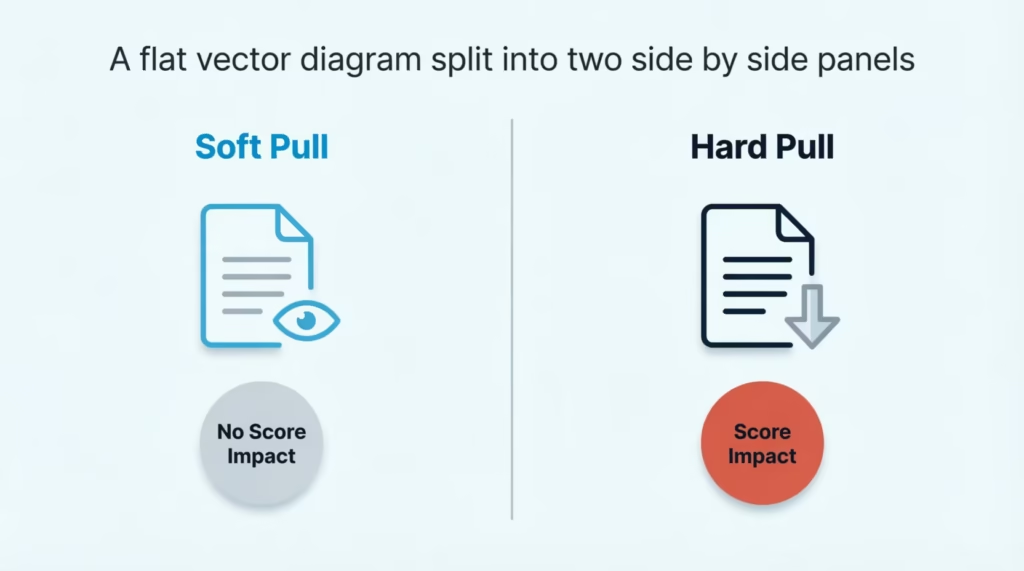
A soft credit inquiry is a background check. Klarna (or any lender) looks at your credit file to decide whether to approve you, but the check does not show up to other lenders and does not touch your score. Soft pulls also happen when you check your own credit, or when a card company sends you a pre-approved offer.
A hard credit inquiry is different. It is recorded on your credit report, other lenders can see it, and it can lower your score by roughly 5 points or so for a short period. Multiple hard pulls in a short window can add up, especially if your credit file is thin.
Applied to Klarna: Pay in 4 and Pay in 30 use soft pulls only. They don’t drop your score at signup. Klarna Financing and the Klarna Card use hard pulls, because those are actual credit accounts you’re opening.
💡 Pro Tip: If you’re planning to apply for a mortgage or auto loan in the next 3 to 6 months, avoid opening a Klarna Financing plan or Klarna Card right before. The hard inquiry and new account can nudge your score down at the worst possible moment.
When Klarna Runs a Hard Inquiry
Klarna doesn’t run a hard pull for a random $60 sweater at checkout. It reserves hard inquiries for specific triggers:
- Applying for Klarna Financing, especially on larger purchases (often above a few hundred dollars, though the exact threshold isn’t public and can vary by merchant and applicant).
- Applying for the Klarna Card, since this is a full credit card application.
- Sometimes larger monthly-payment financing offers at checkout will convert a soft check into a hard check once you tap “apply.”
The score dip from a single hard inquiry is small and usually fades within a few months. What matters more is what happens next. A new installment loan or credit card adds another account to your file. This can affect your average account age.
What Happens If You Miss a Klarna Payment
Here’s the part that catches people off guard. Just because Pay in 4 and Pay in 30 don’t report on-time payments doesn’t mean they can never hurt your credit. They can, through a different pathway.
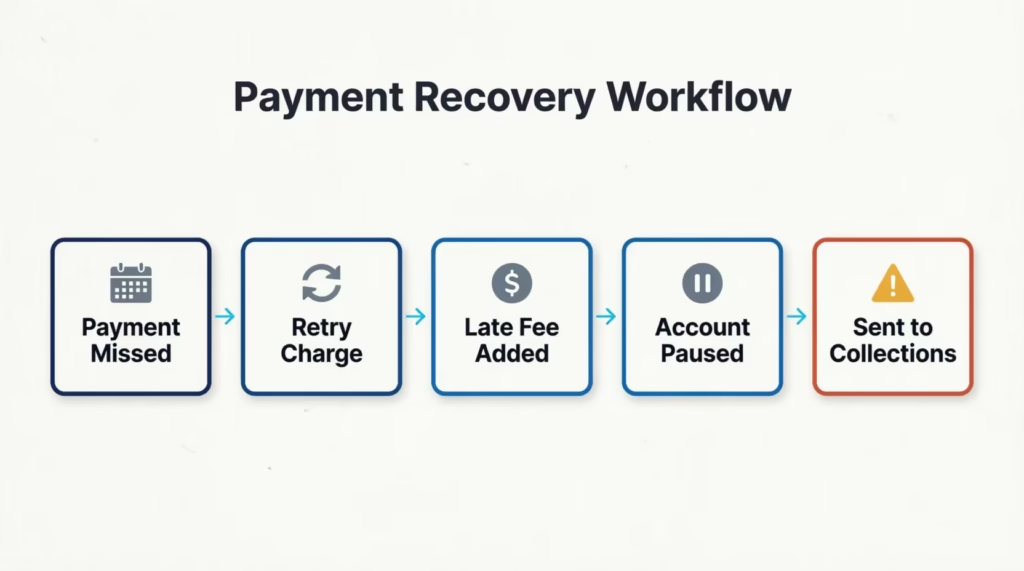
If you miss a Klarna payment, this is roughly what happens:
- Klarna will try to charge your linked card again a few days later.
- You’ll get reminder emails and app notifications.
- A late fee may be added (capped and depends on your state).
- Your ability to use Klarna for new purchases gets paused.
- If the balance stays unpaid long enough (typically after multiple missed attempts), Klarna can send the debt to a third-party collections agency.
That last step is the one that matters for your credit report. The Klarna website confirms that unpaid balances can be sent to collections and that late payments may be reported to credit bureaus.
A collections account can drop your score significantly, sometimes by 50 to 100 points depending on your starting score and credit profile. And it can stay on your report for up to seven years.
⚠️ Mistake to Avoid: Don’t assume that because Pay in 4 “doesn’t report to credit bureaus,” an ignored missed payment is harmless. The collections pathway can still put a serious mark on your report even from a small BNPL purchase.
Collections Reporting vs. Klarna Reporting Directly
This distinction is where most of the confusion lives, so it deserves its own beat.
When people say “Klarna doesn’t report to credit bureaus,” they usually mean Klarna itself is not sending your on-time Pay in 4 payment history to Experian or TransUnion. That part is true.
But if Klarna hands your unpaid debt to a collections agency, the collections agency reports it, not Klarna. From your credit report’s point of view, that entry looks like any other collections account. It hurts your score, and the fact that the original debt was a $90 Pay in 4 order doesn’t soften the impact.
So the rule to remember is: Klarna doesn’t report your good behavior, but a collector can absolutely report your bad behavior.
Does Using Klarna Help Build Your Credit?
For most people using Klarna, the honest answer is no.
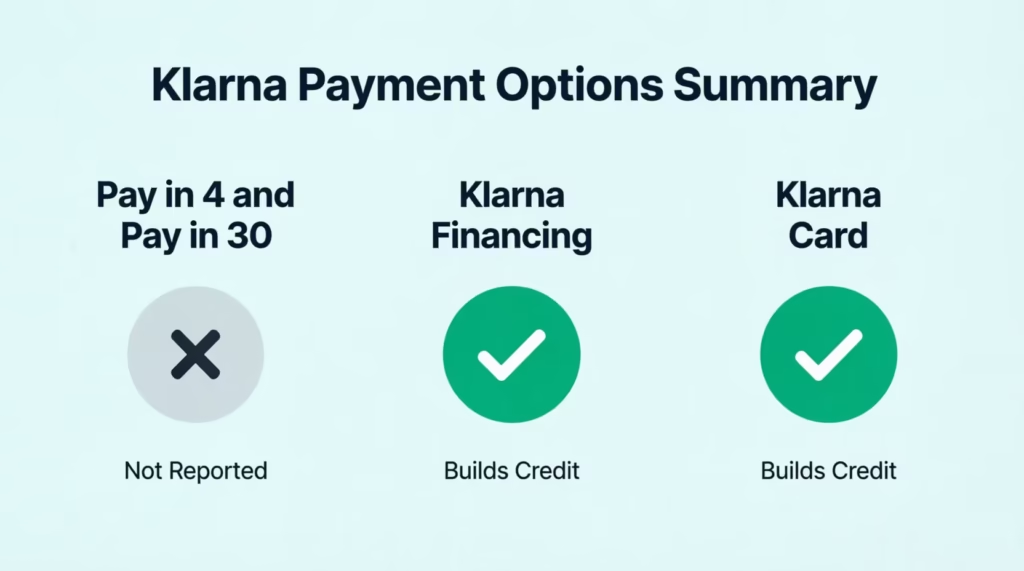
- Pay in 4 and Pay in 30: On-time payments are invisible to the credit bureaus, so they don’t build payment history, don’t add a tradeline, and don’t affect your score. Using these products carefully doesn’t help your credit; it just doesn’t hurt it either (as long as you don’t end up in collections).
- Klarna Financing: This one can help. Because it’s reported as an installment account, on-time monthly payments build a positive payment history, which is the single biggest factor in your FICO score.
- Klarna Card: This can help too, if you keep the balance low and pay on time. It behaves like any other revolving credit card on your report.
Even for the products that do report, don’t expect a huge boost. One account is only one input among many. Payment history, credit utilization, length of history, credit mix, and new credit all matter.
Why FICO’s BNPL Scoring Models Don’t Change This Yet
You may have seen headlines from 2025 saying “BNPL now affects your FICO score.” That announcement was real, but the actual on-the-ground impact is still limited.
FICO introduced two new models, FICO Score 10 BNPL and FICO Score 10 T BNPL, designed to include buy-now-pay-later data. But two things matter here:
- Lenders have to actually adopt the new model for it to affect your score at their institution. Most lenders still use older FICO versions (like FICO Score 8) or VantageScore, and switching scoring models across a large lender typically takes many months to years.
- The BNPL provider still has to send the data to the bureaus. Klarna has said it supports credit reporting for BNPL in principle, but for Pay in 4 specifically, on-time payments are still not being fed into the standard credit files most lenders pull.
Even with the new FICO models, if you’re using Pay in 4 now, it probably won’t show up when a mortgage or auto lender checks your credit. The 2025 headlines got ahead of the reality.
How to Check Whether Klarna Is on Your Credit Report
If you want to see exactly what Klarna activity (if any) is on your file, the process is free and takes about 15 minutes.
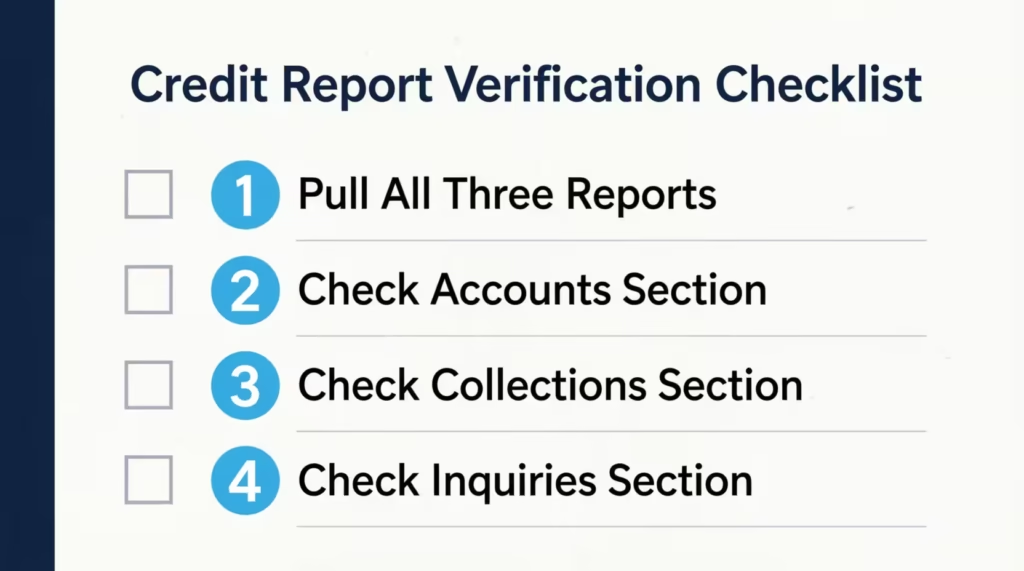
Follow these steps:
- Pull all three of your credit reports. Go to AnnualCreditReport.com, the only federally authorized site for free weekly reports from Experian, Equifax, and TransUnion.
- Look through the “accounts” section. Scan for any entry from Klarna or from WebBank (Klarna’s issuing bank). It will usually appear as an installment loan or a credit card.
- Check the “collections” section separately. If a missed Klarna balance was sent to collections, it will show up here under the collection agency’s name, not Klarna’s. Look for the original creditor field, which may say Klarna or WebBank.
- Check the “inquiries” section. Any hard pulls for Klarna Financing or the Klarna Card will be listed here for up to 24 months.
If you used Pay in 4 or Pay in 30 and see nothing, that’s expected. It means Klarna hasn’t reported the account, which is normal for those products. If you see a collections entry you don’t recognize, look at the original creditor and payment date. Both should help you trace it back.
📌 Did You Know: You are allowed free weekly credit reports from all three bureaus through AnnualCreditReport.com. That change was made permanent, so you no longer have to wait a full year between checks.
If You Want Klarna Used to Actually Build Credit
If your real goal is to build credit and you were hoping Klarna could do the job, it’s worth stepping back. Pay in 4 is a convenience tool, not a credit-building tool. Using it responsibly is fine, but it will not move your score.
For actual credit building, look at products that are designed to report positive activity to all three bureaus every month:
- Secured credit cards: You put down a small refundable deposit (often $200), and the card reports like a normal credit card. Great for thin or no-credit files.
- Credit-builder loans: Offered by many credit unions and fintechs. You make small monthly payments into a locked account, and the on-time payments are reported as an installment tradeline.
- Becoming an authorized user on a family member’s well-managed credit card, which can add positive payment history to your file.
Klarna Financing and the Klarna Card can help too. They report to credit bureaus, but they require more commitment than a starter secured card. Plus, opening them involves a hard inquiry.
Pick the tool that matches the job. Klarna is great for spreading out a purchase. It is not, for most people, the shortest path to a better credit score.
Frequently Asked Questions (FAQs)
Does Klarna report to credit bureaus?
It depends on the product. Pay in 4 and Pay in 30 aren’t reported for on-time payments, but Klarna Financing and the Klarna Card are reported to Experian and TransUnion as normal credit accounts.
Does your credit score go down with Klarna?
Using Pay in 4 or Pay in 30 on time won’t affect your score, since Klarna only runs a soft pull for those. Klarna Financing and the Klarna Card involve a hard pull, which can drop your score by roughly 5 points temporarily.
Will Klarna show up on my credit report?
Only if you use Klarna Financing or the Klarna Card, both of which appear as installment loans or a revolving credit line. Pay in 4 and Pay in 30 won’t show up unless the balance goes unpaid and lands in collections.
Is it hard to get approved for Klarna?
Pay in 4 and Pay in 30 only need a soft credit check, making approval fairly easy for most shoppers. Klarna Financing and the Klarna Card require a hard pull and reasonably good credit, so they’re harder to qualify for.
Is Klarna bad for credit if you pay on time?
No, paying on time with Pay in 4 or Pay in 30 doesn’t hurt your credit since Klarna doesn’t report those payments. The risk only comes in if you miss payments and the debt gets sent to collections.
What happens if I never pay Klarna?
Klarna will attempt to rebill your card, charge a late fee, and pause your account after multiple missed payments. If the balance stays unpaid, Klarna can send it to a collections agency, which can drop your score by 50 to 100 points and stay on your report for up to seven years.
Is Klarna a good credit builder?
Pay in 4 and Pay in 30 won’t build your credit since on-time payments aren’t reported. Klarna Financing and the Klarna Card can help build credit because they report monthly payment history to the bureaus.
How long does it take Klarna to report to credit bureaus?
Klarna Financing and the Klarna Card typically report monthly, similar to any installment loan or credit card account. Pay in 4 and Pay in 30 are never reported for on-time payments, so there’s no reporting timeline for those products.
What disqualifies you from Klarna?
The article doesn’t list specific disqualifying factors, but Klarna Financing and the Klarna Card require a hard credit check and reasonably good credit to be approved. Pay in 4 and Pay in 30 use a soft pull, making them more accessible even with thinner credit files.
Does Klarna show up on a hard credit check?
Only Klarna Financing and Klarna Card applications trigger a hard inquiry, which shows up on your report and stays visible to other lenders for up to 24 months. Pay in 4 and Pay in 30 use soft pulls only, so those never appear as inquiries.
Wrapping Up
The takeaway is clear when you separate Klarna’s products:
- Pay in 4 and Pay in 30 remain invisible on your credit report, as long as you pay on time.
- However, Klarna Financing and the Klarna Card do report to credit bureaus and behave like traditional credit accounts.
Missed payments can still cause damage through a collections agency, so “no reporting” is not the same as “no risk.”
In 2026, the best way to use Pay in 4 is for convenience. If you want to build credit, consider a secured card or a credit-builder loan instead. If a friend keeps asking whether Klarna helps their score, share this so they get the right answer the first time.