
If you’ve seen an ad promising $30,000 deposited into your account with “no loan to pay back,” you’re likely wondering if it’s real or if First Advantage Debt Relief is just a slick way to grab your personal info. That worry makes sense. Debt relief ads often blur the line between real help and a lead trap, and the last thing you want is more calls, more stress, or a hit to your credit.
Here’s the short answer: First Advantage Debt Relief is a real, registered debt settlement business, but some pages using its name work more like a referral service than a direct provider.
Below, we’ll break down who owns it, what it costs, how it treats your credit, and the smarter steps to take before you fill out any form.
Key Takeaways
This guide explains what First Advantage Debt Relief is, including its ownership structure, how its settlement process works, typical fees, credit score impact, and a five-step way to verify any provider before enrolling.
Core Facts:
- First Advantage Debt Relief operates as a DBA of AmeriSave Debt Relief, LLC, a registered for-profit debt settlement business, not a bank or nonprofit.
- The debt settlement process follows five steps: free consultation, enrollment, building a dedicated savings account, creditor negotiation, and payoff with fee collection.
- Fees typically range from 15% to 25% of enrolled debt; on $20,000 enrolled, that equals $3,000 to $5,000 in total fees.
- The program mainly covers unsecured debts like credit cards, store cards, and personal loans; mortgages, auto loans, and federal student loans usually do not qualify.
- Some First Advantage-branded pages may share applicant information with partner companies such as TurboDebt, JG Wentworth, and Freedom Debt Relief.
- Verification involves five steps: checking BBB, searching the CFPB complaint database, confirming AFCC membership, checking state licensing, and reviewing Trustpilot or Google feedback.
Best for:
- Readers deciding whether to enroll with First Advantage Debt Relief and wanting to confirm its legitimacy first.
- People comparing debt settlement fees and credit impact against alternatives like nonprofit debt management plans.
- Anyone who received marketing calls referencing “First Advantage” and needs to identify which specific company contacted them.
What “First Advantage” Actually Refers To
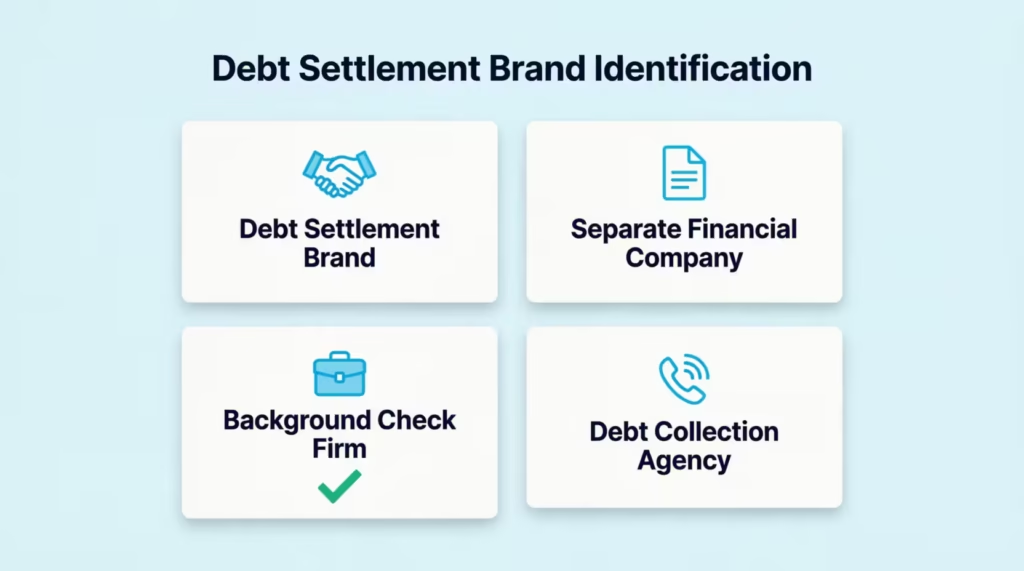
The first problem most people hit is name confusion. A quick search brings up several companies that all use some version of “First Advantage,” and only one of them is the debt help brand you saw in the ad. Before you enter your name, phone number, or debt total on any site, you need to know which company is which.
Here’s a fast breakdown of the four names that keep getting mixed up:
| Company Name | What It Does | Related to Debt Relief? |
|---|---|---|
| First Advantage Debt Relief | Debt settlement brand, operates under AmeriSave Debt Relief, LLC | Yes, this is the one |
| First Advantage Financial | A different company offering debt settlement or consolidation | No, separate business |
| First Advantage Corporation | Big background-check company for employers | No, totally unrelated |
| Firstsource Advantage, LLC | A debt collection agency | No, they collect debts, not settle them |
If a caller says they’re from “First Advantage” and they’re asking about a past-due bill, they’re likely from Firstsource Advantage, the debt collector, not the debt relief brand. That is a very different call, with very different rights on your side. Reviews of First Advantage debt relief also flag this mix-up, since some readers arrive at the topic already worried a collector has “rebranded.”
Take ten seconds to check the exact company name, the mailing address, and the website URL on any offer before you go further. That one step clears up most of the fear.
What Is First Advantage Debt Relief and How Does It Work
First Advantage Debt Relief runs as a DBA (“doing business as”) of AmeriSave Debt Relief, LLC. That means AmeriSave is the legal entity, and “First Advantage” is a brand name it uses to market debt settlement services. It’s not a bank, not a nonprofit, and not a credit counseling agency. It’s a for-profit debt settlement company.
The basic flow works like this:
- Free consultation. You call or fill out a form. A rep, sometimes called a Certified Debt Specialist, asks about your total debt, your monthly income, and which creditors you owe.
- Enrollment. If you qualify and want to move forward, you sign a service agreement. Your enrolled debts get listed in the plan.
- Dedicated savings account. Instead of paying your credit card companies, you send a fixed monthly deposit into a special account in your name. You control the money. First Advantage does not.
- Negotiation. Once enough cash builds up, the company contacts each creditor and tries to settle each debt for less than the full balance.
- Payoff and fee. When a creditor agrees, money is pulled from your account to pay the settlement. The company then charges its fee on that debt.
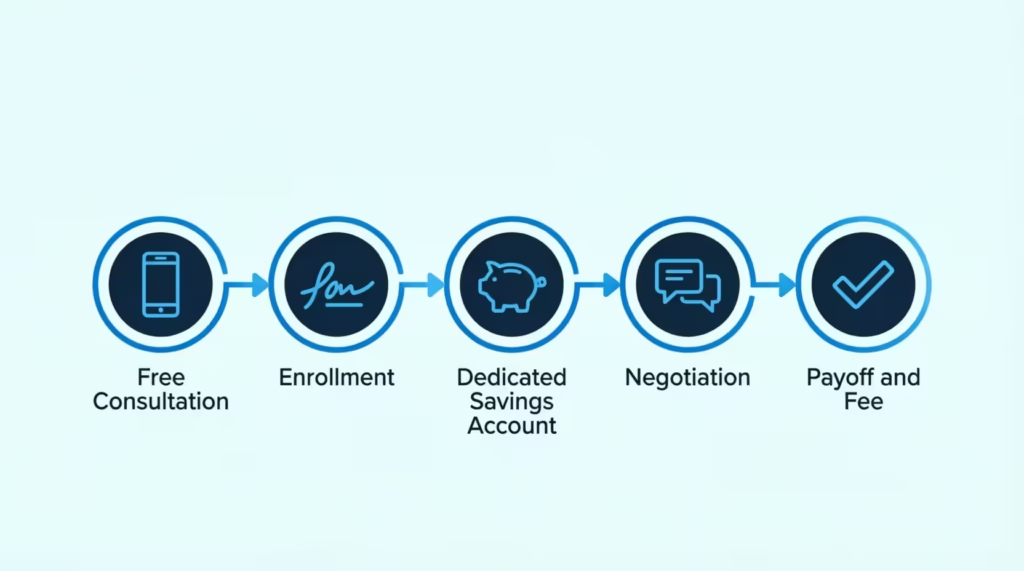
The whole debt settlement program usually runs 24 to 48 months, based on how fast your account grows and how creditors respond
Nothing about this is instant. Nothing about it is “free money.” And nothing about it means the debt just gets erased.
Settlement vs. Consolidation vs. “Debt Forgiveness”: What the Terms Actually Mean
Ads and landing pages often mix these words on purpose. Here is the plain-English difference:
- Debt settlement means a company talks to your creditor and asks them to accept less than you owe. You pay a lump sum; the rest is written off. This is what First Advantage actually offers.
- Debt consolidation means you take out one new loan to pay off many old debts. You still owe the full amount, just to one lender. First Advantage does not give out loans.
- “Debt forgiveness” is marketing language. It’s not a formal program. Creditors are not required to “forgive” anything. What really happens under settlement is a partial write-off in exchange for a lump-sum payment.
So when a page says “we can help forgive $30,000 of your debt,” it usually means “we’ll try to settle some of your debt for less.” That’s an important gap to spot before you sign anything.
First Advantage Debt Relief Review: Is It Legit or a Scam?
This is the core question, so it deserves a direct answer with both sides shown.
The evidence it is a real, registered company:
- It operates as a DBA of AmeriSave Debt Relief, LLC, which is a registered for-profit business.
- Federal law already bans upfront fees for telemarketed debt relief. Under the FTC’s Telemarketing Sales Rule, a provider cannot collect any fee until it has actually settled or resolved at least one of your debts. If a First Advantage rep sticks to this rule, that’s a good sign.
- Some third-party reviewers list it as a licensed debt settlement provider.
The evidence it may act as a lead-generation service:
- Finder’s review of First Advantage Debt Relief found no company reviews on the BBB or Trustpilot and flagged that the site appears to mainly capture your info and hand it off.
- Some pages branded “First Advantage” seem to route users into a network of settlement partners rather than run the negotiation in-house.
So both things can be true at once. The corporate entity is real. But the marketing site you land on may still be a lead generation company that sells your info to other debt settlement firms.
What to do with that:
- Check the exact URL and legal name at the bottom of the page.
- Look for a physical address, a state license number, and a real privacy policy.
- Read the “consent” checkbox very carefully. If it says your info can be shared with “marketing partners” or “affiliates,” it will be.
⚠️ Mistake to Avoid: Filling out the form just to “see your rate.” That single click often counts as legal permission to share your name, phone, email, and debt total with a long list of partner companies. The calls and texts can start within minutes.
Does First Advantage Sell Your Information to Other Companies?
Yes, in some cases, and this is the single biggest complaint pattern.
Named partners that have shown up in reviews and disclosures tied to First Advantage-style landing pages include:
- TurboDebt
- JG Wentworth
- National Debt Relief
- Freedom Debt Relief
- ClearOne Advantage
When you check the box on a “get your free quote” form, you’re usually agreeing to Terms of Use and a Privacy Policy that let the site share your data with these partners. That’s how you can fill out one form and then get eight follow-up calls from eight different companies.
After you submit, expect:
- Calls from unknown 800 and local numbers, sometimes within an hour.
- Text messages with “your debt relief consultant” contact info.
- Emails from brands you never heard of.
- Retargeting ads on social media for weeks.
If that’s a deal-breaker for you, don’t submit the form. Call one specific company directly instead, and tell them not to share your info.
What Does First Advantage Debt Relief Cost?
Debt settlement has no upfront cost by federal law, but the back-end fee is significant. Most companies in this space, including First Advantage-style programs, use percentage-based fees tied to your enrolled debt.
CBS News reports that most debt settlement companies charge between 15% and 25% of the total enrolled debt. That range is the industry norm.
Here’s what that looks like in real dollars. Say you enroll $20,000 in credit card debt:
| Enrolled Debt | Fee at 15% | Fee at 20% | Fee at 25% |
|---|---|---|---|
| $10,000 | $1,500 | $2,000 | $2,500 |
| $20,000 | $3,000 | $4,000 | $5,000 |
| $30,000 | $4,500 | $6,000 | $7,500 |
| $40,000 | $6,000 | $8,000 | $10,000 |
So on a $20,000 program, you should expect to pay $3,000 to $5,000 in fees on top of the settlement amounts you send to creditors.
Key things to check before you sign:
- Is the fee based on enrolled debt (the original balance) or settled debt (the reduced amount)? Enrolled is more expensive for you.
- Are there monthly service fees or savings account fees? These are separate small charges.
- What happens if you cancel? Most programs let you cancel any time and take back the money still in your dedicated account, minus any fees already earned on settled debts.
A settlement fund, sometimes called a dedicated account, is just the escrow-style savings account where your monthly deposits sit. You still own that money until it goes toward a settlement.
💡 Pro Tip: Ask for the fee percentage and the fee base in writing before you enroll. A rep saying “around 20%” is not the same as a contract that spells out “22% of enrolled debt.”
What Debts Qualify for First Advantage’s Program
Not every kind of debt fits. Debt settlement only works well for one narrow category: unsecured credit card debt and other similar unsecured balances. If most of your debt is somewhere else, this program can’t help you much.
Debts that usually qualify:
- Credit card balances
- Store cards (retail credit)
- Unsecured personal loans
- Some medical bills
- Some old collection accounts
Debts that usually don’t qualify:
- Mortgages (secured by your home)
- Auto loans (secured by your car)
- Federal student loans (have their own relief options)
- Most private student loans
- Child support and alimony
- Recent tax debt (IRS has its own programs)
- Utility bills
Quick note on debt consolidation vs settlement: consolidation replaces many debts with one new loan and needs decent credit. Settlement works even if your credit is already damaged, but it damages it further before it helps. They are not the same tool.
If more than half your debt is secured (house, car) or federal student loans, this program is the wrong fit no matter how good the sales call sounds.
How First Advantage Debt Relief Affects Your Credit Score
This is the part that gets glossed over on landing pages, so it deserves the plainest possible language.
Yes, your credit score will drop, and it will drop before it heals.
Here’s why:
- You stop paying creditors. The program only works if creditors see you as unable to pay in full. That means during the early months, you’re told not to pay your credit card bills. Missed payments are the biggest single factor in a credit score.
- Accounts get charged off. After about 180 days of missed payments, most credit card companies “charge off” the account. That stays on your credit report for up to 7 years.
- Collection calls may continue. Nothing about enrolling in a program legally stops a creditor from calling you or, in some cases, suing you. Some do wait, some don’t. There is no on/off switch.
- Settled accounts show as “settled for less than full amount.” That marking is a negative note, but it’s better than an unpaid charge-off.
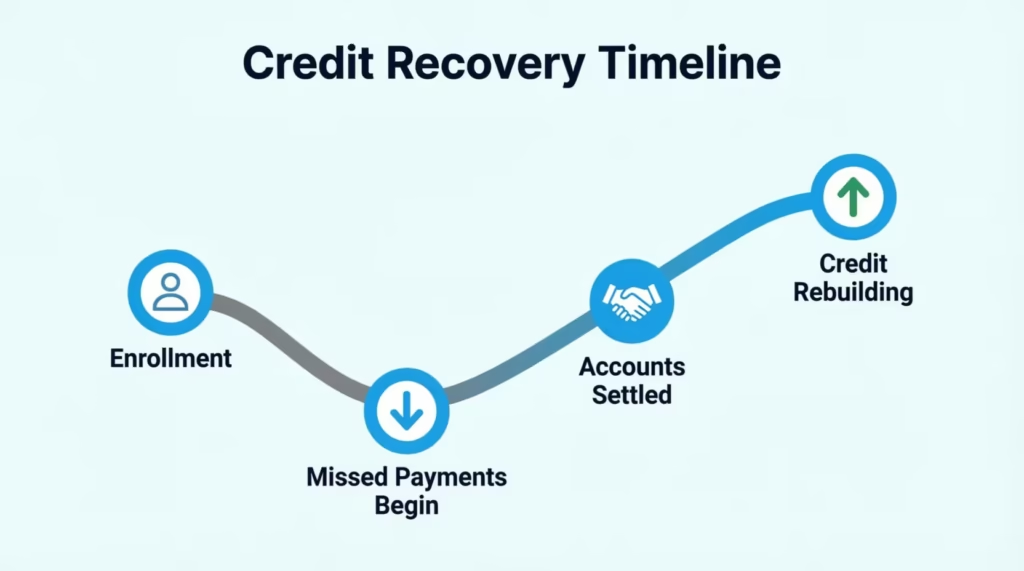
Time-wise, most people see their score drop 100 to 200 points in the first year of the program. Recovery starts as accounts get settled and closed, and steady on-time payments on any remaining credit begin to rebuild your file. Full recovery can take 2 to 4 years after the program ends.
📌 Did You Know: Even after a debt is settled, the IRS may treat the forgiven amount over $600 as taxable income. Your creditor can send you a Form 1099-C, and that “canceled debt” gets added to your income for that tax year. Plan for it.
The credit score impact is the real trade-off of settlement. If you have to keep near-perfect credit for a mortgage or a job in the next 2 to 3 years, this is not the right path.
How to Verify First Advantage Debt Relief Before You Enroll
Before you sign anything, run this five-step check. It takes about 20 minutes, and it’s the single best way to protect yourself from a bad choice.
Step 1: Check the Better Business Bureau (BBB) profile. Go to BBB.org and search the exact legal name (AmeriSave Debt Relief, LLC or First Advantage Debt Relief). Look at:
- The letter grade (A+ to F)
- Number of complaints in the last 3 years
- How the company responded to complaints
- Whether the profile is even listed
A missing profile is itself a warning sign for a debt relief company. Note that BBB has profiles for the unrelated First Advantage Corporation (background checks) and Firstsource Advantage LLC (a debt collector), so match the name carefully.
Step 2: Search the CFPB complaint database. The Consumer Financial Protection Bureau publishes real consumer complaints at consumerfinance.gov/complaint. Search the company name. Read the complaint narratives and the company’s responses. The CFPB received approximately 387,400 debt collection complaints in 2025, so a searchable, public track record matters.
Step 3: Check AFCC membership. The American Fair Credit Council is the main trade group for debt settlement companies in the U.S. Membership is not proof of quality, but it does require members to follow a code of conduct. Visit the AFCC site and check the member directory.
Step 4: Confirm state licensing or registration. Many states require debt settlement companies to be licensed. Search your state’s Department of Financial Regulation or Attorney General site for the company’s legal name. If you’re in a state that requires a license and the company can’t show one, walk away.
Step 5: Look for reviews on Trustpilot and Google. Not every provider has a big presence, but a total absence of reviews for a company that runs national ads is unusual. Cross-check what you see with the complaint patterns from steps 1 and 2.
If the company clears all five steps, it’s likely a legitimate provider. If it fails two or more, keep looking.
Who First Advantage Debt Relief Is a Good Fit For (and Who It Isn’t)
Debt settlement is a heavy tool. It solves one problem well and creates two others (credit damage, possible taxes). So the fit question really matters.
A good fit if you:
- Have $10,000 or more in mostly unsecured credit card debt
- Are already behind on payments, or so close you can’t catch up
- Have some monthly income to fund a settlement deposit
- Don’t need great credit in the next 2 to 3 years
- Have already tried lower-cost options (calling creditors, hardship plans)
- Are okay paying 15–25% in fees for a structured plan
A poor fit if you:
- Have mostly mortgage, auto, or student loan debt
- Are current on payments and could keep paying with a small budget change
- Will need a mortgage, car loan, or apartment approval in the next 2 years
- Have steady income and could use a nonprofit debt management plan instead
- Can’t stomach 6 to 12 months of collection calls
- Have less than $7,500 in debt (many programs won’t accept you)
- Need immediate relief (like this month) because you’re being sued
Think of settlement as a repair option for a debt problem that regular budgeting can’t fix. If your problem is smaller than that, cheaper tools will work better.
Alternatives to Consider Before Enrolling
Before you commit to any settlement plan, look at these four other paths. One of them may fit your situation better and cost less.
1. Payment extensions or hardship plans directly with creditors. Most major credit card companies have hardship programs. You call, explain your situation, and ask about a lower interest rate, a smaller minimum payment, or a short pause on payments. This costs nothing, doesn’t hurt your credit much, and works best if your trouble is temporary.
2. Nonprofit credit counseling and a debt management plan. A debt management plan through a nonprofit counselor rolls your credit cards into one monthly payment at a lower interest rate, usually over 3 to 5 years. You pay back the full balance, but with less interest.
The National Foundation for Credit Counseling (NFCC) provides free counseling. It also connects consumers with member agencies that offer DMPs. Fees are usually a small setup charge and a low monthly service fee, far less than the 15–25% of debt settlement.
3. DIY settlement negotiation. You can call each creditor yourself and offer a lump-sum settlement. It works best on debts that are already in collections or close to charge-off. You keep the full savings instead of paying 20% of it to a company. It takes time and comfort with hard phone calls, but it’s free.
4. Going directly to a named settlement company. If you do want a debt settlement program, going straight to a well-known provider (National Debt Relief, Freedom Debt Relief, Accredited Debt Relief) skips the referral middle-layer. You get the same core service but one clear point of contact, one clear fee structure, and no info-sharing with a chain of “marketing partners.”
For most readers, the choice is between a debt management plan (if you can still afford some payment and want to protect your credit) and direct settlement with a named, verified company (if you’re already behind and need a real reduction in what you owe).
Frequently Asked Questions (FAQs)
Is First Advantage Debt Relief the same company as First Advantage Financial?
No. They are separate companies that both use “First Advantage” in their name, and both operate in debt settlement, which is a common source of confusion.
Is First Advantage Debt Relief a scam?
Reports are mixed: some sources confirm it as a licensed debt settlement company operating as a DBA of AmeriSave Debt Relief, LLC, while others report it functions mainly as a lead-generation site that refers applicants to partner companies. Readers should verify licensing and complaint history directly before enrolling.
Does First Advantage Debt Relief sell your personal information?
Some reviews report that applying through the site authorizes your information to be shared with partner companies such as TurboDebt, JG Wentworth, and Freedom Debt Relief in exchange for a referral fee. This can result in follow-up calls from multiple companies rather than one direct provider.
How much does First Advantage Debt Relief cost?
Fees are typically 15% to 25% of enrolled debt, charged as a percentage rather than an upfront cost. For example, $20,000 in enrolled debt could result in $3,000 to $5,000 in total fees.
What debts qualify for First Advantage’s program?
The program is built around unsecured debts like credit cards. Secured debts such as mortgages, auto loans, and most federal student loans typically aren’t eligible.
Will using First Advantage Debt Relief hurt my credit score?
Yes, most debt settlement programs require you to stop making payments to creditors while funds build in a savings account, which can lower your credit score. Collection activity may also continue during this period until a settlement is reached.
How long does the First Advantage Debt Relief process take?
The process typically takes several months since it depends on building enough savings and negotiating with each creditor individually. Timelines vary based on the number of creditors and the size of the enrolled debt.
Is First Advantage Debt Relief registered or licensed?
Debt settlement companies are generally required to register or hold a license in each state they operate in. Readers can verify this directly with their state’s attorney general or financial regulatory agency rather than relying on the company’s own claims.
Is Firstsource Advantage the same as First Advantage Debt Relief?
No. Firstsource Advantage, LLC is a separate debt collection agency, and receiving contact from them means a creditor has placed an account with them for collection, not enrollment in a debt relief program.
What are the alternatives to First Advantage Debt Relief?
Options include nonprofit credit counseling, a debt management plan, negotiating directly with creditors for a payment extension, or contacting a debt settlement company directly instead of through a referral site. Each option has different costs and effects on credit compared to debt settlement.
Wrapping Up
We discussed many topics: the four “First Advantage” companies, what AmeriSave does for debt relief, and why some pages look like lead sellers. We also talked about the 15–25% fee on real dollar amounts, the impact on credit scores, and a five-step check to verify providers. Finally, we explored cheaper options like nonprofit debt management plans or direct negotiation.
Run the verification checklist first. Then, choose between a nonprofit DMP, if your credit matters short-term, or contact an AFCC-member settlement company directly. That protects you from the lead-gen trap and from the highest hidden costs.
If you know someone drowning in credit card bills and clicking every “get debt help” ad they see, share this with them. It could save them thousands of dollars, a wave of spam calls, and years of credit damage.