
We’ve all felt that quick jolt of worry. Maybe a text popped up saying your card was locked. Maybe a friend got a strange call from “the bank.” Or maybe you just read about a new scam and thought, “Could that happen to me?” Even careful people feel exposed today, and old credit card scam prevention tips don’t fully cover the new tricks scammers now use.
The best defense is a mix of smart daily habits, strong card settings, and a clear plan for the first ten minutes after something feels wrong.
This guide walks you through every step. You’ll learn how thieves get your number, which scams to spot, what to do fast, and how to lock things down going forward.
Key Takeaways
This guide explains how to avoid credit card scams, covering how thieves steal card numbers through phishing and skimming, emerging 2026 tactics like AI voice cloning, the exact response steps after fraud, and your zero liability rights.
Core Facts:
- The FTC reported about $16 billion in consumer fraud losses in 2025, up roughly 25% from 2024, while the FBI’s IC3 recorded $20.877 billion in reported losses that year.
- Common theft methods include phishing and smishing texts, data breaches sold on dark web marketplaces, card skimmers on gas pumps and ATMs, and mail theft of pre-approved offers.
- Emerging 2026 tactics include AI voice cloning using as little as three seconds of audio, data-spoofing callers who read back real breached details, and fake QR code stickers.
- The first fraud response step is locking or freezing the card in the issuer’s app, followed by calling the issuer, changing passwords, and reporting to ReportFraud.ftc.gov.
- Under the Fair Credit Billing Act, unauthorized charges must be disputed in writing within 60 days of the statement date, with issuers required to resolve disputes within 90 days.
- Visa, Mastercard, Amex, and Discover all offer zero liability policies, meaning cardholders pay $0 for unauthorized charges reported within a reasonable time.
Best for:
- Readers who want to recognize new AI-driven scam tactics like voice cloning and data-spoofing calls.
- Anyone who suspects a fraudulent charge and needs a clear, ordered response plan.
- People looking to set up preventive habits like transaction alerts, virtual card numbers, and credit freezes.
How Scammers Actually Get Your Credit Card Number
Most credit card theft today doesn’t need your physical card at all. Thieves work from a distance. They pull data from big company hacks, trick you into typing your details, or grab your info at a store card reader you’d never suspect. Knowing the real ways they get in helps you spot risk before it hits your account.
The FTC reports that consumers lost about $16 billion to fraud in 2025, the highest figure on record and up roughly 25% from 2024, based on data released by the Federal Trade Commission. Card data drives a big share of that loss. Some of it comes from digital theft. Some still comes from old-school tricks in the real world.
Digital Methods (Phishing, Malware, Data Breaches)
Digital theft is the fastest-growing path to your card number. It doesn’t need a stolen wallet. It only needs a click or a leak.
Phishing and smishing. Phishing is a fake email. Smishing is the text version. Both try to look like your bank, Amazon, USPS, or the IRS. Red flags to watch for:
- A link that doesn’t match the real company domain (hover to check on a computer)
- Urgent language like “Your card is locked. Confirm now.”
- Requests for your full card number, CVV, or one-time passcode (OTP)
- A sender number that isn’t the short code your bank normally uses
Your bank will never ask you to read back a code they just sent you. That code is meant to keep them out, not let them in.
Data breaches and dark web marketplaces. When a retailer or hotel chain gets hacked, millions of card numbers can end up for sale on dark web forums. A data breach notification letter means your info may already be circulating. That doesn’t mean fraud will happen tomorrow. It means the risk clock has started, and you should turn on alerts and review statements more often.
Malware and fake shopping or QR sites. Malware can hide on cracked apps, sketchy browser extensions, or ads that promise a deal too good to be true. Once installed, it can log your keystrokes as you type in card details. Fake shopping sites are worse in some ways. They look real, take your money, send nothing, and now have your card. Fake QR codes can send you to a look-alike checkout page instead of the real merchant.
Public Wi-Fi at airports and cafes adds one more risk. Skip logging into your bank or paying with a card on open networks. Use your phone’s cellular data or a trusted VPN instead.
Physical Methods (Skimmers, Mail Theft, Shoulder Surfing)
Digital tricks get most of the headlines, but offline card theft is still very much alive. These methods target people who assume “chip cards fixed it.”
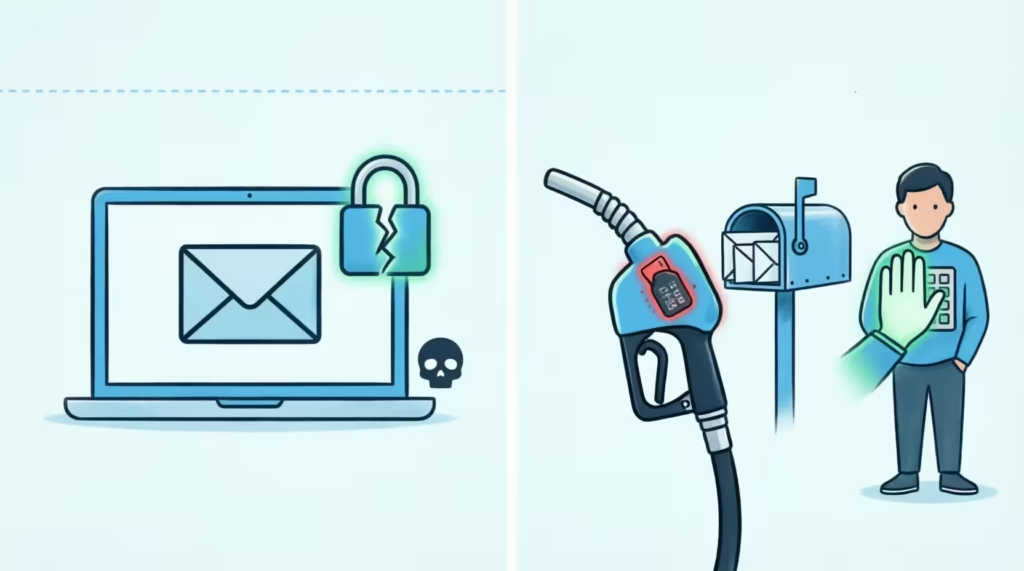
Skimming devices. A skimmer is a small tool a thief attaches over a real card reader. It copies your card data as you swipe or insert. You’ll find them most often on:
- Outdoor gas pumps (especially at less-monitored stations)
- Non-bank ATMs in tourist areas, gas stations, and convenience stores
- POS terminals at small shops where staff can’t watch every device
Give the card slot a light tug before using it. If it moves, wiggles, or looks bulkier than the rest of the machine, pick another pump or ATM. Cover the keypad when you type your PIN. Cameras are sometimes paired with skimmers.
Mail theft and pre-approved offers. New cards, replacement cards, and pre-approved credit offers all travel through the mail. A thief who grabs a pre-approved offer can sometimes activate an account in your name. Shred these before tossing them, and use USPS Informed Delivery so you can see which mail is coming that day.
Shoulder surfing and physical theft. In busy places like airports, hotel lobbies, or coffee shops, people can film your card as you pay or read your CVV out loud. Turn your card face-down after each use. Don’t say the numbers out loud on speaker calls in public.
📌 Did You Know: The FBI’s Internet Crime Complaint Center recorded $20.877 billion in reported losses in 2025, its highest total ever, with credit card/check fraud making up over 18,000 complaints that year, per the 2025 IC3 Annual Report.
Common Credit Card Scam Tactics to Recognize
Once thieves have your number, or want to get it, they lean on the same few scripts over and over. Learning the scripts is like learning the punchline before the joke. You spot it early and hang up.
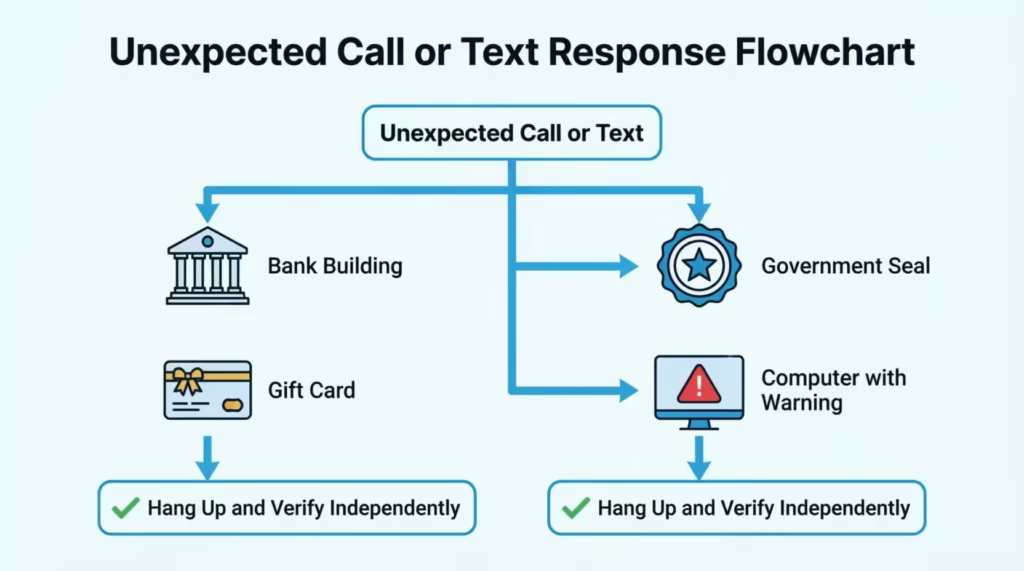
Bank and government impersonation. The call sounds official. Caller ID may even show your bank’s name (that’s called spoofing). The “agent” says something like: “We’ve detected a suspicious charge for $487 at Best Buy. If this wasn’t you, press 1.” Then they ask you to “verify your identity” by reading a code or your full card number. Real banks don’t work that way. Hang up and call the number on the back of your card.
“Lower your interest rate” robocalls. A recorded voice offers to slash your APR “with one quick approval.” To do it, they need your full card number, expiration date, and CVV. What actually happens: they charge a big fee, your rate doesn’t change, and now they have your card.
Gift card payment scams. No real business, court, tax agency, or utility asks you to pay a bill with a gift card. Ever. If someone says, “Buy $500 in Visa gift cards and read me the numbers on the back,” it is 100% a scam. Walk away. See the next subsection for the specific version of this scam.
Fake tech support and “your account is compromised” scams. A pop-up locks your screen or an email says “Microsoft/Apple detected a virus on your device.” They push you to call, install remote software, and then “verify” you by opening your banking app while they watch. Never install remote-access tools for someone who called or messaged you first.
Subscription traps. A “free trial” quietly rolls into a $59 monthly charge, or a small $1.99 charge shows up that you don’t recognize. Scammers use tiny recurring charges to test if a stolen card is still active before hitting it harder. Review your statement every week, not just at bill time.
How to Avoid Visa Gift Card Scams
Gift card scams are their own beast because scammers love gift cards for one reason: once you read them the code, the money is gone, and there’s no chargeback path.
Why scammers demand gift cards. Gift card funds are almost untraceable. They move fast, cross borders easily, and can be resold online in minutes. Wire transfers and cryptocurrency work the same way, and any request for these payment methods should raise a red flag.
Red flags to watch for.
- Anyone (IRS, “your grandson,” a utility, a police officer, a boss over email) asking for payment in Visa, Apple, Google Play, Steam, or Amazon gift cards
- Instructions to stay on the phone while you drive to the store
- Warnings not to tell the cashier what the cards are for
- Urgent stories: an arrest warrant, a hospital emergency, a locked account
What to do if you already shared a gift card code. Move fast. Every minute matters.
- Call the gift card brand’s fraud line right away. Visa gift card issues can be reported through the number on the back of the card.
- Keep the physical card, the receipt, and any packaging.
- Report it at ReportFraud.ftc.gov and to your local police.
- Tell the store where you bought it. Some retailers can freeze the balance if you catch it fast enough.
⚠️ Mistake to Avoid: Don’t throw the gift card away after realizing you were scammed. The card, receipt, and packaging are your only proof and your only shot at getting funds frozen.
New and Emerging Credit Card Scam Tactics in 2026
Old scams still work, but a new wave has changed the game. These newer tactics are harder to spot because they don’t come with the usual “obvious scam” cues like broken English or weird links. If your mental model of a scam is still “a Nigerian prince email,” update it now.
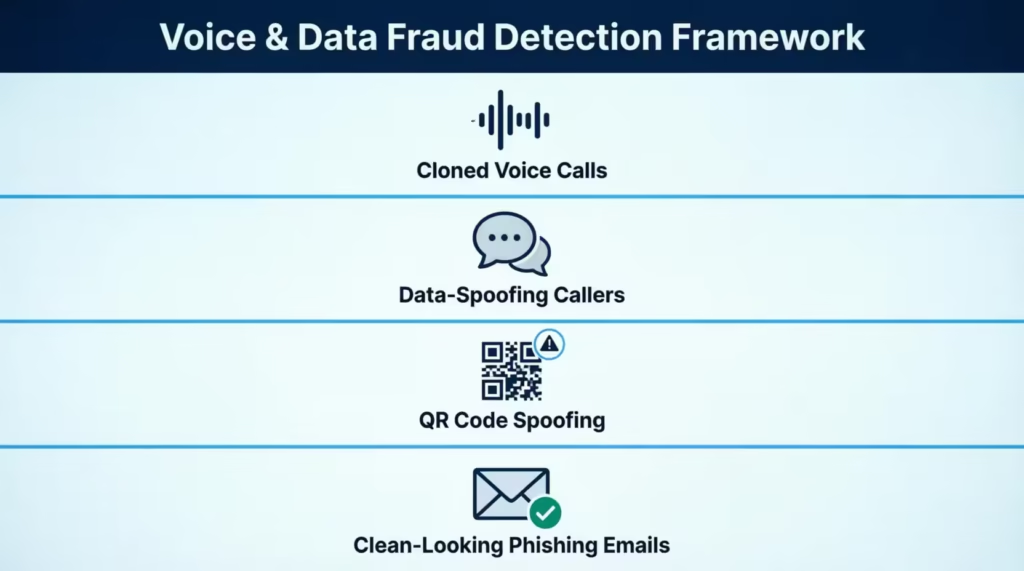
AI voice cloning and deepfake calls. With as little as three seconds of audio pulled from social media, scammers can now clone a voice. You might get a call that sounds exactly like your daughter, your boss, or your bank’s fraud team. The “family emergency” version is common: a cloned voice of a loved one saying they’ve been in an accident and need money right now.
The IC3 reports that in 2025, victims lost over $5 million to distress scams involving voice cloning, and total AI-related fraud complaints topped $893 million, according to the FBI’s 2025 IC3 Annual Report. Set a family “safe word” that must be said on any emergency money call. If it isn’t said, hang up and call the person back on their known number.
Data-spoofing callers. This one smartly breaks trust. A scammer calls and reads real details back to you: the last four digits of your SSN, your card’s exact balance, your recent Amazon order total. Your brain thinks, “Only my real bank would know that.” But those bits often come from data breaches or public records. Real information does not equal a real caller. If they can quote it, that only proves someone leaked it, not that they’re your bank.
Fake QR code stickers. Scammers print stickers that look like the parking meter’s official QR code and stick them right on top. You scan, “pay,” and hand your card details straight to a phishing site. The same trick shows up on:
- Restaurant tables (fake menu QR)
- Charging stations at airports
- Flyers offering “free” gift cards
Type the URL by hand when you can. If a QR code payment feels off, use the parking app directly instead of scanning.
AI-generated phishing emails. The old advice was “look for typos and bad grammar.” That advice is out of date. Generative AI writes clean, personalized phishing emails at scale. Some copy the exact tone of your bank’s real emails. Check the sender’s full email address (not just the display name), and never click “Verify account” from an email. Open a new browser tab and log in directly at the bank’s real website.
💡 Pro Tip: When your bank or a family member calls about anything urgent, hang up and call them back on a number you already trust (the one on the back of your card, or their saved contact in your phone). This one habit defeats most caller ID spoofing and AI voice cloning attempts.
What Can a Scammer Actually Do With Your Credit Card Number?
Losing your card number feels scary, but knowing what a thief can and can’t do helps you react at the right speed. Not every leaked number becomes a fraud disaster, but the risk is real, and how you respond in the first few hours shapes how bad it gets.
Unauthorized online purchases (card-not-present fraud). This is the most common outcome. With just your 16-digit card number, expiration date, and CVV, a thief can shop online at any site that doesn’t require extra checks. Because there’s no chip or PIN check online, these transactions are called card-not-present fraud, and they make up the biggest slice of card fraud today.
Selling the number on dark web marketplaces. Stolen card numbers get bundled and sold in batches. A “fresh” U.S. card with full details can sell for $20 to $110 in these markets. Buyers then test the card with a small charge (often under $5) to see if it works before using it hard. That small mystery charge on your statement is often the first sign.
Creating cloned physical cards. If a skimmer captured your magstripe data, a thief can burn that data onto a blank plastic card. Cloned cards are used in stores that still take magstripe swipes (some smaller shops and older gas stations). EMV chips make this harder, but not impossible.
Setting up recurring subscription charges. A thief may use your card for a streaming service, a “free trial” that renews, or fake charity donations. These low, repeating charges often slip past busy people. Once one gets through, more can follow.
Account takeover. This is the worst case. Here, the thief pairs your card number with other stolen info (your email, phone, birthday) to take over your actual bank or card account. They change your password, redirect alerts, and lock you out while they spend. This is why any fraud alert should be treated as a signal to check every linked account, not just the one card.
Some cases also involve synthetic identity fraud, where thieves stitch together real and fake pieces of information (like a real SSN with a made-up name) to open new credit accounts. This is why proactively freezing your credit reports adds another layer of defense.
Do Credit Cards Actually Protect You From Scams?
Credit cards come with real, built-in protection that debit cards and cash simply don’t offer. That’s good news. It also means you have more time and more options when something goes wrong. These protections have limits. Knowing what happens automatically and what requires your action helps you stay calm and not overly relaxed or panicked.
Zero liability policies. Visa, Mastercard, American Express, and Discover all offer a zero liability policy. In plain terms: if someone uses your card without permission, you don’t pay for those charges, as long as you report them in a reasonable time. This protection is stronger than what debit cards offer under federal law. That’s a big reason to use a credit card, not a debit card, for online shopping.
EMV chip and tokenization. The chip in your card creates a unique code for each in-person transaction. Even if a store gets hacked, the stolen code can’t be reused. Tokenization works like this for mobile wallets such as Apple Pay and Google Pay. The merchant never sees your actual card number. Instead, they only get a one-time token. That’s why paying with your phone can actually be safer than tapping the card itself.
Real-time fraud monitoring by issuers. Card issuers now run every transaction through AI-based fraud scoring. If a charge looks unusual, like a $2,000 purchase in another state while you’re home, the system might block it. It may also ask, “Was this you?” text within seconds. This system isn’t perfect. It sometimes blocks real purchases and misses real fraud, especially small amounts.
Where the protection ends. Zero liability doesn’t cover:
- Charges you authorized but later regretted
- Cases where you gave someone your card willingly (even if they lied to you)
- Some “friendly fraud” claims where you can’t prove the charge was unauthorized
- Very long delays in reporting (past 60 days for many issuers, per federal law)
So the protection is strong but not automatic. You still need to spot the charge, report it, and stay inside the reporting window.
How Banks Prevent Credit Card Fraud
Banks are doing more behind the scenes than most people realize. Understanding this helps you see where your effort still matters.
AI transaction monitoring and fraud scoring. Every charge is scored in milliseconds. The system compares the merchant, amount, location, time, and device against your normal pattern. Unusual charges may be declined or paused for review, which is why you sometimes get a text saying “Reply YES if this was you.”
Instant transaction alerts. Most major issuers let you get a push notification or text for every purchase, or every purchase above a set amount. This is one of the strongest fraud defenses you have, and it’s free. Turn it on today if you haven’t.
Card locking and freezing in the app. Nearly every major card app now has a one-tap card lock. If you can’t find your card, tap the lock. If it turns up in your gym bag an hour later, tap unlock. No phone call. No paperwork. No hold music. This alone stops a huge share of “lost card” fraud before it starts.
Is It Safe to Give Your Credit Card Number Over the Phone or Online?
This is the everyday question. You want to book a hotel, tip a contractor, order takeout from a new place, or subscribe to a service you just heard about. Sometimes it’s fine. Sometimes it’s a trap. Here’s how to tell the difference before you type or read out your number.
Verify the business first. Before you share anything, do a quick trust check:
- Look up the business’s real phone number on your own (not the number that called you)
- Check for a real street address, real reviews (dated, detailed, on multiple platforms), and a return policy
- Make sure the website URL starts with https:// and matches the brand name exactly (watch for tricks like amaz0n.com or paypa1.com)
- Search “[business name] + scam” or “[business name] + review” to see if warnings pop up
Two minutes of checking prevents a lot of pain.
Red flags for fake or unverified online stores.
- Prices way below every other seller for the same brand-new item
- No contact page, or only a Gmail address and no phone number
- New domain (you can check the domain age on free WHOIS lookup tools)
- Only accepts wire transfer, gift cards, crypto, or Zelle for a “storefront” purchase
- Pushy countdown timers and “only 2 left” pressure tactics on random products
When phone-based sharing is safe vs. risky.
Safe: You call a business at a number you found on your own (hotel reservation line printed on their real website, your card’s back, your dentist’s office you already visit). You control who you’re talking to.
Risky: They call you. Any call you didn’t start is a risk, no matter how official the caller ID looks. If a caller claims to be from your bank, the safest move is to hang up and call the number on the back of your card.
Use virtual card numbers for online shopping. A virtual card number is a fake-looking card number linked to your real account. You can generate one in most major card apps (Capital One, Citi, Chase for Amazon, and many others). Use it for:
- One-time buys from new websites
- Free trials you’re not sure you’ll keep
- Subscriptions you might cancel
If the merchant gets hacked or turns shady, you delete the virtual number and your real card is untouched. Some card apps also let you set a spending cap on each virtual number, so a $10 subscription can never accidentally become a $200 charge.
Everyday Habits and Settings That Reduce Your Risk
Big scams get the headlines, but daily habits do most of the real protection. These are the small settings and routines that stop fraud from becoming a nightmare. Set them once, and they work for you every day after.
1. Turn on real-time transaction alerts. Open your card’s mobile app and set alerts for every purchase, or every purchase over $1. Push notifications are faster than email or text. If a fake charge hits, you’ll know in seconds, not on your monthly statement.
2. Don’t use one card for everything. Using a single card for rent, streaming, gas, groceries, medical bills, and all your subscriptions creates a single point of failure. If it gets stolen or replaced, every autopay you have breaks at once. A cleaner setup:
- One card for recurring subscriptions and autopay only
- One card for daily in-person shopping
- Virtual card numbers for one-off online purchases
That way, if your daily card gets skimmed, your rent and utilities keep flowing.
3. Review statements weekly, not monthly. Alerts can miss small test charges (a $0.99 hit from a merchant you don’t recognize). A five-minute scroll through your transactions each Sunday catches these before they grow. Look for: unknown merchants, foreign transactions, duplicate charges, and any subscription you don’t remember signing up for.
4. Turn on two-factor authentication (2FA) on banking apps. 2FA means a thief needs your password AND a second factor (a code sent to your phone, or better, an app like Authy or Google Authenticator). App-based codes are safer than SMS codes because SMS can be hijacked through SIM-swap attacks. Turn on 2FA on your bank app, your credit card apps, your email (this is critical, since password resets go to email), and any store account with your card saved.
5. Freeze your credit reports proactively. A credit freeze blocks new accounts from being opened in your name until you thaw it. It’s free at all three bureaus and takes about ten minutes total. Set up freezes at Equifax, Experian, and TransUnion. Thawing takes seconds when you actually need new credit.
6. Don’t save full card numbers in browsers or unsecured apps. Browser autofill is convenient, but if your laptop gets stolen or a browser extension is compromised, every saved card can be pulled. Use your phone’s secure wallet (Apple Pay, Google Pay, Samsung Pay) or a trusted password manager with card storage instead.
7. Skip public Wi-Fi for banking. If you must check your account on the go, use your phone’s cellular data. Free airport and coffee shop Wi-Fi is a known target for attackers who set up fake hotspots with names like “Airport_Free_WiFi.”
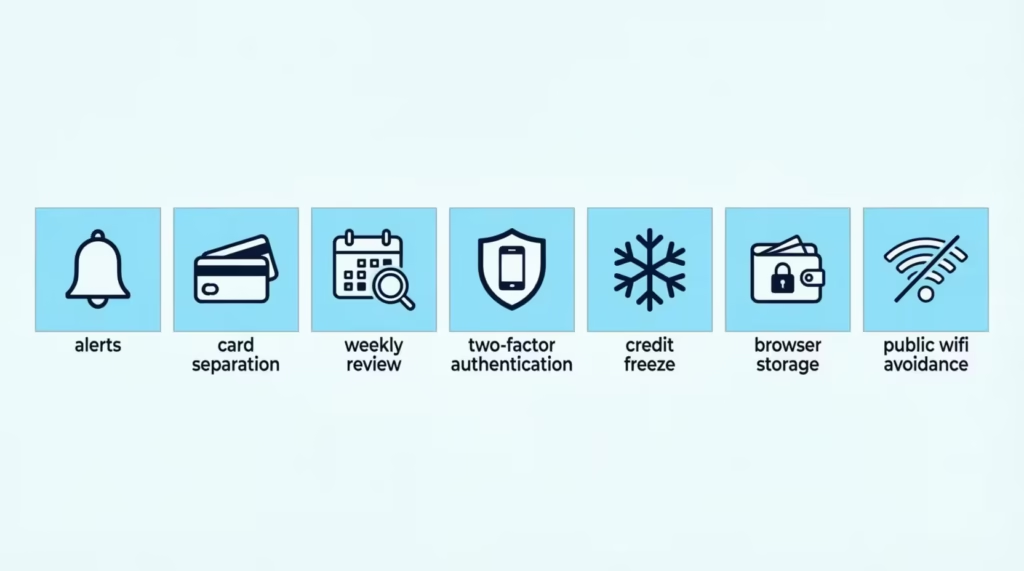
Quick reference table:
| Habit | Time to Set Up | Protection Level |
|---|---|---|
| Real-time transaction alerts | 3 minutes | High |
| App-based 2FA on banking | 10 minutes | Very High |
| Weekly statement review | 5 min/week | High |
| Credit freeze at all 3 bureaus | 15 minutes | Very High |
| Virtual card numbers for online buys | 2 min/purchase | High |
| Separate card for autopay | One-time setup | Medium |
What to Do If You Think You’ve Been Scammed
The first ten minutes matter more than the next ten days. Move in order, don’t skip steps, and don’t let embarrassment slow you down. Card issuers deal with fraud every single day. You are not the first, and you won’t be the last. Here’s the exact sequence to follow.
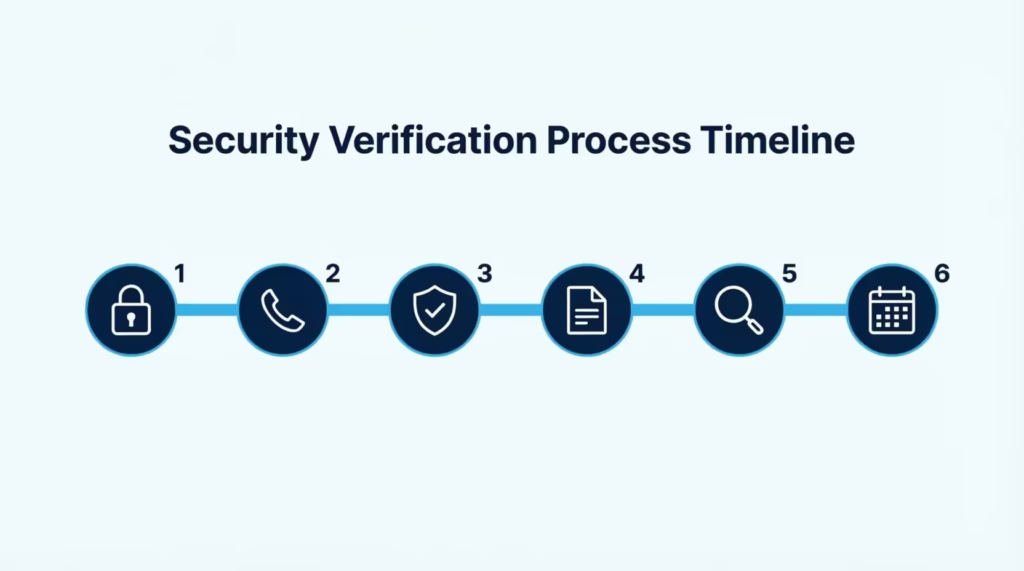
1. Lock or freeze the card right now. Open your card’s mobile app and tap the lock/freeze button. This stops any new charges instantly, even before you talk to anyone. If you can’t find the lock in the app, call the number on the back of the card. Do this before anything else, even before you finish reading this section.
2. Call your card issuer and dispute the charges. After the freeze, call the number on the back of your card. Tell them:
- Which charges are not yours
- When you first noticed
- Whether you shared any info (card number, OTP, password) or clicked any suspicious link
They will start a dispute, cancel the compromised card, and mail a new one (usually 3 to 7 business days, sometimes overnight if you ask).
3. Change your passwords and turn on 2FA. If you clicked a phishing link, replied to a fake text, or gave up an OTP, assume the connected accounts are also at risk. Change the password on:
- Your bank account
- Your card’s online account
- Your email (this is the master key; do it first if you use the same password anywhere)
- Any shopping site that has your card saved
Turn on 2FA on all of them, ideally with an authenticator app instead of SMS.
4. Report to the FTC at ReportFraud.ftc.gov. File a report at ReportFraud.ftc.gov. It takes about 10 minutes. This creates an official record that can support your dispute, and it feeds federal enforcement data. If personal identity info was shared, also file at IdentityTheft.gov to get a step-by-step recovery plan.
5. Watch for related fraud. One leak often leads to more. In the next 30 days, check:
- All your other card and bank statements
- Your credit reports at AnnualCreditReport.com (free weekly from all three bureaus)
- Any recent password reset emails you didn’t request
- Your phone plan account (SIM-swap attacks are a rising follow-up)
Consider freezing your credit reports if you haven’t already.
6. Know the timeline for disputes and refunds. Under the Fair Credit Billing Act, you must dispute an unauthorized charge in writing within 60 days of the statement date on which the charge appeared. Most issuers accept online disputes now. During the dispute, you don’t have to pay the charge, and the issuer must respond within 30 days and resolve within two billing cycles (up to 90 days).
Understanding Your Fraud Liability and Rights
Fear of being blamed keeps people from reporting fast, which is exactly what scammers count on. The truth is the opposite: reporting fast protects you.
Zero liability under most card agreements. Every major issuer (Visa, Mastercard, Amex, Discover) has a zero liability policy for unauthorized charges. That means $0 out of pocket for you, as long as you report the fraud in a reasonable time.
Federal law backs you up. The Fair Credit Billing Act caps your liability at $50 for unauthorized credit card charges, even if the issuer’s policy didn’t exist. In practice, virtually all issuers waive that $50 too. Debit cards have weaker protection under a different law, which is one reason to shop with credit, not debit.
Reporting fast doesn’t put you at fault. Card issuers do not punish customers for reporting fraud. Your credit score isn’t hit for a fraudulent charge you dispute. Your account isn’t closed for reporting suspicious activity. If anything, calling in fast helps the issuer catch the pattern and protect others. There is no reason to wait “to see if it fixes itself.” It won’t.
Frequently Asked Questions (FAQs)
How did someone use my credit card without having it?
Thieves get your card number through phishing emails, data breaches, malware, or skimming devices, then use those digits online where no physical card is needed. This is called card-not-present fraud, and it makes up the biggest share of card fraud today.
What are the most common credit card scams?
The most common scams include bank impersonation calls, “lower your interest rate” robocalls, gift card payment demands, fake tech support pop-ups, and small subscription trap charges. Newer versions include AI voice cloning and fake QR code stickers on parking meters or menus.
How to stay safe from credit card scams?
Turn on real-time transaction alerts, use app-based two-factor authentication, and freeze your credit reports at all three bureaus. Also, hang up on any unexpected call and dial the number on the back of your card instead.
What are the current credit card scams in 2026?
Current scams include AI voice cloning of family members, data-spoofing callers who read back real breached details to seem legitimate, fake QR code stickers, and AI-generated phishing emails with no typos. The FBI reported over $893 million in AI-related fraud complaints in 2025.
What is the most common thing bought with a stolen credit card?
Thieves often test a stolen card with a small charge under $5 to confirm it still works before making larger purchases. That small, unrecognized charge is often the first warning sign on a statement.
How to tell if a card has been cloned?
Watch for small unrecognized test charges, usually under $5, appearing before larger fraudulent purchases show up. Reviewing your statement weekly instead of monthly helps catch these early signs of cloning.
Will freezing my card stop a scammer?
Locking or freezing your card in the issuer’s app stops any new charges instantly, even before you call anyone. It’s the first step to take the moment you suspect fraud, since it works immediately with no phone call needed.
What to do if I already shared a gift card code with a scammer?
Call the gift card brand’s fraud line immediately using the number on the back of the card, and keep the card, receipt, and packaging as proof. Also report it at ReportFraud.ftc.gov and to the store where you bought it, since some retailers can freeze the balance quickly.
How long do I have to dispute an unauthorized credit card charge?
Under the Fair Credit Billing Act, you must dispute an unauthorized charge in writing within 60 days of the statement date it appeared on. The issuer must then respond within 30 days and resolve the dispute within two billing cycles, up to 90 days.
Are credit cards safer than debit cards for online shopping?
Credit cards offer zero liability protection under Visa, Mastercard, Amex, and Discover policies, meaning $0 out of pocket for unauthorized charges reported in time. Debit cards carry weaker protection under federal law, making credit cards the safer choice for online purchases.
Wrapping Up
Staying safe with a credit card in 2026 isn’t about one big move. It’s all about layered defense. You need to know how thieves get your number. Spot the classic and new scams. Use built-in protections like zero liability and virtual card numbers. And have a clear plan for the first ten minutes if something goes wrong.
AI scams are growing quickly. The best way to protect yourself is to use real-time alerts, app-based 2FA, and always call back on a trusted number for urgent matters.
If you know a parent, sibling, or friend who still uses one card for everything or takes bank calls at face value, share this guide with them. It could stop the next scam before it starts.