
A late payment mark can feel like a heavy weight sitting on your credit report. Maybe you just got denied for a car loan, or a mortgage lender flagged it during pre-approval. We understand how stressful this moment is, especially when the mark comes from a single slip-up during a hard month.
The good news is that a late payment on a credit report is not always permanent, and you have real options to fight it. You can remove a late payment by disputing an error with the credit bureaus, sending a goodwill letter to your creditor, or waiting out the seven-year reporting window.
Keep reading for the full step-by-step playbook, expert scripts, and smart moves for tough cases.
Key Takeaways
This guide explains how to remove a late payment from your credit report, covering accuracy checks, the dispute process for errors, goodwill letters for accurate marks, and what to do if either request is denied.
Core Facts:
- A late payment stays on your credit report for seven years from the date of the first missed payment, and the clock does not reset if the balance is paid later.
- Payment history makes up 35% of your FICO score, and a single 30-day late payment can drop a score in the 780s by 90 to 110 points.
- Disputing an inaccurate late payment requires filing with each credit bureau showing the mark, and the bureau must investigate within about 30 days under the FCRA.
- A goodwill letter is a request sent directly to the creditor, not the credit bureau, asking them to remove an accurate late mark as a courtesy.
- Large national banks are described as less likely to grant goodwill removals, while credit unions and community banks are described as more likely to say yes.
- Pay-for-delete applies only to accounts already in collections and does not apply to standard late payments on active loans or cards.
Best for:
- Readers who found a late payment on their credit report and need to determine whether it is an error or accurate before taking action.
- Readers with a mostly on-time payment history who had a single late payment and want to request removal as a courtesy.
- Readers with multiple late payments who need a strategy for which ones to address first.
Is Your Late Payment Accurate or an Error?
Before you send a single letter or file any dispute, you need to figure out one simple thing. Is the late mark real, or is it wrong? This step decides your whole path forward. If the mark is an error, you have a legal right to remove it under the Fair Credit Reporting Act. If the mark is correct, you’ll need a very different plan, like a goodwill request.
Start by asking yourself a few clear questions. Did you actually miss the due date by 30 days or more? Was the payment sent on time but posted late by the bank? Did you have autopay set up that failed without warning? Was the account even yours to begin with? Identity theft and mixed credit files happen more often than most people think.
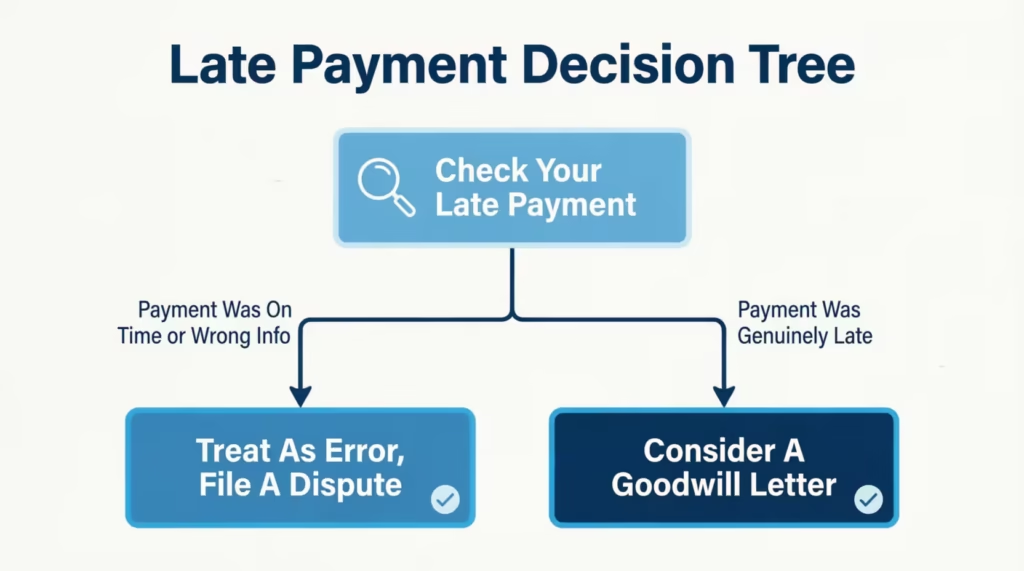
If you find any gap between what the report says and what really happened, treat it as an error. Even small mistakes count, like a wrong date, a wrong dollar amount, or a payment marked “30 days late” when it was only 15 days late.
💡 Pro Tip: Pull all three credit reports at the same time. A late payment might show up on one bureau’s file but not the others, which is itself a sign the record may be flawed.
How to Check Your Credit Reports for Late Payment Details
The only official free source for your reports is AnnualCreditReport.com. This site is backed by federal law and gives you free weekly access to reports from Equifax, Experian, and TransUnion.
Follow these steps to pull and review your files:
- Visit AnnualCreditReport.com and request all three reports.
- Open the “Account History” or “Payment History” section for each account.
- Look for any month marked “30,” “60,” “90,” or “120+” days late.
- Write down the creditor name, account number, date of the late mark, and which bureaus show it.
- Compare the late mark to your own records, like bank statements, canceled checks, or app screenshots.
This side-by-side check gives you the proof you’ll need later. Save copies of any statement or receipt that shows you paid on time. These will be your evidence if you file a dispute.
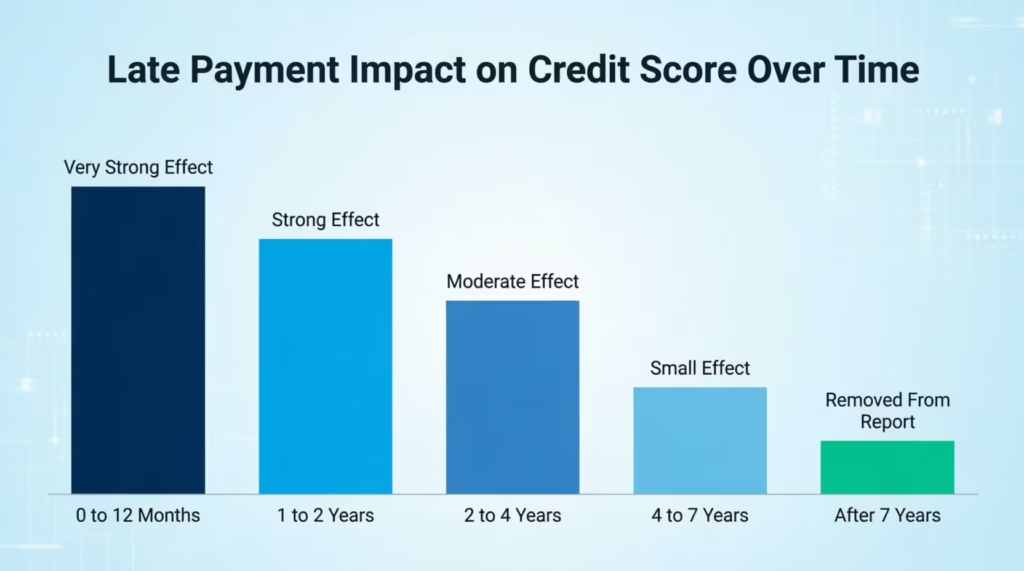
How Long a Late Payment Stays on Your Credit Report
A late payment stays on your credit report for seven years from the date of the first missed payment. This rule comes straight from the Fair Credit Reporting Act, and it applies to all three major bureaus. The clock does not reset if you pay the balance later, and it does not stop if the account is closed.
The Consumer Financial Protection Bureau confirms that most negative marks, including late payments, must be removed after seven years. Charge-offs and collections tied to the original late payment follow the same seven-year clock, measured from that first missed due date.
Here is a quick timeline of how a late mark ages:
| Time Since Missed Payment | Impact on Score |
|---|---|
| 0–12 months | Very strong negative effect |
| 1–2 years | Strong but softening effect |
| 2–4 years | Moderate effect |
| 4–7 years | Small and fading effect |
| After 7 years | Removed from your report |
So while waiting is a real option, it’s usually the slowest one. Most readers will want to try faster paths first.
How a Late Payment Affects Your Credit Score
Payment history is the single biggest factor in your FICO score. It makes up 35% of your total score. That means one late mark can drop your score more than almost any other kind of ding.
Here’s what a single 30-day late payment can do:
- A score in the 780s can drop by 90 to 110 points.
- A score in the 680s might drop by 60 to 80 points.
- A score already below 600 usually drops less, but the effect still hurts.
The higher your starting score, the harder the fall. The damage is worst in the first 12 months, then slowly eases as the mark ages. That’s why fixing or removing the mark early can save you real money on interest for years.
How to Dispute an Inaccurate Late Payment
Filing a dispute is your strongest legal tool when the late mark is wrong. Under the Fair Credit Reporting Act, the credit bureau must investigate your claim within 30 days. If they can’t verify the mark, they must remove it.
Follow these clear steps:
- Gather your proof. Pull bank records, canceled checks, and payment confirmation emails.
- Write a short dispute letter. State the account, the wrong information, and what should be fixed.
- File with each bureau that shows the mark. You can dispute online, by mail, or by phone.
- Equifax: equifax.com/personal/credit-report-services/credit-dispute
- Experian: experian.com/disputes
- TransUnion: transunion.com/credit-disputes
- Send copies, not originals. Keep your originals safe at home.
- Track the timeline. The bureau has 30 days (sometimes 45) to respond.
Filing by mail with certified return receipt is often the strongest choice. It gives you proof of delivery and a paper trail if the case escalates.
What Evidence Strengthens Your Dispute
Your dispute is only as strong as the proof behind it. Bureaus need clear, dated documents that show the truth. Weak or missing evidence is the top reason disputes fail.
Strong evidence includes:
- Bank statements showing the payment date and amount
- Canceled checks with the deposit stamp
- Screenshots from the creditor’s app or website
- Email or text confirmations of on-time payment
- Autopay setup records showing the payment was scheduled
- A police report or FTC identity theft report, if the account isn’t yours
Line up your documents by date. Highlight the key figures. The easier you make the reviewer’s job, the faster your case moves.
What Happens After You File a Dispute
Once you send a dispute, the bureau contacts the creditor (called the “furnisher”) to verify the record. The creditor has to look at their own files and confirm the mark is right. If they can’t back it up within about 30 days, the bureau must delete the mark from your report.
You’ll get one of three possible results:
- Deleted: The mark comes off, and your score often bounces back within one billing cycle.
- Updated: Some part of the mark is corrected, but the mark itself stays.
- Verified: The creditor confirms the mark as accurate, and it stays.
If your dispute succeeds, ask for a free updated report to confirm the change. If it fails, you still have more moves, which we’ll cover next.
What to Do If Your Dispute Is Denied
A denied dispute is not the end. It just means you need a stronger angle or a different route.
Try these steps in order:
- Request the method of verification. You have a legal right to know exactly how the bureau confirmed the mark. Often, they use an automated system that misses details.
- File a direct dispute with the creditor. Skip the bureau and write straight to the lender. Include your evidence and cite the FCRA.
- Submit a complaint with the CFPB. Complaints filed through consumerfinance.gov/complaint get routed to the company, which must reply within 15 days. This step often unlocks a real human review.
- Reach out to your state attorney general. Some states have stronger consumer laws than federal ones.
- Talk to a consumer law attorney. Many take FCRA cases on contingency, meaning you pay nothing unless you win.
Keep all letters, screenshots, and replies in one folder. If the case grows into a legal one, this paper trail is gold.
What a Goodwill Letter Is (And How It’s Different From a Dispute)
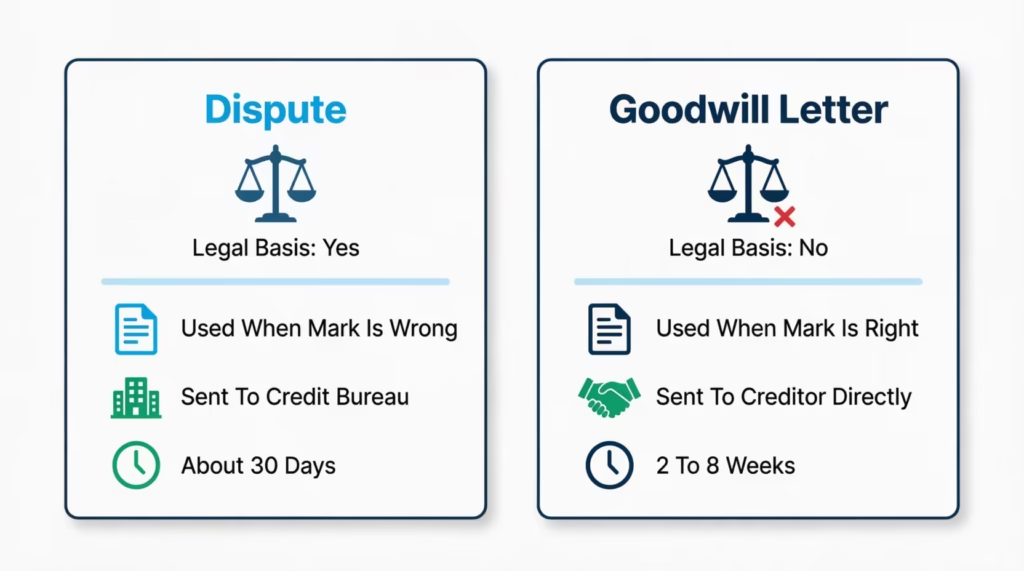
A goodwill letter is a polite request asking your creditor to remove an accurate late payment as a favor. It is not a legal tool. It is not a dispute. You are simply asking, human to human, for a second chance.
Here’s the key difference:
| Feature | Dispute | Goodwill Letter |
|---|---|---|
| Legal basis | Yes (FCRA) | No |
| Used when | The mark is wrong | The mark is right |
| Sent to | Credit bureau | Creditor directly |
| Success driven by | Evidence | Payment history and tone |
| Timeline | ~30 days | 2 to 8 weeks |
Many people mix these up and send a goodwill letter to the credit bureau. The bureau will ignore it. Goodwill letters must go straight to the lender who reported the late mark.
How to Write a Goodwill Letter That Has a Real Chance of Working
A goodwill letter works best when it is short, honest, and specific. Long, emotional letters get skimmed. Clear, respectful ones get read.
Your letter should include five things:
- Your full name, account number, and current contact info
- A clear statement of the late mark you want removed (date and amount)
- A brief, honest reason for the missed payment (illness, job loss, family issue)
- Proof you’ve been a strong customer since (on-time payments, long history)
- A specific, polite request to have the mark removed as a courtesy
Here is a simple sample you can adapt:
Dear [Creditor Name] Team,
I’ve been a customer since [year] and have made all payments on time except for one late mark in [month/year]. During that period, I was dealing with [brief reason]. Since then, my account has stayed in perfect standing.
I’m writing to respectfully ask if you’d consider removing that single late payment from my credit report as a goodwill gesture. It would mean a great deal to me and help me qualify for [loan goal].
Thank you for your time and consideration.
Sincerely, [Your Name]
Send the letter by mail to the creditor’s customer service address. Some banks also accept goodwill notes through their secure message center.
⚠️ Mistake to Avoid: Don’t beg, threaten, or send a long life story. Keep it under one page. Reviewers approve or deny based on account behavior, not drama.
Which Creditors Are Most and Least Likely to Grant Goodwill
Not all creditors respond the same way. Some are known for being more open to goodwill removals, while others rarely agree.
More likely to say yes:
- Local credit unions
- Community banks
- Store cards through smaller lenders
- Auto lenders tied to a dealership network
Less likely to say yes:
- Large national banks (Chase, Bank of America, Citi)
- Federal student loan servicers
- Collections agencies
- Cards run by major issuers with strict policies
If you have accounts with more than one type, start with the friendlier creditor. A win builds your confidence and gives you a template to use for the tougher letters.
Best Timing for Sending a Goodwill Letter
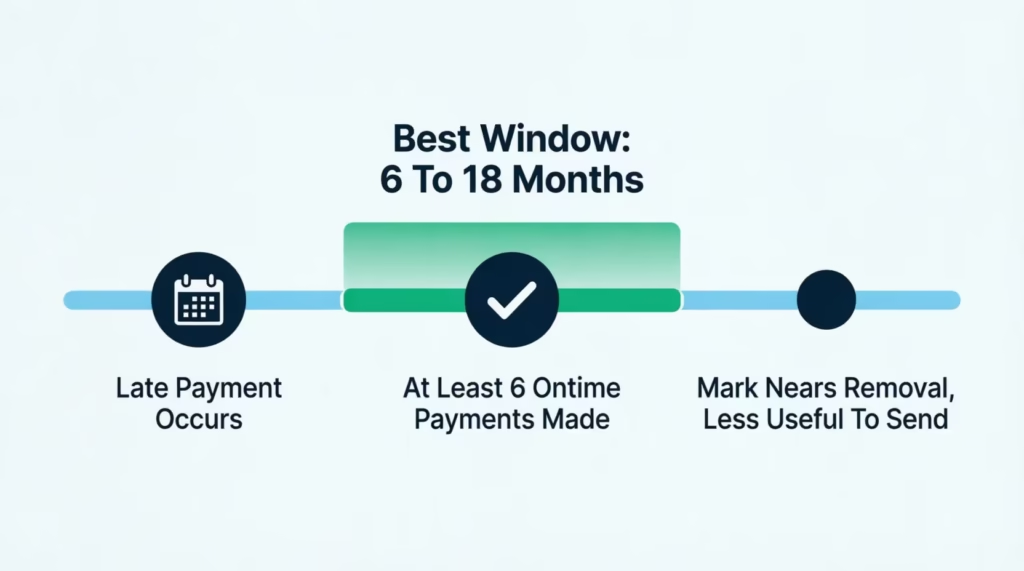
Timing changes your odds more than most people realize. Send the letter too early, and the account is still marked delinquent. Send it too late, and the mark is almost gone anyway.
The best window is usually 6 to 18 months after the late payment, once your account has returned to good standing. Try to send it when:
- You’ve made at least six on-time payments after the slip-up
- You have a specific reason (loan application, mortgage prep) to mention
- The account is still open and active
- You are not currently in any hardship or dispute
If the first letter is denied, wait 60 to 90 days. Then, try a second letter to a different department, like executive customer relations.
What to Do If Your Goodwill Letter Is Rejected
A rejection is not final. Many people succeed on the second or third try.
Take these steps:
- Send a follow-up letter after 60 days. Address it to a supervisor or the executive office. A quick web search can find the CEO’s mailing address at most big banks.
- Try a phone call. Ask calmly to speak to a retention or loyalty specialist. These reps often have more removal power than front-line agents.
- Use social media escalation. A polite public message on X or a private direct message on the bank’s official page can reach a higher-level team fast.
- Wait for a life event. Many creditors soften their stance if you’re paying off the loan, closing a mortgage, or applying for a joint account.
- Focus on rebuilding. Even if the mark stays, adding new positive payment history slowly outweighs the old damage.
Persistence works. Just keep every request polite and short.
When Pay-for-Delete Applies (and When It Doesn’t)
Pay-for-delete is a deal where a collector agrees to remove a negative mark in exchange for full or partial payment. It only applies to accounts already in collections, not to regular late payments on active loans or cards.
Pay-for-delete works when:
- The debt has been sold to a third-party collector
- The collector is small or mid-sized
- The debt is not yet reported to the bureaus by that collector
Pay-for-delete does not work when:
- The late mark is still with the original creditor
- The debt is reported by a major national issuer, who won’t remove verified data
- The account is a mortgage, student loan, or auto loan in good standing
Always get any pay-for-delete deal in writing before you send money. A verbal promise is not enforceable. Once you have the signed offer, pay by a traceable method, then follow up 30 days later to confirm the mark is gone.
Handling Multiple Late Payments
If you have several late marks, don’t panic and don’t try to fix them all at once. A smart order gets faster wins.
Follow this priority order:
- Start with clear errors. These are the easiest and fastest to remove.
- Target the newest marks. Recent late payments hurt your score most, so removing them gives the biggest boost.
- Focus on high-limit accounts. A late mark on a credit card with a $20,000 limit weighs more than one on a $500 store card.
- Handle single-slip creditors next. If a lender only shows one late mark, they are more likely to grant goodwill.
- Leave old, isolated marks for last. These fade on their own and may not be worth the effort.
Track your progress in a simple spreadsheet with columns for creditor, date, method used, and outcome. Working one account per week keeps things focused without burning out.
📌 Did You Know: Removing one recent late payment can boost a mid-600s score by 40 to 100 points. This change might even help you qualify for a lower mortgage rate tier.
Avoiding Credit Repair Scams
Bad actors love credit trouble. If you have a fresh late mark, expect calls, texts, and ads promising fast fixes. Most are scams, and some can actually hurt your credit.
Watch for these red flags:
- Promises to “guarantee” removal of accurate items (illegal under the Credit Repair Organizations Act)
- Requests for full payment upfront before any work is done
- Suggestions to create a “new” credit identity or use an EIN in place of your Social Security number
- Pressure to sign contracts on the spot
- Claims that they know “secret” laws the bureaus don’t want you to see
Everything a legit credit repair firm can do, you can also do yourself for free.
If a company is worth your money, they will:
- Give you a clear written contract
- Explain your legal rights under the CROA
- Let you cancel within three days at no cost
- Never ask for payment before service is delivered
When in doubt, do it yourself. The steps above cost nothing but time, and the results stay yours.
Frequently Asked Questions (FAQs)
How much will one late payment hurt my credit score?
A 30-day late payment can drop a score in the 780s by 90 to 110 points, while a score in the 680s might fall 60 to 80 points. The higher your starting score, the bigger the drop.
Do late payments go away after 7 years?
Yes, a late payment is removed from your credit report seven years from the date of the first missed payment. This rule applies to all three bureaus and doesn’t reset if you pay off the balance later.
Will my credit score go back up after a late payment?
Yes, the damage is worst in the first 12 months and slowly eases as the mark ages. If you successfully dispute an error, your score often bounces back within one billing cycle.
What is the biggest killer of credit scores?
Payment history is the single biggest factor in your FICO score, making up 35% of your total score. That’s why one late mark can hurt more than most other credit dings.
Is it worth disputing late payments?
It’s worth it only if the mark is inaccurate, since bureaus must investigate and remove unverifiable errors within 30 days under the FCRA. Disputing an accurate late payment usually just gets it verified and closed, wasting the effort.
Can I negotiate with a creditor to remove late payments?
Yes, this is done through a goodwill letter, a polite request asking the creditor to remove an accurate late mark as a courtesy. Success depends on your payment history and timing, not a legal right, since goodwill removal isn’t guaranteed like a dispute.
Can you have an 800 credit score with late payments?
It’s possible if the late payment is old enough that its effect has faded, since damage is worst in the first 12 months and shrinks over the following years. A recent late mark makes an 800 score unlikely until enough time or a successful removal restores it.
How do I write a letter to my creditor to remove a late payment?
Include your name and account number, the specific late mark and date, a brief honest reason for it, proof of strong payment history since, and a polite request for removal as a courtesy. Keep it under one page and mail it directly to the creditor, not the credit bureau.
What’s the fastest way to remove a late payment?
Disputing an inaccurate mark is fastest, since bureaus must respond within about 30 days, while goodwill letters typically take 2 to 8 weeks and waiting it out takes up to 7 years. Start with an accuracy check to find your fastest legitimate path.
Wrapping Up
To remove a late payment from your credit report, you have three options:
- Dispute it if it’s incorrect.
- Request a goodwill removal if it’s accurate.
- Wait for seven years for it to drop off.
Errors are fixed under the FCRA. Goodwill letters work with good timing and tone. Stubborn cases often resolve after a CFPB complaint or a call to executive customer service.
Start with an accuracy check. Then, use disputes or goodwill letters based on your findings.
If a friend or family member has a credit ding blocking their mortgage or car loan, share this guide. It might help with their next big application.