
Filing for bankruptcy feels like it leaves a permanent mark. You check your credit score, and that one entry keeps holding you back. Maybe you’re trying to buy a car, rent a nicer apartment, or finally qualify for a mortgage.
The pressure is real, and the internet is full of promises that sound too good to be true. Most people searching for how to remove bankruptcies from a credit report just want a straight answer that isn’t a scam.
Here’s the honest truth: an accurate bankruptcy cannot be legally erased before its reporting period ends, but related errors and outdated tradelines can be disputed and removed.
Key Takeaways
This guide explains how to remove bankruptcies from a credit report, covering the legal 7 and 10-year reporting timelines, which errors can be disputed, and how to rebuild credit while the bankruptcy remains.
Core Facts:
- Chapter 7 bankruptcy stays on a credit report for 10 years from the filing date, while Chapter 13 stays for 7 years from the filing date.
- The reporting clock starts on the date of filing, not the date of discharge or repayment plan completion.
- An accurate bankruptcy cannot be legally removed early, but inaccurate details such as wrong filing dates, incorrect chapter types, or duplicate listings can be disputed and corrected.
- Accounts included in the bankruptcy should show a $0 balance and a status of discharged in bankruptcy; incorrect balances or statuses on these tradelines can be disputed.
- Credit bureaus must investigate a filed dispute within 30 days and correct or delete information they cannot verify.
- Involuntary bankruptcy filings that were dismissed by the court can be blocked from credit reporting using a court order sent to the bureaus.
Best for:
- Readers who filed Chapter 7 or Chapter 13 bankruptcy and want to know their exact credit report removal date.
- Readers looking to dispute specific errors, such as incorrect account balances or duplicate bankruptcy listings, rather than the bankruptcy filing itself.
- Readers rebuilding their credit score while the bankruptcy is still showing on their report.
Can You Remove a Bankruptcy From Your Credit Report Early?
Short answer: if the bankruptcy filing is accurate, no legitimate way exists to remove it before the federal reporting window closes. The Fair Credit Reporting Act (FCRA) sets strict time limits, and neither you, a lawyer, nor a credit repair company can shorten them for an accurate filing.
That said, this doesn’t mean you’re powerless. Two paths do exist for legitimate removal.
First, if any part of the bankruptcy record is inaccurate, such as a wrong filing date, the wrong chapter, or a filing that shouldn’t be reporting at all, you can dispute it and force a correction or deletion.
Second, if the bankruptcy was involuntary or improperly filed and you got the case dismissed, you can request a court order that blocks credit bureaus from reporting it.
Everything else you may have seen advertised, from “legal loopholes” to “insider dispute tricks,” falls into one of two buckets. Either it’s the normal dispute process repackaged with a big price tag, or it’s a scam that could get you in serious trouble.
The Consumer Financial Protection Bureau warns that any company promising to remove accurate negative items is likely violating federal law.
The realistic goal isn’t magic removal. It’s fixing what’s wrong on your report and rebuilding your score so the bankruptcy matters less each month.
How Long Bankruptcy Actually Stays on Your Credit Report
Bankruptcy stays on your credit report for either 7 or 10 years, and the clock starts on the date you filed, not the date your case was discharged. This detail trips up almost everyone. People wait years expecting an earlier drop-off because they’re counting from the wrong day.
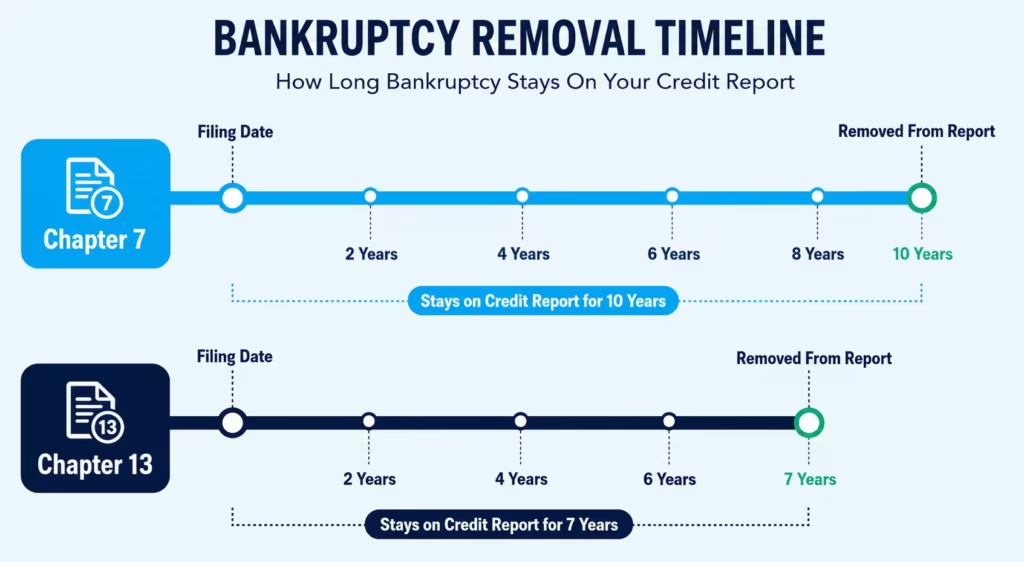
The FCRA gives credit bureaus the legal ceiling on how long they can report a bankruptcy. In practice, all three bureaus, Equifax, Experian, and TransUnion, follow this rule closely. Data reported by the Federal Trade Commission confirms the filing date is the anchor point for the timeline.
Chapter 7 vs. Chapter 13 Removal Timelines
Chapter 7 bankruptcy stays on your credit report for 10 years from the filing date. This is the type most consumers file because it wipes out most unsecured debt without a repayment plan.
Chapter 13 bankruptcy stays for 7 years from the filing date. It gets a shorter reporting window because you agreed to a repayment plan and paid creditors back over three to five years. Credit bureaus treat that repayment effort as meaningful, so the negative mark drops off sooner.
There’s a small wrinkle. Some Chapter 13 filings that get converted to Chapter 7 mid-case may end up reporting for the longer 10-year window. If your case was converted, pull your reports and check what’s actually being reported.
Worked Example, Calculating Your Exact Removal Date
Say Sarah, a 34-year-old marketing coordinator, filed Chapter 7 on March 12, 2019. Her discharge came through on July 8, 2019. Her removal date is March 12, 2029, not July 8, 2029. Even though her case ended in July, the clock started in March.
Now take Michael, a small business owner who filed Chapter 13 on September 3, 2022. He completed his repayment plan on September 3, 2027. His bankruptcy drops off on September 3, 2029, seven years from filing, not seven years from completion.
To calculate your own date, find your filing date on your court records or on your credit report itself. Add 10 years for Chapter 7 or 7 years for Chapter 13. That’s the day the entry must legally come off. If it still appears after that date, you have a clear-cut dispute case.
📌 Did You Know: Credit bureaus are legally required to remove bankruptcy filings automatically once the reporting window ends. If yours doesn’t disappear on time, you can dispute it and demand deletion under the FCRA.
What You Can Actually Dispute If the Bankruptcy Itself Is Accurate
Even when the bankruptcy filing is 100% accurate, other pieces of the record often are not. This is where most people gain real ground. Instead of fighting the filing itself, target the errors around it. Fixing those errors can raise your score, sometimes noticeably.
Under the FCRA, you have the right to dispute anything on your credit report that is inaccurate, incomplete, or unverifiable. That covers a lot of ground when it comes to a bankruptcy record.
Common disputes include:
- Wrong filing date
- Incorrect chapter listed
- Case marked active when discharged
- Bankruptcy still showing after the reporting period
You can also dispute the tradelines connected to the bankruptcy. These are the individual accounts, like credit cards or loans, that were included in the filing. Each account has its own line on your report, and each one must show correct information. If an account was discharged in bankruptcy, it should not still show a balance owed. Getting these fixed is often where the biggest score jumps happen.
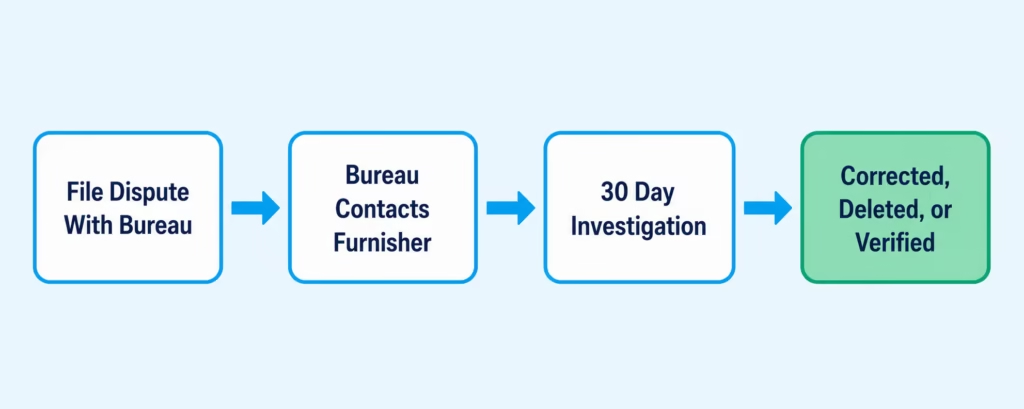
The credit reporting agency, like Equifax, Experian, or TransUnion, must investigate any dispute you file within 30 days. If they can’t verify the information, they must correct or delete it. That’s the mechanism that actually works.
Auditing Your Credit Report for Bankruptcy-Related Errors
Before disputing anything, get all three credit reports and read them line by line. You have the legal right to a free copy from each bureau every week through AnnualCreditReport.com, the only site authorized by federal law.
Pull all three reports at the same time. Errors often show up on one bureau and not another, so comparing them side by side is essential. Print them out or save them as PDFs so you can mark them up.
Focus your audit on these areas. Check the public records section for the bankruptcy filing itself. Verify the filing date matches your court paperwork exactly. Confirm the chapter is correct, either Chapter 7 or Chapter 13. Make sure the case status shows “discharged” if your case is complete.
Then move to the account listings. For every account included in your bankruptcy, look for these red flags:
- Balance showing more than $0
- Account status listed as “past due” or “collection” instead of “included in bankruptcy” or “discharged”
- Payment history still showing late payments after the discharge date
- Account marked “open” when it should be closed
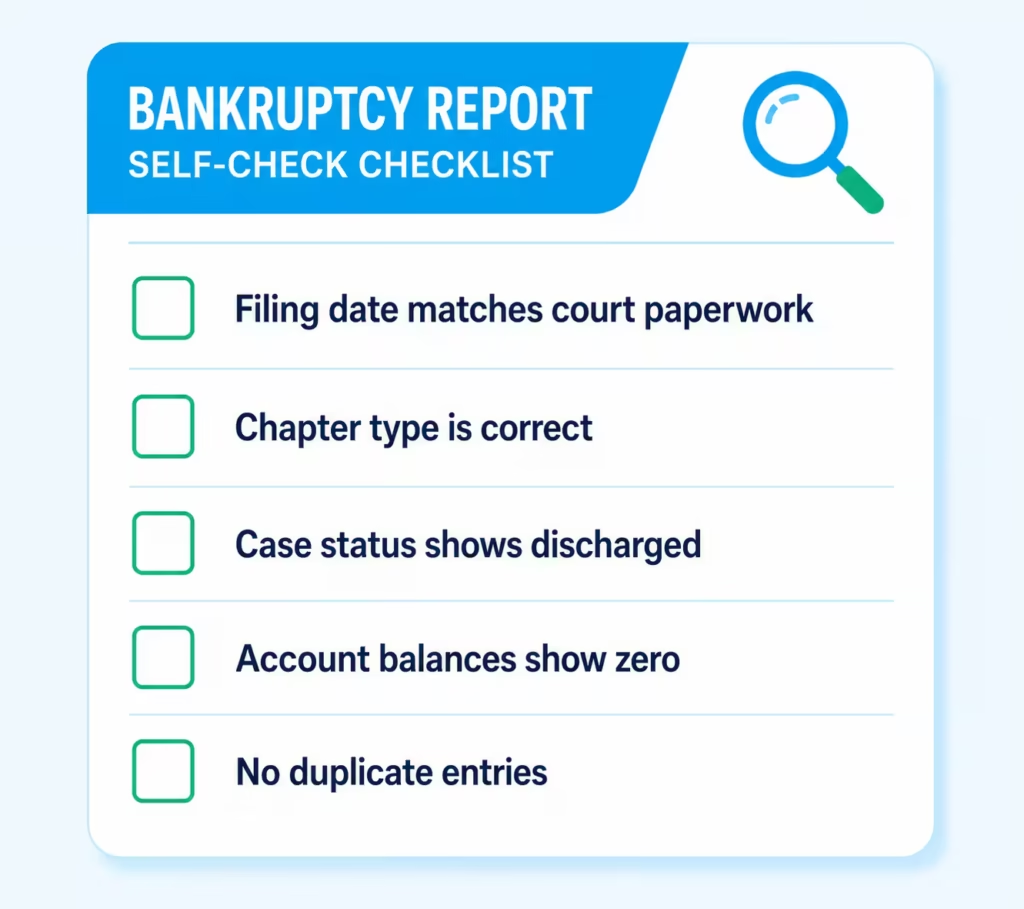
Document everything. Write down the exact wording on each report, the account numbers, and the dates. Take screenshots. You’ll need this evidence when you file your disputes with each credit bureau.
💡 Pro Tip: Pull your reports every 90 days during your dispute period. Bureaus often update information without telling you. Tracking these changes helps you spot new errors quickly and shows when old ones were fixed.
Fixing Incorrect Tradelines on Accounts Included in the Bankruptcy
The single most common error after bankruptcy is accounts still showing balances that were legally wiped out. If a credit card was discharged in bankruptcy, that account must report a $0 balance – discharged in bankruptcy status. When it doesn’t, your credit report looks like you still owe money you no longer legally owe.
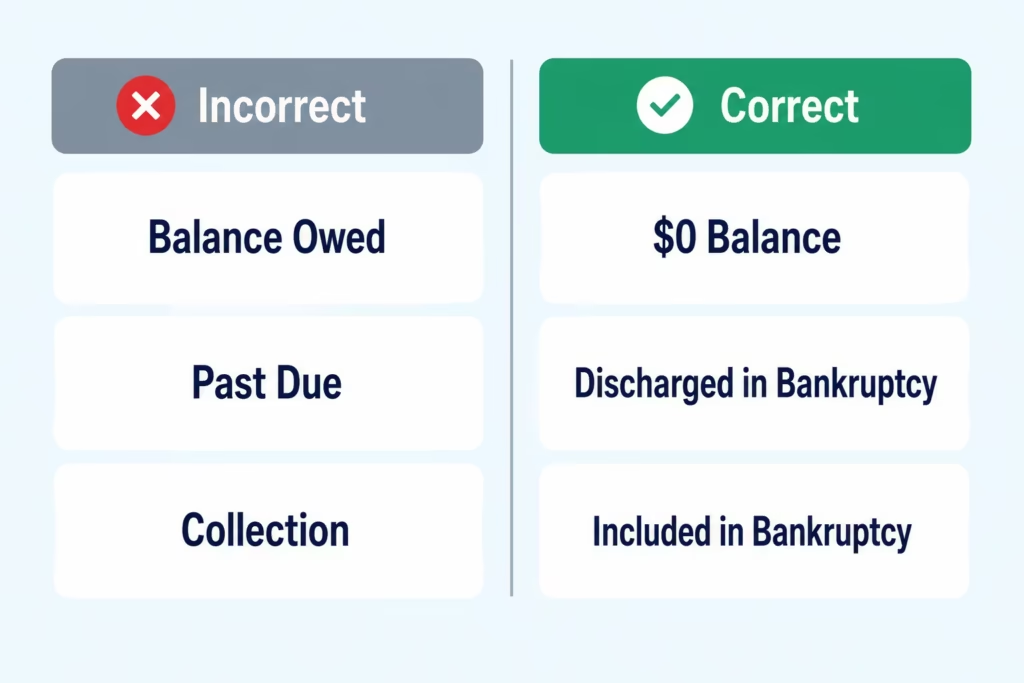
This mistake alone can drag your score down by 30 to 100 points. It’s also one of the most straightforward fixes. The FCRA is clear that discharged debt cannot be reported as an active balance.
To fix each incorrect tradeline, gather three documents first. Get your bankruptcy discharge order from the court. Also, get your schedule of debts that lists all accounts in the filing. Finally, obtain the credit report that shows the error. Match up the account on your report with its entry in your bankruptcy schedule.
Then file a dispute with the bureau reporting the error. State clearly that the account was discharged in your bankruptcy case, cite your case number, and include the discharge date. Attach the discharge order as supporting evidence. Request that the account be updated to show a $0 balance and a status of “discharged in bankruptcy” or “included in Chapter 7/13.”
Don’t skip disputing with the original creditor too. Under the FCRA, both the credit bureau and the furnisher, meaning the bank or lender, must investigate. Sending disputes to both puts pressure on both sides to correct the record.
Duplicate Bankruptcy Listings and Mixed Credit Files
Sometimes the same bankruptcy shows up more than once on a report. Other times, information from a completely different person, often someone with a similar name or a family member, ends up mixed into your file. Both problems are more common than most consumers realize, and both hurt your score unfairly.
Duplicate reporting often occurs when a bankruptcy is mistakenly recorded twice. It can also happen when accounts show up as both the original tradeline and a separate collection entry after discharge. If you see the same account listed twice, that’s a duplicate. If you see your bankruptcy filing appearing as two separate public records, that’s also a duplicate.
Mixed credit files are trickier. This happens when a credit reporting agency merges your file with someone else’s. Watch for accounts you never opened, addresses you never lived at, or a bankruptcy that isn’t yours. Adults with common names or the same name as a parent are most at risk.
To fix duplicates, file a dispute pointing out that the item appears more than once and request removal of the duplicate entry. For mixed files, the fix is more serious. Contact the bureau in writing, explain that your file has been mixed with another consumer’s, and request a full file review.
You may need to send identity verification documents like your Social Security card, driver’s license, and proof of address. If the bureau doesn’t fix a mixed file, this becomes a strong case for CFPB escalation, which we’ll cover shortly.
How to File a Dispute With Each Credit Bureau
Only the credit bureaus can make changes to your credit report. Not the bankruptcy court, not a lawyer, and not a credit repair company. The bureaus control the reports, so your dispute has to go directly to them.
You can dispute online, by mail, or by phone. Mail is often best because it creates a paper trail and gives you proof of what you sent and when. Online disputes are faster but sometimes limit how much documentation you can attach.
Here are the direct dispute channels for each bureau:
- Equifax: File online at Equifax Dispute Center or mail to Equifax Information Services LLC, P.O. Box 740256, Atlanta, GA 30374.
- Experian: File online at Experian Dispute Center or mail to Experian, P.O. Box 4500, Allen, TX 75013.
- TransUnion: File online at TransUnion Dispute Center or mail to TransUnion Consumer Solutions, P.O. Box 2000, Chester, PA 19016.
When writing your dispute, keep it clear and specific. State exactly which item is wrong, why it’s wrong, and what you want corrected. Include copies (never originals) of supporting documents. If you’re mailing, send it via certified mail with return receipt requested. That $5 receipt is your proof of delivery if things get contested later.
What Happens After You File (The 30-Day Process)
Once the bureau receives your dispute, they have 30 days to investigate under the FCRA. The clock starts on the day they receive your dispute, which is why the certified mail receipt matters. In those 30 days, the bureau reaches out to the furnisher of the information. This is usually your original creditor or the bankruptcy court. They ask them to verify the disputed item.
One of three things will happen. The information gets corrected or deleted because it was wrong or couldn’t be verified. The information stays because the furnisher confirmed it as accurate. Or the bureau decides your dispute is “frivolous” and refuses to investigate, though this is rare when you provide documentation.
You’ll receive the results in writing, along with a free updated copy of your credit report showing any changes. If the change was in your favor, request that the bureau send updated information to anyone who pulled your report in the last two years. It’s your right under the FCRA, and it can help clean up your standing with lenders who saw the wrong data.
What to Do If the Bureau Won’t Fix a Legitimate Error
Sometimes bureaus don’t fix errors even when you’ve sent solid proof. This is frustrating, but you have real options. The FCRA gives you enforceable rights, and there are federal agencies whose job is to make bureaus comply.
Start by filing a complaint with the Consumer Financial Protection Bureau (CFPB). The CFPB accepts complaints against credit bureaus and forwards them to the company with a required response deadline. CFPB data shows that credit reporting complaints are the most common. Bureaus handle these complaints more quickly than direct disputes due to regulatory pressure.
You can also file with the Federal Trade Commission (FTC), which handles broader FCRA violations. While the FTC doesn’t resolve individual disputes, they track patterns and takes enforcement action against repeat offenders.
If the error is causing real financial harm, like a denied mortgage or a lost job opportunity, consider contacting an FCRA attorney. Under the FCRA, if you win a lawsuit against a credit bureau for failing to correct verified errors, they must pay your legal fees. This is why most FCRA attorneys work on contingency and take strong cases at no upfront cost.
Before escalating, make sure you’ve done two things. First, send a written dispute with documentation and give the bureau its full 30 days. Second, keep copies of every letter, receipt, and response. Escalation only works if you can prove the bureau ignored a legitimate, well-documented dispute.
⚠️ Mistake to Avoid: Don’t file the same dispute over and over without new information. Bureaus can mark repeat disputes as “frivolous” and refuse to investigate. Always add new evidence or a new angle when refiling.
If Your Bankruptcy Was Involuntary or Improperly Filed
This is the one situation where a bankruptcy filing itself can sometimes be legitimately removed from your credit report early. An involuntary bankruptcy is one filed against you by creditors, not by you. If the court dismisses it as improper, you have grounds to request removal.
Involuntary petitions are rare. They mostly hit business owners or high-net-worth individuals whose creditors band together and force a filing. If three or more creditors owed at least a certain threshold in unsecured debt petition the court, they can file for you. If you fight it and win, the case gets dismissed.
The removal process works like this. You need a court order from the bankruptcy court that either dismissed the case or otherwise ruled the filing improper. Take that order and send it to each credit bureau along with a written request to block the reporting. Reference the specific court case number and the dismissal date.
The bureaus generally comply with clear court orders quickly. In most cases, the entry comes off within 30 days. If they resist, this is a strong case for a CFPB complaint or FCRA attorney, since ignoring a court order is a serious violation.
This path doesn’t apply to voluntary bankruptcies that you filed and then chose to dismiss. Voluntary dismissal, meaning you filed and then withdrew, still leaves a filing record that reports for the standard timeline. Only involuntary or court-declared improper filings qualify for early removal.
Do Credit Repair Companies or Pay-for-Delete Letters Actually Work?
Credit repair companies advertise heavily to people in your situation. Their pitch sounds appealing: pay them, and they’ll remove negative items faster than you could yourself. The truth is that credit repair companies have no special legal powers. They use the exact same dispute process you can use for free.
The Credit Repair Organizations Act makes it illegal for these companies to promise to remove accurate information or charge upfront fees before services are performed. Any company that guarantees bankruptcy removal or asks for payment before doing the work is breaking federal law.
That doesn’t mean every credit repair company is a scam. Some legitimately handle the paperwork for people who don’t want to deal with it themselves. But you’re paying $75 to $150 a month for something you can do yourself in a few hours. If you’re weighing the cost, be honest about whether you value the time saved that much.
Pay-for-delete letters are different. These are letters sent to a creditor, usually a collection agency, offering to pay a debt in exchange for removing the tradeline from your report.
Pay-for-delete works in a narrow set of cases, mostly with collection agencies on smaller debts, but it does not work for bankruptcy filings. The bankruptcy itself is a public court record. No creditor can remove it, because no creditor put it there.
Goodwill letters are another option worth understanding. These are polite written requests to a creditor asking them to remove a late payment or negative mark as a courtesy. They work best with lenders you have a long, positive history with, but they rarely succeed for accounts tied to a bankruptcy discharge.
The bottom line: no shortcut removes an accurate bankruptcy. Anyone claiming otherwise is either misinformed or trying to sell you something.
Rebuilding Your Credit Score While the Bankruptcy Remains
Even with a bankruptcy on your report, your score can climb significantly over time. Many consumers reach the mid-600s within two years of discharge and cross into the 700s by year four or five. The bankruptcy still shows, but its impact fades as newer positive activity outweighs it.
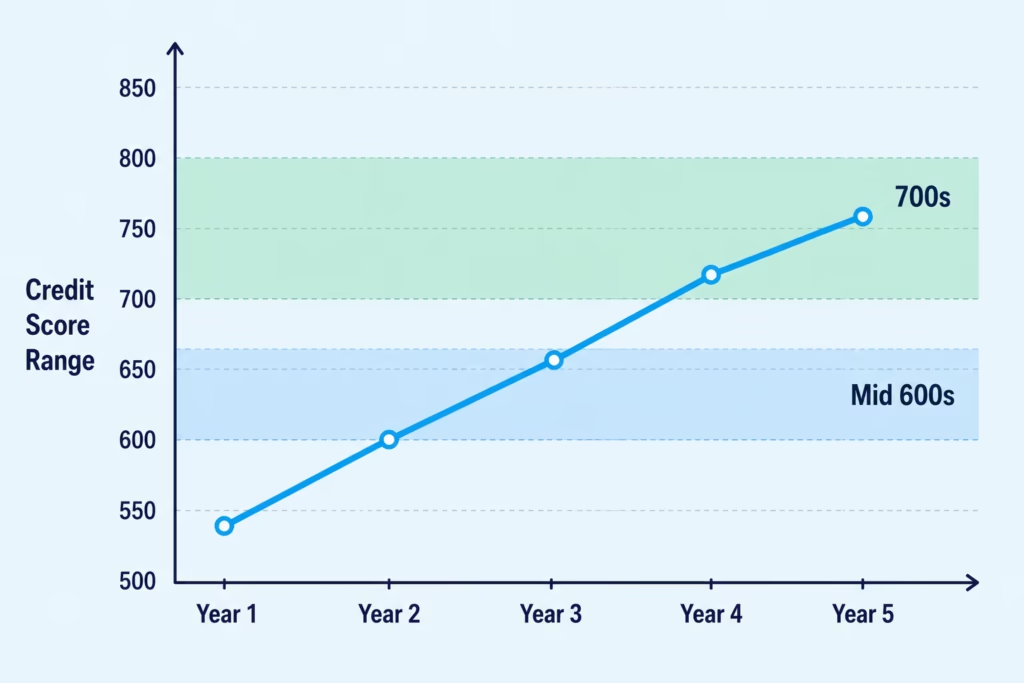
The most effective first step is a secured credit card. You put down a small deposit, usually $200 to $500, and get a card with that amount as your limit. Use it for one small monthly bill, like a streaming service, and pay it off in full every month. Discover, Capital One, and Citi all offer secured cards specifically for consumers rebuilding after bankruptcy.
Credit-builder loans work well as a second step. Credit unions and some online lenders offer these loans. The borrowed amount is kept in a savings account while you make monthly payments. When you finish paying, you get the money. Meanwhile, every on-time payment gets reported to the credit bureaus and builds positive history.
Keep your credit utilization low. This means using less than 30% of your available credit at any time, and ideally under 10%. If your secured card has a $300 limit, keep the balance below $90, and pay it down before the statement closes. Utilization is one of the fastest levers you can pull on your score.
Time is also on your side. A bankruptcy hurts most in the first two years, less in years three and four, and much less after year five. Every month of on-time payments, every new positive account, and every debt paid down chips away at the damage.
Consumers who stay disciplined after bankruptcy often see their scores recover to pre-bankruptcy levels well before the entry falls off, leading to improved credit opportunities and financial stability.
Don’t apply for too many new accounts at once. Each application creates a hard inquiry, and multiple inquiries in a short time can lower your score further. Space out applications by at least six months, and only apply for products you’re likely to qualify for.
Finally, monitor your reports. Free tools like Credit Karma, the myEquifax portal, and Experian’s free tier let you watch your score month over month. Seeing progress in real numbers keeps you motivated, and it also catches new errors before they cause damage.
Frequently Asked Questions (FAQs)
Can you legally remove bankruptcies from your credit report?
You cannot legally remove an accurate bankruptcy before its reporting period ends. You can, however, dispute and remove errors like wrong dates, incorrect chapter type, or accounts still showing balances that were discharged.
How long do bankruptcies stay on your credit report?
Chapter 7 bankruptcy stays for 10 years from the filing date, and Chapter 13 stays for 7 years from the filing date. The clock starts when you filed, not when your case was discharged or your repayment plan ended.
Do bankruptcies disappear automatically from your credit report?
Yes, credit bureaus are legally required to remove bankruptcy filings automatically once the reporting window closes. If yours is still showing after your exact 7 or 10 year mark, you can dispute it and demand deletion under the FCRA.
How to get bankruptcies removed from credit report early for free?
You can dispute errors yourself at no cost by filing directly with Equifax, Experian, and TransUnion using their online dispute centers or by certified mail. This is the same process credit repair companies use, just without the monthly fee.
Can disputing help remove Chapter 7 from your credit report?
Disputing cannot remove an accurate Chapter 7 filing before the 10-year mark. It can remove or correct related errors, such as an account still showing a balance that was actually discharged in the bankruptcy.
Who reports bankruptcies to the credit bureaus?
Bankruptcy court records are picked up and reported by the three major credit bureaus: Equifax, Experian, and TransUnion. Your original creditors, called furnishers, also report how individual accounts included in the bankruptcy should be updated.
Can you fix your credit even with a Chapter 7 still showing?
Yes, many consumers reach the mid-600s within two years of discharge and cross into the 700s by year four or five. Tools like secured credit cards, credit-builder loans, and low utilization under 30% can raise your score even before the bankruptcy falls off.
What’s the difference between disputing a bankruptcy and disputing a tradeline tied to it?
Disputing the bankruptcy itself only works if the filing has an error, like a wrong date or chapter. Disputing a tradeline targets an individual account included in the bankruptcy, such as fixing a credit card that should show a $0 balance instead of an active debt.
Does paying off debts included in a bankruptcy help get them removed from your report?
No, debts discharged in bankruptcy are already legally wiped out and should already show a $0 balance. Paying a creditor for a discharged debt won’t get the bankruptcy removed faster and isn’t necessary since the debt no longer legally exists.
Wrapping Up
Removing an accurate bankruptcy early isn’t possible, but the surrounding cleanup work absolutely is. Fixing wrong tradelines, deleting duplicates, and correcting reporting dates can boost your score. Also, escalating unfair denials makes a difference.
To improve your credit, start by auditing all three reports. Then, dispute any real errors with proof. Also, use secured cards and keep your credit utilization low. Time will help, too.
If you know someone stuck feeling like their bankruptcy will define their finances forever, share this guide. It could save them from wasted money on scams and give them a clear path forward.