
You’ve heard that credit matters, but when it’s time to apply for a loan or apartment, most people don’t actually know what lenders are looking at. Many assume that checking their credit report requires a paid subscription or that it is identical to their credit score. That confusion has real consequences: errors go unnoticed, applications get denied, and opportunities are lost.
A credit report is a detailed written record of how you’ve managed debt and payments over time, and it’s completely free to access.
Below, you’ll get a plain-language breakdown of every section, who can access it, how long negative items stay on file, and exactly what to do if something looks wrong.
Key Takeaways
This guide explains what a credit report is, how it differs from a credit score, what each section contains, how to access all three bureau reports for free, how long negative items stay on file, and how to dispute errors under the Fair Credit Reporting Act.
Core Facts:
- A credit report is a written record of your borrowing history; a credit score is a three-digit number calculated from that report. They are not the same thing.
- You have three separate credit reports, one each from Equifax, Experian, and TransUnion, and each can look different because lenders are not required to report to all three bureaus.
- All three credit reports are available free weekly at AnnualCreditReport.com, the only federally authorized source, with no payment information required.
- Negative items have fixed removal timelines: late payments and collections stay seven years from the original missed payment date; Chapter 7 bankruptcy stays ten years from the filing date.
- Checking your own credit report is a soft inquiry and has zero effect on your credit score. Only hard inquiries from credit applications can lower your score.
- Under the Fair Credit Reporting Act, you can dispute inaccurate entries with each bureau, which must complete its investigation within 30 days of your submission.
Best for:
- Anyone preparing to apply for a mortgage, apartment, or auto loan who wants to review and clean up their credit file before a lender does.
- People who have never checked their credit report and want a plain-language explanation of what it contains and how to read it.
- Anyone who suspects an error, a mixed file, or unauthorized hard inquiries on their report and needs step-by-step guidance on filing a dispute.
What a Credit Report Actually Is
A credit report is a written record of your borrowing history. It shows the accounts you’ve opened, whether you pay on time, how much you owe, and whether you’ve had serious financial problems like collections or bankruptcy.
Lenders use this record to decide whether to approve you for a loan. Landlords use it to decide whether to rent to you. Some employers check it before they hire. Insurers use it to help set your premium.
The report isn’t created by you. It’s built by companies called credit bureaus. They collect financial data that your lenders send in. Then they organize that data into one document called your credit file.
Your credit report is not a number. The score comes later. A scoring model reads the data in your report and produces a three-digit number from it. Both matter, but they aren’t the same thing. That distinction is so important that the next section covers it on its own.
The Three Credit Bureaus: Why There Are Three, Not One
Three companies run the credit reporting system in the United States: Equifax, Experian, and TransUnion. They are private businesses. They don’t share one central database. Each one operates independently and maintains its own records.
This means you have three separate credit reports, not one.
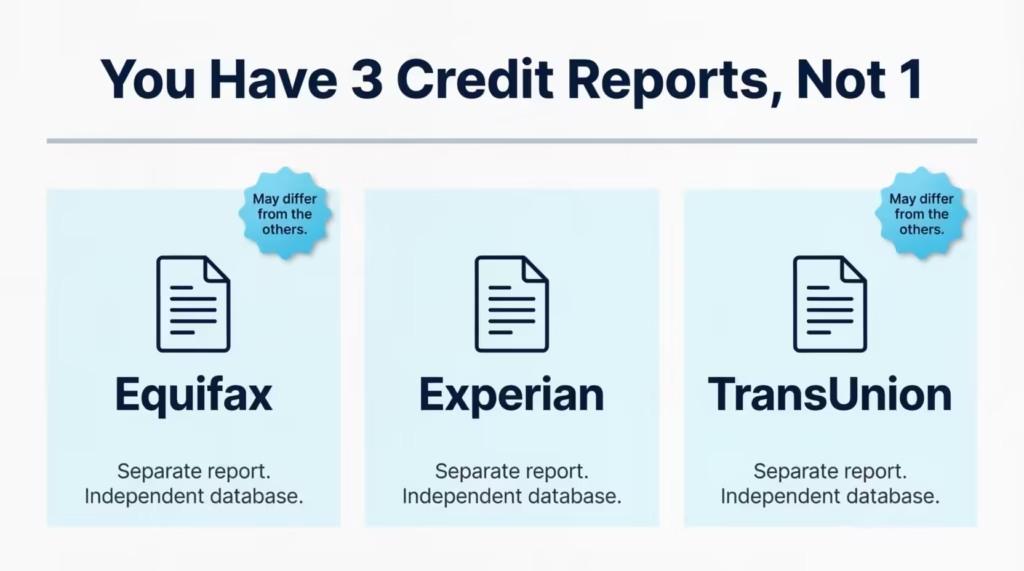
Here’s the key issue: lenders are not required to report your account activity to all three bureaus. It’s a voluntary system. Some creditors report to all three. Others report to only one or two. This means your three reports can look different from each other. An account that shows up on your Experian report might not appear on your TransUnion report at all.
That’s why reviewing just one report isn’t enough. You need to check all three to get an accurate and complete picture of your financial file.
Credit Report vs. Credit Score: Two Different Things
This is one of the most common mix-ups in personal finance. People often use these terms as if they mean the same thing. They don’t.
Your credit report is the raw document. It contains every account, every payment, every inquiry, and every public record tied to your name. It’s the full story.
Your credit score is a number calculated from the data inside your report. It’s a summary. The report is the source material.
Here’s a simple way to picture the difference. Your credit report is like a full academic transcript. Your credit score is like your GPA. The transcript has every detail. The GPA is a single number pulled from those details as a quick reference.
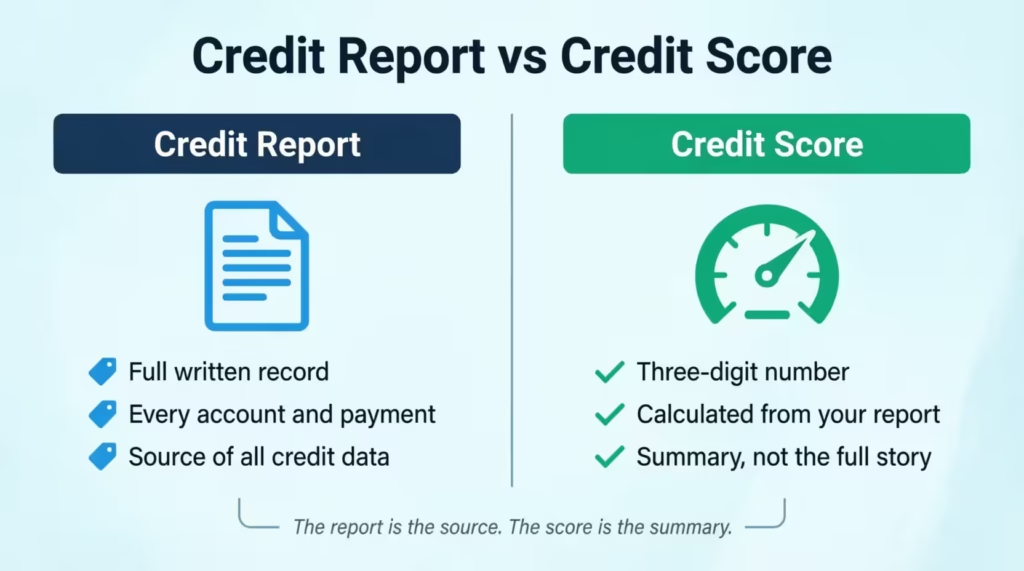
Two main scoring models produce your credit score. FICO is the most widely used. VantageScore is the other major model. Both pull data from your credit report. But they weigh the factors differently. That’s why your FICO score and your VantageScore often don’t match each other.
Here’s why this distinction matters in practice. If a lender denies your application, they looked at your credit report. Your score might reflect a problem, but the report shows you exactly what that problem is.
You can dispute errors on your report. You can’t dispute your score directly. The path to a better score runs through your report. Fix what’s wrong in the report, and the score will improve over time.
📌 Did You Know: Many people pay monthly subscription fees to monitor their score when the real issue is an error in their credit report. Checking the actual report, which is free, is almost always the more useful first step.
What Is Inside a Credit Report: Section by Section
Every credit report, regardless of which bureau produced it, is organized into four main sections. Knowing these sections before you pull your report helps you read it with confidence instead of confusion.
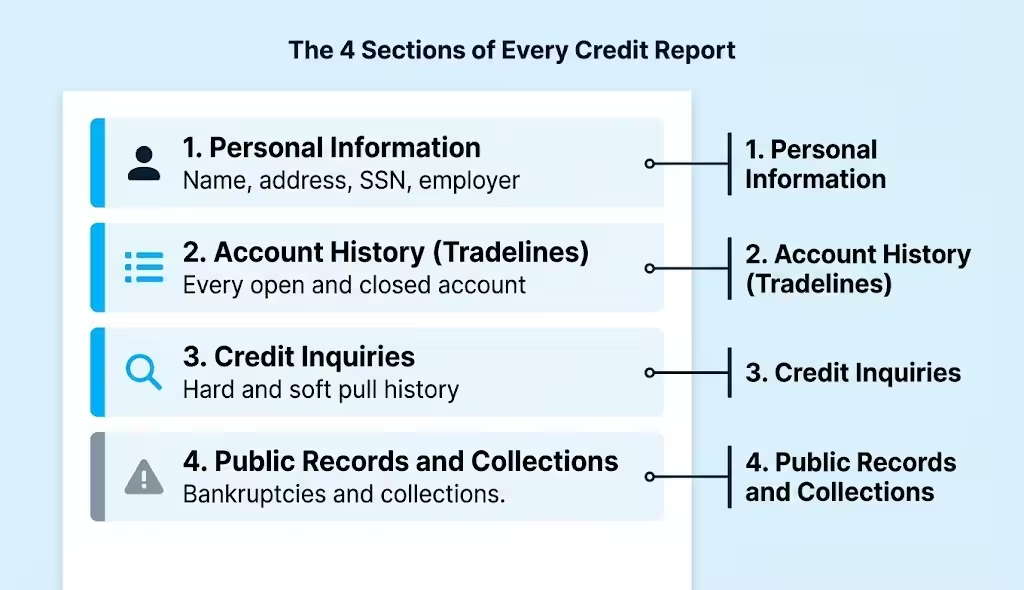
Your Personal Information Section
The first section lists your personal details. This typically includes:
- Your full legal name and any name variations on file
- Your current and previous addresses
- Your Social Security number
- Your date of birth
- Any employer information that creditors have reported
This section has no direct effect on your credit score. It’s used only to identify who you are.
Even so, don’t skip it. Mistakes here can mean more than a simple typo. Finding a name you don’t recognize or an address you’ve never lived at can signal a mixed file. That happens when someone else’s data ends up in your credit file, usually because you share a similar name or Social Security number with another person.
A mixed file can place someone else’s debt on your report. If you spot details that don’t belong to you, treat it as a priority issue and dispute it right away.
Your Account History (Tradelines)
This is the largest section of your report. Every credit account you’ve had, open or closed, appears here as a separate entry. Lenders refer to each entry as a tradeline.
For every account, your report shows:
- The name of the lender or creditor
- The account type (credit card, mortgage, auto loan, student loan)
- The date the account was opened
- Your credit limit or the original loan amount
- Your current balance
- Your payment history, month by month
- The current account status
That last item carries significant weight. Account status codes tell lenders whether your account is current, 30 days late, 60 days late, charged off, or in collections. Each status affects your credit score differently.
Closed accounts don’t disappear from your report right away. If a closed account has a negative history, it typically stays on your report for seven years. If it has a positive history, it can remain for up to ten years after the account is closed. Positive history works in your favor, so those older accounts are worth knowing about.
Your Credit Inquiries Section
Every time someone requests your credit report, that request gets logged here. The inquiries section shows who pulled your file and when.
There are two types: hard inquiries and soft inquiries. The distinction matters enough that this guide covers it in its own dedicated section later. For now, here’s the short version.
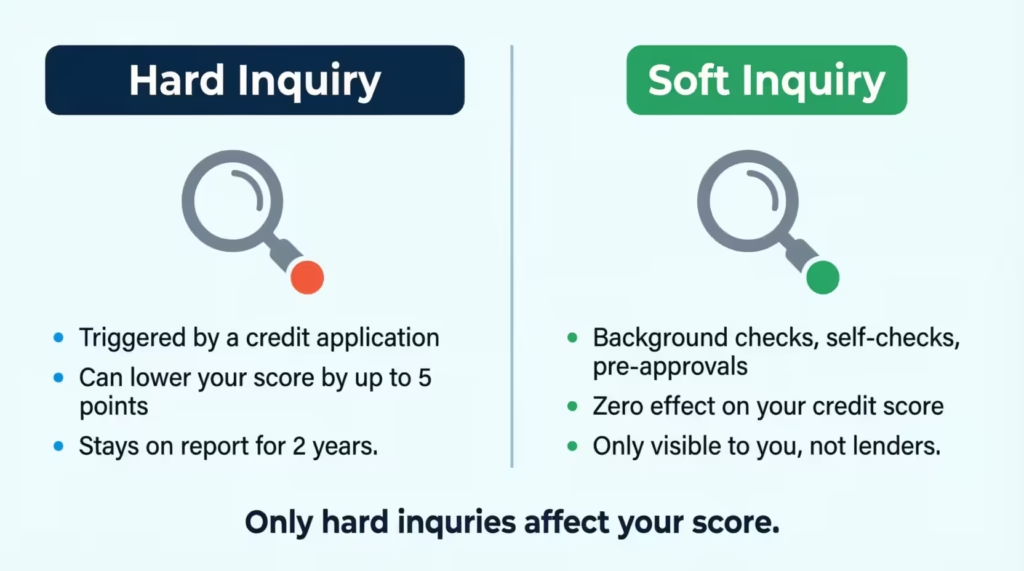
Hard inquiries happen when you apply for credit. They can lower your score slightly and stay on your report for up to two years. Soft inquiries happen in other situations, like a background check or when you check your own report. They don’t affect your score.
Pay close attention to this section when you review your report. A hard inquiry from a company you’ve never applied to is a warning sign. It could mean someone attempted to open credit in your name without your knowledge.
Your Public Records and Collections
This section contains the most damaging entries a credit report can carry.
Public records include legal and financial events such as bankruptcies. A Chapter 7 bankruptcy stays on your report for ten years from the filing date. A Chapter 13 bankruptcy stays for seven years.
Collections accounts are debts that went unpaid long enough that the original creditor sold or transferred the balance to a collection agency. These appear as separate entries in your report, even if the original account is already listed in your account history section.
Collections entries and public records carry heavy negative weight with lenders. But they aren’t permanent. A collections account typically stays on your report for seven years from the date of your original missed payment. The clock doesn’t restart when the debt changes hands to a different collector. That distinction matters a great deal when you’re calculating when something should come off your report.
How Information Gets onto Your Credit Report
Your credit report doesn’t pull data automatically from some central government database. The information gets there because specific companies send it in.
Those companies are called data furnishers. A data furnisher is any business that reports your account activity to a credit bureau. This includes:
- Banks and credit unions
- Credit card issuers
- Mortgage lenders
- Auto loan providers
- Student loan servicers
- Collection agencies
Here’s something important: furnishers are not required to report to all three bureaus. The system is voluntary. A lender can choose to report to Experian only, to all three bureaus, or to none at all. This is why your three credit reports can look so different from each other.
When a furnisher sends data, the bureau doesn’t verify whether it’s accurate. The bureau accepts the data and adds it to your file. This matters because errors often originate with the furnisher, not the bureau itself. When you need to correct a mistake, you may need to contact the company that reported the data, not just the bureau that published it.
How Often Does Your Credit Report Update
Your report doesn’t update in real time. Furnishers typically send updates once per month, usually right after a billing cycle closes.
If you paid off a credit card balance this week, don’t expect that change to appear on your report immediately. Most updates take 30 to 45 days to show up.
If you’re working to clean up your report before a mortgage application or a major purchase, build in at least 45 to 60 days after making changes. This gives updated data enough time to be reported and reflected in your file.
How to Get Your Free Credit Report
Here’s something many people don’t realize: getting your credit report costs nothing. No subscription, no monthly fee, no payment information required.
The official, federally authorized source is AnnualCreditReport.com. This is the only site the U.S. government has designated for free credit report access. As the Federal Trade Commission confirms, free weekly access to all three of your credit reports is currently available through this site. You can pull your Equifax, Experian, and TransUnion reports as often as once per week at no cost.
The process is simple. Visit AnnualCreditReport.com. You’ll be asked identity verification questions based on your financial history. Once your identity is confirmed, choose which bureau reports to view or download.
A few important things to keep in mind:
Pull all three reports, not just one. Because lenders don’t report to all bureaus equally, your three files can look very different. An error on your TransUnion report won’t be fixed by disputing it with Experian. Each bureau operates separately.
Save each report as a PDF and note the date. This gives you a timestamped record of what your report showed on a specific day, which is useful if you need to dispute an error later.
You’re also entitled to a free report outside of the standard schedule in certain situations. If a company denies your application for credit, housing, insurance, or a job based on your credit report, they must send you an adverse action notice. That notice gives you the right to request a free copy of the specific report used in that decision, within 60 days of the denial.
⚠️ Mistake to Avoid: Searching “free credit report” online often leads to subscription sites that ask for a credit card number. AnnualCreditReport.com is the only federally endorsed source for free access. It never asks for payment information to view your basic reports.
How Long Negative Items Stay on Your Credit Report
One of the most common fears about credit is that a single mistake will follow you forever. That’s not how it works. Negative items have fixed removal timelines, and the countdown starts from a specific point.
Here’s a clear breakdown by item type:
| Item Type | How Long It Stays | When the Clock Starts |
|---|---|---|
| Late payment (30, 60, or 90 days) | 7 years | Date of first missed payment |
| Collections account | 7 years | Original delinquency date |
| Charge-off | 7 years | Date of first missed payment |
| Chapter 13 bankruptcy | 7 years | Filing date |
| Chapter 7 bankruptcy | 10 years | Filing date |
| Hard inquiry | 2 years | Date of the inquiry |
| Positive closed account | Up to 10 years | Account close date |
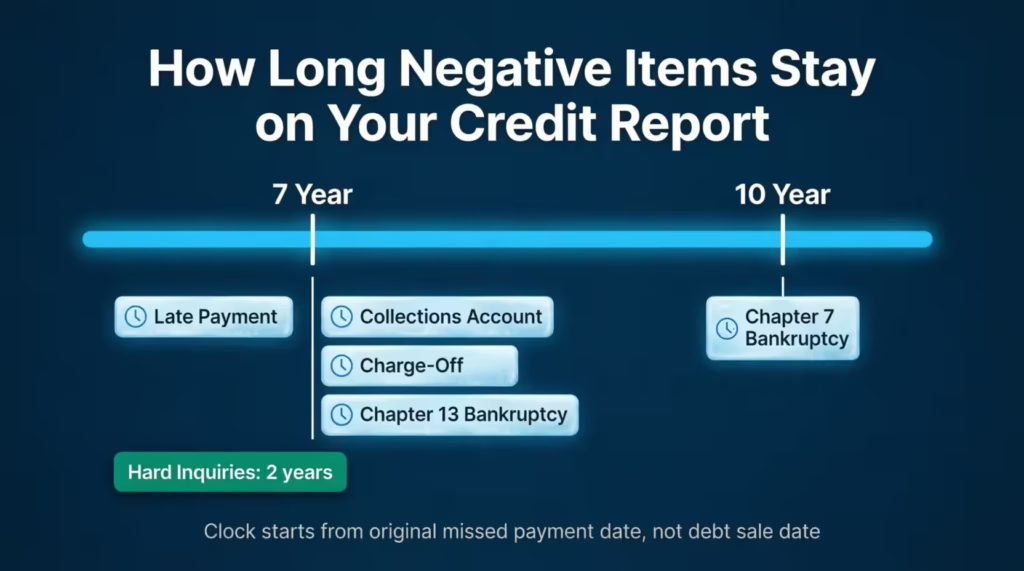
A few important points to understand:
The clock doesn’t reset when a debt is sold.
If a credit card account went to collections in 2021, the seven-year timer runs from 2021. It doesn’t restart if the debt is transferred to a new collector in 2024. Some collectors imply otherwise. That claim is inaccurate.
Hard inquiries fade quickly.
They stay on your report for two years, but most scoring models only count them against your score for the first 12 months. After that, they’re still visible on the report but carry little to no scoring weight.
Positive history works in your favor.
A credit card you’ve had for 15 years and always paid on time continues to help your score. If you close it, that positive history typically remains on your report for another ten years. This is one reason closing old accounts can sometimes hurt your score more than help it.
The impact of negative items also softens over time. A collection account from five years ago hurts your score less than one from six months ago, even if both still appear on the report. Consistent, responsible behavior in the years following a negative event makes a genuine difference.
Hard Inquiries vs. Soft Inquiries
Not all credit checks work the same way. Some affect your score. Some don’t. Understanding the difference lets you manage your credit file with confidence.
Hard Inquiries
Hard inquiries happen when you formally apply for new credit. Common triggers include:
- Credit card applications
- Mortgage applications
- Auto loan applications
- Personal loan applications
- Some apartment rental applications
When you apply, the lender requests your full credit report to evaluate your risk. That request creates a hard inquiry. Hard inquiries can lower your credit score, though the impact is usually small.
Figures from Experian indicate that a single hard inquiry typically reduces a FICO score by fewer than five points. Hard inquiries stay on your report for two years but usually affect your score only during the first year.
Multiple hard inquiries in a short time frame can have a larger combined effect. Lenders may interpret frequent applications as a sign of financial stress.
There’s an important exception worth knowing: rate shopping. If you’re comparing lenders for the same type of loan, such as a mortgage or auto loan, most scoring models treat multiple inquiries within a 14 to 45-day window as a single inquiry. Shopping around for the best mortgage rate from several lenders won’t multiply the damage to your score.
Soft Inquiries
Soft inquiries happen in situations where no new credit application is involved. Common examples include:
- Checking your own credit report or score
- Pre-approval offers sent by lenders
- Employer background checks (with your authorization)
- Insurance underwriting reviews
- Preliminary landlord screenings
Soft inquiries don’t affect your credit score at all. They may appear in your full inquiry list, but only you can see them. Lenders reviewing your report can’t see your soft inquiry history.
Does Checking Your Own Credit Report Hurt Your Score?
No. Checking your own credit report is a soft inquiry. It has zero effect on your score.
This is one of the most persistent myths in personal finance. Many people avoid looking at their own report for years because they believe it will lower their score. That belief comes from a mix-up between soft and hard pulls.
When a lender runs your credit after you apply for a credit card, that’s a hard inquiry. It’s initiated by the lender. When you check your own report, that’s a self-initiated soft inquiry. These are two completely different types of credit checks with entirely different outcomes.
Checking your own report regularly is actually the right habit to build. It’s the most reliable way to catch identity theft early. If someone has opened accounts in your name, a self-check will surface the fraud before it spirals into serious damage. A review every three to four months is a solid starting point.
Who Can Access Your Credit Report
Your credit report is private, but it isn’t completely sealed. Certain parties have legal permission to access it under specific conditions. The Fair Credit Reporting Act (FCRA) governs who can look at your file and why. The legal term for this permission is “permissible purpose.”
Here’s who qualifies, and under what circumstances:
Lenders and creditors: Any lender reviewing your application for a mortgage, credit card, auto loan, or other credit product has permissible access. Your application provides the consent.
Landlords: When you apply to rent a home or apartment, a landlord can run a credit check. This typically requires your written consent on the rental application.
Employers: Some employers, especially in finance, government, and security-sensitive roles, review credit reports during hiring. Federal law requires your written authorization before they can pull your file. Not every state allows this practice. Several states restrict or ban employment-based credit checks.
Insurers: Auto and homeowners insurance companies can review your credit as part of underwriting in most U.S. states. They use a credit-based insurance score, which draws from your credit report data but is calculated differently from a lending score.
Utility and telecom companies: Electric companies, internet providers, and cell phone carriers sometimes check credit before activating service. They use this to decide whether to require a deposit up front.
Existing creditors: Lenders you already have accounts with can review your file periodically as part of an account review. They use this to decide whether to adjust your credit limit or interest rate.
One useful detail: employer and insurer checks are soft inquiries. They don’t affect your score, and they aren’t visible to other lenders. An insurance company can’t see that a different insurer pulled your report, and those checks don’t appear in the hard inquiry section that lenders review.
To see a full list of everyone who has accessed your file, including all soft pull history, request your complete report from AnnualCreditReport.com.
How Your Credit Report Affects Your Real Life
Most people think about credit reports only when applying for a loan. The actual reach goes much further than that.
Loan approvals and interest rates
When you apply for a mortgage, car loan, or personal loan, lenders review your credit report to measure risk. A strong file means better terms and a lower interest rate. A report with serious negative entries, like a recent bankruptcy or active collections, can lead to denial or much higher rates. Even a 1.5% difference on a 30-year mortgage can add up to tens of thousands of dollars over the life of the loan.
Apartment rentals
Most landlords run credit checks on applicants. A history of late payments or an active collections account can lead to a rejection. In some cases, a landlord will approve an applicant with a troubled credit history but require a larger security deposit.
Auto and homeowners insurance premiums
In most U.S. states, auto insurers use a credit-based insurance score to help set your premium. Drivers with lower credit-based scores often pay more for the same coverage than drivers with stronger credit histories. Homeowners’ insurance works similarly in many states.
Utility and telecom services
Electric companies, internet providers, and cell phone carriers sometimes check credit before activating service. A thin or troubled credit history can result in a required deposit that ranges from $100 to several hundred dollars.
Employment background checks
In roles that involve financial responsibility, government contracts, or sensitive data, some employers review credit reports as part of hiring. A collection history or a bankruptcy can affect decisions in these specific contexts.
Take Marcus, a 31-year-old who applied for an apartment in Chicago at $1,800 per month. His credit report showed a $340 medical collections account that he hadn’t known about. The landlord denied his application.
If Marcus had checked his report six months earlier, he would have seen that the entry was the result of a billing error, disputed it, and had it removed before it cost him the apartment.
The thread connecting all these situations is the same: an accurate, well-maintained credit file works for you. An ignored or inaccurate one creates obstacles across many areas of your life, not just at the bank.
How to Read Your Credit Report
Downloading your credit report is the easy part. Actually, reading it is where most people get stuck. Many readers scan it briefly, feel overwhelmed by the format, and close it without learning anything useful.
Here’s a step-by-step approach to reviewing your report once you have it open.
Step 1: Start with your personal information.
Verify your full name, Social Security number, current address, previous addresses, and any employment history listed. Confirm that every detail belongs to you. A name you don’t recognize, or an address you’ve never lived at, is a red flag. It could indicate a mixed file or that your identity has been used without your knowledge.
Step 2: Review each account in your history.
For every account listed, confirm:
- It’s an account you actually opened
- The creditor name is correct
- The balance shown is close to what you actually owe
- The credit limit or original loan amount is accurate
- The payment history shows no errors (watch for “30 days late” entries you don’t recognize)
- The account status is correctly labeled
Step 3: Check every hard inquiry
Look through the inquiries section and confirm you authorized each one. If you see a hard pull from a company you’ve never applied to, investigate it. An unauthorized inquiry can be a sign of attempted identity fraud.
Step 4: Review public records and collections.
If anything appears in this section, note the original delinquency date, the balance, and the creditor. Check whether the entry is approaching its removal date based on the timelines covered earlier in this guide.
Step 5: Repeat the process for all three bureau reports.
Your Equifax file might look very different from your TransUnion file. Don’t assume that correcting one will fix the others. Review each one separately.
This full review takes about 20 to 30 minutes per report. Think of it as an annual financial health check that can catch problems long before they become expensive.
Common Credit Report Errors and How to Spot Them
Errors are more common than most people realize. Here are the five types that appear most frequently:
Mixed files
Another person’s accounts or personal details appear in your file. This usually happens because of a similar name or Social Security number. It’s one of the more serious error types because it can introduce someone else’s negative history into your report.
Duplicate accounts
The same debt appears twice. This often happens when an original creditor reports an account and a collection agency later reports the same debt separately, making one obligation look like two.
Incorrect account status
An account shows as late or in collections when you paid it on time. This is a common data furnisher reporting error.
Outdated entries
A negative item that should have fallen off your report after seven or ten years is still listed. Bureaus are supposed to remove these automatically, but it doesn’t always happen on schedule.
Unauthorized hard inquiries
A hard pull you never approved appears in your file. This could be an administrative error or a sign that someone attempted to open credit in your name.
💡 Pro Tip: When you spot an account name you don’t recognize, do a quick search before assuming it’s an error. Some creditors report under their parent company name rather than the brand you know. A department store card, for example, might be listed under the issuing bank’s name instead of the store’s name.
How to Dispute a Credit Report Error
Finding an error in your report is frustrating. But you have a clear legal right to challenge it. The process is entirely manageable if you stay organized and document everything.
Step 1: Document the error before you act
Download or print the report that shows the problem. Save it as a dated PDF. Note which bureau is showing the error, which entry is wrong, and what specifically makes it inaccurate. This documentation is your evidence.
Step 2: Submit a dispute to the bureau reporting the error.
All three major bureaus, Equifax, Experian, and TransUnion, allow disputes online, by mail, or by phone. Online is the fastest method. Mail with certified tracking gives you the clearest paper trail.
Your dispute needs to be specific. Instead of writing “this account is wrong,” write something like: “This account shows a 30-day late payment in March 2024. I made this payment on time. I’ve attached my bank statement showing the payment cleared on the due date.”
Include copies of supporting documents like payment confirmations, bank statements, or letters from the creditor. Don’t send original documents.
The CFPB provides a free dispute letter template and a step-by-step walkthrough of the full dispute process.
Step 3: Also dispute directly with the furnisher.
The furnisher is the company that originally reported the error. That could be your bank, your lender, or a collection agency. You have a separate legal right to dispute with them directly under the FCRA. Send a written dispute to the furnisher at the same time you file with the bureau. This creates a parallel paper trail and puts the furnisher on notice.
What happens next: Once you submit a dispute, the bureau must investigate. Under the FCRA, they generally have 30 days to complete the review. In most cases, the bureau forwards your dispute to the furnisher. The furnisher checks its own records and responds. After the investigation closes, the bureau will notify you whether the disputed item was corrected, removed, or kept as “verified.”
Keep copies of everything. Keep a record of every date. If you submitted by mail, keep your certified mail receipt.
Your Rights Under the Fair Credit Reporting Act (FCRA)
The FCRA is the federal law that governs credit reporting in the United States. It gives consumers a concrete set of enforceable rights.
Here are the ones that matter most:
- Free report access: You have the right to a free copy of your credit report from each bureau. Free weekly access is currently available at AnnualCreditReport.com.
- Dispute rights: You have the right to dispute inaccurate or incomplete information. The bureau must complete its investigation within 30 days.
- Adverse action notice: If a company denies you credit, housing, insurance, or a job based on your credit report, they must notify you and identify the bureau that provided the report.
- Consumer statement: If a dispute doesn’t resolve in your favor, you can add a written statement of up to 100 words to your credit file. Any lender who later pulls your report will see it.
- Legal recourse: If a bureau or furnisher willfully or negligently violates the FCRA, you may have the right to sue for actual damages. Willful violations can also result in statutory damages.
What to Do If Your Dispute Is Rejected
Sometimes a bureau will investigate your dispute and return a result labeled “verified.” This means the furnisher confirmed the information, and the bureau is keeping it on your report.
“Verified” doesn’t automatically mean “accurate.” In many cases, the bureau converts your dispute into a short code and sends it to the furnisher. The furnisher checks its own database, confirms the entry matches its records, and sends a brief response. The bureau marks it as verified without deeper review.
If your dispute comes back as verified but you know the information is wrong, here are your next steps:
Re-dispute with stronger documentation.
Gather more targeted evidence. If you’re disputing a late payment, include your bank statement showing the payment cleared, the payment confirmation email, and the exact date. A second dispute backed by clearer proof often produces a different result.
File a complaint with the CFPB.
The Consumer Financial Protection Bureau accepts complaints about credit reporting companies at consumerfinance.gov. Filing a complaint creates a formal record and requires the bureau to respond.
Dispute directly with the furnisher.
Send a detailed written dispute to the company that originally reported the error, along with all supporting documents. They have an independent legal obligation to investigate under the FCRA.
Add a 100-word consumer statement.
If you can’t get the item removed, you can ask the bureau to attach your written statement to your file. It won’t erase the entry, but any lender who pulls your report will see your explanation.
Consult a consumer protection attorney.
If the error is causing real financial harm, like a denied apartment, a rejected loan, or a higher interest rate, an FCRA lawyer can help review your case. Many FCRA attorneys work on contingency, meaning they only charge if they win. The law allows for actual damages, and willful violations can result in statutory damages on top of that.
Frequently Asked Questions (FAQs)
Is a credit report the same as a credit score?
No, they are two different things. Your credit report is the full written record of your borrowing history, and your credit score is a three-digit number calculated from the data inside that report.
How many credit reports do I have?
You have three separate credit reports, one each from Equifax, Experian, and TransUnion. Because lenders are not required to report to all three bureaus, your three reports can look different from each other.
Will checking my own credit report hurt my score?
No, checking your own report is a soft inquiry and has zero effect on your score. Only hard inquiries triggered by a lender reviewing a credit application can lower your score.
How long does a late payment stay on your credit report?
A late payment stays on your credit report for seven years from the date of the first missed payment. Its negative impact on your score does soften over time as you build a consistent record of on-time payments.
How many days late before a payment shows on your credit report?
A payment must be at least 30 days past due before it can be reported to the credit bureaus. A payment that is one or two days late will not appear on your credit report, though your lender may still charge a late fee.
Does a hard inquiry fall off your credit report automatically?
Yes, hard inquiries stay on your report for two years and are removed automatically after that. Most scoring models stop counting them against your score after the first 12 months.
How long does a bankruptcy stay on your credit report?
A Chapter 7 bankruptcy stays on your credit report for ten years from the filing date, while a Chapter 13 bankruptcy stays for seven years. Both are removed automatically once the timeline expires.
Can the same debt appear twice on my credit report?
Yes, this is a known error called a duplicate account. It typically happens when the original creditor reports an unpaid balance and a collection agency later reports the same debt as a separate entry, making one obligation look like two.
How often does your credit report update?
Most lenders send updated account information to the bureaus once per month, usually after a billing cycle closes. Changes you make today, such as paying off a balance, typically take 30 to 45 days to appear on your report.
Can a debt collector restart the clock on a negative item by buying your debt?
No. The seven-year removal timeline starts from your original missed payment date and does not reset when a debt is sold or transferred to a new collection agency. Any collector who implies otherwise is inaccurate.
Bottom Line
Your credit report touches more of your financial life than most people realize—from loan approvals and insurance premiums to apartment applications and job screenings. This guide walks through what each section contains, how data gets reported, how long negative items stay on file, and how to challenge errors with confidence.
Based on how frequently errors appear and the real cost they carry, the most effective first step is pulling all three bureau reports from AnnualCreditReport.com and reviewing each one carefully at no cost.
If someone you know is preparing to apply for a mortgage or sign a lease, share this with them. It could save them from a costly and preventable surprise.