
You just got a scary email. Maybe your bank was hacked, or a store you shopped at leaked customer data. Now you’re worried someone could open new accounts in your name. That fear is real, and it hits fast. You’ve heard people say to “freeze your credit,” but you’re not sure what that means or if it will mess up your bills. A credit freeze is one of the strongest free tools to stop identity thieves cold.
A credit freeze blocks new lenders from viewing your credit file, so no one can open new accounts in your name.
Keep reading for a plain-English breakdown of how freezes work, what they block, what still runs fine, and how to lift one when you actually need new credit.
Key Takeaways
This guide explains what a credit freeze is, including what it blocks, what still works, how it differs from a credit lock and fraud alert, and how to freeze or thaw your file at all three bureaus.
Core Facts:
- A credit freeze restricts third-party access to your credit report, blocking new lenders from approving new accounts in your name.
- The freeze does not expire and stays in place until you lift it yourself, unlike a fraud alert, which lasts one year or seven years if extended.
- A credit freeze never affects your credit score, since it only controls report access and does not change the underlying report data.
- Existing accounts, current loan payments, online banking, and checking your own credit report all continue working normally during a freeze.
- Equifax, Experian, and TransUnion each maintain separate files, so a freeze must be placed at all three bureaus individually for full protection.
- Federal law requires freezes and thaws to be free at every bureau, with online or phone requests processed within one hour and mail requests within three business days.
Best for:
- Anyone who received a data breach notice or had their Social Security number exposed.
- People not planning to apply for new credit soon who want free, permanent identity theft protection.
- Parents or guardians looking to freeze a credit file for a child under 16 or an incapacitated adult.
What a Credit Freeze Is and How It Works
A security freeze is a free tool that restricts third-party access to your credit report. When you place one, the credit bureau flags your file so most new lenders and creditors can’t pull it. Without that pull, they can’t approve a new loan, card, or account in your name. That’s the whole point.
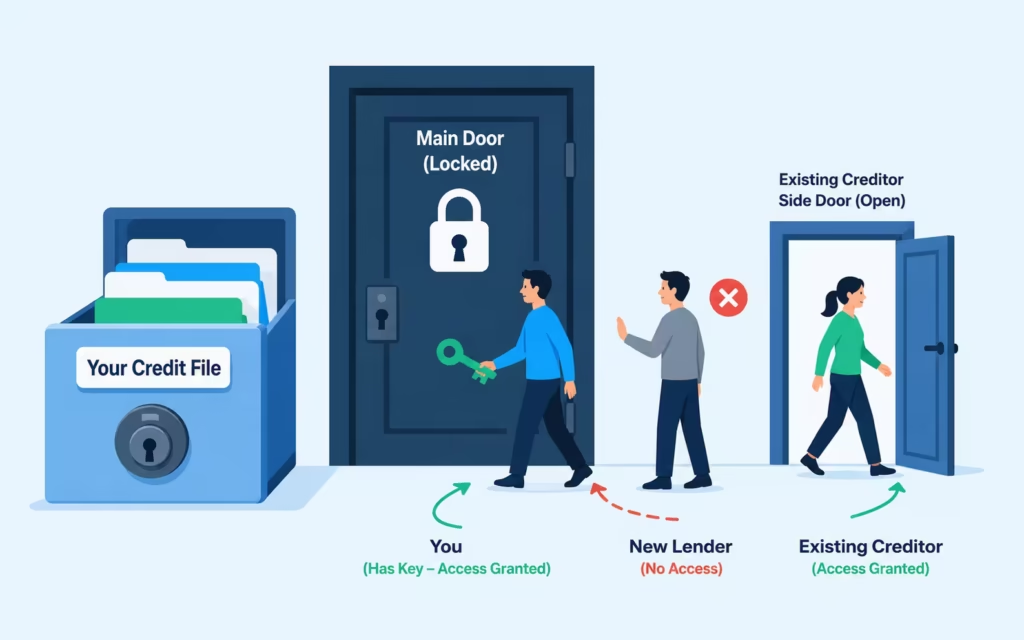
Think of your credit file like a locked door. A freeze puts a deadbolt on it. You still hold the key. The lender knocking on the door can’t come in unless you unlock it first.
Here’s what the freeze does not do. It does not erase your file. It does not close your accounts. It does not stop you from checking your own credit. It just controls credit report access for new inquiries.
Who is still allowed in? A short list:
- You, the file owner
- Your existing creditors and lenders you already have accounts with
- Debt collectors working on debts you already owe
- Government agencies with a court order or subpoena
- Companies you gave written permission
Everyone else: new credit card issuers, new mortgage lenders, new auto lenders get blocked. So if a thief tries to open a card using your Social Security number, the issuer runs a credit check, sees the freeze, and stops the application. No file, no approval.
The Consumer Financial Protection Bureau confirms that a security freeze prevents new creditors from accessing your credit report, which stops most new-account fraud in its tracks.
How Long a Credit Freeze Lasts
A credit freeze stays on your file forever, or until you decide to lift it. There is no auto-expire date. You do not need to renew it every year. You do not need to re-request it.
This is a key point that trips people up. A fraud alert expires. A standard fraud alert lasts one year. An extended fraud alert lasts seven years. A freeze does neither. It just sits there, quietly doing its job, until you tell the bureau to remove it or thaw it for a short window.
What a Credit Freeze Blocks
Once your file is frozen, most new credit activity stops. This is a feature, not a bug. It is exactly what protects you from new account fraud. Below is a list of things a freeze will block:
- New credit card applications. The issuer can’t view your report, so they can’t approve the card.
- New loan applications. Auto loans, mortgages, personal loans, and student loans all need a credit check. A freeze blocks that check.
- New utility or phone accounts. Many electric, gas, cable, and cell phone providers pull credit before opening service.
- Most new hard inquiries by lenders who don’t know you. The credit reporting agency simply won’t share the file.
- Rental applications. Landlords often check credit before signing a lease. A freeze blocks that pull.
- Some employment background checks that include a credit review. This is common in finance and government jobs.
Picture this. Michael, a project manager at a consulting firm, froze his credit after a big retail data breach. Two weeks later, someone tried to open three store cards in his name at a mall 400 miles away. All three were denied instantly because the issuer could not access his file. That is the freeze doing its job.
⚠️ Mistake to Avoid: Do not freeze your file the day before you plan to buy a car or apply for a mortgage. Freeze early, then thaw for the short window you need new credit. Timing matters more than most people think.
What Still Works With a Credit Freeze in Place
This is the section that calms most nerves. A freeze does not shut down your day-to-day money life. It only blocks new lender access. Everything you already have keeps running just fine.
Here is what stays completely normal:
- Using your existing credit cards. Swipe, tap, pay online. All fine. Your card issuer already has access to your account.
- Paying your current loans. Mortgage, auto, student, personal. Every payment posts normally.
- Online banking and account statements. Log in, transfer money, view statements. No change.
- Checking your own credit report and score. You can still pull your free weekly reports from AnnualCreditReport.com, the only federally authorized site for free reports. You can still see your FICO or VantageScore in your bank’s app.
- Renewing accounts with current creditors. If your card issuer offers you a credit limit increase, they can still process it because they already have access.
- Direct deposits and paychecks. These are not credit pulls. A freeze does not touch them.
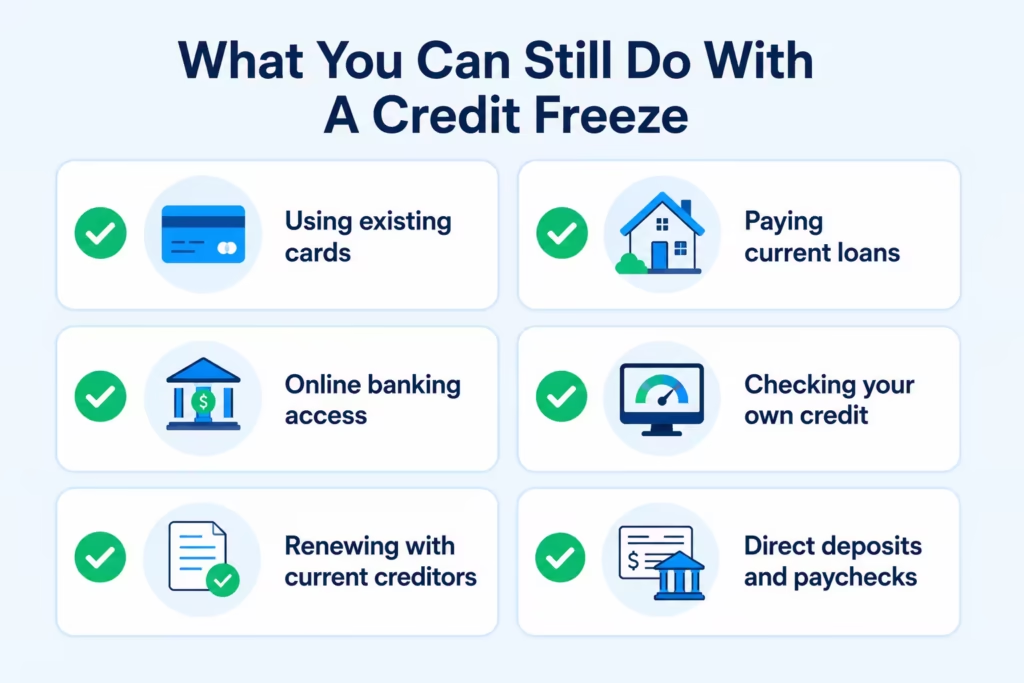
So if you were worried about being locked out of your own money, breathe easy. Existing accounts are untouched. A freeze only guards the front door against new visitors.
Does a Credit Freeze Affect Your Credit Score
No. A credit freeze does not lower your score. Not by one point. Not for one day. Not ever.
Here is why. Your FICO score is built from the data inside your credit report: payment history, balances owed, length of history, credit mix, and new credit. A freeze does not change any of that data. It only controls who can view the report from the outside. The scoring formula runs on the same information it always did.
Even better, you can still check your own score while frozen. Most banks, card issuers, and free apps like Credit Karma will show your score just like before. Lenders you already work with can still see it, too.
Sometimes people confuse this with the small dip from a hard inquiry. A hard inquiry happens when you apply for new credit. It can shave a few points off your score for a short time. But that dip comes from the application itself, not from the freeze. A freeze actually prevents unwanted hard inquiries from ever hitting your report, since fake applications get blocked before they pull.
📌 Did You Know: Placing, lifting, or removing a freeze does not create any inquiry on your report. Your score sees nothing.
Credit Freeze vs. Credit Lock vs. Fraud Alert
Confusion here costs people money. Banks and credit monitoring companies often push paid “credit lock” services when a free freeze does nearly the same thing. Let’s clear this up.
A quick side-by-side table helps:
| Feature | Credit Freeze | Credit Lock | Fraud Alert |
|---|---|---|---|
| Cost | Free (by law) | Often paid, bundled with monitoring | Free |
| Legal backing | Federal law | Private contract | Federal law |
| Speed to lift | Minutes to 1 hour online | Instant, usually via app | N/A, does not block |
| Blocks new credit? | Yes | Yes | No, adds verification step |
| Expires? | No | No | Yes (1 or 7 years) |
A security freeze is the free, legally protected option. Every credit reporting agency must offer it under federal law. Placement and removal are both free. Response times are set by law.
A credit lock is a paid feature, often bundled into a monitoring subscription that runs $10 to $30 per month. Locks are usually faster to toggle through a mobile app. But the protection sits on a private contract with the bureau, not on federal law. If the company changes its terms or you cancel the subscription, the lock can go away.
When might a lock make sense? If you apply for new credit often, say a real estate investor pulling loans several times a year, the tap-to-lock speed can be worth the fee. For most people, the free freeze is the smarter default.
Credit Freeze vs. Fraud Alert
A fraud alert is a different tool. It does not block access to your file. Instead, it tells lenders to take extra steps to verify your identity before granting new credit. Think of it as a sticky note that says “call this person first.”
Fraud alerts expire. A standard one lasts one year. An extended alert, for confirmed identity theft victims, lasts seven years. A freeze does not expire at all.
A fraud alert is a lighter-touch option. It works well if you want a warning system but not a full block. For higher-risk situations, like after a Social Security number leak, a full freeze gives stronger protection.
Why You Need to Freeze All Three Credit Bureaus
Here is the trap. Many people freeze one bureau, feel safe, and stop. That leaves two wide-open doors.
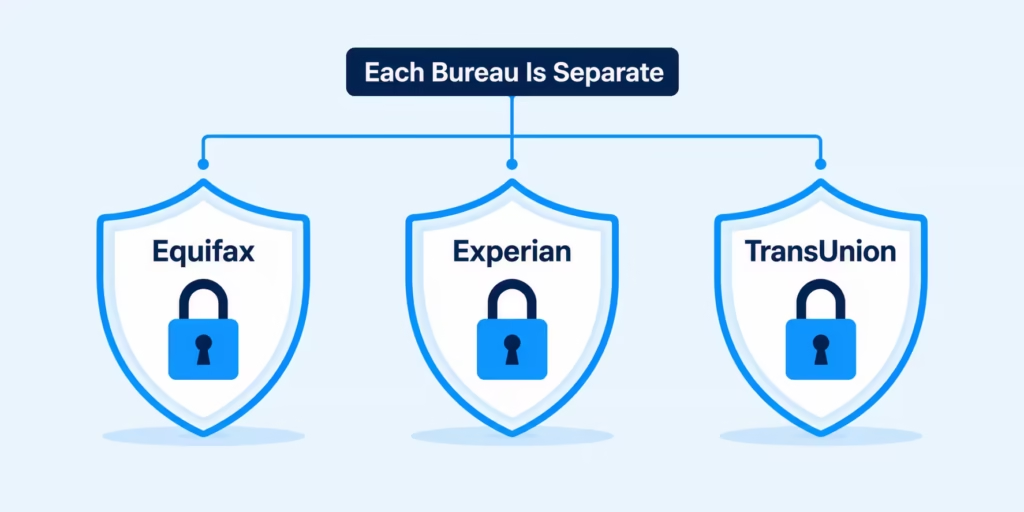
Equifax, Experian, and TransUnion are three separate companies. They each keep their own file on you. They do not share freezes. A freeze at Equifax does nothing at Experian. A freeze at TransUnion does nothing at Equifax.
Lenders pick which bureau to pull, and it varies. A car dealer might pull Experian. A credit card issuer might pull Equifax. A landlord might pull TransUnion. A thief only needs one open door.
So full protection means placing a freeze at all three. It is three separate requests, but each one is quick. You can do them online in one sitting:
Set aside 20 minutes. Do all three back to back. Save your PINs or login details in a password manager. Done.
Who Should Consider Freezing Their Credit
A freeze is not just for people who have already been robbed. It is a smart move for almost any adult. You do not need to wait for a fraud problem to protect yourself.
Some situations make a freeze especially wise:
- After a data breach notice. If a company you shopped with or a service you used tells you your data leaked, freeze right away.
- After Social Security number exposure. SSN leaks are the highest-risk kind. A freeze is the strongest response.
- If you’re not planning to apply for new credit soon. No new loan or card in the next six months? A freeze costs you nothing to keep in place.
- If you’re a senior or care for one. Older adults are frequent identity theft targets. A freeze cuts that risk sharply.
- If you’re a victim of a stolen wallet or phone. Freeze before the thief can act.
Jennifer, a nurse in her early 40s, froze her credit after learning her hospital’s payroll vendor had been hacked. She had no plans to buy a house for two years. The freeze cost her nothing and gave her peace of mind through the whole scare.
Even if none of these apply to you, a proactive freeze is still smart. Think of it like locking your front door at night. You don’t wait for a break-in to start using the lock.
Credit Freezes for Minors and Protected Consumers
Kids can have credit files too, and thieves love to target them. Child identity theft often goes unnoticed for years, sometimes until the child turns 18 and tries to open their first card.
Federal law lets parents and legal guardians place a freeze on a child’s file if the child is under 16. Guardians and conservators can do the same for incapacitated adults. You will need to send proof: a birth certificate, a Social Security card, and a copy of your ID.
Each bureau handles this by mail or through a special portal. Once the freeze is on, it stays until the child turns 16 and can request removal, or you decide to lift it. This one small step can save your child from years of credit damage they never caused.
How to Temporarily Lift or Thaw a Credit Freeze
Freezing is easy. Thawing is just as easy. This is the part that eases most fears.
You can lift a freeze in two ways:
- Temporary lift (thaw). You pick a specific window, say 3 days or 2 weeks, and the freeze pauses for that time. It reinstates automatically when the window ends.
- Permanent lift. You remove the freeze fully. It stays off until you place it again.
You also do not need to lift all three at once. If a lender tells you they pull only Experian, you only need to thaw Experian. Ask the lender ahead of time which bureau they use. This saves you from opening doors you don’t need to open.
Turnaround time is fast:
- Online or by phone: Federal law requires the bureau to act within one hour.
- By mail: Up to three business days.
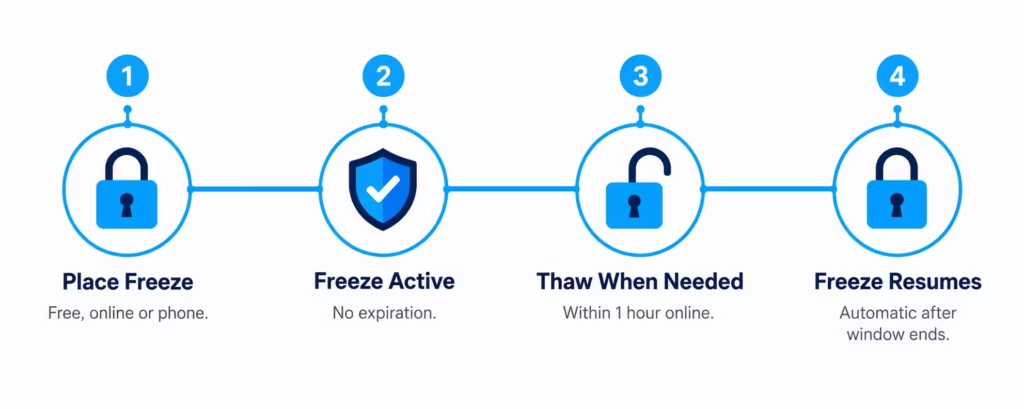
So if you’re heading to a car dealer on Saturday, hop online Friday night and thaw the right bureau for a 3-day window. After the loan closes, the freeze snaps back on by itself.
💡 Pro Tip: Save your bureau PINs and login credentials in a password manager the day you place the freeze. Nothing is more frustrating than needing to thaw fast and hunting for a PIN letter you can’t find.
The Legal Protections Behind Credit Freezes
The reason a credit freeze is so strong is that it’s backed by federal law, not by a company promise.
In September 2018, the Economic Growth, Regulatory Relief, and Consumer Protection Act took effect. It made security freezes free for every consumer in every state. Before that law, some states charged fees of $5 to $10 per bureau, per freeze or thaw. Now, all of it is free by law.
The law also sets strict response times. Bureaus must place a freeze within one business day when you request it online or by phone. They must lift it within one hour through the same channels. These deadlines are not suggestions. They are federal rules.
The Federal Trade Commission’s guidance on credit freezes explains these rights in plain language. The Fair Credit Reporting Act adds even more consumer protections around how bureaus handle your data.
This is why a freeze offers stronger protection than a paid lock. A lock is a private contract. A freeze is federal law. If a bureau ever slipped up, you would have legal grounds to act.
Is a Credit Freeze Really Free
Yes. Fully free. By law.
You can place a freeze for free. You can lift it for free. You can remove it for free. You can do this at all three bureaus, as many times as you want, for the rest of your life, and never pay a cent.
Before 2018, some states let bureaus charge small fees. Those days are over. If anyone a bureau rep, a website, or a service, tries to charge you for a freeze at Equifax, Experian, or TransUnion, that is not legal. Go straight to the bureau’s official site and place it yourself for free.
Frequently Asked Questions (FAQs)
What is a credit freeze?
A credit freeze is a free tool that blocks new lenders from viewing your credit report, so no one can open new accounts in your name. It stays in place until you lift it yourself, and it doesn’t affect your existing accounts or credit score.
How do I remove or unfreeze a credit freeze?
You can thaw it temporarily for a set window, like 3 days, or lift it permanently through the bureau’s website or by phone. Online and phone requests must be processed within one hour by law.
Does removing a credit freeze happen immediately?
Yes, if you request it online or by phone, federal law requires the bureau to lift it within one hour. Mailed requests take longer, up to three business days.
Does a credit freeze hurt your credit score?
No, a credit freeze never affects your credit score, not even by one point. It only limits who can view your report, without changing any of the payment history or balance data the score is based on.
Can someone use my SSN if my credit is frozen?
A thief can still have your SSN, but a freeze stops them from opening new credit accounts with it. Lenders can’t pull your report to approve a new card or loan, so fraudulent applications get denied automatically.
Can I still use my credit cards if my credit is frozen?
Yes, all your existing accounts work exactly as normal. Your current card issuers already have access to your file, so swiping, paying bills, and making payments are unaffected.
Is freezing your credit a good idea? Is there a downside?
It’s a smart move for almost any adult since it’s free and doesn’t hurt your score. The main downside is you must remember to thaw it before applying for new credit, like a mortgage or car loan, or the application will be denied.
Do I need to freeze my credit at all three bureaus?
Yes, Equifax, Experian, and TransUnion each keep separate files, and a freeze at one bureau doesn’t apply to the others. You need to freeze all three separately, which takes about 20 minutes total.
Can a landlord or employer still see my frozen credit report?
No, a freeze blocks most rental application checks and employment background checks that include a credit review. These are treated the same as new lender inquiries and are denied access.
Should I freeze my credit if someone has my Social Security number?
Yes, an SSN leak is one of the highest-risk situations, and a freeze is the strongest free response available. It stops new accounts from being opened in your name while your existing accounts stay fully usable.
Wrapping Up
A credit freeze is the strongest free shield you have against new-account identity theft. It restricts lender access to your credit file, blocks new applications in your name, leaves your existing accounts fully working, and never touches your credit score.
Because it must be placed at Equifax, Experian, and TransUnion separately, plan for a short 20-minute setup and save your PINs. Freezing your credit with all three bureaus is the best choice for most consumers. It’s free and backed by federal protections.
If you know a parent, sibling, or friend who just got a breach notice, share this guide so they can protect their credit today.