
You just got a data breach notice. Or maybe your bank emailed you about protecting your credit. Now you’re seeing the term credit lock everywhere, and you’re not sure what it actually does or whether you need one. That confusion is normal, and you’re not alone in feeling it.
A credit lock is a tool from a credit bureau that blocks lenders from viewing your credit report, so no one can open new credit in your name while it’s on.
Below, we explain how locking works, its costs at each bureau in 2026, how it differs from a free credit freeze, and the easy steps to activate it today.
Key Takeaways
This guide explains what a credit lock is, how it differs from a free credit freeze, what it costs at Equifax, Experian, and TransUnion, and what it does not protect against.
Core Facts:
- A credit lock blocks lenders from viewing your credit report at a specific bureau, which prevents new credit accounts from being opened in your name.
- Equifax offers its Lock & Alert service for free, while Experian’s CreditLock is bundled only inside its paid IdentityWorks Premium subscription at $24.99 per month after a 7-day trial.
- TransUnion has discontinued its credit lock products, including TrueIdentity, and now directs consumers to its free credit freeze instead.
- A credit freeze is a free, federally guaranteed right at all three bureaus under the Fair Credit Reporting Act, with legal deadlines of one business day to place and one hour to lift.
- Locking or unlocking your credit report does not affect your credit score, and existing accounts continue working normally while a lock is active.
- A credit lock only blocks new-account fraud; it does not protect existing accounts from unauthorized charges or fix errors already on your report.
Best for:
- Readers who received a data breach notice or fraud warning and want to stop new credit accounts from being opened in their name.
- Anyone deciding between a paid credit lock and a free credit freeze before applying for new credit protection.
- People who previously used a TransUnion lock and need to confirm what protection is currently active on their report.
What Is a Credit Lock?
A credit lock is a service offered by a credit bureau that lets you block or allow access to your credit report whenever you want. Think of it like a switch. When the switch is on, lenders can’t pull your credit report at that bureau. When it’s off, they can.
Three major credit bureaus track credit in the United States: Equifax, Experian, and TransUnion. Each one keeps its own report on you. Historically, all three offered some form of credit lock. That has changed recently, and I’ll explain the details in a moment.
Locks exist because of identity theft. After big data breaches, millions of people wanted a fast way to stop criminals from opening credit cards or loans in their names. A lock is one answer to that problem. It’s a form of identity theft protection focused on one specific thing: new credit applications.
How a Credit Lock Works
The process is simple. First, you sign up with a bureau and prove your identity once. That usually means confirming your name, Social Security number, address history, and a few security questions.
After that, locking and unlocking works like a toggle in an app or on a website. Tap once, and your report is locked. Tap again, and it’s open.
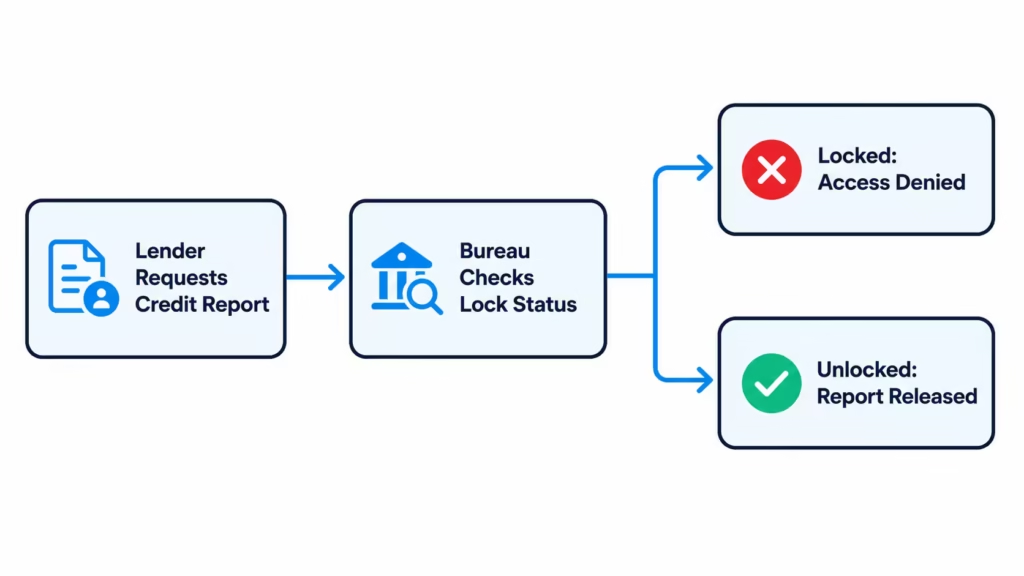
While the lock is on, any lender that tries to pull your report from that bureau gets denied access. No report means no approval, which is exactly what stops a thief. It’s also what can stop your own application, so timing matters. More on that below.
Credit Lock vs. Credit Freeze: What’s the Real Difference?
This is where most people get tripped up, so let’s make it plain.
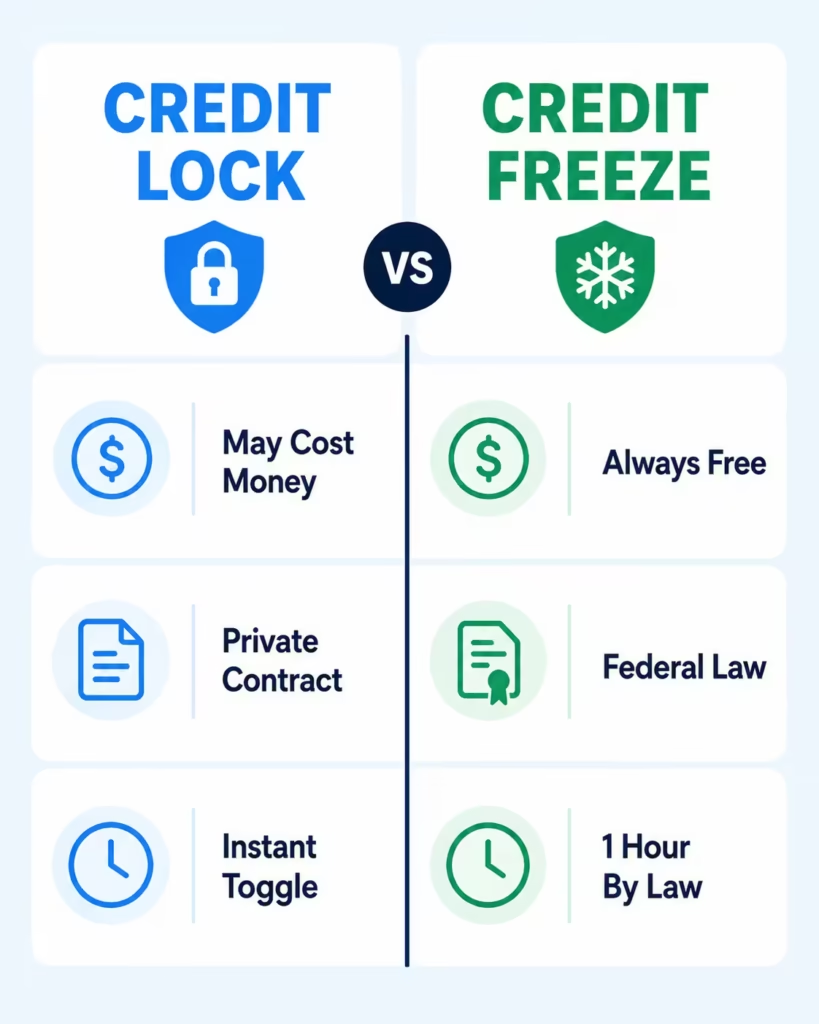
Both a credit lock and a credit freeze do the same basic job. Each one blocks lenders from pulling your credit report, which blocks new accounts from being opened. The outcome is nearly identical. The difference is in cost, legal backing, and availability.
- A credit freeze is free. Always. Federal law guarantees it at all three bureaus.
- A credit lock is a product the bureau chooses to offer. It may cost money, and the bureau can change or end the product at any time. TransUnion already has.
So when it comes to credit lock vs. credit freeze, they are not interchangeable names for the same thing. A lock is not automatically free, and it is not automatically the better option. In many cases, the freeze gives you the same protection with stronger rights behind it.
Why Legal Protection Differs Between a Lock and a Freeze
A security freeze is a legal right, not a product. Under the Fair Credit Reporting Act, every consumer can freeze and unfreeze their credit reports for free at Equifax, Experian, and TransUnion. The law also sets deadlines. If you request a freeze online or by phone, the bureau must place it within one business day. When you ask to lift it, they must do so within one hour.
A lock works differently. It’s a private contract between you and the bureau. The terms are whatever the bureau writes, and they can include things like mandatory arbitration clauses. If the bureau makes a mistake or someone unlocks your report without permission, your options may be weaker than they would be under freeze law.
The Consumer Financial Protection Bureau has also been direct about effectiveness. Credit locks are “no more effective than security freezes, which are free and which you have a right to by law,”.
📌 Did You Know: A paid credit lock doesn’t block fraud any better than a free credit freeze. The main thing you’re paying for is convenience, not stronger protection.
What a Credit Lock Actually Protects You From
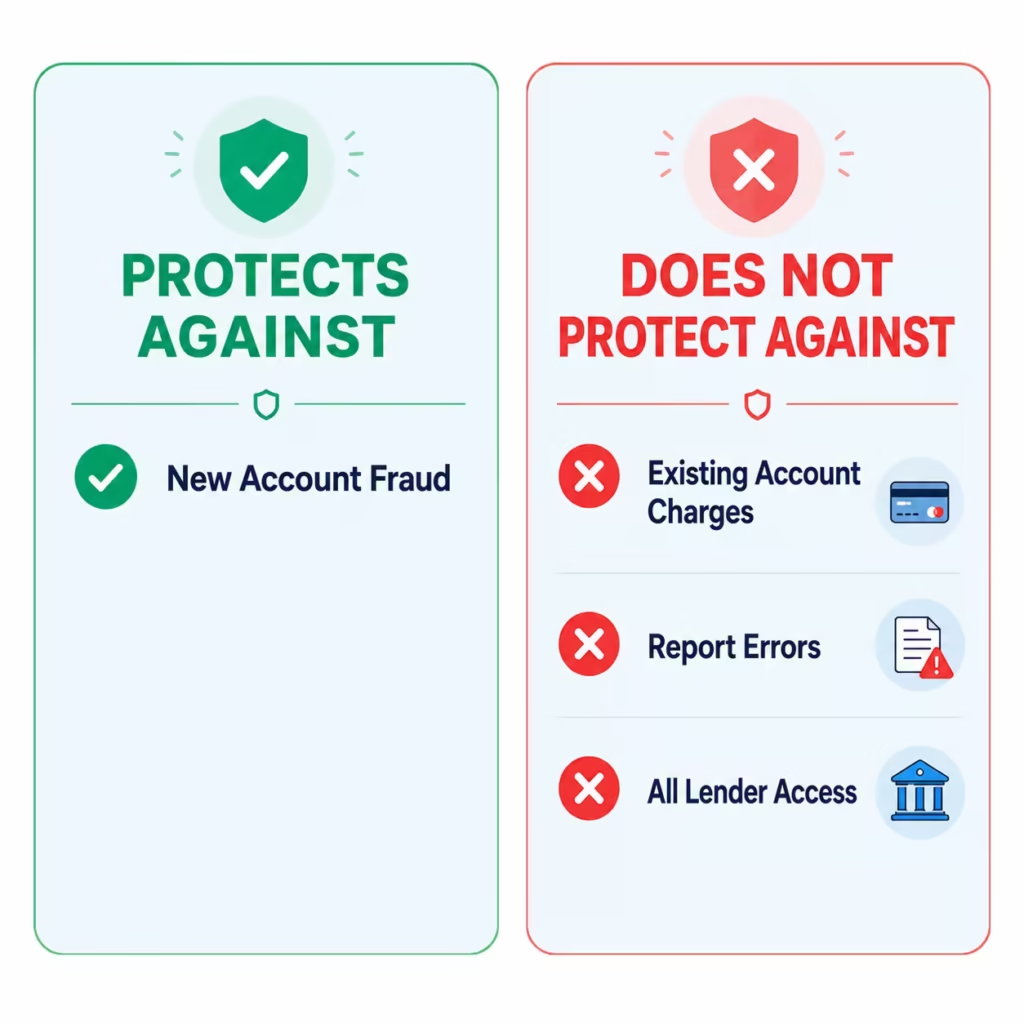
A lock protects you against one specific crime: new account fraud. That’s when a thief uses your stolen identity to apply for a credit card, loan, or other new account in your name.
Here’s how the lock stops it. Nearly every lender runs a hard inquiry on your credit report before approving an application. That means pulling your file from at least one bureau. If that report is locked, the pull fails. No credit report access means no approval, and the fake application dies on the spot.
Picture this. David, a warehouse supervisor in Ohio, had his information exposed in a retail data breach. Three months later, someone tried to open a $4,200 store credit card using his name and Social Security number. His reports were locked, the lender couldn’t pull his file, and the application was denied before it ever touched his credit. That’s the exact scenario a lock is built for.
What a Credit Lock Does NOT Protect Against
A lock is not a shield for everything. It has real gaps, and knowing them matters.
- It doesn’t protect your existing accounts. If a thief gets your current credit card number, a lock won’t stop the charges. Locks only block new applications.
- It doesn’t fix errors on your report. Wrong information stays there until you dispute it.
- It doesn’t replace monitoring. You still need to watch your bank and card statements for fraud on accounts you already have.
- It doesn’t block everyone. Your current creditors, collection agencies working for them, and certain government agencies can still see your file. The same is true of freezes.
A lock is one layer of protection, not the whole plan.
Does Locking Your Credit Affect Your Credit Score?
No. Locking or unlocking your credit has zero effect on your credit score. The bureaus confirm this, and the same is true for freezes. The CFPB states that security freezes “do not impact your credit scores in any way whatsoever”.
You can also keep using your existing credit cards and accounts while your reports are locked. Your cards still work. Your payments still report normally. The only thing that changes is who can pull your file for a new application.
How Much Does a Credit Lock Cost?
Cost depends entirely on the bureau, and this is where readers often get surprised. Here’s the current picture for 2026:
| Bureau | Lock Available? | Cost |
|---|---|---|
| Equifax | Yes (Lock & Alert) | Free |
| Experian | Yes (CreditLock) | Paid: $24.99/month after a 7-day trial, bundled with IdentityWorks Premium |
| TransUnion | No, discontinued | Freeze only (free) |
Equifax’s lock costs nothing. Experian’s lock comes only inside a paid subscription. And TransUnion no longer offers a lock at all, which the next few sections cover in detail.
The key point: never assume a lock is free. Check which bureau you’re dealing with before you sign up.
Equifax Lock & Alert: How It Works
Equifax Lock & Alert is the one major bureau lock that’s completely free. There’s no subscription and no trial period to worry about.
Getting started takes a few minutes:
- Go to the Equifax website and create a free myEquifax account. You’ll verify your identity once during sign-up.
- Find the Lock & Alert feature in your account dashboard.
- Use the toggle to lock or unlock your Equifax report anytime, from the website or the mobile app.
The “Alert” part is a nice bonus. Equifax sends you a notification when someone tries to access your locked report. So if a lender’s pull gets blocked, you’ll know about it. That gives you an early warning if a criminal is actively trying to use your identity.
Experian CreditLock: How It Works
Experian CreditLock is not a standalone free tool. It comes bundled inside Experian’s paid identity protection subscription, IdentityWorks Premium. The plan costs $24.99 per month after a 7-day free trial.
The subscription includes more than the lock. You also get credit monitoring service across the bureaus, FICO Score tracking, and up to $1 million in identity theft insurance.
Once you’re enrolled, the lock itself works like Equifax’s. You toggle it on or off in the Experian app or website, and the change happens fast.
The honest question to ask is whether you need the whole bundle. If all you want is to block access to your Experian report, Experian also offers a free security freeze. That costs nothing and gives you the same core protection. Paying $24.99 a month makes sense only if you actually want the monitoring and insurance features too.
⚠️ Mistake to Avoid: Don’t sign up for a paid lock subscription thinking it’s the only way to protect your Experian report. A freeze on that same report is free by law and blocks new-account fraud just as well.
TransUnion No Longer Offers a Credit Lock: What to Do Instead
This is the update most older articles get wrong, so pay close attention here.
TransUnion has discontinued its credit lock products, including TrueIdentity. TransUnion’s own support pages confirm that TrueIdentity and its related credit monitoring products have permanently shut down, and former accounts were moved to a different product. Today, TransUnion’s website points consumers to one main protection tool: a free credit freeze.
If you search “how to lock my TransUnion credit,” you’ll find plenty of articles with instructions that no longer work. Those pages simply haven’t caught up.
So what should you do?
- New to this: Place a free freeze on your TransUnion report through the TransUnion website or Service Center. It’s free, fast, and backed by federal law.
- Had a TransUnion lock before: Check your TransUnion account to confirm what’s active now. If nothing is in place, add the freeze yourself. Don’t assume your old lock carried over.
There’s one small upside: TransUnion notes that lifting a freeze online can take effect almost right away, so you’re not giving up much convenience.
How Fast a Credit Lock Activates and Deactivates
Speed is one of the lock’s biggest selling points. When you toggle a lock in the app or on the website, the change is near-instant. In most cases, it takes effect within seconds to a few minutes. Unlocking works the same way.
Freezes are fast too, but they run on legal deadlines instead of promises. Federal law gives bureaus up to one business day to place a freeze requested online or by phone, and up to one hour to lift one. In practice, online freeze changes often happen in minutes, but the legal window is the guarantee you can count on.
The practical takeaway: whether you lock or freeze, you can open your report quickly when you need to. Just don’t wait until you’re sitting in the lender’s office.
Will a Credit Lock Block a Loan, Apartment, or Job Application?
Yes, it will. That’s the whole point of the tool, and it applies to your applications too.
Any check that requires a hard pull on your credit report will fail at a locked bureau. That includes mortgage lenders, auto lenders, credit card issuers, many landlords, and some employers who review credit reports as part of hiring.
So if you’re about to apply for anything, unlock your report first. A good rule: if you know an application is coming, unlock a day or two ahead, not after the denial. You can lock it again as soon as the pull goes through.
💡 Pro Tip: Not sure which bureau your lender will pull from? Ask them before you apply. Then unlock only that bureau and keep the others protected.
What Happens If You Forget to Unlock
Don’t panic. Forgetting to unlock is a delay, not a disaster.
If a lender hits a locked report, your application will typically be paused or denied for that reason alone. It doesn’t damage your credit, and it isn’t permanent. Unlock your report, which takes minutes in most cases, then ask the lender to pull it again. Most lenders deal with this all the time and will simply re-run the check.
The real risk is timing. If you’re up against a deadline, like a lease signing or a rate lock on a mortgage, even a short delay can sting. That’s why unlocking ahead of time is the habit to build.
How to Lock Your Credit With All Three Bureaus (Given TransUnion’s Change)
Protecting yourself fully now means covering all three bureaus, because a lender can pull from any one of them. Locking just one leaves two open doors. Here’s the current action path:
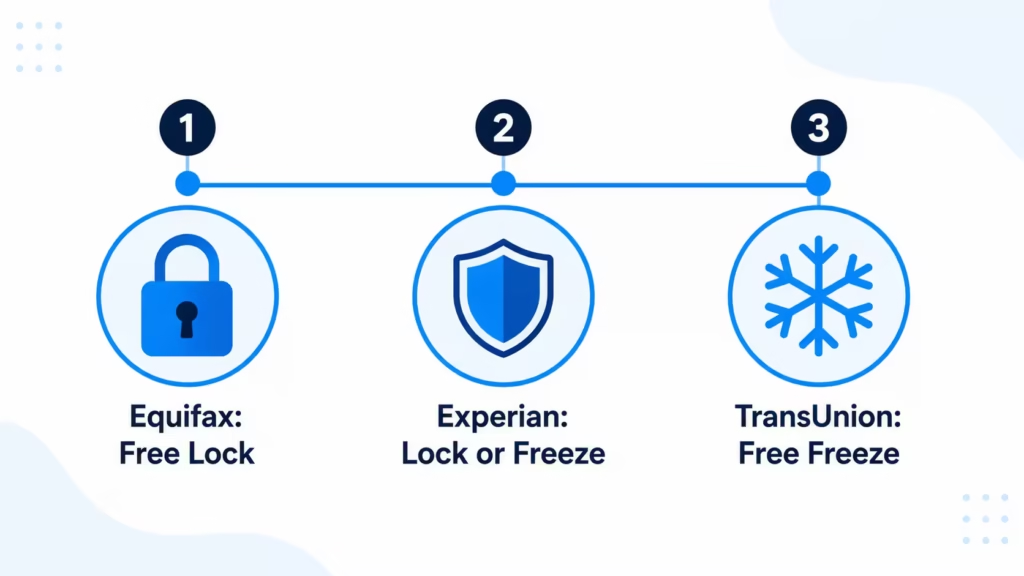
- Equifax: Enroll in Lock & Alert. It’s free. Create your account and toggle the lock on.
- Experian: Choose one of two paths. Sign up for CreditLock through IdentityWorks Premium if you want the paid bundle, or place a free security freeze on your Experian report if cost is a concern. Both block new credit pulls.
- TransUnion: Place a free credit freeze, since no lock is available anymore.
Mixing tools like this is completely normal now. Using a lock at one bureau and a freeze at another is not an error or a gap. Protection at each bureau is what matters, not which tool you used to get it.
Credit Lock or Credit Freeze: Which Should You Actually Use?
By now the picture is clear, so let’s make the decision simple.
- Choose a freeze if cost and legal protection matter most. A security freeze is free at every bureau, guaranteed by federal law, and just as effective at blocking new-account fraud. For most people, this is the strongest default choice.
- Choose a lock if you toggle access often and value the app experience. Equifax’s lock is free and convenient, so there’s little downside there. Experian’s lock only makes sense if you genuinely want the paid monitoring bundle that comes with it.
- Expect a mix either way. Since TransUnion only offers a freeze now, nearly everyone ends up with a freeze somewhere. There’s no way around that, and no reason to fight it.
If you’re unsure where to start, start with freezes at all three bureaus. They’re free, they take about ten minutes each, and you can always add a lock on top later if you want the extra convenience.
Frequently Asked Questions (FAQs)
What does a credit lock do?
A credit lock blocks lenders from viewing your credit report at that bureau, which stops anyone from opening new credit in your name. It only affects new applications and does not affect accounts you already own.
How do I remove a credit lock?
Log in to your account with the bureau (like myEquifax or the Experian app) and toggle the lock off. The change is near-instant, usually taking effect within seconds to a few minutes.
Does a credit lock affect your credit score?
No. Locking or unlocking your credit report has zero effect on your credit score. Your existing cards and accounts continue working and reporting normally while locked.
Is it a good idea to lock your credit?
It’s a solid option if you want free, easy toggling, especially Equifax’s Lock & Alert, which costs nothing. For most people, a free credit freeze offers the same protection with stronger federal legal backing.
What is better, a credit lock or a credit freeze?
A freeze is free at all three bureaus and legally guaranteed under the Fair Credit Reporting Act, with strict deadlines for placing and lifting it. A lock is a private contract that can cost money and change anytime, as TransUnion proved by discontinuing its lock entirely.
Can someone steal your identity if your credit is locked?
A lock only stops new-account fraud, like someone opening a credit card in your name. It won’t stop a thief from using your existing card numbers, so you still need to monitor your current account statements.
How long does it take for a credit lock to be removed?
Removing a lock typically takes seconds to a few minutes through the bureau’s app or website. Freezes work on a legal deadline instead, with bureaus required to lift them within one hour of your request.
Is there a downside to locking your credit?
The main downside is forgetting to unlock before applying for credit, which can pause or deny an application at that bureau. It won’t damage your score, but it can cause delays if you’re up against a deadline like a mortgage rate lock.
What causes a credit lock?
People typically lock their credit after a data breach notice or a bank’s fraud warning, as a way to block new-account identity theft. It’s a proactive step, not something that happens automatically to your report.
What’s the difference between a credit lock and a credit freeze?
Both block lenders from pulling your report, but a freeze is a free legal right at all three bureaus, while a lock is a bureau-controlled product that can be paid or discontinued. TransUnion, for example, now only offers a freeze after ending its lock product.
Wrapping Up
A credit lock blocks new-credit applications at the bureau level, and it’s a useful tool when you know its limits: it won’t guard existing accounts, it may cost money, and TransUnion no longer offers one.
For most readers, free freezes at all three bureaus work best. They offer the same protection, plus federal law supports them. Whatever you pick, cover Equifax, Experian, and TransUnion, and unlock before any planned application.
If you know someone who just got a breach notice and feels overwhelmed, share this guide with them. It could save them hours of confusion and help them act before a thief does.