
I’ve been there too. You swipe your card, check your account an hour later, and something looks off. Maybe the charge is showing as “pending,” maybe the amount doesn’t match your receipt, or maybe the word “posted” is sitting next to a purchase you don’t fully remember. That mix of confusion and mild worry is exactly why understanding a posted transaction credit card status matters so much.
A posted transaction is simply a charge that has fully processed and is now a permanent part of your credit card balance.
In this guide, we’ll explain what “posted” means. We’ll cover how it differs from pending, how long posting takes, why amounts can change, and what to do if something seems off.
Key Takeaways
This guide explains what a posted transaction is on a credit card, how it differs from a pending charge, why posted amounts can shift, and how posting affects disputes, available credit, and your statement.
Core Facts:
- A posted transaction is a charge that has fully processed and become a permanent part of your credit card balance, unlike a pending charge, which can still change or fall off.
- Most transactions post within 1 to 5 business days after purchase, though weekends, foreign transactions, and merchant batching delays can extend this timeline.
- Available credit drops the moment a charge is authorized, but your account balance only updates once the transaction actually posts.
- Posted amounts can differ from pending amounts due to restaurant tip adjustments, hotel or gas station holds, currency conversion shifts, or split shipments.
- Formal disputes generally require a charge to post first, and the Fair Credit Billing Act allows 60 days from the statement date to file in writing.
- Duplicate-looking pending and posted entries for the same charge usually resolve within 1 to 2 business days and are not a real double charge.
Best for:
- Cardholders confused by a mismatch between their pending charge and the amount that later posted.
- Anyone trying to determine whether a duplicate-looking charge on their account is a real error or a temporary overlap.
- Readers preparing to dispute a posted charge who need to understand the required timeline and process.
What “Posted” Means on a Credit Card
A posted transaction is a charge that has fully processed and is now finalized on your credit card account. It’s no longer a hold or a temporary line item. It’s part of your real, official balance.
Think of it this way. When a charge is posted, the money has actually moved between the merchant, the card network, and your card issuer. The purchase is locked in. The amount is set. The record is permanent unless you or the bank makes a change later.
This is different from a hold, which just sets money aside for a possible charge. A posted transaction means that it has been reviewed, settled, and added to your account balance. It’s now a completed item. It’s now part of what you owe.
Posting also happens after another step called authorization. That earlier step is what causes the “pending” status you often see first. So when you’re asking, “what does posted mean on credit card activity?” the short answer is: it’s the final version of the charge, ready for you to review, pay, or dispute if needed.
Posted vs. Pending Transactions
The difference between posted and pending transactions is key to understanding your credit card activity. It clears up most of the confusion cardholders face.
A pending transaction is a charge that has been approved by your card issuer but has not yet been finalized. The merchant has asked for the money, and your bank has agreed to hold it, but no actual transfer has happened yet. The amount can still change. The charge can even fall off if the merchant never completes the sale.
A posted transaction is the opposite. It’s final, complete, and now part of your official balance. Once posted, the amount is locked in unless you file a dispute or the merchant issues a refund.
Here’s how each status affects your account:
| Status | Impact on Available Credit | Impact on Current Balance | Can You Dispute? |
|---|---|---|---|
| Pending | Reduced right away | Not yet updated | No, not formally |
| Posted | Already reduced | Fully updated | Yes |
The practical difference matters for two reasons. First, your available credit drops the moment a charge is pending, so your spending power reflects the hold even before posting. Second, your current balance, the amount you actually owe, only updates once the charge posts. That gap is normal, but it’s also why your app can look confusing right after a purchase.
How the Settlement Process Works
Understanding payment settlement takes the mystery out of why posting isn’t instant. A credit card transaction is not one action. It’s a chain of steps that involves your card, the merchant, a processor, and your bank.
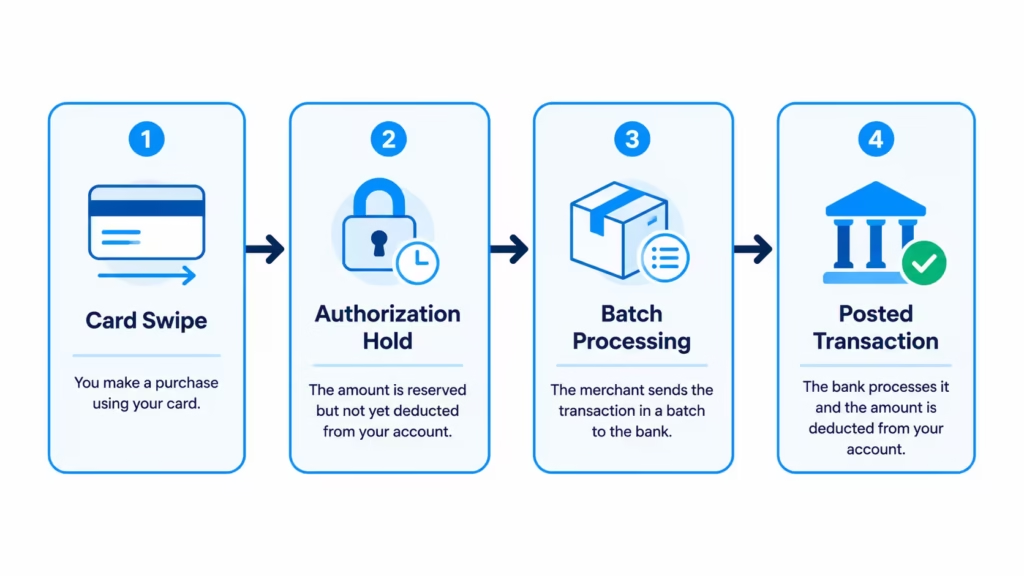
Here’s the full journey from swipe to posted status:
- The merchant requests authorization. When you tap or swipe, the merchant sends a request to your card issuer. It asks, “Is this card valid, and is there enough available credit for this charge?”
- The issuer approves and places a hold. If everything checks out, your bank sends back an approval and places an authorization hold on your account. This is what creates the pending status. Your available credit drops, but your balance hasn’t changed yet.
- The merchant submits the transaction for payment. Later, often at the end of the day, the merchant batches its approved sales and sends them to its merchant processor for actual payment.
- The issuer processes and posts the transaction. Your bank receives the final amount, moves the money, and updates your account. That’s when the charge officially posts.
This last step is what the credit card post date means. It’s the date your bank finalized the charge on your account, not the date you made the purchase.
Nothing here is unusual. It’s just how the payment system works. Every card transaction follows this same chain, which is why even a simple coffee purchase can sit as pending for a day or two.
How Long It Takes for a Transaction to Post
Most credit card transactions post within 1 to 5 business days after a purchase. However, Experian notes that some payments may process faster, depending on the merchant and issuer.
Several things can slow this down:
- Weekends and holidays. Banks don’t process transactions on non-business days, so a Friday purchase may not post until Tuesday.
- Foreign transactions. Charges from other countries take longer because of extra steps like currency conversion and international clearing.
- Delayed merchant batching. Small merchants may not submit their sales daily. Some batch weekly.
- Mail-in or paper-based payments. These take the longest to post because someone has to receive and enter them.
If a transaction never posts, that usually means the merchant didn’t complete the sale. The authorization hold will simply drop off, and your available credit will return to normal, often within 5 to 7 days. If you’re unsure, contact the merchant first. They can tell you whether the sale was ever finalized on their side.
Why the Posted Amount Can Differ From the Pending Amount
It’s normal, and often expected, for the posted amount to be different from what you saw in pending. This does not automatically mean an error.
Pending amounts are often estimates. The final total gets sorted out when the merchant submits the transaction for actual payment. That’s when the accurate number reaches your bank and updates your available balance. So the posted vs pending transaction gap you see is usually a normal part of how settlement works, not a problem.
Common reasons the amounts differ include:
- Tips added after the initial charge. Restaurants often authorize the pre-tip amount first, then update it later.
- Adjusted final totals. A store might have to correct a mispriced item or apply a coupon after the sale.
- Currency conversion shifts. Purchases in another currency go through a foreign currency conversion step, and rates can move slightly between authorization and posting.
- Split shipments or partial fulfillment. Online orders sometimes charge in parts as items ship.
If the posted amount is near the pending amount, you can likely explain the difference with a tip, tax, or shipping change. So, it’s probably not an error. If the amount is wildly different or seems random, that’s when it’s worth digging deeper.
📌 Did You Know: Some merchants, like gas stations, may place a hold of $1 or $100 just to verify your card, then post the actual purchase amount later. So a $1 pending charge doesn’t always mean you were charged $1.
Restaurant Tip Adjustments
Restaurants are the most common reason people see the posted amount differ from the pending one.
When you pay at a restaurant, the server usually swipes your card for the pre-tip total first. That’s the amount you’ll see in your pending activity. After you sign the receipt and add a tip, the restaurant updates the transaction with the full amount before submitting it for settlement.
So if you had a $42 meal and added a $10 tip, your pending charge might show $42 while the posted amount shows $52. That’s normal, expected behavior. It’s not a double charge, and it’s not an error. The pending amount simply hadn’t caught the tip yet.
Hotel and Gas Station Holds
Hotels and gas stations both use pre-authorization holds that often look nothing like your real charge.
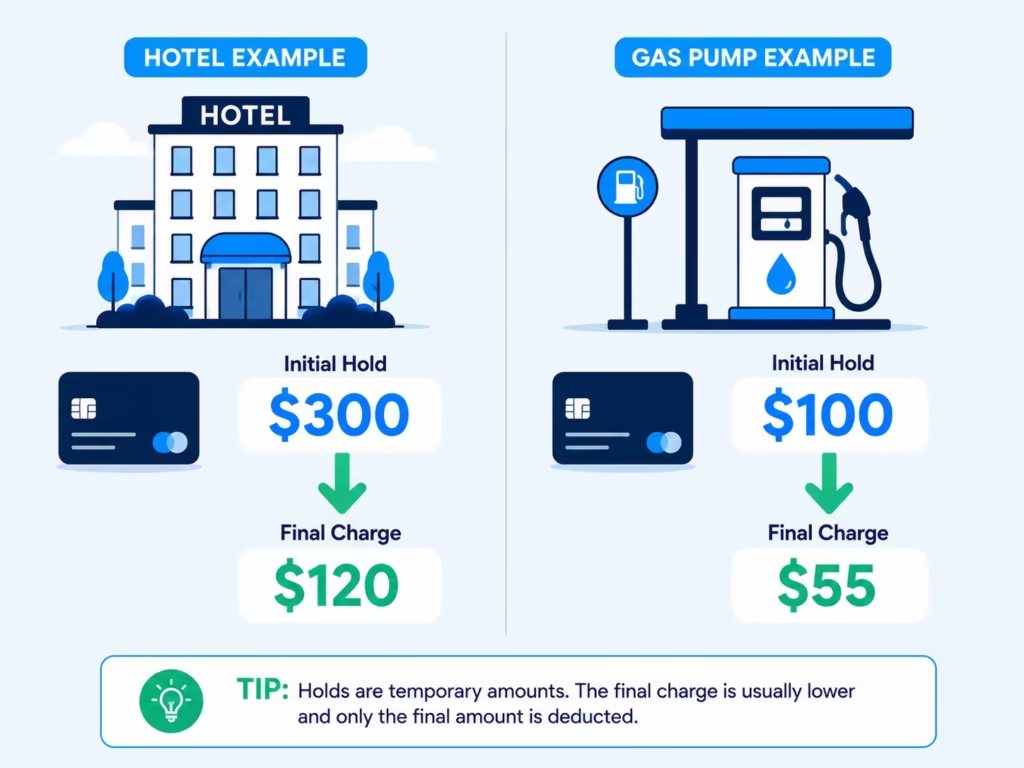
Hotels usually place a larger hold at check-in to cover the room rate plus incidentals like room service, minibar, or damage. If your room is $150 a night for 3 nights, the hotel might place a $600 hold. When you check out, they post the actual final charge, and the extra hold amount is released back to your available credit within a few days.
Gas stations do something similar. Many place a preset hold, often $1, $75, or $100, before you start pumping. Once you’re done, they post the real pump total. The hold and the posted amount are almost never the same, and that’s normal.
In both cases, the extra hold typically clears within 3 to 5 business days. If it doesn’t clear after a week, contact the merchant first, then your card issuer.
Transaction Date vs. Post Date on Your Statement
Every credit card charge has two dates, and knowing which one matters helps you read your account correctly.
The transaction date is when the purchase actually happened. It’s the day you tapped, swiped, or clicked “buy.”
The post date is when your card issuer finalized the charge and added it to your account. This is usually 1 to 5 business days after the transaction date.
These two dates can differ for good reasons. Weekends, holidays, merchant batching schedules, and international clearing can all add days between the two. A Saturday dinner might have a transaction date of Saturday but a post date of Tuesday.
Which date shows up where depends on how you’re viewing your account:
| Where You’re Looking | Which Date You’ll See |
|---|---|
| Real-time activity or app feed | Usually the transaction date |
| Monthly credit card statement | Usually the post date |
| Interest calculations | Based on post date and billing cycle |
| Rewards earning | Often based on post date |
Here’s a concrete example. You buy a $75 pair of shoes on May 30. Your credit card statement closes on May 31. If the charge posts on June 2, it lands in your June statement, not your May one, even though you bought the shoes in May. That’s because the post date, not the transaction date, decides which billing cycle the charge belongs to.
This matters for planning. If you’re trying to keep a purchase off a specific statement or hit a spending deadline, the post date is the one that counts.
How Posting Affects Your Available Credit and Balance
Once you understand posting, tracking your credit card spending gets a lot easier.
Here’s what actually happens behind the scenes. When a charge is authorized, your available credit drops right away. That happens even before the transaction posts. So if you have a $5,000 limit and buy something for $200, your available credit falls to $4,800 the moment the merchant runs your card.
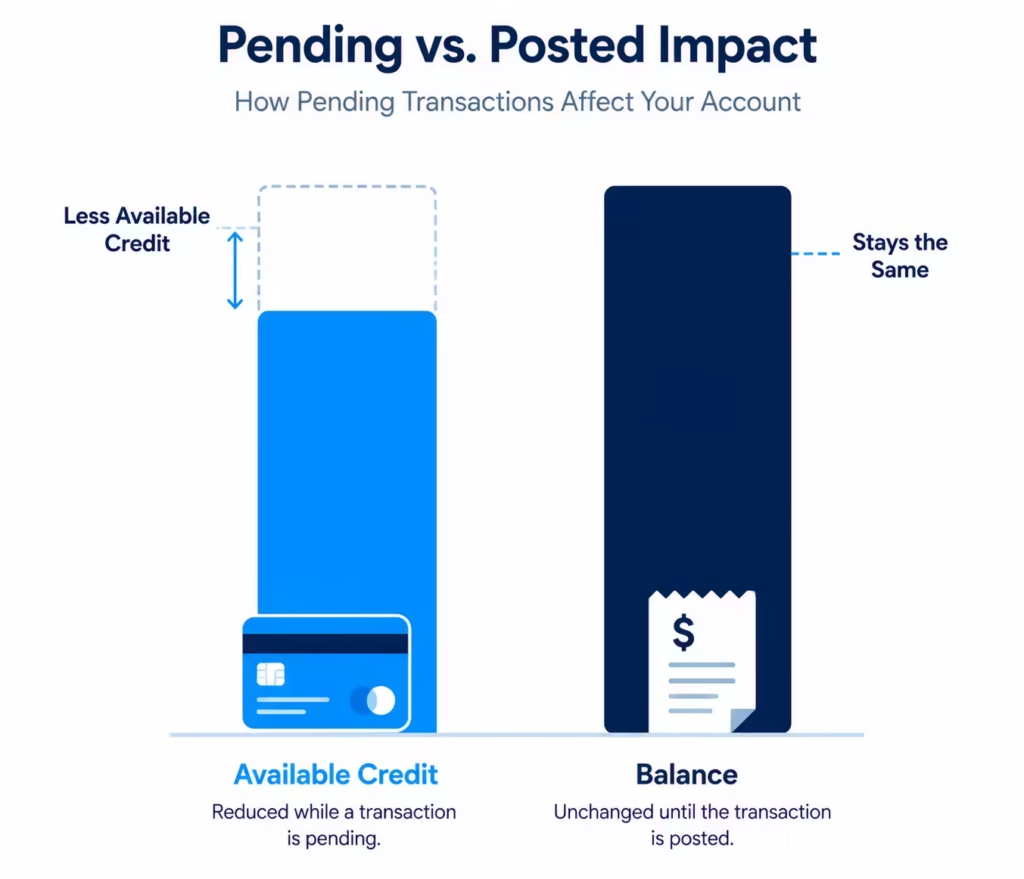
Your account balance, meaning the amount you owe, works differently. It doesn’t update until the transaction posts. That’s why you can check your account after a big purchase and see your available credit drop while your balance still looks the same.
This is where confusion sets in. Your available credit and your current balance may not line up for a day or two. That’s normal. Once the charge posts, everything syncs. Your balance goes up by the posted amount, and your available credit stays reduced.
💡 Pro Tip: If you’re tracking spending closely, watch your available credit for real-time changes and your posted balance for accuracy. Pending charges show your spending power. However, only posted charges show what you owe on your statement.
The takeaway is simple. Available credit reacts to holds. Balance reacts to posting. Both matter, but for different reasons.
Can You Dispute a Posted Transaction?
Yes, and in most cases, you have to wait until a charge posts before you can formally dispute it. Pending charges are considered temporary. Since the amount can still change or the charge can fall off entirely, banks don’t accept formal disputes on them.
A credit card dispute on a posted charge can cover several situations:
- Wrong amount. The posted charge doesn’t match your receipt.
- Duplicate charge. The same purchase posted twice.
- Unauthorized charge. You didn’t make the purchase and don’t recognize the merchant.
- Canceled order. You canceled the purchase but were still charged.
- Item never delivered. You paid but never received the product or service.
- Item not as described. The product was significantly different from what was advertised.
The right to dispute these types of charges comes from a federal law called the Fair Credit Billing Act. Under this law, you generally have 60 days from the date your credit card statement showing the error was sent to notify your card issuer in writing. Miss that window, and your dispute rights weaken sharply.
Once you file, your issuer will investigate. If they agree with you, they’ll issue a chargeback, which reverses the charge and pulls the money back from the merchant. The posted transaction remains on your account until the investigation is complete. However, you don’t have to pay the disputed amount during the review.
Fraud charges are treated separately and more urgently. If you spot a charge you didn’t make, report it right away, whether it’s pending or posted.
Why You Can’t Dispute a Pending Transaction
Pending charges live in a temporary state. The amount isn’t final, the merchant might still change it, and the sale itself might not go through. Because of that, most issuers will tell you to wait until the charge posts before starting a formal dispute.
If a pending charge worries you, the best first step is to contact the merchant directly. They can:
- Confirm whether the sale is going through
- Cancel the sale before it posts
- Adjust the amount before final submission
- Issue a refund faster than a bank dispute would
If the merchant won’t help or you can’t reach them, wait for the charge to post. Once it does, your dispute options open up. You’ll then be able to file with your issuer, provide receipts or evidence, and let the formal process start.
Duplicate Pending and Posted Entries for the Same Charge
Seeing the same charge twice on your account is one of the most common reasons cardholders panic. Most of the time, it’s not an actual double charge. It’s just a brief overlap.
Here’s what happens. Your pending transaction may still be sitting in your account when the posted transaction shows up as well. For a short window, both entries exist, making it look like you were charged twice. Your account balance and available credit reflect only one of them, but visually, two lines can appear side by side.
This usually clears itself within 1 to 2 business days. The pending entry drops off, leaving only the posted charge. Nothing extra has been billed to you.
So how do you tell a real duplicate charge apart from a normal overlap? Ask these three questions:
- Are the two amounts exactly the same?
- Are they from the same merchant on the same day?
- Is one showing as pending and the other as posted?
If you answered yes to all three, it’s almost certainly a temporary overlap. Wait 2 to 3 business days and check again. If both entries still show and both are now posted, you may have a true duplicate charge worth escalating.
Real duplicates happen when a card is swiped twice, a payment terminal fails, or an online order is submitted more than once. In those cases, contact the merchant first. If they can’t resolve it, file a dispute with your issuer.
⚠️ Mistake to Avoid: Don’t call your bank the moment you see a pending and posted charge together. Wait 2 to 3 business days first. Most overlaps resolve on their own, and calling too early usually means being told to wait anyway.
What to Do If a Posted Transaction Looks Wrong
Once you’ve confirmed a charge has posted and something about it looks off, taking the right steps quickly makes all the difference.
Follow these steps in order:
- Verify the charge against your records. Check your receipts, order confirmations, and email. Sometimes a strange charge is just a subscription renewal. It could be a merchant using a different billing name. Or it might be a delayed order that has finally shipped. Confirm the details before assuming there’s an error.
- Contact the merchant directly. For straightforward errors like a wrong amount, a canceled order, or a shipping issue, the merchant is usually the fastest path to a fix. Many will issue a refund on the spot without needing a formal dispute. Keep notes on when you called, who you spoke with, and what they promised.
- File a formal dispute with your credit card issuer. If the merchant can’t or won’t resolve it, contact your credit card issuer through their app, website, or the phone number on the back of your card. Provide any evidence you have: receipts, emails, screenshots. Under federal law, you generally have 60 days from your statement date to do this.
- Report fraud immediately, no matter the status. If a charge looks fraudulent, meaning you didn’t make it and don’t recognize the merchant, don’t wait for it to post. Call your issuer right away. Reporting fraud fast protects your fraud liability, which is capped at $50 for credit cards under federal law and often reduced to $0 by most major issuers.
Keeping your dispute organized helps. Write down the date, the merchant name, the posted amount, the reason for the dispute, and any communication with the merchant. This makes the issuer’s investigation faster and gives you a clear record if the case takes time to resolve.
Frequently Asked Questions (FAQs)
Does a posted transaction mean it went through?
Yes. A posted transaction has fully processed, meaning the money has moved between the merchant, card network, and your issuer. It’s now a permanent, final part of your balance rather than a temporary hold.
What’s the difference between pending and posted transactions?
A pending transaction is approved but not yet final, so the amount can still change, or the charge can fall off entirely. A posted transaction is locked in and added to your official balance, and it typically takes 1 to 5 business days to move from one status to the other.
Does posted mean funds are available?
Not exactly. Your available credit drops the moment a charge is authorized, before it ever posts, while your actual balance only updates once the transaction posts. This gap between the two is normal and usually resolves within a day or two.
Why am I seeing pending and posted credit card transactions for the same transaction?
This happens when a pending entry is still showing while the posted version has already appeared, creating a brief duplicate-looking overlap. It usually clears itself within 1 to 2 business days, and only the posted charge actually counts toward your balance.
How long can a pending transaction stay on your credit card?
Most pending transactions resolve within 1 to 5 business days, though factors like weekends, foreign transactions, or delayed merchant batching can extend that window. If a pending charge never posts, it typically drops off within 5 to 7 days and your available credit returns to normal.
What happens if a transaction is pending but didn’t go through?
If the merchant never completes the sale, the pending authorization hold simply falls off your account. Your available credit is restored, often within 5 to 7 days, and no charge ever posts.
Can you dispute a pending transaction?
Generally no. Most issuers require a charge to post before you can file a formal dispute, since pending amounts can still change or disappear. If a pending charge concerns you, contacting the merchant directly is the faster first step.
What is the difference between a posted balance and an available balance?
Your available balance reflects your credit limit minus both pending holds and posted charges, showing real-time spending power. Your posted balance, or statement balance, only reflects transactions that have fully processed, which is why the two numbers often don’t match right after a purchase.
Why does the posted amount sometimes differ from the pending amount?
Pending amounts are often estimates that get finalized later, so tips, tax adjustments, currency conversion, or split shipments can change the final total. A small difference, like a restaurant adding a tip after the initial swipe, is normal and not an error.
What is the difference between the credit card transaction date and the posted date?
The transaction date is the day you actually made the purchase, while the post date is when your issuer finalized the charge, usually 1 to 5 business days later. The post date determines which billing statement the charge lands on, not the transaction date.
Wrapping Up
Understanding the difference between pending and posted charges gives you real control over your credit card account. A posted transaction credit card entry is the official version of your charge. This entry affects your balance, available credit, ability to dispute, and how the purchase appears on your statement.
Check your posted charges regularly. Wait 1 to 2 days before worrying about duplicates. If something is really wrong, use the 60-day dispute window.
If you know someone who struggles with credit card statements or worries every time a charge looks odd, share this guide with them. It could save them a stressful call to the bank.