
You spotted a charge that reads “TRANSUNION INTERACTIVE” on your bank statement, or you saw the name pop up somewhere tied to your credit. Now you’re wondering if it’s real, if it’s a scam, or if it’s something you signed up for and forgot.
That kind of surprise is stressful, and it’s easy to worry about your credit score, your bank account, or a possible fraud attempt. Understanding what TransUnion Interactive is helps you decide fast.
In short: it’s the real consumer arm of TransUnion that sells credit reports, scores, and monitoring products.
Below, I’ll walk you through the company, the charge, the CFPB refund story, and clean steps to cancel if you need to.
Key Takeaways
This guide explains what TransUnion Interactive is, how it differs from Trans Union LLC and the parent brand, why its name appears on billing statements, and what the 2017 and 2023 CFPB actions actually mean for refund claims today.
Core Facts:
- TransUnion Interactive, Inc. is the consumer-facing subsidiary of TransUnion that sells credit reports, scores, and monitoring products directly to individuals, while Trans Union LLC furnishes credit data to lenders.
- The company’s paid plan, TransUnion Credit Premium, typically bills around $24.95 a month, while the free plan, Credit Essentials, requires no card and has no charge.
- In January 2017, a CFPB consent order required TransUnion to pay over $13.9 million in restitution and a $3 million fine over deceptive marketing of credit scores and products.
- In October 2023, a second CFPB consent order addressed failures to honor security freezes and locks, requiring $3 million in consumer redress and a $5 million civil penalty.
- The 2017 CFPB order was terminated in November 2025 after TransUnion met its obligations, closing that enforcement chapter with no ongoing refund program tied to it.
- Signing up for or checking your own score through TransUnion Interactive counts as a soft inquiry and does not lower your credit score.
Best for:
- Anyone who sees an unrecognized “TransUnion Interactive” charge on a bank or card statement and wants to confirm whether it’s legitimate.
- Readers who received a message about a “TransUnion Interactive refund” and want to verify if it’s real or a scam.
- People trying to cancel a TransUnion Interactive subscription or understand which entity to contact for billing versus credit report disputes.
What Is TransUnion Interactive?
TransUnion Interactive is the consumer subsidiary of TransUnion, one of the three major U.S. credit bureaus. It’s the part of the company that sells products directly to everyday people, not to lenders or banks. When you buy a credit score, sign up for credit monitoring, or pull your own report through TransUnion, you’re really doing business with this subsidiary.
Think of it this way. The big TransUnion name is the umbrella. Under that umbrella, one arm works with lenders and businesses, while the direct-to-consumer platform side handles you, the shopper. That consumer side is TransUnion Interactive, Inc.
The purpose is simple. It exists to package credit data and identity tools into products people can buy or use for free. That’s why the name shows up on your card statement or in your inbox after you set up an account on TransUnion.com.
TransUnion Interactive, Inc. Legal Entity Basics
TransUnion Interactive, Inc. is a separate registered legal entity, not just a marketing label. It’s a corporation that sits under the larger TransUnion corporate family. The “Inc.” at the end matters because banks and card processors show the full legal name on your statement, not the shorter brand name.
So if you see “TRANSUNION INTERACTIVE INC” as a merchant charge, that’s just the legal filing name your bank uses to describe the seller. It looks a little different from the “TransUnion” logo you might remember, but it’s the same company family.
TransUnion Interactive vs. TransUnion vs. Trans Union LLC
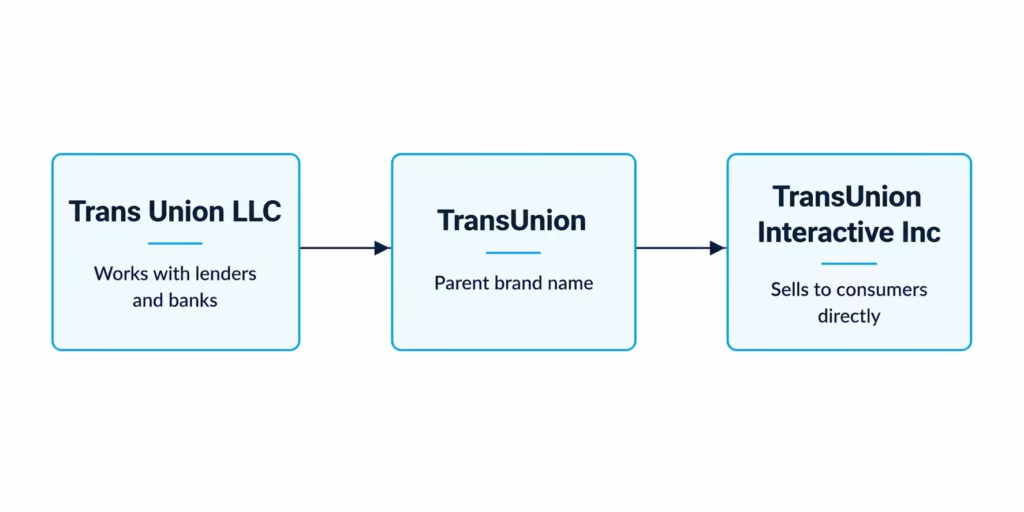
These three names get mixed up all the time, so let’s clear them up.
Trans Union LLC is the credit-reporting side. This is the legal entity that gathers data from lenders, keeps your credit file, and sends reports to banks and card issuers. Lenders talk to Trans Union LLC.
TransUnion Interactive, Inc. is the consumer products side. It builds the websites, apps, and subscriptions that regular people use. Shoppers buy from TransUnion Interactive.
TransUnion is the umbrella brand and the public-facing name. It’s what people say in daily talk, and it’s what the parent company uses in ads.
Here’s a quick side-by-side view:
| Entity | Who It Serves | What It Does |
|---|---|---|
| Trans Union LLC | Lenders, banks, businesses | Furnishes credit reports and data |
| TransUnion Interactive, Inc. | Everyday consumers | Sells monitoring, scores, ID tools |
| TransUnion | Public/brand | Umbrella name for the group |
If you have a dispute about wrong data on your credit file, you’re really dealing with Trans Union LLC. If you have a billing question or want to cancel a subscription, that’s TransUnion Interactive.
Is “TransUnion Consumer Interactive” the Same Thing?
Yes. “TransUnion Consumer Interactive” is another way people write the same consumer subsidiary. You may also see it shortened to “TUCI” in some documents or press releases. The name can shift slightly across bank statements, help pages, and older articles, but the entity is the same.
💡 Pro Tip: If a name looks like it belongs to TransUnion but you’re not sure, type it into your account page on TransUnion.com. If it matches your subscription or product, it’s the real thing.
Why “TransUnion Interactive” Shows Up on Your Bank or Card Statement
When a company sells you something, your card processor prints the seller’s registered legal name on your statement, not the brand you remember. That’s why a billing statement charge can look strange even when the purchase was real.
If you signed up for credit monitoring, an identity theft plan, or a one-time credit report, the merchant name on the statement often reads “TRANSUNION INTERACTIVE” or “TU INTERACTIVE.” The amount could be a small one-time fee, or a recurring subscription charge that hits your card every month.
Many people see something like “TRANSUNION INTERACTIVE” for $24.95 or a similar amount. That usually points to a paid monthly monitoring product. Free products also exist, and those won’t create a charge at all.
If the charge is real and you signed up on purpose, everything is fine. If you don’t remember signing up, you have three quick moves:
- Check your email for a welcome message from TransUnion.
- Log into TransUnion.com and look at your active products.
- Ask anyone else on the account (spouse, parent) if they set it up.
Only after those three steps should you treat it as possible fraud.
⚠️ Mistake to Avoid: Don’t cancel your card the moment you see the name. If it’s your own subscription, you’ll still be billed under the new card once the merchant updates its file. Log in and cancel the product first.
What TransUnion Interactive Actually Sells
The company offers a small menu of consumer products. Some are free, and some are paid.
Free tier. TransUnion offers a free plan called TransUnion Credit Essentials. You get a daily TransUnion credit report and score, alerts, and basic monitoring. No card is needed at signup. You can see the free options on the TransUnion free credit monitoring page.
Paid tier. The paid plan is often called TransUnion Credit Premium. It adds more features like three-bureau monitoring, deeper alerts, and identity theft protection tools. This is where recurring charges like $24.95 come in.
Other products. The platform also sells:
- One-time credit report and score access
- Credit freeze and lock tools
- Dark web and identity monitoring
- Score simulators to test what changes might do
The credit monitoring service side is the biggest reason people see the name on a statement. If you didn’t want a paid plan and only wanted the free one, that’s a common signup mix-up to watch for.
Is TransUnion Interactive Legit?
Yes. TransUnion Interactive is a real, legitimate subsidiary of TransUnion, one of the three national credit bureaus. It’s regulated, has a long paper trail, and is well known to federal agencies like the CFPB and FTC. The company itself is not a scam.
That said, the answer to “is TransUnion Interactive legit” has two parts. The company is real. But not every message, email, or phone call that uses the name is real. Scammers copy famous brand names all the time to trick people.
So the smart move is to trust the company, but never trust a random message just because it uses the name.
How to Spot a Fake “TransUnion Interactive” Contact
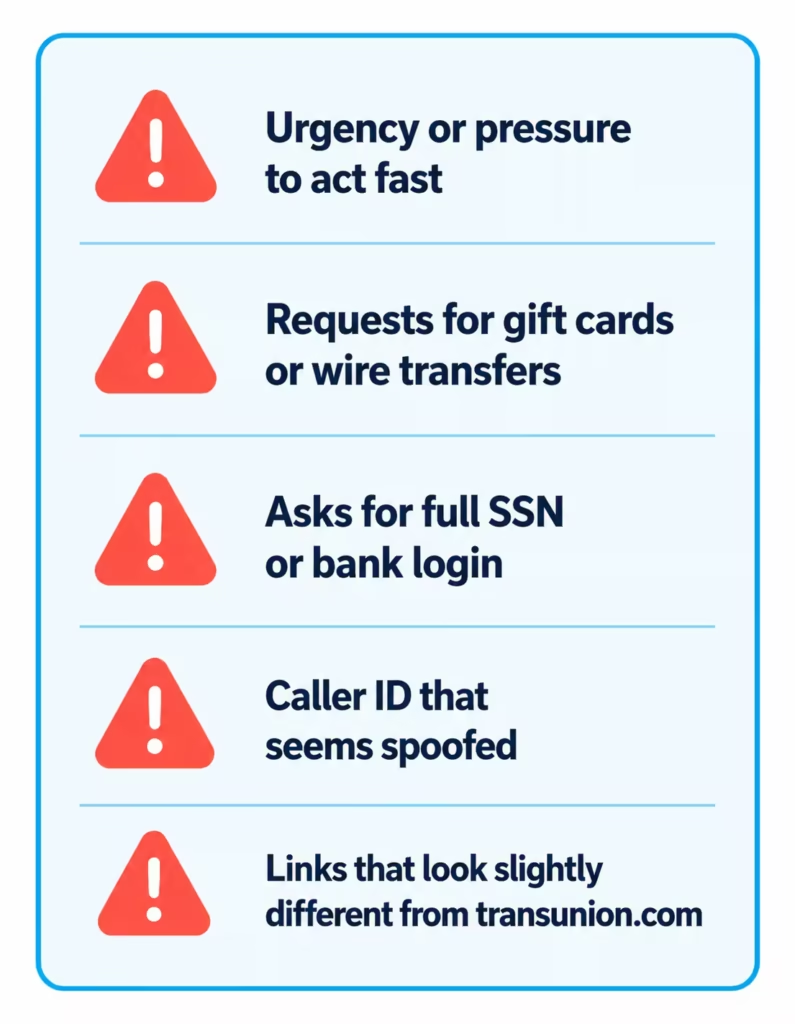
Real customer messages from TransUnion don’t push you or scare you. Fake ones do. Watch for these warning signs:
- Urgency. “Act in 24 hours or lose your refund.”
- Odd payment demands. Real companies never ask for gift cards, wire transfers, or crypto.
- Requests for full SSN or bank login. TransUnion already has your file. They won’t ask you to hand it over cold.
- Unknown phone numbers. A caller ID that reads “TransUnion” can still be spoofed.
- Strange links. URLs that look close to TransUnion.com but aren’t (like “transunion-refund.com”) are red flags.
To check if a contact is real, don’t click the link in the message. Type transunion.com into your browser yourself, log in, and see if the same alert or issue shows up in your account.
📌 Did You Know: The FTC received millions of fraud reports in recent years, and impostor scams remain one of the top categories. Using a well-known brand name is one of the most common tricks, according to the Federal Trade Commission.
TransUnion Interactive and Your Credit Report
Some people worry when they see “TransUnion Interactive” tied to their credit file. Here’s the calm version of the story.
TransUnion Interactive is not a lender. It doesn’t report tradelines like a credit card or car loan does. So it won’t show up as a debt or account on your credit report in the same way a bank would.
If the name appears in your account activity, it’s almost always tied to a product you use. Maybe you signed up for monitoring, pulled a report, or froze your file. That kind of activity relates to your consumer account, not to your credit history that lenders see.
If a tradeline on your report looks wrong, that’s a data issue you’d raise with Trans Union LLC, the reporting arm. Not with TransUnion Interactive.
Does Interacting With TransUnion Interactive Affect Your Credit Score?
No. Signing up for monitoring, buying a score, or checking your own credit score through TransUnion Interactive does not lower your score. These are called soft inquiries, and they don’t count against you.
Hard inquiries are different. Those happen when you apply for new credit, and only lenders can create them. Since TransUnion Interactive is not a lender, it can’t create a hard pull on you.
So checking your own score often through this platform is safe. It’s actually one of the healthiest habits you can build.
The Real TransUnion Interactive CFPB History (and What the “Refund” Talk Is About)
The refund story confuses a lot of readers, so let’s slow down and walk through the real timeline.
2017 CFPB consent order
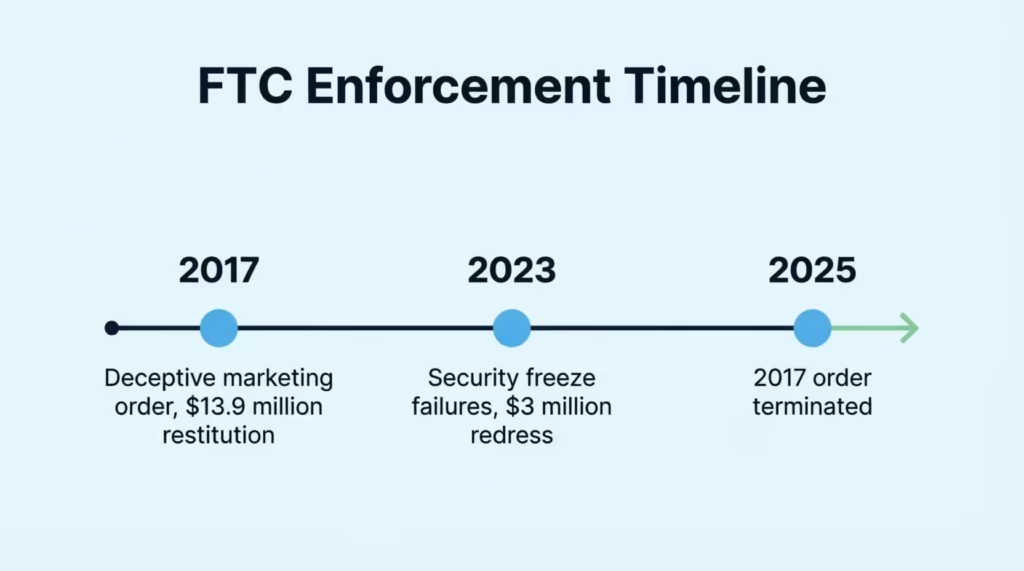
In January 2017, the Consumer Financial Protection Bureau took action against TransUnion Interactive and its parent. The CFPB consent order said the company had used deceptive marketing tactics for its credit scores and products. Under the order, TransUnion had to pay more than $13.9 million in restitution payments to affected consumers and a $3 million fine to the CFPB, as detailed on the CFPB enforcement action page.
2023 CFPB consent order
In October 2023, a second order was issued. This one focused on failures around security freezes and locks, plus tenant screening issues. The CFPB required TransUnion to pay $3 million in consumer redress and a $5 million civil penalty, as the CFPB explains here. A separate FTC settlement added more consumer redress and a civil penalty tied to tenant screening accuracy.
2025 termination
The 2017 order was terminated by the CFPB in November 2025 after TransUnion met its obligations. That means the older enforcement chapter is officially closed.
The important takeaway: both of these were specific, time-bound legal actions. They are not ongoing “refund programs” you can sign up for today. Anyone offering to “get you your TransUnion Interactive refund” now is almost certainly running a scam.
What the “TransUnion Interactive Credit Refund Check” Actually Refers To
Some readers got real refund checks years ago tied to the 2017 case. Those checks were part of the court-ordered restitution and were mailed to eligible consumers as part of that specific settlement.
If you got one in the mail back then and cashed it, you were made whole. If you’re seeing new messages today about a “pending refund” or a “final refund payout,” that is not a real ongoing program.
To confirm anything you receive, look up the case directly on the official CFPB enforcement page. Never call a number from an email or text. Never pay a “processing fee” to unlock a refund. Real government-ordered refunds never charge you to receive them.
How to Contact or Cancel a TransUnion Interactive Subscription
If you want out, canceling is simple. You have three clear paths.
Cancel through your online account.
- Go to TransUnion.com and log in.
- Click “Settings” in the main menu.
- Click “Membership Details.”
- Scroll to the bottom and pick the cancel option.
Cancel by phone. If you can’t log in, you can call. TransUnion’s technical login support line is 833-543-4353, open Monday through Friday, 8 a.m. to 9 p.m. Eastern Time. Always confirm the current number on the official support page before dialing, since numbers can update.
Contact your bank as a last step. If you can’t find the subscription in your account and can’t reach support, ask your bank or card issuer to dispute the charge as an unrecognized transaction. Do this only after the first two steps, since a bank dispute doesn’t stop the subscription itself.
Keep a screenshot of your cancellation confirmation. That’s your proof if a charge still hits after the cancel date.
Frequently Asked Questions (FAQs)
Why is TransUnion Interactive on my credit report?
TransUnion Interactive isn’t a lender, so it won’t appear as a debt or account on your report. Seeing the name usually means you signed up for monitoring, pulled a report, or froze your file through your consumer account.
How do I cancel my TransUnion Interactive subscription?
Log into TransUnion.com, go to Settings, then Membership Details, and select the cancel option at the bottom. If you can’t log in, call the support line at 833-543-4353, Monday through Friday, 8 a.m. to 9 p.m. Eastern.
What is TransUnion Interactive Inc.?
TransUnion Interactive, Inc. is the registered legal entity behind TransUnion’s consumer products, separate from the parent brand and from Trans Union LLC. It’s the “Inc.” name banks show on statements when you buy a credit score, report, or monitoring plan.
Do TransUnion Interactive inquiries hurt your credit score?
No. Checking your own score or signing up for monitoring counts as a soft inquiry, which never lowers your score. Only hard inquiries from lenders applying for new credit on your behalf can affect your score.
Why is TransUnion being sued?
TransUnion faced a 2017 CFPB order over deceptive marketing of credit scores, requiring $13.9 million in restitution and a $3 million fine. A 2023 order followed over failures to honor security freezes and locks, adding $3 million in consumer redress and a $5 million penalty.
Is TransUnion Interactive a monthly subscription?
It can be. The free plan, Credit Essentials, has no charge, while the paid plan, Credit Premium, typically bills around $24.95 a month for added monitoring and identity protection features.
Is it safe to give your SSN to TransUnion?
Yes, when you’re on TransUnion.com directly, since the company already needs identifying details to verify your credit file. It’s never safe to give your SSN to a caller or emailer claiming to represent TransUnion, since real refunds and support never require that upfront.
Is the TransUnion Interactive refund text or email I received real?
Almost certainly not. The real restitution checks were mailed years ago under the 2017 CFPB settlement, and there’s no ongoing refund program today, so any message demanding a fee or personal details to “unlock” a refund is a scam.
What does TransUnion Interactive mean?
It’s the consumer-facing subsidiary of TransUnion that sells credit reports, scores, and monitoring directly to individuals rather than to lenders. The name shows up on your statement or account because it’s the legal entity behind those products.
Wrapping Up
We covered what TransUnion Interactive is, how it differs from Trans Union LLC and the parent brand, why it shows up on your statement, what it sells, whether it’s legit, how it touches your credit, the real CFPB refund story, and how to cancel a plan.
Based on the evidence in this guide, the most effective approach for anyone confused by the name is to log into TransUnion.com first, confirm what’s active, and cancel from there before doing anything else. That single step solves most billing worries fast.
If you know someone stressing over a mystery charge or a “refund” email, share this guide. It could save them from a scam or a wasted phone call.