
I know how stressful it feels when a strange name like RentGrow pops up on your rental application or credit report. You want to check the same file the landlord will see, but you can’t do that until you know which credit bureau RentGrow uses and how the whole screening puzzle fits together.
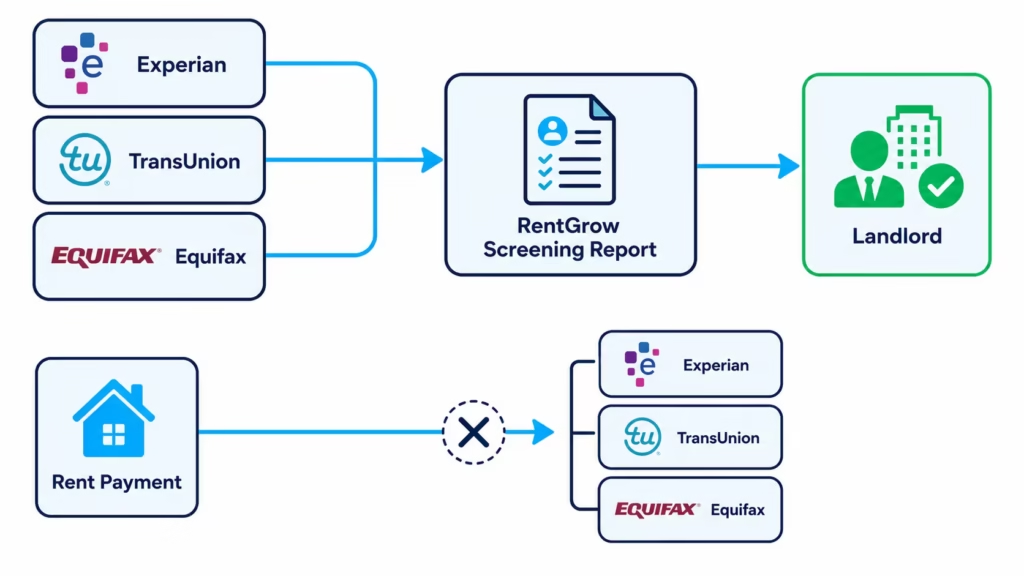
The short answer: RentGrow is a tenant screening company that pulls data from Experian, TransUnion, and Equifax, depending on what the property requests.
Below, we’ll walk you through every step, from spotting a RentGrow inquiry to disputing an error or fighting back after a denial. Keep reading for the full picture.
Key Takeaways
This guide explains which credit bureau RentGrow pulls data from, including how tenant screening reports differ from credit bureau files, how to request a free report, dispute errors, and respond to a denial.
Core Facts:
- RentGrow is a tenant screening company and consumer reporting agency, not a credit bureau itself, and is a wholly owned subsidiary of Yardi Systems, Inc.
- RentGrow can pull data from Experian, TransUnion, or Equifax, plus Experian RentBureau and The Work Number, depending on what the property manager requests.
- RentGrow does not report rent payments back to the credit bureaus on its own; separate rent-reporting services handle that function instead.
- A RentGrow hard inquiry can cause a small, temporary score dip, while a soft pull causes no score impact at all.
- Renters can request a free copy of their RentGrow report, which is guaranteed free within 60 days of an adverse action notice.
- RentGrow disputes are typically resolved within 30 days, though some cases take up to 45 days under the FCRA.
Best for:
- Renters currently applying for an apartment who want to know which credit report to check before a landlord runs a RentGrow screening.
- Applicants who were denied housing based on a RentGrow report and need to request their file and dispute errors.
- Renters who saw an unfamiliar RentGrow inquiry on their credit report and want to confirm whether it affects their score.
Is RentGrow a Credit Bureau, or Something Else?
RentGrow is not a credit bureau. It’s a tenant screening service, also called a consumer reporting agency (CRA). Credit bureaus like Experian, Equifax, and TransUnion collect and store your credit history. A tenant screening report, on the other hand, blends credit data with other rental-related records to help a landlord make a housing decision.
So when RentGrow shows up on a rental form or an adverse action letter, it’s acting as the middleman. It gathers info from many sources, packages it into one report, and sends it to the property manager.
What RentGrow Does and Who Owns It
RentGrow, Inc. is a wholly owned subsidiary of Yardi Systems, Inc., a large property management software company. Property owners who use Yardi software often rely on RentGrow to screen renters.
That’s why you may see the name RentGrow even if the landlord only ever mentioned “Yardi” during your application. Consumer Financial Protection Bureau lists RentGrow as a nationwide specialty consumer reporting company that provides resident screening services.
The company is based in Massachusetts and can be reached at 1-800-898-1351. You can visit their site at rentgrow.com.
RentGrow vs. Other Tenant Screening Companies
You may have heard of TransUnion SmartMove, Experian RentBureau, or CoreLogic Rental Property Solutions. These all do a similar job, but they don’t share data with each other.
RentGrow is unique because it’s plugged into Yardi’s property management platform. If a landlord uses Yardi software, they likely use RentGrow, too. Other landlords may use different screeners, so the report you got on one apartment may look nothing like the one from another.
Which Credit Bureau(s) Does RentGrow Actually Pull Data From?
Here’s the direct answer many renters miss: RentGrow doesn’t rely on just one credit bureau. RentGrow tenant screening reports may pull consumer information from Experian, Experian RentBureau (for rental payment history), TransUnion, and Equifax, plus other databases like The Work Number for employment and income checks. This is confirmed by Francis Mailman Soumilas, P.C., a consumer law firm that handles FCRA cases against tenant screening companies.
Which bureau feeds your specific report depends on what the property manager requests. Some landlords want a full credit file with a FICO or VantageScore. Others just want a soft check plus rental history. Because of that, two applicants at two different buildings could both be “screened by RentGrow” and yet have completely different bureaus behind their reports.
The best way to know for sure is to look at the report itself. RentGrow will list the credit bureau it used inside your tenant screening report. If you don’t have a copy yet, you can request one directly from RentGrow (more on that soon).
💡 Pro Tip: Before applying, ask the leasing agent point-blank which credit bureau their RentGrow setup pulls from. Front-desk staff often know the answer, and it saves you from checking the wrong report.
Does RentGrow Report Your Rent Payments Back to the Credit Bureaus?
This is where a lot of renters get confused. RentGrow pulls data from the credit bureaus so landlords can screen you. It does not send your monthly rent checks back to Experian, Equifax, or TransUnion. In other words, paying rent on time through a building screened by RentGrow won’t automatically boost your credit score.
Rent-payment reporting is a separate service. Products like Experian RentBureau, Rental Kharma, or Boom collect payment data from participating landlords or from your bank account and then furnish that info to a credit bureau. RentGrow, by itself, is a screening tool. Its main job is to read your data, not write to your credit file.
Can On-Time Rent Payments Help Your Credit Through RentGrow?
Not directly. If your landlord uses Yardi software plus a rent-reporting add-on that feeds Experian RentBureau, then your on-time payments could show up on your Experian file.
But that’s a landlord choice, not a RentGrow default. Ask your property manager if they use a rent-reporting feature. If they don’t, and you want your rent to help your score, sign up for a stand-alone service that reports to one or more of the three major bureaus.
Does a RentGrow Credit Check Hurt Your Credit Score?
A RentGrow credit check may cause a small, short-lived dip in your credit score, but only if it’s a hard inquiry. Most hard pulls take a few points off and fade after a few months. They usually drop off your report entirely after two years.
If RentGrow only ran a soft pull, there’s no score impact at all. Soft pulls are visible to you but not to future lenders scoring your credit.
To spot a RentGrow inquiry on your credit report, look under the “inquiries” section for entries like “RentGrow,” “RentGrow Inc.,” or “Yardi Resident Screening.” If you see one and you didn’t apply for an apartment, submit a dispute right away. According to RentGrow, the inquiry is likely valid if you applied for a rental, co-signed for someone, or were rescreened at lease renewal.
⚠️ Mistake to Avoid: Don’t panic and dispute every rental-related inquiry. If you or a family member applied for an apartment recently, the inquiry is probably legit and disputing valid activity can slow you down.
Hard Pull vs. Soft Pull, What RentGrow Uses
A hard pull, sometimes called a hard inquiry, means a lender or landlord asked to see your full credit file with your permission. Hard pulls can shave a few points off your score. A soft pull is a lighter check that doesn’t affect your score at all. It might show up when you check your own credit, get a pre-approved offer, or in some tenant screening setups.
RentGrow can perform either type, and the choice depends on what the property requests through its Yardi configuration. Bigger apartment communities that need a formal credit decision often ask for a hard pull. Smaller landlords or roommate-matching setups may only need a soft pull.
If you’re worried about score damage, ask the leasing office ahead of time whether their application triggers a hard or soft inquiry. Getting the answer in writing (email works) gives you proof if the wrong pull type shows up later.
What’s Included in a RentGrow Tenant Screening Report
A landlord’s RentGrow report can bundle several kinds of data. The exact mix depends on what the property manager orders. Typical items include:

| Report Section | What’s Inside |
|---|---|
| Credit history | Accounts, balances, payment history, sometimes a credit score |
| Eviction records | Filings and judgments from national eviction databases |
| Criminal history | County, state, and national background check hits |
| Rental history | Prior addresses and, if enrolled, payment data via Experian RentBureau |
| Employment and income | Verifications through The Work Number and similar services |
| Identity verification | Social Security number checks and address history |
Because landlords pick and choose the pieces they want, no two RentGrow reports look identical. That’s why reading your own copy is so important. It’s the only way to know exactly what the landlord saw.
How to Get and Check Your Own RentGrow Report
Under the Fair Credit Reporting Act (FCRA), you have the right to a free copy of your tenant screening report. RentGrow makes this easy. To get your report:
- Go to the RentGrow Tenant Screening Report Request page.
- Fill out the form. Every field marked with an asterisk is required.
- Upload a clear photo or scan of your government-issued ID, such as a driver’s license or state ID card.
- Click Submit.
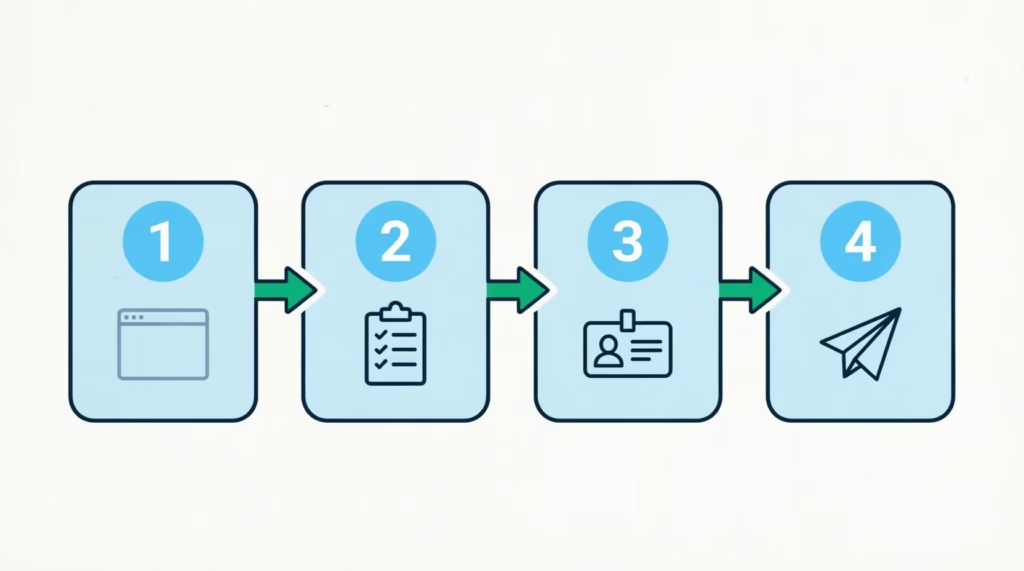
If you’d rather speak with someone, call RentGrow Consumer Relations at 1-800-898-1351 Monday through Friday, 9:00 a.m. to 8:30 p.m. ET. You can also email information@rentgrow.com.
Try to request your report within 60 days of any adverse action letter. That window guarantees a free copy under federal law. Even outside that window, you can still ask, and RentGrow generally still provides a free copy if it has a file on you.
How to Dispute an Error on Your RentGrow Report
If something on your RentGrow report is wrong, you can push back. Follow these steps:
- Read your full report and mark every item you believe is inaccurate. Note the account number, court case number, or date tied to each error.
- Visit the RentGrow Applicant Dispute Form.
- Fill in the form carefully. List each disputed item and the reason it’s wrong.
- Gather supporting documents. Common examples include an expungement order for an old criminal case, a paid-in-full letter for a collection, or a court order sealing a record.
- Upload a clear copy of your government-issued ID.
- Submit the form.
Once RentGrow gets your dispute, it must investigate. Under the FCRA, most disputes are wrapped up within 30 days, though certain cases can take up to 45. RentGrow reaches out to the data furnisher, such as a court, a former landlord, or a collection agency, and asks them to check the record. You’ll get a written result when the review ends. If RentGrow updates your file, you’re entitled to a corrected report.
If your dispute involves an inquiry that shouldn’t be there, RentGrow can also submit an inquiry dispute to the appropriate credit bureau on your behalf.
Which Bureau Should You Check Before Applying With RentGrow Involved?
Since RentGrow can pull from Experian, TransUnion, or Equifax, check all three before you apply. That’s the safest way to spot problems ahead of time. Grab your free reports at AnnualCreditReport.com, the only site authorized by federal law for free reports from all three bureaus.
While you’re checking, review these rental-specific items:
- Old collections, especially medical or utility collections that lower your score
- Any past eviction or landlord-tenant judgment
- Public records like bankruptcies or civil judgments
- Old addresses that could confuse identity matching
- Hard inquiries that don’t belong to you
If you see anything wrong, dispute it with the bureau reporting it, before you sign a rental application. Cleaning up your file first reduces the chance a landlord sees a red flag that isn’t really yours.
📌 Did You Know: A rental application can trigger multiple hard pulls if you apply at several buildings in a short window. Try to keep your apartment shopping to a two-week window, since FICO and VantageScore models often treat similar inquiries in that period as a single event.
RentGrow Accuracy Concerns and What They Mean for You
Tenant screening reports aren’t perfect, and RentGrow has faced its share of scrutiny. Consumer lawsuits and enforcement history point to a recurring accuracy problem: mixed files. That’s when data belonging to another person, someone with a similar name or Social Security number, ends up on your report.
Public court filings from Francis Mailman Soumilas, P.C. show cases where RentGrow reports listed a felony belonging to someone else, an expunged criminal record, or a civil judgment tied to a different person. In each case, applicants lost the apartment or had to fight to rent one.
What this means for you: don’t assume the report is right just because it looks official. Pull your copy, review every line, and dispute anything that doesn’t fit. The FCRA gives you strong tools to force a correction, and in serious cases, to sue for damages.
What to Do If You Were Denied Housing Because of a RentGrow Report
If you were turned down, follow this ordered plan:
- Read the adverse action notice. The landlord must give you one in writing, orally, or electronically. It will list RentGrow’s name, address, and phone number and tell you about your right to a free report. This is required by the Fair Credit Reporting Act.
- Request your RentGrow report within 60 days of that notice so it stays free.
- Compare the report line by line with what you know is true. Check names, addresses, court records, and any credit accounts.
- Ask the landlord which specific item caused the denial. Sometimes they can share which line triggered it.
- File a dispute with RentGrow for any error. Use the online Applicant Dispute Form.
- Ask RentGrow to send the corrected report to the landlord if a fix is made. Some landlords will reopen your application.
- If the error was serious and cost you the apartment, talk to a consumer protection attorney. Many take FCRA cases on contingency, meaning you pay nothing up front.
- File a complaint with the CFPB at consumerfinance.gov/complaint if you feel RentGrow or the furnisher isn’t playing fair.
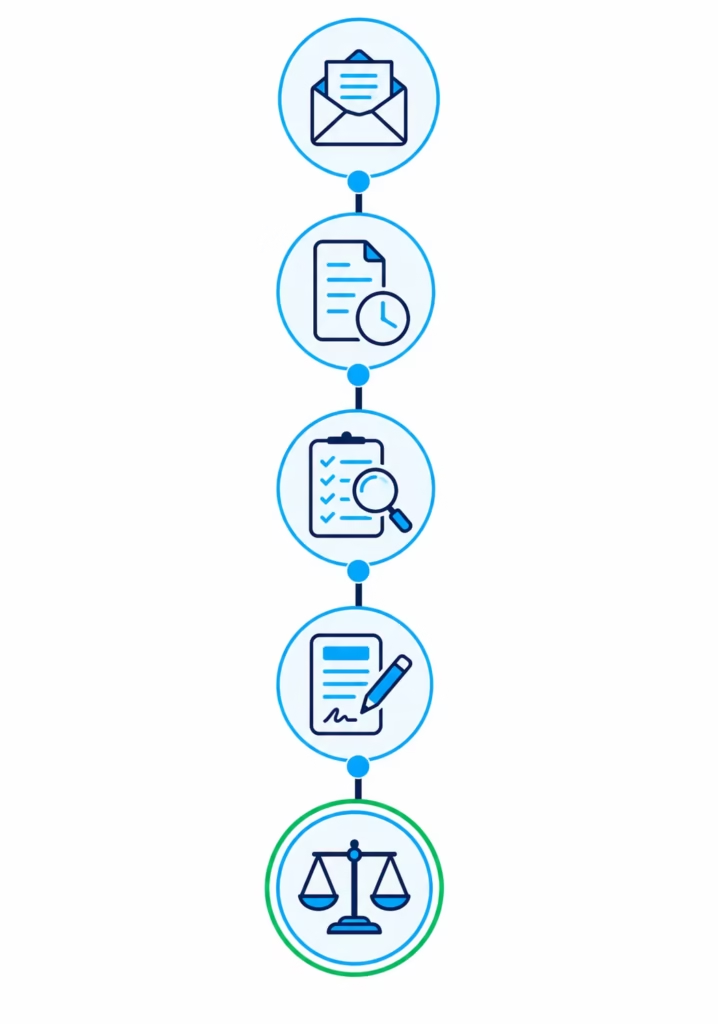
Acting fast matters. The 60-day free-report window is your strongest tool, and the faster you dispute, the sooner a corrected file can go back to the landlord.
Frequently Asked Questions
What credit bureau does RentGrow use?
RentGrow does not rely on a single bureau. It pulls data from Experian, TransUnion, and Equifax depending on what the property manager requests, so the bureau behind your report varies by building.
Does RentGrow affect your credit score?
Only if it’s a hard inquiry, which can cause a small dip of a few points that fades within months. Soft pulls, which some landlords use instead, have no impact on your score at all.
Who owns RentGrow?
RentGrow, Inc. is a wholly owned subsidiary of Yardi Systems, Inc., a major property management software company. Landlords who use Yardi software often use RentGrow to screen applicants.
Is RentGrow accurate?
Not always. Consumer lawsuits and enforcement history point to recurring mixed-file problems, where another person’s criminal record or judgment ends up on your report by mistake.
Can I be denied an apartment because of bad credit?
Yes, credit history is one of several factors in a RentGrow report that can influence a landlord’s decision. If you’re denied, federal law entitles you to a written adverse action notice and a free copy of your report.
How long does a RentGrow dispute take to process?
RentGrow must investigate most disputes within 30 days, though some cases take up to 45 days under the FCRA. You’ll receive a written result once the review is complete.
What alternatives are there to RentGrow?
Similar tenant screening services include TransUnion SmartMove, Experian RentBureau, and CoreLogic Rental Property Solutions. These companies don’t share data, so reports can differ between buildings.
What does RentGrow check for?
A RentGrow report can include credit history, eviction records, criminal background checks, rental history, employment and income verification, and identity checks. Landlords choose which pieces to include, so no two reports look identical.
Is a RentGrow credit check a hard pull or soft pull?
It can be either, depending on what the property requests. Look under the inquiries section of your credit report for entries like “RentGrow” or “Yardi Resident Screening” to see which type hit your file.
How do I get a free copy of my RentGrow report?
You can request one through RentGrow’s Tenant Screening Report Request page or by calling 1-800-898-1351. Requesting within 60 days of an adverse action notice guarantees the report is free.
Wrapping Up
Renting an apartment shouldn’t feel like flying blind. Once you know that RentGrow is a Yardi-owned tenant screening company that draws credit data from Experian, TransUnion, or Equifax, everything else falls into place. You’ve now seen how to check your file, dispute errors, protect your credit score, and push back after a denial.
Based on how varied RentGrow’s data sources are, the most effective approach is to pull all three bureau reports before applying and request your RentGrow file the moment anything feels off.
If you know someone gearing up for an apartment hunt, share this guide; it could save them from a surprise denial.