
You just checked your credit report and saw the words “collection account.” Your stomach dropped. Maybe you didn’t even recognize the name of the company listed, or you thought you paid off that old bill years ago. This kind of surprise is stressful, and understanding a collection account on your credit report is the first step to fixing it.
A collection account is a record showing an unpaid debt that was handed over to a debt collector after months of missed payments.
Below, we’ll walk you through what triggered this listing, how much it hurts your score, and the exact steps you can take right now to protect your credit.
Key Takeaways
This guide explains what a collection account is, how it forms after 120 to 180 days of missed payments, how long it stays on your report, and whether paying it off actually helps your score.
Core Facts:
- A collection account appears after a bill goes unpaid for roughly 120 to 180 days and the original creditor sends or sells the debt to a collector.
- Collection accounts stay on your credit report for 7 years from the date of first delinquency on the original bill, not from when the collector took over.
- FICO Score 8 counts paid third-party collections as negative marks, while FICO Score 9, FICO Score 10, and VantageScore 3.0 and 4.0 ignore paid collections entirely.
- Third-party collectors are covered by the Fair Debt Collection Practices Act, which requires a debt validation letter within 5 days of first contact and gives you 30 days to dispute in writing.
- Paid medical collections are removed from credit reports, medical debts under $500 are not reported, and new medical debts get a 365-day grace period under current bureau policy.
- Making a payment on an old debt can restart a state’s statute of limitations clock, which is separate from the 7-year credit reporting timeline.
Best for:
- Readers who just noticed an unfamiliar collection account on their credit report and want to understand what happened.
- Anyone deciding whether paying off a collection is worth it based on which credit scoring model their lender uses.
- People who don’t recognize a listed debt and need steps to validate, dispute, or report it as identity theft.
What Is a Collection Account?
A collection account is a line item on your credit report that shows a bill you didn’t pay for a long time, usually 120 to 180 days. When the original company stopped trying to collect the money, they either sent it to their recovery team or sold it to an outside collector. That handoff is what creates the new entry.
The company that first lent you money or sent you a bill is called the original creditor. When they can’t get paid, they mark the account as a delinquent account and take action. Sometimes an in-house department keeps trying to reach you. Other times, a third-party agency or debt buyer takes over. Either way, the account gets flagged as being “in collections.”
Here’s something many people don’t realize. Bills you’d never expect to show up on your credit report can end up there once they go unpaid. A missed gym fee, an old cable bill, or a small hospital charge can turn into a collection account if the company sends it to a debt collector.
Common Types of Debt That End Up in Collections
Not every unpaid bill turns into a collection. But some types of debt are much more likely to end up on your credit report than others. The most common ones include:
- Credit card debt: This is by far the biggest source of collections. Banks charge off unpaid balances quickly.
- Medical bills: Hospital visits, lab work, and specialist fees often go to collections after a few months of nonpayment.
- Utility bills: Old electric, gas, or water accounts can end up with a collector after you move.
- Private student loans: Federal loans have different rules, but private lenders send accounts to collections fast.
- Gym or cell phone contracts: Early cancellation fees and unpaid monthly bills often show up here.
How a Missed Payment Becomes a Collection Account
The path from a missed bill to a full collection listing isn’t instant. It follows a fairly clear timeline, and knowing the day counts helps you see where you stand.
When you miss your first payment, the clock starts. Most lenders wait 30 days before reporting the missed payment to the credit bureaus. From there, the account keeps aging. At 60 days late, then 90, then 120, the damage builds. Around the 180-day mark, most credit card issuers and lenders will “charge off” the account.
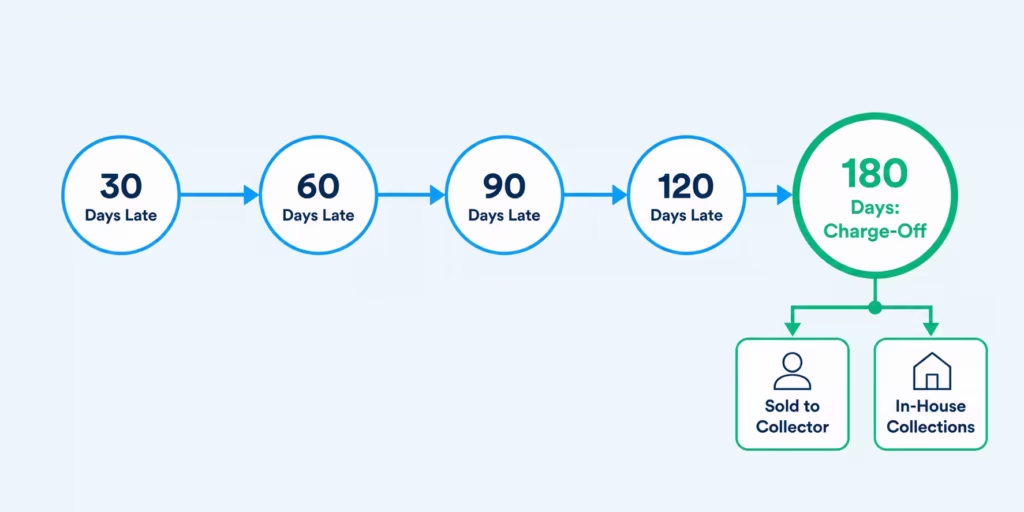
A charge-off means the lender has given up on getting paid and has written the debt off as a loss for tax purposes. But this doesn’t mean you no longer owe the money. Far from it. The charge-off just changes how the lender treats the debt on their books.
Right after that, one of two things usually happens. The lender either hands the account to its own in-house collection team, or sells the debt to a debt collector for pennies on the dollar.
Once the account is sold or referred, a brand new entry can appear on your credit report. This is the actual collection account. The original charged-off account stays on your report too, which is why so many people think they’re being punished twice. We’ll clear that up in a moment.
Who Reports the Collection to the Credit Bureaus
Both the original creditor and the new collector can report to the credit bureaus. The original lender usually updates the account status to “charged-off.” Then the collection agency adds its own separate entry showing the debt is now with them.
These entries can appear on all three major bureaus: Experian, Equifax, and TransUnion. Not every collector reports to all three, though. Some only report to one or two. The collector’s name, phone number, and contact info will show up on the entry so you know exactly who now holds the debt.
First-Party vs. Third-Party Collections
Not all collectors are the same. The type of collector matters because it changes your legal protections and, in some cases, how the debt affects your score.
A first-party collection happens when the original company keeps the debt in-house and tries to collect it themselves. For example, a credit card company might have its own recovery department that calls you when you’re behind. Since it’s still the original creditor, some federal collection laws don’t apply the same way.
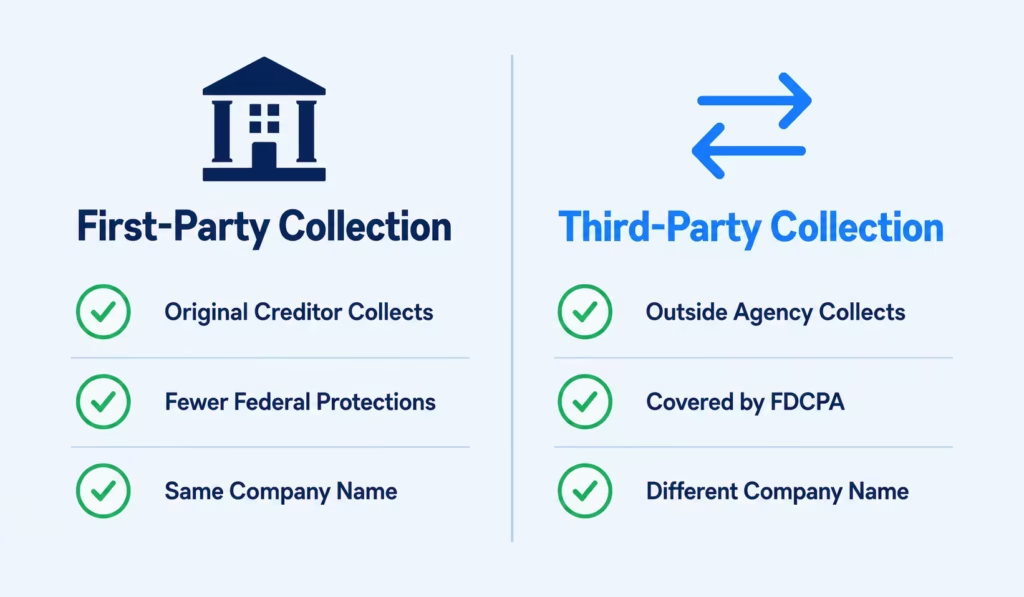
A third-party collection is different. This is when an outside agency or a debt buyer takes over the debt. Third-party collectors are fully covered by the Fair Debt Collection Practices Act (FDCPA), which is a federal law that limits what collectors can do. They can’t call you at all hours, threaten you, or lie about the debt. If they break the rules, you have the right to sue.
To find out which type you’re dealing with, look at the name on the collection entry. If it matches the original lender, it’s a first-party collection. If it’s a totally different company, like Portfolio Recovery Associates or Midland Credit Management, it’s a third-party collection.
⚠️ Mistake to Avoid: Ignoring a third-party collector because you don’t recognize the name. Many people assume it’s a scam and toss the letter. But debt buyers often have real, legally purchased debts. Ignoring them can lead to lawsuits.
What Information Appears in a Collection Account Entry
When you open your credit report and look at a collection listing, it can feel like reading a foreign language. Once you know what each piece means, though, it becomes much easier to spot mistakes.
Every collection entry should include a few key details:
- The original creditor’s name: The company you first owed money to.
- The collection agency’s name: Who currently holds or is trying to collect the debt.
- The amount owed: This may be higher than the original bill because of interest and fees.
- Date of first delinquency: The date you first fell behind on the original account. This date is the most important one because it controls how long the entry stays on your report.
- Account status: Common wording includes “In Collections,” “Paid Collection,” “Open,” or “Closed.”
Check every field carefully. Errors here are common and can hurt your credit for years if you don’t catch them. If any detail looks wrong, you have the right to dispute it directly with the bureau.
Why You Might See Two Separate Listings for One Debt
This part confuses almost everyone. You might look at your report and see the same debt listed twice. Once as “charged-off” from the original lender, and again as “in collections” from a different company. It feels like double punishment, but it’s actually normal.
Here’s why. When the original creditor gives up on the debt, they mark their account as closed or charged-off. That entry stays on your report. When the debt gets sold or referred to a collector, that collector opens a brand new account under their own name. Both entries reference the same debt, but they’re treated as two separate items.
Only one of them is actively hurting you in most cases. Modern scoring models are smart enough to recognize the connection. Still, having two negative entries tied to the same debt can look worse to a human loan officer who’s reviewing your file by hand.
How Much a Collection Account Hurts Your Credit Score
This is the question that brought most people here. How bad is this really? The honest answer is that a collection account can cause serious damage, but the exact impact depends on your starting point.
If you had a strong score, say around 750, a new collection can drop your score much more than if you started at 600. That’s because scoring models see a fresh collection on a clean file as a major red flag. On a file that already has other negative marks, a new collection adds less pain because the damage was already done.
Age matters, too. A collection that just hit your report will hurt more than one that’s four years old. As time passes, its impact fades even before it falls off completely. That’s why lenders often look more at recent activity than at older items.
One more thing to know. Collection accounts don’t count toward your credit utilization ratio the way credit card balances do. Utilization measures how much of your credit limit you’re using, and collections aren’t revolving credit. So paying off a collection won’t lower your utilization percentage, but it also means the debt itself isn’t dragging your utilization number down.
Does the Impact Differ by Scoring Model?
Yes, and this is where things get interesting. The scoring model your lender uses can completely change whether a paid collection helps or hurts you. Not all scores treat collections the same way, which is why paying one off might boost your credit with one lender but do nothing with another.
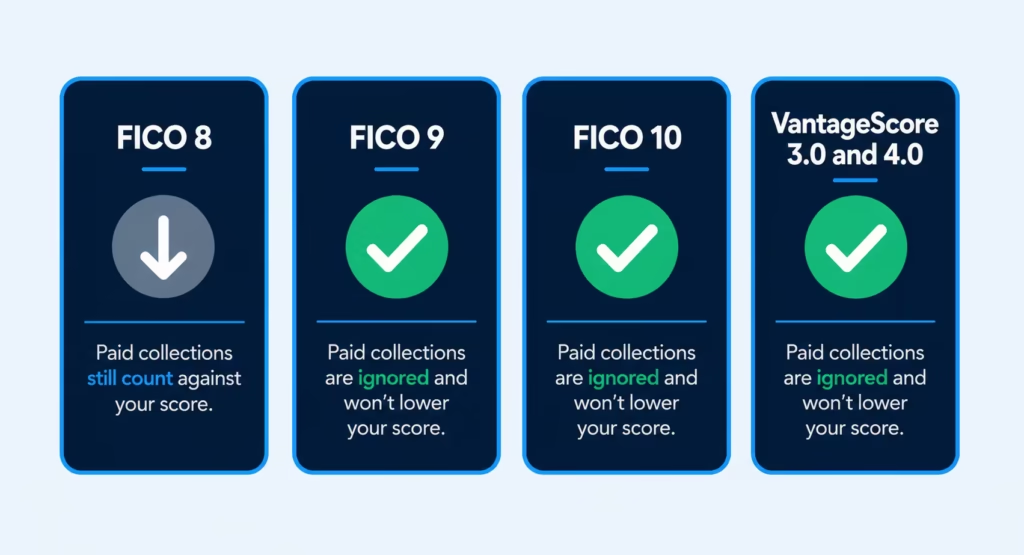
FICO Score 8 is still the most common model used by lenders today. It counts paid third-party collections as negative marks. So even if you pay it, the entry keeps hurting your score until it falls off. FICO 8 does ignore collections where the original balance was under $100, which is a small win.
FICO Score 9 and FICO Score 10 are newer models. They ignore paid collections completely. Unpaid medical collections also carry less weight than other unpaid debts. If your lender uses FICO 9 or 10, paying off a collection can genuinely help your score.
VantageScore 3.0 and 4.0 both ignore all paid collections, no matter the type. VantageScore 4.0 also treats medical collections more gently than other kinds. FICO Scores 9 and 10 ignore paid collection accounts and place less importance on unpaid medical collections.
Mortgage lenders often still use older FICO models (2, 4, or 5), which are less forgiving. Auto lenders and credit card issuers tend to use FICO 8 or FICO Auto Score. Knowing which model your future lender will pull matters when you’re deciding whether to pay a collection.
Also worth noting: third-party collection balances generally don’t count toward your utilization ratio. First-party collections might, depending on how the original creditor reports the account.
How Long a Collection Account Stays on Your Credit Report
The good news is that no collection lasts forever. The federal Fair Credit Reporting Act (FCRA) sets a strict limit. A collection account can stay on your credit report for seven years from the date of first delinquency. After that, the credit bureaus must remove it.
The key word is “delinquency,” not the date the collector picked up the account. The clock starts on the day you first missed the payment on the original bill. If you stopped paying a credit card in March 2020 and it went to collections a year later, it will fall off your report seven years from March 2020. This timing doesn’t change when the collector took over.
This matters because collectors sometimes try to “re-age” old debts by reporting them with a newer date. That’s illegal under the FCRA. If you spot this on your report, you can dispute it and force the bureau to correct it.
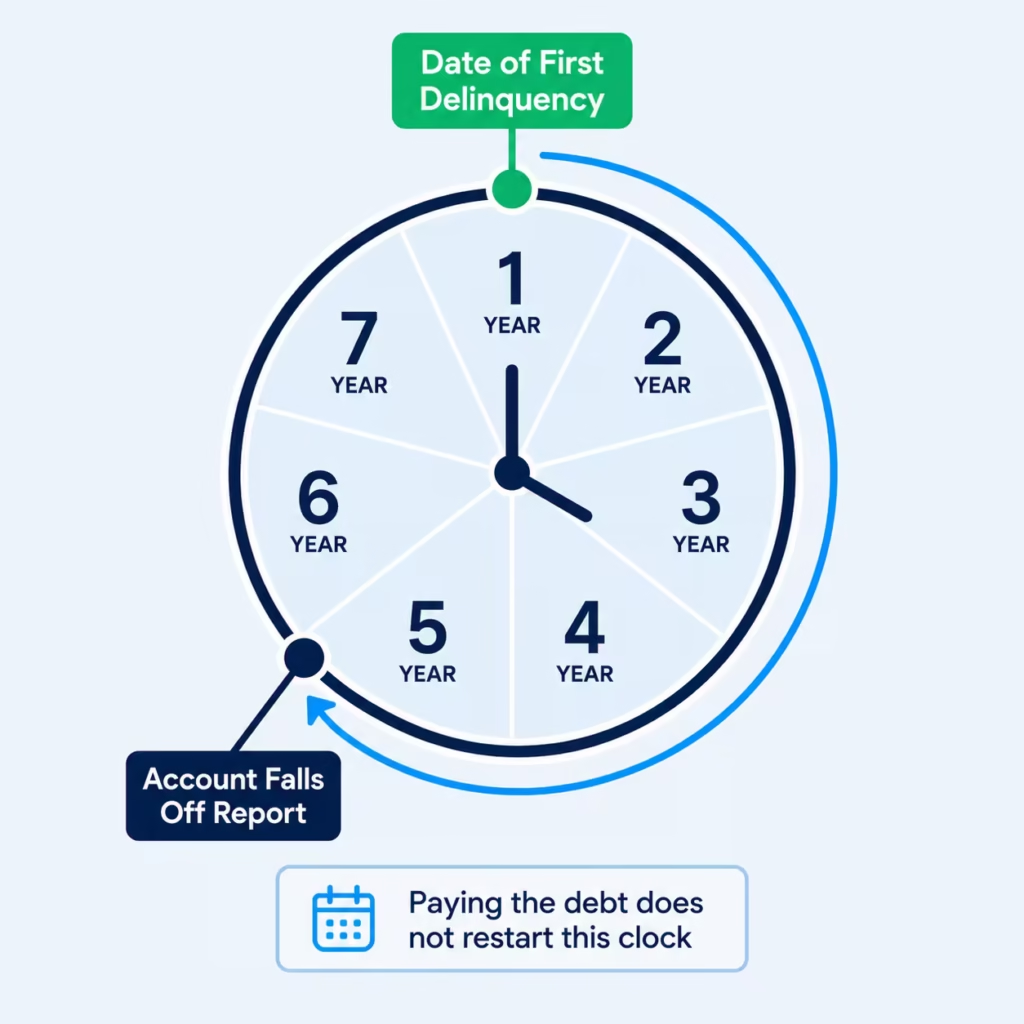
Paying the debt does not restart or reset this seven-year clock. Some people believe paying makes the entry disappear right away, but that’s a myth. Payment changes the status to “paid,” but the account still sits on your report until the seven years are up.
📌 Did You Know: The seven-year rule is federal law, not a policy. Even if a collector promises to remove a paid debt sooner, they can’t legally extend the reporting period past seven years from the original delinquency date.
Does Paying Off a Collection Account Help Your Score?
This is the moment of truth for many readers. Should you pay it or not? The straight answer is: it depends on which scoring model your future lender will use and how old the debt is.
If lenders in your future use FICO 9, FICO 10, or VantageScore, paying a collection can help because those models ignore paid collections. If they use FICO 8 or older mortgage-focused models, paying won’t move your score much, if at all. The paid collection still counts against you until it drops off.
That said, paying can still make sense even when it doesn’t help your score. It stops collectors from calling. It removes the risk of being sued for the debt. It can also help with manual underwriting, where a human loan officer reviews your file and looks favorably on cleared debts. For mortgages especially, lenders often require collections to be paid before closing.
Before paying, ask for the offer in writing. Try to negotiate. Many collectors will settle for less than the full amount, especially on older debts. Get any deal in writing before sending money.
💡 Pro Tip: If you’re planning to apply for a mortgage in the next 12 months, talk to the lender first before paying old collections. Some mortgage programs require paid collections; others don’t care. Paying without a plan can waste money.
Paid vs. Unpaid Collection Status
When you pay a collection, the entry doesn’t vanish. It just changes status. The listing will now say paid collection instead of unpaid collection. Your report still shows the same account, the same dates, and the same history. Only the status label updates.
Some people try to negotiate a “pay for delete” deal. This is when you offer to pay the collector in exchange for them removing the entry entirely from your credit report. Some smaller collectors will agree. The big ones usually won’t, since their agreements with the credit bureaus discourage it.
If a collector agrees to pay for delete, get it in writing before you send any money. A verbal promise is worth nothing here. Send the payment only after you have the deletion agreement signed and dated.
Be Careful With Old Debt: Statute of Limitations
Here’s a trap many people fall into. Every state has a statute of limitations on debt, which is the time period during which a collector can legally sue you to collect. Depending on your state, this ranges from 3 to 10 years. After that, the debt is “time-barred” and can’t be enforced in court.
The danger is that making a payment, or even acknowledging that you owe the debt, can restart this legal clock in some states. Suddenly a debt that was too old to sue over becomes fully enforceable again. This is completely separate from the seven-year credit reporting clock.
Before paying any old debt, check the statute of limitations for your state. If the debt is close to that limit or past it, talk to a consumer protection attorney or a nonprofit credit counselor first. Sometimes the smart move is to wait it out rather than restart the clock.
Medical Debt Collections: What’s Different in 2026
Medical debt has its own set of rules, and things changed a lot recently. If you saw news headlines saying medical debt was banned from credit reports, that’s not the full story anymore.
In January 2025, the CFPB finalized a rule that would have removed all medical debt from credit reports. But in July 2025, a federal judge in Texas vacated that rule, meaning it’s no longer in effect.
According to reporting from the Consumer Financial Protection Bureau and coverage by Berkeley Law’s Consumer Law Center, the court ruled that the CFPB overstepped its authority. So there is no federal ban on medical debt appearing in credit reports right now.
That said, the three major credit bureaus have voluntary policies in place. These policies were adopted in 2022 and 2023 and still stand today:
- Paid medical collections are removed from credit reports.
- Medical collections under $500 are not reported at all.
- New medical debts get a 365-day grace period before they can appear on your credit report, giving you time to work with your insurance or the hospital.
So while the federal rule was struck down, most small and paid medical debts still won’t show up. If you owe more than $500 on an unpaid medical bill for more than a year, it can still hit your credit report.
Several states also have their own protections. States like Colorado, New York, and California have passed laws limiting how medical debt can be reported or collected within their borders. Check your state’s rules if you’re dealing with a medical collection.
Your Rights When a Debt Goes to Collections
When a debt goes to a third-party collector, you have real legal protections. The Fair Debt Collection Practices Act (FDCPA) sets clear rules for how collectors can behave and gives you tools to fight back if they cross the line.
Within 5 days of first contacting you, a collector must send you a debt validation letter. This letter has to include the amount of the debt, the name of the original creditor, and a notice of your right to dispute it. If they don’t send this letter, they’re already breaking federal law.
From the day you get that letter, you have a 30-day window to dispute the debt in writing. Send your dispute by certified mail with a return receipt. Once you dispute it, the collector must stop all collection activity until they send you proof that the debt is real and belongs to you. This proof might include the original signed contract or account statements.
If the collector can’t validate the debt, they legally have to stop collecting and, in most cases, remove the entry from your credit report. Many collectors don’t bother validating older debts because the paperwork is long gone. This alone can wipe a wrongly reported collection from your file.
Collectors also can’t call you before 8 a.m. or after 9 p.m., harass you, threaten you with arrest, or contact your employer after you tell them to stop. If any of that happens, file a complaint with the Consumer Financial Protection Bureau right away.
What to Do If You Don’t Recognize the Debt
Seeing a collection account for a debt you don’t recognize is scary. It might be a mistake, identity theft, or a debt so old you forgot about it. Whatever the cause, take these steps in order:
- Request validation in writing. Send a certified letter within 30 days of first contact asking the collector to prove the debt is yours. Don’t call or admit anything on the phone.
- Check the original creditor’s name. Look at the entry to see who first said you owed money. If the name means nothing to you, it may be a mix-up or fraud.
- File a dispute with the credit bureaus. You can dispute directly online with each bureau. The bureau has 30 days to investigate and respond.
- Get your free credit reports. You can pull all three at AnnualCreditReport.com, the only site authorized by federal law for free weekly reports.
- Report suspected identity theft. If the debt isn’t yours at all, file a report at IdentityTheft.gov and place a fraud alert on your credit file.
Acting fast matters. The longer a wrong collection sits on your report, the more it hurts you. Written disputes create a paper trail that helps if you end up in court or need to escalate to the CFPB.
Frequently Asked Questions (FAQs)
Can a collection account be removed from a credit report?
Yes, if it’s inaccurate, unverified, or falls off after 7 years from the first missed payment. You can also dispute errors with the credit bureau, which must investigate within 30 days.
How long does a collection account stay on your report?
A collection account stays on your report for 7 years from the date of first delinquency on the original bill. Paying the debt does not restart or shorten this clock.
Should I pay off collection accounts on my credit report?
It depends on which scoring model your lender uses. FICO 9, FICO 10, and VantageScore ignore paid collections, so paying can help; FICO 8 still counts paid collections against you until they fall off.
Can you have a 700 credit score with a collection?
Yes, especially if the collection is old, small, or offset by strong payment history elsewhere on your report. Newer collections on an otherwise clean file cause more damage than one that’s several years old.
What happens if you don’t pay a collection agency after 7 years?
Once 7 years pass from the original delinquency date, the collection must come off your credit report regardless of payment status. You may still legally owe the money if your state’s statute of limitations hasn’t expired, but it can no longer affect your score.
What is the fastest way to remove collections from a credit report?
Disputing an inaccurate entry with the credit bureau is often the fastest route, since the bureau has 30 days to investigate. Negotiating a “pay for delete” agreement with a smaller collector, in writing before you pay, is another option.
Will my credit score go up if I pay off a collection account?
Only if your lender uses FICO 9, FICO 10, or VantageScore, which ignore paid collections entirely. Under older FICO 8 models, a paid collection still counts against you until it ages off your report.
Is it worth paying off old collection accounts?
It can be, even without a score boost, since paying stops collector calls and removes lawsuit risk. Check your state’s statute of limitations first, since making a payment can restart the legal clock on an otherwise time-barred debt.
Do I have to pay a debt if I don’t recognize the collector?
No, you can request debt validation in writing within 30 days of first contact instead of paying right away. The collector must stop collection activity until they prove the debt is real and belongs to you.
What’s the difference between a first-party and third-party collection?
A first-party collection is handled by the original creditor’s in-house team, while a third-party collection is sold or referred to an outside agency. Only third-party collectors are covered by the Fair Debt Collection Practices Act, which limits how they can contact you.
Wrapping Up
Seeing a collection account on your credit report is jarring, but now you have the full picture. We discussed how missed payments lead to collections. We also looked at the seven-year timeline from the FCRA. Different scoring models treat paid and unpaid debts differently. We touched on the 2026 status of medical debt rules. Finally, we outlined steps to take if a debt seems incorrect.
To start, verify the debt with a validation letter. Then, decide if paying is smart based on your lender’s scoring model. Do not pay old debts blindly.
If you know someone stressed about a surprise collection on their report, share this guide. It could help them protect their score and avoid a costly mistake.