
Trying to boost your credit score without opening a credit card can feel confusing. Maybe you’ve been turned down before, or you just don’t want the temptation of plastic. Either way, the worry is the same: how do lenders even know you’re responsible with money if you’re not swiping a card? Learning how to raise credit without credit card use is possible, and it’s more common than most people think.
The fastest way is to combine a credit-builder loan with a rent-reporting service and pay every bill on time.
Below, we’ll walk you through every safe, low-cost method, real timelines, and the exact order to try them for the best results.
Key Takeaways
This guide explains how to raise credit without a credit card using methods such as bill reporting, credit-builder loans, authorized user status, and existing loans, along with expected timelines and costs for each approach.
Core Facts:
- Three of the five FICO and VantageScore factors payment history, length of credit history, and credit mix, can be built through loans, rent payments, and other bills without a credit card.
- Experian Boost and UltraFICO are free tools that add utility, phone, streaming, or banking activity to a credit file, but Experian Boost affects only the Experian score.
- Paid rent-reporting services such as Rental Kharma, RentReporters, and Boom range from about $2 to $9.95 per month and can backdate up to two years of rent history.
- Credit-builder loans hold funds in a locked account while the borrower makes fixed monthly payments for 6 to 24 months, with each on-time payment reported to all three bureaus.
- The FICO score model needs at least six months of activity on one account before it can generate a first score.
- Results appear on different timelines: instant to 30 days for Experian Boost and authorized user tradelines, 30 to 60 days for rent reporting, and 3 to 6 months for credit-builder or installment loans.
Best for:
- People who already pay rent, phone, or utility bills on time and want that history reflected on their credit report.
- Readers with no credit file who need to build history from scratch through a credit-builder loan or installment loan.
- Anyone with a trusted family member willing to add them as an authorized user on a card with strong payment history.
Why You Can Have a Credit Score Without a Credit Card
A credit score is a report on how well you handle borrowed money. Credit cards are just one way to prove that. Loans, rent, and even some utility payments can do the same job.
The Consumer Financial Protection Bureau (CFPB) reports that about 45 million U.S. adults are “credit invisible” or have thin files, meaning they have no score or too little data for one. That’s a huge group, and most of them don’t need a card to fix the problem.
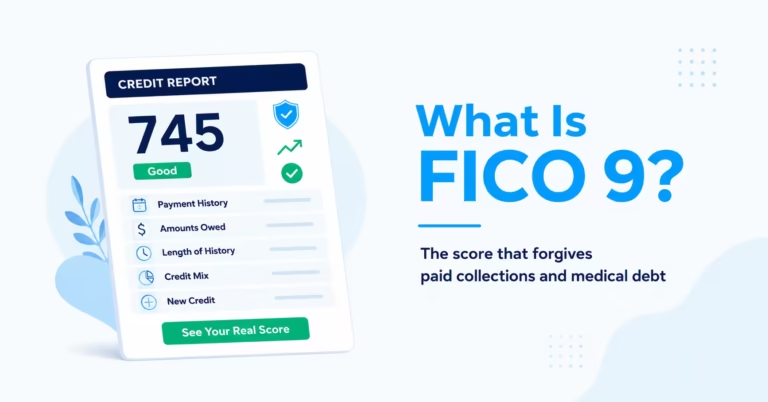
FICO and VantageScore both look at five main things:
- Payment history (do you pay on time?)
- Amounts owed (how much debt you carry)
- Length of credit history (how long you’ve had accounts)
- Credit mix (loans, not just cards)
- New credit (recent applications)
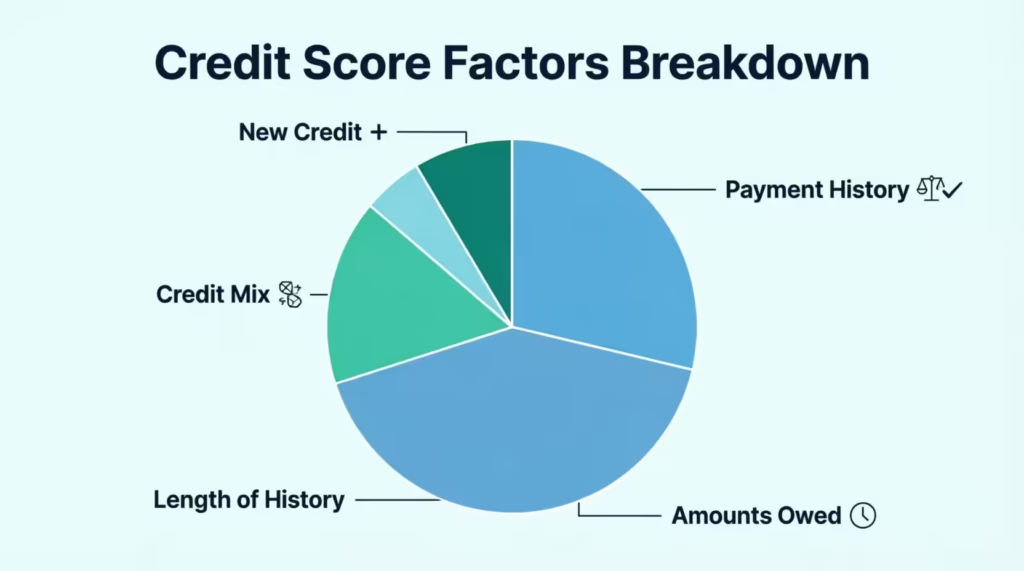
Only two of these, amounts owed and credit mix, lean toward card use. The other three can be built with loans, rent, and other bills. So yes, you can build a strong score without ever swiping plastic.
📌 Did You Know: A credit-builder loan plus on-time rent reporting can move a “no score” file to a mid-600s FICO in about 6 months, according to lender case data.
Confirm Whether Your Current Bills Are Already Helping (or Could Help)
Before you sign up for anything new, check what’s already on your report. Many people pay bills that don’t count and never know it.
Start with a free copy of your report from AnnualCreditReport.com. This is the only site backed by federal law for free weekly reports from Equifax, Experian, and TransUnion.
Look for these accounts on the report:
- Rent payments
- Cell phone bills
- Utility bills (power, gas, water)
- Streaming and internet services
- Any current loans
If none of these show up, that’s your gap. If some show up, note which bureau lists them. Not every bill reports to all three, and lenders often pull from just one.
Next, call or email your landlord, phone company, and utility providers. Ask one clear question: “Do you report my on-time payments to any of the three credit bureaus?” Most will say no by default, but some offer opt-in reporting for a small fee.
Keep a short list with three columns: bill name, who you asked, and their answer. This makes your next steps much easier.
⚠️ Mistake to Avoid: Don’t assume paying on time is enough. If the account isn’t reported to a bureau, your score sees nothing, no matter how perfect your record is.
Get Credit for Bills You’re Already Paying
You’re already paying rent, phone, and utilities. Turning those into score-boosting data is one of the easiest wins. Some tools are free, and others charge a small monthly fee.
Free Bill-Reporting Tools (Experian Boost, UltraFICO)
Experian Boost is a free service from Experian. You link your bank account, and it scans for on-time payments on utilities, phone, streaming, rent, and even insurance. Approved payments get added to your Experian file. The Experian Boost sign-up page lets you connect in about 5 minutes.
The catch? It only affects your Experian score, not Equifax or TransUnion. Still, many lenders pull Experian, so it’s worth doing.
UltraFICO is another free option. It looks at your checking and savings habits, like keeping a positive balance and avoiding overdrafts. This one is best if you have a thin file but strong banking habits.
Both tools are safe, don’t require a hard inquiry, and can be turned off any time.
Paid Rent-Reporting Services
Rent is often your biggest monthly bill, so getting credit for it makes a real difference. Companies like Rental Kharma, RentReporters, and Boom work with tenants directly. They verify your rent with your landlord, then send that data to one, two, or all three bureaus.
Here’s a quick look at how they compare:
| Service | Monthly Cost | Setup Fee | Bureaus Reported | Backdating |
|---|---|---|---|---|
| Rental Kharma | ~$8.95 | ~$50 | Equifax, TransUnion | Up to 2 years |
| RentReporters | ~$9.95 | ~$95 | Equifax, TransUnion | Up to 2 years |
| Boom | ~$2 | Free | All 3 bureaus | Up to 2 years |
Backdating is the real value. It adds months of past on-time rent to your file at once. Just check the fine print. Some services drop the data if you cancel, which can hurt your score.
Open a Credit-Builder Loan
A credit-builder loan flips a normal loan on its head. Instead of getting money and paying it back, you pay first and get the money at the end.
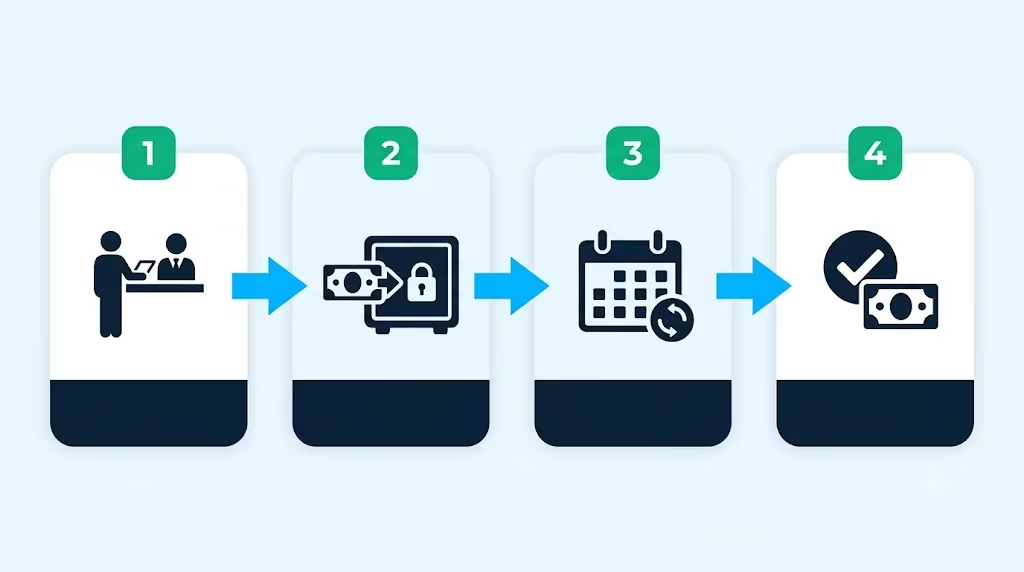
Here’s how it works step by step:
- You apply for a small loan, usually $300 to $1,000.
- The lender holds those funds in a locked savings account or CD.
- You make fixed monthly payments for 6 to 24 months.
- Each on-time payment gets reported to all three bureaus.
- When the loan ends, you get the cash back, minus small fees or interest.
Credit unions and community banks offer these often. Self, a well-known online lender, is one of the easiest to start with. You can begin at the Self credit-builder loan page.
This method builds two of the five FICO factors at once: payment history and credit mix. It’s one of the strongest tools for anyone with no file or a very thin one.
💡 Pro Tip: Pick the smallest loan amount and shortest term you can comfortably afford. It builds credit just as fast and keeps interest costs low.
Become an Authorized User, Safely
Being added as an authorized user (AU) means someone lets you piggyback on their credit card. You don’t have to use the card. Just being listed can add their good history to your report.
But this can backfire fast. If they miss a payment or run up the balance, your score drops too.
Before saying yes, ask the primary cardholder these questions:
- How long have you had this card? (Older is better.)
- What’s your credit utilization ratio? (Under 10% is ideal, under 30% is safe.)
- Have you ever missed a payment? (Any late payment kills the benefit.)
- Does your card issuer report AUs to bureaus? (Not all do. Discover, Chase, and Amex usually do.)
Family members are the safest bet since you can talk openly about money habits. Avoid arrangements with strangers or paid “tradeline” sellers, which can be flagged as fraud.
You don’t need the physical card in hand. Some cardholders never even mail it out, and the credit benefit still shows up on your report within 1 to 2 billing cycles.
Use Loans You Already Have, Or Can Qualify For
Loans of any kind can build credit if they report to bureaus. Many people miss this because they think of loans as debt, not as tools.
Student, Auto, and Personal Loan Payments
If you have federal student loans, they already report to all three bureaus once you enter repayment. Even income-driven plans with low monthly payments count. Check your loan status at StudentAid.gov.
Auto loans work the same way. Every on-time car payment adds to your history and mix. This is one reason people who finance a used car often see a score boost within a year.
Personal loans from banks, credit unions, or online lenders like LendingClub or Upstart also report. Just make sure the lender confirms bureau reporting before you sign.
Cosigned Loans If You Can’t Qualify Alone
If your file is empty, no lender wants to bet on you. A cosigner solves that. A parent, spouse, or trusted family member signs the loan with you and promises to pay if you can’t.
The loan shows on both credit reports. On-time payments help both of you. Missed payments hurt both. That’s why cosigning is a serious ask, and a broken promise can end a family relationship.
Keep the loan small, keep the term short, and set up autopay the day it starts.
Compare Every Method by Cost, Speed, and Effort
Not every option fits every person. Some cost nothing but move slowly. Others charge a fee but backdate history. This side-by-side view makes the choice easier.
| Method | Cost | Speed to Impact | Effort Level | Bureaus Covered |
|---|---|---|---|---|
| Experian Boost | Free | Instant | Very Low | Experian only |
| UltraFICO | Free | Instant | Very Low | Experian only |
| Rent Reporting (Boom) | ~$2/month | 1-2 cycles | Low | All 3 |
| Rent Reporting (Kharma/RentReporters) | $8-$10/month + setup | 1-2 cycles | Low | 2 of 3 |
| Credit-Builder Loan | $10-$25/month | 3-6 months | Medium | All 3 |
| Authorized User | Free | 1-2 cycles | Low | Depends on issuer |
| Student/Auto/Personal Loan | Varies | 3-6 months | Medium | All 3 |
| Cosigned Loan | Varies | 3-6 months | High | All 3 |
Free tools are great starting points but limited to one bureau. Paid tools and loans cost money but spread the benefit wider and stick longer.
Which Method Should You Start With?
The best method depends on where you are today. Here’s a simple decision path:
- If you pay rent in your own name: Start with a rent-reporting service and Experian Boost. Both are quick wins.
- If you have no bills in your name: Open a credit-builder loan. It creates history from scratch.
- If a trusted family member has strong credit: Ask to be added as an authorized user first. It’s free and fast.
- If you already have a loan (student, auto): Keep paying on time and check that it’s reporting. You may already be building.
- If you have a job and steady income but empty credit: Combine a credit-builder loan with rent reporting for the fastest well-rounded file.
Don’t try all nine at once. Pick two that fit your life and layer more in every 3 to 6 months.
If None of These Fit, Secured Credit Cards as a Fallback
If nothing above works, a secured credit card is the last mile. It’s not a regular credit card. You put down a deposit, usually $200, and that becomes your credit line.
You use it like a normal card, pay it off in full each month, and the issuer reports to all three bureaus. After 6 to 12 months of good behavior, most issuers refund your deposit and switch you to a regular card.
Discover, Capital One, and many credit unions offer these. Just watch for annual fees. A good secured card charges $0 to $35 per year.
How Long It Actually Takes to See Results
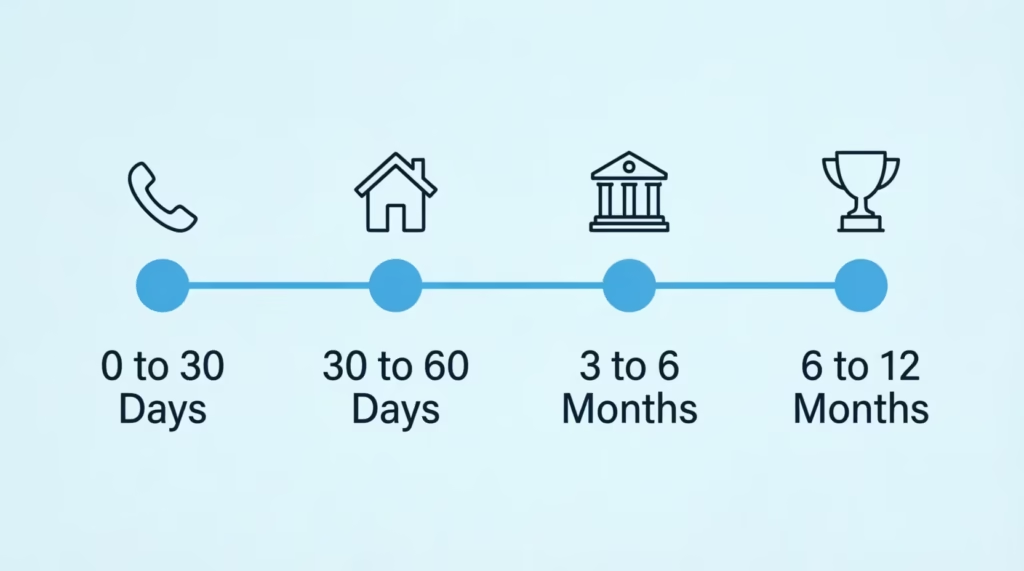
Timelines vary based on the method. Setting the right expectation keeps you from giving up too early.
- Instant (0-30 days): Experian Boost, UltraFICO, and authorized user tradelines with backdated history can show up on your next report pull.
- 1 to 2 billing cycles (30-60 days): Rent reporting services and new authorized user accounts start posting.
- 3 to 6 months: A credit-builder loan or new installment loan starts showing a clear payment pattern. Scores often jump into the mid-600s here.
- 6 to 12 months: A full “thin file to established file” transition. You’ll likely qualify for regular credit cards, auto loans, and even some apartments without a cosigner.
The FICO score model needs at least six months of activity on at least one account to generate a score at all. So if you’re starting from zero, plan for a six-month runway before you see your first number.
Habits That Protect Your Progress Once You Start
Building a score is only half the job. Keeping it healthy is the other half. A few simple habits protect everything you’ve built.
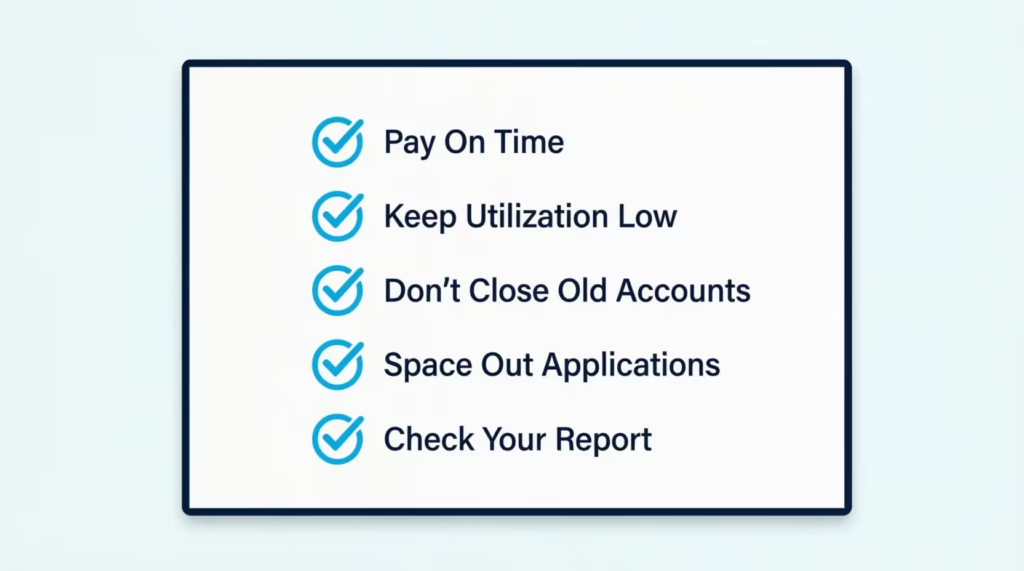
- Pay every bill on time. Even one late payment can drop your score 60 to 100 points. Set up autopay for at least the minimum due.
- Keep credit utilization low. If you do get a card later, use less than 10% of the limit. Under 30% is the safe ceiling.
- Don’t close old accounts. Length of history matters. Even a card you don’t use adds age to your file.
- Space out new applications. Every hard inquiry drops your score a few points. Apply for new credit no more than once every 6 months.
- Check your report every 4 months. Rotate between Equifax, Experian, and TransUnion at AnnualCreditReport.com. Look for errors and dispute them fast.
Think of your score like a garden. You planted the seeds. Now you just have to water them and pull weeds.
Mistakes That Quietly Stall Your Progress
Some mistakes don’t feel like mistakes. They’re small habits that quietly cost you points month after month. Watch for these:
- Not confirming a service actually reports. Some rent-reporting apps only report to one bureau or drop your history if you cancel. Always read the fine print.
- Paying a credit-builder loan late. The whole point is on-time history. One late payment on a builder loan can actually lower your score below where you started.
- Piggybacking on a bad account. If the primary cardholder maxes out their card or misses payments, your file catches every hit.
- Applying for too many products at once. Opening a builder loan, a rent service, and a secured card in the same week racks up inquiries and looks risky to lenders.
- Ignoring old collections. New payments help, but an unpaid collection sitting on your report drags everything down. Deal with old debts before or alongside your new efforts.
- Assuming utilities count. Most water, gas, and electric bills don’t report unless you sign up through a tool like Experian Boost.
Fix these quietly, and your score will climb faster than most people expect.
Frequently Asked Questions
Can you build credit without a credit card?
Yes. Credit-builder loans, rent reporting, authorized user status, and installment loans all build credit without a card. Millions of people have used these methods to start or rebuild their scores.
How long does it take to build credit without a credit card?
You need at least 6 months of reported activity to generate a first FICO score. Most people see a solid file in 6 to 12 months if they combine two or more methods.
Does paying rent build credit?
Only if your landlord or a rent-reporting service sends the payments to the credit bureaus. Paying on time alone doesn’t count unless it’s being reported.
Is Experian Boost worth it?
For most people with a thin file, yes. It’s free, safe, and can add points quickly. Just remember it only affects your Experian score, not the other two bureaus.
Do utility bills help your credit score?
Usually no. Utility companies don’t report to bureaus by default. But tools like Experian Boost can add those payments to your Experian file for free.
What is a credit builder loan and how does it work?
It’s a small loan where the lender holds the money in savings while you make payments. Every on-time payment gets reported to the bureaus. At the end, you get the cash back and a stronger credit file.
Can becoming an authorized user hurt my credit?
Yes, if the primary cardholder misses payments or maxes out the card. Always check their payment history and utilization before agreeing to be added.
Wrapping Up
Building credit without plastic is not only possible, but it’s also often smarter and safer. From free tools like Experian Boost to steady options like credit-builder loans and rent reporting, there’s a path for every situation.
The most effective approach is layering two or three methods together, staying consistent, and giving each one 6 to 12 months to show results. Based on the data, combining a credit-builder loan with rent reporting delivers the best mix of speed, cost, and bureau coverage.
If you know someone stuck at “no score” or afraid to apply for a card, share this guide; it could be the push they need to finally build a strong financial future.