
I know the feeling of looking at your credit report mid-plan and wondering if your score is frozen until the case ends. You’re making trustee payments, doing everything right, and yet the number barely moves. That’s the frustration behind every question about a credit score improvement strategy for Chapter 13 bankruptcy, and it’s fair to want answers now, not in three years.
Your score can grow during Chapter 13, but only through the right mix of passive plan effects and a few carefully permitted active moves.
Below, we’ll walk through what’s helping your score already, what needs the court’s blessing, and the safe steps you can start this week.
Key Takeaways
This guide explains how credit scores can rise during an active Chapter 13 repayment plan through passive plan effects and specific court-approved active steps, including secured cards, rent reporting, and dispute strategies.
Core Facts:
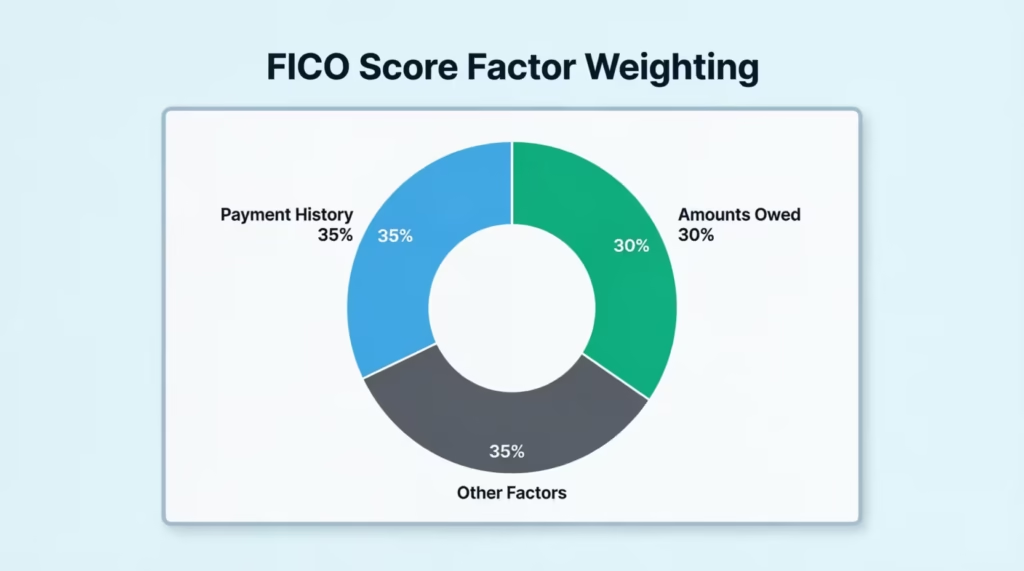
- Payment history and amounts owed make up roughly 65 percent of a FICO Score, and both factors can improve during an active Chapter 13 plan before discharge.
- Reported balances on accounts included in the bankruptcy typically show as zero or “included in bankruptcy,” which lowers reported revolving debt and helps the amounts owed factor.
- New credit, including secured cards and credit builder loans, generally requires trustee or court approval through a formal Motion to Incur Debt in most districts.
- Local bankruptcy court rules set different dollar thresholds and debt types that trigger required approval, so filers should check their specific district’s rules.
- Authorized user status and services like Experian Boost or rent reporting typically do not require trustee permission since they don’t create new debt.
- Score gains are gradual: filers often see 10 to 30 point movements in the first 3 to 6 months, with larger gains building between months 6 and year 2, and further compounding by years 3 to 5.
Best for:
- Filers currently in an active Chapter 13 repayment plan who want to understand which credit-building moves are safe.
- Anyone confused about whether trustee or court permission is needed before opening new credit accounts during bankruptcy.
- Filers looking for a realistic timeline of when credit score improvements typically appear during and after a Chapter 13 plan.
Why Your Credit Score Can Still Improve During Chapter 13
Many filers assume the score sits still until discharge. It doesn’t. Two of the biggest scoring factors keep working in the background while you make plan payments. Payment history counts for 35% of a FICO Score, and amounts owed count for another 30%, together shaping roughly 65% of the number. Both categories can shift in your favor during an active repayment plan, even before the case closes.
Think of it this way. When you filed, several accounts were probably late, over the limit, or in collections. The plan freezes new damage and starts cleaning up the flow of new negative marks month by month. That change alone can lift a badly bruised score over time. The FICO scoring model doesn’t wait for discharge to notice.
How the Repayment Plan Lowers Your Debt-to-Income Ratio
The plan restructures what you owe into a fixed schedule the court approved. Unsecured balances get paid at whatever percentage your plan allows, and some debts may be discharged at the end. While the case is open, your reported balances on the accounts included in the bankruptcy typically show as $0 or included in bankruptcy, which pulls your total revolving debt down on paper.
Lower reported balances feed the “amounts owed” factor, which is 30% of your FICO Score. Your credit utilization ratio on any surviving revolving accounts also drops when big charged-off balances stop reporting as active debt. Debt-to-income ratio is a tool lenders use for underwriting. It doesn’t directly affect your score. However, lowering your balances improves your DTI and the scoring factor related to amounts owed. That’s why some filers see small score gains within the first year of the plan, without doing anything new.
How the Automatic Stay Restores Your Payment History
The automatic stay kicks in the moment you file. It stops new late payments, new charge-offs, and new collection activity from piling on. For payment history, which is the single biggest scoring factor, this matters more than most people realize. New “30 days late” marks stop showing up because the account activity is halted.
Over months and years, older late payments start to age. Recent negative items hurt scores more than older ones under the FICO scoring model. As the fresh damage stops and the old damage ages, payment history slowly begins to recover. It won’t feel fast. It is real, though, and it’s happening whether or not you take any other step.
📌 Did You Know: About 65% of your FICO Score comes from just two categories, payment history and amounts owed. Both of these can improve during Chapter 13, before your case is even discharged.
Do You Need Permission Before Getting New Credit in Chapter 13
Yes, in almost every case. Once your plan is confirmed, you generally can’t take on new debt without the trustee’s sign-off or the court’s approval. This isn’t optional paperwork. Skipping it can put your case at risk, including dismissal or having a discharge denied later.
The reason is simple. Your plan was built around a specific budget and a specific amount of disposable income going to creditors. A new car loan, a new credit card, or even a co-signed loan changes that math. The bankruptcy court and the Chapter 13 trustee want to check any new obligation. They need to ensure it doesn’t take away from the funds meant for old creditors. This is a core rule of any confirmed repayment plan.
How to Request Permission (Motion to Incur Debt)
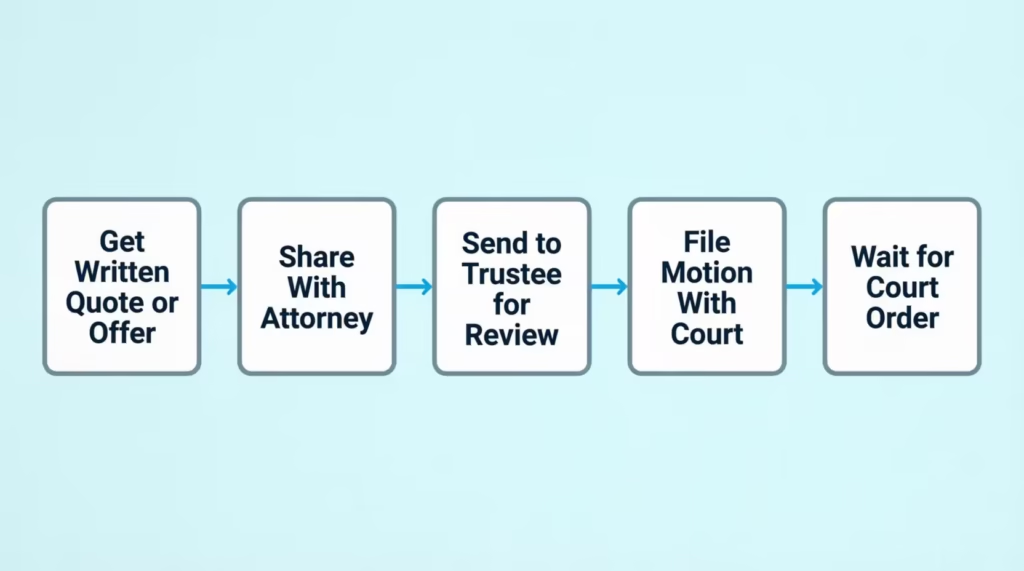
The formal request is called a Motion to Incur Debt. Your attorney usually files it, though some courts allow debtors to file it on their own. The steps look like this:
- Get a written quote or offer. This can be a loan estimate, a car purchase agreement, or a credit card offer showing the credit limit, rate, and monthly payment.
- Share it with your bankruptcy attorney. They’ll draft the motion, listing the reason for the new debt, the terms, and how you’ll still afford your plan payment.
- Send the proposed motion to the trustee. Many trustees review it first and either approve, object, or ask for changes before it goes to the judge.
- File the motion with the bankruptcy court. Creditors and the trustee get notice and a chance to respond.
- Wait for the court’s order. If the judge signs off, you can move forward. If not, you cannot incur that debt.
Timelines vary. Some districts approve routine requests in one to three weeks. Others take longer if there’s an objection. The U.S. Courts Chapter 13 overview explains the trustee’s role in reviewing new debts.
Local Rules and Dollar Thresholds Can Vary by District
There’s no single national rule for when you need permission. Each bankruptcy court has local rules that set the dollar amount and the type of debt that triggers a motion. Some districts require court approval for any new debt over a set threshold, like $500 or $1,000. Others require it for any new consumer credit, no matter the amount. A few allow small purchases, such as a replacement appliance, without a motion.
The safest move is to check your district’s local bankruptcy rules on the court’s website, or ask your attorney. Never guess based on what a friend in another state did. Their trustee might allow something yours won’t.
⚠️ Mistake to Avoid: Applying for new credit without checking your district’s local rules is one of the fastest ways to jeopardize a confirmed repayment plan. Ask before you apply, not after.
Secured Credit Cards During Chapter 13
A secured credit card is often the first tool people ask about. It’s a card backed by a refundable deposit, and the deposit usually equals your credit limit. If you deposit $300, your limit is $300. The card reports to the three major bureaus like any other credit card, which is what makes it useful for rebuilding.
Here’s the important part for Chapter 13. Even a small secured card usually counts as new credit, which means you still need trustee permission or court approval before opening one in most districts. Some trustees allow secured cards freely because the risk is low. Others want a motion. Don’t assume. Ask first.
If you get the green light, choose a card that reports to all three credit bureaus: TransUnion, Experian, and Equifax. Look for one with no annual fee, if you can. Also, pick a card that doesn’t need a hard pull, so it won’t hurt your score. Keep the balance very low each month. Because the deposit sets the limit, it’s easy for a small charge to push your credit utilization ratio high, which can offset the benefit.
Credit-Builder Loans as an Alternative
A credit builder loan works in reverse of a regular loan. The lender holds the loan amount in a locked savings account. You make monthly payments, which get reported to the bureaus. When you finish, you get the money, minus interest and fees. It’s a way to build payment history without borrowing money you can actually spend.
Many credit unions and community lenders offer these. Some fintechs, like Self, offer them online. They still create a new debt on paper, so most Chapter 13 filers should treat them the same as a secured card and check with the trustee first. Small credit builder loans are often approved, since the payment is fixed and low.
Becoming an Authorized User
Becoming an authorized user on a family member’s credit card lets you benefit from their good payment history. You get the advantages without adding new debt to your name. The account isn’t really yours, so you usually don’t need trustee permission in most areas. Still, it’s a good idea to tell your attorney about it.
Choose the account carefully. It should have a long history, on-time payments, and low utilization. Make sure the card issuer actually reports authorized user activity to the bureaus. Not all of them do. If the card gets misused later, the negative activity will hit your report too, so trust matters here more than convenience.
Building Credit Without Taking on New Debt
Not every score-building path needs a new account. Alternative data reporting lets you get credit for bills you already pay, like rent, utilities, phone, and streaming. This is often the safest lane during a repayment plan because you’re not creating any new debt at all.
Tools like Experian Boost add utility, phone, and streaming payments directly to your Experian credit report for free. Rent reporting services like RentReporters, Rental Kharma, and Boom can add on-time rent payments to one or more credit bureaus. Not every service reports to all three bureaus, so check before signing up if you care about a specific one.
Payment history built this way still counts. It’s slower than a well-managed credit card, but it carries almost zero risk to your bankruptcy case. For someone in year two of a five-year plan, that trade-off usually makes sense.
💡 Pro Tip: Combine one no-permission move (like rent reporting) with one permission-based move (like a small secured card, if approved). This layered approach builds a fuller credit file without stacking new debt.
Disputing Errors on Your Credit Report
Mistakes on credit reports are common, and Chapter 13 filers see them more often than most. Accounts that should show “included in bankruptcy” sometimes still report as late or in collections. Balances that should be $0 sometimes still show old amounts. Every one of these errors can drag your score down for no reason.
You have the legal right to fix them under the Fair Credit Reporting Act. Pull all three reports for free at AnnualCreditReport.com. Compare each tradeline against your bankruptcy paperwork. Look for:
- Accounts included in the plan still showing recent late payments after the filing date.
- Balances that haven’t updated to $0 or “included in bankruptcy.”
- Accounts you never opened, or duplicated tradelines for the same debt.
- Wrong status codes, like “charge-off” when the account is in the plan.
To dispute, file with both the credit reporting company and the company that reported the information. Use the online dispute portals at TransUnion, Experian, and Equifax, or send a letter by certified mail. Please include your name. Also, add the account details. State why it’s wrong. Finally, attach supporting documents like bankruptcy schedules or the confirmation order.
The bureau has 30 days to investigate under federal rules from the Federal Trade Commission. If the error is confirmed, they must correct or remove it. If they refuse and you disagree, you can add a short statement to your report and, in some cases, take further action.
Keeping Credit Utilization Low on Any New Accounts
If you do open a secured card or get added as an authorized user, how you use it matters more than the fact that you have it. Credit utilization ratio is the percentage of your revolving credit limit you’re actually using. It sits inside the “amounts owed” factor, which is 30% of your FICO Score.
The common rule of thumb is to keep utilization under 30%. Data actually suggests lower is better. On a $300 secured card, that means keeping your reported balance under $30 most of the time.
Here’s the trick most people miss. Credit card issuers usually report your balance to the bureaus on the statement closing date, not the due date. So even if you pay in full every month, a high balance on the closing date will still show up on your report. To keep utilization low:
- Check your statement closing date in the account settings.
- Pay the card down to almost zero a few days before that date.
- Pay off any remaining balance by the due date to avoid interest.
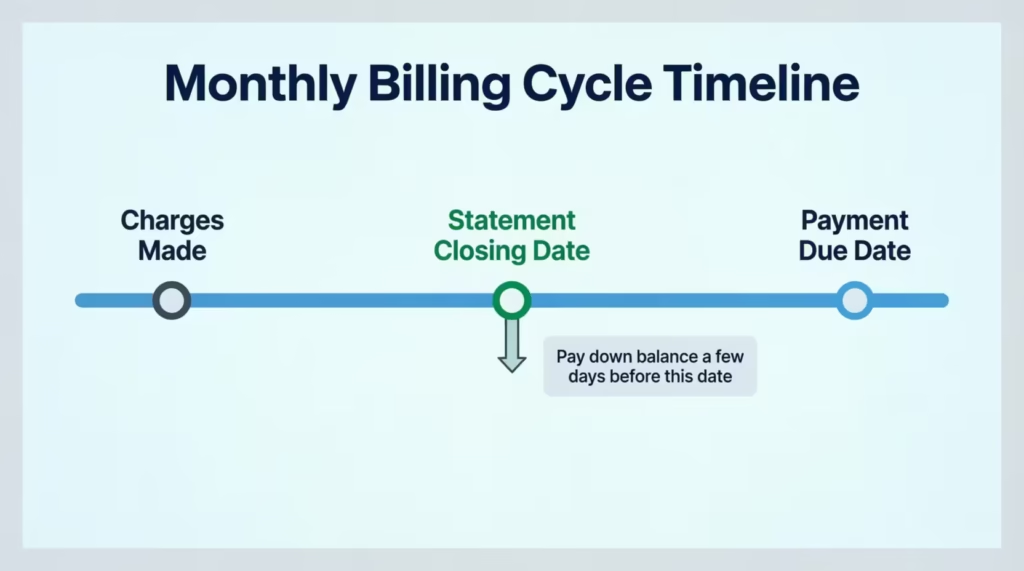
Using this timing trick, someone with a $300 card can put small charges on it every month, keep reported utilization near 3%, and steadily build payment history without ever carrying a balance.
Mistakes That Can Hurt Your Score or Jeopardize Your Case
Some moves feel productive but actually cause damage. Others quietly put the whole case at risk. Both are worth avoiding.
Stacking multiple credit applications in a short window is one of the worst. Each application creates a hard inquiry, which can shave a few points off your score. Several inquiries in a month look risky to the FICO scoring model, and they also raise eyebrows with the trustee. Apply for one thing at a time, and only after you know the trustee’s stance.
Taking on new debt without trustee permission is the bigger risk. Even if you can afford the payment, buying a car on credit or opening a personal loan without approval can be treated as a plan violation. The trustee may ask the court to modify or dismiss the plan. In some cases, discharge can be denied at the end.
Draining your budget so you can’t cover the plan payment is another common trap. Any new debt you take on has to fit inside your disposable income, which the court already reviewed. Squeezing in a car loan that leaves nothing for the trustee payment usually ends badly. So does trying to hide side income from the case, or paying favored creditors outside the plan.
Closing old accounts you didn’t lose in the bankruptcy can also hurt. Length of credit history is another FICO factor. If an old credit union card or store card survived the filing and is still open, keeping it open, even unused, can help your average account age.
Realistic Timeline for Seeing Score Improvement
Expectations matter here. Most people don’t see a big jump in the first few months. Chapter 13 is a long process, and score gains show up gradually.
In the first 3 to 6 months, filers often see a small dip right after the case is filed as the bankruptcy notation posts. Then, as balances on included accounts update to $0 and new late payments stop, scores usually start to stabilize. Movement is usually small, sometimes 10 to 30 points, and it varies a lot by starting point.
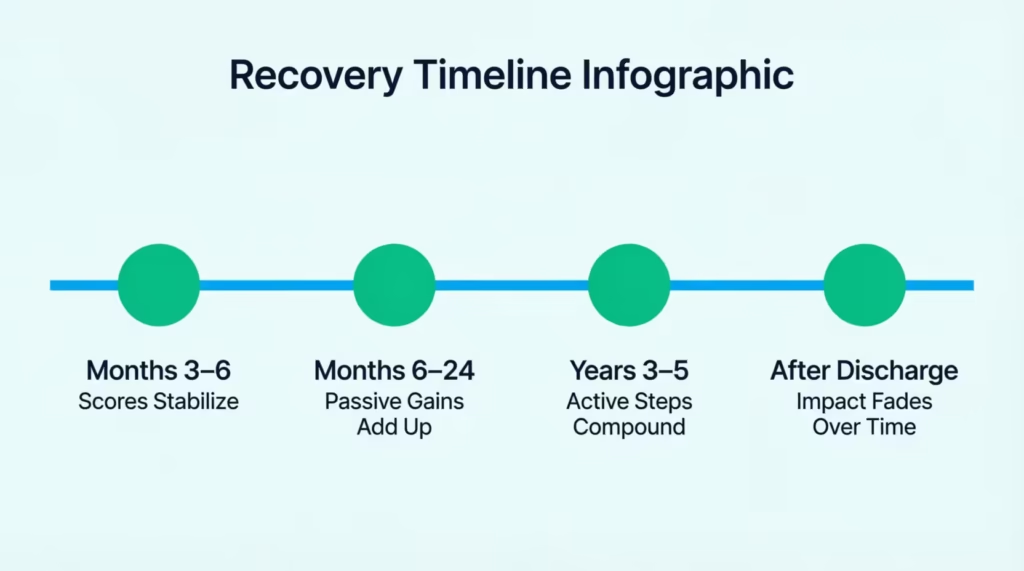
Between month 6 and year 2, the passive improvements begin to add up. Payment history ages, disputed errors get corrected, and any approved secured card or rent reporting starts adding fresh positive data. Many filers move from the low 500s into the 600s during this window, though there’s no guaranteed number.
By years 3 to 5, active steps compound. Consistent low utilization, on-time secured card payments, and a clean report can push scores into the mid-600s or higher before discharge. After discharge, the bankruptcy stays on your report for up to 7 years from the filing date for Chapter 13. Its impact fades over time, especially in the last two years.
The honest picture is this. Score building during a Chapter 13 case is real, slow, and worth doing. Filers who take the passive route only, without any active steps, still tend to see gains, just smaller ones. Those who add safe active steps, with the trustee’s approval, tend to walk into discharge with a much stronger starting point for the next chapter of financial life.
Frequently Asked Questions (FAQs)
Can you get new credit while in Chapter 13?
Yes, but almost always with trustee or court approval first. Opening new credit without permission can put your case at risk, including possible plan dismissal.
How to raise your credit score after Chapter 13?
Combine passive plan effects with safe active steps like a court-approved secured card, authorized user status, rent reporting, and disputing report errors. Layering one no-permission move with one approved credit-building move works best.
What is the average credit score after Chapter 13?
There’s no single guaranteed number, but many filers move from the low 500s into the 600s between month 6 and year 2 of the plan. By years 3 to 5, consistent low utilization and clean reporting can push scores into the mid-600s or higher.
How long is your credit ruined from Chapter 13?
The bankruptcy stays on your report for up to 7 years from the filing date. Its impact fades over time, especially in the last two years before it drops off.
What credit card can I get after Chapter 13?
A secured credit card is the most common option, backed by a refundable deposit that sets your credit limit. Look for one that reports to all three bureaus, has no annual fee, and doesn’t require a hard pull.
What can you not do while in Chapter 13?
You generally cannot take on new debt, like a car loan or credit card, without trustee or court approval. Doing so without permission can be treated as a plan violation and may lead to dismissal or denied discharge.
What’s the average Chapter 13 payment?
The article doesn’t provide a specific average payment figure, since plan payments are set individually based on each filer’s disposable income and court-approved budget.
How to jump 20 points fast in credit score?
There’s no verified fast-jump method within Chapter 13, but keeping utilization on any approved account under 30% (ideally under 3%) by paying down balances before the statement closing date helps. Small, steady gains of 10 to 30 points typically show up over the first 3 to 6 months.
How long does it take to build credit from 500 to 700?
Building your credit score from 500 to 700 typically takes 12 to 24 months for many people, but the timeline depends on factors like your payment history, debt levels, and any negative marks on your credit report. Making every payment on time, lowering your credit utilization, and avoiding new missed payments can help you reach 700 faster.
Do I need permission before opening a secured credit card in Chapter 13?
In most districts, yes, since a secured card usually counts as new credit requiring trustee or court sign-off. Some trustees allow it freely because the deposit-backed risk is low, so always ask before applying.
Wrapping Up
Rebuilding during an active plan isn’t about tricks. It’s about understanding what’s already helping, like payment history and lower reported balances, and adding safe active steps such as a court-approved secured card, authorized user status, rent reporting, and clean disputes.
The most effective approach is layering one no-permission move with one approved credit-building move, because that combination protects the case while building a real credit file.
A steady, patient credit score improvement strategy for Chapter 13 bankruptcy will always beat aggressive shortcuts. If you know someone stuck mid-plan and feeling frozen, share this guide; it could save them years of unnecessary waiting.