
When you spot a hard inquiry on your credit report that you did not expect, it can feel alarming. You might worry about your score, your next loan, or even your identity. Many people see two, three, or four recent inquiries and assume the worst. That worry is real, but the fix in most cases is also simpler than you think.
A hard inquiry that you do not recognize can often be removed in 30 days through a free dispute with the credit bureau. You do not need to pay a service or buy a template to do it.
In this guide, you will learn how to tell which inquiries can be removed, how to dispute them with Experian, Equifax, and TransUnion, and how to handle cases that go beyond a normal dispute. You will also see when a goodwill letter makes sense and when you are better off just waiting.
Key Takeaways
This guide explains how to remove hard inquiries from a credit report, including how to identify unauthorized inquiries, free dispute and goodwill letter steps, realistic timelines, and what to do if a dispute is denied.
Core Facts:
- Only unauthorized or fraudulent hard inquiries can be removed early; legitimate inquiries you authorized cannot be forced off before they fall off naturally.
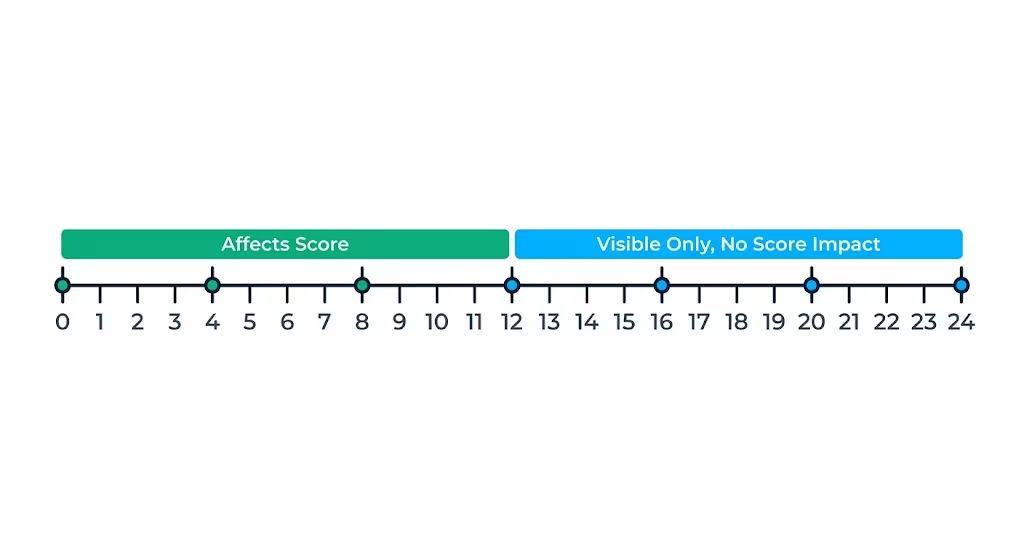
- Hard inquiries stay visible on a credit report for 2 years, but FICO only factors them into your score for the first 12 months.
- The credit bureau dispute process is free through each bureau’s online portal or certified mail, and the bureau must respond within a 30-day investigation window.
- Disputes must be filed separately with each bureau, since Experian, Equifax, and TransUnion maintain independent files and do not share your dispute with each other.
- Rate shopping for auto, mortgage, or student loans within a 14 to 45 day window is typically scored as a single inquiry rather than multiple separate dings.
- A goodwill letter can be sent to a creditor for a legitimate inquiry, but removal is entirely at the creditor’s discretion and success is not guaranteed.
Best for:
- Readers who found unfamiliar hard inquiries on their credit report and need to determine whether removal is possible.
- Consumers wanting to dispute an inquiry themselves for free instead of paying a credit repair service.
- Readers whose recent dispute was denied and need next steps like requesting a method of verification or filing a CFPB complaint.
Can You Actually Remove a Hard Inquiry From Your Credit Report?
The honest answer is split into two paths. If the inquiry is unauthorized or the result of fraud, yes, you can usually remove it. If you actually applied for the credit and the inquiry is accurate, no service or letter can force it off early.
An authorized inquiry is one where you filled out an application and gave the lender permission to check your file. The credit bureau has a record of your permission.
They call this a permissible purpose under the Fair Credit Reporting Act, and it protects accurate information from being deleted just because it hurts your score. The FTC publishes the full text of Section 611, which sets out how disputes must be handled and why accurate items stay on your file.
An unauthorized inquiry is one where you did not apply, did not give consent, or do not recognize the lender at all. These can be removed because they were either added in error or pulled without a valid permissible purpose.
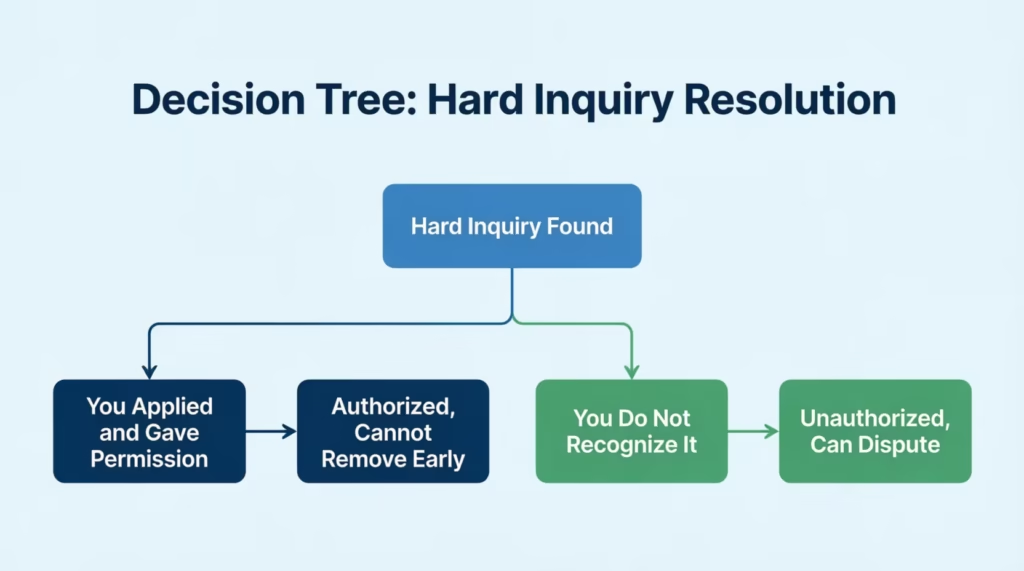
⚠️ Mistake to Avoid: Do not send dispute letters for inquiries you actually triggered. Each rejected dispute can make future disputes look frivolous and slow down your real cases.
This is why the first step before any letter or call is to sort your inquiries into two piles. One pile has inquiries you recognize. The other pile has anything you do not remember applying for.
If You’re Searching From Canada
Canadian readers should know that the process is different. Canada uses Equifax Canada and TransUnion Canada, not the U.S. system. The dispute principles are similar, but the regulatory body and the rules are not the same as in the United States. This guide focuses on the U.S. FCRA process.
How to Tell If a Hard Inquiry Is Legitimate or Unfamiliar
Before you dispute anything, pull your real credit report, not just the score you see in an app. You can get a free report from each bureau every week through the official site AnnualCreditReport.com. The app on your phone may show a different list because it pulls from a single bureau and may not match all three.
Lay out every hard inquiry on a piece of paper. For each one, write the date, the lender name, and what you remember about that month.
Now run through this short checklist:
- Did I fill out an application with this lender in this month? If yes, the inquiry is authorized.
- Did I shop for a mortgage, auto loan, or student loan in this window? If yes, the inquiry is probably part of rate shopping. Multiple auto or mortgage lenders within a short window often count as one.
- Do I not recognize the lender name, the date, or the city? If yes, that inquiry needs a closer look.
FICO designed a rate-shopping window so that consumers can compare lenders without a pile of separate dings. As the CFPB explains, mortgage inquiries within a 45-day window count as a single inquiry for scoring. That window is your friend when you compare home or car loans.
If the lender name is unfamiliar and the date does not match any of your applications, treat it as a possible fraud case and move carefully.
How to Remove Hard Inquiries From Credit Report for Free
Every legitimate path to remove an inquiry is free. You do not need a service, a kit, or a subscription.
The two free channels are:
- The online dispute portal at each credit bureau.
- Certified mail sent directly to the bureau with your dispute letter.
You can use one or both. The bureau is required to investigate your dispute at no cost because the FCRA makes the consumer reporting agency responsible for the accuracy of its files. You also have the right to attach proof such as a copy of your ID or a recent utility bill showing your address.
What about paid services? Most of what they sell is the same letter template you can write yourself. You do not gain any legal right by paying them. The bureau will respond the same way to your free letter as it would to a paid one.
How to Remove Hard Inquiries From Credit Report Fast
Here is the honest part about speed. There is no legal shortcut that gets a legitimate inquiry off your report in 24 hours. The FCRA gives the bureau a 30-day window to investigate your dispute, and that window is the floor, not the ceiling.
The fastest legitimate path is the online dispute portal. Filing online gets your dispute into the system the same day. Mail disputes have a few extra days of handling on each end.
Even with the fastest method, plan for weeks, not hours. If you have a mortgage closing in two weeks, a dispute right now is unlikely to clear before that closing. In that case, the better move is to explain the inquiry to your loan officer and let your strong file do the work.
Online disputes:
- Faster to file.
- Less paper trail for your own files.
- Confirmation is often just a screen or an email.
Mail disputes:
- Slower, but you keep a stamped proof of delivery.
- Good if you want a clear date stamp for your records.
- Useful if your dispute is more complex and includes pages of proof.
For most people, online is the right choice. For a fraud case or a complex dispute, use certified mail so you can prove exactly when the bureau received your letter.
How to Remove Hard Inquiries From Credit Report Yourself (Step-by-Step)
This is the core DIY path. Follow it in order.
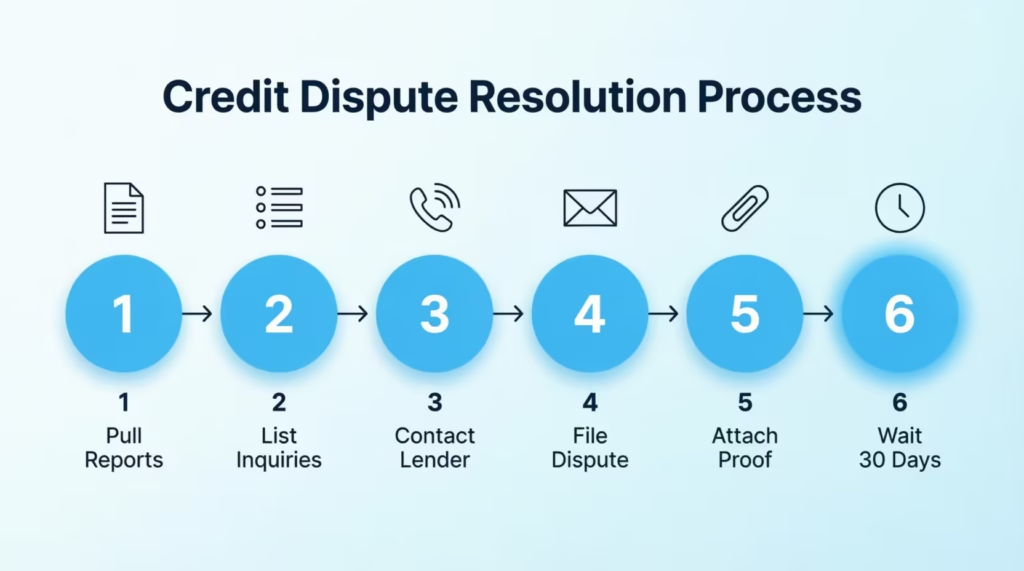
Step 1: Pull all three reports. Use AnnualCreditReport.com and get one report from Experian, one from Equifax, and one from TransUnion. Each bureau has its own file, so do not skip any.
Step 2: Make a list of every inquiry to dispute. Write down the lender name, the date, and the bureau that shows the inquiry. Mark which ones you actually applied for and which ones you do not recognize.
Step 3: Contact the inquiring company first. Call the lender on the report and ask them to confirm the application, the date, and the account tied to the inquiry. This call sometimes solves the case. If they admit there is no matching application, keep a written record of that call.
Step 4: File a formal dispute with the credit bureau. Use the online dispute form or send a certified letter. Include your full name, current address, date of birth, the last four digits of your Social Security number, and the specific inquiry you are disputing.
Step 5: Attach proof of your identity and address. A clear copy of your driver’s license and a recent utility bill are usually enough. If you have a fraud report or a police report number, attach that too.
Step 6: Wait for the 30-day investigation and review the response. The bureau must respond within 30 days. The response will say the inquiry was verified, updated, or removed. If it was removed, your file will update at the next reporting cycle.
Sample dispute letter for an unrecognized inquiry:
[Your Name]
[Your Address]
[City, State, ZIP]
[Date]
Equifax Information Services LLC
P.O. Box 740256
Atlanta, GA 30374
Re: Dispute of Unauthorized Inquiry
Dear Equifax,
I am writing to dispute the following inquiry on my credit report:
Creditor name: [Lender Name]
Date of inquiry: [Exact Date]
Account number (if shown): [Number or None]
I do not recognize this company, and I did not authorize any
application with them in this date range. Please investigate
and remove this inquiry under the Fair Credit Reporting Act,
Section 611.
Enclosed are copies of my ID and a recent utility bill to
confirm my address.
Sincerely,
[Your Name]
Send one letter per bureau for each disputed inquiry. The bureaus do not share your dispute with each other on your behalf.
Disputing With Experian
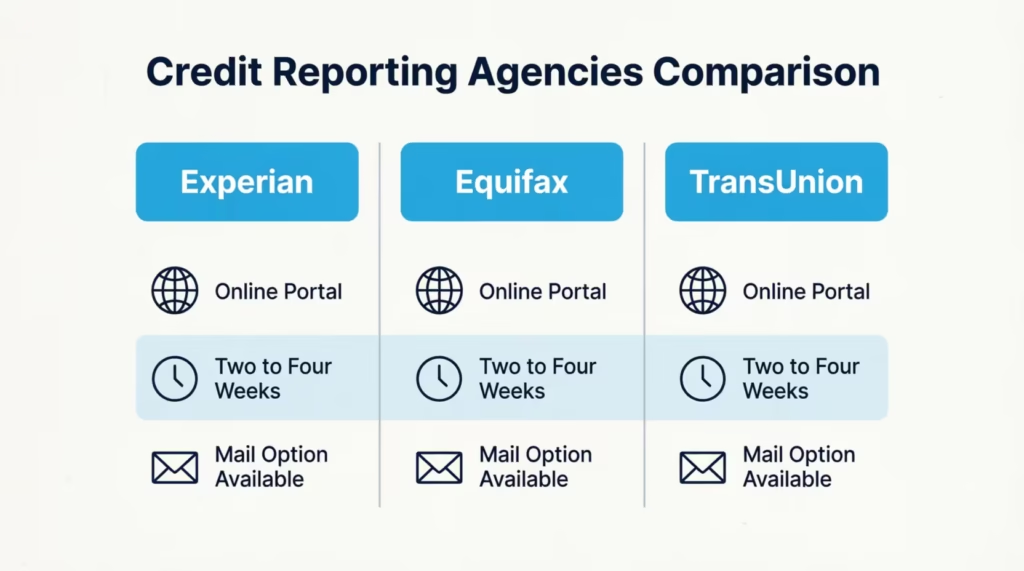
Use Experian’s online dispute center at experian.com. Online disputes through Experian often clear in two to four weeks for simple inquiry cases. You can also send a dispute by mail to the address on your credit report.
Disputing With Equifax
Use Equifax’s online dispute center at equifax.com. Equifax tends to send an automated confirmation when a dispute is filed. That confirmation is your proof the 30-day clock has started.
Disputing With TransUnion
Use TransUnion’s online dispute center at transunion.com. TransUnion often resolves simple inquiry disputes within a few weeks as well. The process looks similar to the other two bureaus.
Online Dispute vs. Certified Mail
Both methods are accepted under the FCRA. Online is faster and uses the bureau’s built-in form fields. Certified mail is slower but gives you a stamped proof of delivery, which matters if you later need to file a complaint with the CFPB.
A good rule of thumb: use online disputes for routine inquiries and use certified mail when you have a fraud report, a complex case, or proof you want to keep on file.
Writing a Goodwill Letter for a Legitimate Inquiry
If the inquiry is yours and there is no error, the only soft path left is a goodwill letter to the creditor. This is a polite request, not a demand. The creditor has full discretion, and most will say no.
A goodwill letter makes sense when you have a real relationship with the lender, such as a long-standing card, a paid auto loan, or a mortgage. It also makes sense if you were denied on a recent application and want the lender to know your full picture. It does not make sense if you have no history with the lender or if you have multiple recent applications with them.
What to include:
- Your account details and a short note on your history with the lender.
- A brief, honest explanation of why the inquiry happened.
- A polite ask to remove the inquiry as a courtesy.
- No threats, no legal language, no emotional pressure.
Sample goodwill letter:
[Your Name]
[Your Account Number]
[Date]
[Lender Name]
[Customer Service Address]
Re: Request for Goodwill Removal of Hard Inquiry
Dear [Lender Name],
I have been a customer since [Year], and I value the account
we have built. I recently applied for additional credit and
a hard inquiry was placed on my report on [Date].
I understand this inquiry was a normal part of the process.
If possible, I would appreciate it if you could remove this
inquiry as a courtesy. I continue to manage my account in
good standing and would like to keep building our
relationship.
Thank you for your time and your consideration.
Sincerely,
[Your Name]
Realistic success rate is low. Many lenders will not budge. Think of it as a long shot worth sending once, not a guaranteed path off your report.
What to Do If the Hard Inquiry Is Identity Theft or Fraud
If you have an inquiry from a lender you have never contacted, treat it as a possible fraud case and act quickly. The dispute path here looks different because the stakes are higher.
Step 1: Call the lender on the report and ask for proof of permissible purpose. They must show they had your written permission or a real account tied to your identity. If they cannot, the inquiry is invalid.
Step 2: File an identity theft report with the FTC at IdentityTheft.gov. This gives you an official report number that you can attach to every dispute from this point on.
Step 3: File a fraud-specific dispute with each bureau. Use the words “identity theft” and attach your FTC report number.
Step 4: Consider placing a credit freeze with all three bureaus. A freeze stops new credit from being opened in your name and blocks future pulls unless you lift it. It is free in every U.S. state.
Speed matters here. A freeze takes minutes and prevents new fraud while you work through the dispute.
How Long Hard Inquiries Stay on Your Report and Affect Your Score
Two time frames matter, and they are not the same.
Visibility on the report: A hard inquiry stays visible for two years from the date it was placed.
Score impact: FICO only considers hard inquiries from the last 12 months. The inquiry can stay on the report for two years but only affects your score for one year.
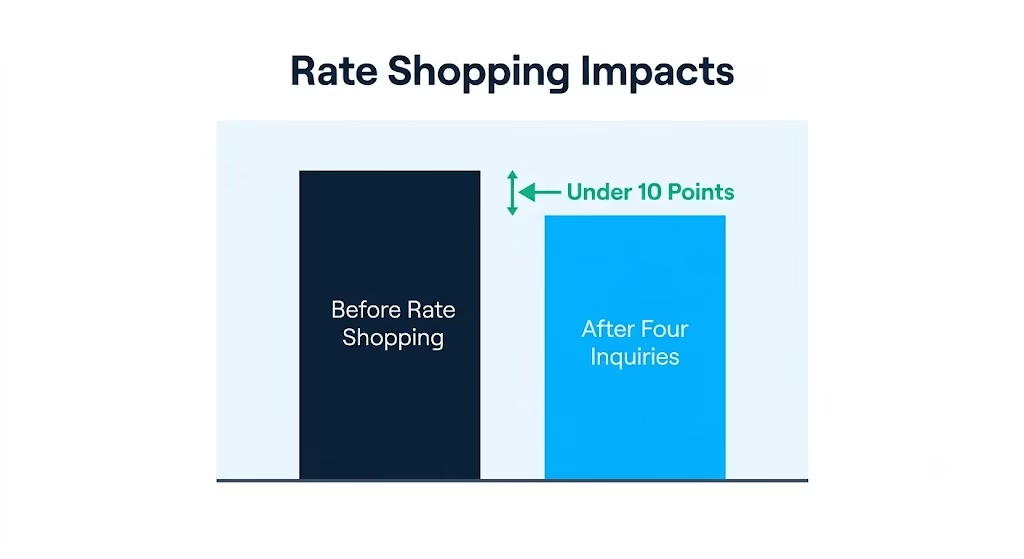
Rate shopping changes the math. Auto, mortgage, and student loan inquiries within the standard 14 to 45 day window are usually scored as a single inquiry, so comparing lenders does not add up the way many people fear.
In real numbers, here is a common example. Sarah, a senior accountant in Cincinnati, was shopping for a mortgage in March. She pulled reports from four different mortgage lenders over three weeks and saw four hard inquiries on her file. Her score dropped by fewer than 10 points, and most of the drop faded within six months. The rate-shopping rule did its job.
For most people with strong credit, a single inquiry is rarely a deal-breaker. The decision to dispute should rest on whether the inquiry is accurate, not on whether one inquiry will sink a score.
Are Paid Hard Inquiry Removal Services Worth It?
Short answer: no. Not for a legitimate inquiry, and not even for most unauthorized inquiries.
The paid services usually sell one of three things:
- A letter template that the FCRA already gives you the right to send for free.
- A subscription that files disputes on your behalf, and you can file the same disputes yourself.
- A promise that they can remove anything, which they cannot do for accurate data.
Red flags of a credit repair scam include any of these: an up-front fee before any service, a promise to remove all negative items, a request for your Social Security number before you have signed anything, or pressure to act today.
When is professional help actually worth it? A consumer protection attorney is useful if a bureau or lender has clearly broken the FCRA’s dispute rules, for example if a bureau ignored a valid dispute for more than 30 days or refused to share its method of verification.
In that case, you may have a real legal claim, and an attorney can send the right kind of letter. For a routine removal, you do not need a lawyer or a service.
What to Do If Your Dispute Gets Denied
A denial is not the end. It usually means the bureau contacted the lender, the lender confirmed the inquiry, and the bureau reported the result back to you. You still have real next steps.
Step 1: Ask the bureau for its method of verification. Under FCRA Section 611, you have the right to ask how the bureau verified the disputed item. The bureau must tell you what it checked and who it contacted.
Step 2: Re-dispute with new evidence if you have any. A police report, an FTC fraud report, or a written statement from the lender confirming they did not process your application can all turn a denied dispute into a successful one.
Step 3: File a complaint with the CFPB. The CFPB takes consumer reports about bureaus and furnishers and pushes for responses. A CFPB complaint often brings a faster and more detailed answer than a second dispute.
Step 4: Talk to a consumer protection attorney if your evidence is strong. If a bureau or lender has clearly mishandled your dispute, an attorney can evaluate whether you have an FCRA case worth filing.
💡 Pro Tip: Keep copies of every letter, every email, and every screenshot from your dispute. If you ever need to escalate to the CFPB or to an attorney, that file becomes your proof of what you did and when.
The dispute process can feel slow, but it has a clear escalation path. You do not have to accept a denial as final.
Frequently Asked Questions (FAQs)
Is 2 hard inquiries in 1 year bad?
Two hard inquiries in a year usually cause a minor, short-term dip since FICO only counts inquiries from the last 12 months. Most people see less than a 10-point drop, and it typically fades within six months.
Do hard inquiries ever go away?
Yes, every hard inquiry falls off your credit report automatically after 2 years, whether you dispute it or not. You don’t need to take any action for this to happen.
Can a lender refuse to remove a hard inquiry?
Yes, lenders have full discretion over goodwill removal requests, and most will say no. A goodwill letter is worth sending once, but it’s a long shot rather than a guaranteed fix.
Can I pay to get inquiries removed?
No paid service can legally remove an accurate inquiry, since the letter templates they sell are the same free ones the FCRA already lets you send yourself. Red flags of a scam include upfront fees and promises to remove all negative items.
How damaging is a hard inquiry?
A single hard inquiry typically causes a small drop, often under 10 points, and rarely sinks a strong credit file on its own. The rate-shopping window also groups similar-lender inquiries into one ding instead of several.
Why haven’t my hard inquiries been removed?
If a dispute comes back denied, it usually means the bureau contacted the lender, and the lender confirmed the inquiry was legitimate. You can ask for the bureau’s method of verification or re-dispute with new evidence like a police report.
Will removing hard inquiries increase my credit score?
Only if the inquiry is less than 12 months old, since FICO stops factoring inquiries into your score after that point. Removing an inquiry older than a year won’t change your score even if it’s still visible on the report.
How long after a hard inquiry will my credit score recover?
FICO only counts hard inquiries against your score for 12 months, and most of the impact fades within about six months. After a mortgage-shopping example in the article, a consumer’s score drop faded within six months.
What’s the difference between a hard inquiry and a soft inquiry?
A hard inquiry happens when you apply for credit and can lower your score temporarily, while a soft inquiry, like checking your own report, has no score impact at all. Only hard inquiries are ever worth disputing or worrying about.
Wrapping Up
In short, only unauthorized or fraudulent inquiries can usually be removed, and you can do it yourself for free through the bureau dispute portals. A goodwill letter is a polite long shot, not a guaranteed fix, and paid removal services rarely do anything you cannot do on your own.
For most accurate inquiries, the practical answer is to let the 12-month FICO scoring window do its work while you keep your file strong in other ways.
If you know someone who is staring at a long list of unfamiliar inquiries on their report, this guide can walk them through the next step without paying for a service they do not need.