
If you have been denied for an apartment or a loan because of an eviction, you know how frustrating it feels. Many renters think the mark is permanent and give up before exploring their options.
The process of learning how to remove an eviction from your credit report starts with figuring out where the mark actually lives.
You have clear legal rights to dispute errors, talk to collectors, and let old records fade on their own. This guide walks through every step so you can take action and get approved again.
Key Takeaways
This guide explains how to remove an eviction from your credit report, including where eviction records actually appear, how to dispute inaccurate entries, negotiate pay-for-delete agreements, and use the 7-year reporting limit.
Core Facts:
- An eviction filing typically does not appear on a standard credit report from Equifax, Experian, or TransUnion; only related unpaid debt sent to collections shows up there.
- Eviction filings and judgments typically appear on tenant screening reports from companies like CoreLogic or RentGrow, which landlords use for rental background checks.
- The FCRA gives consumers 60 days after a denial notice to request a free copy of the report that caused the denial.
- Reporting companies must investigate disputes within 30 to 45 days and remove any information that cannot be verified.
- The 7-year reporting period for eviction-related collections and judgments begins from the date of first delinquency, not the eviction filing or judgment date.
- Pay-for-delete agreements are not guaranteed to work because credit bureaus are not legally required to honor them even if the collector agrees in writing.
Best for:
- Renters who were denied a new apartment or credit application due to an eviction-related mark on their record.
- Readers trying to determine whether their eviction is showing on a credit report, a tenant screening report, or both.
- Anyone with an inaccurate eviction entry, a dismissed case still showing as active, or a valid collection debt they want removed through negotiation.
Does an Eviction Actually Show Up on Your Credit Report?
The short answer may surprise you. An eviction filing by itself does not usually appear on a standard credit report. The three major credit bureaus, Equifax, Experian, and TransUnion, track how you handle borrowed money.
Each one is a type of consumer reporting agency. They show loans, credit cards, and unpaid debts sent to a collection agency. An eviction is a court matter between you and a landlord. It is not a credit account.
But most people get confused at this point. When you are evicted for not paying rent, the unpaid balance often goes to a collection agency. That collection account is what shows up on your credit report. The collection entry is what pulls down your score. The eviction itself is a separate record that lives somewhere else.
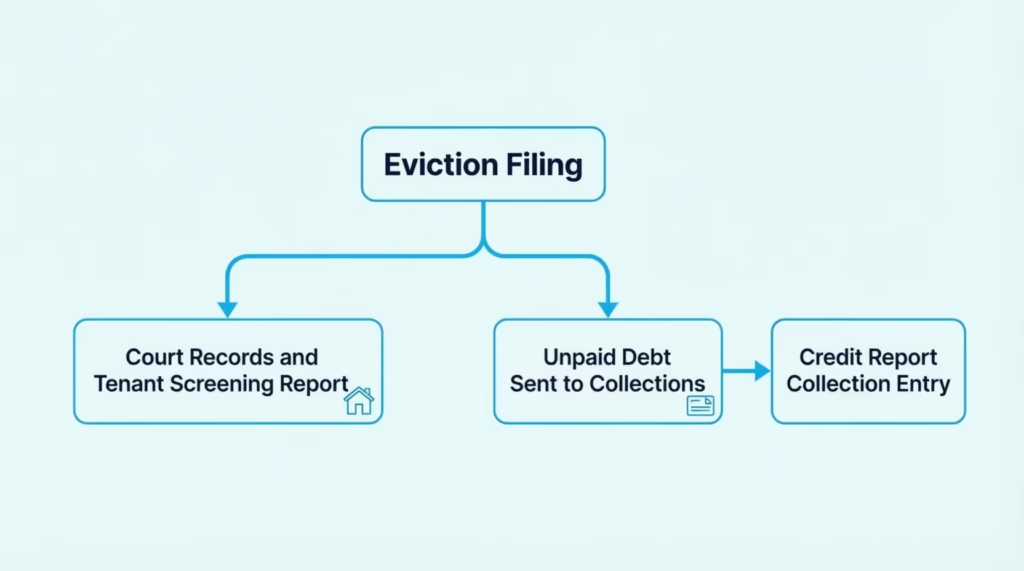
So, does an eviction show on a credit report? Not on its own. The eviction filing lives in public court records and on a different type of report called a tenant screening report. Only the unpaid debt tied to the eviction shows up on your credit report, and only if someone reported it to a bureau.
This matters a lot. It changes your whole plan. If you want to fix your credit, focus on the collection account. If you want to pass a rental background check, focus on the tenant screening report. Fighting the wrong record wastes time and gets you nowhere.
Tenant Screening Reports vs. Credit Reports: The Key Difference
Two different types of reports can trip you up after an eviction. Knowing the difference is step one.
Credit reports come from the three major credit bureaus. Banks, credit card companies, and auto lenders pull these reports when you apply for credit. A credit report shows your payment history, current debts, and any collection accounts. An eviction filing does not appear here, but a related collection account might.
Tenant screening reports come from different companies. These include CoreLogic, RentGrow, and others. Landlords and property managers pull these when you apply to rent. A tenant screening report can show your rental history, eviction filings, eviction judgments, and criminal records. This is where an eviction shows up and blocks you.
Both types of reports are governed by the Fair Credit Reporting Act. Both give you the right to dispute errors. But you have to know which report caused your denial so you can fix the right one.
| What to Check | Credit Report | Tenant Screening Report |
|---|---|---|
| Who makes it | Equifax, Experian, TransUnion | CoreLogic, RentGrow, others |
| Who pulls it | Banks, lenders, card issuers | Landlords, property managers |
| Shows eviction filing? | No | Yes |
| Shows collection debt? | Yes | Sometimes |
How to Find Out Which Company Reported Your Eviction
When a landlord or lender denies your application, they must send you an adverse action notice. This is required by federal law under the Fair Credit Reporting Act. The notice tells you that a consumer reporting agency provided information that led to the denial.
The adverse action notice is your roadmap. It must include the name, address, and phone number of the company that created the report. It must tell you that you have the right to a free copy of that report. And it must tell you that you have the right to dispute any errors.
Read the notice carefully. Write down the name of the reporting company. That company is your target. If the notice names a credit bureau, your issue is likely a collection account, not the eviction itself. If it names a tenant screening company, the eviction record is what blocked you.
This step matters more than any other. If you dispute the wrong company, you waste weeks and get nowhere. The adverse action notice tells you exactly where to aim.
Your FCRA dispute rights kick in the moment you get that notice. You have 60 days to request a free copy of the report that was used against you. Use that window.
Requesting Your Free Report After a Denial
Once you know which company reported you, request your free copy right away. The FCRA gives you 60 days from the date of the denial notice to ask for this report. The report is free during this window.
Contact the company named on the adverse action notice. You can usually do this online, by phone, or by mail. Give them your full name, current address, and any reference number from the denial notice. If you moved recently, include your previous address so they can find your file.
When the report arrives, read it from start to finish. Look for the eviction entry, any collection accounts, and any other negative items. Write down the exact dates, amounts, and company names listed. You will need these details for every step that follows.
How to Pull and Read Your Credit Report and Tenant Screening Report for Eviction-Related Errors
Even if you were not recently denied, pull your reports and check them for errors. You can get free weekly credit reports from all three major bureaus through AnnualCreditReport.com. This is the only federally authorized source for free credit reports. You do not need to pay or sign up for any service to get them.
Once you have your credit reports, look in two key sections. The Public Records section may show civil judgments tied to your eviction. The Collections section will show any unpaid rent or damages sent to a collection agency. Check every detail.
The most common errors to hunt for include:
- Wrong dates: The date listed is off by months or even years. This matters because the 7-year clock starts from a specific date.
- Incorrect balances: The amount shown is higher than what you actually owed. Collection agencies sometimes add fees that are not allowed.
- Duplicate entries: The same debt appears twice because it was sold to a new collector. This makes the damage look twice as bad.
- Wrong outcome: The report shows an eviction judgment when the case was actually dismissed. This is a serious error that can block you for years.
- Mixed files: Someone else’s eviction or debt appears on your report because of a similar name or shared address.
The CFPB received more than 5.8 million credit and consumer reporting complaints in 2025, making up 88% of all complaints filed with the agency that year. That number shows how common reporting errors are. If you find one, you are not alone, and you have tools to fix it.
Mixed Identity and Fraud-Related Eviction Errors
Sometimes an eviction on your report does not belong to you at all. This happens when a consumer reporting agency mixes your file with someone who has a similar name, the same birthday, or a shared address. It can also happen if someone used your identity to rent an apartment and got evicted under your name.
If you suspect a mixed identity error, gather proof that the eviction is not yours. Collect copies of your driver’s license, your Social Security card, and a list of every address where you have actually lived. If the eviction happened at an address you never stayed at, that is strong evidence.
If the mix-up involves identity theft, file a report at IdentityTheft.gov. The FTC runs this site, and it walks you through creating an Identity Theft Report. This report serves as your official affidavit when you dispute the fraudulent entry. Include it with your dispute letter to the credit bureau or tenant screening company.
How to Dispute an Inaccurate Eviction or Collection Entry
If you found an error, file a formal dispute. The Fair Credit Reporting Act gives you this right at no cost. You do not need a lawyer. You do not need to pay anyone. The process is free and federally protected.
Send your dispute to the right target. If the error is on a credit report, send it to the credit bureau that is reporting it. You can file online through the bureau’s website, but a written letter sent by certified mail creates a stronger paper trail. If the error is on a tenant screening report, send the dispute straight to that screening company.
Also send a copy to the company that provided the wrong information. This is called the furnisher. It might be your former landlord, a property manager, or a collection agency. The FCRA requires both the reporting company and the furnisher to look into your claim.
Your dispute letter should include:
- Your full name, address, and phone number
- The report reference number if you have one
- Each item you are disputing, listed clearly
- Why the item is wrong, stated in plain terms
- Copies of any documents that prove your case (court records, lease paperwork, payment receipts)
- A clear request to remove or correct the item
Keep copies of everything you send. Use certified mail with return receipt so you have proof they received it. Note the date you mailed it.
Once the company receives your dispute, the clock starts. The FCRA requires the company to investigate within 30 days. If you filed the dispute after pulling your free annual credit report, they get 45 days. If you send extra information during the review, they can add 15 more days. In most cases, you will hear back within 30 to 45 days. This 30-45 day timeline is fixed by federal law.
After the review, the company must tell you the results in writing. If they find that the information is wrong or they cannot verify it, they must remove it from your report. They also have to send you an updated copy of your report for free.
💡 Pro Tip: Send your dispute to both the credit reporting company and the original furnisher at the same time. This doubles the pressure and increases your chances of a fix. If one side corrects it, they must tell the other.
What Happens After You File a Dispute
During the review, the reporting company contacts the furnisher to verify the disputed information. The furnisher must review your evidence and respond. If the furnisher agrees the information is wrong, the reporting company updates or removes the entry.
You should receive a written notice of the outcome. If the dispute results in a change, you also get a free updated copy of your report. This copy does not count against your annual free report total.
If the review confirms the information is accurate, the entry stays on your report. But you are not out of options. You have the right to add a 100-word consumer statement to your report. This statement explains your side of the story. Future landlords and lenders who pull your report will see it. It will not raise your score, but it gives context to anyone reading your file.
If Your Dispute Is Denied
A denied dispute is not the end of the road. Many disputes are denied the first time because the reporting company simply took the furnisher’s word that the information was correct. You can fight back.
Start by refiling with stronger evidence. If you sent general statements before, now send hard documents. Get a certified copy of the court outcome. Pull lease records. Include a notarized statement if needed. The more specific your proof, the harder it is for the company to ignore.
If a second dispute also fails, the next step is escalation. You can file a complaint with the CFPB, which is covered in detail later in this guide. You can also consult an attorney who handles FCRA cases. Many offer free consultations and work on contingency, meaning you pay nothing unless you win.
How to Negotiate a Pay-for-Delete for an Eviction-Related Debt
What if the collection account on your report is accurate? You really did owe the rent, and the debt really was sent to collections. You cannot dispute it as an error. But you might still get it removed through a strategy called pay-for-delete.
Pay-for-delete is simple in concept. You offer to pay the debt, either in full or at a settled amount. In exchange, the collection agency agrees to remove the account from your credit report. Paying the debt gives the collector what they want. Removing the entry gives you what you want. A pay-for-delete agreement puts both sides’ promises in writing.
But understand the limits. Credit bureaus are not legally required to honor a pay-for-delete agreement. Some bureaus actively discourage the practice. Even if the collector agrees in writing, the bureau might refuse to delete the entry. The success rate is not high, but it costs nothing to try.
Follow these steps to do it right:
- Send a debt validation letter first. Before you offer to pay anything, ask the collection agency to prove the debt is valid. Under the Fair Debt Collection Practices Act, they must provide the creditor’s name, the amount owed, and an itemized breakdown. If they cannot validate the debt, it must be removed from your report. A debt validation letter is your first line of defense.
- Get the agreement in writing before you pay. Never pay a collector based on a verbal promise. If they agree to pay-for-delete, ask them to send a signed letter stating that they will request removal of the account from all three credit bureaus upon receipt of your payment.
- Pay only after the written agreement arrives. Keep a copy of the agreement, your payment receipt, and all letters sent back and forth. If the collector fails to follow through, you have proof to escalate.
- Follow up with the credit bureaus. Wait 30 to 60 days after payment, then pull your credit reports. If the collection account still shows, file a dispute with the bureaus and include the pay-for-delete agreement as evidence. Collection account removal is the goal, not just a paid status.

⚠️ Mistake to Avoid: Paying a collection in full without a written pay-for-delete agreement is one of the most common errors renters make. Once you pay, the account updates to “paid collection.” It still stays on your report for up to 7 years, and your credit score may not improve at all. The removal of the collection, not the payment itself, is what can help your score.
Requesting a Goodwill Deletion
If you already paid the eviction-related debt, pay-for-delete is no longer an option. But you can try a different approach called a goodwill deletion request.
A goodwill deletion is a written request asking the collection agency or original creditor to remove the negative entry as a courtesy. You are not disputing the debt. You are admitting it was yours, explaining that you have paid it, and asking them to stop reporting it out of goodwill.
This works best when you have a clean payment history since the debt was paid. If you have paid on time for a year or more, mention that. If you faced a hardship like job loss or medical issues that caused the eviction, explain it briefly.
Write a short, polite letter to the collection agency or creditor. Include your account number, the date you paid the debt, and a request for goodwill removal. Keep it professional and to the point.
The success rate is lower than pay-for-delete because the creditor has no reason to help you. But it costs nothing to try, and some creditors do say yes. Think of it as a free shot at eviction collection removal when all other options are spent.
What to Do If Your Eviction Case Was Dismissed or Settled
This is one of the most frustrating situations renters face. Your eviction case was dismissed in court, or you settled with your landlord. You thought the matter was over. Then you apply for a new apartment and get denied because the eviction still shows on your report.
This happens because tenant screening companies pull records from court databases. When they see an eviction filing, they often report it without checking the final outcome. If the case was dismissed, the report should say “dismissed,” not “eviction.” If the case was settled, the report should reflect that. But screening companies do not always update their records after the case closes.
You have the upper hand here. CFPB guidance makes clear that sealed or expunged eviction records should not appear on tenant screening reports, and that federal law generally bars negative information like evictions from being reported after seven years.
Take these steps:
- Get certified court documents. Request a certified copy of the court order showing the dismissal or settlement. This is your strongest evidence. The court clerk’s office can provide this for a small fee.
- File a dispute with the tenant screening company. Send a copy of the court order along with your dispute letter. State clearly that the case was dismissed or settled and that the report is wrong. Ask them to remove or correct the entry.
- Also dispute with the furnisher. If a landlord or property manager reported the eviction to the screening company, send them a copy of the court order too. They must correct any wrong information they provided.
- Check if you qualify for expungement or record sealing. Some states allow you to seal or expunge an eviction record, especially if the case was dismissed or decided in your favor. Once a record is sealed or expunged, reporting companies must remove it from your report. Check your state’s rules or contact a local legal aid office for help.
How Long an Eviction Stays on Your Record
If removal through dispute or negotiation does not work, time is on your side. Both credit reports and tenant screening reports follow the same federal time limit under the Fair Credit Reporting Act.

Most negative information can only stay on your report for 7 years. This includes collection accounts, civil judgments, and eviction-related entries. After 7 years, the reporting company must remove the information on its own.
The key is knowing when the clock starts. The 7-year reporting period begins from the date of first delinquency. This is the date you first missed a payment that led to the collection or judgment. It is not the date of the eviction filing. It is not the date of the judgment. It is not the date the collection agency took over the debt.
This matters because some collection agencies try to reset the clock. They report a newer date to make an old debt look fresh. This practice is called re-aging, and it is illegal. If you notice that a collection account’s date is more recent than when you originally fell behind, file a dispute right away. State that the account has been illegally re-aged.
📌 Did You Know: The 7-year clock starts from the date you first missed a payment, not the date the eviction was filed or the date a judgment was entered. Many renters assume the clock starts at the court date, which can make them think the record will last longer than it actually does.
So, how long does an eviction stay on your record? For credit reports, the related collection account can remain for up to 7 years from the date of first delinquency. For tenant screening reports, the eviction record follows the same 7-year rule. In both cases, the entry should drop off on its own once the time limit passes.
How to Escalate If the Company Won’t Fix the Error
Sometimes disputes fail, and talks go nowhere. The reporting company insists the information is correct. The furnisher refuses to fix it. You have strong evidence, but no one will listen. When this happens, you have options that cost nothing and can get real results.
The first and most effective step is filing a complaint with the CFPB. The Consumer Financial Protection Bureau oversees credit reporting companies and tenant screening agencies. You can submit a complaint at consumerfinance.gov/complaint. The process takes about 15 minutes online.
When you file, describe the error clearly. Upload copies of your dispute letters, the company’s response, and any evidence that proves the information is wrong. The CFPB forwards your complaint to the company and gives them a deadline to respond. Companies take CFPB complaints seriously because the bureau tracks patterns and can take enforcement action.
You can also file a complaint through the FTC complaint portal. The Federal Trade Commission enforces the Fair Credit Reporting Act and tracks violations across the industry. While the FTC does not resolve individual complaints, your report adds to their enforcement record and helps them spot trends.
If the error is clear and the company still refuses to fix it, talk to an attorney who handles FCRA cases. The Fair Credit Reporting Act lets consumers sue for actual damages, statutory damages up to $1,000 per violation, and attorney’s fees. Many FCRA attorneys work on contingency. You pay nothing unless you win. A letter from a lawyer often gets results that your own dispute letters could not.
Rebuilding Your Credit and Rental Approval Odds After an Eviction
Even if you cannot get the eviction or collection removed right away, you can still improve your chances of getting approved. Rebuilding is about showing landlords and lenders that the eviction was a setback, not a pattern.
Start by addressing the collection balance if it is still unpaid. An unpaid collection hurts you more than a paid one in the eyes of many landlords. Even without a pay-for-delete deal, paying the debt shows good faith. Some credit scoring models treat paid collections more kindly than unpaid ones.
Specific tactics that work:
- Pay down the collection balance. Even if the account stays on your report, a zero balance looks better to landlords who review your file by hand. Some landlords care more about whether the old debt is settled than whether the collection entry is gone.
- Open a secured credit card. Put down a small deposit, charge a few small purchases each month, and pay the full balance on time. This builds positive payment history that slowly lifts your score. After 6 to 12 months of clean payments, you may qualify for a regular unsecured card.
- Use a credit-builder loan. Some credit unions and community banks offer these loans. The money is held in a savings account while you make payments. When the loan is paid off, you get the cash. Each on-time payment is reported to the credit bureaus.
- Find landlords who review by hand. Large apartment complexes often use automated screening that rejects anyone with an eviction. Individual landlords and smaller properties are more likely to read your application personally. You can explain your situation, show proof of better finances, and offer a larger deposit if needed.
- Write a letter of explanation. When you apply for a rental, include a brief, honest letter explaining what happened, what you have done to fix it, and why it will not happen again. Keep it to one page. Landlords who read applications personally often value the honesty.
Sarah, a 34-year-old nurse in Phoenix, was denied by three apartment complexes because of an eviction from two years earlier. She started by paying off the remaining $2,400 in collection debt. She opened a secured card with a $300 deposit and charged only gas and groceries.
She applied at smaller duplex properties where the owner reviewed applications by hand. Within four months, she was approved for a two-bedroom rental after providing a letter of explanation and an extra month of rent as a deposit.
The eviction stayed on her record. But she found a home anyway. Rebuilding is not about erasing the past. It is about proving that your present is different.
Frequently Asked Questions (FAQs)
Can you get an eviction off your credit report?
Yes, but usually indirectly. Since the eviction filing itself rarely appears on a credit report, removal efforts should target the related collection account through disputes, pay-for-delete, or the 7-year reporting limit.
Will an eviction show up on a background check?
Yes, eviction filings and judgments typically appear on tenant screening reports, which landlords use for background checks. This differs from a traditional credit report, which usually only shows related unpaid debt.
Do dismissed evictions show up on background checks?
Sometimes, because screening companies pull records from court databases without always confirming the outcome. A certified court order showing dismissal is the strongest evidence to get the entry corrected or removed.
What’s the first step to removing an eviction?
Start by identifying which company reported it using the adverse action notice from your denial letter. This notice names the exact reporting company and confirms your right to a free copy of the report within 60 days.
Can I dispute an eviction record?
Yes, if the record contains an error such as a wrong date, incorrect balance, or an outdated judgment status. Send your dispute in writing to the reporting company and the furnisher, and they must investigate within 30 to 45 days.
Should I pay off an eviction-related debt?
Paying it can help, but only after getting a written pay-for-delete or goodwill agreement first. Paying without an agreement changes the account to “paid collection” but leaves it on your report for up to 7 years with little score benefit.
How to look up if you have an eviction on your record?
Request a free copy of your tenant screening report from the company named on any denial notice, or pull your credit reports through AnnualCreditReport.com to check for related collection accounts.
Can I still rent with an eviction on my record?
Yes, many renters get approved again by paying down related debt, building a clean payment history, and applying with smaller landlords who review applications by hand instead of using automated screening.
Is pay-for-delete guaranteed to work?
No, credit bureaus aren’t legally required to honor a pay-for-delete agreement even if the collector agrees in writing. It costs nothing to try, but success isn’t guaranteed.
How do I get old rental history and evictions deleted off my credit for good?
Dispute any inaccurate entries, negotiate a pay-for-delete for valid debts, or wait out the 7-year reporting period that starts from your date of first delinquency, after which the entry must be removed automatically.
Wrapping Up
Removing an eviction from your credit report starts with knowing where the mark lives. The eviction filing appears on a tenant screening report, while unpaid rent shows up as a collection account on your credit report. The most effective approach is to dispute errors first, try pay-for-delete if the debt is valid, and rely on the 7-year rule as a backstop.
For most readers, pulling the right report and filing a free FCRA dispute delivers the best results because reporting errors are common and the law is on your side.
If you know someone denied housing over an old eviction, share this guide. It could mean the difference between another denial and new keys.