
I still remember the first time I checked my credit score in three different places on the same day and saw three different numbers. It felt confusing, a little scary, and honestly, unfair. If you’re staring at a credit score gap between your bank app, Credit Karma, and your paid FICO report, you’re probably wondering if something is broken, or worse, if a lender will see the lowest one.
Here’s the short answer: Yes, it’s normal to see different credit scores on different sites, and it usually doesn’t mean anything is wrong.
Keep reading. I’ll walk you through why this happens, when a gap is a red flag, and which number actually matters when you apply for a loan.
Key Takeaways
This guide explains why credit scores differ across sites, including the roles of scoring models, credit bureaus, and refresh timing, plus which score gaps are normal and which score lenders actually use for loan approvals.
Core Facts:
- A 20 to 40 point gap between credit scores on different sites is common and does not indicate a credit problem.
- Free apps like Credit Karma typically show VantageScore, while paid services like myFICO show FICO Score, the model used in over 90% of lending decisions.
- The three credit bureaus, Experian, Equifax, and TransUnion, each keep separate files since not all creditors report to all three.
- Score gap severity ranges from 1-20 points as normal to 100+ points as worth investigating for possible errors or identity theft.
- Mortgage lenders typically pull FICO Scores 2, 4, and 5 from all three bureaus and use the middle score for approval decisions.
- Disputing a credit report error involves pulling all three free reports, filing with both the bureau and creditor, and following up within 30 days.
Best for:
- Readers confused after seeing different credit scores on their bank app, Credit Karma, or a paid FICO report.
- Anyone preparing for a mortgage, auto loan, or credit card application who wants to know which score the lender will pull.
- Readers with a large score gap trying to determine if it signals a credit report error rather than normal variation.
Is It Normal to Have Different Credit Scores on Different Sites?
Yes, it’s normal. Almost everyone who checks their credit in more than one place sees different numbers. A 20 to 40 point gap between sites is common and does not mean your credit is damaged.
The reason is simple. There isn’t just one credit score. There are dozens. Each site picks a different scoring model, pulls data from a different credit bureau, or refreshes on a different day. Put those three factors together and small gaps show up almost every time.
So if your bank app shows 720 and Credit Karma shows 745, that’s just how the system works. It’s not an error. It’s not fraud. And it’s not going to hurt you.
The bigger question is which score a lender will see when you apply. That’s a different topic, and we’ll cover it below.
💡 Pro Tip: Don’t chase a single “perfect” number. Watch the trend on one score over time. If it’s climbing, your credit health is improving no matter what any other app says.
Free Apps vs. Paid Credit Scores
Free apps and paid services often use different scoring models, and that’s the main reason the numbers look so different.
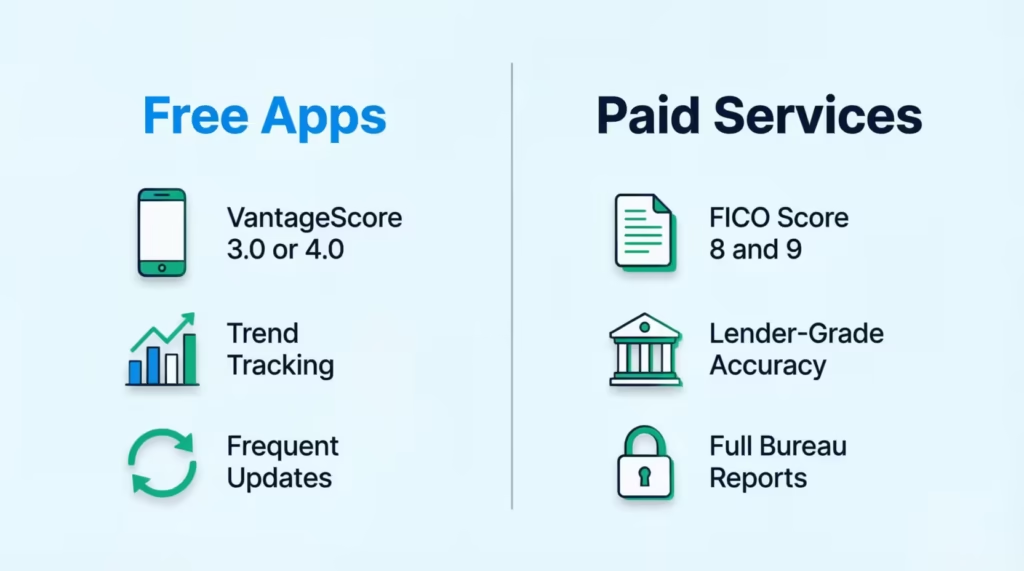
Most free tools, like Credit Karma or your bank’s built-in tracker, show a VantageScore. It’s free for these apps to use, and it’s easy to update often. Paid services from myFICO or your credit card issuer usually show a FICO Score. FICO is the score most lenders actually use.
Here’s a quick way to think about it:
| Source Type | Score Model Usually Shown | What It’s Good For |
|---|---|---|
| Free apps (Credit Karma, CreditWise) | VantageScore 3.0 or 4.0 | Tracking trends, spotting big changes |
| Paid services (myFICO) | FICO Score 8, 9, and industry versions | Knowing what most lenders will see |
| Bank or card issuer app | Either FICO or VantageScore | Free monitoring, tied to that account |
So a free app isn’t “wrong.” It’s just showing a different score, built by a different company, with different rules. Data from FICO shows that FICO models are used in over 90% of lending decisions, which is why the paid version tends to line up more closely with what a lender sees.
Why Credit Scores Differ Across the Three Credit Bureaus
There are three major credit bureaus in the U.S.: Experian, Equifax, and TransUnion. Each one keeps its own file on you. Those files aren’t identical, and that’s the second big reason your scores don’t match.
Lenders and creditors don’t have to report to all three bureaus. Some report to only one or two. So if your car lender reports only to Experian, that account may show up on your Experian report but not on your Equifax report. Your Equifax score might be a bit lower because it’s missing that positive payment history.
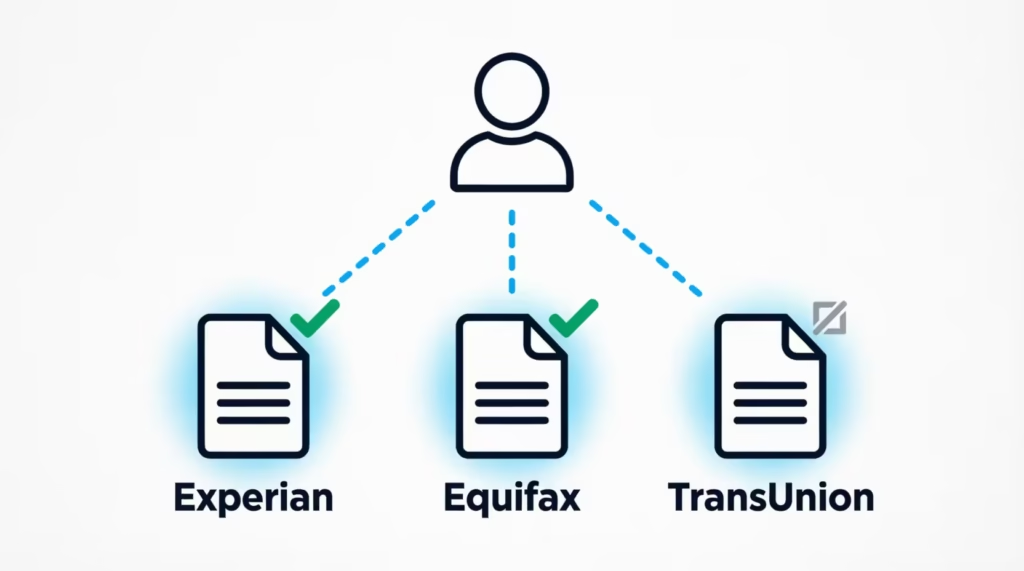
Other reasons the three bureaus can show different data:
- A creditor updates one bureau on the 5th and another on the 20th.
- A hard inquiry gets pulled from just one bureau, not all three.
- An old collection account drops off one report sooner than another.
- A dispute you filed was resolved with one bureau but not yet the others.
Each bureau then plugs its own version of your file into a scoring model. Different data in, different score out. It’s the same math but with slightly different inputs.
Because of this, the Consumer Financial Protection Bureau recommends checking all three reports at least once a year. That way you can spot missing accounts, outdated info, or errors that might be pulling one score down.
Why FICO and VantageScore Give Different Numbers
FICO and VantageScore are two different companies that both create credit scores. They use similar factors, but they weigh them differently, so the same credit file can produce two different numbers.
Both models look at:
- Payment history
- Amounts owed
- Length of credit history
- New credit
- Credit mix
But the weights aren’t the same. FICO puts the heaviest weight on payment history and amounts owed. VantageScore treats total credit usage and payment history as its top factors, but it weighs the newer credit and available credit differently.
A few smaller differences can move the number more than you’d expect:
- Minimum history needed. VantageScore can score a file with just one month of history. FICO usually needs at least six months.
- How they treat collections. VantageScore ignores paid collections. Older FICO models still count them.
- How they treat multiple inquiries. Both group rate-shopping inquiries, but the windows and rules differ.
So imagine you paid off a small collection last year. VantageScore may skip it. An older FICO Score may still count it. That one difference alone can create a 30 to 50 point gap on the same credit file.
How Timing and Refresh Dates Cause Score Differences
Even when two sites use the same scoring model and the same bureau, timing can still cause the numbers to differ. Credit scores are a snapshot. A snapshot taken on Monday and one taken on Friday can look different if anything on your report changed during the week.
Picture this. Sarah, a 32-year-old marketing manager, checks her Credit Karma score on the 1st of the month. It says 728. On the 10th, her credit card statement posts and shows a $2,300 balance because she just booked a vacation. When she checks her bank’s FICO score on the 15th, it drops to 701. Nothing is broken. Her utilization ratio just spiked because the balance got reported before she paid it down.
Common timing causes for score gaps:
- Your card issuer reports balances once a month, right after your statement date.
- Some sites update your score weekly. Others update daily or only when you log in.
- New accounts or hard inquiries can take a few days to appear.
- Paid-off debts can take 30 to 45 days to show as $0.
So a score you saw two weeks ago and a score you see today might not match, even on the same site. That’s a refresh gap, not a real change in your credit.
⚠️ Mistake to Avoid: Don’t panic if your score drops right after a big purchase or balance transfer. Wait one full billing cycle after you pay the balance down. The score almost always bounces back.
When Two Sites Show the Same Score Type But Still Differ
Sometimes two apps both advertise “FICO Score 8” or “VantageScore 3.0” and the numbers still don’t match. That usually comes down to caching and pull dates.
- Different pull dates. One site may have pulled your file on the 1st. Another pulled it on the 15th. Anything that changed in between will show up in only one of the scores.
- Cached scores. Some free apps don’t pull a fresh report every time. They show you the last score they pulled, even if it’s a few weeks old.
- Different bureau feeds. A FICO 8 from Experian and a FICO 8 from Equifax use the same math but different data files. Same model, different inputs, different score.
If you want an apples-to-apples comparison, check both scores on the same day, from the same bureau, using the same model. That’s the only way the numbers should truly match.
Which Score a Lender Will Actually Use for Your Application
The score you see on Credit Karma is rarely the exact number a lender will use. Lenders pick a scoring model based on what they’re lending money for, and many of those models are built specifically for their industry.
Most lenders use one of these:
- Mortgage lenders: Usually pull older FICO models (FICO 2, 4, and 5) from all three bureaus and use the middle score.
- Auto lenders: Often use FICO Auto Score 8 or 9, which weighs auto loan history more heavily.
- Credit card issuers: Usually use FICO Bankcard Score 8 or 9, which focuses more on revolving credit behavior.
- Personal loan and fintech lenders: May use FICO 8, FICO 9, or a VantageScore, depending on their internal setup.
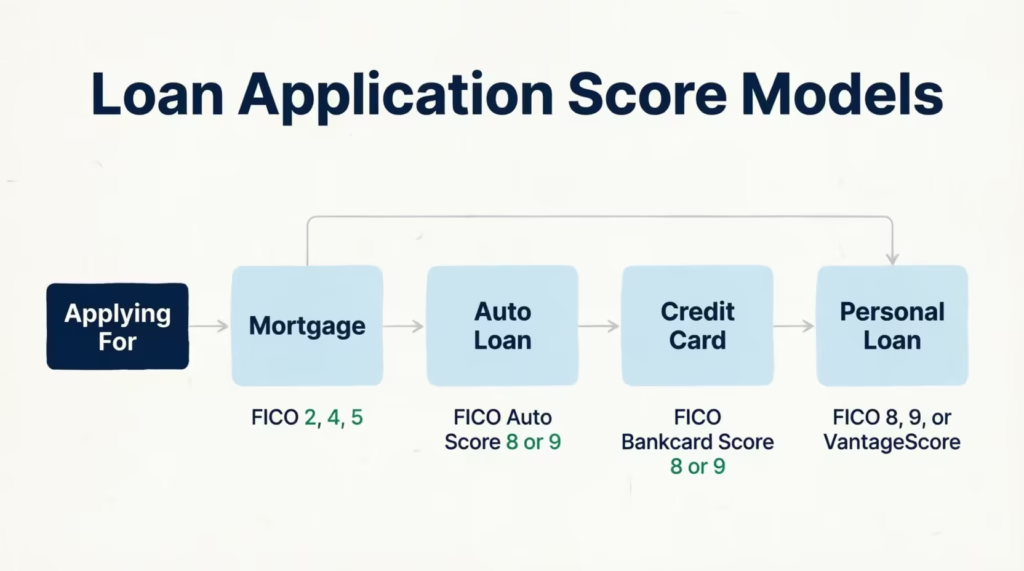
So the “one true score” idea just doesn’t work. A mortgage lender and an auto lender can pull your file on the same day and see two different numbers, both correct for their purpose.
How to Find Out Which Score a Specific Loan Type Uses
You don’t have to guess. You can ask, or you can look it up. Here’s how to find the exact score before you apply.
- Call the lender directly. Ask which scoring model and which bureau they’ll use for a hard pull. Most loan officers will tell you.
- Check the loan disclosure. After you apply, federal law requires the lender to send you a risk-based pricing notice or an adverse action notice showing the exact score they used,
- Use a paid service. myFICO shows you the specific industry FICO scores lenders use for mortgages, autos, and credit cards. It’s the closest match to what most lenders see.
Here’s a quick guide by loan type:
| Loan Type | Score Model Commonly Used | Bureau Approach |
|---|---|---|
| Mortgage | FICO Score 2, 4, and 5 | Pulls all 3, uses middle |
| Auto Loan | FICO Auto Score 8 or 9 | Usually 1 bureau |
| Credit Card | FICO Bankcard Score 8 or 9 | Usually 1 or 2 bureaus |
| Personal Loan | FICO 8, FICO 9, or VantageScore | Varies by lender |
Why Lenders Sometimes Use Customized Scoring Criteria
Some banks and credit unions layer their own rules on top of a standard FICO or VantageScore. They call it a custom scorecard.
A custom scorecard mixes your credit score with other data the lender already has about you. That can include:
- Your checking account balance and history with that bank
- How long you’ve been a customer
- Your income and job stability
- Existing loans or deposit accounts
So even if your FICO Score 8 is 740 at two banks, one might approve you and the other might not. Their custom rules see you differently. It’s not something you can shop for on a website. It’s just how each lender chooses to manage risk.
How Much of a Score Difference Is Normal vs. a Red Flag
Not every gap between scores is a problem. Some gaps are normal. Some are worth a closer look. Here’s a simple rule of thumb.
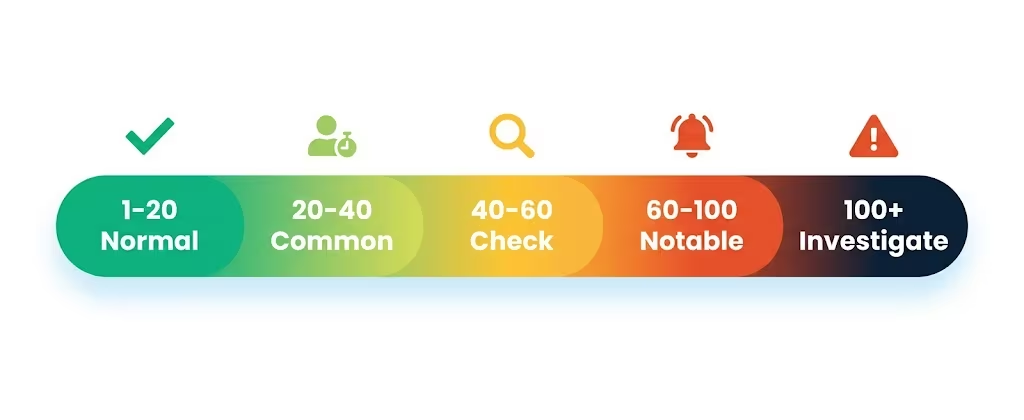
- 1 to 20 points: Totally normal. Different pull dates or a slightly newer report.
- 20 to 40 points: Very common. Usually a different model or a different bureau. No action needed.
- 40 to 60 points: Worth checking. Could be missing account data on one bureau or an older model in use.
- 60 to 100 points: Notable. Something is likely different in the underlying report, not just the model.
- 100+ points: Investigate. There may be an error, a missing account, or possibly identity theft.
A Consumer Financial Protection Bureau study found that most consumers land in the same credit category (fair, good, excellent) across models, even when the exact numbers differ. So a 30-point gap almost never changes how a lender sees you.
The real question isn’t the exact number. It’s whether the gap changes your credit tier. If you’re “good” on one and “poor” on another, that’s the point to dig deeper.
When a Score Difference Signals a Real Problem
A large or sudden gap can mean something is wrong with your credit report. When any of these show up, treat it as a signal to investigate, not just a scoring quirk.
- One bureau’s score is 100+ points lower than the others.
- You see an account you don’t recognize on one report but not the others.
- A hard inquiry shows up that you didn’t authorize.
- A closed or paid account still appears as open or unpaid.
- Your name, address, or Social Security number is wrong on one report.
These issues can be credit report errors, mixed files (someone else’s data on your report), or in the worst case, identity theft. Under the Fair Credit Reporting Act, you have the right to dispute anything inaccurate and have it removed or corrected.
📌 Did You Know: You can freeze your credit for free with all three bureaus. A freeze blocks new accounts from being opened in your name and doesn’t hurt your score.
What to Do If Your Scores Are Significantly Different
Follow these steps in order. Don’t skip ahead.
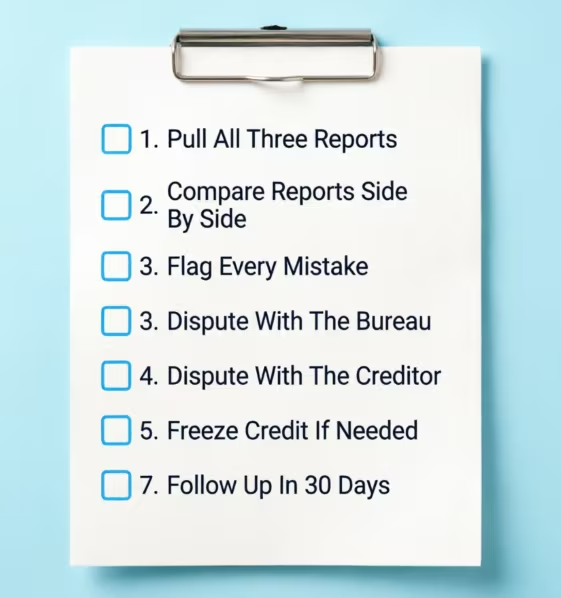
- Pull all three free reports. Go to AnnualCreditReport.com, the only federally authorized site for free reports. You can now get free weekly reports from each bureau.
- Compare the reports side by side. Look for accounts that appear on one but not the others. Look for balances that don’t match. Look for names, addresses, and inquiries you don’t recognize.
- Flag every mistake. Highlight anything that looks wrong. Even small errors, like a wrong address, can matter.
- File a dispute with the bureau. Each bureau has an online dispute portal. Submit the error with proof (statements, letters, payoff confirmations).
- File a dispute with the creditor too. This step gets skipped a lot, but it speeds things up. The creditor is the one who reported the info.
- If you suspect identity theft, freeze your credit. Then file a report at IdentityTheft.gov to build your case.
- Follow up in 30 days. Bureaus must investigate within 30 days. If nothing happens, escalate to the CFPB.
Most disputes are resolved within a month. Real errors get removed. Your scores usually align more closely once the data matches up across bureaus.
Which Score You Should Track Going Forward
You don’t need to track every score. Pick one score to monitor and use the others as a sanity check.
For most people, the best choice is a FICO Score 8 from any one bureau. Here’s why:
- It’s the most widely used score in lending.
- It reflects the same math lenders use.
- It responds quickly to positive changes like lower balances.
Free options that show a FICO Score 8 include Experian’s free plan, Discover Credit Scorecard (no card needed), and many bank apps. If you want a complete view, myFICO lets you pay for scores from all three bureaus. It also includes the FICO versions used for mortgages, autos, and cards.
Here’s a simple tracking plan that works for most people:
- Every month: Check your main FICO Score 8. Watch the trend, not the exact number.
- Every three months: Pull one of the three bureau reports at AnnualCreditReport.com. Rotate which bureau you check.
- Six months before a big loan: Pay for a full three-bureau FICO pull. This shows you what a lender is likely to see.
- After any big change: New card, big payoff, missed payment. Check the score in the next 30 to 45 days.
The trend line matters far more than the exact number on any single day. A rising trend on one solid score means your credit is getting stronger, no matter what the other apps show.
Frequently Asked Questions (FAQs)
Why does my credit score change on different sites?
Each site may use a different scoring model, pull from a different bureau, or refresh on a different day. A 20 to 40 point gap between sites is common and doesn’t mean anything is wrong.
Which is the best site to check your credit score?
A free FICO Score 8 from Experian or Discover Credit Scorecard is a solid choice since FICO models are used in over 90% of lending decisions. For a complete three-bureau view, myFICO gives you the industry-specific scores lenders actually pull.
Do lenders look at Equifax or Experian?
Lenders don’t stick to just one bureau. Mortgage lenders typically pull FICO scores from all three bureaus and use the middle score, while auto and credit card lenders often rely on just one or two.
How to get FICO score 2 4 5?
FICO Scores 2, 4, and 5 are the older models mortgage lenders pull from all three bureaus. A paid service like myFICO is the closest way to see these specific industry scores before you apply.
Is your FICO score your true credit score?
There’s no single “true” score since FICO alone has dozens of versions built for different industries, like FICO Auto Score 8 for car loans or FICO Bankcard Score 8 for credit cards. Which one counts as “true” depends entirely on what you’re applying for.
What is the biggest killer of credit scores?
A sudden spike in credit utilization, like a large balance posting right before your statement date, can drop your score fast.
Why are Equifax and Experian so different?
Not every creditor reports to all three bureaus, so an account showing on Experian might be missing from Equifax entirely. Different report dates and unresolved disputes with one bureau can widen the gap further.
How much of a credit score difference is normal?
A 1 to 20 point gap is totally normal, and 20 to 40 points is very common due to different models or bureaus. Gaps over 100 points are worth investigating for possible errors or identity theft.
What should I do if my scores are significantly different?
Pull all three free reports at AnnualCreditReport.com and compare them side by side for missing accounts or wrong balances. File a dispute with both the bureau and the creditor if you spot an error, since bureaus must investigate within 30 days.
Is 620 a poor credit score?
The CFPB found most consumers land in the same credit category, like fair, good, or excellent, across different scoring models even when exact numbers vary. So a score like 620 typically falls in a similar tier no matter which site shows it.
Wrapping Up
Different sites show various credit scores. This happens because they use different scoring models, pull data from various bureaus, and refresh on different days. That’s normal. Based on the thresholds in this guide, a gap of 20 to 40 points is expected, while gaps of 100+ points are worth investigating.
The best way to track your credit is to choose one FICO Score 8. Check your three free bureau reports each year. Also, ask each lender which score they will use. That way, you stop worrying about the number and start managing what really moves it.
If you know someone getting ready for a mortgage, car loan, or new credit card, share this article. It could save them from misreading a score gap right when it matters most.