
We know how heavy it feels when credit card balances keep growing, and the calls from collectors won’t stop. If you’re sitting at your kitchen table wondering whether filing bankruptcy on credit card debt is even possible for someone in your position, you’re not alone. Many people carry $10,000 to $50,000 in credit card debt before they even consider this option.
The short answer: yes, most consumer credit card debt can be wiped out in Chapter 7 or partially repaid in Chapter 13 if you follow the legal steps in the right order.
Below, you’ll get the full path, with clear day-by-day markers, real dollar amounts, and the traps to avoid before you file.
Key Takeaways
This guide explains how to file bankruptcy on credit card debt, covering the means test, Chapter 7 versus Chapter 13, required steps, 2026 filing costs, and rules that can block your discharge.
Core Facts:
- Chapter 7 discharges nearly all qualifying credit card debt in 3 to 5 months and costs $338 in filing fees for 2026.
- Chapter 13 requires a 3 to 5 year repayment plan, costs $313 in filing fees, and only discharges the unpaid portion of debt after the plan ends.
- Qualifying for Chapter 7 depends on a means test comparing household income to your state’s median, with a second disposable-income calculation if income is above median.
- Luxury purchases over $900 or cash advances over $1,250 within 60 days of filing are presumed non-dischargeable under federal law.
- The automatic stay takes effect immediately upon filing and stops collection calls, lawsuits, wage garnishments, and repossessions in progress.
- Filing requires mandatory credit counseling before the petition and a debtor education course afterward, both from U.S. Trustee approved providers.
Best for:
- People whose main debts are unsecured credit cards, medical bills, or personal loans with income at or below their state median.
- Readers deciding between Chapter 7 and Chapter 13 who want to understand discharge timing, costs, and eligibility before filing.
- Anyone close to filing who needs to know which recent credit card charges could be excluded from discharge.
Do You Qualify to File Bankruptcy for Credit Card Debt
Before you gather a single document, you need to know if the law lets you file. For Chapter 7, which most credit card filers pick, the key gate is the means test.
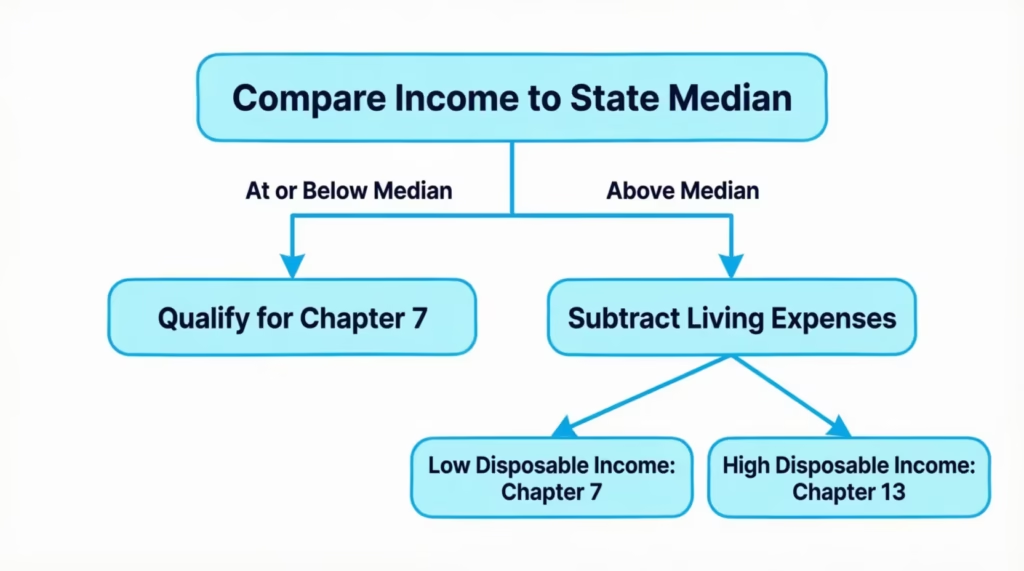
The means test is a two-part income check. First, you compare your household’s gross income for the last six months (annualized) to the median income for a household of your size in your state. If you’re at or below the median, you pass, and you can file Chapter 7. Median figures are updated by the U.S. Trustee Program and posted on the Census Bureau Median Income Table used by the U.S. Trustee Program.
If your income is above the median, you move to Part 2. Here, you subtract allowed living expenses (rent, food, transportation, medical costs) from your income. What’s left is called disposable income. If your disposable income is low enough, you still qualify for Chapter 7. If it’s too high, the law “presumes abuse,” and you’ll usually need to file Chapter 13 instead.
Good news for most card-debt filers: because your debts are unsecured (no house or car attached to them), and because you likely have limited disposable income after basic bills, most people in this situation pass the means test without a problem. The U.S. Courts’ Chapter 7 – Bankruptcy Basics page walks through the same qualification rules in plain terms.
There is no minimum debt amount required to file. You don’t need $50,000 in debt to qualify. But most people don’t file for small balances, because bankruptcy carries a long credit report impact.
Complete Mandatory Credit Counseling
The very first legal step, before you file anything with the court, is a short counseling session. Skip this step, and your case gets dismissed the day you file it.
Under federal law, you must finish a credit counseling session with an agency approved by the U.S. Trustee Program within 180 days before you file your petition. The full approved list is on the DOJ’s Credit Counseling & Debtor Education Information page. Do not use any agency that is not on that list. Only approved providers can issue the certificate the court will accept.
The session is short. Most agencies offer it online, over the phone, or in person. It usually takes 60 to 90 minutes. The counselor will review your income, expenses, and debts. Then, they’ll guide you through options, such as a debt management plan. This is not a lecture, and it does not require you to change your mind about filing.
Cost is usually $10 to $50. If your household income is below 150% of the federal poverty line, most agencies must offer a fee waiver. Ask for it up front.
When you finish, the agency issues a credit counseling certificate. Save it. You’ll attach it to your bankruptcy petition. If you file without it, the clerk will still take your paperwork, but your case will be dismissed within days.
⚠️ Mistake to Avoid: Do not take the counseling session more than 180 days before filing. If your petition is filed on day 181, the certificate is dead, and you’ll have to retake the course.
Choose Chapter 7 or Chapter 13 for Your Credit Card Debt
Not every bankruptcy chapter treats card debt the same way. Picking the wrong one can trap you in a five-year repayment plan you didn’t want.
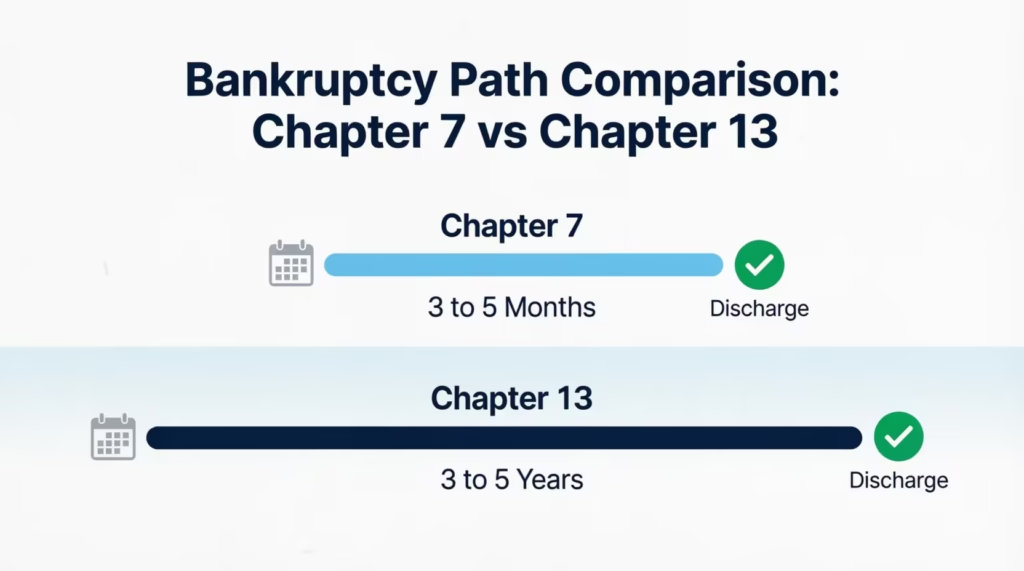
Chapter 7 is a liquidation case. The court appoints a bankruptcy trustee who can sell non-exempt assets to pay creditors. In practice, most Chapter 7 filers with card debt keep all their property, because state or federal exemptions cover the things they own. The case is fast (about 3 to 5 months from filing to discharge), and at the end, qualifying unsecured debts are wiped out.
Chapter 13 is a reorganization case. You keep everything, but you pay back part of your debt through a court-approved plan over 3 to 5 years. The amount you repay depends on your income and assets, not on how much debt you have. Chapter 13 is the right pick if you’re behind on a house or car and want to catch up, or if your income is too high for Chapter 7.
Credit card balances are unsecured and non-priority. They have no collateral and no special legal status. So, they sit at the bottom of the payment order in both chapters. That’s the technical reason card debt is so treatable in bankruptcy.
Most people whose main problem is credit card debt end up in Chapter 7. It’s faster, cheaper, and fully discharges the balances.
How Much of Your Credit Card Debt Gets Discharged in Each Chapter
In Chapter 7, essentially 100% of qualifying credit card debt is wiped out at discharge. The card issuer cannot come after you for the balance. There are narrow exceptions, mostly for debt tied to fraud or very recent luxury purchases (covered in the next sections).
In Chapter 13, only the portion of card debt not covered by your monthly plan payment is discharged at the end. Many filers repay pennies on the dollar to unsecured creditors, and the rest is wiped out when the plan finishes. But if your income supports full repayment, you may end up paying most of the balance back.
Here is a simple comparison for credit-card-only cases:
| Feature | Chapter 7 | Chapter 13 |
|---|---|---|
| Length of case | 3–5 months | 3–5 years |
| Card debt discharged | Nearly all | Portion not paid by plan |
| Filing fee (2026) | $338 | $313 |
| Repayment plan | None | Required (36–60 months) |
| Stays on credit report | Up to 10 years | Up to 10 years (often removed at 7) |
Gather the Documents and Information You’ll Need
Filing without the right paperwork causes delays, trustee objections, and stress you don’t need. Pull these documents together before you sit down to fill out the petition:
- Pay stubs for the last 6 months (or proof of income if self-employed)
- Federal tax returns for the last 2 years
- Bank statements for the last 3 to 6 months, from every account
- A complete list of creditors with account numbers, balances, and mailing addresses (pull all three credit reports free at AnnualCreditReport.com)
- Deeds, titles, and loan statements for any real estate, vehicles, or other big assets
- Retirement and investment account statements
- A list of household bills and monthly expenses (rent, utilities, groceries, insurance, medical)
- Your credit counseling certificate from the pre-filing course
- Your photo ID and Social Security card (needed later at the 341 meeting)
You’ll list every creditor. Leaving one off, even by accident, can leave that debt out of the discharge. Pull all three credit reports so you catch old collection accounts you may have forgotten.
Also write down every lawsuit, wage garnishment, or repossession that is pending or has happened in the last year. The court needs this on your Statement of Financial Affairs.
Filing Costs and Fees to Expect
Bankruptcy is not free, but it is affordable compared to what you save. Here are the real 2026 costs for filing on your own (pro se):
- Chapter 7 filing fee: $338 total ($245 case filing fee + $78 administrative fee + $15 trustee surcharge)
- Chapter 13 filing fee: $313 total ($235 case fee + $78 administrative fee)
- Pre-filing credit counseling: $10–$50 (waiver available for low income)
- Post-filing debtor education course: $10–$50 (waiver available)
If you cannot pay the Chapter 7 filing fee at once, you can ask the court to let you pay in up to 4 installments within 120 days. If your household income is below 150% of the federal poverty line, you can also apply for a full fee waiver using Official Form 103B.
Attorney fees are separate and vary widely. Chapter 7 attorneys usually charge $1,000 to $2,500 flat for a straightforward card-debt case. Chapter 13 attorneys typically charge $3,000 to $5,000, but most of that gets rolled into your plan payments.
Avoid the Recent Credit Card Use Traps Before You File
This is where people accidentally sink their own case. If you know bankruptcy is coming, stop using your cards right now. The law watches your last 60 days closely.
Two federal rules under 11 U.S.C. § 523(a)(2)(C) create a presumption of fraud (meaning the debt is presumed not dischargeable unless you can prove otherwise):
- Luxury goods presumption: Consumer debts of more than $900 for luxury goods or services owed to a single creditor, incurred within 60 days before filing, are presumed non-dischargeable. “Luxury” is defined broadly. It’s basically anything not reasonably necessary for you or your dependents. So restaurants, vacations, jewelry, electronics, and designer clothes can all fall in.
- Cash advance presumption: Cash advances totaling more than $1,250 from a single open-end credit account (a credit card is one), taken within 60 days before filing, are presumed non-dischargeable.
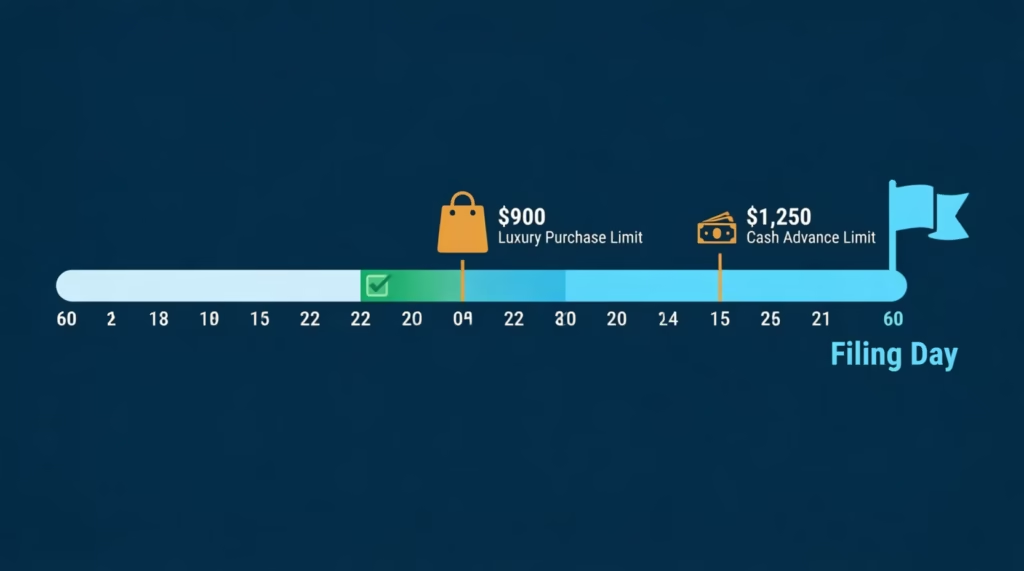
These dollar amounts were adjusted upward effective April 1, 2025, and they apply nationwide.
If a creditor challenges the debt under this rule, you can still try to prove you intended to repay when you charged it. But the burden shifts to you, and litigation is expensive. The safe approach is to stop using cards. Avoid cash advances, too. Don’t pay a large amount to one creditor just before filing. This can be seen as a “preference payment” and could be reversed.
Beyond the two presumptions, a creditor can also allege actual fraud under 11 U.S.C. § 523(a)(2)(A) if you ran up balances with no intent to repay, even outside the 60-day window. Examples: charging $8,000 on a card the week after you got a bankruptcy consult, or maxing out a card the day before filing.
💡 Pro Tip: If bankruptcy seems likely, put your cards away. Pay only the minimum on each account, or nothing if you’re close to filing. Also, don’t make any big payments or balance transfers to one creditor for at least 90 days before you file.
File Your Bankruptcy Petition
This is the moment your case officially starts. Filing means submitting your petition and schedules to the U.S. Bankruptcy Court for the federal district where you live.
Your petition packet includes:
- Voluntary Petition (Form 101)
- Schedules A/B through J (your assets, debts, income, and expenses)
- Statement of Financial Affairs (Form 107)
- Means test forms (122A-1 for Chapter 7, 122C for Chapter 13)
- Credit counseling certificate
- Filing fee (or fee waiver/installment application)
You can file in person at the clerk’s office or electronically. Most districts now accept electronic filing for pro se debtors through their court’s online system. Find your local court at PACER’s court finder.
The second the clerk stamps your petition, your case number is assigned, and something powerful kicks in immediately: the automatic stay.
What the Automatic Stay Does Immediately
The moment you file, 11 U.S.C. § 362 creates a legal wall between you and your creditors. This is the automatic stay, and it takes effect at the exact minute your petition is accepted.
The stay stops:
- Collection calls and letters from card issuers and collectors
- Lawsuits already filed against you for unpaid card debt
- Wage garnishments coming out of your paycheck
- Bank account levies and freezes tied to a judgment
- Repossessions and foreclosures already in progress
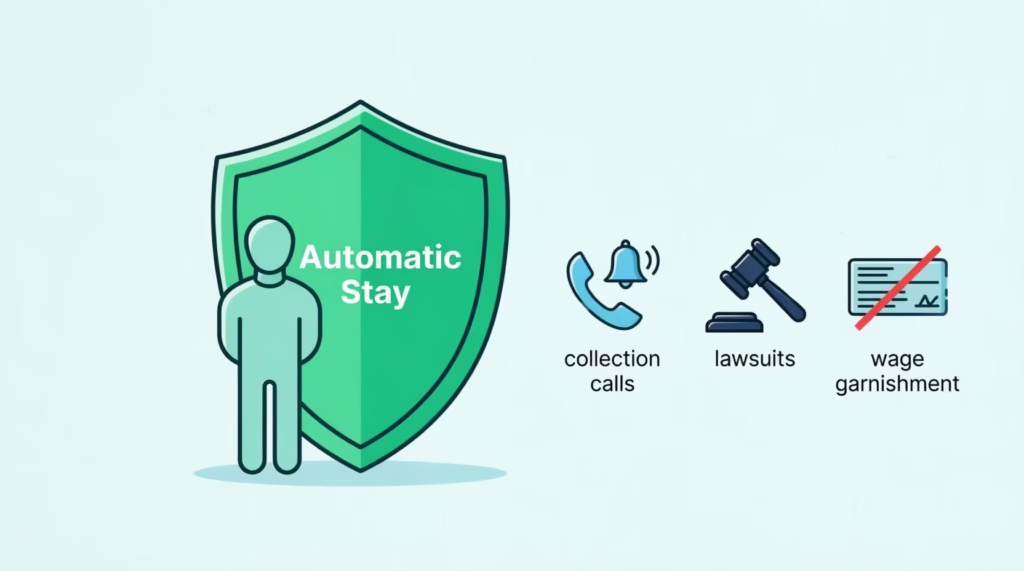
Card issuers get formal notice from the court within days, but many stop calling within 24 hours of filing once your case is entered in the PACER system. If a creditor keeps calling after they’ve been notified, that’s a violation of federal law, and you can seek damages.
The stay lasts until your case ends. In Chapter 7, that’s usually 3 to 5 months. In Chapter 13, it lasts through the entire plan.
What Happens to Your Credit Cards
This is the practical worry that keeps people up at night: “Will they take the cards? Do I have to hand them over?”
You must list every credit card account on your bankruptcy schedules, even ones with zero balance and even ones you rarely use. Hiding a card is not allowed and can lead to your entire case being thrown out.
Once you file, the court sends notice to each card issuer. Almost every issuer will then close your accounts, whether you had a balance or not. They see you as a credit risk and can legally cancel the account.
You are not usually required to physically cut up or surrender the cards. Nothing in the Bankruptcy Code makes you hand over the plastic. But the account behind the plastic is dead. If you try to swipe a card after filing, the charge will be declined. If it somehow goes through, that new balance is a fresh debt (not part of your bankruptcy), and using a card you know is closed could be treated as fraud.
Two common surprises:
- Zero-balance cards get closed too. Even cards you were paying off in full every month usually get canceled once the issuer sees the bankruptcy filing.
- Authorized user cards on someone else’s account. These usually stay open, because the debt is not yours. But list them anyway so the trustee sees the full picture.
Attend the 341 Meeting of Creditors
The 341 meeting of creditors is the step people fear most, mostly because the name sounds worse than it is. This is not a courtroom trial. It’s a short meeting run by your bankruptcy trustee, not a judge.
Your meeting is scheduled roughly 21 to 40 days after you file (usually about 30 days). You get the date and location in the mail within a week of filing. Most 341 meetings are now held by phone or video conference, a change that stuck after 2020.
At the meeting:
- The trustee will place you under oath.
- You’ll show your photo ID and Social Security card (originals, not copies). Bring these no matter what.
- The trustee will ask a set of standard questions: did you list all your assets, did you list all your debts, did you sign the papers yourself, have you filed before, do you expect any money soon (like a tax refund or inheritance).
- Creditors are invited but rarely show up in credit-card-only cases. If a card issuer does show, they usually ask about recent large charges.
The meeting itself typically lasts 5 to 10 minutes. Dress neatly, answer honestly, and don’t guess. If you don’t know an answer, say so.
Bring:
- Photo ID and Social Security card
- The most recent bank statement from every account
- Any documents the trustee’s notice specifically requests
- A copy of your filed petition
If the trustee needs more information, they’ll continue the meeting to a later date. That’s routine and not a sign your case is in trouble.
Complete Your Debtor Education Course
After you file, there is one more required course. This is the debtor education course, sometimes called the personal financial management course, and it is different from the credit counseling you did before filing.
You must finish it within 60 days after the date first set for your 341 meeting in Chapter 7. In Chapter 13, you must finish it before your last plan payment. Miss the deadline, and the court will close your case without giving you a discharge. That means the debt stays.
Only providers on the U.S. Trustee’s approved debtor education list can issue the certificate. Check the list before you pay anything.
The course is about 2 hours long, usually taken online. Topics cover budgeting, managing money, using credit wisely, and saving. Cost is normally $10 to $50, with fee waivers available for low-income filers.
When you finish, the provider gives you a certificate (Form 423). File it with the court, or in many districts the provider files it electronically for you. Confirm it hits the docket, because no certificate means no discharge.
Receive Your Discharge and What It Means
The discharge is the whole point of the process. It’s a federal court order that legally erases your card debt.
For Chapter 7, the discharge is typically entered 60 to 90 days after your 341 meeting, assuming no creditor filed an objection and you completed the debtor education course. Total time from filing to discharge is usually 3 to 5 months.
For Chapter 13, the discharge comes at the end of your 3-to-5-year plan, after your final payment is verified by the trustee.
What the discharge legally does:
- It permanently bars every listed creditor from ever trying to collect the discharged debt. No calls, no letters, no lawsuits, no wage garnishment. Violations are punishable by contempt of court.
- It converts the automatic stay into a permanent discharge injunction under 11 U.S.C. § 524.
- It does not erase legally non-dischargeable debts: most student loans, recent taxes, child support, alimony, criminal fines, and debts from fraud.
Credit card debt usually gets wiped out. But a creditor can challenge a charge if they follow the recent-use rules we discussed earlier.
You’ll get the discharge order in the mail. Keep it forever. It’s your proof if any creditor tries to collect on a discharged debt years later (which does happen, especially with debt buyers).
Do You Need a Bankruptcy Attorney or Can You File Pro Se
Filing without a lawyer is called filing pro se, and it is legal. The U.S. Courts publish a full pro se filing guide for people who choose this path. The real question is whether pro se makes sense for your case.
Pro se filing is realistic for a Chapter 7 credit-card-only case if all of these are true:
- Your only major debts are credit cards, medical bills, and personal loans (all unsecured)
- You’re clearly under the median income for your state
- You don’t own a house, or your equity is fully within your state’s homestead exemption
- You haven’t taken cash advances or made luxury purchases in the last 60 days
- No creditor has filed a lawsuit alleging fraud
- You have not filed bankruptcy in the past 8 years
Hire a bankruptcy attorney if any of these are true:
- You want to file Chapter 13 (the plan math and legal work are complex; pro se Chapter 13 cases fail at a very high rate)
- You have significant home equity or business assets
- A creditor is threatening a fraud lawsuit or has already filed one
- You’ve been sued and are close to a judgment or wage garnishment
- Your income is above the state median, and you need help with the means test
- You have non-dischargeable debts mixed in (recent taxes, student loans you want to challenge)
Cost check: A straightforward Chapter 7 attorney fee runs $1,000 to $2,500 in most parts of the country. If that’s out of reach, look at your local legal aid society or the Legal Services Corporation finder at LSC.gov, which lists free help for low-income filers. Many federal courts also have pro bono bankruptcy clinics that match filers with volunteer attorneys.
📌 Did You Know: Research from the American Bankruptcy Institute shows Chapter 13 cases filed pro se complete successfully at a far lower rate than those filed with an attorney. For Chapter 13, the money spent on legal help usually pays for itself.
What Happens After Your Credit Card Debt Is Discharged
The day the discharge hits, your card debt is gone. But the story doesn’t end there, and knowing what’s next helps you plan.
How long bankruptcy stays on your credit report. A Chapter 7 filing shows up on your credit report for up to 10 years from the filing date. Chapter 13 also has a 10-year legal cap under the Fair Credit Reporting Act, but the three major credit bureaus (Equifax, Experian, TransUnion) voluntarily remove Chapter 13 filings after 7 years, according to the Consumer Financial Protection Bureau.
Realistic credit score recovery timeline:
- Months 0–6 after discharge: Score often rises slightly because the discharged balances drop off as active debt.
- Year 1: You can typically qualify for a secured credit card (you deposit cash as your limit). This is the fastest way to rebuild.
- Years 1–2: Auto loans become available at higher-than-average rates.
- Years 2–4: With clean payment history, most filers reach the mid-600s FICO range.
- Years 4–7: Many reach the 700s if new credit is used carefully.
- Year 7 (Chapter 13) or Year 10 (Chapter 7): The filing drops off entirely.
Refiling limits. You are not stuck if life goes sideways again, but the law sets waiting periods:
- Chapter 7 to Chapter 7: 8 years from the earlier filing date
- Chapter 7 to Chapter 13: 4 years from the earlier filing date
- Chapter 13 to Chapter 7: 6 years from the earlier filing date
- Chapter 13 to Chapter 13: 2 years from the earlier filing date
Rebuilding steps most people take in the first year:
- Open a secured credit card with a small deposit ($200–$500).
- Pay every bill on time, every month. Payment history is 35% of your FICO score.
- Keep card use under 30% of your limit, and under 10% if you can.
- Check all three reports free at AnnualCreditReport.com every 4 months, and dispute any listing that still shows an old debt as “owed.”
- Save a small emergency fund ($500 to start). Cash on hand is what kept most people from needing the card in the first place.
The legal term for this stage is a fresh start, and it is written into the Bankruptcy Code on purpose. The system is designed to give you a working baseline to rebuild from.
Frequently Asked Questions
Will bankruptcy get rid of credit card debt?
Yes, Chapter 7 discharges nearly 100% of qualifying credit card debt within 3 to 5 months of filing. Chapter 13 discharges only the portion not covered by your 3 to 5year repayment plan.
What debt cannot be forgiven in bankruptcy?
Most student loans, recent taxes, child support, alimony, criminal fines, and debts tied to fraud survive bankruptcy. Credit card charges made fraudulently, like luxury purchases over $900 or cash advances over $1,250 within 60 days of filing, can also be excluded.
What disqualifies you from filing bankruptcy?
Having income too high to pass the means test is the main disqualifier for Chapter 7, since your disposable income after allowed expenses must be low enough. Filing again too soon after a prior bankruptcy also disqualifies you, such as within 8 years of a past Chapter 7.
How much money do you need for bankruptcy?
There is no minimum debt amount required to file bankruptcy. What matters instead is qualifying through the means test and being able to cover the $338 Chapter 7 or $313 Chapter 13 filing fee, with installment plans or fee waivers available.
What income is too high for bankruptcy?
Income above your state’s median household income for your family size moves you to Part 2 of the means test, where your disposable income is calculated. If that disposable income is too high after allowed expenses, the law presumes abuse and pushes you toward Chapter 13 instead.
What happens after 7 years of not paying credit card debt?
Chapter 13 bankruptcy filings drop off your credit report after 7 years. The three major bureaus do this voluntarily, even though the legal limit is 10 years. This is separate from the debt itself, which becomes uncollectible through lawsuits once your state’s statute of limitations expires (this varies by state).
What will you lose if you declare bankruptcy?
In Chapter 7, a trustee can sell non-exempt assets, but most filers with only credit card debt keep everything because state or federal exemptions cover their property. You will also lose access to any credit cards you had, since issuers typically close all listed accounts, even ones with a zero balance.
What is the 90-day rule in bankruptcy?
Making a large payment to one creditor within 90 days before filing can be treated as a “preference payment” and reversed by the trustee. This is why the article advises against paying off one card in full or making balance transfers right before filing.
How long after filing bankruptcy do you go to court?
You attend a 341 meeting of creditors, not a courtroom trial, roughly 21 to 40 days after filing, usually about 30 days. This short meeting is run by a bankruptcy trustee and typically lasts only 5 to 10 minutes.
Can I keep one credit card if I file bankruptcy?
No, once you file, the court notifies every listed issuer, and almost all of them close your accounts, even ones with a zero balance. Authorized user cards on someone else’s account usually stay open since that debt isn’t yours, but you must still list them.
Wrapping Up
Filing on card debt is a legal process, not a life sentence. The path is fixed: qualify through the means test, finish credit counseling, pick Chapter 7 or Chapter 13, file a complete petition, attend a short 341 meeting, complete debtor education, and receive your discharge.
For many readers with credit card debt, Chapter 7 is the best option. You can expect a full discharge in about 3 to 5 months. The total court fee is $338, and you get legal protection from collectors as soon as you file.
The key protective step is easy: stop using the cards at least 60 days before filing. This way, the recent-use rules won’t affect you.
If this guide helped you see a clear path, share it with someone stuck making minimum payments. It could be the reason they stop drowning.