
Readers often ask me a common, worried question: they need $100 before Friday. They see Dave’s “Credit, Cash and Money” tagline in the app store, but they’re unsure if tapping “Get ExtraCash” will affect their credit report for seven years.
That fear is fair, because most short-term borrowing tools do get reported, and the answer for Dave isn’t a simple yes or no.
In this guide, I’ll break down exactly what Dave sends to the credit bureaus, what it doesn’t, and how to use the app without any nasty surprises.
Key Takeaways
This guide explains whether Dave reports to credit bureaus, covering the difference between ExtraCash advances and the Build Credit feature, missed payment consequences, and alternative credit-building tools.
Core Facts:
- Dave’s ExtraCash advances are never reported to Equifax, Experian, or TransUnion, so on-time or late repayment does not affect your credit score.
- Dave’s Build Credit feature reports rent and utility payments to credit bureaus, but only for accounts where the user opts in through a partnership with LevelCredit.
- A missed ExtraCash payment triggers repeated ACH withdrawal attempts, which can cause bank overdraft or nonsufficient funds fees of $30 to $35 each.
- Dave states it does not charge late fees on ExtraCash and has historically said it does not sell ExtraCash debt to third-party collectors or sue for the balance.
- The Build Credit feature can report up to 24 months of past rent history, and the first tradeline typically appears on a credit report within 30 to 60 days.
- Frequent ExtraCash use will not affect FICO or VantageScore directly, but manually reviewed loan applications like mortgages may flag frequent advances on bank statements.
Best for:
- Readers who use or are considering Dave’s ExtraCash advance and want to know if missed or late payments will affect their credit score.
- Readers who want to use Dave’s Build Credit feature specifically to add rent or utility payment history to their credit report.
- Readers comparing Dave to other credit-building methods such as secured credit cards, credit-builder loans, or standalone rent-reporting services.
Does Dave Report to Credit Bureaus? The Short Answer
No. Dave does not report your ExtraCash advances, repayments, or late payments to Equifax, Experian, or TransUnion. That’s the direct answer for the feature most people use.
But there’s an important split inside the Dave app that trips people up. The app has two very different products, and only one of them touches your credit file at all.
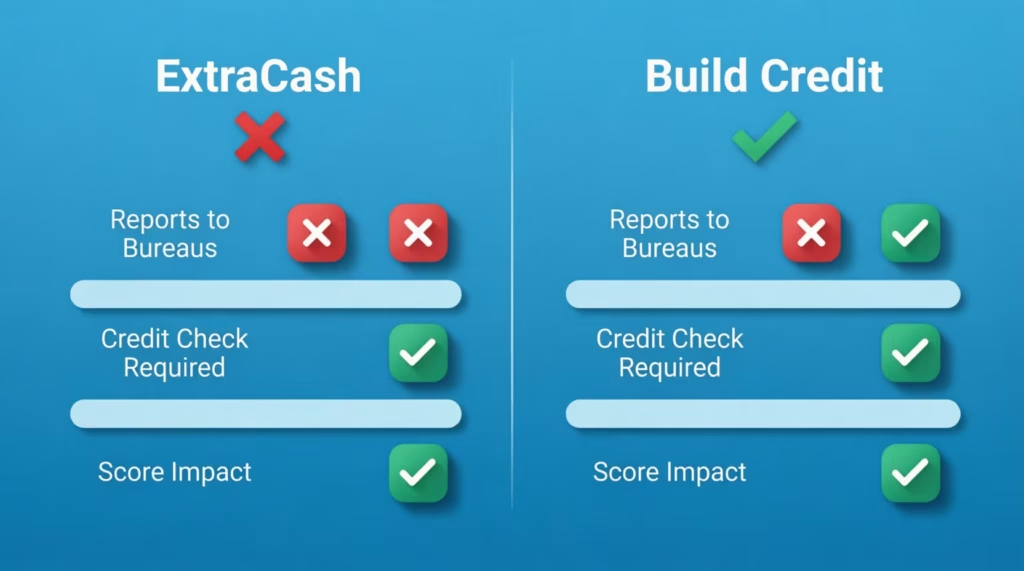
The first product is ExtraCash, the small dollar advance of $5 to $500 that Dave is famous for. This product never gets reported to any of the three big bureaus. You can take an advance, pay it back, be late paying it back, or even fail to pay it back, and none of that activity will appear on your credit report through Dave itself. Dave’s own ExtraCash account terms confirm the company only shares information with bureaus to verify the account exists, not to report payment history.
The second product is Dave’s Build Credit feature, which is a rent and utility reporting tool. This one does report, but only the payments you tell it to track, and only if you opt in. It has nothing to do with your ExtraCash borrowing.
So if you’re asking whether the Dave app can help or hurt your score, the honest answer depends on which feature you’re using. ExtraCash is invisible to your credit report. Build Credit is visible, on purpose, and only for the bills you connect.
💡 Pro Tip: If you only want the cash advance and don’t want anything reported to the bureaus, just skip the Build Credit setup. The two features are separate, and using one doesn’t force you to use the other.
How to Verify Dave’s Current Reporting Policy Yourself
Policies change, and you shouldn’t take any blog’s word for it, including this one. Here’s how to check Dave’s current stance in under two minutes.
Open the Dave app and tap the menu icon, then go to Settings, then Legal. Look for the ExtraCash Account Agreement and the Privacy Policy. Use the search function inside each document and type “credit bureau” or “Equifax.” The section that comes up will spell out exactly what Dave shares and with whom.
You can also read the same documents on a desktop at dave.com/extra-cash, which is often easier for scanning. If the wording ever changes, that page will show it first.
Does ExtraCash Affect Your Credit Score?
Taking an ExtraCash advance will not move your credit score up or down. Not by one point. The reason is simple: your score is built from the data sitting inside your credit files at the three bureaus, and Dave doesn’t send ExtraCash data to any of them.
That includes every kind of activity you might expect to matter. On-time payments don’t help. Late payments don’t hurt. The advance balance doesn’t count toward your credit utilization ratio, because it isn’t a credit card or a line of credit that the bureaus can see. Even if you take five advances in a month, your FICO or VantageScore won’t budge because of it.
Dave uses its own internal risk model to decide how much to advance you. It checks your linked bank account, your paycheck deposit pattern, your account balance history, and how you’ve managed past advances with Dave. This is a private scoring system, not a bureau-based one. ExtraCash does not build credit and does not report to bureaus.
The trade-off is real. You get fast money without a hard inquiry, but you also get no credit-building benefit from paying it back on time. If your goal is a higher score, ExtraCash is a neutral tool at best.
Does Dave Do a Credit Check to Sign Up?
No hard credit check happens when you sign up for Dave. There’s no inquiry on your Equifax, Experian, or TransUnion file, and your score won’t drop from applying.
Instead, Dave asks to connect to your primary checking account through a bank data service like Plaid. It then reviews your recent transaction history to decide if you qualify for an advance. The review looks at things like how often paychecks land in your account, your average balance, whether you have a pattern of overdrafts, and how long the account has been open.
This is called a cash flow underwriting model. It’s the same general approach that most cash advance apps use. This is why people with thin credit files or low scores can still qualify for a Dave advance, even when a traditional lender would decline them.
Dave’s Build Credit Feature: How Rent and Utility Reporting Works
Dave’s Build Credit feature is a completely separate product from ExtraCash. It’s powered through a partnership with LevelCredit, a rent and bill reporting service owned by Self Financial. When you turn it on, Dave sends your on-time rent payments, and in some cases utility payments, to the credit bureaus as a positive tradeline on your report.
Here’s the mechanic. You link the checking account where your rent gets paid. LevelCredit scans your bank account for recurring rent payments. It confirms the payment amount and your landlord.
The service can then report up to 24 months of past rent history and your ongoing monthly payments. The rent tradeline appears on your credit report. It may help your credit score, especially with newer scoring models such as VantageScore 3.0, VantageScore 4.0, and FICO 9, which can consider rent payment data.
Not every rent payment qualifies. LevelCredit generally needs to see a clear, recurring payment to the same landlord or property manager. Cash rent, Venmo to a roommate, or irregular amounts usually won’t count. You’ll also need a Dave Spending account with active direct deposit to unlock the feature, based on Dave’s current terms.
Set realistic expectations for the score bump. Adding a positive rent tradeline can help thin-file consumers see a meaningful lift, sometimes 20 to 40 points in the first reporting cycle, but results vary. If you already have several credit cards and a long history, the boost tends to be smaller. And older scoring models used by some mortgage lenders still ignore rent data entirely.
⚠️ Mistake to Avoid: Signing up for Build Credit and then paying your rent through a channel LevelCredit can’t verify. If your landlord takes a paper check or Zelle from a different account, the payments won’t get reported and you’ll pay for a service that isn’t tracking anything.
How to Turn On Credit Reporting in Dave
Turning on rent reporting inside Dave takes about five minutes if you have your lease and rent payment info ready.
Step 1: Open the Dave app. If you don’t have it, download it from the Apple App Store or Google Play.
Step 2: Tap the profile or menu icon and look for Build Credit or Credit Building. On some versions, it sits under a “Grow” or “Credit” tab.
Step 3: Tap Get Started and confirm you have a Dave Spending account. If you don’t, the app will walk you through opening one, which is free but requires ID verification.
Step 4: Link the checking account where rent gets paid. This is often your Dave Spending account, but it can be an outside bank if that’s where the rent debit hits.
Step 5: Enter your landlord’s name, your monthly rent amount, and your address. The app cross-checks this against the transactions it sees.
Step 6: Choose whether to report past rent history. Reporting up to 24 months of past on-time rent is often a paid add-on, while ongoing reporting may be included with Dave’s monthly membership fee.
Step 7: Confirm and submit. The first tradeline typically shows up on your credit report within 30 to 60 days.
If you want to double-check that reporting is active, log into a free credit monitoring tool and look for a new “rental” or “LevelCredit” tradeline on your report.
What Happens If You Miss an ExtraCash Payment?
A missed ExtraCash payment will not appear on your credit report. That’s the good news. But it’s not consequence-free, and the fallout can still cost you money and cut off future advances.
Dave collects repayment through an ACH withdrawal on your scheduled due date, which is usually your next payday. If the withdrawal fails because your balance is too low, Dave will typically try again over the next few days.
Each retry can trigger an overdraft fee or a nonsufficient funds fee from your bank. Those fees are often between $30 and $35 each. This is more painful than any late fee Dave itself would charge. t it does not charge late fees or penalties on ExtraCash.
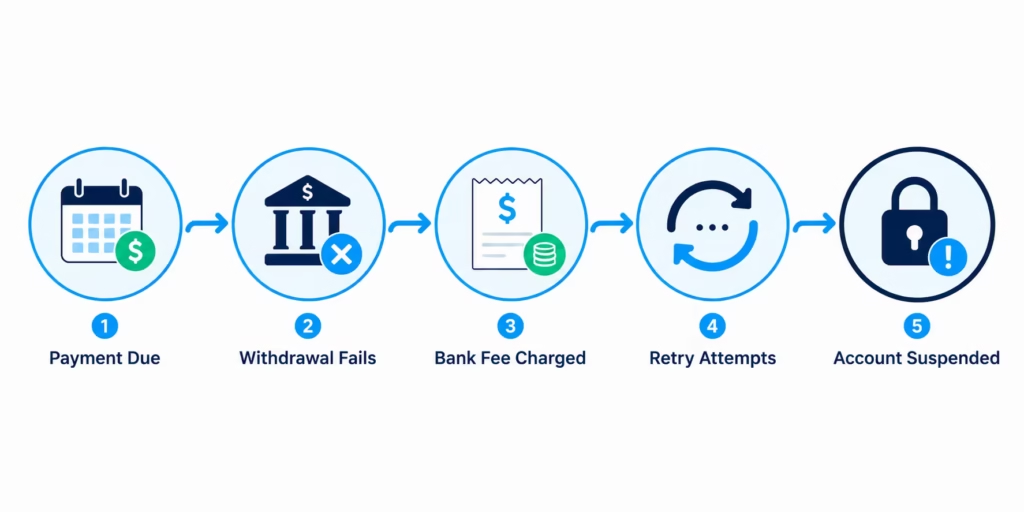
If the retries keep failing, Dave will suspend your ExtraCash access. You won’t be able to request another advance, and your account may be limited until the balance is cleared. The company may email you, send in-app reminders, and eventually attempt to work out a payment plan.
Can Dave send you to collections? Historically, Dave has stated it doesn’t sell ExtraCash debt to third-party collectors and doesn’t sue for the balance. That policy is worth checking against the current ExtraCash terms because it can change.
If Dave sends your unpaid balance to a collection agency, the agency may report the account to the credit bureaus. That could hurt your credit score. Right now, a missed Dave payment does not directly appear on your credit report. However, the risk is not completely gone. Any lender can send an unpaid debt to collections.
📌 Did You Know: The Federal Trade Commission took action against Dave in 2024 over how it disclosed fees and tips. Since then, the fee structure has been updated, but it’s worth reviewing your total cost, including express fees and optional tips, before every advance.
Can Using Dave Frequently Hurt Your Credit Indirectly?
Yes, indirectly, and this is the part most articles skip. Even though the three bureaus can’t see your Dave activity, other lenders sometimes can.
When you apply for a mortgage, an auto loan, or a personal loan, the lender often asks for two or three months of bank statements. A human underwriter reads those statements. If they see six ExtraCash advances in ninety days, plus deposits from Earnin and Brigit, they may flag your file as “cash flow strained.” That flag can lead to a higher interest rate, a smaller loan amount, or a denial, even if your credit score itself looks fine.
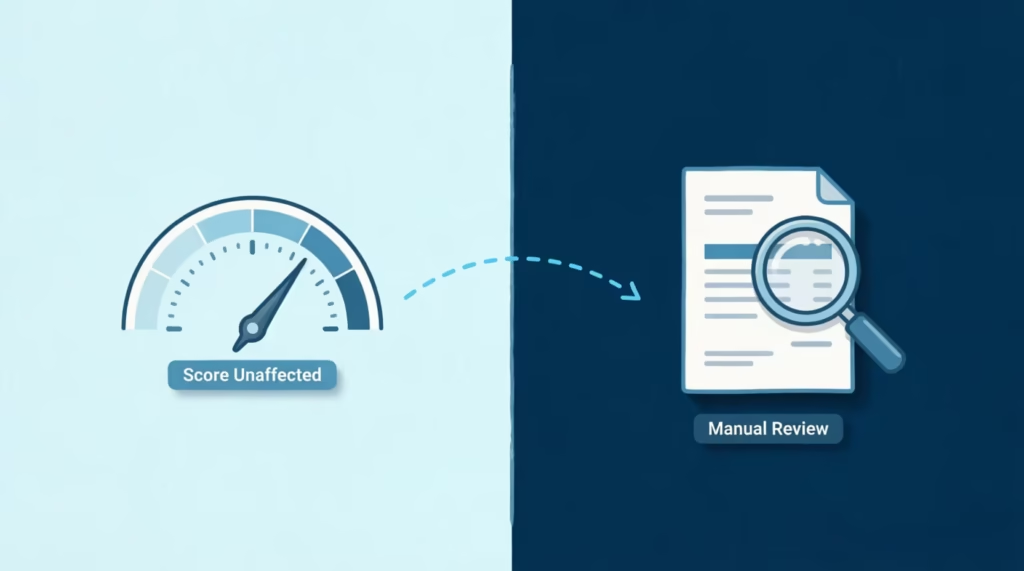
This matters most for manually underwritten loans, which include most mortgages, jumbo loans, small business loans, and some auto loans through credit unions. Automated underwriting for a car loan or a credit card usually doesn’t pull bank statements at all, so frequent advances don’t come up.
The practical advice is simple. Use ExtraCash when you need it, but try to keep the pattern light in the two to three months before any major loan application. Space out your advances. Wait for one or two “clean” statement cycles before applying for a mortgage. Also, be prepared to explain any transactions if an underwriter asks.
None of this affects your FICO or VantageScore. It only affects how a human at a bank interprets your finances when they’re looking directly at your account.
Dave vs. Other Cash Advance Apps: Which Ones Report to Bureaus?
Most cash advance apps follow the same playbook Dave does. They don’t report advances or repayments to the credit bureaus, because their underwriting isn’t credit-based to begin with. Here’s how the main players stack up:
| App | Reports advances to bureaus? | Credit check to sign up? | Optional credit building product? |
|---|---|---|---|
| Dave | No | No | Yes, rent and utility reporting via LevelCredit |
| Brigit | No | No | Yes, Credit Builder loan reported to bureaus |
| Earnin | No | No | No dedicated credit building product |
| Chime | No, for SpotMe advances | No | Yes, Credit Builder secured card reports to bureaus |
| MoneyLion | No, for Instacash advances | Soft check only | Yes, Credit Builder Plus loan reports to bureaus |
The pattern is clear. The advance side of these apps stays off your credit file. Where they can help your score is through their separate credit-building products, which are usually a small loan or a secured card designed specifically to be reported.
If you want to build credit, Chime’s Credit Builder secured card and Brigit’s Credit Builder loan usually give better score boosts than rent reporting. This is because they create a full revolving or installment tradeline that all scoring models accept.
If Dave Won’t Build Your Credit, What Will?
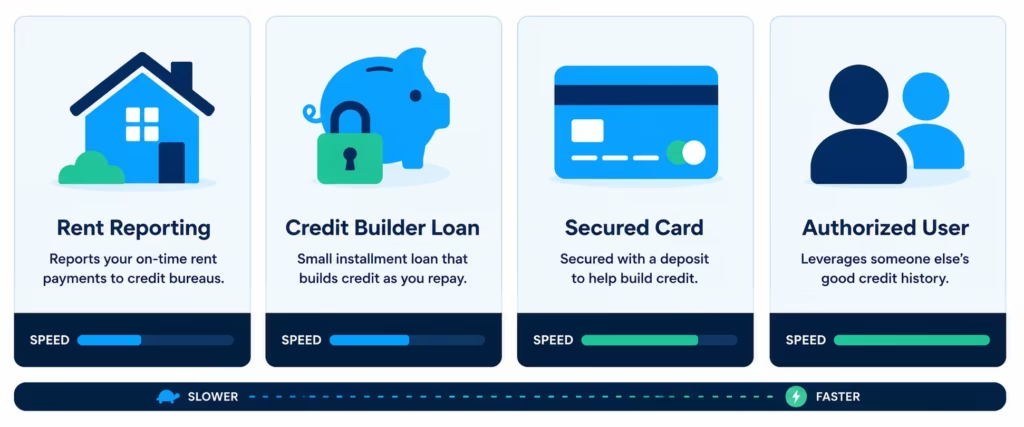
Dave’s rent reporting can help, but it’s not the fastest or most reliable way to build a score. Three tools tend to work better for most people, especially those starting from a thin file or rebuilding after damage.
Secured Credit Cards
A secured credit card is a real credit card backed by a refundable cash deposit. You put down $200 to $500. The bank gives you a card with that same credit limit. Every on-time payment gets reported to all three bureaus as a revolving tradeline. The advantage is speed and coverage.
Secured cards are reported by every major scoring model, unlike rent, and a new account can start moving your score within one to two billing cycles. Look for cards with no annual fee, automatic upgrades to unsecured cards after six to twelve months of on-time payments, and reporting to all three bureaus. Products like the Discover it Secured, Capital One Platinum Secured, and Chime Credit Builder are common starting points.
Keep utilization low, ideally under 10 percent of your limit, and pay in full every month. That combination produces the strongest score lift.
Credit-Builder Loans
A credit builder loan flips the normal loan structure. Instead of getting money upfront, you make monthly payments into a locked savings account, and at the end of the term, usually 12 to 24 months, you get the money back minus interest and fees. Every payment during that term is reported as an installment tradeline.
This works well for two reasons. First, it forces a savings habit alongside the credit building. Second, it adds an installment account to your file, which improves your credit mix, a small but real scoring factor. Self, Credit Strong, and many local credit unions offer these loans with monthly payments as low as $25.
Becoming an Authorized User
Being added as an authorized user on someone else’s credit card can add years of positive history to your file overnight. If a parent, spouse, or close family member has a card with a long history, a low balance, and a perfect payment record, ask if they’ll add you.
You don’t even need to use the card, and in some cases you don’t need physical access to it. The card issuer reports the account on your credit file along with the primary holder’s, so their history becomes part of your score calculation.
Not every issuer reports authorized user data to all three bureaus, so check before relying on it. Discover, Chase, and American Express are among the issuers that generally do.
The catch is that this ties your score to someone else’s behavior. If they miss a payment or run up the balance, your score takes the hit too. Only do this with someone whose habits you trust.
Rent-Reporting Services as an Alternative to Dave’s Build Credit Feature
If you like the idea of rent reporting but don’t want to keep a Dave account or set up direct deposits there, several standalone services can do the same job. Some of them even cost less.
LevelCredit’s own direct product, sold under the RentTrack brand, costs about $6.95 per month and reports to all three bureaus. You get the same reporting engine Dave uses, without needing the Dave app.
Self Rent Reporting is free if you’re already a Self credit builder loan customer, and it reports to all three bureaus. It’s one of the few no-cost options and is a strong pick if you’re already using Self.
Boom Rent Reporting costs around $2 per month and can report up to 24 months of past rent history, which can be a big score boost if you have a long rental record.
Rental Kharma and Rent Reporters are older services that typically cost $25 to $75 upfront plus a small monthly fee. They tend to have strong landlord verification, which helps if your rent payment method is unusual.
The most important thing to check before paying for any rent reporter is which bureaus it reports to. A service that only reports to TransUnion, for example, will only move your TransUnion score. All three bureaus reporting is the gold standard, and it’s what you want if a lender might pull any of the three files.
The added tradeline from a rent reporter can lift a thin file score noticeably, but it doesn’t replace the value of a revolving or installment account. For the strongest overall profile, combine rent reporting with a secured card or a credit builder loan.
Frequently Asked Questions
Does Dave show up on your credit report?
Only if you opt in to Dave’s Build Credit feature, which reports rent and utility payments to the three credit bureaus. ExtraCash advances and repayments never appear on your credit report, no matter how you use them.
What happens if I don’t pay back Dave?
Dave retries the ACH withdrawal over the next few days, which can trigger $30 to $35 overdraft fees from your bank. Your ExtraCash access gets suspended until the balance clears, but Dave doesn’t charge late fees itself.
Can Dave put you in collections?
Dave has stated it doesn’t sell ExtraCash debt to collectors or sue for the balance, though this policy can change. If an unpaid balance ever does move to an outside collection agency, that agency could report it to the credit bureaus.
How long does it take to get $500 from Dave?
A first tradeline from Dave’s rent reporting typically shows up within 30 to 60 days of setup, but that’s separate from ExtraCash speed. For ExtraCash specifically, the app’s underwriting reviews your linked bank account activity to determine your advance amount and delivery timing.
Will Dave take money from my account if I don’t have it?
Dave attempts the ACH withdrawal on your due date and retries if it fails due to low balance. Each failed attempt can trigger an overdraft or nonsufficient funds fee from your bank, typically $30 to $35.
What are the cons of Dave?
ExtraCash won’t build your credit even with perfect repayment, and missed payments can trigger bank overdraft fees of $30 to $35 each. Frequent advances can also flag your bank statements as “cash flow strained” to human underwriters on mortgage or loan applications.
Does paying ExtraCash on time help your credit score?
No. ExtraCash activity is never sent to Equifax, Experian, or TransUnion, so on-time repayment has zero effect on your FICO or VantageScore.
Is there a fee for Dave’s Build Credit feature?
Reporting up to 24 months of past rent history is often a paid add-on, while ongoing monthly reporting may be included with Dave’s membership fee. Check the current in-app terms since pricing details can change.
How to get $500 instantly with Dave?
Dave determines your advance amount through cash flow underwriting, reviewing your paycheck deposit pattern, average balance, and repayment history with past advances. This means approval and amount depend on your account activity rather than a fixed guarantee of $500.
The Bottom Line
Dave’s ExtraCash advances stay off your credit report entirely, which means fast cash without a score hit but also without a score benefit. The Build Credit feature is where reporting happens, and it only tracks the rent and utility payments you opt in to share through the LevelCredit partnership. Missed advance payments cost you overdraft fees and app access, not credit points, unless a debt ever moves to outside collections.
To improve credit scores, it’s best to use a **secured credit card** or a credit builder loan along with rent reporting. Relying on rent reporting alone isn’t as effective for most readers. That combination touches every major scoring factor.
If you know someone who is caught between needing quick cash and protecting their credit, share this guide with them. It could help them avoid an overdraft spiral or a missed chance to build their credit score.