
You just split a purchase into four payments with Sezzle. Now you’re wondering, does Sezzle report to credit bureaus? A friend may have warned you that buy now, pay later apps can hurt your score. Or you may want to build credit and are not sure if Sezzle can help.
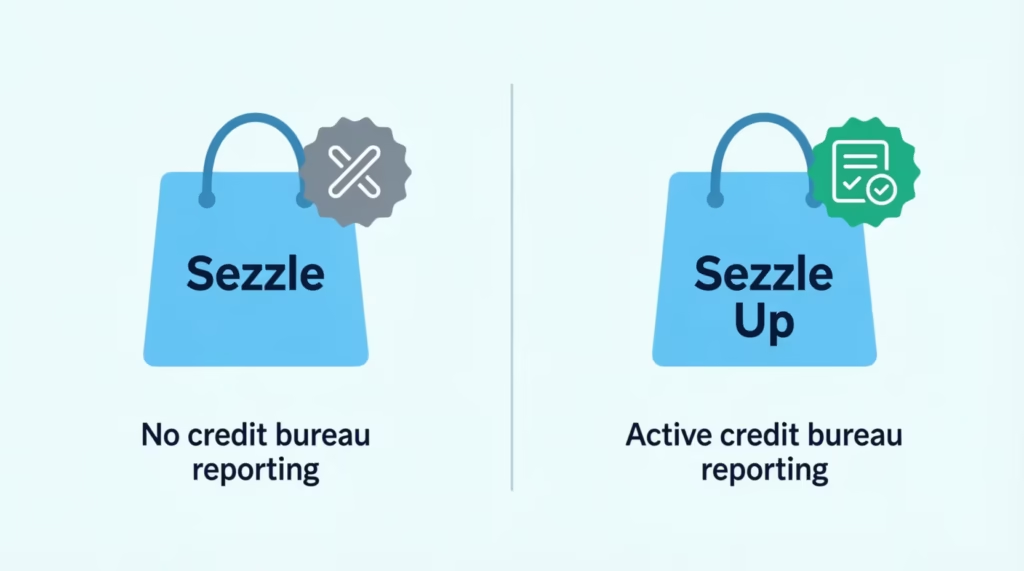
Yes, Sezzle does report to credit bureaus, but only when you opt in to a free feature called Sezzle Up.
Keep reading to learn what Sezzle reports, which bureaus get your data, how to turn on Sezzle Up, and what happens if you miss a payment.
Key Takeaways
This guide explains whether Sezzle reports to credit bureaus, covering the opt-in Sezzle Up program, what account information gets reported, the 30-day late payment threshold, and how to enroll or dispute errors.
Core Facts:
- Sezzle only reports to credit bureaus if a user opts into Sezzle Up, a free credit-building feature; standard Pay-in-4 purchases without Sezzle Up are not reported.
- Sezzle Up reports at the account level, not per purchase, sending the outstanding balance and payment status as a single monthly entry.
- A payment is not reported as late until it is 30 or more days overdue, based on a month-end account snapshot rather than real-time tracking.
- Sezzle Up reports to Experian, Equifax, TransUnion, and Innovis in the United States, and to Equifax Canada for Canadian users.
- To enroll in Sezzle Up, a user must pay off one order on time, link a bank account as the default payment method, and provide a valid Social Security Number.
- Closing a Sezzle account with an unpaid balance does not stop reporting; Sezzle is required to keep reporting the outstanding amount until it is paid.
Best for:
- Sezzle users who want to know whether their account activity is currently visible to credit bureaus.
- Shoppers considering Sezzle Up to build credit history and wanting to understand how reporting timing works.
- Sezzle Up users who missed a payment and want to know the exact timeline before it affects their credit report.
Does Sezzle Report to Credit Bureaus?
Sezzle does not report your activity to credit bureaus by default. The only way to get Sezzle on your credit report is to join Sezzle Up. This is a free, opt-in feature inside the Sezzle app.
Sezzle Up is a credit-building program. It works on top of your normal Sezzle account. When you turn it on, Sezzle starts sending your payment history to major credit reporting agencies.
Both good and bad history get reported. On-time payments can help build your credit file. Late or missed payments can hurt your score. Sezzle must report both sides. They cannot report only the good news and hide the bad.
If you never join Sezzle Up, your normal Pay-in-4 purchases stay invisible to credit bureaus. No one sees them. They do not help or hurt your score through regular reporting.
What Is Sezzle Up and How Is It Different From Regular Sezzle
Regular Sezzle lets you split purchases into four payments over six weeks. This is called Pay-in-4. It works like a short-term plan with no interest charges. Standard Pay-in-4 use does not show up on your credit report at all.
Sezzle Up is a separate layer you add to your account. Think of it as a switch you flip to turn on credit reporting. The app stays the same. Your shopping experience stays the same. The only change is that Sezzle now sends your payment history to credit bureaus each month.
This program exists for people who want to build credit. Many Sezzle users are in their 20s and 30s. They may have thin credit files. A thin file means you do not have much credit history yet. Sezzle Up gives these users a way to add positive payment history to their report over time.
The keyword is opt-in. Sezzle does not sign you up for Sezzle Up on its own. You must choose to join. You must also meet a few basic rules before you can enroll, which are covered later in this guide.
How to Check If You’re Already Enrolled in Sezzle Up
You might have signed up for Sezzle Up a while ago and forgotten. Or you might not be sure if you ever turned it on. Checking is easy and takes less than a minute.
Open the Sezzle app on your phone. Tap on “Account.” Then look under the “Benefits” section. You will see “Sezzle Up” listed there. Tap on it.
This page shows your reporting status for each month. You will see one of two labels:
- “Current” means that month was reported with on-time payments. This is good for your credit.
- “Not Current” means that month was reported with a late or failed payment. This can hurt your credit.
If a month has nothing filled in, Sezzle has not reported for that month yet. This is normal for new members who just joined and have not completed a full reporting cycle.
How Long It Takes for Sezzle Up to Appear on Your Credit Report
When you first join Sezzle Up, your data does not show up right away. It can take up to 60 days from your first order after signing up for Sezzle to appear on your credit report.
This delay happens because of how reporting cycles work. Credit bureaus do not update in real time. Sezzle sends reports once per month, and only after the month ends. So there is a natural gap between when you enroll and when your report changes.
If you check your credit report after a week and see nothing, do not panic. This is completely normal. Wait at least two full months before expecting to see Sezzle on your report. You can always check the Sezzle Up page in your app to see which months have been reported so far.
What Information Sezzle Actually Reports
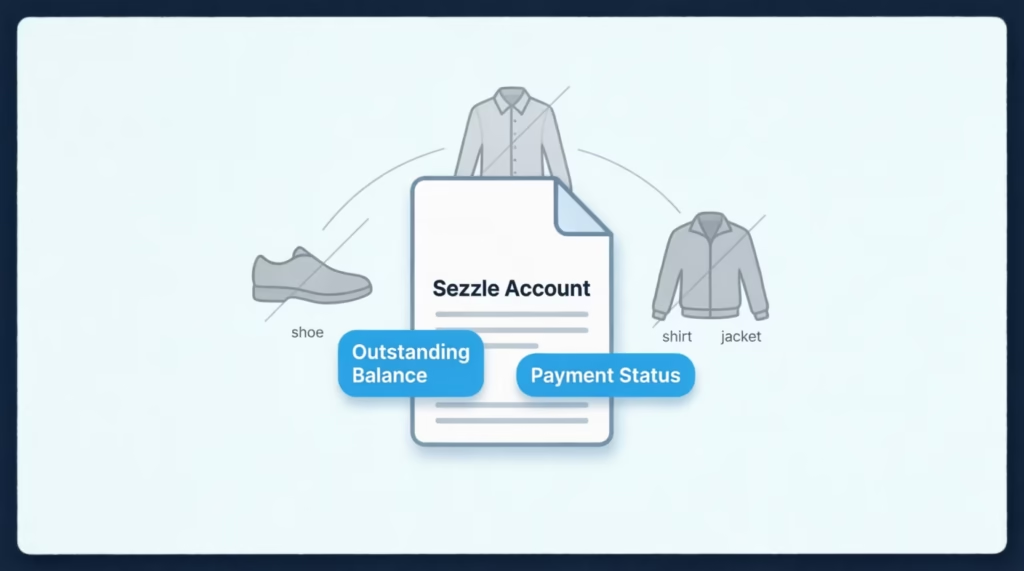
Sezzle reports at the account level, not the purchase level. This is an important detail that many people miss when they worry about how buy now, pay later apps affect their credit.
Your credit report will not show every single item you bought. It will not list each coffee, shirt, or pair of shoes as a separate loan. Instead, Sezzle sends one account entry. This entry shows your overall standing with the company.
📌 Did You Know: Sezzle reports your account as a single entry, not as individual loans for each purchase. This means your average age of credit does not drop every time you shop. Multiple small purchases stay under one account.
What gets included in the report? Sezzle sends your outstanding balance and your payment status. The payment status shows whether you paid on time or fell behind on your schedule.
Sezzle only reports transactions that follow a biweekly repayment schedule. This is the standard Pay-in-4 setup where you make four payments over six weeks. If you use other types of payment plans through Sezzle, they may not be part of the credit reporting.
The Month-End Snapshot and 30-Day Late Rule
Sezzle does not report your balance in real time. Instead, it takes a snapshot at the end of each month. This snapshot captures your account status at that specific point in time. Anything that happens after the snapshot will not show up until the next reporting period.
The most important rule to understand is the 30-day late threshold. A payment is not reported as late to credit bureaus until it is 30 or more days overdue. This gives you a buffer to fix problems before they hit your report.
For example, say your payment fails on January 10. Sezzle will not report it as late in January. But if the payment is still unpaid by the end of February, it gets reported as late in the February snapshot. It will continue to be reported as late every additional month that it stays unpaid.
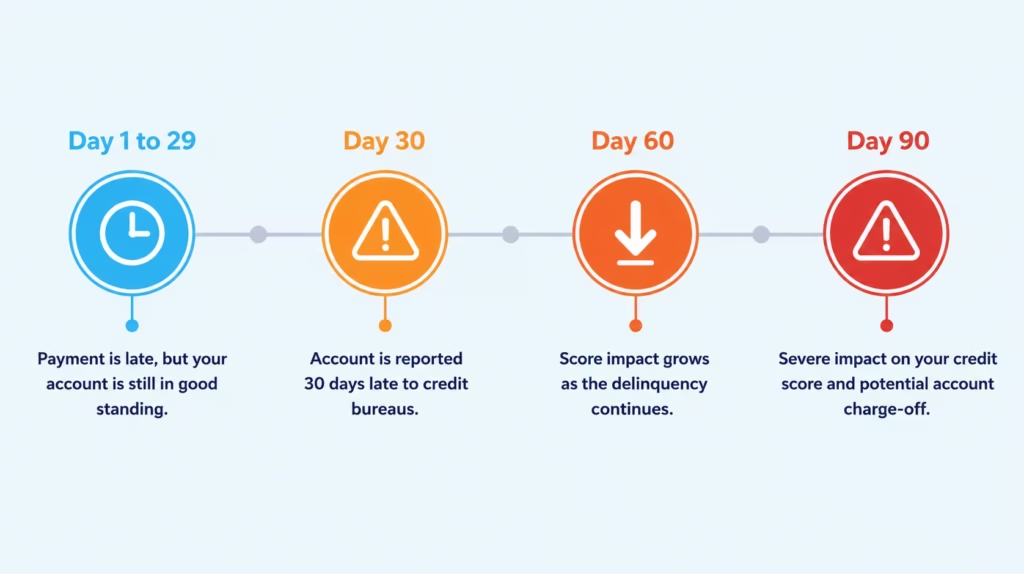
The longer a payment stays failed on your account, the worse the impact on your credit score. A 30-day late mark hurts. A 60-day late mark hurts more. A 90-day late mark causes serious damage that can take years to recover from.
Which Credit Bureaus Receive Sezzle Up Reports
Sezzle sends reports to four credit bureaus in the United States:
- Experian
- Equifax
- TransUnion
- Innovis
The first three are the major bureaus that most lenders check when you apply for credit. Innovis is a smaller bureau that some lenders also use.
If you live in Canada, Sezzle reports only to Equifax Canada. The other bureaus are not included for Canadian users.
This means your Sezzle Up activity appears on reports from all three major US bureaus. Most lenders look at one or more of these when you apply for a credit card, car loan, or mortgage. Your Sezzle payment history will be visible to them as part of your overall credit picture.
Soft Credit Check vs. Credit Bureau Reporting: What’s the Difference
Many people confuse two separate things. One is the credit check at signup. The other is ongoing credit reporting. These are very different, and mixing them up causes needless worry.
When you sign up for Sezzle or check out with Pay-in-4, Sezzle runs a soft credit check. A soft check is a quick look at your credit background. It does not affect your credit score. It does not show up to other lenders. It is invisible to everyone but you.
A hard credit inquiry is different. Hard inquiries can lower your score by a few points. They stay on your report for up to two years. According to Equifax, hard inquiries happen when you apply for new credit, like a credit card, a car loan, or a mortgage.
Sezzle does not run a hard check for standard Pay-in-4 approvals. Hard checks may only apply if you apply for longer-term monthly financing through Sezzle’s lending partners, such as WebBank.
Then there is credit bureau reporting. This is the ongoing monthly update that Sezzle sends to bureaus about your account. This only happens if you are enrolled in Sezzle Up. The soft check at signup is a one-time event. Reporting is a monthly cycle that continues as long as you stay enrolled.
How to Enroll in Sezzle Up to Build Credit
Joining Sezzle Up is free and takes just a few minutes. Before you start, make sure you meet the basic rules.
You must have an active Sezzle account. Your account must not be in default. You need to have placed at least one order and paid it off in full and on time. You also need a valid Social Security Number to verify your identity.
Here are the steps to enroll:
- Pay off one order in full and on time. This shows Sezzle you can handle your payments before they start reporting your activity.
- Link your bank account as your default payment method. Sezzle wants to see a reliable way to collect your scheduled payments.
- Enter your valid Social Security Number and confirm your personal details in the app. This allows Sezzle to match your account to your credit file.
Once you complete these steps, Sezzle Up turns on. Your payment history will start being reported to credit bureaus. Remember, it can take up to 60 days to appear on your actual credit report.
💡 Pro Tip: Keep a backup payment method on file, like a debit card, in case your bank account runs low. This helps you avoid failed payments that could end up on your credit report as late marks.
Does Sezzle Up Actually Help Your Credit Score
Yes, Sezzle Up can help your credit score. But results vary from person to person based on your full credit picture.
On-time payments add positive history to your credit file. This matters most for people with thin credit files or limited history. If you have few accounts on your report, adding a new one with good payment history can give your score a meaningful boost.
David, a 23-year-old graphic designer, enrolled in Sezzle Up after paying off his first two orders. He used it for small purchases like a $60 pair of sneakers and a $45 jacket. After six months of on-time payments, he checked his credit score and saw a 28-point increase.
However, Sezzle Up is not a magic fix. If you already have a strong credit profile with many accounts, adding one more may not move the needle much. The impact depends on what else is on your report. Also, the type of credit Sezzle reports may not carry the same weight as a credit card or car loan in all scoring models. Some FICO score versions treat buy now, pay later accounts differently than traditional credit lines.
How to Opt Out of Sezzle Up Reporting
You can stop Sezzle from reporting your activity, but the process is not as simple as flipping a switch back off. The only way to end Sezzle Up is to close your Sezzle account entirely.
When you close your account, Sezzle stops adding new reporting going forward. But there is a catch. If you still owe money when you close the account, Sezzle is legally required to keep reporting that outstanding balance until it is paid off.
If you close your account with no amounts owed, Sezzle reports the account as closed by you. If you owe money and do not pay within 90 days of the due date, Sezzle reports the account as closed by them. That status can look negative to future lenders.
Sezzle cannot delete negative reports that were already sent to bureaus. Accurate history stays on your report even after you leave the program. This is standard practice under credit reporting laws.
What Happens If You Miss a Sezzle Up Payment
Missing a payment does not instantly ruin your credit score. This is one of the most common fears among Sezzle Up users, and the reality is less scary than you might think.
The key number to remember is 30. A payment is only reported as late to credit bureaus if it stays unpaid for 30 or more days. If you fix the issue quickly, it may never show up on your report at all.
Sarah, a 26-year-old marketing coordinator, missed her Sezzle payment on March 5 when her bank account had insufficient funds. She noticed the issue on March 12 and paid it right away. Because she resolved it within 30 days, the late payment was never reported to the bureaus.
⚠️ Mistake to Avoid: Do not ignore a failed payment notice hoping it will go away on its own. If a payment stays unpaid past 30 days, it gets reported as late. The longer it stays unpaid, the worse the damage to your score.
Here is how the timeline works:
- Day 1 to 29: Your payment is overdue but not yet reported to bureaus. Fix it now and you avoid a late mark on your credit report.
- Day 30 and beyond: The late payment gets reported in the next monthly snapshot. It shows up on your credit report as a 30-day delinquency.
- Day 60 and beyond: The delinquency updates to 60 days late. The impact on your score gets worse.
- Day 90 and beyond: This is a serious delinquency. It can cause major damage to your credit score that takes years to fix.
If you catch a failed payment within the first 30 days, take care of it right away. Add funds to your bank account or switch to a different payment method in the app. The sooner you fix it, the less risk there is to your credit.
Does Regular Sezzle Use (Without Sezzle Up) Ever Affect Your Credit?
Standard Sezzle use without Sezzle Up is invisible to credit bureaus. Your purchases do not show up. Your on-time payments do not help your score. This is the default state for most Sezzle users.
But there is one exception that catches people off guard. If you stop paying and leave a balance unpaid, Sezzle may send your account to a third-party collections agency. When that happens, the collections account can appear on your credit report.
A collections account is a serious negative mark. It can drop your score by 100 points or more, depending on your starting score and the amount involved. It stays on your report for up to seven years from the date of the original delinquency.
The same risk applies to a charge-off. A charge-off happens when a company gives up on collecting a debt and writes it off its books. This also appears on your credit report and causes major damage to your score.
So the rule is simple. Without Sezzle Up, your normal shopping does not affect your credit. But if you default on what you owe, the collections process can still hurt you. The key is to pay what you owe, on time, every time.
This collections risk exists whether or not you are in Sezzle Up. The difference is that with Sezzle Up, your payment activity is reported on a regular monthly basis. Without it, only major problems like collections show up on your report.
How to Dispute Inaccurate Sezzle Credit Reporting
Sometimes Sezzle makes a mistake. You might see something on your credit report that does not look right. Maybe it shows a late payment you know you made on time. Or maybe it shows a balance you already paid off.
You have the right to dispute any inaccurate information on your credit report. The Fair Credit Reporting Act gives you this protection under federal law. Sezzle is required to investigate disputes and fix errors when they find them.
To file a dispute with Sezzle, you need to provide certain information so they can identify your account:
- Your full first and last name
- Your date of birth
- The last four digits of your Social Security Number
- Your current residential address
- Your email address
- Your Sezzle Credit Account number, which you can find on your credit report
You also need to explain what specific information you are disputing and why you believe it is wrong. Include any supporting documents you have. A copy of the relevant part of your credit report is very helpful for speeding up the process.
You can submit your dispute through Sezzle’s contact form on their support page. Select the category that describes your dispute and include all the required details listed above.
Sezzle will investigate your claim and notify you of the results in writing. If they find that an error occurred, they will correct it with the credit bureaus. They can also send a clarification letter to any future creditors who need to know about the fix.
One thing to keep in mind: there may be a lag between what you see in your Sezzle app and what shows on your credit report. Sezzle reports once per month after the month ends. So your current balance in the app may not match what is on your report yet. This is normal and not necessarily an error. Give it a full reporting cycle before filing a dispute about a balance mismatch.
You can also check your credit reports for free once a year from each of the three major bureaus. Visit AnnualCreditReport.com to pull your reports and look for any Sezzle entries that seem wrong.
How Sezzle’s Credit Reporting Compares to Other BNPL Apps
Sezzle is not the only buy now, pay later app out there. You might also use Klarna, Afterpay, or Affirm. Each one handles credit reporting differently, and the differences matter when you are choosing where to shop.
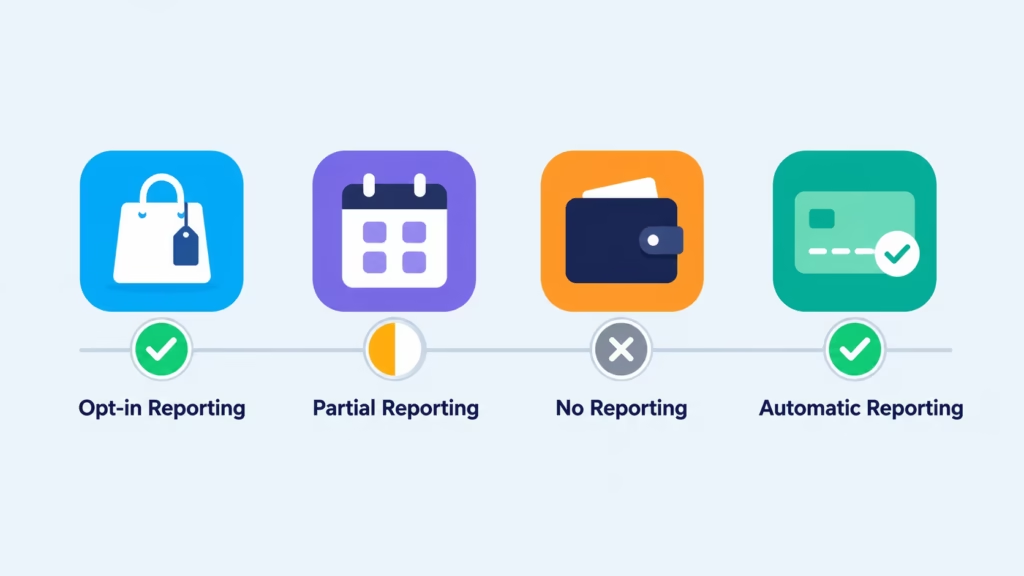
Here is how they compare:
| BNPL App | Reports to Bureaus? | Which Bureaus | What Gets Reported |
|---|---|---|---|
| Sezzle | Yes, with Sezzle Up (opt-in) | Experian, Equifax, TransUnion, Innovis | Account-level standing and payment history |
| Klarna | Only for Pay over time loans | TransUnion, Experian | Monthly financing only (not Pay in 4) |
| Afterpay | No (in the US) | None | Does not report BNPL activity |
| Affirm | Yes (automatic) | Experian, TransUnion | All payment activity (on-time, late, missed) |
Sezzle stands out because it offers an opt-in credit-building path. You choose whether to report. This gives you control over your credit activity. Other apps either report everything or nothing at all.
Klarna reports only its longer-term monthly financing product. Its Pay in 4 plan stays invisible to bureaus, just like standard Sezzle without Sezzle Up. Klarna also notes that the shared data does not currently impact credit scores because other lenders cannot view it yet.
Afterpay does not report to credit bureaus in the United States. The company has stated it will not report until it sees proof that BNPL data helps rather than hurts credit scores. Afterpay does run a soft credit check at signup, but this does not affect your score.
Affirm reports all payment activity to Experian and TransUnion. As of April 2025, Affirm sends both positive and negative payment history for all plans. There is no opt-in or opt-out choice. If you use Affirm, your activity gets reported automatically.
The bottom line is that reporting practices vary widely across BNPL providers. Some report everything. Some report nothing. Some let you choose. Sezzle’s opt-in model gives you the most control over whether your buy now, pay later activity appears on your credit report.
Frequently Asked Questions (FAQs)
Does Sezzle report to credit bureaus?
Sezzle only reports to credit bureaus if you opt in to Sezzle Up, a free credit-building feature. Standard Pay-in-4 purchases without Sezzle Up stay invisible to Experian, Equifax, and TransUnion.
Will using Sezzle affect my credit score?
Regular Sezzle use without Sezzle Up does not affect your score at all. With Sezzle Up enrolled, on-time payments can help your score while payments 30+ days late can hurt it.
What’s the difference between Sezzle and Sezzle Up?
Sezzle is the standard Pay-in-4 shopping app, which never reports to credit bureaus on its own. Sezzle Up is a free opt-in add-on that turns on monthly credit bureau reporting for your payment history.
Does Sezzle Up cost anything?
No, Sezzle Up is completely free to join. You only need to pay off one order on time, link a bank account, and verify your Social Security Number to enroll.
What credit agency does Sezzle use?
Sezzle Up reports to Experian, Equifax, TransUnion, and Innovis in the United States. Canadian users are only reported to Equifax Canada.
How late can I be on a Sezzle payment before it hurts my credit?
A payment must be 30 or more days overdue before Sezzle reports it as late to credit bureaus. Fixing a missed payment within that 30-day window means it never shows up as a late mark.
Is Sezzle a good way to build credit?
Yes, Sezzle Up can help build credit, especially for people with thin credit files. One case in the article showed a 28-point score increase after six months of on-time payments, though results vary by individual credit profile.
What happens if I never pay Sezzle?
An unpaid Sezzle balance can be sent to a third-party collections agency, and that collections account can appear on your credit report. A collections mark can drop your score by 100 points or more and stay on your report for up to seven years.
Can I close my Sezzle account if I owe money?
You can close your account, but Sezzle is required to keep reporting the outstanding balance until it’s paid off. If you don’t pay within 90 days of closing, Sezzle reports the account as closed by them, which looks negative to future lenders.
Is Sezzle better than Afterpay for building credit?
Sezzle offers an opt-in credit-building path through Sezzle Up that reports to four bureaus, while Afterpay does not report BNPL activity to credit bureaus in the US at all. If building credit through BNPL matters to you, Sezzle currently gives you that option, and Afterpay does not.
Wrapping Up
To wrap up, the question of whether Sezzle reports to credit bureaus comes down to one choice: opting in to Sezzle Up. Standard Pay-in-4 use stays invisible to bureaus. Once enrolled, Sezzle sends monthly updates to Experian, Equifax, TransUnion, and Innovis. On-time payments help build your file. Payments 30 or more days overdue get reported as late.
For most readers who want to build credit, turning on Sezzle Up makes sense if you can keep up with your payment schedule. The 30-day buffer gives you time to fix a failed payment before it shows up on your report.
If you know someone who uses buy now, pay later apps and worries about their credit, share this guide so they can make a smart, informed choice.