
You pulled up your credit report, and there’s a word staring back at you: “tradeline.” Maybe a lender used it, or a credit repair ad mentioned it, and now you’re wondering if it’s normal, a problem, or something you can actually buy. I get it. The word sounds technical, and your report doesn’t explain it.
A tradeline is simply the credit industry’s term for any single account listed on your credit report. Nothing more, nothing scary.
Below, I’ll walk you through exactly what’s inside a tradeline, the different types, how they shape your score, and what to do if you spot one you don’t recognize.
Key Takeaways
This guide explains what a tradeline is on a credit report, including the fields inside each entry, how revolving and installment accounts differ, how long positive and negative tradelines stay on file, and the risks of buying one.
Core Facts:
- A tradeline is the credit bureau term for a single account on a credit report, covering credit cards, auto loans, student loans, and mortgages.
- Each tradeline typically includes creditor name, account type, date opened, credit limit or loan amount, current balance, payment history, account status, and date of last activity.
- Payment history accounts for 35% of a FICO score and amounts owed accounts for 30%, according to myFICO’s category weighting cited in the article.
- Closed accounts in good standing generally stay on a report for about 10 years, while negative accounts like charge-offs and collections generally stay for about 7 years.
- Authorized users are not legally responsible for the account debt, while cosigners and joint account holders are fully liable for missed payments.
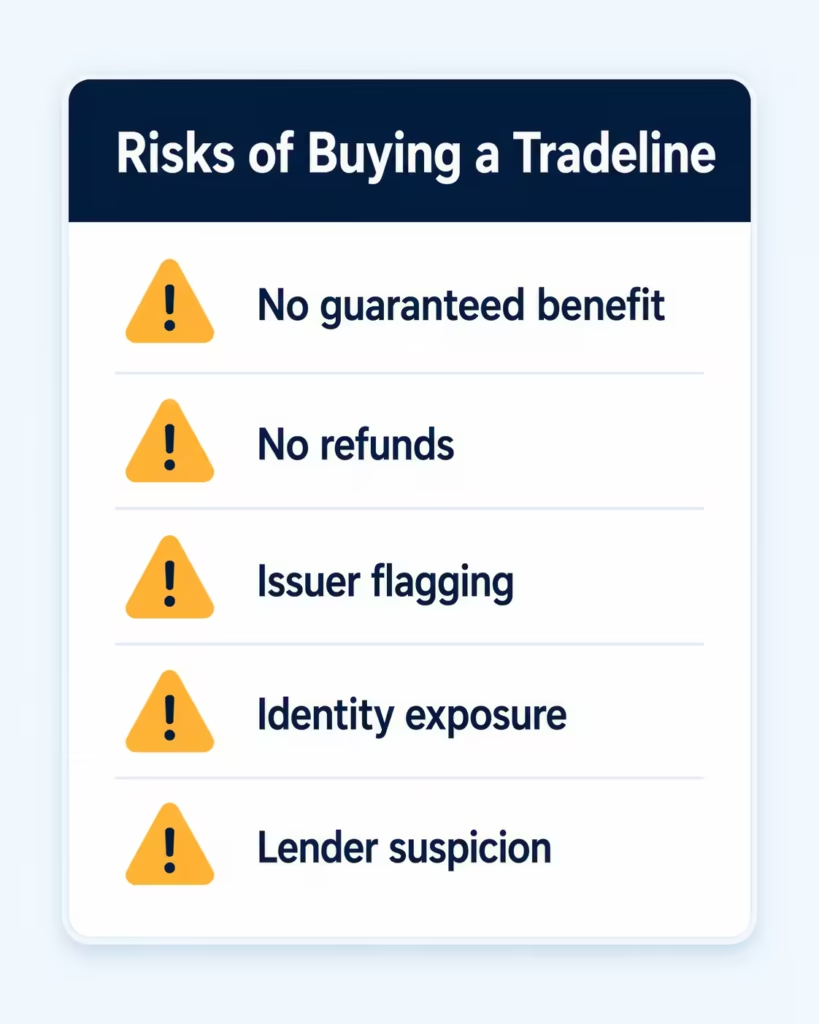
- Buying a tradeline carries risks including no guaranteed score benefit, no refunds if it fails to post, potential issuer flagging, and exposure of personal identity information to a broker.
Best for:
- Readers trying to understand an unfamiliar term on their own credit report.
- People deciding whether to become an authorized user, cosigner, or joint account holder and want to know the liability difference first.
- Anyone considering buying or renting a tradeline who wants to weigh the risks before paying a broker.
What a Tradeline Is on a Credit Report
A tradeline is the official credit bureau term for one account entry on your credit report. Every credit account you have gets its own tradeline. That includes your credit card, your car loan, your student loan, and your mortgage. Each one shows up as its own separate listing.
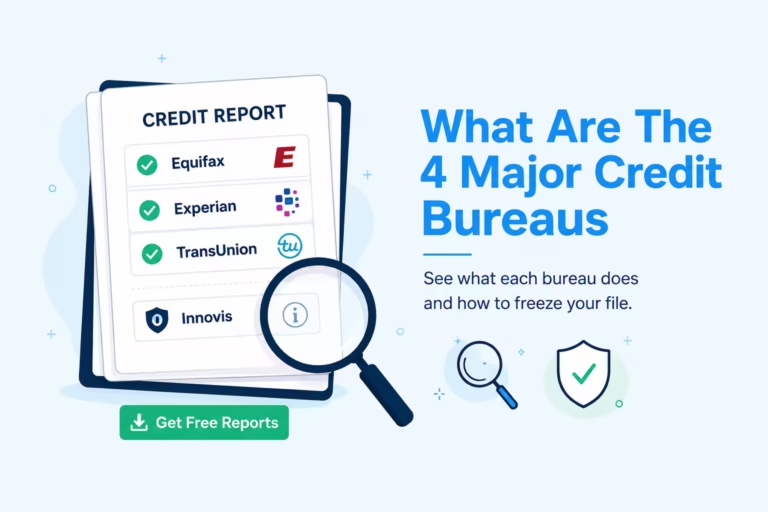
The word is just industry language. The three major credit bureaus, Equifax, Experian, and TransUnion, all use it. So do lenders and scoring companies. When your report shows a section called “Accounts” or “Tradelines,” both labels mean the same thing.
Seeing the word on your report is not a red flag. It doesn’t mean a hidden fee, a penalty, or a mistake. It simply means “here is one of your accounts, and here is its history.” If you have five credit accounts, you have five tradelines. That’s it.
What Information Is Inside a Tradeline
Each tradeline is like a mini file for one account. It holds the details that tell a lender how you’ve handled that account over time. The core fields you’ll usually see are:
- Creditor or furnisher name. This is the company reporting the account, like Chase, Capital One, or a local credit union.
- Account type. Whether it’s a credit card, auto loan, mortgage, or another kind of account.
- Date opened. The month and year the account started.
- Credit limit or loan amount. For a card, this is your spending limit. For a loan, it’s the original amount borrowed.
- Current balance. What you owe right now, as of the creditor’s last report.
- Payment history. A month-by-month record showing whether each payment was on time or late.
- Account status. Open, closed, paid as agreed, delinquent, or charged off.
- Date of last activity. The last time the account saw a payment or update.
One thing to know: not every creditor reports every field. Some furnishers leave certain fields blank. A missing field doesn’t automatically mean something is wrong.
How to Read a Tradeline Entry (Example)
Here’s a realistic example of one tradeline, with each field labeled:
| Field | Example Entry |
|---|---|
| Creditor | Capital One |
| Account type | Revolving (credit card) |
| Date opened | March 2019 |
| Credit limit | $5,000 |
| Current balance | $1,200 |
| Account status | Open, current |
| Payment history | 24 months, all on time |
| Date of last activity | July 2026 |
The fields that matter most for your score are payment history, balance, credit limit, and date opened. In this example, the card uses 24% of its limit ($1,200 of $5,000), which is a healthy level.
Keep in mind the same account can look slightly different across Equifax, Experian, and TransUnion. Balances update on different days, so one bureau might show $1,200 while another still shows $1,450. Small timing gaps like that are normal.
Types of Tradelines: Revolving, Installment, and Open Accounts
Tradelines fall into three categories, and the category changes how the account affects your score.
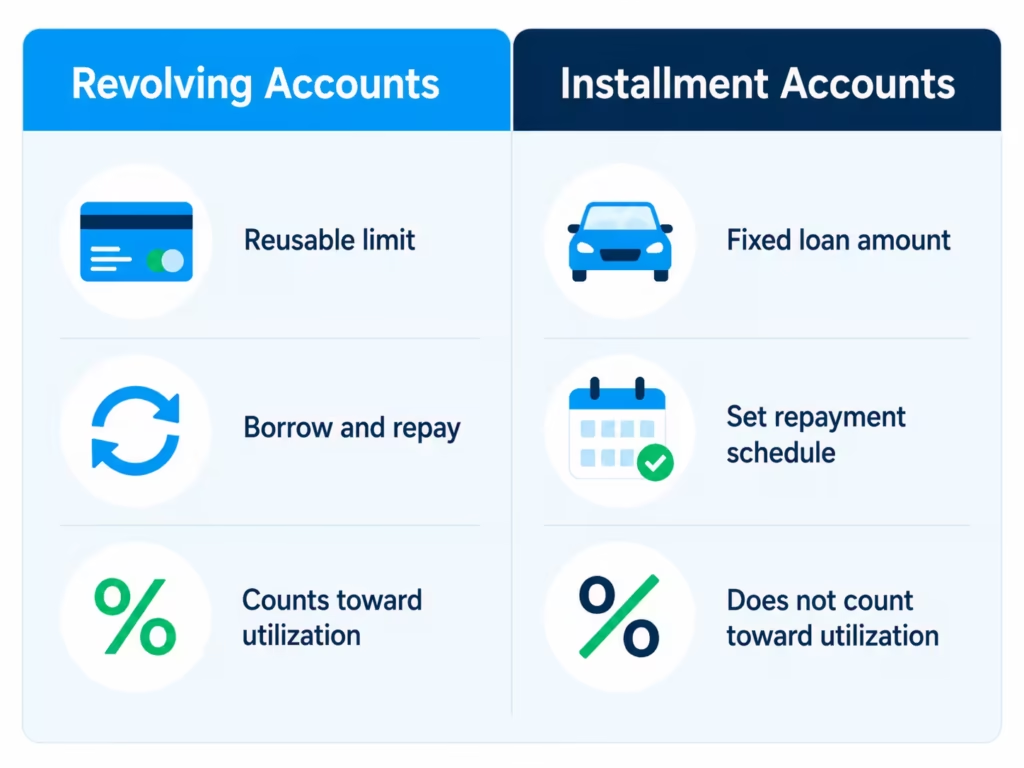
Revolving accounts give you reusable credit up to a limit. Credit cards and lines of credit work this way. You can borrow, pay back, and borrow again. These accounts feed directly into your credit utilization ratio, which is the share of your limit you’re using.
Installment accounts have a fixed amount and a fixed repayment schedule. Auto loans, student loans, mortgages, and personal loans fit here. You borrow one lump sum and pay it off in set monthly chunks. Installment balances don’t count toward your utilization ratio the way card balances do.
Open accounts must be paid in full each period. Certain charge cards work this way. There’s no option to carry a balance month to month.
This is why two accounts with similar balances can affect your score so differently. A $3,000 balance on a $4,000-limit card pushes utilization to 75%, which can drag a score down fast. A $3,000 remaining balance on a $15,000 car loan is just a normal loan in repayment.
Having both types also builds your credit mix, which scoring models reward. A report with only cards looks less seasoned than one with cards plus a loan handled well.
How Many Tradelines Is “Good” to Have
There’s no magic number. Scoring models care far more about how you manage your accounts than how many you have.
A thin file, meaning very few tradelines, gives lenders less to judge and can make your score fragile. One late payment on a two-account report hurts more than one late payment spread across eight accounts. On the flip side, opening many accounts quickly can lower your average account age and signal risk.
For most people, a healthy credit pattern includes:
- A few revolving accounts with low balances
- At least one installment account in good standing
- A long history across all accounts
Quality and age beat raw count every time.
What Counts as a Tradeline (and What Doesn’t)
Not everything on your credit report is a tradeline. Knowing the difference keeps you from misreading your own file.
Tradelines are your open and closed credit accounts. Credit cards, auto loans, student loans, mortgages, and personal loans all count. They usually appear in a report section labeled “Accounts,” “Satisfactory Accounts,” or “Accounts with Adverse Information.”
Hard inquiries are not tradelines. When you apply for credit and a lender pulls your report, that application shows up in a separate “Inquiries” section. It sits apart from your accounts.
Public records are also separate. Bankruptcies, for example, appear in their own section rather than as account entries. The exception is collections. When you don’t pay a debt, it goes to a collection agency. Then, the collections account often shows up as a separate tradeline next to your other accounts.
Here’s the quick version:
| Report Item | Is It a Tradeline? |
|---|---|
| Credit card, open or closed | Yes |
| Auto loan, student loan, mortgage | Yes |
| Collections account | Usually yes |
| Hard inquiry | No |
| Bankruptcy or judgment | No (separate section) |
How Tradelines Affect Your Credit Score
Tradelines are the raw material your credit score is built from. Scoring models like FICO and VantageScore read the data inside your account entries, then turn it into a number. Almost nothing else feeds your score as directly.
The five classic FICO categories all trace back to tradeline data. Data from myFICO breaks the weighting down this way: payment history at 35%, amounts owed at 30%, length of credit history at 15%, new credit at 10%, and credit mix at 10%. The first three live entirely inside your tradelines.
That gives you a clear priority order:
- Payment history. On-time payments on every tradeline matter more than anything else.
- Balances versus limits. Keeping card balances low relative to their limits helps the most after payment history.
- Account age. Older tradelines raise the average age of your credit, so keep them open when it makes sense.
Tradelines come in two flavors. A positive tradeline shows on-time payments, reasonable balances, and a clean status. A negative tradeline carries late payments, maxed-out limits, charge-offs, or collections. Negative entries hit hard at first, but their sting fades as time passes and newer positive history stacks on top.
📌 Did You Know: Closing an old card doesn’t erase its history right away. The account can keep helping your average account age for years after you close it.
How Long Tradelines Stay on Your Credit Report
The timeline depends on whether the account is in good or bad shape.
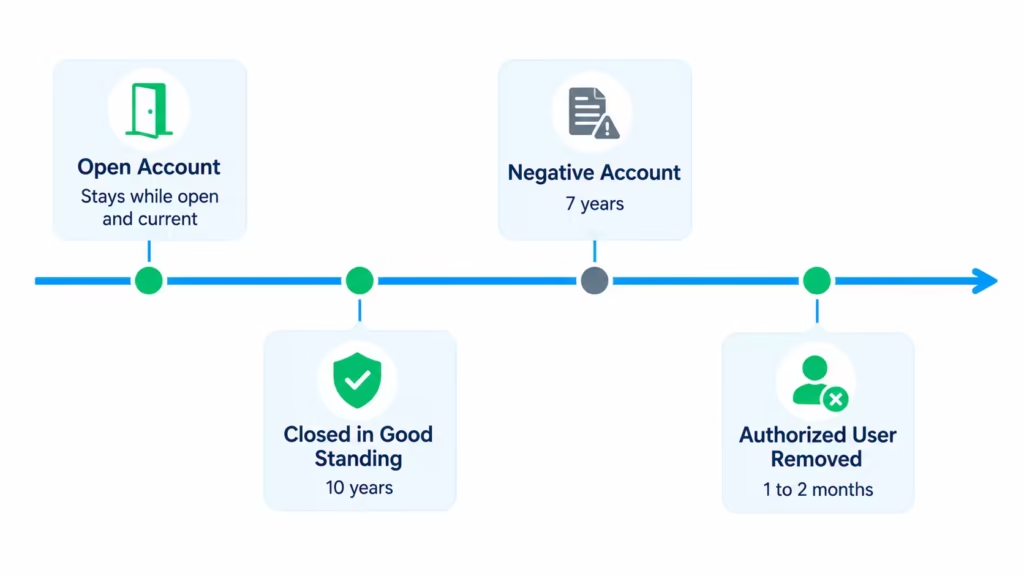
Open accounts in good standing stay on your report for as long as they remain open and current. There’s no expiration date on a healthy, active account.
Closed accounts in good standing typically remain for about 10 years after closing. During that time, they continue to count toward your length of credit history.
Negative accounts, such as charge-offs and collections, generally stay for about seven years. The Consumer Financial Protection Bureau confirms that credit reporting companies can report most negative information for seven years, with some items like bankruptcy lasting longer.
Authorized user tradelines are the exception. If the primary account holder removes you, that tradeline can drop off your report much sooner, sometimes within a month or two.
Does Closing an Account Remove the Tradeline?
No. Closing an account does not delete its tradeline. The entry stays on your report, marked as closed, for roughly a decade if it was in good standing.
The catch is what happens after it finally drops off. Your average account age can fall when an old closed card disappears. Say you have two cards: one opened 12 years ago (now closed), and one opened 2 years ago. Your average age is about 7 years. When the old card’s tradeline falls off, your average drops to 2 years, and your score may dip.
The practical takeaway: think twice before closing your oldest card. If it has no annual fee, keeping it open with a small recurring charge often protects your credit history for free.
Authorized User, Cosigner, and Joint Account Tradelines
A tradeline can land on your report even when you’re not the primary account holder. There are three ways this happens, and the liability difference between them is huge.
Authorized user. You’re added to someone else’s card. The tradeline appears on your report, and its payment history can help (or hurt) your score. But you’re not legally responsible for the debt. If the primary account holder runs up the balance, creditors can’t come after you for payment.
Cosigner. You sign the loan alongside the borrower. The tradeline appears on your report, and you are fully, legally responsible for the debt. If the other person stops paying, the lender can pursue you for every dollar, and the late payments land on your report too.
Joint account. Both parties are equal owners. The tradeline appears on both reports, and both people share full legal responsibility.
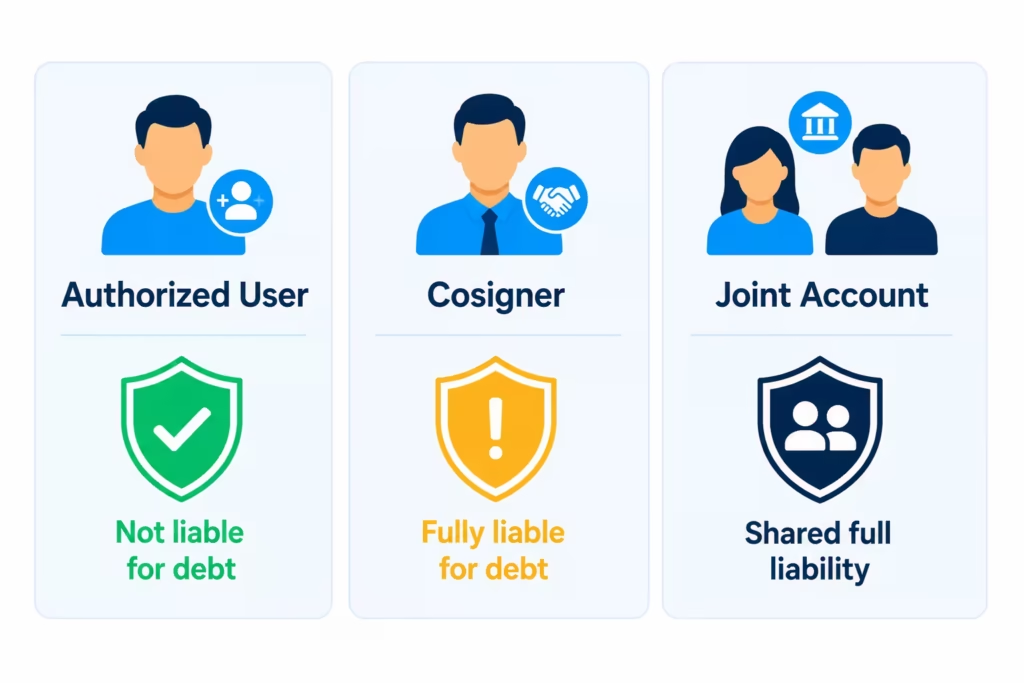
Before agreeing to any of these roles, ask one question: if the other person stops paying tomorrow, am I on the hook? For an authorized user, the answer is no. For a cosigner or joint holder, it’s yes.
⚠️ Mistake to Avoid: Never cosign a loan thinking it’s just a favor with no real risk. Cosigning makes you 100% liable for the debt, and any missed payments damage your credit the same as if they were yours.
What to Do If You See an Unfamiliar Tradeline
Spotting an account you don’t recognize is unsettling, but don’t panic. There are three common explanations, and only one of them is fraud.
First, it could be a forgotten old account, like a store card you opened years ago for a discount. Second, it could be a reporting error, where a furnisher sent wrong data or matched someone else’s account to your file. Third, it could be identity theft, where someone opened credit in your name.
Start by verifying the details against your own records. Check the creditor name, the date opened, and the balance. Jennifer, a marketing coordinator in Austin, once found a tradeline she didn’t recognize and assumed the worst.
After ten minutes of checking, she realized it was her old student loan, now listed under a new servicer’s name after a transfer. A quick verification saved her weeks of stress.
If the account still doesn’t check out, you have strong rights. Under the Fair Credit Reporting Act, you can dispute any inaccurate tradeline, and the bureau must investigate, usually within 30 days.
If fraud is likely, report it and get a free recovery plan at IdentityTheft.gov, the federal government’s official identity theft resource. You can also place a free credit freeze with each bureau, which blocks anyone from opening new accounts in your name.
Buying or Renting Tradelines: What It Means and the Risks
If you’ve researched credit repair, you’ve probably seen ads for “buying a tradeline.” Here’s what it means: you pay a company, usually several hundred dollars, to be added as an authorized user on a stranger’s old, well-managed credit card. The idea is that their “seasoned tradeline” shows up on your report and boosts your score.
Is it legal? Technically, yes. No law bans being added as an authorized user. But legal doesn’t mean safe or smart.
The risks are real:
- No guaranteed benefit. Scoring models can discount authorized user accounts that look purchased, so you may pay for nothing.
- No refunds. If the tradeline never posts or gets removed, most brokers won’t return your money.
- Issuer flagging. Card issuers watch for “authorized user abuse.” When detected, they can remove the tradeline or even close the underlying card.
- Identity exposure. You hand your Social Security number to a broker, which opens the door to scams and identity theft.
- Lender suspicion. Mortgage underwriters who spot a purchased tradeline pattern may view your whole application with doubt.
Contrast that with an organic arrangement. Being added to a parent or spouse’s long-standing card carries almost none of these risks and costs nothing. David, a warehouse supervisor in Ohio, put his 26-year-old son on his 15-year-old card. In just three months, the son’s score improved enough for a better auto loan rate. No broker, no fee, no exposure.
For anyone building credit, the slow, honest path with family or your own secured card almost always beats renting a stranger’s account.
Frequently Asked Questions (FAQs)
What is a tradeline on a credit report?
A tradeline is the credit bureau term for a single account entry on your report, such as a credit card, auto loan, or mortgage. Each account you have gets its own separate tradeline showing details such as balance, limit, and payment history.
What does a tradeline do for credit?
A tradeline supplies the raw data your credit score is built from, including payment history, balances, and account age. Payment history alone makes up 35% of your FICO score, so on-time tradelines carry the most weight.
Is buying a tradeline worth it?
Buying a tradeline usually costs several hundred dollars with no guaranteed score boost, since scoring models can flag and discount purchased authorized-user accounts. It also carries risks like no refunds, issuer flagging, and exposing your Social Security number to a broker.
How long do tradelines stay on your credit report?
Closed accounts in good standing typically remain on report for about 10 years, while negative accounts, such as charge-offs and collections, remain for about 7 years. Authorized user tradelines can drop off within a month or two if the primary holder removes you.
How do I remove a tradeline from my credit report?
You can dispute an inaccurate tradeline under the Fair Credit Reporting Act, and the bureau must investigate, usually within 30 days. Accurate negative tradelines can’t be removed early, but they fall off automatically after about 7 years.
What is an example of a tradeline?
A typical tradeline lists the creditor name, account type, date opened, credit limit, current balance, and payment history. For example, a Capital One card opened in March 2019 with a $5,000 limit and 24 months of on-time payments is one tradeline.
Do lenders know if I use tradelines?
Mortgage underwriters who spot a pattern of purchased tradelines may view the whole loan application with more suspicion. This makes rented or bought tradelines riskier than organic ones, like being added to a family member’s long-standing card.
Does closing an account remove its tradeline?
No, closing an account does not delete the tradeline; it stays on your report as closed for roughly 10 years if it was in good standing. This can actually help your average account age until the entry eventually falls off.
What’s the difference between an authorized user and a cosigner?
An authorized user’s tradeline appears on their report, but they carry no legal responsibility for the debt. A cosigner is fully legally liable for the account, so missed payments and unpaid balances affect their credit and can be collected from them directly.
How many tradelines should I have?
No set number counts as good, since scoring models weigh account management more than account count. A healthy mix usually includes a few revolving accounts with low balances plus at least one installment account in good standing.
Wrapping Up
A tradeline on a credit report shows one account’s details. Key fields to look at are payment history, balances, limits, and account age. The best way to improve your score is to keep all accounts current and balances low. Also, let your oldest tradelines age.
Most readers should check all three bureau reports once a year at AnnualCreditReport.com. This helps find errors and unknown accounts early, making them easier to fix.
If you know someone confused by their credit report right now, sharing this guide could save them from overlooking a costly mistake.