
I get why you’re here. You froze your credit at some point, maybe after a data breach alert or an identity theft scare, and now a lender, landlord, or employer needs to run your credit. You opened the Credit Karma app expecting a simple “unfreeze” button, but it’s not there. The clock is ticking on your mortgage rate lock, car loan, or apartment application, and every hour matters.
Here’s the short answer: you can’t unfreeze your credit through Credit Karma because it isn’t a credit bureau. You must contact Equifax, Experian, and TransUnion directly.
Below, we walk you through each step, the fastest methods, and what to do if you’ve lost your PIN.
Key Takeaways
This guide explains how to unfreeze your credit when Credit Karma shows a frozen report, including why Credit Karma cannot lift freezes, exact contact methods for all three credit bureaus, and the difference between temporary and permanent unfreezing.
Core Facts:
- Credit Karma is a monitoring tool that pulls data from TransUnion and Equifax, but it cannot lift a credit freeze, as freezes are managed directly by each bureau.
- Unfreezing requires contacting Equifax, Experian, and TransUnion separately, since a freeze placed at one bureau does not transfer to the others.
- Online and phone requests must be processed within one hour under federal law, while mail requests are processed within three business days of receipt.
- A temporary lift removes the freeze for a set window, typically 1 to 30 days, then automatically reactivates without further action.
- A permanent unfreeze removes the freeze indefinitely until the person manually places a new freeze.
- Lifting or placing a credit freeze does not affect credit score, though a resulting hard inquiry or new account may affect it afterward.
Best for:
- People who need a lender, landlord, or employer to pull their credit report and discover Credit Karma has no unfreeze option.
- Anyone who lost their freeze PIN and needs to verify identity through an online account or phone call instead.
- Readers deciding between a temporary lift for a single application and a permanent unfreeze for ongoing credit activity.
Why Credit Karma Can’t Unfreeze Your Credit for You
Credit Karma is a free credit monitoring and financial marketplace tool. It shows your VantageScore 3.0 credit scores and reports pulled from TransUnion and Equifax, but it does not own or manage those reports. That job belongs to the three national credit bureaus: Equifax, Experian, and TransUnion.
A security freeze is placed directly at each bureau. Only the bureau that holds the freeze can lift it. So even if Credit Karma displays a note that your file is frozen, the app has no button, tool, or support agent that can remove the block for you. Trying to unfreeze through Credit Karma’s help center or chat will only send you in circles.
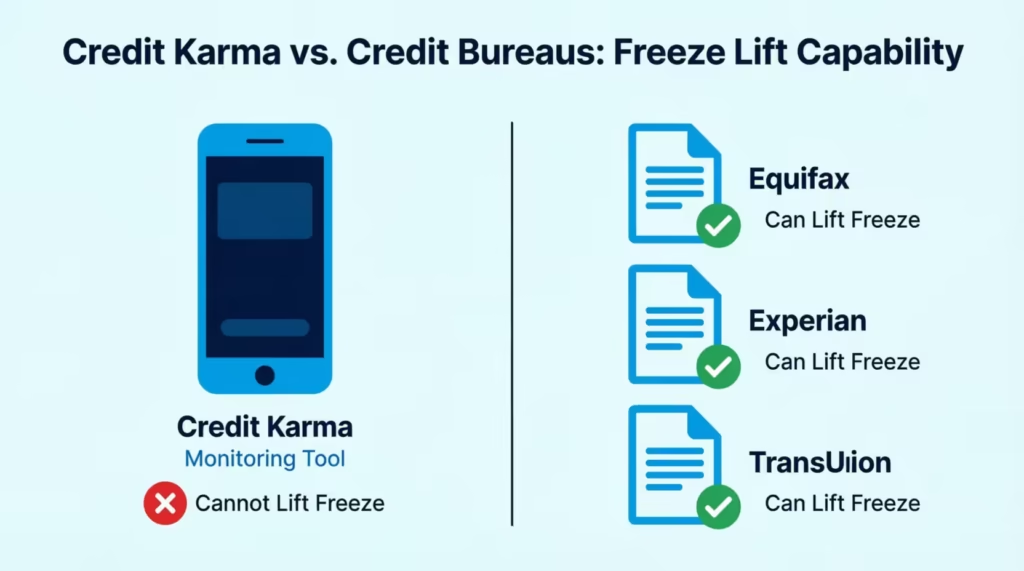
Think of Credit Karma as a dashboard, not a control panel. It reflects what’s on your report, but the levers to change your freeze status sit inside your own accounts at each bureau. To move forward, you’ll need to go straight to the source.
Step 1: Confirm Which Credit Bureaus You Froze
Freezes are placed one bureau at a time. You might have frozen all three, or just one or two. Contacting the wrong bureau wastes time you probably don’t have, especially if a lender is waiting on your file.
Start by checking any confirmation emails or letters you got when you placed the freeze. Those messages usually name the bureau and include a PIN or reference number. Search your inbox for terms like “security freeze,” “credit freeze confirmation,” or the bureau names.
If you can’t find those emails, log into Credit Karma. Under your credit report tab, a frozen file often shows a note or alert saying the report can’t be pulled.
That’s a clue for TransUnion and Equifax, since those are the two bureaus Credit Karma pulls from. For Experian, you’ll need to check your account at Experian.com or try pulling a free report from AnnualCreditReport.com.
If a report request fails or shows a freeze notice, that bureau has an active freeze. You’ll want to make a short list of exactly which bureaus need action before moving on.
💡 Pro Tip: If you’re not sure whether you froze all three, assume you did. Lenders usually pull from at least two bureaus, so unfreezing all three saves you from a surprise denial mid-application.
Step 2: Gather What You’ll Need to Verify Your Identity
Each bureau will ask you to prove you are who you say you are. Having your info ready avoids stalls, dropped calls, and mailed-in rejections.
Here’s a simple checklist to prep before you contact any bureau:
- Full legal name, including any previous names
- Current address and any addresses used in the past two years
- Date of birth
- Social Security number
- The PIN or password you set when you placed the freeze (if you have it)
- Login credentials for your myEquifax, Experian, and TransUnion accounts (if you created them)
If you’re going the mail route, you’ll also need copies of documents to prove your identity. Bureaus usually need a government ID, like a driver’s license, and one proof of address. This could be a utility bill or a bank statement from the last 60 days. Never send originals.
Having your PIN speeds things up the most. Without it, the process still works, but you’ll have to answer knowledge-based verification questions or send documents by mail.
Step 3: Unfreeze Your Credit at Each Bureau
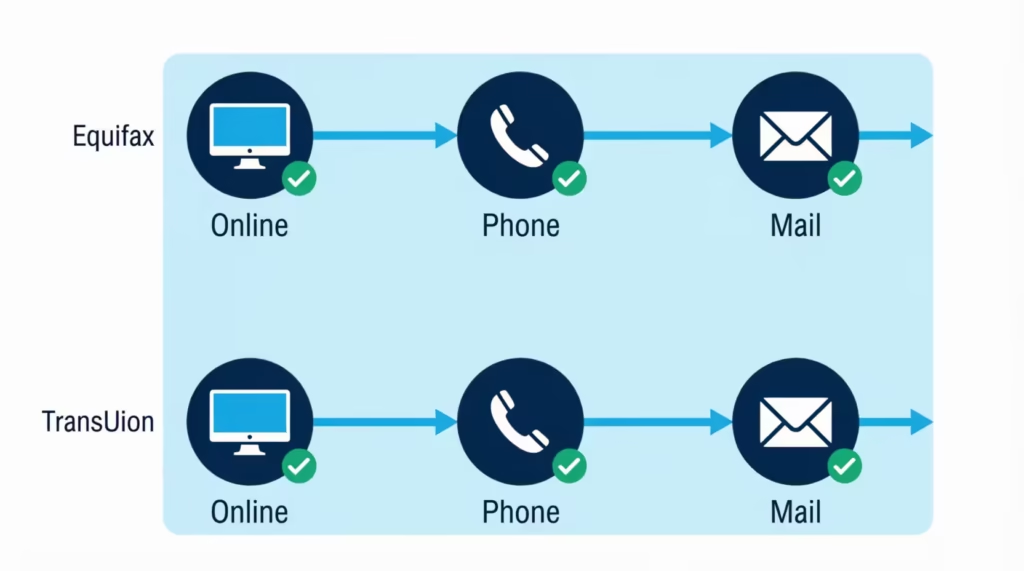
This is the core action step. Each bureau has three ways to lift a freeze: online (fastest), phone (also fast), or mail (slowest).
Equifax
Online is the quickest option. Log into your myEquifax account and use the freeze management tool. You can lift the freeze temporarily (for a set number of days) or permanently.
By phone, call the Equifax automated line at 800-349-9960 or Customer Care at 888-298-0045. You’ll answer identity verification questions before the freeze is lifted.
By mail, send a written request to:
Equifax Information Services LLC P.O. Box 105788 Atlanta, GA 30348-5788
Include your full name, address, date of birth, SSN, and copies of your ID and proof of address. Download the official Equifax security freeze form from the Equifax contact page to keep your request in the right format.
Experian
Online is the smoothest path. Head to the Experian Freeze Center, sign in, and choose to lift the freeze temporarily or permanently.
By phone, call 888-397-3742. The automated system can handle most freeze actions if you have your PIN.
By mail, send your written request to:
Experian Security Freeze P.O. Box 9554 Allen, TX 75013
Your letter must have:
- Full name (include middle initial and Jr. or Sr. if applicable)
- Current address
- Previous addresses for the last two years
- Date of birth
- SSN
- Copies of your ID
- Utility bill
TransUnion
Online is fast and simple. Log into your TransUnion Service Center account at transunion.com/credit-freeze and choose the option to lift or remove the freeze.
By phone, call the automated line at 800-916-8800. If you want to speak with a live agent, the same number connects you during business hours.
By mail, send your request to:
TransUnion P.O. Box 160 Woodlyn, PA 19094
TransUnion also lets you schedule a lift up to 15 days in advance. That’s handy if you know exactly when a lender plans to pull your credit and want the freeze to lift and re-close on its own.
Temporary vs. Permanent Unfreeze: Which One Fits Your Situation
Both options remove the block. The difference is what happens after your application is done.
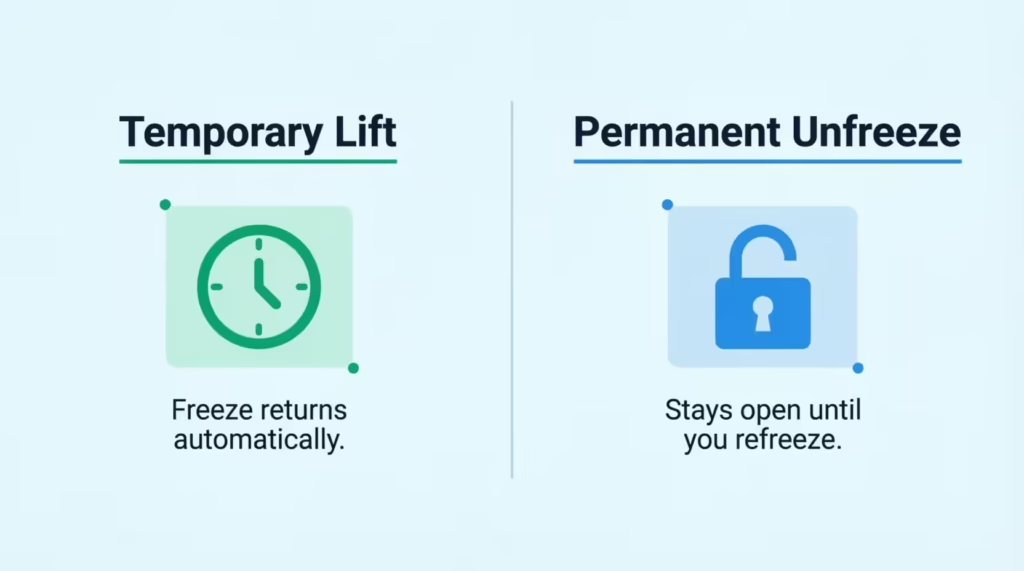
A temporary lift removes the freeze for a set window you choose, usually 1 to 30 days. After that window ends, the freeze snaps back on automatically. You don’t have to do anything to re-freeze.
A permanent unfreeze removes the freeze indefinitely. Your file stays open until you place a new freeze.
Which one fits depends on your plan:
- Choose temporary if you have one specific application and want protection back on right after. A common example: a mortgage rate-shopping window where you want lenders to check your credit for two weeks, then close the door again.
- Choose permanent if you’ll be opening multiple accounts over the next few months, checking rates often, or you plan to stop using a freeze altogether.
For most one-off events like renting an apartment or getting a single loan, a temporary lift is the safer pick. It gives you access when you need it and locks things down again without a follow-up call.
⚠️ Mistake to Avoid: Don’t lift the freeze permanently just because it feels simpler. If you forget to re-freeze later, your file stays exposed for months or years. Temporary lifts auto-close the gap for you.
Lost Your PIN or Login Access? Here’s What to Do
Losing a freeze PIN is common, especially if you froze your credit years ago. The good news: you can still lift your freeze without it. The trade-off is a slower process.
If you don’t have your Equifax PIN, log in to or create a myEquifax account. Once logged in, you can manage freezes without a PIN. If you can’t log in, call 888-298-0045. The agent will run through identity verification questions based on your credit history, like naming a past lender or address.
For Experian, sign into your account at Experian.com or use the Freeze Center. If those don’t work, call 888-397-3742. If phone verification doesn’t work, you must mail a request. Include a copy of your government ID and a utility bill or bank statement that shows your name and address.
For TransUnion, use your Service Center account. Password resets work the same as any online account, using your email. If that fails, call 800-916-8800 or mail a written request with ID and proof of address to the Woodlyn, PA address above.
Expect the mail route to add 3 to 5 business days on top of the standard processing time. Plan for at least a week if you’re stuck using mail because of lost credentials.
How Fast Each Method Works (and Which to Pick If You’re on a Deadline)
Speed matters when a lender needs your report today. Federal rules set clear timelines for each method.
Here’s how the three methods stack up:
| Method | Timeframe | Best For |
|---|---|---|
| Online | Within 1 hour of request | Same-day applications |
| Phone | Within 1 hour of request | Same-day applications, no PIN needed |
| Within 3 business days of receipt | Non-urgent lifts, no online access |
Under federal law, bureaus must lift a freeze within one hour when you request it online or by phone (if you can verify your identity). Mail requests should be processed within three business days after the bureau gets your letter. Also, remember to consider mailing time.
If your lender is pulling your credit today, pick online first. It’s usually instant once you hit submit. Phone is a solid backup if the site is glitchy. Skip mail unless you have no other choice or you don’t need the lift for at least two weeks.
One more tip: lift the freeze at all bureaus your lender might pull from. Mortgage lenders often pull from all three, while some auto lenders pull only one or two. Ask your lender which bureau they use if you’re not sure.
Credit Freeze vs. Credit Lock: Don’t Confuse the Two
These two tools sound alike and do similar things, but they’re not the same. Mixing them up can cost you time and money.
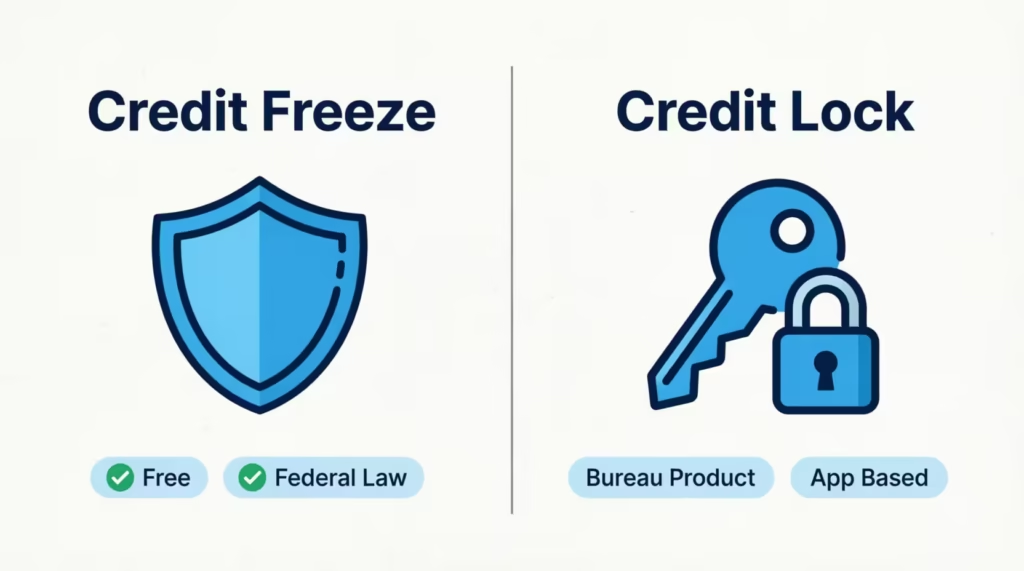
A credit freeze is a free service required by federal law under the Fair Credit Reporting Act. It fully blocks lenders from pulling your credit report. Bureaus must let you place and lift a freeze at no cost. Freezes can take up to an hour to lift when done online or by phone.
A credit lock is a product offered by each bureau. It also blocks access to your report, but the terms are set by the bureau, not federal law. Some locks are free (like the basic TransUnion TrueIdentity lock), while others are part of paid credit monitoring bundles. Locks are usually instant, controlled through an app.
The key difference: freezes come with stronger legal protection but move slower. Locks are faster and app-based, but they don’t carry the same federal guarantees. If you froze your credit years ago, you almost certainly have a freeze, not a lock. Trying to “unlock” it through a bureau’s app won’t work if it’s actually frozen.
After the Freeze Is Lifted: Next Steps
Once the freeze is off, your report is open to new inquiries. Here’s how to close the loop.
First, tell your lender, landlord, or employer that your credit is now available. They may need to try pulling your report again if their first attempt was blocked. Confirm they got what they needed before you consider the job done.
Second, decide when to re-freeze. If you chose a temporary lift, the freeze reactivates on its own. If you chose a permanent unfreeze, you’ll need to place a new freeze once your applications are complete. Go back to each bureau’s freeze page and place a fresh freeze the same way you managed the lift.
Third, keep using Credit Karma for what it does well: free credit monitoring, score tracking, and alerts about new activity. It won’t manage your freeze, but it can flag suspicious pulls or new accounts so you catch problems fast.
📌 Did You Know: A security freeze doesn’t stop your existing creditors, debt collectors on your accounts, or government agencies from accessing your report. It only blocks new lenders trying to open new accounts, which is exactly where identity thieves attack.
Will Unfreezing Your Credit Hurt Your Score?
Short answer: no. The action of lifting or placing a freeze has zero effect on your credit score.
Your credit score comes from your report. It includes payment history, credit utilization, account age, credit mix, and recent inquiries. A freeze is a status flag on your file, not a data point that scoring models look at. The Federal Trade Commission confirms that placing or lifting a freeze is free and doesn’t affect your score.
What can affect your score is what happens after you unfreeze. If a lender does a hard inquiry, that inquiry may knock a few points off temporarily. Opening a new account can lower your average account age. Missing a payment on that new loan will hurt your score much more than any freeze action ever could.
So unfreeze when you need to. The freeze itself is safe. Just be thoughtful about what you apply for once the door is open.
Frequently Asked Questions (FAQs)
How do I unfreeze my credit?
Contact Equifax, Experian, and TransUnion directly since Credit Karma cannot lift freezes. Use each bureau’s online portal, phone line, or mail request, with online being the fastest at under one hour.
Can I remove my credit freeze online?
Yes, each bureau offers an online option through myEquifax, the Experian Freeze Center, or your TransUnion Service Center account. Online requests are processed within one hour under federal law.
Does credit unfreeze immediately?
Online and phone requests must be processed within one hour under federal law, as long as you can verify your identity. Mail requests take up to three business days after the bureau receives your letter.
What number do I call to unfreeze my credit?
Call Equifax at 800-349-9960, Experian at 888-397-3742, or TransUnion at 800-916-8800. Each automated line can lift your freeze if you have your PIN ready.
Can I unfreeze all three credit bureaus at once?
No single request covers all three. You must contact Equifax, Experian, and TransUnion separately, since each bureau manages its own freeze independent of the others.
How many times can I freeze and unfreeze my credit?
There’s no limit on how often you can freeze or unfreeze your credit. Both actions are free and can be repeated as many times as needed under federal law.
Does removing a credit freeze affect credit score?
No, lifting or placing a freeze has zero effect on your credit score. Only what happens afterward, like a new hard inquiry or missed payment, can impact your score.
Can you permanently unfreeze your credit?
Yes, choosing a permanent unfreeze removes the freeze indefinitely until you manually place a new one. This differs from a temporary lift, which snaps back on automatically after your chosen window ends.
What is the fastest way to unfreeze your credit report?
Online requests are fastest, processing within one hour once submitted. Phone is a solid backup if a bureau’s website is having issues.
What happens if I lost my credit freeze PIN?
You can still unfreeze without it by logging into your account online or calling the bureau for identity verification questions. If phone verification fails, you’ll need to mail a request with your ID and proof of address, adding 3 to 5 business days.
The Bottom Line
Unfreezing your credit isn’t something Credit Karma can do for you, but the path forward is clear once you know where to go. We discussed why you need to contact Equifax, Experian, and TransUnion directly. We covered how to prepare your identity information. You learned the exact online, phone, and mail options for each bureau. Lastly, we talked about choosing a temporary or permanent lift.
Based on the federal one-hour rule, an online or phone request is the most effective approach for anyone facing a deadline.
If you know someone stuck mid-application with a frozen file, share this guide so they can lift their freeze in time and avoid a costly delay.