
You froze your LexisNexis file months or years ago, and now a lender, insurer, or landlord can’t move forward with your application. The screen just says “denied” or “pending,” and no one told you the freeze was even a factor. If you’re trying to figure out how to unfreeze your credit on LexisNexis before your deal falls through, you’re in the right place.
The fastest way to lift the freeze is through the official LexisNexis Risk Solutions security freeze portal, which processes online and phone requests within one hour.
Below, you’ll find every step, the exact phone number, what to do if you lost your PIN, and how a temporary lift differs from a full removal.
Key Takeaways
This guide explains how to unfreeze a LexisNexis consumer file through online, phone, or mail requests, including required documents, temporary versus full removal options, and what to do if you lost your PIN.
Core Facts:
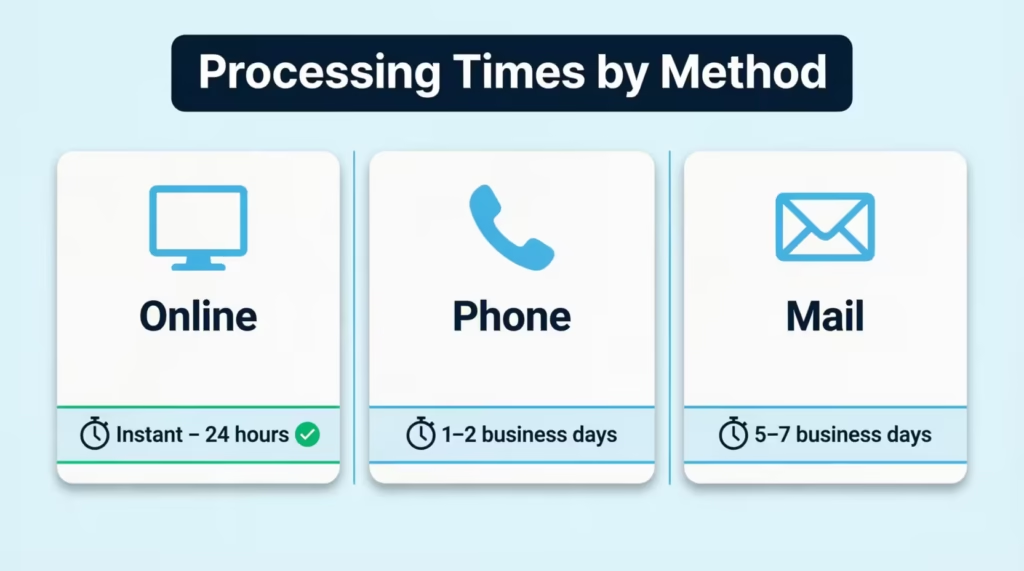
- LexisNexis online and phone freeze lift requests must be processed within one hour, while mail requests are processed within three business days of receipt.
- Phone requests go through the LexisNexis Risk Solutions Consumer Center at 1-800-456-1244, available Monday through Friday during business hours, Eastern time.
- Placing, lifting, or removing a LexisNexis security freeze is free, with no charge allowed for any of these actions.
- A temporary lift restores access for a set window or to a specific party and automatically reactivates once that window closes, while a full removal stays open until a new freeze is placed manually.
- A LexisNexis freeze is separate from Equifax, Experian, and TransUnion freezes, so unfreezing LexisNexis does not affect those bureaus or the related SageStream file.
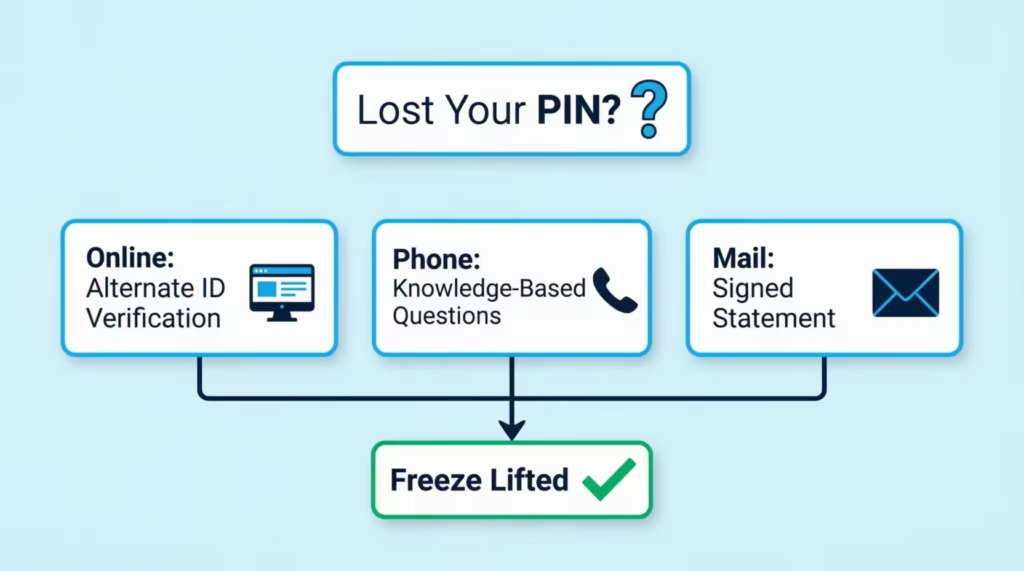
- Losing a PIN does not block the process — online forms route to alternate identity verification, phone reps use knowledge-based questions, and mail requests can include a signed statement in place of a PIN.
Best for:
- Readers with a pending application (loan, insurance quote, or apartment) blocked by a LexisNexis freeze who need it lifted quickly.
- People who lost their original PIN or freeze confirmation letter and aren’t sure how to proceed.
- Anyone trying to understand the difference between a temporary lift and a full removal before submitting a request.
What a LexisNexis Security Freeze Actually Controls
A LexisNexis freeze blocks access to your Consumer Disclosure Report, which is not a credit report from the Big Three bureaus. It’s a separate file kept by LexisNexis Risk Solutions that stores public records, insurance claims history, address history, and identity data.
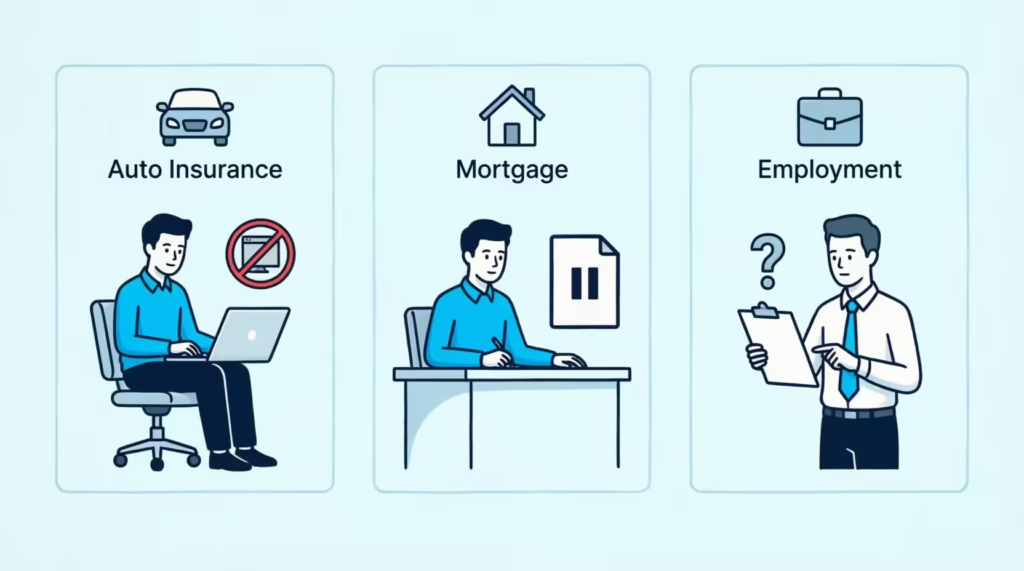
Auto insurers pull it to price your policy. Mortgage lenders pull it to verify identity and check for fraud flags. Some landlords and employers pull it as part of a background check. LexisNexis also manages the SageStream consumer report, which acts more like a traditional credit bureau file.
When your homeowner’s insurance quote stalls, it’s often due to a LexisNexis freeze. If an underwriter says, “we can’t verify your identity,” that’s usually the hidden cause. Three quick examples where this trips people up:
- Auto insurance shopping. The carrier can’t run your claims history, so they can’t finalize the rate.
- Mortgage underwriting. The lender’s identity verification tool comes back blocked.
- Employment background checks. The screening firm can’t pull public records tied to your name.
Why This Is Separate From Equifax, Experian, and TransUnion
The Big Three bureaus hold your credit accounts, payment history, and credit scores. LexisNexis holds a different kind of file, mostly public records and insurance data. That’s why unfreezing your Equifax file does nothing for LexisNexis, and vice versa.
Each agency is legally independent under the Fair Credit Reporting Act (FCRA). If you froze all four (Equifax, Experian, TransUnion, and LexisNexis), you have to lift each one separately. There’s no single button that thaws them all.
📌 Did You Know: LexisNexis has another consumer file called SageStream. Some lenders use it as an alternative credit bureau. If you froze both, you’ll need to lift both.
What You’ll Need Before You Start
Have these ready before you open the form. Missing items are the top reason requests get rejected or delayed:
- Full legal name as it appears on your ID
- Date of birth
- Social Security Number
- Current address (and previous addresses from the last two years)
- PIN or password from your original freeze confirmation letter (if you kept it)
- Government-issued photo ID (driver’s license, state ID, or passport) for uploading online
- Proof of address if your ID doesn’t match your current home (a recent utility bill or bank statement works)
- Reference number from your original freeze confirmation letter, if available
If you have the PIN, keep the letter next to you while you fill out the form. If you don’t, skip ahead to the “Lost PIN” section below. You can still get your freeze lifted.
How to Unfreeze LexisNexis Online
Online is the fastest path. Most people finish in under 15 minutes, and the lift takes effect within one hour.
- Open the official freeze page. Go to the LexisNexis Security Freeze portal. Bookmark it. Don’t rely on a search result, as fake copycat pages exist.
- Choose “Request to Lift a Security Freeze.” You’ll see three options on the page: place a freeze, lift a freeze, or request a replacement PIN. Pick the lift option.
- Enter your identifying information. Fill in your full name, date of birth, Social Security Number, and current address. Use the exact spelling from your ID.
- Enter your PIN or password. If you have it, type it in. If not, the form will guide you to an alternate identity verification path (see the lost PIN section).
- Choose the lift type. Pick either a temporary lift (for a specific window) or a full removal (indefinite). Details on which to pick are in the next section.
- Upload your ID and proof of address. Take a clear photo or scan. Blurry uploads are a common rejection reason.
- Submit and save the confirmation. You’ll get a confirmation number on screen and by email. Save both. If anything goes wrong later, this is your proof.
Once submitted, the freeze must be lifted within one hour by federal rule.
💡 Pro Tip: Screenshot the confirmation page before you close it. If your lender still can’t pull your file after an hour, that screenshot lets you push back and prove the lift went through on time.
How to Unfreeze LexisNexis by Phone or Mail
If you don’t want to upload documents online, or if the online form is giving you errors, phone and mail options work too.
By phone:
Call the LexisNexis Risk Solutions Consumer Center at 1-800-456-1244. Hours are typically Monday through Friday during business hours (Eastern time).
Here’s what the call looks like:
- A representative will ask for your name, date of birth, SSN, and address to verify identity.
- If you have your PIN, have it ready.
- If you don’t, they’ll ask a series of “knowledge-based” questions (past addresses, prior employers, etc.) to confirm it’s really you.
- You’ll be asked whether you want a temporary lift or a full removal.
- The rep will confirm the lift and give you a reference number. Write it down.
Phone requests must also be processed within one hour under federal law.
Requesting by Mail
Mail is the slowest option. Use it only if you can’t verify online or by phone.
Send a signed letter to:
LexisNexis Risk Solutions Consumer Center P.O. Box 105108 Atlanta, GA 30348-5108
Include:
- Your full name, date of birth, and SSN
- Your current and previous addresses
- A copy of your government-issued ID
- A copy of a utility bill or bank statement for proof of address
- A clear statement that you’re requesting a security freeze lift, and whether it’s temporary or permanent
Mail requests must be processed within three business days of receipt. Add mailing time on top, so plan for at least a week total.
Temporary Lift vs. Full Removal
You have two choices when you lift the freeze, and picking the right one matters.
Temporary lift gives access for a set window (for example, 7 days, 30 days, or through a specific date) or to a specific party (like one insurance company or one lender). After the window closes, the freeze snaps back on by itself. You don’t need to re-freeze manually.
Full removal takes the freeze off entirely and leaves your LexisNexis file open until you place a new freeze in the future.
Pick a temporary lift when:
- You’re applying for one thing (a car loan, an insurance quote, a mortgage).
- You want the freeze back on as soon as the application closes.
- You’re worried about identity theft and want your file protected long term.
Pick a full removal when:
- You’re actively shopping, and multiple lenders or insurers may pull the file over the next few months.
- You’re moving and expect landlord, utility, and insurance checks.
- You’ve decided the freeze isn’t worth the friction for your situation.
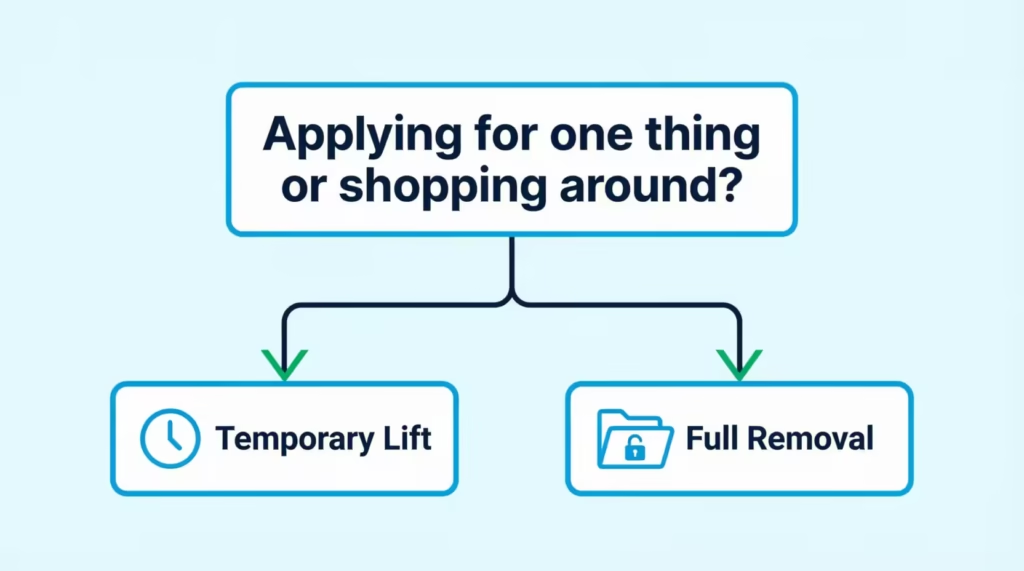
For most people applying for one specific thing, a temporary lift is the safer default. It solves the immediate problem without leaving your file open forever.
How Long It Takes and What It Costs
The freeze lift is free. LexisNexis cannot charge you to place, lift, or remove a security freeze. That’s a federal rule.
Timing:
| Method | Processing Time |
|---|---|
| Online | Within 1 hour of receiving the request |
| Phone | Within 1 hour of receiving the request |
| Within 3 business days of receiving the request |
If your lender or insurer needs to pull your file today, use online or phone. Don’t use mail for anything time-sensitive.
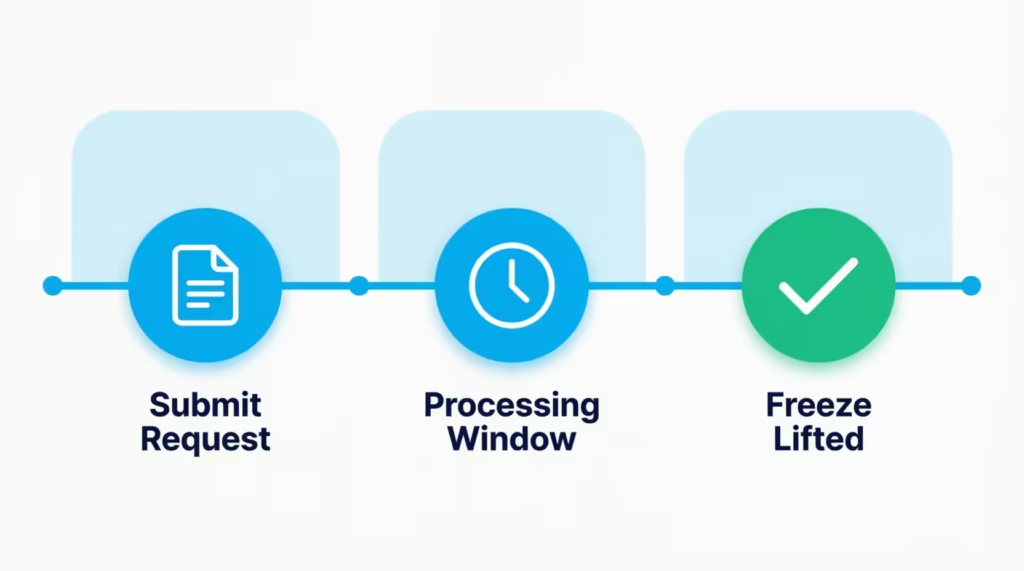
If you have a same-day deadline, like a car dealership appointment or an apartment signing, submit the lift request first thing in the morning. That way, even if there’s a technical hiccup, you have hours of buffer before the appointment.
⚠️ Mistake to Avoid: Don’t wait until you’re at the dealership or signing table to lift the freeze. Even a one-hour processing window feels forever when the salesperson is watching you refresh your phone. Lift it the day before.
If You Lost Your PIN or Freeze Confirmation Letter
Losing your PIN is common, especially if you froze your file years ago. You are not stuck.
LexisNexis does not strictly require the PIN to lift a freeze. Here’s how to move forward:
- Online: The form will detect that the PIN field is empty and route you to an alternate identity verification. You’ll upload a copy of your ID and answer questions that only you should know.
- By phone: Tell the representative you’ve lost your PIN. They’ll walk you through knowledge-based verification (previous addresses, past accounts, etc.).
- By mail: Include a copy of your government-issued ID and a utility bill or bank statement showing your current address. Also include a short, signed statement that you no longer have your PIN.
If your request gets rejected for “insufficient information,” don’t panic. Call 1-800-456-1244 and ask what specifically was missing. Fix that one item and resubmit.
You can also request a replacement PIN through the same freeze portal if you want to keep your PIN for future use. Just pick “Request a Replacement PIN” instead of the lift option.
What Happens After You Unfreeze
Once the lift goes through, your file is accessible to whoever needs it. But there are a few things to double-check so you don’t get stuck at the finish line.
Ask your lender, insurer, or landlord to re-run the check after the lift confirms. Many of them cached the “access denied” result and won’t automatically retry. A quick email or call gets them to run it fresh.
Remember, unfreezing LexisNexis does nothing for Equifax, Experian, or TransUnion. If your application also pulls a standard credit report, you’ll need to lift those freezes separately. Same for SageStream if you froze that too.
Watch for the confirmation email or letter from LexisNexis that says the lift is complete. Save it. If a future dispute pops up, that record proves when the file was open.
Should You Re-Freeze After Your Application Is Approved
Yes, for most people. Once the underwriting, insurance quote, or background check is done, the reason your file needed to be open is gone. Re-freezing stops identity thieves from using your LexisNexis data. They can’t open fake insurance policies or pass background checks for others.
If you used a temporary lift with a set end date, the freeze reactivates on its own. If you did a full removal, go back to the freeze portal and place a new freeze. It takes about the same 15 minutes as the lift did.
If you move often, shop for insurance yearly, or plan to apply multiple times soon, it might be wise to keep the freeze off until things calm down. Just don’t forget to freeze it again when the shopping season ends.
Common Myths About Freezing LexisNexis to Fix Your Credit Report
A myth circulates in credit-repair forums. It claims that if you freeze your LexisNexis file and dispute a bankruptcy or judgment on your Equifax report, then Equifax must delete it. The reasoning is that Equifax “can’t verify” the record through LexisNexis.
This does not work. Here’s why:
- Equifax, Experian, and TransUnion don’t rely on LexisNexis to verify most public records. They have their own public records data sources, and many negative items come directly from courts or original creditors.
- The FCRA requires the credit bureau to conduct a reasonable investigation. A frozen LexisNexis file doesn’t stop that investigation. It just means one specific data source is unavailable, and the bureau can still verify the item elsewhere.
- Bankruptcies, tax liens, and judgments are pulled from court records, not from LexisNexis alone.
People who try this tactic waste weeks disputing items that come right back. Worse, filing frivolous or knowingly false disputes can hurt your credibility with the bureau on future legitimate disputes.
To remove negative items, you have a few options:
- Dispute real inaccuracies with proof.
- Wait for the item to age off (usually 7 years for most negatives, 10 for Chapter 7 bankruptcy).
- Negotiate a pay-for-delete with the original creditor if it’s legal.
Freezing LexisNexis protects your identity. It does not clean up your credit report.
Frequently Asked Questions (FAQs)
How to remove a LexisNexis credit freeze?
Submit a lift request online, by phone at 1-800-456-1244, or by mail. Online and phone requests process within one hour, while mail takes three business days.
Can I remove my credit freeze online?
Yes, visit the official LexisNexis Security Freeze portal and select “Request to Lift a Security Freeze.” Enter your identifying information and PIN, then submit; the lift takes effect within one hour.
How long does it take to unfreeze credit with LexisNexis?
Online and phone requests are processed within one hour by federal rule. Mail requests take three business days, plus mailing time.
Can I unfreeze all three credit bureaus at once?
No, each bureau, including LexisNexis, Equifax, Experian, and TransUnion, is legally independent under the FCRA. You must lift each freeze separately, and there’s no single request that thaws them all.
How much does it cost to unfreeze my credit report?
It’s free. LexisNexis cannot legally charge you to place, lift, or remove a security freeze.
What number do I call to unfreeze my credit?
Call the LexisNexis Risk Solutions Consumer Center at 1-800-456-1244 during business hours, Monday through Friday, Eastern time. A representative will verify your identity and process the lift within one hour.
What is the downside of freezing your credit report?
A freeze can block lenders, insurers, and landlords from accessing your file, causing stalled loan approvals, insurance quotes, or apartment applications. You have to remember to lift it before any application that requires a file check.
What happens if I lost my LexisNexis PIN?
You don’t need the PIN to unfreeze your file. Online, you’ll be routed to identity verification with an ID upload; by phone or mail, you can answer knowledge-based questions or include a signed statement instead.
Should I choose a temporary lift or full removal?
Choose a temporary lift if you’re applying for one specific thing, like a loan or insurance quote, since it snaps back on automatically after the window closes. Choose full removal if you’re actively shopping with multiple lenders over several months.
Does unfreezing LexisNexis also unfreeze my Equifax, Experian, or TransUnion reports?
No, unfreezing LexisNexis has no effect on the three major credit bureaus or on SageStream. Each freeze must be lifted separately since they’re independent files.
Wrapping Up
Unfreezing your LexisNexis file is faster and simpler than most people expect. The online portal and the phone line at 1-800-456-1244 both process lifts within one hour. Mail takes three business days. Every option is free.
For anyone with a pending application, the best move is to submit a temporary lift online the day before the deadline. This follows the timing rules and identity verification steps well. It solves the immediate blocker, keeps your file protected long term, and gives you a buffer if anything goes wrong.
If you know someone stuck in a stalled loan, insurance quote, or apartment application because of a mystery denial, share this guide. It could save them days of confusion and a missed opportunity.