
I know that sinking feeling when you tap “Pay in 4” at checkout and then wonder, wait, is this going to show up on my credit report? Maybe you just got approved, or maybe a payment date is creeping up, and you’re worried one slip could tank your score. The question “does Zip report to credit bureaus” gets asked a lot, and the answers online are messy.
Standard Zip Pay-in-4 use doesn’t report on-time payments to the main credit bureaus. However, missed payments can still negatively affect you.
Keep reading. You’ll get the full picture, the timelines, the risks, and clear next steps if a payment already slipped.
Key Takeaways
Standard Zip Pay-in-4 payments made on time are not reported to Experian, Equifax, or TransUnion, but missed payments can escalate to collections and appear on your credit file for years.
Core Facts:
- Zip does not report on-time Pay-in-4 payments to Experian, Equifax, or TransUnion, and applying for Zip only triggers a soft credit inquiry, not a hard pull.
- A missed payment first results in a late fee within about 7 to 10 days, and the account is typically paused for new purchases.
- Around 30 days past due, the account is flagged as seriously delinquent inside Zip’s system, ahead of outside collections handling.
- Around 60 to 90 days past due, unpaid balances are often sold or assigned to a third-party collector, who can then report the debt to credit bureaus.
- Collections entries from an unpaid Zip balance can remain on a credit report for up to seven years under the Fair Credit Reporting Act.
- Zip Money and Zip Pay are revolving credit line products that can behave differently from Pay-in-4 and may be reported as a tradeline, depending on the account.
Best for:
- Shoppers deciding whether to use Zip Pay-in-4 and wanting to know if on-time payments will affect their credit score.
- Anyone who already missed a Zip payment and needs to understand the timeline before it becomes a reporting event.
- Readers comparing Zip to other BNPL apps like Affirm, Klarna, Afterpay, or Sezzle to choose one based on credit-reporting behavior.
Does Zip Report On-Time Payments to Credit Bureaus?
No. Standard Zip Pay-in-4 activity is not reported to Experian, Equifax, or TransUnion when you pay on time. That means your four small installments, even if you pay every single one perfectly, will not show up as a tradeline on your credit file.
Zip confirms this on its consumer help page. It states that it does not report customer payment information to credit bureaus. Instead, it uses only a soft credit check when you apply for Zip.
So if you were hoping those weekly payments would quietly build your file in the background, they won’t. And if you were worried each purchase was leaving a paper trail at the bureaus, it isn’t.
One important note. This is Zip’s current policy, and the whole Buy Now, Pay Later space is shifting fast. The U.S. Senate Banking Committee sent a formal letter to Equifax in May 2026 asking how BNPL loan data is being folded into credit files, which shows how quickly the rules could change. Before you rely on the “not reported” answer, check Zip’s live terms in the app or on its site so you have the newest version in writing.
Does Applying for Zip Affect Your Credit Score?
No, signing up for Zip does not lower your credit score. When you apply or make a purchase, Zip runs a soft credit inquiry, not a hard pull. A soft inquiry is a background check that lenders use to preview your credit. It does not show up to other lenders, and it is not counted in your FICO or VantageScore calculations.
A hard inquiry is different. That one appears on your report and can shave a few points off your score for up to a year. Zip’s process avoids that step at checkout, which is one reason the app can approve small purchases in seconds without any score damage.
So you can apply, get approved, and walk away with zero impact on your score from the application itself. The risk starts later, and only if a payment goes unpaid.
What Happens If You Miss a Zip Payment
This is where things get serious, so read carefully. If you miss a Zip payment, the first thing that hits is a late fee. Zip charges a fee when an installment fails to process, and the amount depends on your state and the size of the purchase. The fee alone won’t touch your credit, but it starts a clock.
When people say Zip “reports” something, they usually think it means every payment gets logged at the bureaus. That is not what happens here. In Zip’s case, “reporting” almost always refers to negative activity, meaning a seriously late account or an unpaid balance that gets handed off. On-time payments stay invisible to the bureaus. Late and defaulted payments do not.
Missed payments are the main path for any Zip activity to reach your credit file. That is the single biggest thing to understand. Your score is safe while you pay on time. The moment you stop, you start moving toward a reporting event.
⚠️ Mistake to Avoid: Assuming a small missed installment is harmless because “BNPL doesn’t hit your credit.” Once an unpaid balance is sent to a collection agency, that agency can report it, and one collection entry can drop a good score by 50 to 100 points.
The Timeline From Missed Payment to Collections
Knowing the escalation path helps you act before real damage sets in. Here is the general timeline for a missed Zip payment.
| Stage | Approximate Timing | What Happens |
|---|---|---|
| Grace window | Around 7 to 10 days | A late fee posts. Your Zip account is usually paused so you can’t make new purchases. |
| Continued non-payment | Around 30 days past due | The account is flagged as seriously delinquent inside Zip’s system. This is the point where BNPL lenders typically prepare accounts for outside handling. |
| Collections referral | Around 60 to 90 days past due | The unpaid balance is often sold or assigned to a third-party debt collector. That collector can then report the debt to the credit bureaus in its own name. |
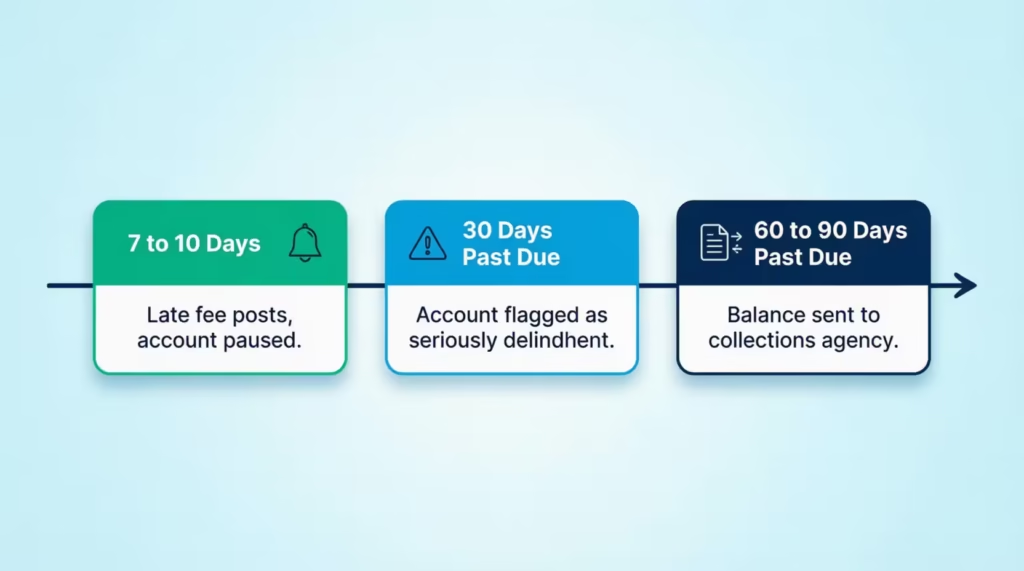
These windows are approximate. Zip can adjust its process, and some accounts move faster than others. But the pattern is consistent across most BNPL providers, so use it as a rough map. If you are inside the grace window, you still have room to fix things quietly.
Does a Zip Charge-Off or Collections Account Show Up on Your Credit Report?
Yes. If Zip charges off your account or sends it to a collection agency, that collections entry can appear on your credit report. Under the Fair Credit Reporting Act, most negative items, including collections, can stay on your file for up to seven years from the original date you first fell behind, according to Experian.
That is a long shadow for what might have started as a $60 purchase.
There is also a second reporting trigger worth knowing. If the debt is large enough and the collector or Zip sues you, a court judgment can result. Judgments are public records. In 2017, the main credit bureaus removed most civil judgments from consumer credit reports. However, they can still appear in background checks and public record searches. Landlords, employers, and some lenders may use these searches.
The takeaway is simple. A single Zip account left unpaid can turn into a years-long credit problem. That is why the “just skip it” mindset is so dangerous with BNPL.
Zip Pay-in-4 vs. Zip Pay and Zip Money: Do They Report Differently?
Not all Zip products behave the same way, and this trips up a lot of users. It helps to know which one you actually have.
Zip Pay-in-4 is the standard BNPL installment product most U.S. shoppers use at checkout. You split a purchase into four payments over about six weeks. This is the version that generally does not report on-time activity to the credit bureaus.
Zip Pay and Zip Money are different animals. These are revolving credit lines available in some markets. They resemble traditional credit accounts more than basic installment plans. Credit line products can show various account behaviours. One possibility is being reported as a tradeline. This is important because a reported tradeline can impact your credit mix, utilization, and payment history in ways that a Pay-in-4 loan cannot.
If you have a Zip credit line product rather than the basic Pay-in-4 plan, check your specific agreement or contact Zip support directly. Don’t assume the “not reported” rule applies across the board.
💡 Pro Tip: Log into your Zip account and look at the product name on your active plan. If it says “Pay-in-4,” you’re on the standard installment plan. If it talks about a credit limit, revolving balance, or minimum monthly payment, you probably have a credit line product with different reporting rules.
Does Using Zip Help Build Your Credit?
No. Using Zip responsibly will not build your credit history. Even if you pay every installment early, in full, for years on end, none of that positive behavior reaches Experian, Equifax, or TransUnion.
The reason comes down to tradelines. A tradeline is the entry a lender reports to the bureaus that shows the account, the balance, and your payment history. Credit scores are built almost entirely from tradelines. No tradeline means no data. No data means nothing for the scoring model to reward.
So Zip is a payment tool, not a credit-building tool. If your real goal is a stronger score, using Zip more often will not move the needle. You need a product that reports.
How Zip’s Credit Reporting Compares to Other BNPL Apps
BNPL providers do not follow one rulebook. Reporting practices vary a lot from company to company, and even within the same company from one product to another. That’s why comparing them side by side matters when you’re deciding which app to trust with your credit.
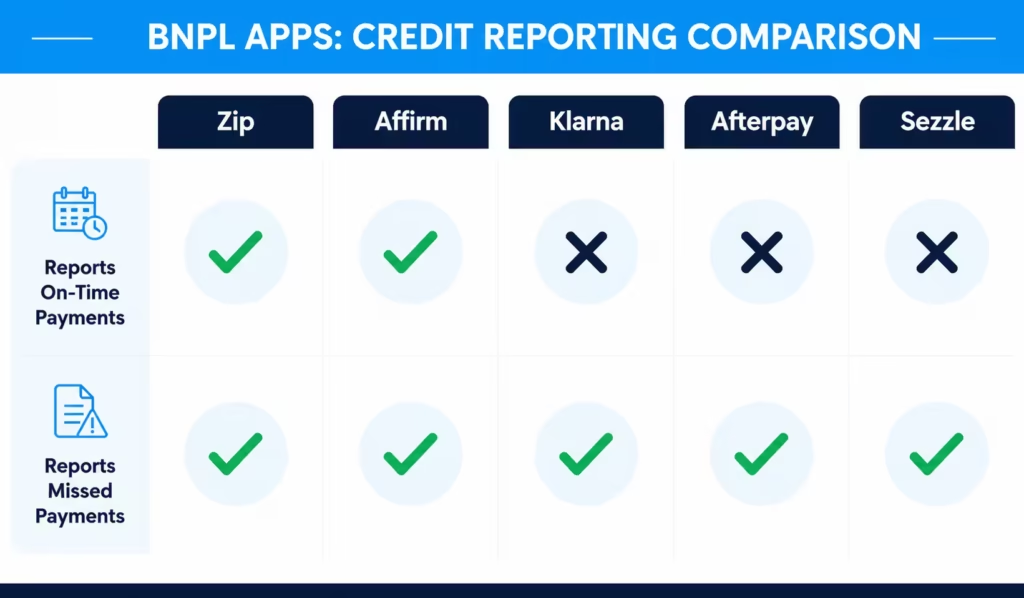
Here is a quick snapshot of the major players in 2026.
| BNPL App | Reports On-Time Pay-in-4 to Bureaus? | Reports Missed Payments / Collections? |
|---|---|---|
| Zip | No | Yes, through collections |
| Affirm | Yes, most loans | Yes |
| Klarna | Only certain products | Yes |
| Afterpay | No | Yes, through collections |
| Sezzle | No, unless you opt in to Sezzle Up | Yes |
The details below explain what each provider does in practice.
Affirm
Affirm is the most credit-visible option in this group. It reports many of its loans to the credit bureaus, and since April 2025 it has expanded that reporting to include short-term Pay in 4 loans, with data going to Experian Affirm. That is a sharp contrast with Zip. If you use Affirm, your Pay in 4 activity can shape your credit file, for better or worse. Late payments can hurt you, and consistent on-time payments have a shot at helping.
Klarna
Klarna’s approach is mixed. It reports on some loan types but not others. The longer-term Monthly Financing product is usually reported, but the shorter Pay in 4 plans in the U.S. have not been reported in the same way. Since Klarna has changed its policies in the past two years, always check the current terms in your Klarna app. Don’t assume anything about how it affects your score.
Afterpay
Afterpay behaves a lot like Zip. Standard on-time Pay-in-4 usage is not reported to the credit bureaus. Missed payments can escalate the same way, with the account potentially going to a collection agency that then reports the debt. If you already use Zip and understand the risk pattern, Afterpay works on nearly identical rules.
Sezzle and Sezzle Up
Standard Sezzle usage does not report to the credit bureaus by default. But Sezzle offers an add-on feature called Sezzle Up, which is opt-in. When you enable Sezzle Up, your on-time payments do get reported, which means responsible use can help build your credit history. That makes Sezzle Up one of the few BNPL products designed to help scores rather than just avoid hurting them.
What to Do If You Missed a Zip Payment
If a Zip payment already failed to process, act fast. You have a real window to fix this before it becomes a credit issue.
Follow these steps in order.
- Pay the missed installment right now. Open the Zip app, go to the failed plan, and clear the balance the moment funds are available. This stops the escalation clock. Any pause on your account will usually lift once the balance is current.
- Contact Zip support directly. Use the in-app help chat or visit the official Zip Help Center to confirm your account status and ask if any late fees can be waived. Getting written confirmation that your account is current is valuable if a dispute comes up later.
- Set up a backup payment method. Add a second debit card or bank account to your Zip profile so the next installment doesn’t fail if your main card is short on funds. Turn on payment reminders too.
- Watch the calendar. Remember the rough timeline covered above. If you are inside the first 30 days, you are almost certainly still safe from bureau reporting. Every extra day past that raises the risk.
Speed matters more than anything else here. A missed payment caught in week one is a minor headache. The same payment ignored for three months can become a seven-year problem.
How to Check If Zip Has Reported Anything on Your Credit File
Don’t guess. Verify.
You can get a free credit report from each of the three major bureaus. Just visit the official site, AnnualCreditReport.com, to access all three whenever you want. Grab one report from Experian, one from Equifax, and one from TransUnion so you can compare.
Once you have the reports open, look for two things. First, scan the tradelines section for any entry that mentions Zip, Zip Co, QuadPay (Zip’s former U.S. brand name), or a general BNPL account. Second, check the collections section for any third-party collection agency listing an unpaid balance around the size of your Zip debt. Collectors often use their own name, not Zip’s, so the entry may not say “Zip” at all.
If something is listed and you believe it is wrong, file a dispute directly with the bureau reporting it. Each bureau has an online dispute portal, and they are required to investigate within about 30 days under federal law.
Alternatives If Your Goal Is Building Credit
If the real reason you were curious about Zip is that you want to build credit, switch tools. Zip’s standard Pay-in-4 was never designed for that job.
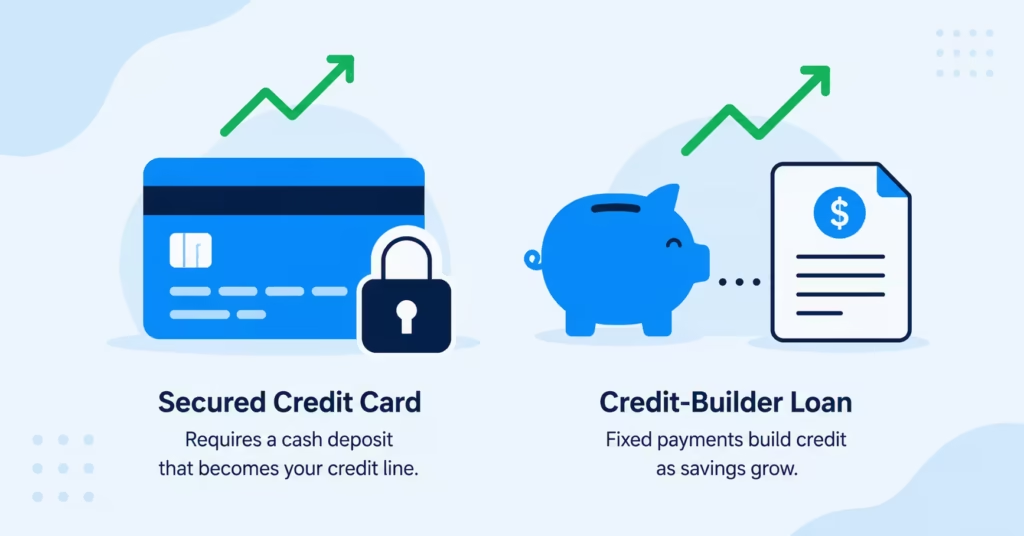
Two options actually do what you want.
A secured credit card is usually the fastest, cheapest way to start. You put down a small deposit, often $200, and the card issuer gives you a matching credit line. Every month you use it and pay the balance, that activity is reported as a revolving tradeline to all three bureaus. Look for a card with no annual fee that reports to Experian, Equifax, and TransUnion, and set autopay for the full balance so you never carry a late payment.
A credit-builder loan works differently but reports the same way. Instead of borrowing money upfront, you make small monthly payments into a locked savings account. At the end of the term, you get the money back, minus fees.
The lender reports each payment as an installment tradeline, which builds both your payment history and your credit mix. Community banks, credit unions, and several fintech apps offer these.
There is also one BNPL-specific option worth mentioning again. If you like the BNPL format, Sezzle Up is the opt-in version of Sezzle that reports your on-time payments to the bureaus. It is not as powerful as a full secured card or credit-builder loan, but it fits naturally into how BNPL users already shop.
The main point is this. Any tool that reports a positive tradeline can help your credit. Zip Pay-in-4 does not. Match the tool to the goal.
Frequently Asked Questions (FAQs)
Does Zip Pay affect getting a loan?
Standard Zip Pay-in-4 use won’t show up on your credit report if you pay on time, so it typically won’t affect a loan application. But a missed payment sent to collections can appear on your file and hurt your approval odds.
Will Zip mess up my credit score?
On-time Zip Pay-in-4 payments don’t touch your credit score at all since they’re not reported. A missed payment that goes to collections can drop a good score by 50 to 100 points.
What happens if you don’t pay your Zip?
You’ll first get a late fee within about 7 to 10 days, and your account gets paused. Around 60 to 90 days past due, the unpaid balance is often sold to a collection agency that can report it to the bureaus.
Will Zip take you to collections?
Yes, if a payment stays unpaid long enough. Around 60 to 90 days past due, Zip typically assigns or sells the debt to a third-party collector, who can then report it under their own name.
Does Zip Money show up on a credit report?
Zip Money is a revolving credit line, different from the standard Pay-in-4 plan, and it can be reported as a tradeline. Check your specific agreement or contact Zip support to confirm how your account is classified.
How often does Zip show up on a credit report?
Standard Zip Pay-in-4 activity rarely appears on a credit report when payments are made on time. It only shows up after a missed payment escalates to a collections referral, usually around 60 to 90 days past due.
What credit bureau does Zip report to?
Zip does not report on-time Pay-in-4 payments to Experian, Equifax, or TransUnion. If your debt goes to collections, the collection agency reports it to these bureaus in its own name.
Which is better, Afterpay or Zip?
They work almost identically. Neither reports on-time Pay-in-4 payments to the bureaus, and both can send unpaid balances to collections that do get reported.
Is Zip Pay bad for credit score?
Zip Pay itself isn’t bad for your score since on-time payments stay invisible to the bureaus. It only becomes a problem if you miss payments and the debt escalates to collections.
What’s better than Zip Pay for building credit?
A secured credit card or credit-builder loan actually builds credit since both report your payment history as a tradeline. Sezzle Up, an opt-in BNPL feature, is another option that reports on-time payments to the bureaus.
Wrapping Up
Standard Zip Pay-in-4 activity won’t show on your credit report if you pay on time. Using it only involves a soft inquiry. However, missed payments can cause your Zip debt to be reported to Experian, Equifax, or TransUnion. Different Zip products can act in unique ways. Other BNPL apps, like Affirm, Klarna, and Sezzle Up, manage reporting on their own terms.
In 2026, BNPL reporting trends suggest treating Zip as a short-term payment tool. It’s not meant for building credit. If you want a stronger score, consider using it with a secured card or a credit-builder loan.
If you know someone using BNPL to stretch a tight budget, share this article with them. It could save them from a seven-year collections mark on a purchase they’ve long forgotten about.