
Starting your credit journey feels scary. You want your first card to be safe, fair, and easy to get. Many new users ask if a Capital One credit card for beginners is a smart pick, or if it will lead to hidden fees, denials, or a wasted hard inquiry.
Yes, Capital One is one of the best starting points for beginners because it offers cards built for people with no credit or thin credit files.
In this guide, we’ll help you find the right card for you. You’ll learn about expected deposits and fees. Plus, we’ll show you how to build your score step by step with confidence.
Key Takeaways
This guide explains whether Capital One credit cards are good for beginners, covering four starter card options, deposit and fee requirements, starting credit limits, and how automatic reviews help credit scores grow over time.
Core Facts:
- Capital One offers four beginner cards: Platinum (no deposit, no annual fee), Platinum Secured (refundable deposit of $49, $99, or $200), QuicksilverOne ($39 annual fee, 1.5% cash back), and SavorOne Student (no deposit, for enrolled students).
- The Platinum Card typically starts with a credit line between $300 and $500, while the Platinum Secured starts at $200 or more depending on the deposit paid.
- Capital One reviews accounts automatically around six months after opening to decide on limit increases, based on payment history, balance patterns, and updated income.
- Capital One reports account details to all three major credit bureaus, Equifax, Experian, and TransUnion, usually once a month near the statement closing date.
- A soft inquiry from Capital One’s pre-approval tool or CreditWise does not affect a credit score, while a formal application creates a hard inquiry that can lower it.
- Keeping utilization below 30 percent of the credit limit, and ideally below 10 percent, is presented as a way to support faster credit score growth.
Best for:
- People with no credit history or a thin credit file looking for a first card with low or no upfront cost.
- Beginners deciding between an unsecured option and a secured option based on available deposit funds.
- Readers who want to understand how on-time payments and utilization affect automatic credit limit reviews.
Does Capital One Approve People With No Credit History?
Capital One is one of the few major issuers that actually designs cards for people who are just starting out. You don’t need a long credit history to get approved. In fact, some of their cards are built for folks who have never had a credit account before.
There’s a big difference between “no credit” and “limited or fair credit.” No credit means nothing is on your report yet. Fair credit usually means a FICO score in the 580-669 range, based on the standard credit tiers used by major bureaus.
If you fall in that range, you already have a decent shot at unsecured cards like the Platinum. If you have no file at all, a secured card is the smoother path.
Capital One looks at more than just your score. They check your income, your job status, your rent or housing costs, and any other credit signals you might have. Even a small steady income can help your case. This means young adults, students, and new immigrants often qualify. The issuer looks at the whole picture, not just a three-digit number.
💡 Pro Tip: Before you apply, list your monthly income and rent. Capital One’s online form asks for both, and honest numbers help match you to the right card faster.
Which Capital One Card Is Actually Built for Beginners
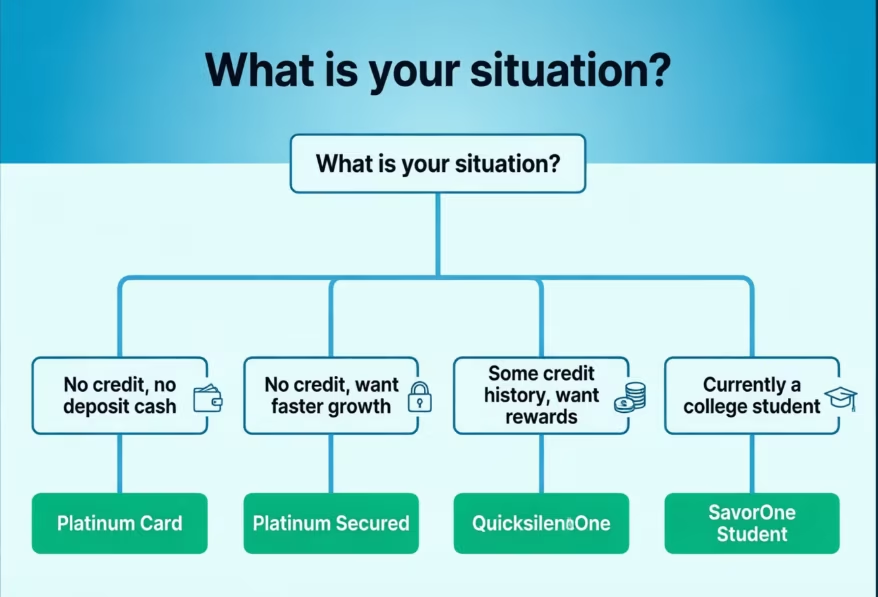
Capital One doesn’t have just one starter card. It has four, and each one fits a different type of beginner. Picking the right one saves you from a wasted hard inquiry and puts you on the fastest path to building your score.
Here’s a quick guide to help you find your match.
| Your Situation | Best Card Match |
|---|---|
| No credit + no cash for deposit | Platinum Card |
| No credit + want faster growth | Platinum Secured |
| Some credit history + want rewards | QuicksilverOne |
| Currently a college student | SavorOne Student |
Capital One Platinum Card
The Platinum is the go-to pick if you want an unsecured card with no upfront cost. There’s no security deposit and no annual fee, which makes it friendly for tight budgets. Starting credit lines usually land between $300 and $500, giving you room to make small purchases and pay them off.
One thing to know: the Platinum wants at least a fair credit score, not literally zero history. If you have a thin file with even one reported account, like a student loan or an authorized user spot, you’re likely a fit. Learn more on the official Capital One Platinum page.
Capital One Platinum Secured Card
If you truly have no credit file at all, the Platinum Secured is your safest bet. You put down a refundable deposit of $49, $99, or $200, and Capital One opens a line of at least $200. The lower deposit tiers are rare in the industry, so this card is a real gift for beginners with limited cash.
Use it well, and you can earn back your deposit. After about six months of on-time payments, Capital One reviews your account and may bump your limit or move you to an unsecured card. This is also the best fallback if the unsecured Platinum turned you down.
Capital One QuicksilverOne Cash Rewards
QuicksilverOne is for folks who already have a little credit history and want to earn rewards while they build. You get 1.5% cash back on every purchase, which adds up fast if you use it for gas, groceries, or subscriptions.
The tradeoff is a $39 annual fee and a higher APR than premium cards. If you plan to pay your bill in full each month, the rewards can easily cover the fee. But if you carry a balance, the interest will eat into your gains, so weigh that carefully.
Capital One SavorOne Student Card
Students get their own path with the SavorOne Student card. It’s unsecured, has no deposit, and doesn’t require a long credit history because enrollment status helps you qualify. Beyond that, it offers strong rewards on the stuff students actually buy, like dining, streaming, and groceries.
This card can be a smart way to build credit during college while earning cash back on daily spending. Just be sure to keep balances low and pay on time so you graduate with a solid score and no debt hangover.
Deposit Requirements: What You’ll Actually Need Upfront
Not every Capital One starter card asks for money upfront, but a few do. Knowing which is which helps you plan your budget before you apply.
Here’s the full breakdown:
| Card | Deposit Required | Starting Credit Line |
|---|---|---|
| Platinum Card | None | $300-$500 |
| Platinum Secured | $49, $99, or $200 | Starting at $200 |
| QuicksilverOne | None | Varies by income |
| SavorOne Student | None | Varies by income |
The Platinum Secured is the only one that needs a deposit. Even then, it’s flexible. You may qualify to open a $200 line with just a $49 deposit, based on your income and application details. That’s much lower than most secured cards on the market.
The good news is that the deposit is refundable. If you pay on time and manage your account well, Capital One will return your money when you upgrade to an unsecured card or if you close the account in good standing. So think of it as a temporary hold, not a fee.
⚠️ Mistake to Avoid: Don’t drain your emergency savings to fund a security deposit. Keep at least one month of expenses in reserve, and start with the $49 deposit tier if cash is tight.
Starting Credit Limits and How They Grow
Your first credit limit will likely feel small, and that’s normal. Capital One starts most beginners with a modest line so both sides can build trust. Here’s what to expect and how limits grow over time.
The Platinum unsecured card usually opens with a limit between $300 and $500. The Platinum Secured starts at $200 or more, depending on your deposit. QuicksilverOne and SavorOne Student limits vary based on income, but they often start in a similar range for first-time users.
Capital One offers an automatic credit limit review as early as six months after account opening. You don’t need to ask for it. The issuer checks your payment history, balance patterns, and updated income info to decide if you deserve a bump. This makes Capital One friendlier than issuers that make you request each increase and eat a hard inquiry.
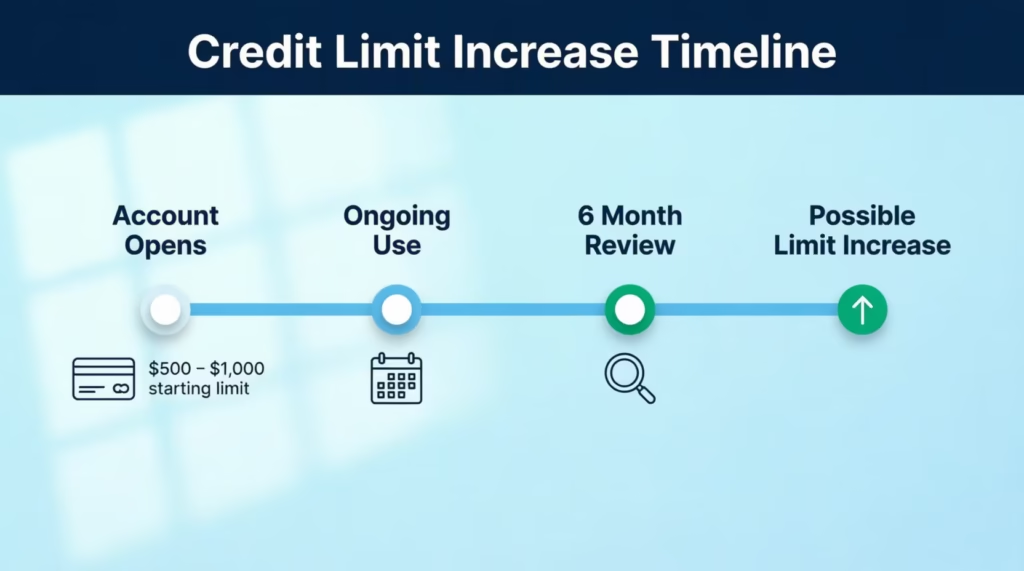
To increase your chances of a higher limit, follow these three habits:
- Pay every bill on time.
- Keep your balance well below the limit each month.
- Update your income in the app if you get a raise or start a new job.
These small moves signal to Capital One that you can handle more credit safely.
Annual Fees and APR: What Beginners Should Actually Expect
Fees are one of the biggest worries for first-time card users. Nobody wants to pay just to have a card. Capital One keeps things fair here, but the details vary by card, so it pays to know what you’re signing up for.
| Card | Annual Fee | APR Range |
|---|---|---|
| Platinum Card | $0 | Higher variable APR |
| Platinum Secured | $0 | Higher variable APR |
| QuicksilverOne | $39 | Higher variable APR |
| SavorOne Student | $0 | Variable APR |
Three of the four beginner cards have no annual fee, which is great for people testing the waters. The QuicksilverOne charges $39 a year, but you get 1.5% cash back in return. If you spend at least $2,600 a year on the card, the rewards cover the fee.
APR is where beginner cards feel expensive at first glance. Fair-credit cards carry higher rates than premium cards, and that’s normal, not predatory. It reflects the risk the issuer takes on a thin credit file. Here’s the trick: APR only matters if you carry a balance. If you pay your statement in full each month, you never pay a cent of interest, no matter how high the rate looks.
How to Check Your Approval Odds Without Hurting Your Credit Score
Applying blind is risky. A denial still leaves a hard inquiry on your report, which can lower your score by a few points and stay visible for two years. Luckily, there are ways to check your odds before you apply.
Understand the two types of credit checks first. A soft inquiry is a background check that doesn’t affect your score. Banks use it for pre-approval offers and credit monitoring. A hard inquiry happens when you formally apply for credit, and it does show up on your report. The Consumer Financial Protection Bureau notes that hard inquiries can lower scores, especially on thin files where each point matters.
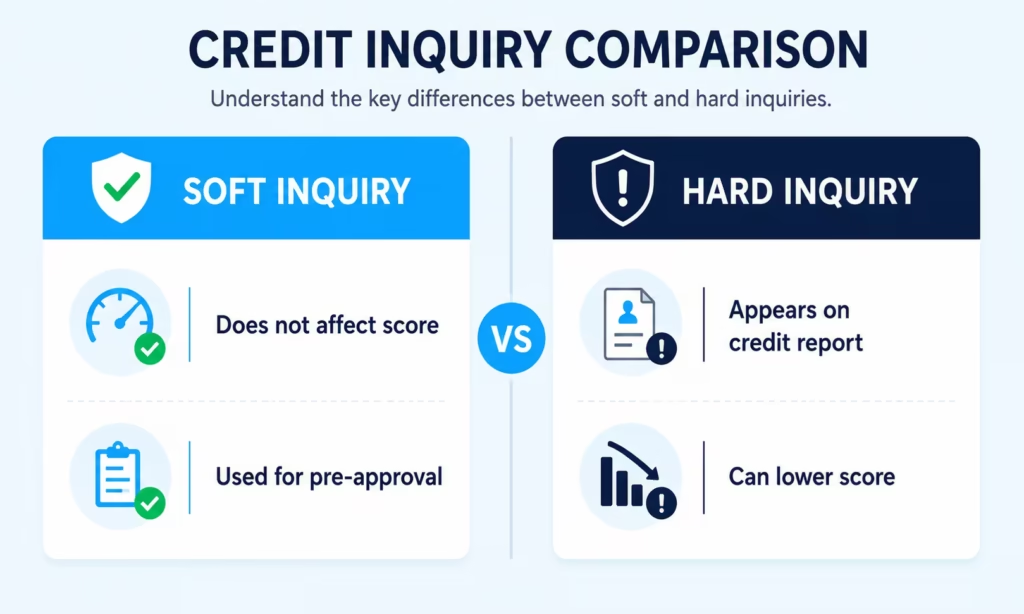
Capital One offers a free tool called CreditWise that anyone can use, even without a Capital One card. It shows your VantageScore, tracks changes, and gives you a picture of where you stand. Sign up at CreditWise before you apply so you know if your score fits the fair credit range.
You can also use Capital One’s pre-approval tool on their website. It runs a soft pull and tells you which cards you’re likely to qualify for. This step alone can save you from a wasted hard inquiry, so it’s worth the two minutes it takes to fill out.
What “Responsible Use” Actually Means in Numbers
“Use your card responsibly” is advice you’ll hear everywhere, but few articles say what it really means. Let’s put real numbers on it so you know exactly what to do.
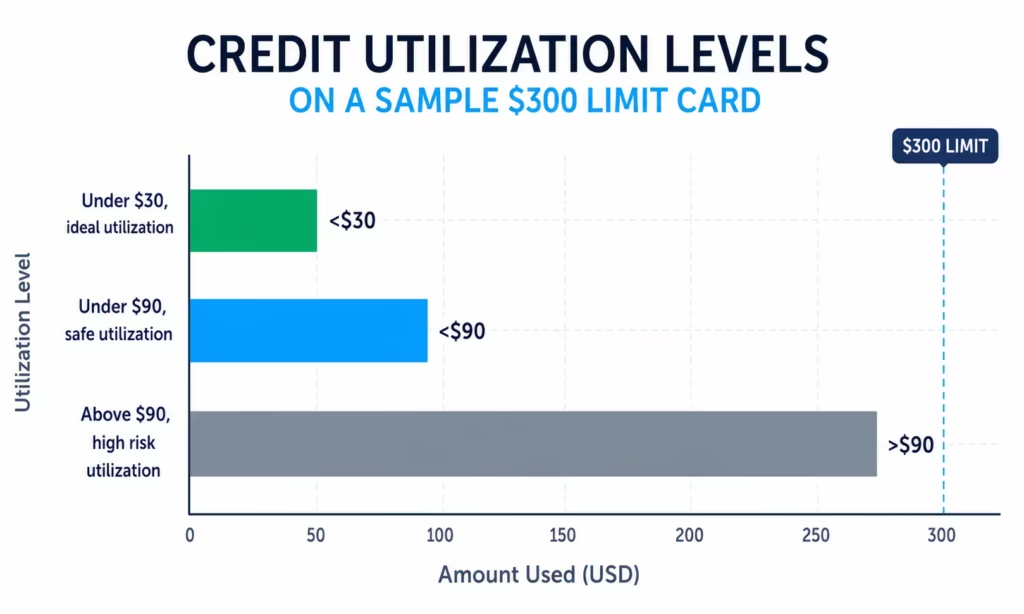
Keep your credit utilization below 30%, and ideally below 10% if you want the fastest score growth. Utilization is the share of your credit limit you use each month. If your Platinum limit is $300, try to keep your balance under $90 at any time, and under $30 if you want top-tier results. High utilization is one of the biggest score killers for beginners.
Pay on time, every time. That means paying at least the minimum by the due date, but paying the full statement balance is even better. Set up autopay the day your card arrives. A single missed payment can drop your score by 60 to 100 points and stay on your report for seven years.
These habits compound over the six-month review window. If Capital One sees a clean record of on-time payments and low utilization, you’re likely to get a limit bump, which then lowers your utilization even more. It’s a snowball effect that can lift your score from the low 600s to the 700s in about a year.
📌 Did You Know: Paying your card balance before the statement date can lower the utilization number that Capital One reports to the bureaus. This trick can boost your score without changing your spending.
How Capital One Reports to Credit Bureaus (and Why That Matters)
A credit card only helps your score if the issuer reports your activity to the credit bureaus. If they don’t report, using the card is useless for building history. Capital One does report, and that’s a huge reason it works so well for beginners.
Capital One reports account details to all three major bureaus: Equifax, Experian, and TransUnion. That includes your credit limit, current balance, payment history, and account age. This full reporting is what feeds your FICO Score 8 and VantageScore, giving lenders the data they need to trust you later.
The reporting usually happens once a month, on or near your statement closing date. So the balance you carry at that moment is the one that shows up on your report. This is why timing your payments before the statement date can help, even if your due date is later.
Consistent reporting over six to twelve months is what actually moves your score. Every on-time payment adds a positive mark, and every month of low utilization strengthens your profile. Over time, this record turns a thin file into a solid one, opening doors to better cards, car loans, and eventually a mortgage.
What to Do If You’re Declined
Getting turned down for a first card feels rough, but it’s not the end of the road. Capital One offers a clear fallback path, and there are other smart moves you can make right away.
If the unsecured Platinum denied you, the Platinum Secured is your direct next step. It’s designed for exactly this situation. You put down a small refundable deposit and get an active credit line to start building history. Many beginners get approved for the secured version even after a denial on the unsecured one.
Another option is becoming an authorized user on a family member’s card. If a parent or trusted relative adds you to their account, their payment history often shows up on your report. This can jumpstart your credit file without you needing to apply for anything yourself. Just make sure the primary user has a strong record, because their mistakes will hit your report too.
Before you reapply for any new card, wait at least six months. Multiple hard inquiries in a short window signal desperation to lenders and can push your score even lower. Use that time to build income, save for a deposit if needed, and monitor your credit through CreditWise. When you do reapply, your odds will be much better.
Frequently Asked Questions (FAQs)
Is Capital One a good credit card for beginners?
Yes, Capital One designs several cards specifically for people with no credit or thin credit files. It checks income and housing costs beyond just your score, and offers automatic credit limit reviews after six months.
Which Capital One card is best for a beginner?
The right card depends on your situation. If you have no credit and no deposit money, choose the Platinum Card; if you have zero credit history at all, choose the Platinum Secured Card.
Which card is easiest to get approved for?
The Platinum Secured Card is the easiest to get approved for since it requires no credit history at all. A refundable deposit of $49, $99, or $200 opens a credit line starting at $200.
How many credit cards should a beginner have?
One card is enough for a true beginner. Building history on a single account with low utilization and on-time payments is the fastest way to grow a thin credit file.
Is Capital One hard to get approved for?
No, Capital One is one of the more accessible major issuers for people with no credit or fair credit. It evaluates income, rent, and job status alongside your score, and the secured card removes the credit history requirement entirely.
What are the downsides of Capital One’s beginner cards?
Beginner cards carry higher variable APR than premium cards, and QuicksilverOne charges a $39 annual fee. The APR only costs you money if you carry a balance instead of paying in full each month.
Does Capital One report to all three credit bureaus?
Yes, Capital One reports your credit limit, balance, payment history, and account age to Equifax, Experian, and TransUnion monthly. This full reporting is what builds your FICO Score 8 and VantageScore over time.
What credit score do you need for a Capital One beginner card?
The unsecured Platinum Card typically requires fair credit, meaning a FICO score around 580 to 669. If you have no credit file at all, the Platinum Secured Card has no minimum score requirement.
What happens if you’re declined for a Capital One card?
If the unsecured Platinum denies you, the Platinum Secured is the direct fallback with a small refundable deposit. Wait at least six months before reapplying to avoid stacking hard inquiries on your report.
How can I check my Capital One approval odds without hurting my score?
Use Capital One’s free CreditWise tool or their online pre-approval form, both of which run a soft inquiry that doesn’t affect your score. This lets you see which cards you likely qualify for before submitting a formal application.
The Bottom Line
Capital One truly earns its spot as a friendly starting point for new credit users.
There’s a card for almost every beginner need:
- No-deposit Platinum
- Low-cost Platinum Secured
- Reward-earning QuicksilverOne
- Student-friendly SavorOne
Add in the six-month automatic reviews, full bureau reporting, and free CreditWise tool, and you get a full ecosystem that helps your score grow over time.
To get the best results, choose a card that fits your credit situation. Use it wisely by keeping your utilization low and making on-time payments. That combo delivers the fastest, safest growth.
If you know someone getting their first card, share this guide. It helps them choose the right Capital One product and avoid a wasted hard inquiry.