
I get a small wave of worry every time the magnetic strip on my wallet’s most-used card starts showing a date that’s only a month away. If you’re staring at the front of your Capital One card and noticing the MM/YY is close, you’re probably wondering the same thing I did the first time: do I need to apply again, call someone, pay a fee, or just sit and wait? Good news. In almost every case, a Capital One card renewal happens on its own, with no request and no fee from you.
Capital One automatically mails a new card before the old one expires, as long as your account is open and in good standing.
Below, we’ll walk through the full timeline, what to do if your new card is late, how activation works, what changes (and what doesn’t) on the new card, and a small list of updates you should make so your autopay and subscriptions don’t break.
Key Takeaways
This guide explains how Capital One credit card renewal works automatically, including the mailing timeline, activation steps, what changes versus stays the same on the new card, and how renewal affects fees and credit scores.
Core Facts:
- Capital One automatically mails a replacement card before expiration with no application, request, or fee required, as long as the account is open and in good standing.
- A new card is typically printed and mailed about four weeks before the old card’s printed expiration date.
- Reissued cards after a lost or stolen report usually arrive within four to six business days.
- The 16-digit card number usually stays the same during a routine renewal, while the CVV security code and expiration date are refreshed.
- The annual fee posts based on the account’s anniversary date, not the card’s expiration date, so these are two separate timelines.
- A standard card renewal does not affect credit score, since no hard inquiry occurs and the account number, limit, and history stay unchanged.
Best for:
- Cardholders noticing their printed expiration date is approaching and want to know if action is required.
- People whose replacement card has not arrived and need a troubleshooting checklist.
- Anyone updating autopay and stored payment details after receiving a new card number, CVV, or expiration date.
Do You Need to Do Anything to Renew Your Capital One Card?
For most cardholders, the honest answer is: no, you don’t need to do anything. There’s no renewal form, no re-application, and no extra fee just because the date on the front of your card is getting close. The “renewal” you’re picturing is really just a card reissue. Your account stays open the whole time. Only the physical card gets replaced.
This trips a lot of people up. They see the MM/YY date and assume the account ends on that date, too. It doesn’t. The account and the plastic card are two different things. The date printed on the card is only the date at which the card itself stops working at the chip and magnetic strip. The credit line, the rewards, the history, and the login all keep going.
So when does action actually matter? Only in a few cases:
- Your address on file is out of date, so a new card would go to the wrong place.
- Your account has been inactive for a long time and may be flagged for review.
- Your account is past due, frozen, or under a fraud hold.
- You don’t want to keep the card and need to close it before the next annual fee posts.
If none of those apply, the smartest move is to log in, confirm your mailing address is correct, and then simply wait for the envelope to show up.
How Capital One’s Automatic Card Replacement Works
Capital One uses an automatic card replacement system, which means a new card is triggered for you in the background. About a month before the printed expiration, the bank’s system flags your account, prints a fresh card with a new expiration date, and mails it to the address on file. You don’t request it. You don’t pay for it. It just gets sent.
📌 Did You Know: The expiration date on a credit card isn’t there because the account ends. It exists because the chip, magnetic strip, and security features wear out and need to be refreshed for fraud protection. That’s the real reason your card has a printed date at all.
A few quick things worth knowing about how this works:
- The trigger is time-based, not request-based. You don’t have to click anything.
- The new card uses a fresh expiration date, usually three or four years out.
- The card type stays the same. A Quicksilver stays a Quicksilver. A Venture stays a Venture.
- Your account number in your online profile doesn’t change, even if the card number on the plastic does (more on that below).
The takeaway is simple. If your account is healthy and your address is current, the system handles the renewal for you.
When Will Your New Capital One Card Arrive?
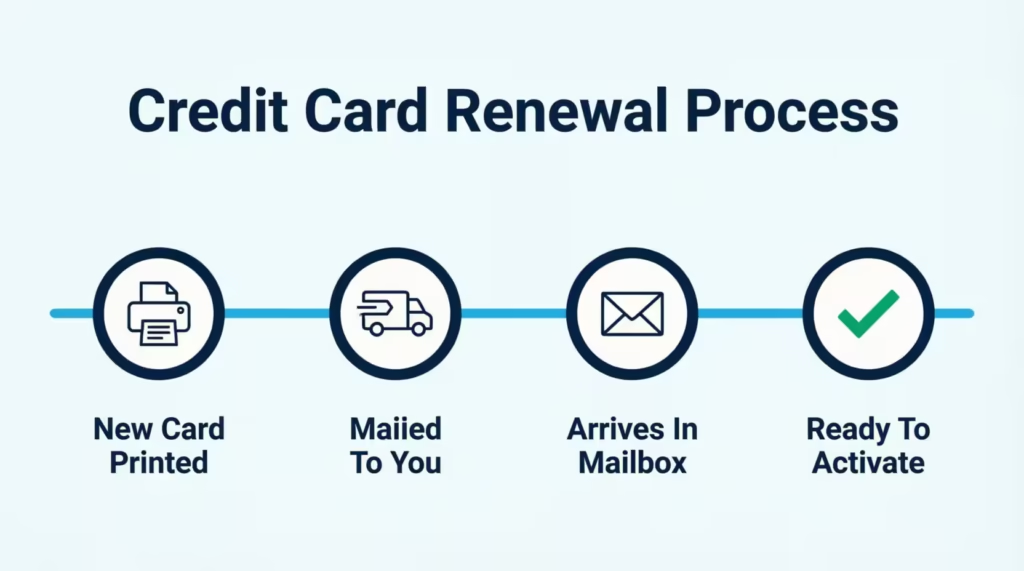
Here’s the timeline most cardholders can expect. Capital One says a new card should arrive around four weeks before your old one expires, so by the time your printed date hits, you’ve usually had the replacement in your hand for several weeks already.
In plain language, that means:
- About 4 weeks before expiration: A new card is printed and mailed.
- 3 to 7 business days later: The envelope reaches your mailbox.
- Before the month of expiration ends: Your new card is ready to activate and use.
Cards usually arrive in a plain white envelope without a Capital One logo on the outside. That’s on purpose. Banks ship cards in low-key packaging to lower the chance of mail theft. So if you’re sorting your mail quickly, it’s easy to toss it out by accident. Look closely at any plain envelope during the month leading up to your expiration date.
If the date on your card is, say, 08/26, your card works through the last day of August 2026. The new one should land in your mailbox sometime in late July or early August 2026.
What to Do If Your New Card Hasn’t Arrived Yet
If your card is set to expire this month and you still haven’t received a replacement, don’t panic. Work through this short checklist first:
- Check your mailing address. Log in to your Capital One account or the app and confirm the address on file. If you moved and didn’t update it, that’s the most common reason cards go missing.
- Search your mail pile. New cards ship in unbranded envelopes, so they can look like junk mail. Check anything you set aside over the past three weeks.
- Confirm the account is in good standing. A frozen account, an unpaid balance, or a fraud hold can stop a reissue.
- Check for delivery alerts. If you use USPS Informed Delivery, look for a daily email preview of incoming mail.
If you’ve checked all of those and your card still hasn’t arrived within a week of the expiration date, contact Capital One directly. The number on the back of your current card still works until the date prints out, and you can also chat with Eno, Capital One’s virtual assistant, inside the app. A rep can confirm whether a card was mailed, when, and to where, and they can reissue a replacement if needed. Reissued cards usually arrive within four to six business days, and rush shipping is sometimes available if you ask.
⚠️ Mistake to Avoid: Don’t keep waiting silently after the expiration date passes. If you can’t use the old card and the new one hasn’t arrived, every day you delay is a day your autopayments could decline. Call as soon as you suspect a delivery problem.
How to Activate Your New Capital One Card
Once the new card is in your hand, you can’t tap or swipe it until it’s activated. Capital One gives you three easy ways to do this, and any one of them works:
- In the Capital One Mobile app: Sign in, tap your profile icon, select “Account & Feature Settings,” then choose “Activate a Credit Card.” The app walks you through the steps in about a minute.
- On the Capital One website: Sign in at capitalone.com, go to your card account, and look for the activation prompt on the dashboard.
- By phone: Call the activation number printed on the sticker attached to the front of your new card. The system is automated and takes only a few minutes.
You’ll usually need to confirm a few details, like the last four digits of your Social Security number, the security code on the new card, and sometimes the card’s expiration date. That’s it. Once the activation is done, the new card is live, and the old one stops working, often within a few minutes.
A small tip many people miss: peel the activation sticker off the front of the card after you activate, and then sign the back if your card has a signature panel. Some merchants still check for a signature on the back, even though most readers skip it now.
Will Your Card Number Change When You Get a New Card?
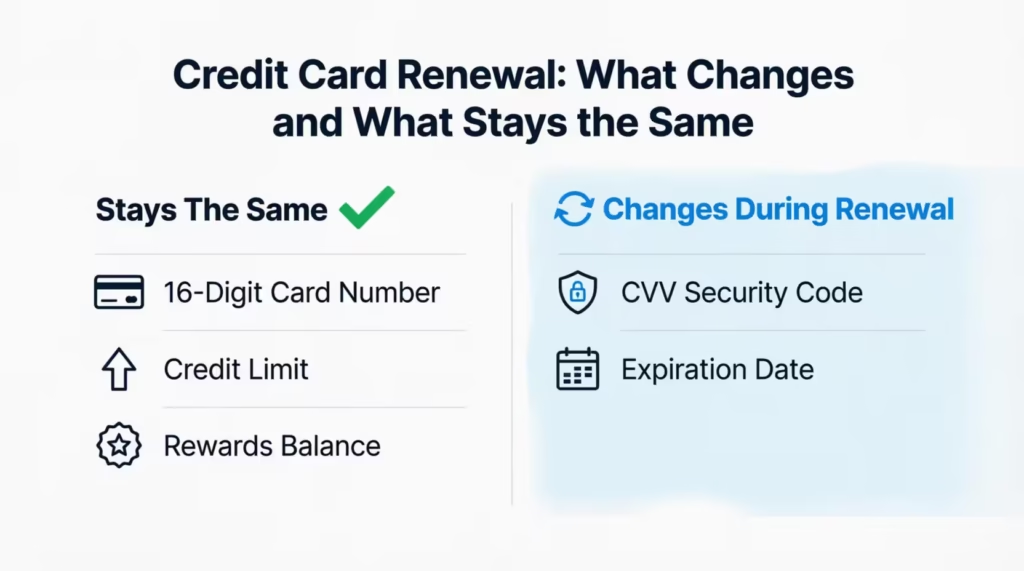
This is the part that surprises people most. For a routine, on-time renewal, your 16-digit card number usually stays the same. The expiration date is new, and the CVV on the back is new, but the long number on the front carries over. That’s because nothing happened to compromise the old number. The bank only had to refresh the chip and strip, not change your identity to merchants.
Your card number will change in these situations:
- The card was reported lost or stolen.
- The card was damaged, and you requested a replacement, depending on the reason.
- Capital One detected fraud or a data breach involving your number.
- The product changed (for example, you upgraded from a Quicksilver to a Venture).
So if you’re getting a fresh card simply because the old one timed out, expect to keep the same number. If you asked for a replacement after a fraud alert, expect a brand new number, and plan to update every merchant that has it on file.
Does Your CVV or Card Design Change?
Yes, the CVV security code on the back almost always changes during a renewal. That’s by design. The CVV is meant to refresh whenever a new physical card is printed, so old card data floating around online becomes useless. This is one of the small but important fraud protections built into the system.
The card design might change, too, depending on timing. Capital One refreshes its card art now and then, so a Venture X you renewed in 2026 may look a little different from the one you got in 2023, even though the product is the same. The metal feel, color tone, or logo style might shift slightly. None of that changes how the card works, your benefits, or your account.
Updating Autopay and Stored Payment Information After Renewal
Even when your card number stays the same, your CVV and expiration date are new. That matters because many merchants store all three. When the expiration date on file is out of date, the next charge may decline, even if the card number hasn’t moved.
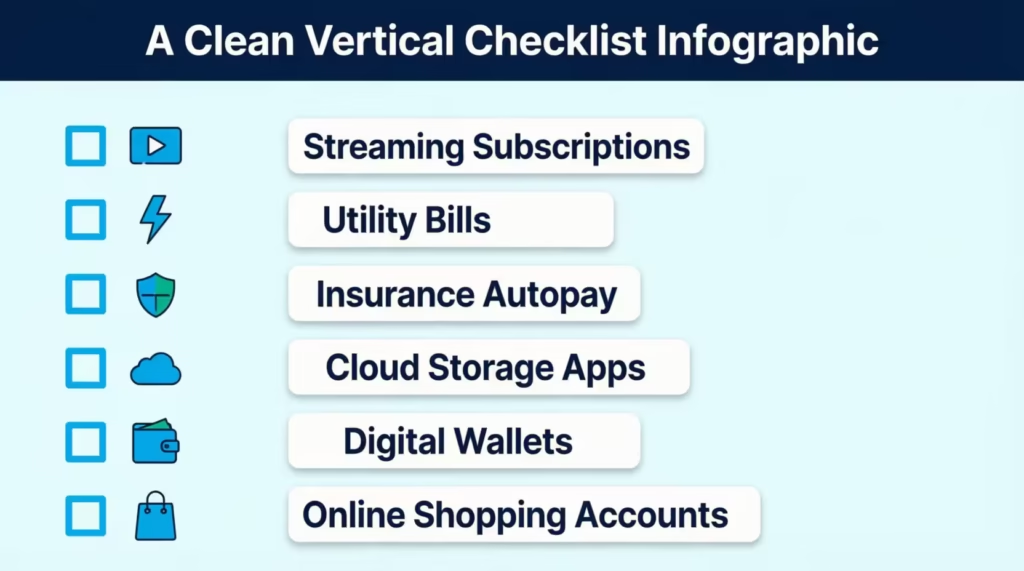
Here’s a clean checklist to run through within a day or two of activating your new card:
- Streaming and subscription services: Netflix, Spotify, Hulu, Disney+, Amazon Prime, Apple services, and any other monthly bills.
- Utility bills on autopay: Electric, gas, water, internet, and mobile phone provider.
- Insurance autopay: Auto, renters, health, life, pet insurance.
- Cloud storage and software: iCloud, Google One, Dropbox, Microsoft 365, and Adobe.
- Digital wallets: Apple Pay, Google Pay, Samsung Pay, PayPal, Venmo balance card.
- Online shopping accounts: Amazon, Walmart, Target, eBay, and any “saved card” at checkout.
- Recurring memberships: Gym, warehouse club, AAA, software platforms, charity gifts.
- Travel profiles: Airline accounts, hotel loyalty programs, car rental profiles, and TSA PreCheck or Global Entry renewal billing.
A short, real-world example. Jessica, a marketing manager at a small consulting firm, got her renewed Capital One Venture card and tossed the envelope. Her card number was the same, so she figured nothing needed to change.
Three weeks later, her Adobe subscription, her gym membership, and her car insurance autopay all declined within five days of each other because the expiration date and CVV on file were no longer valid. Each one charged her a small late fee. The lesson is simple. Even when the long number doesn’t change, the CVV and expiration date almost always do, so the merchant’s stored card needs an update.
💡 Pro Tip: After you activate, scroll through your last two months of card statements. Anything billed monthly or yearly is a clue that there’s a saved card somewhere that needs updating. That single habit catches almost every recurring charge in one sitting.
Some merchants use a service called Account Updater (run by Visa and Mastercard), which automatically pushes new expiration dates to participating retailers. Capital One participates in this, so some of your subscriptions may update themselves. Still, don’t count on it. Always confirm the ones that matter most, like insurance and utilities.
Does Renewing Your Card Affect Your Annual Fee?
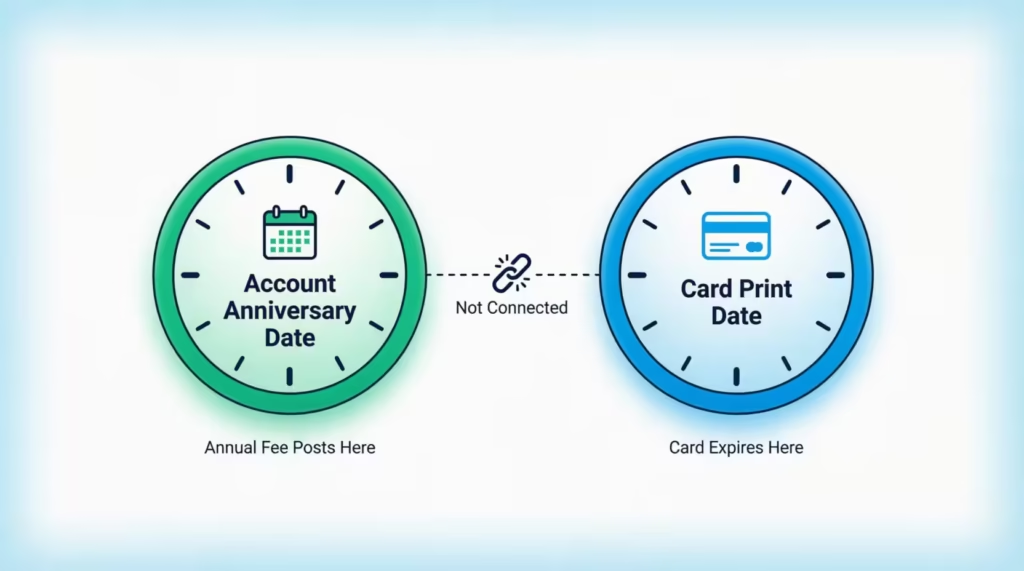
The annual fee is tied to your account’s anniversary date, not your card’s expiration date. They are two different clocks. The annual fee posts every 12 months from the date you opened the account. The physical card expires every three or four years based on its print date. So getting a new card in the mail does not, by itself, trigger an annual fee.
This matters most for cards that do have an annual fee, like the Venture, Venture X, or Savor. If you’ve had your Venture X for a year and it happens to expire around the same time, the fee posting is a coincidence of timing, not a cost of the renewal itself. You would have paid that fee whether the card was reissued or not.
Cards with no annual fee, like Quicksilver or many Platinum products, never cost anything to renew. Capital One simply mails the new card, and your account keeps going.
What If You Don’t Want to Keep the Card Before It Renews?
If you’ve decided the card isn’t worth keeping (most often because of a fee you don’t want to pay again), the time to act is before the next anniversary, not after the renewal mailing. Here’s the right order of steps:
- Check your account anniversary date. It’s listed in your account details inside the app or on the website.
- Decide before the fee posts. Some cardholders call about 30 to 45 days before the anniversary.
- Call Capital One at the number on the back of your card. Ask about your options. Sometimes a rep can offer a retention bonus, statement credit, or a product change to a no-annual-fee card so you keep your account history without the fee.
- If you still want to close, request closure clearly and ask for written confirmation.
A product change is often the smartest move if the only reason you’d close the card is the fee. You keep your account age, which protects your credit score, but you stop paying for a card you don’t use enough.
Does Getting a New Card Affect Your Credit Score or Account History?
A standard renewal does not affect your credit score. There’s no new application, no hard inquiry, and no new account opened. From the credit bureaus’ point of view, nothing has changed. The same account, with the same age, the same limit, and the same payment history, just keeps reporting as usual.
This is one of the most common worries, and it’s also one of the easiest to put aside. Your credit limit stays the same. Your payment history stays intact. Your account opening date stays the same, which protects your average age of accounts, an important credit scoring factor. The only thing that physically changed is the plastic.
There’s also no “soft inquiry” triggered by a routine reissue. Capital One simply prints and mails a card. The credit bureaus don’t even see this as an event.
What Happens to Your Rewards Balance During Renewal
Your rewards balance is tied to your account, not your card. So your cash back, miles, or points stay exactly where they are. A Quicksilver cardholder with $182.40 in cash back rewards still has $182.40 after the new card arrives. A Venture cardholder with 64,000 miles still has 64,000 miles. Nothing resets.
Recent purchases, statement credits, and pending rewards also carry over. If you used your old card for a $40 gas station purchase the day before the new card arrived, that transaction still posts normally, and the rewards still earn on the same account.
Replacing a Lost, Stolen, or Damaged Capital One Card Before It Expires
A normal renewal is different from a lost, stolen, or damaged card replacement. If something is wrong with your card before its printed expiration date, you don’t wait for the automatic reissue. You request a new one right away.
Here’s how to do it:
- Lost or stolen: Open the Capital One app, go to your card, and select “Report Lost or Stolen.” The old card is locked instantly, so no one can use it. A replacement is mailed, usually within four to six business days. You can also call the number on your account or the Capital One fraud line.
- Damaged: If your card is cracked, peeling, or the chip is not reading, request a free replacement through the app or by phone. Most damaged-card replacements keep the same card number and the same expiration date as the original, since nothing was compromised.
You’re protected from fraud either way. Capital One credit cards come with $0 fraud liability, which means you aren’t held responsible for charges someone else made with your stolen card or number. Report it as soon as you notice, and the bank handles the rest.
A quick note on rush shipping. If you’re traveling soon and need the card faster, ask. Capital One can usually expedite delivery for free in urgent cases, especially for cards stolen while you’re on a trip.
When to Contact Capital One About a Renewal Issue
Most renewals go quietly, and you never need to call. But there are a few moments where reaching out to Capital One directly saves a lot of frustration. Call or chat with Eno in the app if any of these are true:
- It’s within one week of your expiration date, and the new card still hasn’t arrived.
- The new card arrived, but activation isn’t working through the app, website, or phone.
- The new card arrived with the wrong name, wrong address, or any printing problem.
- You see charges on your old card that you didn’t make.
- You moved recently and aren’t sure if the new card was sent to your old address.
- You want to decline the renewal because you’re closing the account, and you need to time it before the annual fee posts.
The best ways to reach Capital One are the app’s secure messaging, the number on the back of your card, or the customer service number on their website. For credit card activation specifically, you can use the number printed on the sticker attached to your new card.
If your card is genuinely missing and you suspect mail theft, ask the rep to cancel the mailed card and issue a new one with a different number. That fully protects you, since the lost-in-mail card might be intercepted and used.
Frequently Asked Questions (FAQs)
Does Capital One automatically send a new card when it expires?
Yes, Capital One automatically mails a replacement card before your current one expires, as long as your account is open and in good standing. There’s no application, request, or fee required on your end.
How long does Capital One take to send a new card?
A new card is typically printed and mailed about four weeks before your old card’s expiration date. After mailing, it usually arrives within three to seven business days.
What happens if my credit card expires and I still have a balance?
Your balance stays on your account regardless of the card’s expiration, since the expiration date affects the physical card, not the account itself. You’re still required to make payments on schedule even while waiting for the replacement card to arrive.
Will Capital One close a credit card for inactivity?
An account that’s been inactive for a long stretch may get flagged for review, which can affect whether a replacement card is automatically issued. Logging in periodically and confirming your address helps avoid this issue.
Does getting a new card affect your credit score?
A standard renewal does not affect your credit score at all. There’s no hard inquiry, no new account opened, and your credit limit, payment history, and account age all stay exactly the same.
Will your card number change when you get a new card?
For a routine, on-time renewal, your 16-digit card number usually stays the same, while the expiration date and CVV are refreshed. Your number only changes if the card was reported lost, stolen, or involved in fraud.
Can I still use my credit card even if it’s expired?
No, once the printed expiration date passes, the chip and magnetic strip stop working for transactions. You’ll need to activate your new replacement card to continue using the account.
What happens to your rewards balance during renewal?
Your rewards balance is tied to your account, not the physical card, so cash back, miles, or points carry over completely. A cardholder with 64,000 miles still has all 64,000 miles after the new card arrives.
What should I do if my new Capital One card hasn’t arrived yet?
First check that your mailing address is current and search your mail for an unbranded envelope, since replacement cards ship without Capital One branding. If it’s within a week of your expiration date and still missing, call Capital One directly to confirm mailing status.
Does renewing your card trigger the annual fee?
No, the annual fee is tied to your account’s anniversary date, not your card’s expiration date, so these are two separate clocks. Getting a new card mailed to you doesn’t by itself cause the fee to post.
Final Thoughts
Renewing a Capital One credit card is one of the simpler things in personal finance. The bank handles the heavy lifting, your account stays open the whole time, and your credit score doesn’t move. We covered why no application is needed, when to expect the new card, how activation works, what changes (and what doesn’t) on the new plastic, the autopay updates worth running through, and when to call for help.
Based on how the renewal system actually works, the smartest move for most cardholders is to confirm your mailing address now, watch your mail in the weeks before the printed date, activate the new card the day it arrives, and update the handful of subscriptions that matter most.
If you know a friend or family member who’s been quietly worried about an expiring Capital One card, share this guide. It could save them a panicked phone call and a few declined payments.