
You’re packing for a trip and wondering: will my Capital One credit card work internationally? It’s a fair worry. A declined card at a hotel desk or a surprise fee on your statement can ruin a good trip fast.
Here’s the short answer: yes. Capital One credit cards work in most places around the world, charge no foreign transaction fees, and don’t require a travel notice before you leave.
Below, you’ll learn what “no foreign transaction fee” means. We’ll cover how to avoid expensive currency conversion traps. Plus, find out what to do about PINs and kiosks. Lastly, discover what steps to take if your card is declined, lost, or stolen while traveling.
At a Glance
This guide explains whether Capital One credit cards work internationally, covering foreign transaction fees, currency conversion, PIN requirements, cash advance costs, and what to do if a card is lost, stolen, or declined abroad.
Core Facts:
- Capital One charges no foreign transaction fees on any credit card, including travel, cash back, and student cards, and cards run on the Visa or Mastercard network, which reach 200 or more countries and territories.
- Capital One does not require a travel notice before international trips, since fraud monitoring runs continuously on the account.
- Dynamic currency conversion at foreign terminals can add a markup of 3% or more; choosing local currency instead of USD at checkout avoids this cost.
- Capital One credit cards do not require a PIN for purchases abroad, but some unattended kiosks like transit machines, toll booths, and fuel pumps only accept chip-and-PIN cards.
- Cash advances at foreign ATMs carry a separate fee typically ranging from 3% to 5% of the amount, plus interest that starts accruing immediately with no grace period.
- A lost or stolen card can be locked instantly in the Capital One Mobile app, and a replacement typically ships within 4 to 6 business days.
Best for:
- Travelers deciding whether a Capital One credit card is a safe primary payment method for an upcoming international trip.
- Cardholders wanting to avoid hidden costs like dynamic currency conversion markups or unnecessary cash advance fees while abroad.
- Anyone preparing a pre-trip checklist or troubleshooting a declined, lost, or stolen card while traveling internationally.
Which Payment Network Does Your Capital One Card Use?
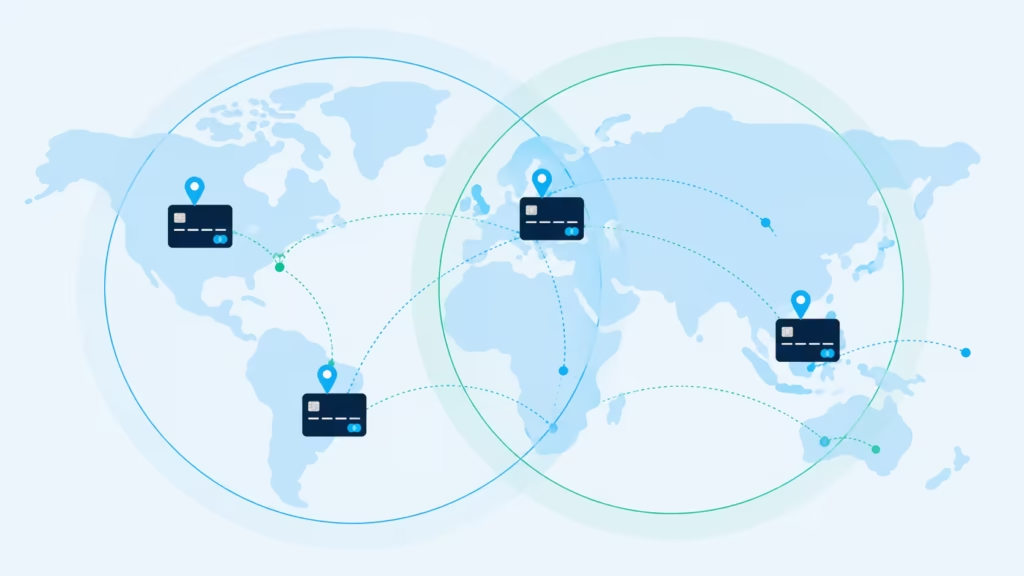
Every credit card runs on a payment network. That’s the system that moves money between the merchant’s bank and your card issuer. Capital One issues cards on both the Visa and Mastercard networks. Visa says its network reaches more than 200 countries and territories, and Mastercard reports reach in more than 210 countries and territories.
Want to know which one you have? Check the bottom corner of your physical card for the Visa or Mastercard logo. You can also sign in to your account online or in the Capital One Mobile app. It takes less than a minute.
For most trips, the network on your card won’t change your day-to-day experience. Both are accepted at a huge share of merchants worldwide.
Important to know: Capital One bought Discover. They are shifting parts of their card portfolio to the Discover network. So, a replacement card you get later may have a different logo. Always check the card you actually plan to pack.
How Acceptance Varies by Merchant and Region
Network reach and real-world acceptance aren’t quite the same thing. Acceptance is a merchant-level decision, not a Capital One setting.
Big hotels, airlines, chain restaurants, airports, and major retailers abroad take Visa and Mastercard almost everywhere. The gaps show up at small, independent, or rural businesses. Think family-run guesthouses, village markets, street food stands, and tiny cafés in cash-preferred regions. Some of them don’t take cards at all.
The practical move: carry a modest amount of local cash as backup. Your card will handle most spending, but cash keeps you covered when a merchant can’t or won’t take it.
Does Capital One Charge Foreign Transaction Fees?
No. Capital One states that it doesn’t charge foreign transaction fees on any of its credit cards, including travel, cash back, and student cards. This isn’t a perk reserved for premium products. It applies across the lineup.
For context, many cards from other issuers charge a foreign transaction fee that typically runs around 1% to 3% of each purchase, as Capital One’s own explainer on the fee notes. On a $3,000 trip, a 3% fee would add about $90. With a Capital One card, that specific charge doesn’t exist.
What’s Actually Free vs. What Can Still Cost You
“No foreign transaction fee” is real, but it’s not the whole cost picture. Here’s the full stack in one place:
- Foreign transaction fee: $0. Genuinely free on every Capital One credit card.
- Currency conversion: Not an added cost. Purchases convert to dollars at the network’s exchange rate, and Capital One says it doesn’t adjust the rate or add a conversion fee.
- Dynamic currency conversion (DCC): An avoidable cost set by the merchant, not Capital One. More on this below.
- ATM cash advances: A real, separate cost category with its own fee and interest.
- ATM operator fees: Charged by whoever owns the machine, not by Capital One.
So the fee Capital One waives isn’t the only possible cost abroad. The good news: the remaining costs are mostly avoidable once you know where they hide.
How Currency Conversion Works on International Purchases
When you buy something in euros, pesos, or yen, the charge reaches Capital One and gets converted into U.S. dollars before it lands on your statement. Capital One explains that foreign currency transactions convert automatically at the rate in effect on the processing date, and that this rate can differ from the rate on the day you made the purchase.
That timing detail matters. If the exchange rate changes between when you tap your card and when the charge posts, your final amount might be a bit higher or lower than expected. The difference is usually small, but it explains why a statement total doesn’t always match the mental math you did at the register.
Either way, the Visa or Mastercard network rate is close to the wholesale market rate. It’s usually much better than what you’d find at an airport currency exchange. There, markups and fees can really cut into your money before your trip begins.
How to Avoid Dynamic Currency Conversion (DCC)
This is the most expensive mistake travelers make with a no-foreign-transaction-fee card, and it’s completely optional.
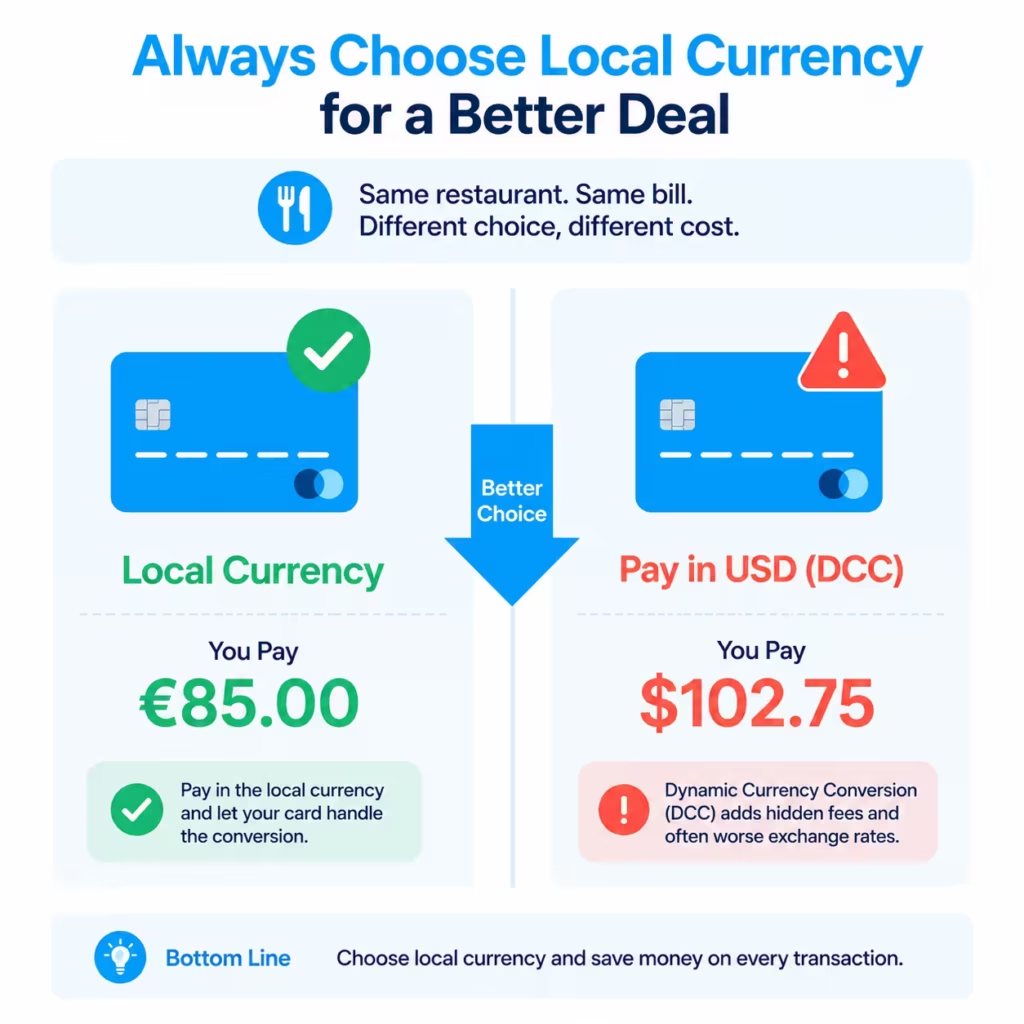
Here’s how it works. A merchant’s terminal or an ATM abroad offers to charge you in U.S. dollars instead of the local currency. It feels safer because you see a number you recognize.
But that dollar figure comes with dynamic currency conversion: the merchant or their payment provider sets the exchange rate, and it’s usually several percent worse than the network rate. Markups of 3% or more are common, and they can run higher.
A quick example. Say you owe €100 at a restaurant. At a fair network rate, that’s about $108. With a DCC markup, the same meal might ring up at $115 or more. You paid an extra $7 for nothing, and the merchant or their processor pocketed the difference.
The fix takes one second:
- At a payment terminal, always choose local currency (euros, pounds, yen), never “USD.”
- At an ATM, decline the “with conversion” option and choose “without conversion.”
- If a clerk runs the charge in dollars anyway, you can ask them to cancel it and rerun the sale in local currency.
⚠️ Mistake to Avoid: Choosing “pay in USD” at a foreign terminal or ATM. That friendly dollar amount hides a markup you never had to pay. Pick local currency every time.
Does Your Capital One Card Need a PIN Internationally?
Capital One issues chip-and-signature cards, and the company confirms your card doesn’t require a PIN to make purchases outside the U.S. If a terminal abroad prompts for a PIN, Capital One’s advice is to speak with the merchant, who can usually bypass the prompt and complete the sale with a signature or a receipt.
At staffed registers, this works smoothly almost everywhere. The friction shows up at machines with no human nearby.
Where Chip-and-Signature Cards Can Fail (Kiosks and Transit Terminals)
Some unattended terminals abroad are built to read chip-and-PIN cards only. The usual trouble spots:
- Train and subway ticket machines
- Parking pay stations
- Highway toll booths
- Self-service fuel pumps
- Some automated ticketing kiosks
This affects most U.S.-issued cards, not just Capital One. It’s a chip-and-signature limitation, not a flaw in your account.
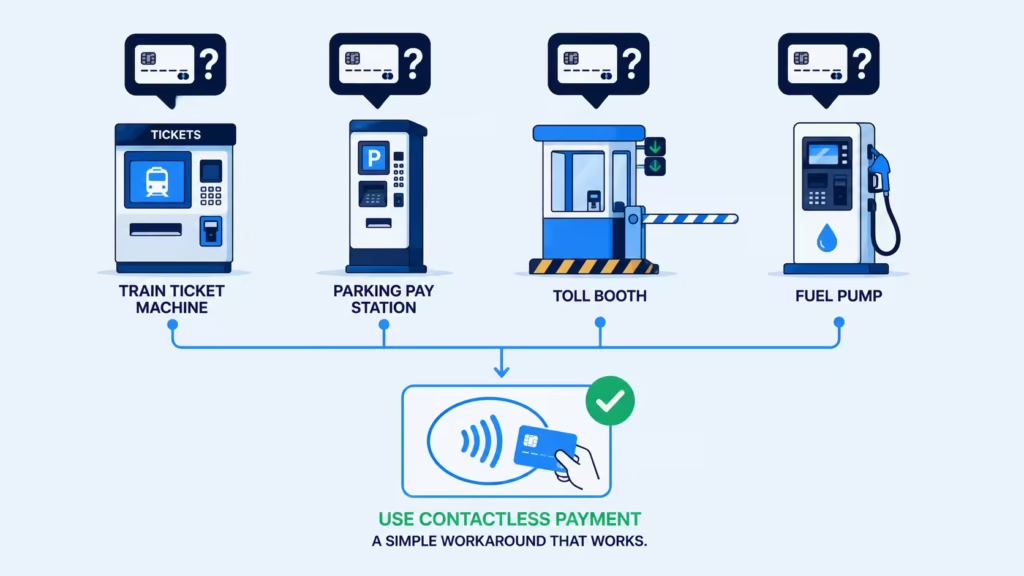
Your workarounds: try contactless tap-to-pay first, since contactless transactions often skip the PIN prompt for smaller amounts. If that fails, look for a staffed counter or ticket window. As a last resort, pay with local cash.
Getting a Cash Advance PIN Before You Travel
A Cash Advance PIN is a four-digit code that lets your credit card pull cash from an ATM. It’s for ATM cash advances only. It won’t turn your card into a chip-and-PIN card for purchases at kiosks.
Capital One’s help center lays out the steps:
- Sign in to your credit card account online.
- Click “I Want To…” and select Get a Cash Advance PIN under Control Your Card.
- Follow the prompts. In some cases, Capital One can send a security code by email or text so you can set a custom PIN right away. Otherwise, the PIN arrives by mail in about 7 to 10 business days.
Request it well before departure, not the night before your flight. And remember the cost section below: an ATM cash advance is a backup tool, not a cheap way to get travel cash.
Using Digital Wallets as a Workaround
Capital One cards work with Apple Pay and Google Pay. Adding your card to your phone before the trip gives you a helpful backup. Tap-to-pay with a digital wallet often skips PIN prompts at terminals.
This feature can save you time compared to using a chip-and-signature card. It also means you can keep paying even if your physical card is locked or lost, as long as the wallet is already set up.
Do You Need to Notify Capital One Before International Travel?
No. Capital One states clearly that travel notifications aren’t needed inside or outside the United States. Fraud monitoring runs on your account around the clock, and the chip card’s added security handles the rest.
If you’ve heard that you must call your bank before flying, that advice comes from other issuers and older practices. Some banks do still ask for a travel notice. Capital One credit cards don’t. One caveat: this guidance is about Capital One credit cards. Debit cards and checking accounts can follow different rules, so verify those separately if you plan to travel with them.
What Capital One does ask: make sure your phone number and email are current, so fraud alerts actually reach you while you’re away.
How to Prepare Your Capital One Card Before an International Trip
There’s no travel notice to set, but a ten-minute checklist before departure removes almost every common failure point:
- Update your contact info. Confirm the phone number and email on your account so security alerts find you abroad.
- Download the Capital One Mobile app and turn on push notifications. The app lets you monitor transactions and lock your card instantly if something goes wrong.
- Save the support numbers. Capital One lists 1-800-CAPITAL (1-800-227-4825) for credit card help, and from outside the U.S., you can call collect at 1-804-934-2001 from a landline.
- Check your available credit. Pending hotel or rental car holds can eat into your limit faster than you’d expect. Know your real headroom before you leave.
- Request a Cash Advance PIN in advance if you think you might need emergency ATM cash. Allow 7 to 10 business days for mail delivery.
- Set up a digital wallet and pack one backup payment method, plus a little local cash.
Using Your Capital One Credit Card at ATMs Abroad
You can use your Capital One credit card at ATMs abroad, but what you’re doing isn’t a purchase. It’s a cash advance, and it’s priced completely differently.
The no-foreign-transaction-fee policy still applies. There’s no extra percentage tacked on just because the cash came out in a foreign currency. But that’s not the same as free. Cash advances carry their own fee and immediate interest, which the next section breaks down.
For regular cash needs on a trip, a debit card linked to your checking account is the cheaper tool. Treat the credit card ATM option as an emergency backup.
Cash Advance Fees and Interest You’ll Actually Pay
Three separate costs can stack on a single international ATM withdrawal:
- Cash advance fee: Capital One says cash advances come with a front-end service charge plus a higher APR than purchases. Capital One notes the fee typically ranges from 3% to 5% of the amount, or a flat minimum, whichever is greater. Check your specific card’s rates and disclosures for the exact number.
- Interest from day one: Cash advances don’t get a grace period. Interest starts accruing immediately, usually at a higher cash advance APR.
- ATM operator fee: The machine’s owner may add its own surcharge, separate from anything Capital One charges.
Pull $200 in an emergency, and you could owe the advance fee, the machine’s surcharge, and interest running until you pay it off. Useful in a pinch. Expensive as a habit.
Do You Still Earn Rewards on International Purchases?
Yes. Purchases abroad earn rewards at the same rates as domestic purchases. There’s no penalty or reduction for the transaction happening outside the U.S.
This matters more than it might seem. International trips tend to concentrate spending on flights, hotels, and dining, which is exactly the kind of volume where rewards add up. With no foreign transaction fee and full rewards, a Capital One card keeps its entire value proposition intact overseas.
How Rewards Differ by Capital One Card
If you carry more than one Capital One card, the rates differ by product. Based on Capital One’s card pages and comparisons:
| Card | Everyday earning rate |
|---|---|
| Venture X | 2X miles on all purchases, with elevated rates on travel booked through Capital One Travel |
| Venture | 2X miles on all purchases, with elevated rates through Capital One Travel |
| VentureOne | 1.25X miles on all purchases |
| Quicksilver | 1.5% cash back on all purchases |
| Savor | 3% cash back at grocery stores and on dining, entertainment, and popular streaming services; 1% on other purchases |
Savor holders earn category bonuses on eligible international transactions. So, a dinner in Rome can still earn the dining rate. Rewards are calculated based on the converted U.S. dollar amount on your statement. There’s no adjustment for international purchases. Rates can change, so confirm your card’s current terms before a big trip.
What to Do If Your Capital One Card Is Declined Abroad
A decline at a foreign checkout is stressful, but it’s usually fixable in minutes. The most common causes, roughly in order of likelihood:
- Not enough available credit. Hotel and rental car holds reduce your available balance before you ever see a charge. Check your real available credit in the app.
- A fraud flag. Unusual location plus unusual spending can trip the security system. This is where updated contact info pays off: respond to the text or email alert, confirm the purchase is yours, and retry.
- Terminal incompatibility. Unattended kiosks and some older terminals reject chip-and-signature cards. Try tap-to-pay, a digital wallet, or a staffed register.
- A locked card. If you locked the card earlier and forgot, unlock it in the app.
Quick action plan:
- Open the Capital One Mobile app.
- Look for an alert or decline reason.
- Confirm any fraud prompt.
- Then, retry with a different payment method: contactless, wallet, backup card, or cash.
If nothing works, call 1-800-227-4825, or place a collect call to 1-804-934-2001 from a landline abroad.
💡 Pro Tip: Before dismissing any Capital One fraud text while traveling, check whether it references the purchase you’re standing at. A one-word reply can unblock the card on the spot.
What to Do If Your Capital One Card Is Lost or Stolen Internationally
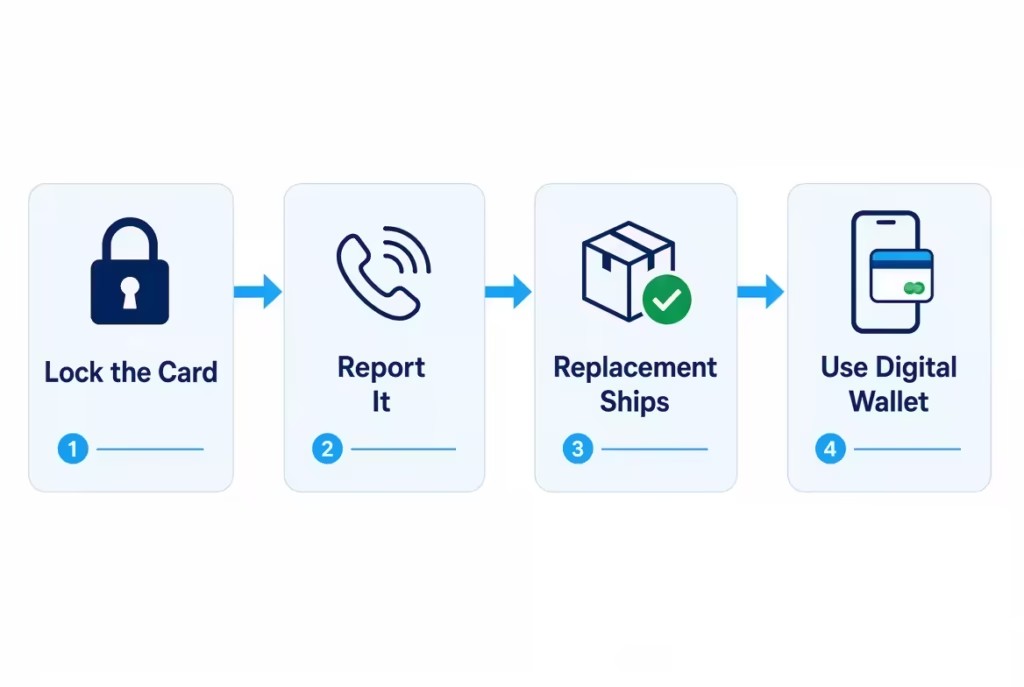
Act in this order:
- Lock the card immediately in the Capital One Mobile app or website. If you find it, you can unlock it and keep using it.
- If it’s truly gone, report it lost or stolen. Capital One’s process locks the card and issues a replacement with a new number. From outside the U.S., you can call collect at 1-804-934-2001.
- Expect a replacement in about 4 to 6 business days, shipped to the address on your profile. That’s one more reason your contact details should be current before you fly.
- Bridge the gap with a digital wallet. Capital One says eligible customers can get a virtual card via the app or online. Also, if you set up a digital wallet beforehand, it will still work while your physical card is being replaced.
- Update recurring payments once the new card arrives, since the card number, expiration date, and security code will change.
Built-In Security Tools for International Travel
Capital One’s protection stack goes beyond the emergency steps:
- $0 fraud liability: You won’t be held responsible for unauthorized charges. That’s stronger than the federal floor: under the Fair Credit Billing Act, liability for unauthorized credit card use caps at $50, and Capital One waives even that.
- Real-time alerts: Text and email notifications flag suspicious activity as it happens, which is why current contact info matters so much.
- Card lock: Instant on/off control from the app, reversible if the card turns up.
- Virtual card numbers: Eno, Capital One’s assistant, can generate virtual card numbers for online bookings, so your real card number stays off unfamiliar foreign websites.
- Basic habits: Shield your PIN at ATMs, don’t carry cards you won’t use, and keep your backup card in a different bag from your main one.
Do International Rules Differ by Capital One Card Type (Student, Business, Secured)?
The core rules are the same across the lineup.
Student cards, business cards, and secured cards share several features:
- No foreign transaction fees
- Operate on the same networks
- Use identical chip technology
- No travel notice needed
- Include the same security tools
Where products can differ is capacity, not policy. Student and secured cards often come with lower credit limits, which means hotel and rental car holds can consume a bigger share of your available credit.
Check your headroom before departure and consider paying down the balance early if a big trip is coming. Business cardholders should check their account’s terms for cash advances and employee card settings. Account management features can vary from consumer cards.
Frequently Asked Questions (FAQs)
Do I need to tell Capital One I’m traveling internationally?
No, Capital One doesn’t require a travel notice before you leave the country. Fraud monitoring runs continuously on your account, so you can travel without calling ahead.
Is Capital One good to use abroad?
Yes, Capital One cards work well abroad since they charge no foreign transaction fees and run on the Visa or Mastercard network, which covers 200+ countries. You’ll still want backup cash for small merchants that don’t take cards.
Which Capital One card has no international fee?
Every Capital One credit card carries no foreign transaction fee, including cash back, travel, student, and secured cards. This applies across the entire lineup, not just premium products.
Which Capital One card is best for travel?
Venture X and Venture both earn 2X miles on all purchases with elevated rates on travel booked through Capital One Travel. Both also carry no foreign transaction fees, making them strong picks for international trips.
Why is my Capital One card not working when I travel internationally?
Declines usually come from low available credit after hotel or rental car holds, a fraud flag from unusual location or spending, or a kiosk that only accepts chip-and-PIN cards. Checking the Capital One Mobile app for a decline reason is the fastest way to fix it.
Will I get charged if I use my Capital One card abroad?
Capital One won’t charge a foreign transaction fee, but choosing “pay in USD” at a terminal triggers dynamic currency conversion with markups of 3% or more. Always select the local currency to avoid this extra cost.
How do I avoid the 3% foreign transaction fee?
Capital One cards already have no foreign transaction fee, so there’s nothing to avoid there. To dodge other hidden costs, always pay in local currency instead of accepting a merchant’s dollar conversion offer.
Where are Capital One cards not accepted?
Small, independent, or rural businesses like village markets, family-run guesthouses, and street food stands may not accept cards at all. Carrying a modest amount of local cash covers these gaps.
What countries can I use Capital One credit cards in?
Capital One cards run on Visa or Mastercard, and Visa reports reach in over 200 countries and territories, while Mastercard reports over 210. Acceptance is strongest at hotels, airlines, and major retailers worldwide.
Does my Capital One card need a PIN to make purchases abroad?
No, Capital One issues chip-and-signature cards that don’t require a PIN for purchases outside the U.S. If a terminal prompts for one, ask the merchant to bypass it with a signature instead.
Wrapping Up
Your Capital One credit card will work internationally: every card has no foreign transaction fee, both major networks reach 200-plus countries and territories, and no travel notice is required.
The real risks are the ones you can avoid:
- Accepting dynamic currency conversion.
- Using credit card ATMs casually.
- Getting caught at a PIN-only kiosk without a backup.
A practical approach: update your contact info, set up the app and a digital wallet, save the collect-call number, and always pay in local currency. If this guide helped you prep, share it with a travel companion or a friend planning their first trip abroad.