
I know the sinking feeling of seeing a late payment show up on your credit report. Maybe a bill slipped past you, or an auto-pay didn’t go through, and now you’re worried it will block a mortgage, a car loan, or even a rental application. Learning how to improve your credit score after a late payment takes a clear plan, not panic.
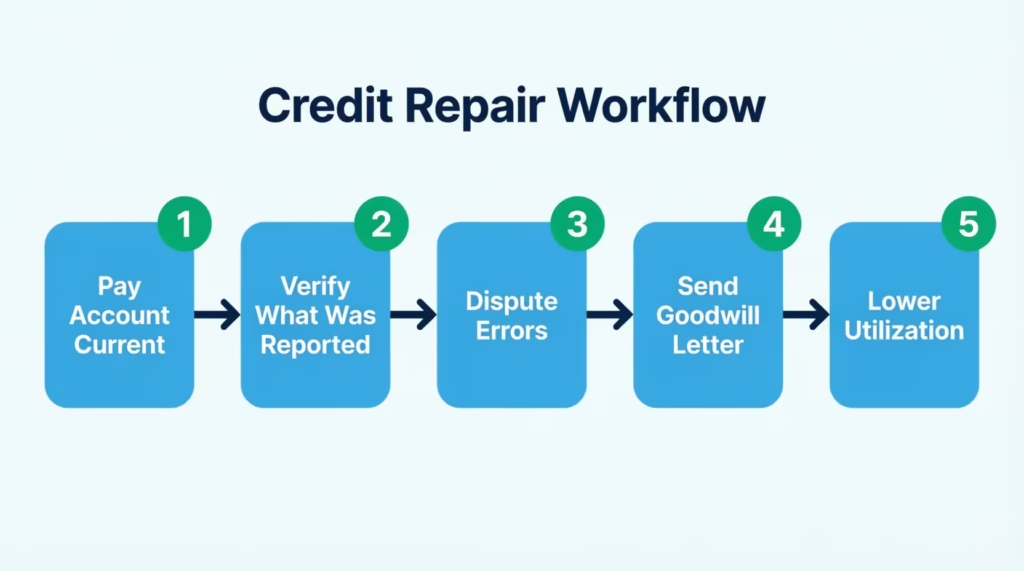
The fastest path forward is simple: bring the account current today, confirm what was reported, then attack the damage with disputes, goodwill outreach, and lower utilization.
Below you’ll find the exact order to follow, realistic point drops, timeline expectations, and expert tips to speed up your comeback.
Key Takeaways
This guide explains how to improve your credit score after a late payment, including realistic point-drop ranges, the correct order of recovery steps, dispute versus goodwill letter strategy, and expected recovery timelines.
Core Facts:
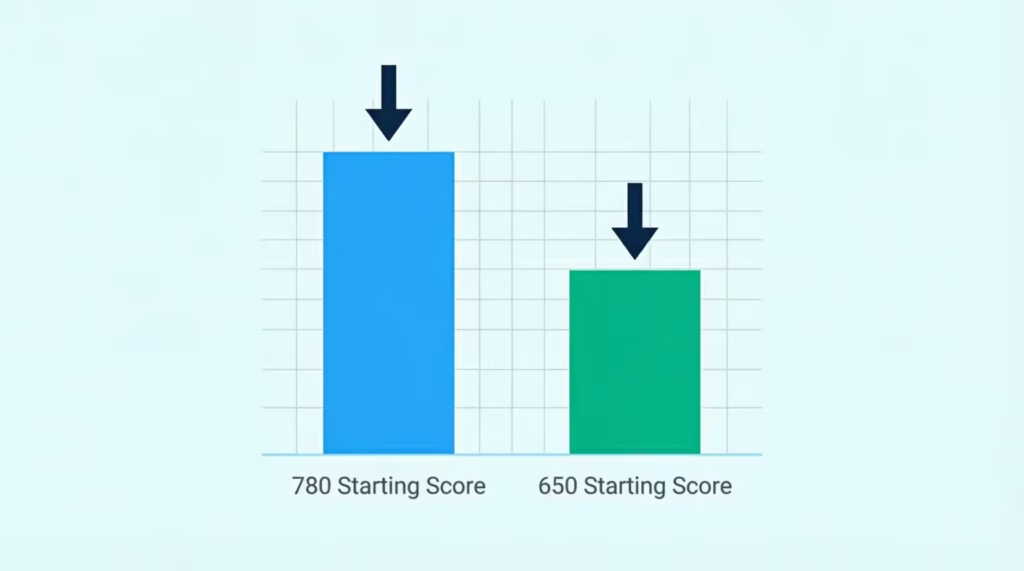
- A single late payment can drop a credit score by 50 to 180 points, with higher starting scores (such as 780) losing more points than lower starting scores (such as 650).
- Payment history makes up 35% of a FICO Score, while credit utilization accounts for about 30%, making these the two most important factors to address after a late payment.
- Credit bureaus have 30 days, sometimes 45, to investigate a dispute, and unverifiable late payments must be removed from the report by law.
- A late payment stays on a credit report for a maximum of 7 years from the original delinquency date, though it carries less weight after 24 months.
- Most single-late-payment situations regain the majority of lost points within 6 to 12 months when paired with low utilization and no new inquiries.
- Closing the account with the late payment is not recommended, since it can raise utilization on remaining cards and shorten average account age.
Best for:
- Readers who recently missed a payment and need a clear, ordered action plan to begin recovery immediately.
- People deciding whether to file a dispute or send a goodwill letter for an existing late payment mark.
- Anyone planning a major purchase like a mortgage or car loan who wants a realistic recovery timeline before applying.
How Much a Late Payment Actually Drops Your Credit Score
A single late payment can drop your credit score anywhere from 50 to 180 points. That’s a big range, and the size of the drop depends on three things: how high your score was before, how late the payment was, and how clean your prior history looked.
Higher scores fall the hardest. If you had a 780 FICO Score, a 30-day late mark can knock you down by 90 to 110 points. If you started closer to 650, the same slip may only cost you 50 to 70 points. That feels unfair, but it’s how the math works. A strong score signals near-perfect habits, so one miss changes the picture more.
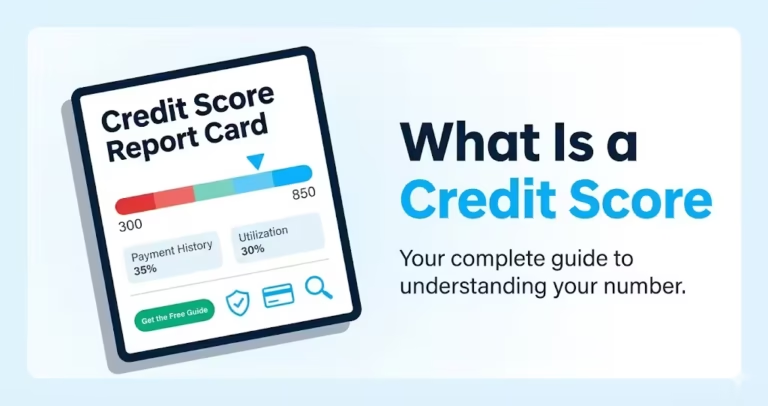
Payment history is the reason for such a steep hit. It counts for 35% of your FICO Score, more than any other factor. When that history breaks, the model treats it as a serious warning.
The 30, 60, and 90-day marks are not equal. A 30-day late payment is the first level and stings the most for people with strong credit. A 60-day late payment adds a second, deeper hit. A 90-day late payment (or beyond) is treated as very serious and can drag your score even lower, plus stay noted as more severe on your report.
📌 Did You Know: A 30-day late payment on a mortgage can hurt your FICO Score more than the same late mark on a credit card. Mortgage delinquencies weigh heavier in the model.
Confirming the Late Payment Was Actually Reported
Here’s the good news: not every late payment gets reported. Most lenders will not send a late notice to the credit bureaus until you cross the 30-day threshold. If you pay 5, 10, or even 25 days after the due date, the account may show a late fee, but it likely won’t hit your credit report.
To check what was actually reported, pull all three bureau reports for free at AnnualCreditReport.com. This is the only site backed by federal law for free weekly reports. Look at the payment history grid for the account in question. A late payment shows up as “30,” “60,” “90,” or higher, next to the month it happened.
If nothing has been reported yet, pay the balance right now. Once the account is current before the 30-day mark, most lenders will not report the late payment at all. You may still owe a late fee, but your score stays untouched.
Bring the Account Current Immediately
Before anything else, pay the past-due amount. This is job number one. Every day the account sits unpaid, the risk of another reporting cycle grows. A 30-day slip can turn into a 60-day slip fast, and that second mark hurts far more than the first.
Call the creditor directly after you pay. Ask two questions:
- “Has this account been reported late to the bureaus yet?”
- “If not, can you confirm no late report will be filed now that the overdue payment is cleared?”
Get the answer in writing if possible, either through the app’s secure message center or by email. Screenshots of your payment confirmation and the rep’s reply are gold if you need to dispute anything later.
Once you pay, the account status will shift from “past due” to “current” or “paid as agreed.” That shift alone helps your credit utilization ratio recover, because past-due balances can inflate your reported balance on revolving accounts. Keep watching your account for the next two billing cycles to make sure no residual fees push you late again.
💡 Pro Tip: Set up auto-pay for the minimum payment on every credit card and loan, even if you plan to pay in full. The minimum auto-pay is your safety net. It keeps you out of late-payment territory if life gets busy.
Check If the Late Payment Was Reported Accurately
Sometimes the late mark on your credit report is just plain wrong. Banks make mistakes. Payments get misapplied. Systems glitch. A Consumer Financial Protection Bureau study has long shown that credit report errors are common, and payment history errors are among the most damaging.
Pull the account’s full payment record and compare it side by side with your own bank statements. Look for these red flags:
- The late month doesn’t match a month you actually missed
- The payment posted on time, but the creditor marked it late anyway
- You paid before the 30-day window closed, yet a “30 days late” mark still appears
- The account was in a forbearance or hardship plan that should have paused reporting
- The late payment belongs to a joint account holder or an account you already closed
Gather proof for anything that looks off. Save bank statements, check images, screenshots of auto-pay settings, and any emails from the creditor. This evidence is what turns a dispute from “he said, she said” into a clear-cut win.
Under the Fair Credit Reporting Act (FCRA), you have a legal right to accurate credit reporting. Any information that is wrong, incomplete, or unverifiable must be corrected or removed by the bureau.
Disputing an Inaccurate Late Payment with the Credit Bureaus
If the mark is wrong, file a dispute with all three bureaus where the error appears. You can file free online:
In your dispute, be short and specific. State the account, the month reported late, why it’s wrong, and what proof you have. Upload your bank statements, payment confirmations, or any written notes from the lender.
The bureau then has 30 days (sometimes 45) to investigate. They contact the creditor, review your evidence, and either remove the mark, correct it, or verify it. If the creditor cannot verify the late payment inside that window, the mark must come off your report. That’s the law.
If your dispute is denied and you still believe you’re right, you can add a 100-word consumer statement to your file and file a complaint with the Consumer Financial Protection Bureau.
Write a Goodwill Letter to Request Removal
If the late payment is accurate but out of character for you, a goodwill letter is your best move. This is a polite written request asking the creditor to remove the late mark as a one-time courtesy. It’s not a legal claim, and it’s not a dispute. It’s a favor, based on your long track record of on-time payments.
A goodwill letter works best when:
- You have a strong payment history with that lender (usually 12+ months clean)
- The late payment was caused by a one-time event (medical bill, job change, family emergency, tech glitch)
- The account is now current and in good standing
- You can be honest, short, and respectful in your writing
Here’s what your letter should include:
- Your full name, address, and account number
- The specific late payment you want removed (month and year)
- A brief, honest reason for the miss (no long excuses)
- A short summary of your on-time history with the lender
- A clear ask: “Please consider removing this late mark as a goodwill adjustment.”
- Your signature and a way to reach you
Send the letter through the lender’s secure message system for speed. For a paper trail, mail a copy by USPS Certified Mail with Return Receipt so you have proof it was received. Keep the tone warm. This person can help you, and you’re asking, not demanding.
Response times vary. Some lenders reply in a week; others take 60 to 90 days. If the first “no” comes back, wait a month and try again with a different agent or a different department. Many people succeed on the second or third try.
⚠️ Mistake to Avoid: Never blame the lender in a goodwill letter. Own the mistake, explain briefly, and focus on your positive history. Lenders remove late marks as a favor, not as a peace treaty.
Goodwill Letter vs. Dispute: Which One Applies to You
The rule is simple. Use the wrong tool, and you waste weeks. Use the right one, and you get results.
| Situation | Tool to Use | Why |
|---|---|---|
| The late mark is factually wrong | Dispute | You have a legal right to accurate reporting under the FCRA |
| The late mark is accurate but rare | Goodwill letter | You’re asking for a courtesy, not correcting an error |
| Late mark caused by a bank glitch or lender error | Dispute first, goodwill as backup | Errors must be fixed by law; goodwill is only if the dispute fails |
| Late mark linked to identity theft or fraud | Dispute plus fraud alert | File with the FTC at IdentityTheft.gov as well |
| You have multiple late marks across years | Neither works alone | Focus on new positive history and time |
Match the tool to the truth of your situation. Filing a false dispute is a waste of time and, if repeated, can hurt your credibility with the bureaus. Sending a goodwill letter for a mark that’s actually wrong means you accept a fact you shouldn’t have to.
Lower Your Credit Utilization to Offset the Damage
Payment history is done. You can’t undo the past. But you can pull the second-biggest lever on your score right now: credit utilization. This factor makes up about 30% of your FICO Score, second only to payment history.
Credit utilization is the ratio of what you owe on revolving accounts (mostly credit cards) to your total credit limit. If you have a $10,000 total limit and owe $3,000, your utilization is 30%. Drop that owed balance to $1,000, and your utilization falls to 10%.
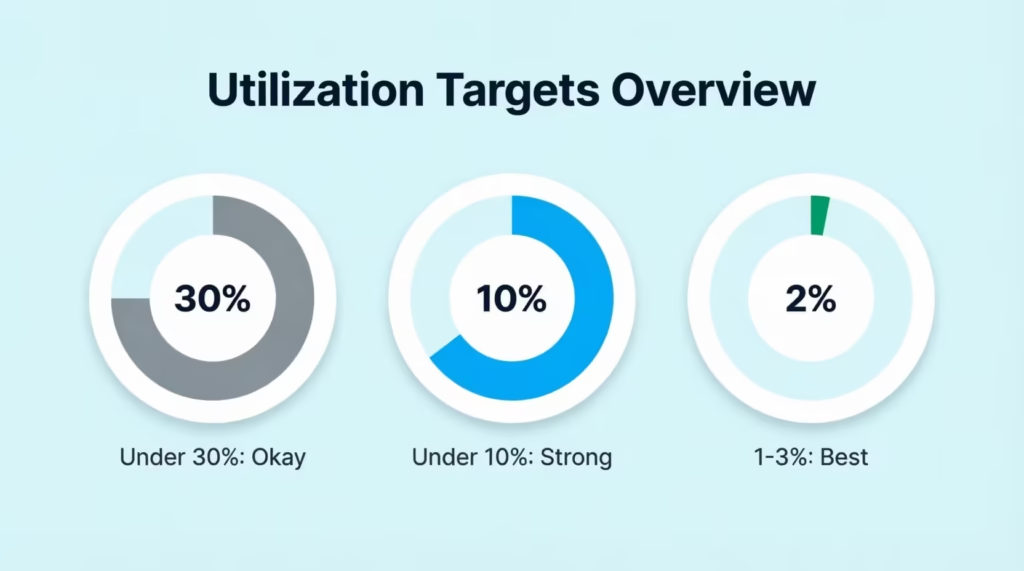
Target ranges to aim for:
- Under 30%: The old rule of thumb; okay, not great
- Under 10%: Where high scorers sit; strong signal to the scoring model
- 1% to 3%: The sweet spot for maximum points
Three fast ways to lower your ratio:
- Pay down balances before the statement closes. Credit card issuers report your balance on the statement date, not the due date. If you pay a few days before that date, a smaller number gets reported.
- Ask for a credit limit increase. A higher limit with the same balance drops your ratio instantly. Most issuers let you request this online in the account settings. Ask for a soft-pull increase to avoid a hard inquiry.
- Spread balances across cards. If one card is near its limit, that single card’s utilization also matters. Move part of the balance to another card so no single card sits above 30%.
Score updates can hit in as little as one to two billing cycles once your reported balances drop. That’s why utilization is the fastest visible fix in the whole recovery playbook.
Don’t Close the Account With the Late Payment
It’s tempting. The card burned you. You want it gone. Don’t do it.
Closing that card causes two problems at once:
- Your total credit limit drops, which spikes your credit utilization on every other card overnight.
- Your average age of accounts shrinks, which weakens the length-of-credit-history factor (15% of your FICO Score).
The late payment stays on the report for 7 years whether the account is open or closed, so closing doesn’t erase the mark. It just removes the positive on-time months that would have kept coming.
Keep the card open, use it for a small recurring bill like a streaming service, set up auto-pay in full, and let time do the healing. If the annual fee is an issue, call and ask for a product change to a no-fee version of the same card. That keeps your account age and limit intact.
Add Positive Payment History to Offset the Damage
The scoring model watches your recent months closely. Every new on-time payment after the late one is a small vote of confidence. Stack enough of them and your score climbs.
Ways to add positive history faster:
- Experian Boost: Free service that adds on-time utility, phone, streaming, and rent payments to your Experian report. Sign up at experian.com/boost. Average users see a small score bump right away.
- Rent reporting services: Companies like RentReporters, Rental Kharma, and Boom report your on-time rent payments to the bureaus. Some landlords now offer this for free.
- Secured credit cards: If your score dropped hard, a secured card lets you rebuild. You put down a deposit that becomes your limit. Use it for small buys, pay in full each month, and after 6 to 12 months of clean history, many issuers upgrade you to unsecured.
- Credit-builder loans: Offered by credit unions and by services like Self and Kikoff. You “borrow” a small amount that’s held in savings while you make monthly payments. Each on-time payment reports to the bureaus.
- Authorized user status: Ask a family member with strong, low-utilization credit to add you as an authorized user. Their positive history can boost your file. Make sure the card reports authorized users to the bureaus.
Consistency matters more than volume. One card with a 3% balance paid on time every month, for a year, will do more for your score than five new accounts opened at once.
Avoid New Credit Applications While Recovering
Every time you apply for new credit, the lender pulls a hard inquiry. Each hard inquiry can shave a few points off your score and stays on your report for 2 years, though it stops affecting scoring after 12 months.
One hard inquiry on a healthy file is a small deal. Multiple inquiries while you’re already recovering from a late payment stack up fast. The scoring model reads clusters of new applications as financial stress, which is the last signal you want to send right now.
Hold off on:
- New credit cards you don’t need for utilization relief
- Store cards offered at checkout for a small discount
- Auto loan pre-approvals from many lenders in different weeks
- Personal loan shopping across months
Rate-shopping for a mortgage, auto loan, or student loan inside a 14 to 45-day window counts as a single inquiry for scoring, so that kind of shopping is safe. Random applications outside that pattern are not.
There’s another hidden problem: your debt-to-income ratio (DTI). Even if a new card has no balance, lenders check total available credit when you apply for a mortgage. Too many recent applications can flag your file as risky, even if your score technically qualifies.
Wait until your score has recovered by at least 40 to 60 points, or until you’re within 60 days of a planned major purchase, before opening anything new.
Realistic Recovery Timeline After a Late Payment
Here’s the honest truth about how long recovery takes. Anyone promising a “one-week credit repair miracle” is selling something you don’t want.
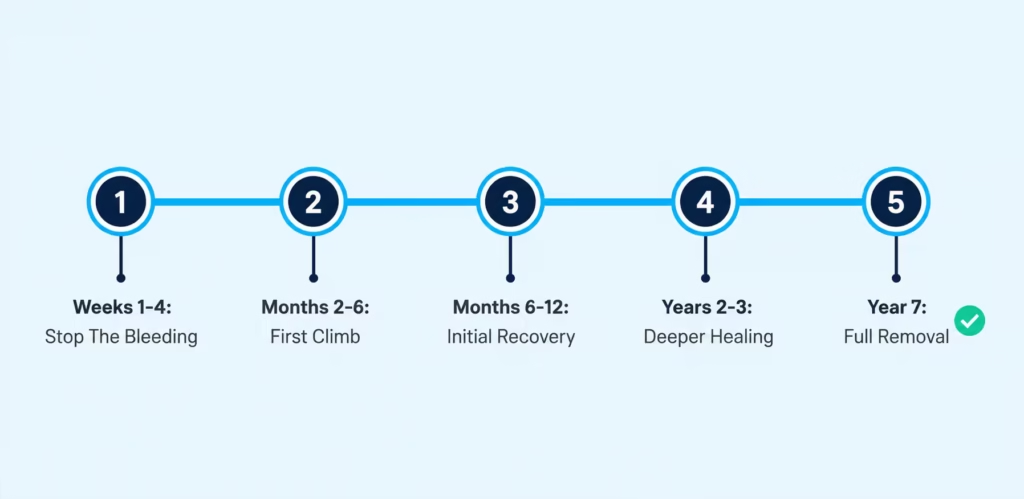
Weeks 1–4: Stop the bleeding. Bring the account current, file disputes on any errors, send your first goodwill letter, and lower utilization. Some score bump may show up in this window if utilization drops.
Months 2–6: First real climb. With clean payment history, low utilization, and no new inquiries, most people see 20 to 60 points come back. If a goodwill letter succeeds during this window, expect a bigger jump.
Months 6–12: Initial recovery. Many single-late-payment situations recover most of the lost points inside a year, especially for people who started with a strong history. Newer files take longer.
Years 2–3: Deeper healing. The late payment still shows on your report but gets less weight over time. Scoring models care most about the last 24 months of behavior, so a two-year gap of on-time payments makes the old late mark feel small.
Year 7: Full removal. A late payment stays on your credit report for a maximum of 7 years from the original delinquency date, as set by the Fair Credit Reporting Act. After that, it drops off completely and stops affecting your score.
Track your progress monthly using free tools like Credit Karma, Experian, or your credit card issuer’s free FICO Score dashboard. Watching the trend keeps you motivated and helps you catch any new errors early.
Frequently Asked Questions
How can I fix my credit score after a late payment?
Bring the account current immediately, verify what was reported, dispute any errors, and send a goodwill letter if the mark is accurate. Lower your credit utilization and keep adding positive payment history to speed recovery.
How do I get a late payment removed from my credit report?
If the mark is inaccurate, dispute it with all three bureaus, who have 30 days to investigate and remove unverifiable information. If it’s accurate, send a goodwill letter asking the creditor to remove it as a one-time courtesy.
How do I ask for late payment forgiveness?
Write a goodwill letter that includes your account number, the specific late payment, a brief honest reason, and your on-time payment history. Send it through the lender’s secure message system and follow up if you get a “no.”
How long does it take for a credit score to improve after a late payment?
Some score bump can appear within weeks 1 to 4 if you lower utilization. Most people see 20 to 60 points return between months 2 and 6, with much of the loss recovered within a year.
How long does it take to recover from a 90-day late payment?
A 90-day late payment is treated as very serious and drags scores lower than a 30 or 60-day mark. Recovery follows the same timeline as other late payments, with most points returning within a year and full removal after 7 years.
How bad is a 60-day late payment?
A 60-day late payment adds a second, deeper hit beyond the initial 30-day mark. It stays on your report for 7 years, though it carries less weight as time passes.
How bad is a 30-day late payment?
A 30-day late payment can drop a 780 FICO Score by 90 to 110 points, while a 650 score might only fall 50 to 70 points. Mortgage late payments hurt more than credit card late payments in the scoring model.
Can you have an 800 credit score with a late payment?
An 800 score is unlikely right after a recent late payment, since payment history carries 35% weight in the FICO Score. Over time, as the mark ages past 24 months and gets less scoring weight, reaching that range becomes possible again.
What is the biggest killer of credit scores?
Payment history is the biggest factor, making up 35% of your FICO Score. A late payment breaks that history and triggers the steepest score drops of any single event.
Should I close the credit card account that had the late payment?
No, closing the account lowers your total credit limit and shrinks your average account age, both of which hurt your score further. The late payment stays on your report for 7 years whether the account is open or closed.
Wrapping Up
Recovering from a late payment involves these steps:
- Pay the account current.
- Verify what was reported.
- Dispute any errors.
- Send a goodwill letter if the mark is correct.
- Lower your utilization.
- Keep the account open while you rebuild.
To improve your FICO Score, focus on two key areas: payment history (35% weight) and utilization (30% weight). It’s best to work on both at the same time while adding new on-time payments. Learning how to improve credit score after late payment rewards patience and steady action.
If you know a friend stressed over a recent late mark before a mortgage or car loan, share this guide with them. It could save them hundreds of points and thousands of dollars in interest.