
You just got hit with a rejection letter, a request for a co-signer, or a shocking deposit demand, even though your credit score sits comfortably above 700. Somewhere on that adverse action notice, you spotted an unfamiliar term: TransUnion Resident Score. Now you’re wondering if it’s a mistake, a scam, or a hidden number that just cost you the apartment.
Your landlord is looking at a different score than the one your bank app shows, and that score is built specifically to predict rental risk.
Below, we explain what this score means. I’ll show how it differs from your regular credit score. You’ll learn what counts as “good,” where to check your number, and how to raise it before your next application.
Key Takeaways
This guide explains what a TransUnion Resident Score is, how it differs from a credit score, the 350-850 range, what counts as a good score, and specific ways to raise it before applying.
Core Facts:
- The Resident Score runs on a 350-850 scale, the same range as a FICO score, but predicts rental risk instead of loan repayment risk.
- A score of 700 or higher is generally considered good and usually clears rental screening easily.
- Scores between 650 and 699 are often accepted but may come with a larger deposit, a co-signer requirement, or proof of higher income.
- The score pulls from standard credit inputs like payment history and utilization, plus rental-specific inputs like past rent payments and eviction filings.
- Renters have the right to request a free copy of their screening report within 60 days of receiving an adverse action notice.
- Rent-reporting services can add on-time rent payments to a TransUnion file and, in illustrative examples, raised a score by 40 to 80 points within one or two update cycles.
Best for:
- Renters who were denied, asked for a co-signer, or hit with a higher deposit despite having a strong credit score.
- Applicants trying to understand why their Resident Score differs from their FICO score before their next application.
- Renters with a thin rental history looking for concrete ways to raise their score before apartment hunting.
What Is a TransUnion Resident Score
The TransUnion Resident Score, often written as ResidentScore, is a proprietary scoring model built by TransUnion just for landlords. It sits inside a tenant screening report and tells the property owner how risky you might be as a renter. It’s not a general credit score. It’s a rental-specific prediction tool.
Here’s the key point most renters miss. Your regular credit score tries to guess if you’ll pay back a loan or credit card. The ResidentScore tries to guess something very different: will you skip rent, break your lease, or end up with an eviction filing?
The score runs on a scale from 350 to 850. A higher number means lower risk in the eyes of a landlord. TransUnion built the model with actual rental data. This way, it focuses on the signals that matter for housing, not for auto loans or mortgages.
You’ll see this score inside a tenant screening report. When you apply for a unit, the landlord or property manager gets a report from a screening service. The ResidentScore is one of the key numbers on that report.
📌 Did You Know: The latest version, ResidentScore 4.0, uses rental data. This means two people with the same FICO score might have different Resident Scores.
Resident Score vs. Credit Score: What’s the Difference
Both numbers look almost the same on paper. Both sit on a scale roughly between 300 and 850. Both come from credit bureau data. But the models behind them are built to answer completely different questions.
A FICO score or VantageScore answers this question: “How likely is this person to repay borrowed money?” That includes credit cards, auto loans, personal loans, and mortgages. Lenders use it to decide interest rates and approvals.
The Resident Score answers a narrower question: “How likely is this person to fulfill a lease?” That includes paying rent on time, staying the full term, and avoiding an eviction filing. TransUnion created this model based on real rental outcomes. So, it weighs factors differently than a typical credit bureau score.
Here’s what changes under the hood. Rental payment history, when available, carries more weight. Prior eviction records, if reported, drag the score down harder than they would a FICO score. Some standard credit factors, like the age of an old car loan, matter less because they don’t predict rental behavior well.
So two scores, same person, different math, different purpose. That’s why the number your landlord sees can look nothing like the one in your banking app.
Resident Score Range Explained
The ResidentScore runs on a 350 to 850 scale. Landlords use this range to sort applicants into risk buckets, but the exact cutoffs are set by each property, not by TransUnion. Still, the bands below reflect how most screening services and landlords read the number.
| Score Range | General Risk Signal | Typical Landlord Response |
|---|---|---|
| 750 to 850 | Very low risk | Auto-approve, standard deposit |
| 700 to 749 | Low risk | Approve, standard deposit |
| 650 to 699 | Moderate risk | Approve with conditions |
| 600 to 649 | Elevated risk | Higher deposit or co-signer |
| Below 600 | High risk | Often denied |
Keep in mind, one property might auto-approve everyone above 680, while a competitive building in a hot market might set the bar at 720. The bands above are directional, not universal.
What Counts as a “Good” Resident Score
For most rentals, a score of 700 or higher is considered good. At that level, you usually clear screening easily. You can also negotiate lease terms with confidence.
Scores between 650 and 699 are often accepted, but landlords may ask for a larger security deposit, a co-signer, or proof of higher income. You’re not out of the running; you just have less leverage.
Scores below 600 to 650 are where trouble starts. Many landlords set an automatic cutoff around this range, meaning your application may get denied before a human even reviews it. Some may still approve you if your income is high, but expect tougher terms.
If you’re applying in a high-demand market like a major city, aim higher. A 720 or above gives you real breathing room.
What Data Goes Into the Resident Score
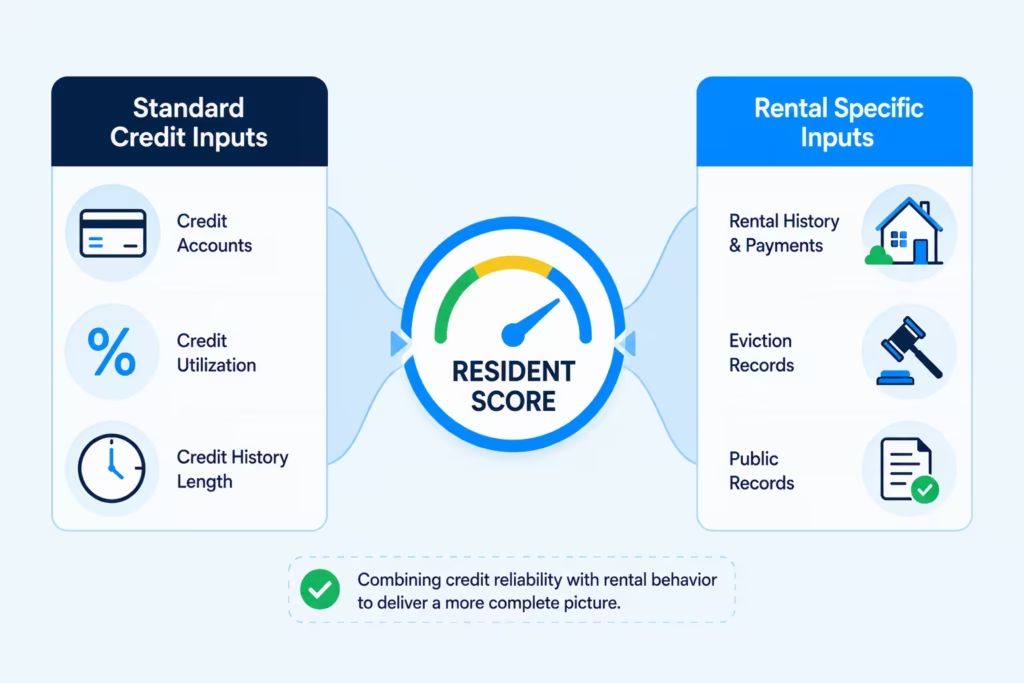
The Resident Score pulls from your TransUnion credit file, plus any rental-specific data the bureau has on you. The exact formula is proprietary, but TransUnion has confirmed the main input categories.
Standard credit inputs include:
- Payment history on credit cards, loans, and other reported accounts
- Credit utilization, meaning how much of your available credit you’re using
- Length of credit history and the mix of account types
- Recent credit-seeking behavior, like multiple hard inquiries in a short window
Rental-specific inputs, when available, include:
- Past rental payment history reported by landlords or rent-reporting services
- Eviction filings and judgments from public records
- Bankruptcies, liens, and other public records tied to housing risk
If you have a thin credit file, it means you have few accounts or a short credit history. In this case, the model may give more weight to the little data you have. That’s why one late payment can hurt a thin file much more than a thick one.
Why Your Resident Score Can Be Different From Your Credit Score
This is the section that solves the biggest mystery for renters. Here’s a real, worked example.
Meet Sarah. She’s a 28-year-old marketing coordinator with a FICO score of 748. She pays her credit card in full, has two years of clean auto loan payments, and no missed bills. When she applied for a downtown apartment, she assumed she’d sail through screening. Instead, her ResidentScore came back at 642, and the landlord asked for a co-signer.
What happened? Sarah had been renting for three years, but her previous landlords never reported her rent payments to TransUnion. So the model had no rental payment history to reward her with. On top of that, an $180 unpaid utility bill from two years ago had gone to collections. That collection barely dented her FICO, but for a rental risk model, an unpaid housing-related bill is a red flag.
Now meet Michael. His FICO is a modest 672, lower than Sarah’s. But Michael used a rent-reporting service for the past 18 months, and every on-time rent payment shows up on his TransUnion file. His ResidentScore comes back at 711, higher than Sarah’s, because the model saw direct proof he pays rent reliably.
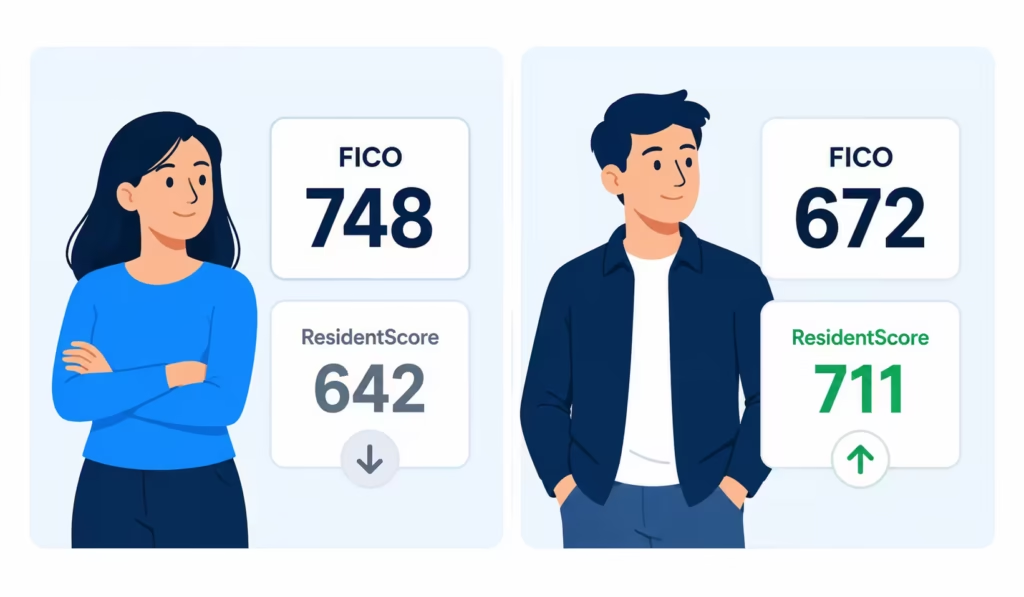
That’s the mechanism. The Resident Score cares most about signals that predict rental behavior. A great FICO built on credit card habits doesn’t automatically translate. This is why “just paying down my credit card” often doesn’t move the number the way renters expect. If your rental history is invisible, or if a housing-related record is dragging you down, that’s the lever you need to pull.
How Landlords Use Your Resident Score
The Resident Score is rarely the only factor in a rental decision, but it’s often the first filter. When you apply, the landlord or property manager gets a screening report. They use services like TransUnion SmartMove, RentSpree, or Zillow Rental Manager. The report displays your ResidentScore.
It also includes:
- Income verification
- Rental references
- Eviction check
- Sometimes, a criminal background check.
Most landlords, especially big property management companies, set internal cutoffs based on those score bands. A score above their threshold triggers an auto-approve path. A middle score leads to a “conditional approve” path. This means the leasing agent will check your income, references, and ability to pay a deposit before making a decision. A score below the cutoff often triggers an automatic denial, sometimes without human review.
Individual landlords who own one or two units usually have more flexibility. They may weigh a personal reference or a strong income statement more heavily than the score itself. Bigger landlords with hundreds of units tend to follow the numbers strictly.
What Happens With a Low Resident Score
If your ResidentScore lands below the property’s cutoff, three outcomes are common. First, outright denial, meaning the application is rejected, and you’ll get an adverse action notice.
Second, a higher security deposit, sometimes two or three months of rent instead of one. Third, a co-signer or guarantor requirement, where a parent, sibling, or third-party service like Insurent has to back the lease.
These outcomes are set by the landlord, not by TransUnion. TransUnion just provides the number. If your landlord asks for a co-signer, it’s their policy. You might be able to negotiate. Showing recent pay stubs or offering a higher deposit can help.
How to Check Your Own Resident Score
Unlike your FICO score, you can’t just log into a bank app and see your ResidentScore. But you do have two realistic paths to view it.
Path 1: Request your consumer disclosure from TransUnion. Under the Fair Credit Reporting Act, you have the right to see the information a consumer reporting agency has on you. TransUnion offers a rental screening consumer disclosure that includes your ResidentScore. You can request it directly by contacting TransUnion Rental Screening Solutions or by calling their consumer disclosure line. There’s no cost when you request it after an adverse action, and low-cost options exist otherwise.
Path 2: Ask the landlord or screening service for a copy. When a landlord pulls your report through SmartMove, RentSpree, or a similar service, you have the right to see what was used to make the decision. Please ask the leasing agent for the screening report. You can also reach out to the screening service with your applicant ID.
💡 Pro Tip: If you were just denied, request the report within 60 days of receiving your adverse action notice. During this window, you’re entitled to a free copy under federal law.
How Often the Resident Score Updates
Your ResidentScore updates as new data hits your TransUnion credit file. In practice, that usually means monthly, since most creditors and rent-reporting services report on a monthly cycle. Major events, like a new eviction filing or a disputed error being corrected, can update sooner.
If you just paid down a credit card, don’t expect the score to jump the next day. Wait for the next statement cycle to post, then request a fresh screening report before your next application.
How to Improve Your Resident Score
Generic credit advice will only take you so far here. The Resident Score responds best to rental-specific fixes. These are the levers that actually move the number, ranked by impact.
1. Pay every rent payment on time, every month. This is the single highest-impact factor once rental data is in your file. Even one late payment reported by a landlord can drop your score meaningfully.
2. Bring down your credit utilization. Try to keep total revolving balances under 30% of your available credit, and under 10% if you want to see real gains. This is one of the fastest levers you can pull, since utilization updates each billing cycle.
3. Correct any errors on your report. A wrongly reported eviction, a paid collection still showing as open, or a duplicated account can all drag your score down. Dispute these directly with TransUnion (covered in the dispute section below).
4. Build rental history if you have none. If your file is thin because past landlords never reported your payments, that’s the biggest gap you can close. See the rent-reporting section next.
5. Avoid new credit applications right before you apply for housing. Each hard inquiry can nudge the score down for a few months. If you know you’re apartment hunting in the next 90 days, hold off on new credit cards or loans.
Rent-Reporting Services and Your Resident Score
Rent-reporting services send your on-time rent payments to TransUnion. This information then goes directly into your ResidentScore. This is the fastest fix for a thin rental file.
Popular services include RentReporters, Rental Kharma, and LevelCredit (formerly RentTrack). Most charge a small monthly fee, often between $6 and $10, plus a one-time setup cost. Some can even backdate up to two years of past rent payments if your landlord verifies them.
For a renter like Sarah in the earlier example, signing up for a rent-reporting service and backdating her three years of on-time payments could raise her ResidentScore by 40 to 80 points within one or two update cycles. If your credit is fine but your rental history is invisible, this is often the single biggest score lift you can get.
⚠️ Mistake to Avoid: Don’t confuse rent-reporting services with credit repair services. Rent-reporting adds real, verifiable payment data. Credit repair often disputes items without real grounds. This rarely leads to lasting results.
Your Rights If You’re Denied Because of Your Resident Score
If a landlord denies your application, raises your deposit, or asks for a co-signer due to a consumer report, federal law has your back. Under the Fair Credit Reporting Act (FCRA), you have specific rights. Knowing these rights can help you turn a rejection into a fixable issue.
First, the landlord must give you an adverse action notice. This notice must inform you that a consumer report was used. It must name the screening company, such as TransUnion Rental Screening Solutions or SmartMove. It should also explain your right to get a free copy of the report. The Consumer Financial Protection Bureau provides plain-language guidance on what this notice must contain.
Second, you have the right to request that report for free within 60 days of receiving the adverse action notice. Contact the screening company directly with your applicant details, and they must provide the report.
Third, if the report contains inaccurate information, you have the right to dispute it. That’s covered next.
These rights apply whether the landlord denied you outright or simply added tougher conditions like a bigger deposit. Don’t skip the adverse action notice; it’s your ticket to seeing what actually cost you the apartment.
Disputing Errors on Your Resident Score
If you see a mistake on your screening report, take action. This could be a wrong eviction, an account that isn’t yours, or a paid collection still marked open. You can dispute it directly with TransUnion. Here’s how:
Step 1: Get a copy of the report. Request it from the screening service that ran it, or directly from TransUnion Rental Screening Solutions.
Step 2: Identify the specific errors. Highlight each item and gather any supporting documents you have, like a court dismissal, a paid-off letter, or proof of identity if it’s a mixed file.
Step 3: File the dispute. Submit your dispute online through TransUnion’s consumer dispute portal, by mail, or by phone. Include copies (not originals) of your supporting documents.
Step 4: Wait for the investigation. Under the FCRA, TransUnion generally has 30 days to investigate and respond. If the dispute is verified in your favor, they’ll correct the file and send you an updated report.
Step 5: Reapply if the correction matters. Once your report is fixed, your ResidentScore should update at the next cycle. Request a new screening report before your next rental application so the landlord sees the corrected number.
If the dispute is denied and you still believe the item is wrong, you can add a 100-word statement to your file explaining your side. Future landlords who pull the report will see that note.
Frequently Asked Questions (FAQs)
Where can I get my TransUnion resident score?
You can request your consumer disclosure directly from TransUnion Rental Screening Solutions, which includes your ResidentScore. You can also ask your landlord or screening service (like SmartMove or RentSpree) for a copy of the report they pulled.
What is a good resident score for TransUnion?
A score of 700 or higher is considered good and usually clears screening easily. In competitive markets, aim for 720 or above to give yourself extra negotiating room.
How do I improve my TransUnion resident score?
Pay rent on time every month, keep credit utilization under 30%, and correct any errors on your report. Joining a rent-reporting service also helps if you have little or no rental history on file.
Is a TransUnion resident score different than a credit score?
Yes, they measure different things using different math. A credit score predicts loan repayment risk, while the ResidentScore predicts the likelihood you’ll pay rent on time and avoid eviction.
Why is my resident score lower than my credit score?
Your rental payments may not be reported to TransUnion, leaving the model with no positive rental data to reward. A housing-related collection, like an unpaid utility bill, can also hurt your ResidentScore more than it hurts your FICO score.
Is a 648 resident score good?
A 648 typically falls in the range where landlords ask for extra conditions, like a larger deposit or a co-signer. It’s not an automatic denial, but you have less negotiating leverage than someone above 700.
How often does the resident score update?
It usually updates monthly, matching the reporting cycle of creditors and rent-reporting services. Major events like a new eviction filing or a corrected dispute can update the score sooner.
What data goes into the resident score?
It combines standard credit factors like payment history and utilization with rental-specific data like past rent payments, evictions, and housing-related public records. A thin credit file means the model weighs whatever limited data it has more heavily.
What happens if I’m denied due to a low resident score?
You may face outright denial, a higher security deposit of two to three months’ rent, or a co-signer requirement. Federal law requires the landlord to send an adverse action notice naming the screening company used.
How do rent-reporting services affect my resident score?
Rent-reporting services like RentReporters or LevelCredit send your on-time rent payments directly to TransUnion for a small monthly fee, often $6 to $10. Some can backdate up to two years of verified payments, which can raise a thin-file score by 40 to 80 points within one or two cycles.
The Bottom Line
Your TransUnion Resident Score is not a mystery; it’s a rental-specific number that measures how safe you look to a landlord. In this guide, we explain how it differs from your FICO score. We cover the 350 to 850 range and what it means. You’ll learn why your Resident Score can differ from your credit score and the key factors that can raise it.
The best strategy for most renters is a combined move: lower utilization, fix report errors, and join a rent-reporting service. This helps close the thin-file gap quickly.
If you know someone stuck in a frustrating apartment search or facing a surprise deposit demand, share this guide. It could save them from reapplying blindly and losing another security deposit.