
Dealing with a difficult tenant feels stressful, and figuring out if you can legally remove them adds another layer of worry. Many small landlords mix up “annoying” behavior with actual legal reasons to evict a tenant, and that mistake can cost thousands in court fees and delays. You may also wonder if your reason is strong enough to hold up before a judge.
The short answer: you can only evict a tenant for reasons the law recognizes, which fall into either at-fault or no-fault categories.
Below, we walk you through every valid ground, the traps to skip, and how the rules shift by location.
Key Takeaways
This guide explains what legal reasons to evict a tenant, covering at-fault and no-fault grounds, notice period ranges, relocation assistance, and reasons that are not legally valid.
Core Facts:
- Valid eviction grounds fall into two categories: at-fault, where the tenant broke a rule, and no-fault, where the landlord wants the unit back for reasons unrelated to tenant behavior.
- At-fault evictions typically use notice periods of 3 to 14 days, while no-fault evictions typically require 30 to 120 days’ notice.
- Just cause jurisdictions, including California, Oregon, and New Jersey, require landlords to select a specific listed legal ground rather than simply not renewing a lease.
- Discrimination based on protected classes and retaliatory eviction for a tenant exercising a legal right are not valid grounds and can expose a landlord to legal liability.
- Relocation assistance is often required for no-fault evictions, with cited examples including San Francisco ranging from $8,000 to $22,000 per unit and Seattle around three months’ rent for low-income tenants.
- Self-help eviction, such as changing locks or removing belongings without a court order, is illegal and can result in triple damages in many states.
Best for:
- Landlords trying to confirm whether their specific reason for removing a tenant is legally valid before serving notice.
- Property owners comparing at-fault versus no-fault eviction categories and the different notice and payment requirements each involves.
- Landlords operating in just cause jurisdictions who need to identify a specific legal ground rather than simply ending a lease.
At-Fault vs. No-Fault Evictions: The Framework That Determines Your Reason
Before you send any notice, you need to know which type of eviction you are dealing with. Every valid reason falls into one of two buckets. Getting the bucket right decides your notice length, your paperwork, and whether you owe the tenant money.
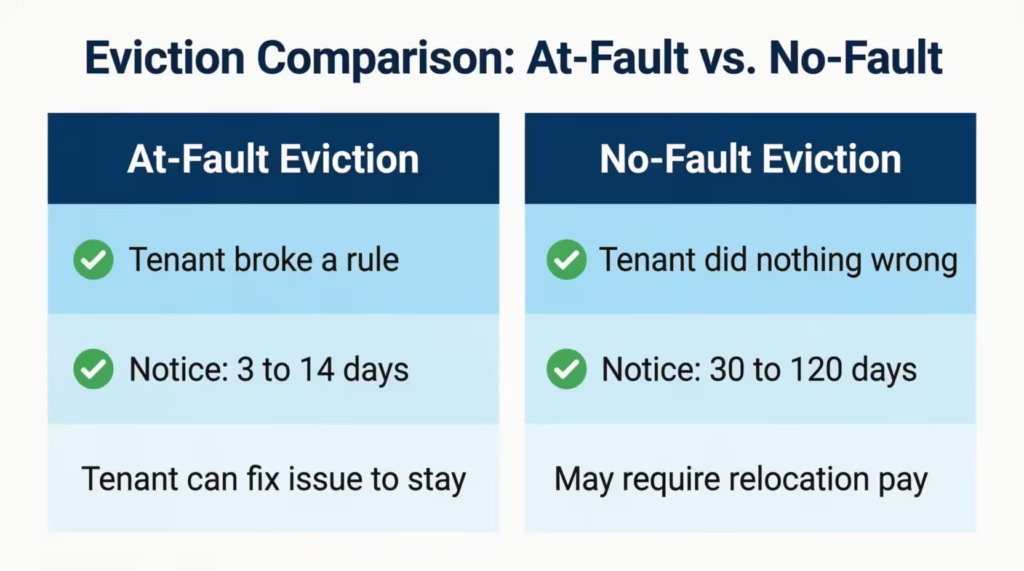
An at-fault eviction means the tenant did something wrong. They broke the lease, stopped paying rent, or caused harm to the property. The tenant is the reason the tenancy is ending. You usually give short notice, often 3 to 14 days, and the tenant can sometimes fix the problem to stay.
A no-fault eviction means the tenant did nothing wrong. You want the unit back for your own reasons, like moving in yourself or selling the building. Because the tenant is not at fault, notice periods are longer, often 30 to 120 days, and you may have to pay relocation assistance.
Some places have just cause eviction rules. These laws say you must pick a reason from a fixed list. You cannot just decide not to renew a lease without a stated ground. California, Oregon, New Jersey, and many cities have just cause rules. Other places, like most of Texas, let landlords end month-to-month tenancies without giving a reason.
Knowing your grounds for eviction first shapes every step that follows. Pick the wrong category, and a judge can throw your case out on day one.
📌 Did You Know: In just cause jurisdictions, simply saying “the lease is up” is not a legal reason. You must state a specific ground from the local statute, or the court will dismiss your case.
Nonpayment of Rent
Nonpayment of rent is the most common reason landlords go to court. If the tenant does not pay by the due date, and the grace period has passed, you have grounds to act.
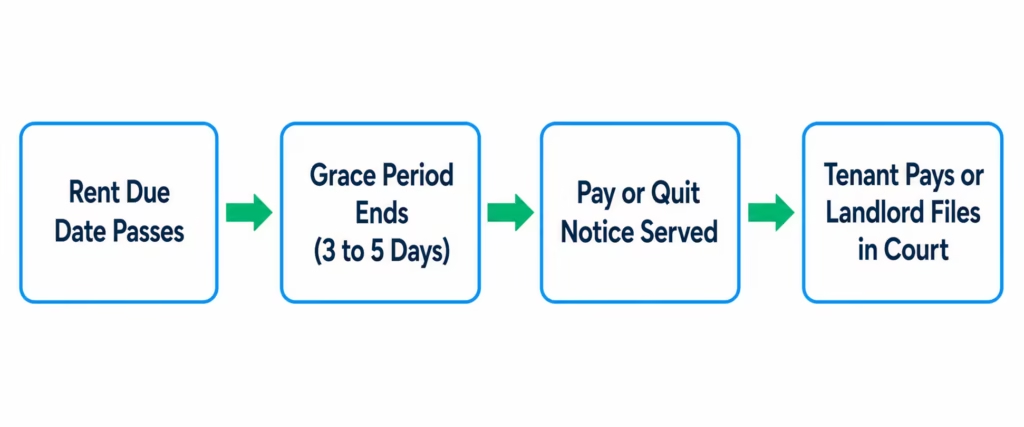
Here is how it usually works. Rent is due on the 1st. Most leases give a grace period of 3 to 5 days. After that, rent is late. You then serve a pay or quit notice. This notice tells the tenant they have a set number of days, often 3 to 5, to pay up or leave. If they pay in full, the case ends. If they do not, you can file in court.
Partial payment gets tricky. In many states, if you accept a partial payment after serving the notice, you may cancel your right to evict for that month. Always check your local rule before you cash a check.
Some places also require you to serve a “notice of intent to file” before the pay or quit notice. Skipping this step is a common way landlords lose cases.
Also watch for local rent relief programs. In some cities, you must offer the tenant a chance to apply for help before you can move forward.
Lease Violations
A lease violation happens when the tenant breaks a rule in the written agreement. But not every broken rule is a legal reason to remove them. Courts split violations into two groups: material and trivial.
A material breach is a serious break that harms you or the property. Think of a tenant keeping a large dog when the lease says no pets, running a business from a home-only unit, or letting three extra people move in. These change the deal in a big way.
A trivial breach is small and does not really hurt anyone. A tenant hanging one picture with a nail, when the lease says no wall damage, is usually trivial. A judge will not end a tenancy over that.
For most fixable breaches, you must serve a cure or quit notice. This gives the tenant, often 3 to 30 days, to fix the problem. If they fix it, the case ends. If not, you can move to court.
Repeated Minor Violations
One small break is not enough to evict. But a pattern of small breaks can add up to a material breach. Say a tenant plays loud music past 10 p.m. three times in one month. Each time alone is minor. Together, they show the tenant will not follow the rules.
To use this ground, you must have written proof of each event. Keep dated notices, emails, and warning letters. Judges want to see that you told the tenant to stop, they kept doing it, and only then did you file.
Illegal Activity on the Property
Illegal activity at the rental unit is one of the strongest grounds. This covers drug sales, weapons crimes, violent acts, or running a criminal business from the property.
Most states let you use a shorter notice, sometimes just 3 days with no chance to cure. Some states allow same-day filing for very serious crimes.
But the proof bar is high. You cannot just claim the tenant is doing something illegal. Courts want police reports, arrest records, or sworn statements from neighbors. A rumor is not enough.
The activity also has to happen at or near the unit. If your tenant commits a crime across town, that is usually not grounds for eviction. The behavior must tie back to the rental itself.
Some states file this type of case as an unlawful detainer with a special fast-track process. Check your local court rules for the exact form.
⚠️ Mistake to Avoid: Never confront the tenant yourself or change the locks. Even with clear proof of illegal activity, only a sheriff or marshal can remove someone. Self-help eviction can land you in more legal trouble than the tenant.
Property Damage Beyond Normal Wear and Tear
Property damage past what normal use causes is a valid ground, but the line between wear and damage trips up many landlords.
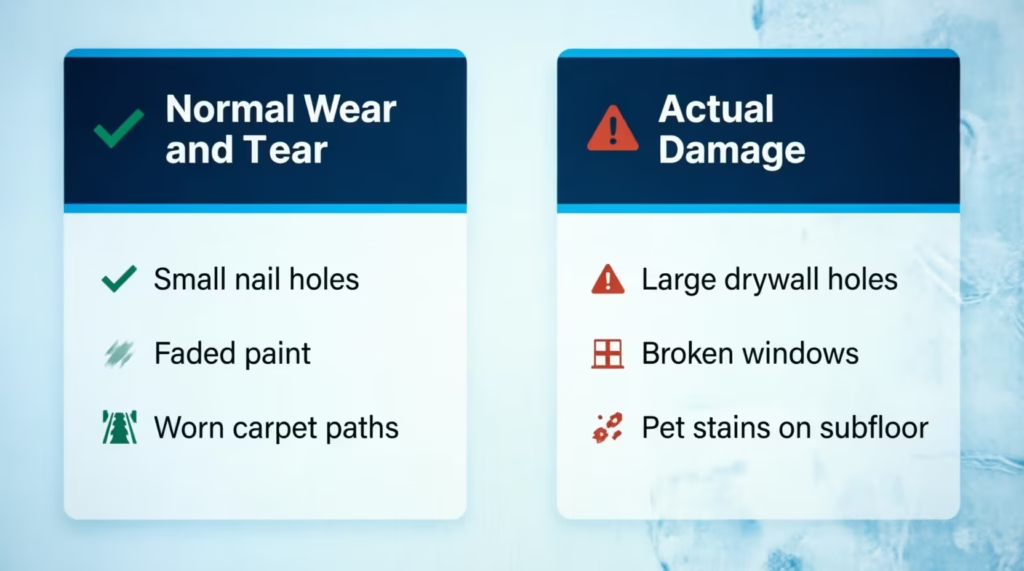
Normal wear and tear covers things like:
- Small nail holes from hanging pictures
- Faded paint after 3 to 5 years
- Worn carpet in walking paths
- Loose door handles
These come from just living in the unit. You cannot evict for them.
Actual damage is different. It shows careless or willful harm. Examples include:
- Large holes punched in drywall
- Broken windows or doors
- Cracked tile or ripped-up flooring
- Pet stains soaked through the subfloor
- Missing appliances
Take photos with a date stamp. Get repair quotes in writing. This paper trail turns your claim into a real lease violation case a judge can rule on.
For most damage cases, you serve a cure or quit notice. If the damage is huge, some states let you skip the cure step and file right away.
Nuisance and Disturbing Other Tenants or Neighbors
A nuisance claim covers behavior that makes the property unlivable for others. Loud music every night, constant fights, foul smells, or aggressive pets can all fit.
For this ground to hold, the behavior must be ongoing, not a one-off. And you need proof. That means:
- Dated complaint logs from other tenants
- Police call records
- Written warnings you sent to the tenant
- Photos or videos if safe to take
One noise complaint from one neighbor rarely wins. A pattern across weeks or months, backed by paper, does.
A nuisance is a type of lease violation in most jurisdictions. So you still need to follow the cure or quit process unless the behavior is severe.
Unauthorized Occupants or Subletting
Most leases limit who can live in the unit and ban unauthorized subletting. When a tenant lets someone else move in or rent the space without your say, you have grounds to act.
The tricky part is telling a guest from an occupant. A visiting cousin who stays two weeks is a guest. A partner who moved in six months ago and gets mail there is an occupant. Most leases set a limit, often 7 to 14 days a month, past which a guest becomes an occupant.
Subletting is even clearer. If the tenant lists the unit on Airbnb, or has a roommate who pays them rent without your name on any paperwork, that is a lease violation.
To build your case, gather:
- Mail sent to the unauthorized person at your address
- Photos or logs showing they come and go daily
- Screenshots of any short-term rental listings
Serve a cure or quit notice giving the tenant a chance to remove the extra person. If they refuse, file in court.
Holdover After Lease Expiration
A holdover tenant stays past the end of the lease without a new agreement. Many landlords think a lease ending means the tenant must leave. That is not always true.
In most states, if the tenant stays and you keep taking rent, the tenancy rolls into a month-to-month tenancy. You did not evict them; you formed a new agreement by taking their money.
To evict a true holdover, you must:
- Stop accepting rent after the lease ends
- Serve a notice to quit, usually 30 to 60 days
- File for possession if they still refuse to leave
In just cause jurisdictions, this gets harder. You cannot simply say “the lease is over.” You still need a listed reason, like an owner move-in or a sale.
No-Fault Reasons: Owner or Family Move-In
An owner move-in is a common no-fault eviction ground in just cause areas. You want the unit for yourself, your spouse, your parent, or your child.
Just cause eviction laws set strict rules for this. Most require:
- The move-in must be in good faith, meaning you truly plan to live there
- The owner or family member must move in within a set window, often 60 to 90 days
- They must stay for a minimum time, usually 12 to 36 months
- You must offer the tenant relocation pay in many cities
If you evict for owner move-in and then rent the unit to someone else, the old tenant can sue. Damages can run into tens of thousands of dollars, plus fines.
Notice periods for this ground run longer than at-fault cases. Expect 60 to 120 days depending on where you are and how long the tenant has lived there.
No-Fault Reasons: Selling, Renovating, or Removing the Unit from the Rental Market
You can also end a tenancy with no-fault eviction grounds tied to what you plan to do with the building itself. The three main types:
Selling the property: In some places, a sale alone is not a ground; the new owner takes the tenant with the lease. In just cause cities, you may need the buyer to plan an owner move-in before you can give notice.
Major renovations: Work that makes the unit unlivable during repairs, like gutting the kitchen and bath, can be a ground. Painting or new carpet does not count. You often must offer the tenant the right to move back in at the same rent.
Removing from the rental market: The Ellis Act in California is the best-known example. It lets landlords pull all units in a building off the rental market at once. This is not for one unit, only whole buildings. Similar rules exist in other cities.
Each ground triggers relocation assistance in most just cause areas. You cannot use these grounds as a cover for raising rent on a new tenant. If you do, expect a lawsuit.
Relocation Assistance: When a Valid Reason Still Costs You Money
Relocation assistance is money you must pay a tenant when you end their tenancy through a no-fault eviction. Even with a legal reason, the tenant did nothing wrong. So the law makes you help cover their moving costs.
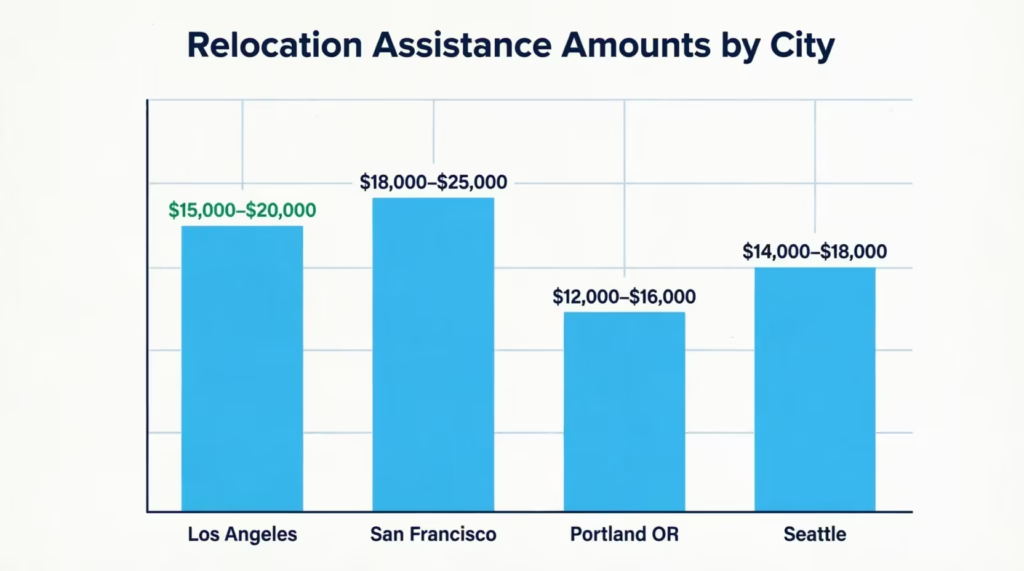
Amounts vary a lot by city. Some examples of common ranges in 2026:
| Location | Typical Relocation Payment |
|---|---|
| Los Angeles | One month’s rent, plus more for seniors and disabled tenants |
| San Francisco | Set by ordinance, often $8,000 to $22,000 per unit |
| Portland, OR | $2,900 to $4,500 based on unit size |
| Seattle | About three months’ rent for low-income tenants |
You usually must pay half when you serve the notice and half when the tenant hands back the keys. Miss a deadline, and your case can be tossed.
Not every city requires this. Texas, for example, has no statewide relocation rule. Always check your local code before you serve any no-fault notice.
Reasons That Are NOT Legal Grounds for Eviction
Some reasons feel valid but are illegal. Using them can turn you from the plaintiff into the defendant fast.
Discrimination under the Fair Housing Act bans eviction based on:
- Race, color, or national origin
- Religion
- Sex, gender identity, or sexual orientation
- Familial status, like having children
- Disability
State and city laws often add more protected classes, like source of income (Section 8 voucher holders), age, or marital status.
Retaliatory eviction happens when you try to remove a tenant because they used a legal right. Examples include:
- The tenant called code enforcement about a broken heater
- The tenant joined a tenant union
- The tenant asked for a repair in writing
- The tenant reported you to fair housing authorities
Most states presume retaliation if you file within 6 months of the tenant’s protected action.
Other invalid reasons include personal dislike, breakup with a tenant you were dating, or wanting to raise rent past legal limits.
Retaliation Timing Red Flags
Judges look hard at timing. If a tenant reports a code violation on May 1 and you serve a notice on May 15, that looks like retaliation. Even if you had a real reason, you have to prove it.
To protect yourself:
- Keep a paper trail of the real reason well before any tenant complaint
- Never mention the complaint in your notice or emails
- Wait past the presumption window when possible, though this is not always practical
If you must evict soon after a tenant complaint, gather your evidence first. Show the problem started before the tenant’s protected act.
Why Jurisdiction Changes Everything
Eviction law is local. What works in Dallas can get you sued in San Francisco. Three layers of rules apply to every case:
- State law: Sets basic notice periods, court procedures, and tenant rights
- County or city law: Can add just cause rules, relocation pay, or rent control
- Federal law: Fair housing, service member protections, and some subsidy rules
A just cause eviction city like Oakland has very different rules than a state like Texas with no just cause requirement. In Oakland, you need a listed reason and often must pay relocation. In most of Texas, you can end a month-to-month lease with 30 days’ notice for any legal reason.
Always start by looking up your state’s landlord-tenant statute. Then check your city and county codes. If your city has a rent board or housing agency, their website usually lists every valid ground.
Legal Reasons to Evict a Tenant by Jurisdiction
Rules differ so much that a short tour of major places helps. This is a starting point, not legal advice. Always check the current statute where your unit sits.
Legal Reasons to Evict a Tenant in California
California uses AB 1482, the Tenant Protection Act of 2019. Most rentals over 15 years old fall under it. AB 1482 sets a just cause list:
At-fault grounds:
- Nonpayment of rent
- Breach of a material lease term
- Nuisance or waste
- Criminal activity on the property
- Refusal to allow lawful entry
- Assigning or subletting against the lease
- Failure to sign a similar new lease
No-fault grounds:
- Owner or family move-in
- Withdrawal from the rental market (Ellis Act)
- Compliance with a government order
- Substantial remodel
No-fault grounds trigger relocation pay equal to one month’s rent. Local cities like Los Angeles and San Francisco add stricter rules on top.
Legal Reasons to Evict a Tenant in BC
British Columbia uses the Residential Tenancy Act. Landlords must serve a specific form for each ground:
- Form RTB-32 for unpaid rent
- Form RTB-33 for cause, like repeated late rent or damage
- Form RTB-29 for landlord use of property
Landlord use grounds include owner or close family move-in, major renovations that need vacant possession (with a permit in hand), and sale where the buyer plans to move in.
Notice periods run from 10 days for unpaid rent to 4 months for landlord use. Tenants can dispute any notice at the Residential Tenancy Branch, and many do.
Legal Reasons to Evict a Tenant in Ontario
Ontario runs on the Residential Tenancies Act through the Landlord and Tenant Board. Landlords must use N-forms:
- N4: nonpayment of rent
- N5: interference, damage, or too many people
- N6: illegal act
- N7: serious damage or safety issue
- N8: persistent late payment or end of term
- N12: landlord or family use
- N13: demolition, repair, or change of use
For N12 evictions, landlords must pay one month’s rent as compensation. For N13, tenants have a right of first refusal to return after major repairs.
Legal Reasons to Evict a Tenant in Texas
Texas has fewer restrictions than most states. The Texas Property Code Chapter 24 governs evictions:
- Nonpayment of rent (3-day notice to vacate, unless the lease says otherwise)
- Lease violation
- Holdover after lease ends
- End of month-to-month with 30 days’ notice, no reason needed
Texas has no statewide just cause rule and no relocation pay. Cities like Austin have added some tenant rules, but the state remains one of the most landlord-friendly.
Legal Reasons to Evict a Tenant UK
England and Wales use two main routes under the Housing Act 1988:
Section 8: For fault-based grounds. The landlord picks from 17 grounds, split into mandatory (like 2 months of rent arrears) and discretionary (like persistent late payment or nuisance). Notice periods run from 2 weeks to 2 months.
Section 21: The old “no-fault” route. A landlord could end an assured shorthold tenancy with 2 months’ notice for any reason. Under the Renters (Reform) Bill moving through Parliament, Section 21 is set to end, shifting all evictions in England to a Section 8-style just cause system. Scotland already ended no-fault evictions in 2017.
Landlords must protect deposits and provide safety certificates or lose the right to use Section 21 while it still exists.
Reasons to Evict a Tenant Immediately
Many landlords want to know the reasons to evict a tenant immediately. The honest answer: “immediate” eviction in the true sense does not exist in most places. Every state requires some form of court process.
But some grounds do move faster. These usually include:
- Serious illegal activity, like drug manufacturing or violent crime
- Direct threats of harm to other tenants
- Major property destruction that makes the unit unsafe
- Domestic violence exceptions in some states
For these, notice periods can drop to 24 to 72 hours, and courts may hold hearings within a week.
What you cannot do, even with the worst tenant, is:
- Change the locks
- Shut off utilities
- Remove their belongings
- Threaten or physically remove them yourself
This is called “self-help” eviction, and it is illegal everywhere in the U.S. Doing it can cost you triple damages plus attorney fees, even if the tenant deserved to leave.
What Happens If You Evict Without a Valid Legal Reason
Trying to remove a tenant without a proper ground fails, and it fails expensively. Courts treat this seriously because tenants can lose their home over it.
If you file an unlawful detainer without a valid reason, expect:
- Case dismissal, sometimes with prejudice, so you cannot refile
- Payment of the tenant’s court costs and attorney fees
- Delay of any real eviction by weeks or months
If you skip court and do a self-help eviction, the cost grows:
- Wrongful eviction lawsuit from the tenant
- Damages for emotional distress, lost property, and moving costs
- Triple damages in many states
- Criminal charges in some cases
A retaliatory eviction finding brings its own penalties. The tenant often gets to stay, plus damages of one to three months’ rent, plus fees.
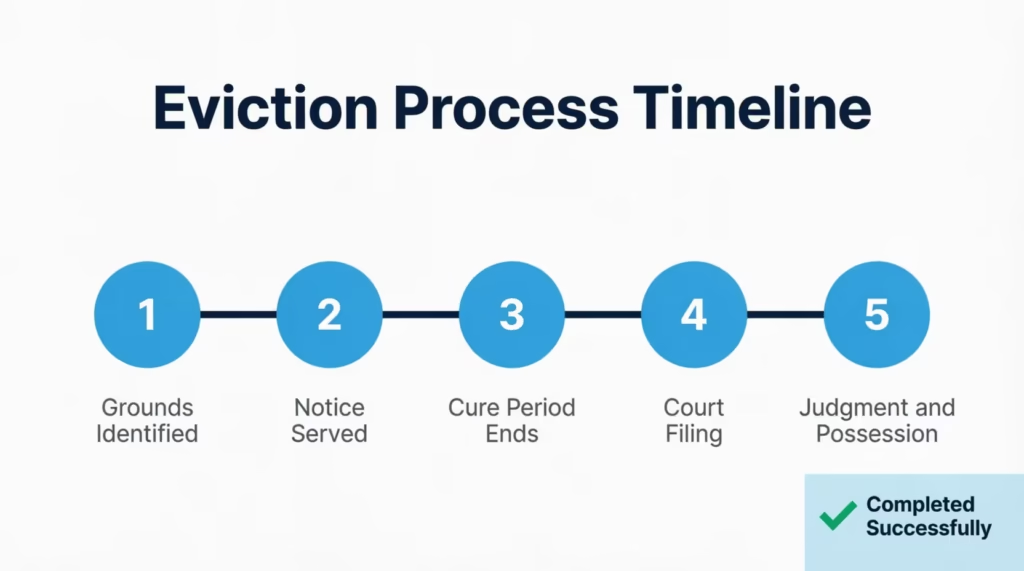
The safest path is simple. Pick a ground the law lists. Follow every notice rule to the letter. Keep written proof of everything. And when in doubt, talk to a local landlord-tenant attorney before you serve any paper. A one-hour consult costs far less than a lost case.
Frequently Asked Questions (FAQs)
What is the most common reason for eviction?
Nonpayment of rent is the most common reason landlords go to court. Once rent is past the grace period, usually 3 to 5 days, the landlord can serve a pay or quit notice giving the tenant a set window to pay in full or leave.
What is a valid reason to evict a tenant?
A valid reason falls into either at-fault categories, like nonpayment, lease violations, or illegal activity, or no-fault categories, like an owner move-in or removing the unit from the rental market. Just cause jurisdictions require picking a specific ground from a fixed list rather than simply not renewing.
How long does it take to evict a tenant?
Timelines vary widely by location and ground. Notice periods alone range from 3 to 14 days for at-fault evictions to 30 to 120 days for no-fault evictions, and that’s before any court filing and hearing process begins.
How much notice do landlords have to give to vacate?
At-fault evictions typically require 3 to 14 days’ notice, while no-fault evictions require 30 to 120 days. Nonpayment of rent notices are often on the shorter end, commonly 3 to 5 days.
How many days’ notice to evict someone in Florida?
This isn’t detailed for Florida specifically. In general, nonpayment cases often use short notice windows of 3 to 5 days, while no-fault or lease-end situations require longer notice, but Florida’s exact statute should be checked directly.
What is a revenge eviction?
A revenge eviction is another term for retaliatory eviction, where a landlord tries to remove a tenant because they exercised a legal right, such as reporting a code violation or requesting a repair. Most states presume retaliation if the landlord files within 6 months of the tenant’s protected action.
Can I kick someone out of my house if there is no contract?
No, removing someone yourself without going through the legal process is illegal self-help eviction, even without a written lease. Only a sheriff or marshal can physically remove a tenant after a proper court order.
How difficult is it to evict a tenant in NY?
New York is considered a tenant-friendly state with strict just cause protections in many areas, especially New York City. Landlords must prove a specific legal ground, follow strict notice and filing procedures, and cases can take several months to resolve through housing court.
Is a text message a legal eviction notice?
In most states, a text message alone does not meet legal notice requirements. Eviction notices generally must be delivered in writing through methods like personal delivery, posting on the door, or certified mail, as specified by state law.
What happens if a landlord evicts without a valid legal reason?
Filing without a valid ground typically results in case dismissal, and the landlord may have to pay the tenant’s court costs and attorney fees. Doing a self-help eviction instead can lead to a wrongful eviction lawsuit, triple damages in many states, and even criminal charges.
Wrapping Up
Evictions rest on one rule: the law must name your reason. Based on the framework above, the most effective approach is to first place your situation in the at-fault or no-fault bucket, then check the exact rules where your unit sits.
Each reason has its own steps. Nonpayment, lease violations, owner move-ins, and market withdrawals all need a notice, proof, and payment. Skipping any step turns a strong case into a costly loss.
If you know a fellow small landlord dealing with a tough tenant, share this guide. It could save them thousands in legal fees.