
I’ve been on the phone with a creditor while my heart pounded, worried I’d say the wrong thing and lose thousands of dollars. If you’re staring at a past-due credit card balance you truly can’t pay, a written credit card settlement letter is the safest way to lock in a smaller payoff, in ink, before you send a single dollar.
The short answer: put your offer, terms, and legal protections in one clear letter, then wait for written approval before paying.
Below, we’ll walk through the full structure, exact wording, sample templates, tax rules, and what to do if the creditor pushes back.
Key Takeaways
This guide explains how to write a credit card settlement letter, including required components, protective legal clauses, realistic offer percentages by account status, and the tax implications of forgiven debt.
Core Facts:
- A settlement letter must include contact information, account number, a specific dollar offer, a brief hardship statement, payment terms, reporting and release language, and a response deadline of 15 to 30 days.
- Settlement offer ranges vary by account status, from 70% to 90% for current but at-risk accounts down to 10% to 30% for old debt near the statute of limitations.
- Payment should only be sent after receiving a signed written agreement, since a verbal agreement from a phone representative is not enforceable.
- Three protective clauses are recommended in every letter: a paid-in-full clause, a credit reporting clause, and a mutual release clause.
- Forgiven debt of $600 or more is generally reported to the IRS on Form 1099-C and may count as taxable income unless the insolvency exclusion applies.
- Debts sold to a debt buyer or already charged off are generally settled at lower percentages than accounts that are still current.
Best for:
- People with a past-due credit card balance who cannot pay the full amount and want to negotiate a lower payoff in writing.
- Readers who want to avoid using a for-profit debt settlement company and negotiate directly with their creditor or collector.
- Anyone who has already reached a verbal settlement understanding and needs the correct legal wording before sending payment.
What a Credit Card Settlement Letter Is (and When You Should Send One)
A credit card settlement letter is a short, formal written offer to your creditor or collector. You ask them to accept less than the full balance as payment in full. It puts your terms on paper so the deal is clear and provable.
You should send one when you truly cannot pay the full balance. Common triggers include a job loss, a big medical bill, a divorce, or reduced work hours. The letter also fits well if your account is past due, close to charge-off, or already sold to a collector.
Timing matters a lot. Creditors are usually more open to settling when the account is 90 to 180 days late, or after it has been marked as a charged-off account. Before that point, they still expect full payment. After charge-off, the debt is often sold cheap to a debt buyer, so a smaller lump sum starts to look attractive to them.
You should not send a settlement letter if you can still afford the minimum payment, or if you plan to keep using the card. Settlement will hurt your credit score, and the account will likely be closed. It is a damage-control move, not a first choice.
Write this letter yourself when you want to skip for-profit debt settlement firms. The Federal Trade Commission warns that these companies often tell people to stop paying creditors, which can pile on fees, hurt credit further, and even trigger lawsuits. A direct letter keeps you in control.
💡 Pro Tip: Pull your latest statement and confirm who owns the debt right now. That single detail decides the tone of your debt settlement letter and whether you’re negotiating with the bank, a collector, or a debt buyer.
Core Components Every Settlement Letter Must Include
A strong settlement letter has clear parts. Miss one, and you give the creditor room to twist the deal later. Keep it to one page. Keep it plain. Keep it firm but polite.
Every letter should include these building blocks:
- Your full name, address, phone number, and email at the top.
- The date you send it.
- The creditor or collector’s name and mailing address.
- Your account number (last four digits are safer than the full number).
- A clear subject line, such as “Settlement Offer for Account Ending in 4832.”
- A short statement of purpose, saying you want to settle the debt for less than the full amount.
- The exact settlement offer, in dollars and as a percent of the balance.
- A brief hardship reference, one or two sentences only.
- Payment terms, such as lump sum within 14 days of a signed agreement.
- Reporting and release language to protect your credit and legal rights.
- A response deadline, usually 15 to 30 days.
- Your signature and printed name.
Do not include long personal stories, threats, or admissions that the balance is fully correct. Keep the tone factual. The person reading it handles many files per day. A clean written offer helps you stand out and speeds up approval.
Who to Address the Letter To
The right recipient depends on who owns the debt right now. Sending the letter to the wrong party wastes weeks and can even reset the clock on your rights.
If the account is still with the original creditor, address the letter to their “Loss Mitigation” or “Recovery” department. Call the customer service number on the back of your card and ask for the mailing address of that team. Do not just send it to the general payments address. Payments teams do not approve settlements.
If the account has been sent to a third-party collection agency but the original bank still owns it, you can often still negotiate with either party. Start with the original creditor, since they set the rules the collector must follow.
If the debt has been sold to a debt buyer, that buyer is now the legal owner. Address the letter to the debt buyer at the address on their most recent collection notice. Before you send it, consider mailing a short debt validation request first. Under the Fair Debt Collection Practices Act, you can ask the collector to prove the debt is yours and the amount is right. This is your right within 30 days of their first contact.
For a bank-issued card, use the bank’s official collections mailing address, not a branch. Branches cannot settle credit card debt.
How to Determine Your Settlement Offer Amount
The number you offer decides whether the letter gets a serious read or a quick rejection. Aim too high, and you waste money. Aim too low, and the file gets closed.
Here are realistic ranges tied to account status. These reflect what creditors and debt buyers commonly accept when a consumer negotiates directly.
| Account Status | Typical Settlement Range | Best Opening Offer |
|---|---|---|
| Current but at risk | 70% to 90% of balance | 60% |
| 90 to 180 days late | 40% to 60% | 30% |
| Charged-off, still with original creditor | 30% to 50% | 20% to 25% |
| Sold to a debt buyer | 20% to 40% | 10% to 15% |
| Old debt near statute of limitations | 10% to 30% | 10% |
Research from the National Consumer Law Center shows credit card issuers recover only about 12% of a charged-off balance in the first two years. That is why a lump-sum settlement of 25% to 40% often looks good to them. It beats what they’d get otherwise.
Always start below your true ceiling. If you can pay 40%, open at 20% to 25%. This leaves room for a counteroffer without going past your budget.
Only offer money you can actually pay in one shot, within 14 to 30 days of a signed deal. Multi-month payment plans are harder to get in writing and easier to break by accident. A single lump-sum offer is stronger than a drawn-out plan.
Never touch retirement funds or borrow at high rates to fund the settlement. If the money isn’t safely on hand, the offer isn’t ready.
How to Write the Hardship Explanation
Your hardship section is where most people either help their case or hurt it. Say too little, and it sounds like you just don’t want to pay. Say too much, and you sound scripted, or worse, you reveal money the creditor can chase.
Keep it to two or three sentences. State the cause, the impact, and the fact that full payment isn’t possible. That’s it.
Good examples of a short financial hardship statement:
- “In March 2026, I was laid off from my full-time role as a warehouse supervisor. My income has dropped by roughly 60%, and I can no longer meet the full monthly payment on this account.”
- “A recent medical event led to about $18,000 in out-of-pocket costs. After basic living expenses, I have limited funds available and cannot pay the full balance.”
- “Following a divorce finalized this year, my household income was cut in half. I can offer a one-time lump sum from a family member to close this account.”
Avoid these mistakes in a hardship letter:
- Do not list every asset you own.
- Do not mention a tax refund, bonus, or lawsuit settlement coming your way.
- Do not beg, over-apologize, or blame the creditor.
- Do not attach pay stubs, bank statements, or medical bills unless the creditor asks in writing.
Stay factual and calm. The goal is to show your situation is real, not to move the reader to tears. Creditors respond to clear numbers and a clean credit card settlement letter, not drama.
How to Word the Payment and Reporting Terms So You’re Protected
This is the section that shields you long after the check clears. Weak wording lets the creditor keep chasing the “forgiven” amount. They can report the account negatively or sell the remaining balance to another collector.
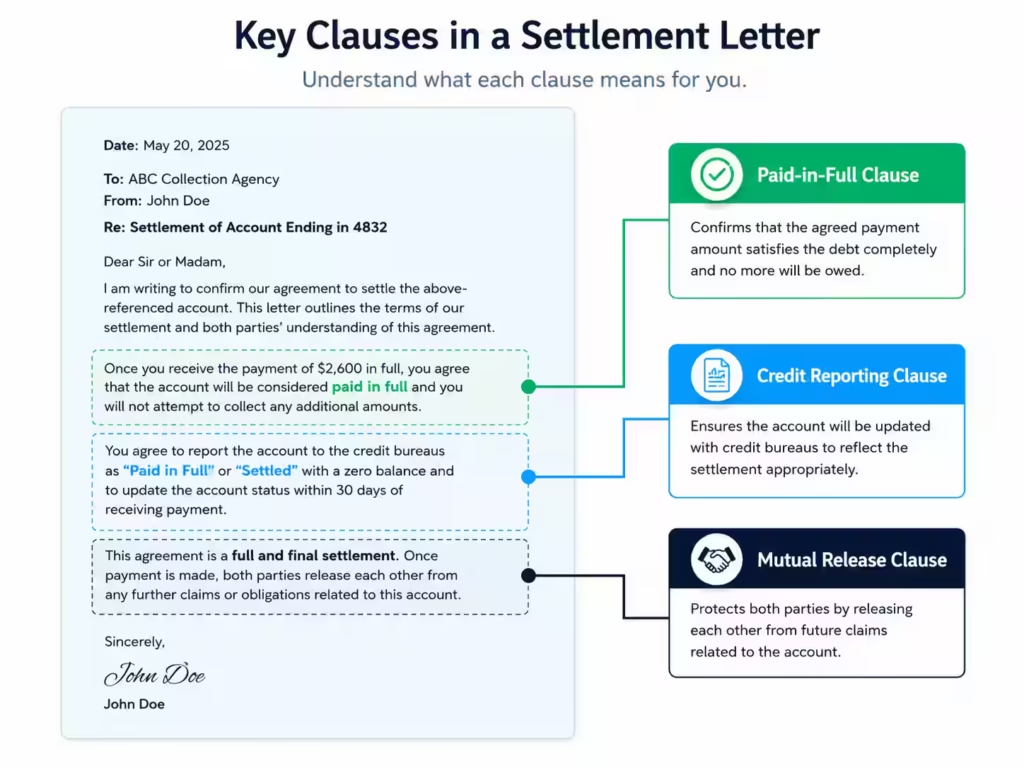
Use these three protective clauses inside your letter. Copy them almost word-for-word.
1. Paid-in-Full Clause
“Upon receipt of the agreed settlement amount of $______, the account ending in ______ shall be considered paid in full and fully satisfied. No further collection activity, sale, transfer, or legal action will be pursued against me for the remaining balance.”
2. Credit Reporting Clause
“The account will be reported to Equifax, Experian, and TransUnion as ‘paid in full’ or ‘account closed, paid in full,’ with no reference to ‘settled for less than full balance,’ within 30 days of payment.”
Some creditors will not agree to remove the “settled” note, since guidance from the Consumer Financial Protection Bureau treats accurate reporting as protected. Still, always ask for the better wording. Many will meet you halfway.
3. Mutual Release Clause
“This agreement constitutes a mutual release of all claims related to this account. Neither party may pursue further collection, legal action, or reporting beyond what is stated in this agreement.”
You can also try a pay-for-delete request. This asks the creditor to remove the tradeline from your credit report in exchange for payment. Many original creditors refuse, but some smaller debt buyers agree. Ask for it, but do not make the whole deal depend on it.
Step-by-Step: Writing the Letter
Follow this order so nothing important gets left out. Each step builds on the last and slots into the final draft.
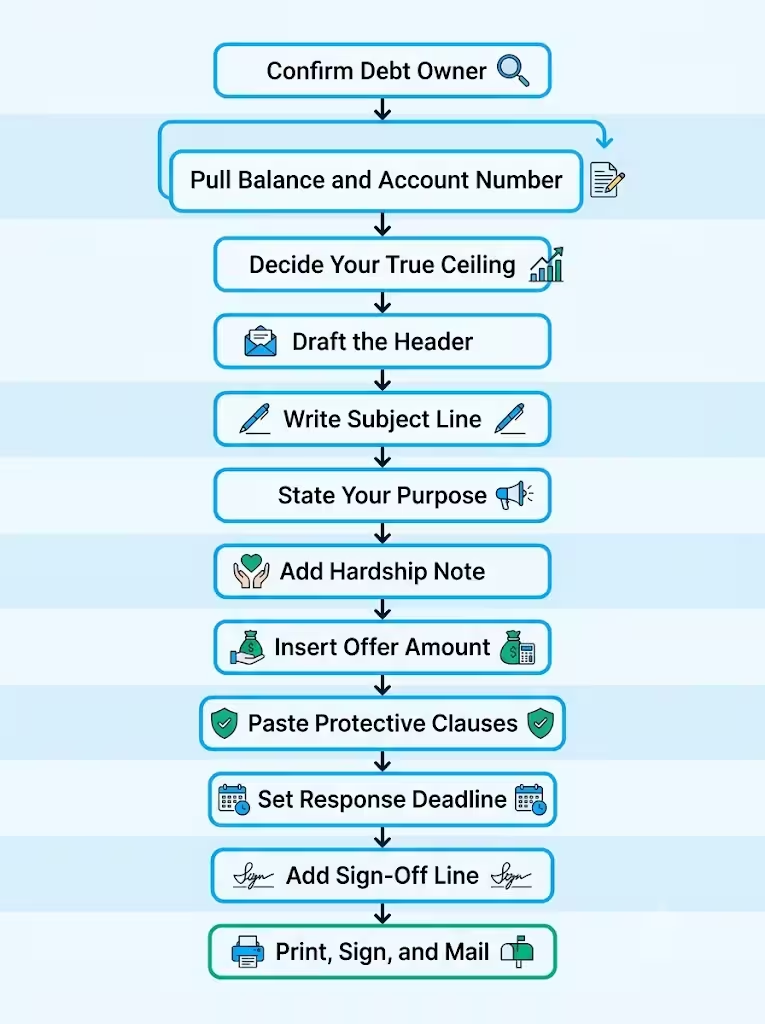
- Confirm the current owner of the debt. Call the number on your last statement or collection notice. Note the department name and mailing address.
- Pull the exact balance and account number. Match it to the most recent statement, not an old one.
- Decide your true ceiling. Write down the most you can pay in one lump sum. Cut that number by 30% to 50% to set your opening offer.
- Draft the header. Add your contact info, the date, and the creditor’s name and address.
- Write a short subject line. Example: “Settlement Offer for Account #____.”
- State your purpose in one sentence. Say you want to settle the account for less than the full balance as a full and final payment.
- Add your two-sentence hardship note. Keep it factual.
- Insert your offer amount. Show both the dollar figure and the percentage of the balance.
- Paste in your protective clauses. Paid-in-full, credit reporting, and mutual release.
- Set a response deadline. Fifteen to thirty days is standard.
- Add a sign-off line. Ask them to sign, date, and return the letter before payment.
- Print, sign, and mail via certified mail with return receipt requested. Keep a full copy for your records.
Do not email a settlement letter unless the creditor sends you an official secure portal link. Emails get lost in shared inboxes, and you lose your paper trail.
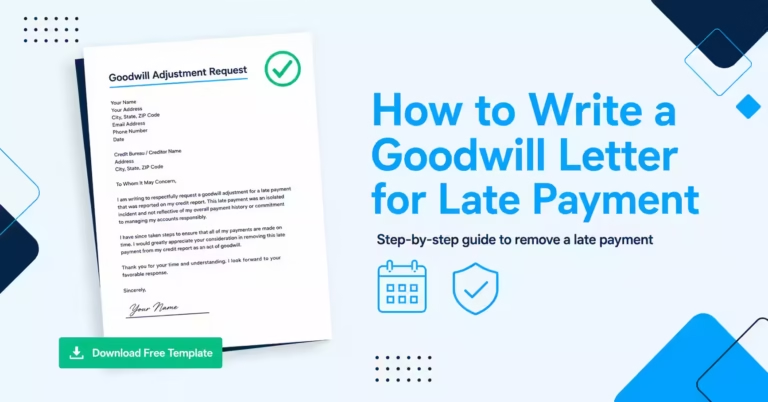
Sample Credit Card Settlement Letter
Below is a full sample you can adapt. Change the names, numbers, and hardship to fit your situation. Do not copy it word-for-word without editing, as generic letters get less attention.
Jennifer Alvarez 1425 Maple Ridge Drive Austin, TX 78704 (512) 555-0184 jennifer.alvarez@email.com
July 29, 2026
Recovery Department Sunrise National Bank P.O. Box 92150 Wilmington, DE 19850
Subject: Settlement Offer for Account Ending in 4832
To Whom It May Concern:
I am writing to propose a lump-sum settlement on the account referenced above, which shows a current balance of $8,640.
In February 2026, I was laid off from my position as an operations coordinator at a mid-sized logistics firm. My household income has dropped by roughly 55%, and I can no longer meet the full monthly payment on this account. I want to resolve this matter fairly rather than let it go further into default.
I offer $2,600, which is approximately 30% of the current balance, as full and final payment. A family member has agreed to fund this one-time payment. Funds will be sent within 14 days of receiving a signed agreement from Sunrise National Bank.
By accepting this offer, Sunrise National Bank agrees to the following terms:
- Upon receipt of $2,600, the account ending in 4832 shall be considered paid in full and fully satisfied. No further collection activity, sale, transfer, or legal action will be pursued for the remaining balance.
- The account will be reported to Equifax, Experian, and TransUnion as “paid in full” or “account closed, paid in full” within 30 days of payment.
- This agreement is a mutual release of all claims related to this account.
Please respond in writing by August 20, 2026. A signed copy of this letter, or your written agreement on company letterhead, will confirm these terms.
Thank you for your time and consideration.
Sincerely,
Jennifer Alvarez
Getting the Agreement in Writing Before You Pay
A verbal “yes” from a phone rep is not enforceable. Reps change jobs, notes get lost, and recorded calls are hard to obtain later. The paper trail is what protects you.
Only pay after you have one of these in hand:
- The creditor’s signed copy of your original letter.
- A settlement agreement on the creditor’s official letterhead. It should list the same amount, terms, and reporting language you requested.
- A secure PDF from the creditor’s official email or portal, with the same details.
Read every word before you pay. Watch for sneaky changes like “settled for less than full balance” instead of “paid in full,” or a missing clause about no future collection. If any wording weakens your terms, reply in writing and ask for a corrected version.
Once you have the signed agreement, pay by a method that leaves a clear record. A cashier’s check or a bank wire is best. Never give bank login details or a debit card number over the phone. Keep the receipt, the signed agreement, and your original letter together in one folder for at least seven years.
After payment clears, ask for a settlement confirmation letter that says the account is closed and paid in full. Also pull your credit reports from all three bureaus about 45 days later. Check that the account matches the agreed wording. If it does not, dispute it with the bureau in writing, and include a copy of the signed deal.
Tax Implications of a Settled Credit Card Debt
Forgiven debt can count as taxable income. This surprises many people the year after they settle. Plan for it before you sign anything.
The Internal Revenue Service explains that when a debt is canceled, forgiven, or discharged for less than what you owed, the canceled amount is generally taxable as ordinary income. If your creditor forgives $600 or more, they must send you Form 1099-C,
Cancellation of Debt, and file a copy with the IRS. For tax years starting after 2025, the general 1099 reporting threshold rises to $2,000 for some payments. However, the 1099-C rule for canceled debt still requires reporting when the forgiven amount meets the current threshold.
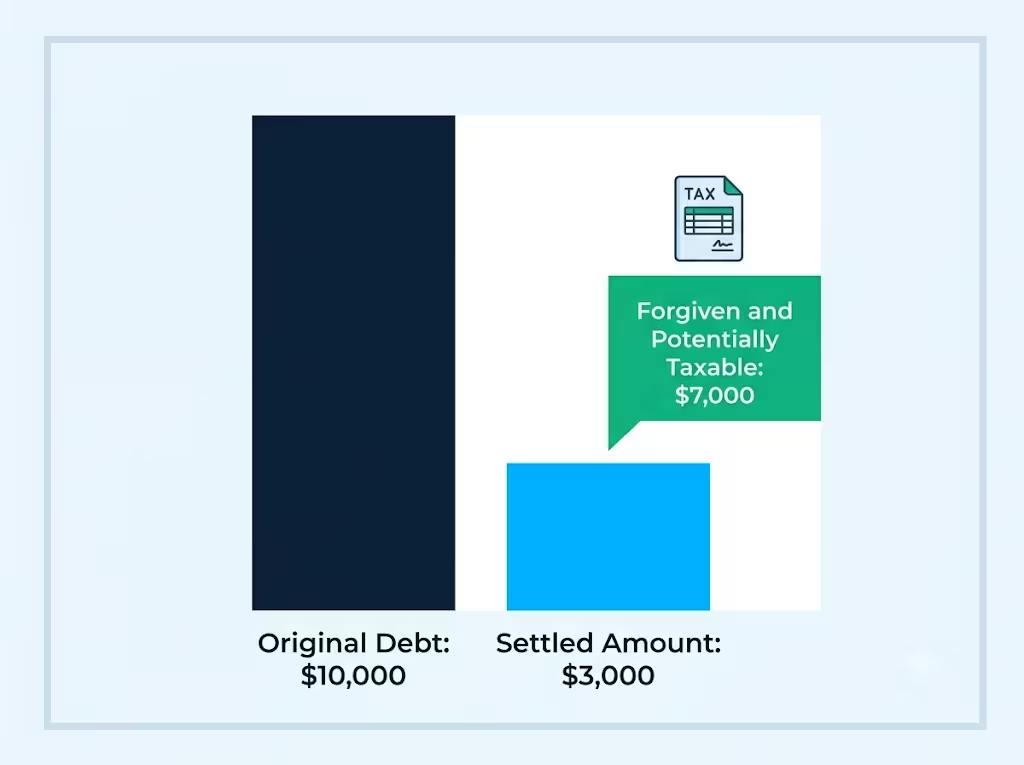
Here is a plain example: You owe $10,000. You settle for $3,000. The creditor forgives $7,000. That $7,000 may be added to your taxable income on next year’s return. If you’re in a 22% federal tax bracket, that could mean about $1,540 in extra federal tax, plus any state tax.
You may be able to skip this tax under the insolvency exclusion. If your total debts were more than your total assets right before the debt was forgiven, some or all of the canceled debt may not be taxable. You claim this with IRS Form 982. Talk to a tax pro before you settle if this could apply to you, since running the numbers correctly takes care.
📌 Did You Know: The cancellation of debt rule means a “cheap” settlement can still cost you more than expected at tax time. Setting aside 20% to 25% of the forgiven amount for taxes is a smart safety habit until you know if you qualify for insolvency relief.
Common Mistakes to Avoid When Writing a Settlement Letter
Small errors in a settlement letter can undo months of planning. These are the ones that trip up most people negotiating on their own.
- Paying based on a phone call alone. If it isn’t signed, it doesn’t count.
- Admitting the debt is fully valid. If any part of the balance may be wrong, use phrases like “the alleged balance” or “the amount currently claimed.” Never write “I agree I owe this debt in full.”
- Skipping the reporting clause. Without it, the creditor can report “settled for less” and drag your score down for years.
- Using regular mail. Always send by certified mail with return receipt. This proves they got it and starts the clock.
- Missing the debt validation window. For debts with a collector, request validation within 30 days of first contact, before offering to settle.
- Offering more than you can actually pay. If the check bounces or you miss the deadline, the deal is dead, and the full balance snaps back.
- Sharing extra financial details. Bank balances, employer names, and family income are none of the creditor’s business unless a court orders it.
- Settling debt past the statute of limitations without checking. In many states, this window is three to six years. Making a payment or written promise can restart it. Check your state law before you write.
- Forgetting the tax angle. A settlement that looks great today can turn into a surprise bill next April.
Fixing these settlement mistakes in advance is far cheaper than fixing them after the payment clears.
What to Do If the Creditor Rejects or Counters Your Offer
A rejection or a counter is not the end of the road. In fact, it usually means the creditor is willing to keep talking. Stay calm and take it in stages.
If they reject the offer outright, ask them to put the rejection in writing. Then wait two to four weeks and send a second letter with a slightly higher offer, maybe 5% to 10% more. Time is often on your side, especially as the account gets closer to being written off or sold.
If they counter with a higher number, do the math against your true budget. If the counter is within your ceiling and includes the same protective terms, it may be worth accepting. If it’s above your ceiling, reply in writing with a middle number. For example, if you offered 25% and they countered at 60%, come back at 40%.
Watch for common counter-tactics:
- Payment plans instead of lump sums. These are harder to protect legally. If you have to accept one, make sure it has the same paid-in-full and reporting clauses. Also, pay by auto-draft from an account with the exact settlement amount—nothing extra.
- Higher amount with “removed from credit” wording. Sometimes worth it, since a clean tradeline can help you rebuild faster.
- Deadlines that pressure you. If they say “today only,” stall. Real settlement offers stay open for at least a few days.
If debt negotiation stalls after two or three rounds, consider free help from a nonprofit credit counselor certified by the National Foundation for Credit Counseling. They can review your budget and sometimes negotiate on your behalf without the high fees of a for-profit debt settlement firm.
If the balance is very large, the creditor sues, or the tax angle looks complex, talk to a consumer rights attorney. Many offer a free first call. Under the FDCPA, if a collector broke the law, you may even have leverage that changes the settlement math in your favor.
Walking away is also an option. If no offer helps and the debt is near its statute of limitations, it might be best to save your money. Stop making payments or promises, and let time run its course. This is a serious step with credit and legal risks, so weigh it carefully before choosing that path.
Frequently Asked Questions (FAQs)
How much should I offer as a full and final settlement?
Open at 20% to 25% of the balance if you can pay 40%. Charged-off accounts with the original creditor typically settle for 30% to 50%, while debt sold to a buyer often settles for 20% to 40%.
Will creditors accept a 50% settlement offer?
Yes, especially on accounts that are 90 to 180 days late, where the typical range is 40% to 60%. Accounts still current but at risk usually need 70% to 90%, so 50% works better on more delinquent debt.
What are common mistakes in settlement letters?
The biggest mistakes are paying based on a phone call alone and admitting the debt is fully valid in writing. Skipping the credit reporting clause and using regular mail instead of certified mail also weaken your protection.
How do I write a hardship letter for credit card settlement?
State the cause, the impact, and that full payment isn’t possible in two to three sentences. For example: a layoff cut your income by 60%, so you can’t meet the full monthly payment.
How to write a letter asking for full and final settlement?
Include your contact details, account number, exact offer amount as a dollar figure and percentage, a brief hardship note, and paid-in-full and reporting clauses. Set a response deadline of 15 to 30 days and send it by certified mail.
Does settling a credit card debt hurt your credit score?
Yes, settlement will hurt your credit score, and the account will likely be closed. It’s considered a damage-control move rather than a first choice for accounts you can still afford to pay normally.
What is a debt settlement paid-in-full letter?
It’s written confirmation from the creditor stating the account is considered paid in full and fully satisfied once they receive your agreed settlement amount. This clause also blocks further collection activity, sale, or legal action on the remaining balance.
Will a debt collector settle for 20%?
Yes, debt sold to a debt buyer commonly settles for 20% to 40%, with an opening offer of 10% to 15% being realistic. Old debt near the statute of limitations can settle for as little as 10%.
Is credit card debt forgiven in a settlement taxable?
Yes, the IRS generally treats canceled debt of $600 or more as taxable income, reported on Form 1099-C. For example, forgiving $7,000 in a 22% tax bracket adds roughly $1,540 in federal tax, unless you qualify for the insolvency exclusion using Form 982.
What should I do if a creditor rejects my settlement offer?
Ask them to put the rejection in writing, then wait two to four weeks and resend a slightly higher offer, about 5% to 10% more. If they counter instead, compare it against your true budget before accepting or countering back.
Wrapping Up
Settling a credit card debt is not just about picking a number. It’s about writing a clear, protective letter, sending it to the right party, and refusing to pay until every term is signed and returned.
Offering 20% to 40% of a charged-off balance usually works best. This approach helps secure a paid-in-full status, mutual release, and clean reporting language. Most creditors will accept these terms. Plan for the 1099-C tax angle too.
If you know someone drowning in past-due card debt, share this guide. It could save them thousands and years of credit damage.