
I know how stressful it feels to spot a late payment on your credit report right when you’re planning a mortgage, an auto loan, or a card upgrade. That single mark can drag your score down and quietly wreck your APR. The good news? You don’t always have to live with it. A goodwill letter for late payment gives you a polite, low-risk way to ask your creditor to erase it.
The fastest fix is a short, honest letter that owns the mistake and requests removal as a one-time courtesy.
In the guide below, we’ll walk through who qualifies, what to write, where to send it, and exactly what to do if the answer is no.
Key Takeaways
This guide explains how to write a goodwill letter requesting removal of an accurate late payment, including who qualifies, what to include in the letter, where to send it, and what to do if the request is denied.
Core Facts:
- A goodwill letter asks a creditor to remove an accurate negative mark as a one-time courtesy, while a dispute letter challenges information believed to be inaccurate under the Fair Credit Reporting Act.
- Goodwill requests work best for a single late payment, a clean payment history otherwise, and an account currently paid and in good standing.
- Credit card issuers and credit unions are described as more flexible than mortgage servicers, auto loan servicers, and large national banks, which often have blanket no-goodwill policies.
- Recommended letter length is roughly 200 to 300 words, covering a greeting, one clear reason for the late payment, ownership of the mistake, payment history, and a specific removal request.
- Letters should be mailed to the customer correspondence or credit reporting address rather than the payment address, since payment mail rooms often do not route letters to decision-makers.
- Most responding creditors reply within two to six weeks, and the guide recommends waiting at least 30 days before following up by phone.
Best for:
- People with a single 30-day late payment on an account that is otherwise paid and in good standing.
- Readers deciding between a goodwill letter and a formal credit dispute for a negative mark on their report.
- Anyone whose first goodwill request was denied and wants a plan for follow-up, rewriting, or escalation.
What a Goodwill Letter Is (and How It’s Different From a Dispute Letter)
A goodwill letter is a brief, polite request to a creditor. You ask them to remove a negative mark, like a late payment, from your credit report as a one-time favor. You’re not saying the record is wrong. You’re admitting it’s right, but asking the lender to make a goodwill exception because the rest of your account looks strong.
This is very different from a credit dispute letter. A dispute is for information you believe is wrong, like a payment marked late that you actually paid on time, or an account that isn’t yours.
When you dispute an item, the credit bureau and the furnisher must look into it. This is required by the Fair Credit Reporting Act. If they find inaccurate data, it must be corrected or removed.
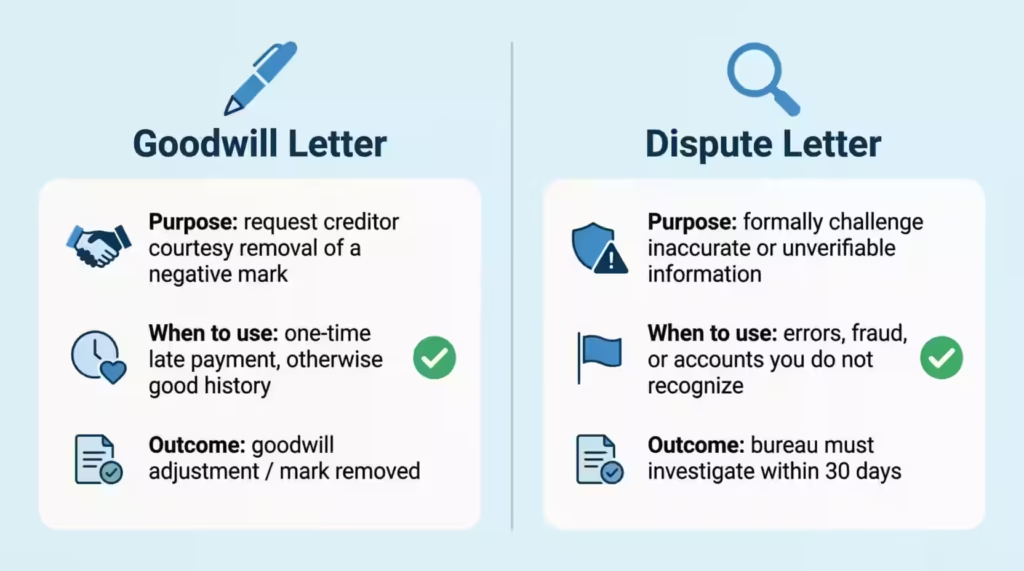
The CFPB explains that you generally cannot have accurate negative information removed, which is why a goodwill request, not a dispute, is the right tool when the late mark is real.
So the rule is simple. If the late payment truly happened, use a goodwill letter. If the record is inaccurate or unverifiable, file a dispute with the credit bureau instead. Mixing these up is the fastest way to get ignored, because a creditor who receives a “dispute” for an accurate item will usually just verify the data and move on.
📌 Did You Know: Under the FCRA, furnishers are legally required to report accurate data to Experian, Equifax, and TransUnion. That’s why goodwill removal is always a courtesy, never a right, and every creditor can say no.
Does Your Situation Qualify for a Goodwill Letter?
Before you spend an hour drafting anything, take a minute to size up your odds. Not every situation is a good fit, and knowing that upfront saves you from disappointment.
Your chances of getting a goodwill adjustment go up sharply when a few things are true at once. You have a single 30-day late payment, not a pattern. The rest of your on-time payment history is clean.
Your account is currently in good standing, meaning it’s paid, current, and not in collections. And you’re acting fairly soon after the slip-up, ideally within a few months, while the reason for the late payment is still fresh and believable.
The type of account matters too. Credit card issuers and credit unions tend to be the most flexible. They have more room to make customer-service decisions, and a long, healthy relationship carries real weight. Store cards and smaller regional lenders can also be worth a try.
On the harder side, mortgage servicers, auto loan servicers, and some large national banks are much less likely to say yes. Mortgage lates in particular are treated as serious, and many servicers have blanket “no goodwill” policies. Student loan servicers vary, and government-backed loans rarely adjust. That doesn’t mean you shouldn’t try. It just means you should set realistic expectations and be ready for a “no.”
Here’s a quick eligibility snapshot:
| Factor | Better Odds | Lower Odds |
|---|---|---|
| Number of late payments | One 30-day late | Multiple lates or 60/90-day |
| Account status now | Current and in good standing | Delinquent or charged off |
| Time since the late | A few months, still fresh | Years old with no recent activity |
| Account type | Credit card, credit union | Mortgage servicer, auto loan, some big banks |
| Payment history overall | Otherwise spotless | Repeated missed payments |
Why Some Creditors Won’t Grant a Goodwill Adjustment
The main reason isn’t rudeness. It’s the law. The Fair Credit Reporting Act requires anyone who reports to a credit bureau (called a “furnisher”) to send data that is accurate and complete. The CFPB has stated plainly that furnishers must assure the accuracy of consumer report information, and there is no legal exception that lets them wipe a truthful late payment just because a customer asks.
Large banks and mortgage servicers often build blanket policies around this rule. Their compliance teams think that granting goodwill removals might seem inconsistent to regulators.
So, they train customer service to say no to everyone. Smaller issuers and credit unions have more discretion, which is why they’re more likely to say yes. Knowing this helps you take a “no” less personally and pick a smarter next step.
Gather Your Account Information Before You Write
A messy letter with wrong dates or a missing account number tells the creditor you didn’t take this seriously. Before you type a single word, pull together the exact facts. This takes about ten minutes and makes your letter far more credible.
Start with your credit report. You can pull all three bureaus free at AnnualCreditReport.com, which is the official site authorized by federal law. Find the account, and write down:
- The exact date the late payment was reported (for example, “30 days late as of March 2026”).
- The amount that was reported past due.
- The account number (or the last four digits, since many statements only show that).
- The current status of the account, such as “paid,” “current,” or “in good standing.”
Next, confirm the creditor’s correct name and contact info. The name on your credit report may be slightly different from the brand name on your card. For contact info, check the back of your card, your latest statement, or the “contact us” page in your online account. If the creditor has a specific address for credit reporting disputes and correspondence, use that one, not the payment address. Payment mail rooms often just scan checks and toss letters.
Finally, jot down a short timeline of what happened around the late payment. Not to include all of it in your letter, but so you can be specific in one clean sentence. If a medical bill hit the same week, a paycheck was delayed, or an autopay failed after a card was replaced, note the date. Facts calm the tone of the letter and keep you from over-explaining later.
How to Write the Letter Itself
The whole letter should be short, honest, and specific. Think of it as a professional note, not a plea. Creditors see hundreds of these letters.
The best ones follow a simple pattern:
- A quick greeting
- One clear reason
- Ownership
- Acknowledgment of your track record
- A specific request
No drama, no legal threats, no long life story.
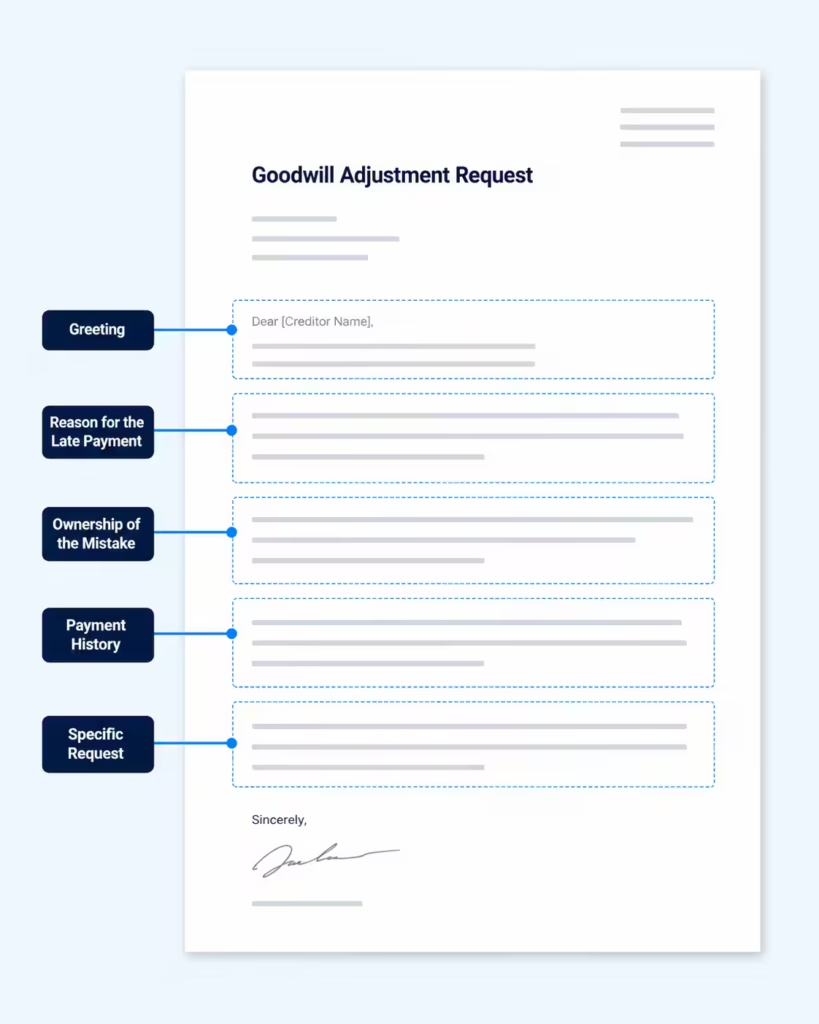
Keep it under one page, roughly 200 to 300 words. Use a plain business format, and remember you’re writing to a person, not a robot. A warm but professional tone works best.
Explain Why the Payment Was Late
Give a real reason in one or two sentences. That’s it. Long explanations start to sound like excuses, and vague ones (“life got busy”) don’t move anyone.
Reasons that resonate usually involve experiences we all face. These include a medical emergency, job loss, or income issues. Other examples are a death in the family, a move that messed up your mail, an autopay failure after getting a new card, or a billing glitch. Keep the detail light but specific. “My father was hospitalized in February 2026, and my bills fell behind for about three weeks” is stronger than “I had a family emergency.”
If you don’t have a dramatic reason, that’s fine. Being honest about a simple oversight is still better than making something up. Something like, “I misjudged my statement date after switching to paperless billing” is believable and blame-free.
Take Ownership of the Mistake
This is the line most people skip, and it’s the one that changes the tone of the whole letter. Say clearly that the payment was your responsibility. Don’t blame the bank, the postal service, or your app.
Then tell them what’s changed so it won’t happen again. Concrete fixes work best. You enrolled in autopay. You set a due-date alert on your phone. You moved the account to a bank you check daily. You also added a calendar reminder two days before the statement is due. This signals that you’re a lower risk now than you were the day of the late payment, which is exactly the reassurance a creditor needs to say yes.
Highlight Your Payment History and Relationship With the Lender
Now give them a reason to help you. Briefly mention how long you’ve been a customer, and note that the rest of your payment history has been on time. One or two sentences is plenty.
For example: “I’ve held this card since 2019 and, aside from this single late payment, my account has been in good standing with every other payment made on time.” If you have other products with the same bank (checking, savings, another card), a quick mention doesn’t hurt. Just don’t turn it into a résumé. The point is to remind them that you’re a long-term, low-risk customer, not a one-time problem.
Make a Clear, Specific Request
Close with a direct ask. Vague endings like “please consider helping me” get vague answers. Instead, name the exact item and what you want done with it.
Try something like: “I’m respectfully asking that you make a one-time goodwill adjustment and remove the 30-day late payment reported in March 2026 from my credit report with Experian, Equifax, and TransUnion.” That’s it. If the late payment is affecting a real, near-term goal, one short sentence about it can help. For example: “I’m applying for a mortgage this summer, and this single mark is affecting my rate.” Keep it factual, not emotional.
💡 Pro Tip: Address the letter to a real department, not “To Whom It May Concern.” Something like “Customer Relations, Credit Reporting” signals you know how the process works and helps the letter reach the right desk.
Should You Attach Supporting Evidence?
You don’t need a stack of documents to send a goodwill letter. In most cases, the letter itself is enough. But in specific situations, a single well-chosen attachment can strengthen your case.
Evidence helps when it backs up a concrete claim in your letter. If you mentioned a medical emergency, a redacted copy of a hospital bill or discharge summary can support it. If you cited a layoff, a termination or severance letter works.
If your reason was that an autopay failed after your card was replaced, a screenshot showing the failed transaction is useful. Proof that the account is now current, like a recent statement showing a zero balance or “paid as agreed,” is also a nice touch.
Skip anything that doesn’t tie directly to your reason. Don’t send bank statements, pay stubs, tax returns, or your full medical history. Oversharing looks unfocused and can trigger privacy concerns on the creditor’s side. Before sending anything, make sure to redact sensitive numbers. This includes full account numbers, Social Security numbers, and medical diagnoses.
If you do attach something, mention it in the letter with one line near the end: “For reference, I’ve enclosed a copy of my March 2026 hospital discharge summary and my most recent statement showing the account is current.” Then list the attachments below your signature. Clean, simple, done.
Formatting, Tone, and Length
The finished letter should look like a short, professional business letter. Keep it to one page, and aim for roughly 200 to 300 words of body text. Anything longer starts to feel like a plea.
Use this order:
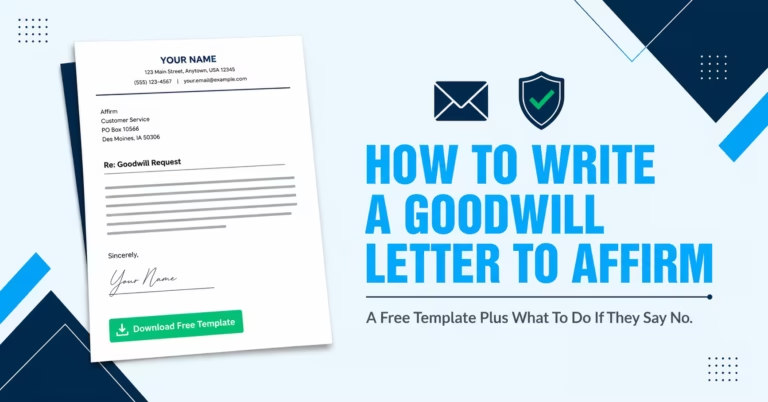
- Your name and address at the top.
- Date below that.
- Creditor’s name, department, and address.
- Salutation, like “Dear Customer Relations Team” or “Dear [Name]” if you have a contact.
- Opening line stating who you are and the account (last four digits are fine).
- Reason the payment was late (one or two sentences).
- Ownership of the mistake and what you’ve changed.
- Payment history and relationship with the lender.
- Specific request to remove the late payment.
- Thanks and closing, such as “Sincerely,” followed by your printed name and signature.
Tone should be formal but warm. Read it out loud before you send it. If any sentence sounds angry, demanding, or too casual, rewrite it. Avoid words like “unfair,” “ruined,” or “demand.” Also avoid legal threats or references to suing, complaining to regulators, or “reporting” the creditor. Those instantly end the goodwill conversation.
Type the letter if possible, and print it on plain white paper. Sign in blue or black ink. Small details, but they show you took the time.
⚠️ Mistake to Avoid: Copy-pasting a template word-for-word from the internet. Creditors see the exact same phrasing over and over. A letter in your own voice, using your real details, always outperforms a generic script.
Where and How to Send Your Goodwill Letter
Sending the letter to the wrong place is the single biggest reason Goodwill requests never get answered. Your goal is to get it in front of a human who has authority to adjust, not a payment processing center.
Start with the standard customer service or credit reporting address listed on the back of your statement or in your online account. For most credit cards, this is a “Customer Correspondence” P.O. box, separate from the payment address. Mail is still the most reliable channel because letters get routed to actual reps, while email and chat often go to first-tier bots.
If your creditor offers a secure message center inside your online account, that’s a strong second option. Messages sent through the portal are logged, tied to your account automatically, and usually reach a real agent within a few business days. Keep the same letter format; just paste the body into the message.
Phone can work for a quick request, but always follow up in writing. A friendly call to customer service asking, “Is there a specific address or department I should send a goodwill adjustment request to?” often uncovers the exact routing you need.
If the standard channel comes back with a no or no reply after a follow-up, escalate. Many big banks have a CEO Executive Office or an Executive Customer Relations team. They manage escalated complaints. A short, respectful letter to that address, referencing your prior contact, is often the tier where blanket “no” answers get reconsidered. You can usually find the corporate headquarters address on the bank’s investor relations page.
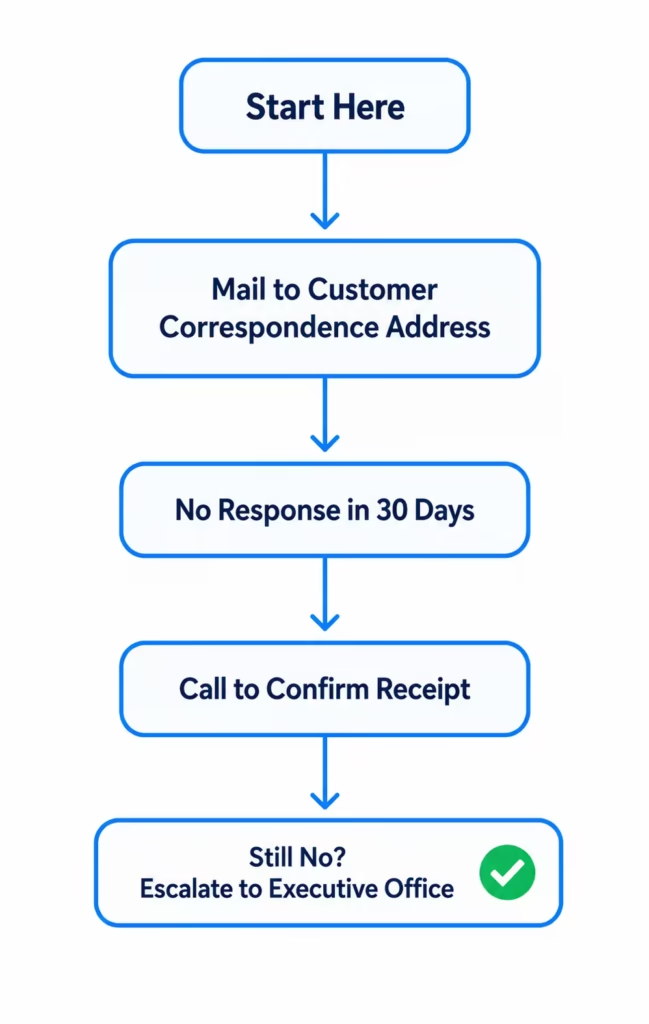
Certified mail with return receipt is optional but useful for higher-stakes cases (like an escalation letter). It costs a few dollars, gives you proof of delivery, and signals that you’re organized. For a first attempt on a routine card, regular first-class mail is fine.
How Long to Wait and How to Follow Up
Goodwill letters don’t have a legal response window, so timing is a judgment call. Most creditors that respond do so within two to six weeks. Some answer in a few days. Others never reply at all, which is essentially a soft “no.”
Give it at least 30 days before you follow up. That’s long enough for the letter to be received, routed, and reviewed. If you sent it by certified mail, check the tracking to confirm delivery before you count the clock.
For the follow-up, a short, polite phone call is often more effective than another letter. Call the customer service number and say something like: “Hi, I mailed a goodwill adjustment request on [date] regarding my account ending in [last four]. I’m calling to confirm it was received and to check on the status.” Keep it brief, thank them, and let them route you.
If they can’t find it, offer to resend it, and ask for the best address or department. If they found it and it’s still under review, ask when to expect a decision. If it was denied, ask if there’s an escalation path or a different department that could look at it.
Two follow-up touches are usually the limit. After a call and a second written attempt, more pressure starts to feel pushy, which hurts your case. Give it space and try a fresh approach later.
What to Do If Your Goodwill Letter Is Denied
A “no” isn’t the end of the road. Goodwill requests are always discretionary, and a denial today doesn’t mean a denial forever. Several things can shift the answer.
Try again in a few months. Every additional on-time payment strengthens your case. A creditor who said no when the late payment was three months old may say yes when it’s a year old and surrounded by twelve more clean payments. Time genuinely helps.
Rewrite and re-send with a stronger reason or more context. If your first letter lacked detail, a second one can make a bigger impact. This is true, especially if it includes a real event, like a medical bill or a documented emergency. Never repeat the same letter word-for-word.
Escalate the channel. If your first request went through standard customer service, send the next one to the executive office or corporate customer relations. Different desk, different discretion.
Focus on the score, not the removal. Even with the late still showing, a single 30-day late fades fast in credit scoring. FICO says more recent late payments hurt more than older ones, which means every clean month reduces the damage. Keep balances low, pay on time everywhere, and the score will keep climbing even if the mark stays.
Finally, remember what a denial isn’t. It isn’t a mark against you, and it doesn’t hurt your account. You can keep using the card, keep building history, and try again later. The worst outcome is exactly where you started.
Common Mistakes That Get Goodwill Letters Rejected
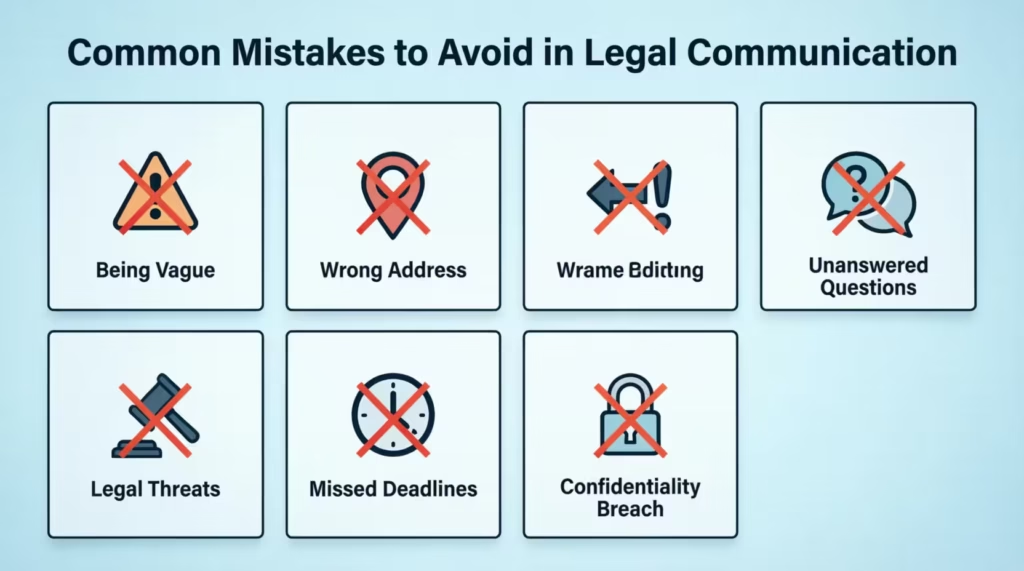
Most goodwill letters fail for the same handful of reasons. Avoiding these puts you ahead of nearly every template floating around online.
- Being vague or overly emotional. Long, dramatic stories about how the late payment “ruined your life” push readers away. Keep it short, factual, and calm.
- Sending it to the wrong address. A goodwill letter mailed to the payment P.O. box will rarely reach a decision-maker. Use the customer correspondence or credit reporting address.
- Failing to take ownership. Blaming the bank, the mail, the app, or your ex tells the creditor you’ll miss another payment. Own it, then explain what’s changed.
- Treating it like a dispute. Words like “inaccurate,” “I demand,” or “under the FCRA” flip the letter from a courtesy request into a formal dispute. That triggers a verification process, not goodwill.
- Making legal threats. Mentioning lawsuits, CFPB complaints, or regulators kills the goodwill vibe instantly. Save escalation channels for after a “no,” not as a first move.
- Sending too many letters too fast. Two well-timed attempts beat five rushed ones. Give the creditor room to respond.
- Ignoring the account status. If the account is currently delinquent, bring it current before you send anything. Goodwill requests on unpaid accounts are almost always declined.
Fix these, keep the professional tone, and you’ve done everything within your control.
Frequently Asked Questions
Do goodwill letters work for late payments?
Goodwill letters can work, especially for a single 30-day late payment on an account that’s otherwise in good standing. Success isn’t guaranteed since removal is always a courtesy, but credit unions and card issuers grant them more often than mortgage or auto loan servicers.
How likely is a goodwill letter to work?
Your odds are best with one isolated late payment, a clean history otherwise, and a current, paid account. Credit card issuers and credit unions are more flexible than mortgage or student loan servicers, which often have blanket no-goodwill policies.
What is a good reason for a late payment letter?
Strong reasons include a medical emergency, job loss, a death in the family, or an autopay failure after getting a new card. Keep the explanation to one or two specific sentences, like naming the month and what happened, instead of a vague excuse.
Should you email or mail a goodwill letter?
Mail is generally more reliable since letters route to actual representatives, while email and chat often go to first-tier bots. A secure message center inside your online account is a strong second option since it’s logged and reaches an agent within a few days.
Who do I write a goodwill letter to?
Address it to a specific department, like “Customer Relations, Credit Reporting,” rather than “To Whom It May Concern.” Use the customer correspondence address from your statement or online account, not the payment P.O. box.
What happens after writing a goodwill letter?
Most creditors that respond do so within two to six weeks, though some never reply at all. Wait at least 30 days before following up, then use a short, polite phone call to check on the status.
Can I ask for goodwill deletion with debt collectors?
Goodwill letters are meant for original creditors reporting an account in good standing, not third-party debt collectors. Collectors report accounts already in default, so a goodwill request isn’t the right tool there.
What is a 609 letter to remove late payments?
A 609 letter is a different tool that asks a credit bureau to verify disputed information under the Fair Credit Reporting Act, rather than requesting a courtesy removal. It only applies to inaccurate items, not accurate late payments a goodwill letter would address.
How to get late payments forgiven?
Take ownership of the mistake, explain a specific reason, and highlight your on-time payment history in a short letter under 300 words. If denied, wait a few months, gather more clean payments, and try again with a stronger, updated request.
Is it worth disputing late payments?
Disputing only makes sense if the late payment is genuinely inaccurate or unverifiable, since the Fair Credit Reporting Act requires bureaus to investigate and correct wrong data. If the late payment actually happened, a goodwill letter is the right approach instead, since accurate items can’t be disputed away.
Wrapping Up
Fixing a late payment mark isn’t about luck. It’s about sending the right letter to the right person, at the right time.
We’ve talked about how to:
- Check if you qualify.
- Gather the right facts.
- Write a brief and honest letter.
- Choose the best way to communicate.
- Follow up without being pushy.
- Respond if the answer is no.
The best way to approach creditor discretion is with a one-page letter. This letter should be blame-free, admit the mistake, show your on-time payment history, and make a clear request. Even if the answer isn’t yes today, every clean month strengthens your case for next time.
If you know someone worried about a late payment before getting a mortgage or car loan, share this guide. It might help them save money on their next rate.