
You open your credit card app. The number on the screen doesn’t match what you expected. You know you didn’t max out your card, so why is the available balance so low? It’s a confusing moment, and it usually hits right when you’re about to buy something.
Your available balance is the amount you can still spend before hitting your credit limit, and it drops every time a purchase or hold hits your account, even before the charge officially posts.
Below, I’ll walk you through exactly what this number means, why it changes, and what to do when it looks wrong.
Key Takeaways
This guide explains what credit card available balance means, including the exact formula, how pending charges and merchant holds reduce it, and what to check if it shows $0 or looks incorrect.
Core Facts:
- Available balance equals credit limit minus current balance minus pending charges, and most issuers calculate this automatically in the app or online account.
- Available balance and available credit are the same number on a credit card, though some apps use “available balance” for checking or debit accounts instead, which holds actual cash.
- Pending charges and merchant holds reduce available balance immediately, even before the transaction officially posts to the current balance.
- Hotels, gas stations, and rental car counters often place holds larger than the actual purchase amount to cover potential extra charges.
- Payments typically take same-day to 1-2 business days to process online, while mailed checks can take a week or more, and available credit does not always update the instant a payment is received.
- High utilization, meaning a balance close to the credit limit, can lower a credit score even when payments are made on time, since scoring models flag balances near the limit.
Best for:
- Anyone confused about why their available balance dropped or doesn’t match what they expected to see.
- People troubleshooting a $0 or unexpectedly low available balance before making a purchase.
- Readers trying to understand the difference between available balance, current balance, credit limit, and statement balance.
What Is Available Balance on a Credit Card?
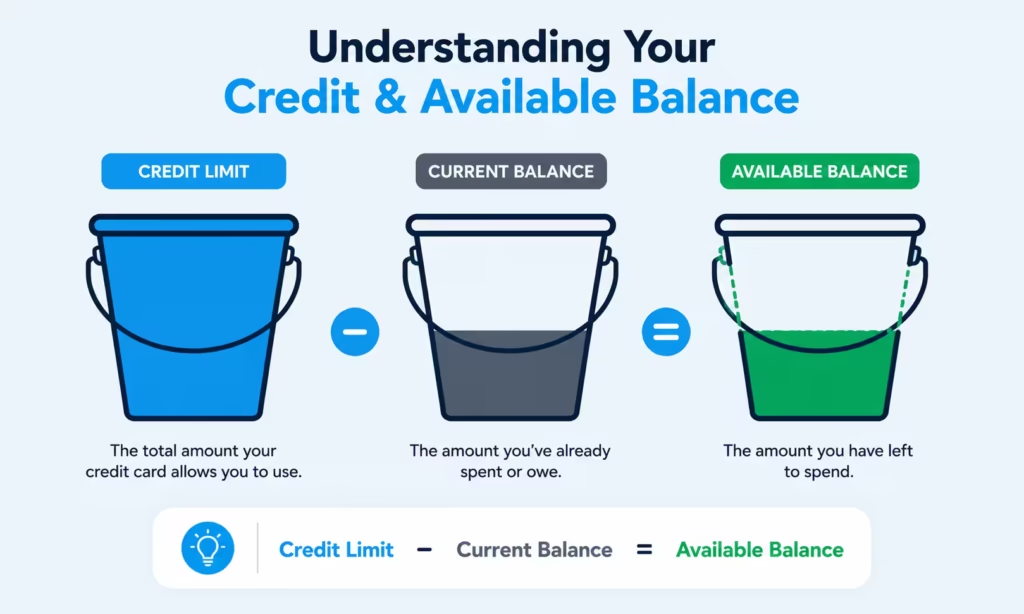
Your available balance is the spending room left on your card right now. Think of your credit limit as the size of a bucket. Your available balance is how much space is still open in that bucket today.
Here’s a simple example: Say your credit limit is $3,000. You’ve spent $1,200 so far this month. Your available balance is $1,800. You can safely charge up to that amount without going over your limit.
One thing to keep in mind: this number isn’t frozen. It moves every time you swipe, tap, or click. It also drops when a merchant places a temporary hold on your card, even if no money has officially changed hands yet. That’s why the number you see at 9 a.m. can be different from the one you see at 9 p.m.
Available Balance vs. Available Credit: Same Thing?
Yes, on a credit card, they mean the same thing. Most issuers use the term “available credit” as the standard label. Some apps and card companies say “available balance” instead. If you see either one on your account, it points to the same number: what’s left before you hit your limit.
There’s one spot where the wording gets tricky. Some banking apps use “available balance” for your checking or debit account, which is actual cash you own. On a credit card, it’s borrowed spending room, not your money. If your app shows both a debit account and a credit card, double-check which product you’re looking at before assuming the number is yours to spend freely.
So if you searched for one term and landed on articles using the other, you’re not missing anything. You’re reading about the right concept.
Available Balance vs. Other Numbers on Your Statement
Your account screen shows several numbers at once, and they all sound similar. Here’s how each one relates to your available balance.
Available Balance vs. Credit Limit
Your credit limit is the ceiling. It’s the total amount your issuer will let you borrow, and it rarely changes unless you request an increase or the issuer adjusts it. Say your limit is $5,000. That number sits still.
Your available balance is what’s left under that ceiling at this moment. If you’ve spent $2,000, your available balance is $3,000. Spend $100 more, and it drops to $2,900. The limit is fixed. The available balance moves constantly.
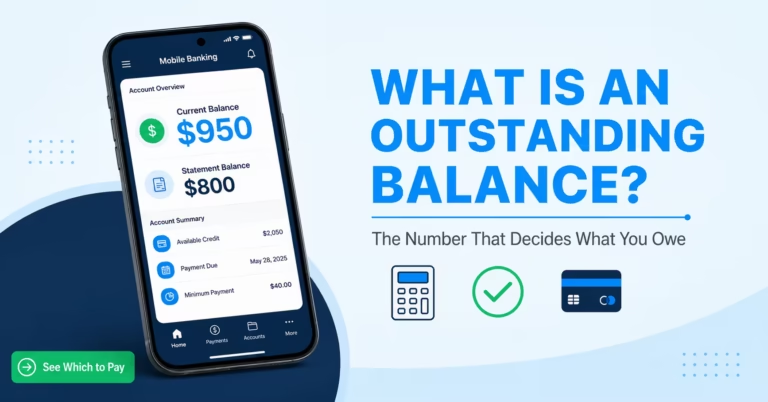
Available Balance vs. Current Balance
Your current balance is what you owe right now. Your available balance is what you can still spend. They move in opposite directions, like two ends of a seesaw.
With a $5,000 limit and a $2,000 current balance, you have $3,000 available. Every dollar your current balance goes up, your available balance goes down by the same dollar. Quick math check: current balance plus available balance should equal your credit limit, give or take any pending charges.
Available Balance vs. Statement Balance
Your statement balance is a snapshot. It’s the total you owed on the day your billing cycle closed, and it stays frozen until the next cycle ends. Your available balance is live. It updates in real time as you spend and pay.
That’s why the two rarely match. If your cycle closed on the 5th with a $900 statement balance, and you bought groceries on the 7th, your available balance already reflects that grocery run. Your statement balance doesn’t. Neither number is wrong. They’re just measured at different moments.
How to Calculate Your Available Balance
The formula is simple. Take your credit limit, subtract your current balance, then subtract any pending charges:
Credit Limit − Current Balance − Pending Charges = Available Balance
Let’s run it with real numbers. Your limit is $4,000. Your current balance is $1,500. You also have a $250 hotel hold pending. That gives you $4,000 − $1,500 − $250 = $2,250 available to spend.
Most issuers do this math for you automatically. Your app already shows the result. But knowing the formula lets you sanity-check the number instead of trusting it blindly. If the app’s figure doesn’t match your own math, something may need a closer look, like a duplicate hold or a charge you don’t recognize.
A Running Example: How Available Balance Changes Over a Few Days
Watch how one card’s available balance shifts across a normal week. The credit limit is $2,000.
| Day | Activity | Available Balance |
|---|---|---|
| Monday | Starting point, no balance | $2,000 |
| Tuesday | $120 grocery purchase posts | $1,880 |
| Wednesday | Gas station places a $100 hold | $1,780 |
| Thursday | Hold adjusts to the real $42 charge | $1,838 |
| Friday | $500 payment posts | $2,338 |
Notice Friday’s figure. It went above $2,000 because the $500 payment covered the earlier charges and added breathing room back.
Also notice Wednesday: the gas station held $100 even though the actual fuel cost was $42. That $58 gap freed up the next day. This kind of temporary drop is normal, and it catches a lot of people off guard.
How Pending Transactions and Holds Affect Available Balance
A pending transaction is a charge the merchant has started but not finished. When you buy something, the merchant asks your issuer to set aside the money first. That request reduces your available balance right away, even though the charge hasn’t officially “posted” to your current balance yet.
Most pending charges clear within 1 to 3 business days. Once the merchant finalizes the sale, the pending charge becomes a posted transaction and moves into your current balance. Your available balance doesn’t jump at that point, because the money was already counted against it.
The pending amount can also differ from the final charge. A restaurant, for example, often authorizes your meal total before you add the tip. Your available balance first drops by the pre-tip amount, then adjusts once the final total posts a day or two later.
📌 Did You Know: A pending charge can reduce your available balance even if the merchant never finishes the transaction. If a store cancels an order, the hold usually falls off on its own within a few business days.
Authorization Holds at Hotels, Gas Stations, and Rental Counters
Some merchants hold more than your actual purchase. Hotels, gas stations, and car rental counters are the usual suspects. They do this to protect themselves against extras you might add later, like room service, minibar charges, or a full tank upgrade.
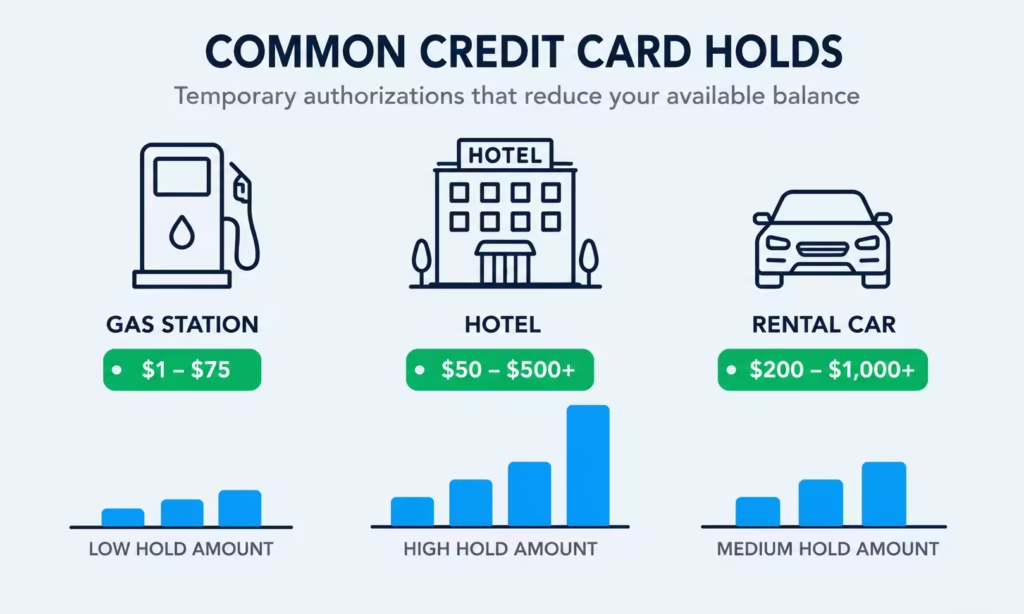
The hold sizes can be surprising. A gas pump may place a $100 or $175 hold for a $40 fill-up. A hotel might hold your room rate plus $50 to $100 per night for incidentals. A rental car counter can tack on several hundred dollars above the quoted price.
These holds typically release after the final charge posts. For hotels, that can take up to 24 hours after checkout, and sometimes a few days longer. The money was never spent, but your available balance treats it as spoken for until the hold drops off. If you’re traveling with a low-limit card, this is where trouble starts.
Where to Find Your Available Balance
You have four easy options:
- Mobile app. Open your issuer’s app and look at the account summary or home screen. The available balance usually sits near the top, next to your current balance.
- Online account. Log in through a browser. The number appears on your main account dashboard.
- Paper or PDF statement. Your statement shows figures from the day your billing cycle closed. Treat it as a snapshot, not a live number.
- Automated phone line. Call the number on the back of your card. The automated system reads your available balance after you verify your identity.
For a decision you’re making right now, use the app or website. They’re the only options that reflect pending activity in real time.
Why Available Balance Doesn’t Update Instantly After a Payment
You paid your card. The money left your bank account. But your available balance hasn’t budged. This is normal, and your payment isn’t lost.
Payment processing takes time, and the timing depends on how you paid:
- Online payment from a bank account: usually same day to 1 to 2 business days.
- Mailed check: several business days, sometimes a week or more, since mail and manual processing add time.
- Autopay: often processes right around your due date, so the update can lag a day or two past the withdrawal.
Federal rules require issuers to credit your payment as of the day they receive it, which protects you from late fees. But the Consumer Financial Protection Bureau’s Regulation Z rules don’t force issuers to restore your available credit the same second. Many issuers also hold off on freeing up your credit line until the payment fully clears your bank, which can take an extra day or two.
💡 Pro Tip: Need spending room fast? Pay from an account at the same bank that issued your card. Same-bank payments often free up available credit within hours instead of days.
What to Do If Your Available Balance Is $0 or Looks Wrong
A zero available balance means your card is effectively maxed out, at least for now. Any new purchase will likely be declined. Don’t panic. Work through this checklist:
- Check your pending transactions. Several small holds can stack up fast. Add them up and compare against your limit.
- Check your recent payment status. If you paid within the last day or two, the payment is probably still processing. Give it 1 to 2 business days.
- Look for duplicate holds. Two identical pending charges from the same merchant usually mean one will drop off on its own.
- Review recent posted charges. Spot anything you don’t recognize? That’s a different problem, and it needs a call.
- Call your issuer if nothing above explains it. Ask them to walk through the account with you. If you suspect fraud, report it right away. Federal law caps your liability for unauthorized credit card charges at $50, and most issuers waive even that.
One more wrinkle: your cash advance limit is often separate and lower than your spending limit. You might have $800 in available credit for purchases but only $300 available for a cash advance. Check your card agreement if that matters to you.
Common Reasons Your Available Balance Looks Wrong
Before you assume an error, rule out these usual suspects:
- A lingering hold from a hotel, gas station, or rental that hasn’t dropped off yet.
- A large recent purchase that’s still pending, so your available balance fell before your current balance caught up.
- Payment timing lag after an online payment, check, or autopay withdrawal.
- A duplicate authorization from a merchant who ran your card twice.
- A true issuer error, which is rare but possible. If your own math using the formula above doesn’t match the app, and no holds or pending charges explain it, call and dispute it.
How Available Balance Affects Your Credit Utilization
Credit utilization is the share of your credit limit you’re currently using, expressed as a percentage. When your available balance shrinks, your utilization rises, even if you never made one big purchase. A $900 balance on a $1,000-limit card means 90% utilization, and scoring models like FICO treat that as a red flag, even if you always pay on time.
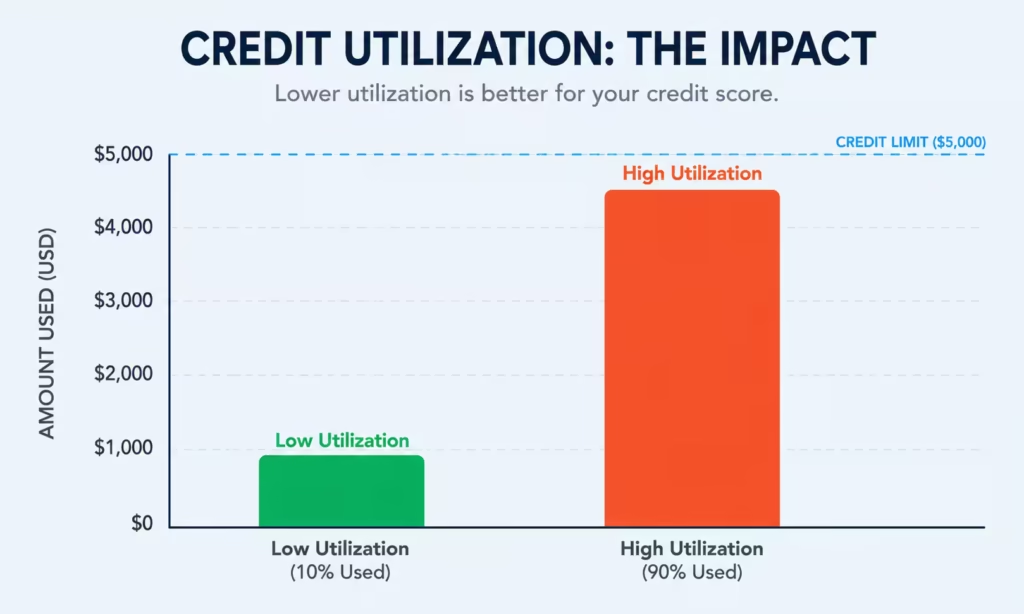
The connection matters most around your statement closing date, since that’s often the balance your issuer reports to the credit bureaus. A card that hovers near its limit all month can quietly drag your score down.
Frequently Asked Questions (FAQs)
Can I spend my available balance on my credit card?
Yes, your available balance is the exact amount you can spend before hitting your credit limit. It drops with every purchase and pending hold, so check it before a big purchase to avoid a decline.
Is my available credit the amount I can spend?
Yes, available credit and available balance mean the same thing on a credit card. Both show your credit limit minus your current balance and any pending charges.
Why can’t I spend my available credit?
Pending holds from places like hotels or gas stations often eat into your available credit without you spending that money. A $40 gas fill-up can trigger a $100 hold, temporarily blocking spending room until the hold clears.
What happens if you use all your available credit?
Your available balance hits $0, and new purchases will likely be declined. Check for stacked pending holds or duplicate charges first, since these often explain a maxed-out card that isn’t really maxed out.
How long does it take for a payment to become available balance again?
It depends on how you paid: online bank payments take same-day to 2 business days, while mailed checks can take a week or more. Paying from an account at the same bank as your card issuer can free up credit within hours.
Does a pending charge come out of available balance?
Yes, a pending charge reduces your available balance immediately, even before it officially posts to your current balance. This happens because the issuer sets aside that money the moment the merchant requests it.
What should my balance be on a $500 credit card?
Keep your balance under $150 on a $500 limit card. Staying below 30% utilization protects your credit score, since scoring models flag high balances relative to your limit even when you pay on time.
Why is my money in current balance but not available?
Your current balance reflects what you owe, while your available balance also subtracts pending holds that haven’t posted yet. A hotel or rental car hold can shrink your available balance even though it hasn’t hit your current balance.
Is it better to have a low balance or no balance?
A low balance under 30% of your limit is ideal for your credit score, since it keeps utilization low without closing the account. A $0 balance every month is fine too, but scoring models specifically reward staying well under your limit rather than requiring zero.
Can I withdraw from my current balance instead of my available balance?
No, your available balance is the actual spending room you have right now. Your current balance just shows what you already owe, and it doesn’t represent extra money you can access.
Wrapping Up
Your available balance is simply your credit limit minus what you owe and any pending holds. It moves constantly, drops when merchants place holds, and takes a day or two to bounce back after a payment.
Most readers find it helpful to check the app before making a big purchase. Doing a quick limit-minus-balance math is key when something seems off. This habit helps catch holds, processing delays, and rare errors before a card gets declined.
Know someone about to book a hotel or road trip with a new card? Share this with them. It could save them from a very awkward moment at the check-in desk.