
Worried that a credit check you just spotted on your report will drag your score down? You’re not alone. Plenty of people pull their credit report, see a list of companies they don’t recognize, and assume the worst. Questions about what a soft inquiry is and whether it’s something to fear are some of the most common credit questions out there.
Here’s the short answer: a soft inquiry never hurts your credit score, no matter how many of them show up on your report.
Keep reading for a full breakdown of how these checks work, who can see them, how long they stick around, and the one rare case where you should take action.
Key Takeaways
This guide explains what a soft inquiry is, including how it differs from a hard inquiry, whether it affects your credit score, who can see it, and how long it stays on your report.
Core Facts:
- A soft inquiry is a credit check with no new application for credit and never affects your FICO Score or VantageScore, no matter how many appear on your report.
- A hard inquiry requires your consent and can lower your score by under 5 points, while a soft inquiry needs no consent and carries zero score impact.
- Only you can see soft inquiries on your self-pulled credit report; lenders, landlords, and employers receive a version with soft inquiries stripped out.
- The Fair Credit Reporting Act allows companies to check your credit without consent for permissible purposes like pre-screened offers, account reviews, and employment screening.
- Soft inquiries stay on your report for up to two years, with promotional inquiries typically lasting about one year and account reviews lasting up to two years.
- Legitimate soft inquiries generally cannot be disputed since they require no consent and have no score impact; the exception is a soft inquiry tied to identity theft.
Best for:
- Readers who noticed an unfamiliar inquiry on their credit report and want to know if it will hurt their score.
- People avoiding self-checks or credit monitoring tools out of fear that checking will lower their score.
- Anyone preparing for a mortgage or loan application who wants to know what a lender will and won’t see on their report.
What Is a Soft Inquiry?
A soft inquiry is a credit check that happens without a new application for credit. It’s a look at your credit report or score that has nothing to do with you asking to borrow money. You’ll also hear it called a “soft pull” or a “soft credit check.” All three names mean the same thing.
The soft inquiry meaning comes down to purpose. Companies and individuals check credit for two broad reasons. One reason is to decide whether to lend you money, like when you apply for a credit card or a car loan. The other reason is purely informational. That second category is where soft checks live. They exist for screening, review, and marketing purposes, not for lending decisions.
A simple way to think about it: a soft credit check is someone glancing at your credit file to learn something about you. Nobody is deciding whether to approve you for a new account at that moment. Because there’s no borrowing risk attached, credit scoring models ignore these checks completely. That’s the key fact everything else in this guide builds on.
Soft Inquiry vs. Hard Inquiry: What’s the Difference
These two types of credit checks look similar on the surface. Both are records of someone viewing your credit file. But they differ in four important ways: what triggers them, whether you gave permission, how they affect your score, and who can see them.
| Soft Inquiry | Hard Inquiry | |
|---|---|---|
| Trigger | Background checks, pre-approvals, self-checks, account reviews | You apply for credit (card, loan, mortgage) |
| Your consent | Not required | Required by law |
| Score impact | None | Small, temporary drop (usually under 5 points) |
| Who sees it | Only you | You and any lender who pulls your report |
| How long it stays | Up to 2 years | Up to 2 years |
The biggest difference is the trigger. A hard inquiry only happens when you apply for new credit. You fill out an application, you authorize the check, and the lender pulls your file to make a decision. A soft credit inquiry covers everything else. You can check your score, get a pre-approved offer in the mail, or ask your card issuer to review your account.
Consent works differently too. Federal law requires a lender to get your permission before a hard pull. Soft checks tied to specific legal purposes don’t need that same authorization. That surprises a lot of people, and the next few sections explain exactly why it’s allowed.
📌 Did You Know: A hard inquiry usually drops your FICO Score by under 5 points. In contrast, a soft pull never affects it at all.
Does a Soft Inquiry Hurt Your Credit Score?
No. A soft inquiry has zero impact on your credit score. This is true for both major scoring models, FICO Score and VantageScore, and it’s true no matter how many soft checks appear on your report.
The reason is simple. Scoring models are built to predict lending risk. Applying for new credit is a risk signal, because someone taking on lots of new debt at once is statistically more likely to miss payments.
That’s why hard inquiries carry a small score impact. A soft credit check carries no such signal. Nothing is being borrowed, and no lending decision hangs in the balance, so there’s nothing for the score to react to. Experian says that soft inquiries don’t affect credit scores precisely because they aren’t attached to an application for credit.
So if you’ve been avoiding your bank’s free credit score tool because you think “checking too much” will hurt you, that fear is backwards. Staying in the dark about your own credit is the real risk, not the checking.
Is It Safe to Check Your Own Credit Repeatedly?
Yes, completely safe. Checking your own credit is always a soft inquiry, and you can do it as often as you like with no cumulative damage. Check weekly, check daily if you want. The math never changes: zero impact, every time.
This matters because hard inquiries work differently. Several hard pulls in a short window can stack up and drag your score down. Self-checks never stack. There’s no version of events where checking your own score 30 times in a month costs you a single point.
Consider Sarah, an operations manager at a tech startup in Austin. She avoided her bank’s credit monitoring tool for two years because a coworker told her checking credit “dings your score.”
When she finally looked, she found a reporting error that had been sitting on her file for 14 months. Regular self-monitoring would have caught it within weeks. Treat checking your credit like checking your bank balance: a healthy habit, not a hazard.
Who Can See a Soft Inquiry on Your Credit Report?
Here’s a fact that surprises most people: only you can see soft inquiries. They show up on your self-pulled credit report. But lenders, landlords, and employers won’t see them on the reports they get.
The mechanism behind this is worth understanding. Each credit bureau (Experian, Equifax, and TransUnion) keeps a full file on you, but it doesn’t hand out that same file to everyone. When you request your own report, you get the complete version, including every soft inquiry on record.
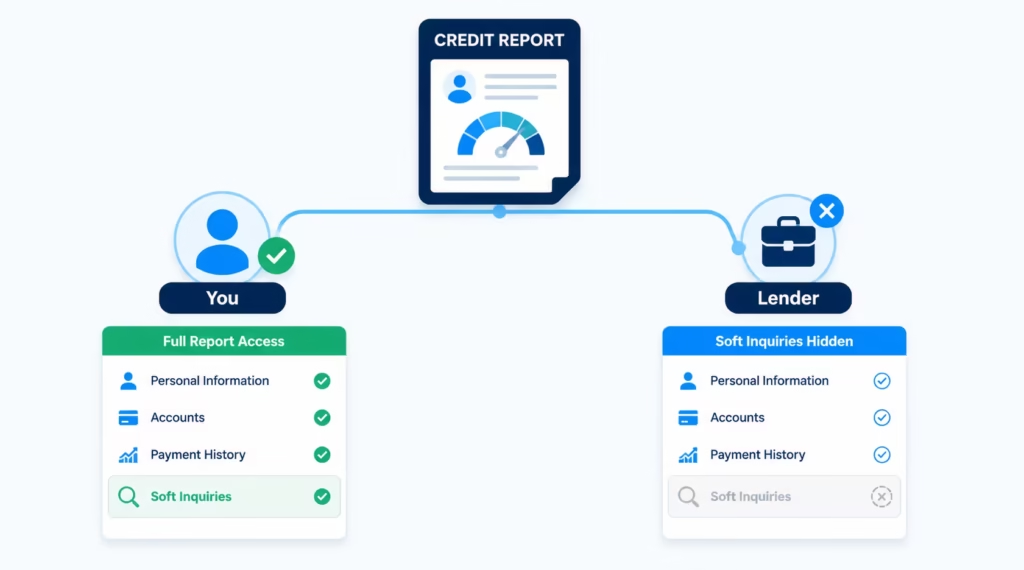
When a lender pulls your report for a credit decision, the bureau provides a version with soft inquiries stripped out. The split exists because those entries are irrelevant to lending decisions, so they’re simply not shared in the file sold to third parties.
The practical effect is total privacy on this front. If you’re about to apply for a mortgage and you’re worried the underwriter will see 12 soft pulls from the past year and judge you for it, relax. The underwriter’s version of your report doesn’t contain them. An unauthorized inquiry in the true sense (one with no legal basis) is a different matter, which the dispute section below covers.
What Gives Companies “Permissible Purpose” to Check Your Credit?
The Fair Credit Reporting Act (FCRA) is the federal law that controls who can access your credit file. It doesn’t require your consent for every type of check. Instead, it lists specific “permissible purposes” that allow a company to view your credit information without a signed application from you.
These purposes include:
- Making a pre-screened offer of credit or insurance (that’s how “You’re pre-approved!” mail happens)
- Reviewing an existing account you already hold with the company
- Employment screening, with your general written authorization
- Insurance underwriting when you request a quote
This is why a credit card company can check your credit without asking you first. It’s not a privacy violation. It’s a specific, legal carve-out that has existed for decades. If those pre-approval offers annoy you, you can stop most of them for free at OptOutPrescreen.com, the official opt-out site run by the major credit bureaus.
Common Triggers of a Soft Inquiry
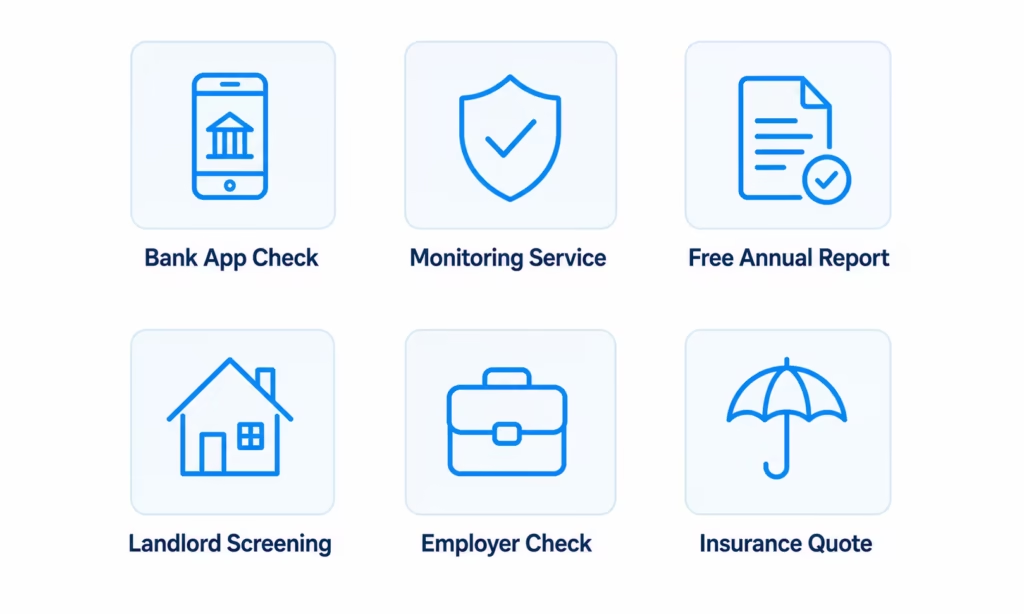
One of the best ways to calm down about an unfamiliar entry on your report is to know what causes soft inquiries in the first place. They fall into two buckets: checks you start yourself, and checks other companies start. Most “mystery” entries turn out to be one of the everyday triggers below.
When You Check Your Own Credit
Self-initiated checks are the easiest to recognize:
- Viewing your score in your bank or credit card app
- Using a credit monitoring service like the free tools many banks offer
- Pulling your free report from AnnualCreditReport.com, the only federally authorized source, which now offers free weekly reports from all three bureaus
- Getting pre-qualified for a card or loan before formally applying (prequalification is a soft pull; the hard pull only comes if you submit the real application)
When a Company or Person Checks Your Credit
These other-initiated triggers cause the most confusion when spotted on a report:
- Existing lenders reviewing your account, often before a credit limit increase or as routine risk monitoring
- Landlords screening your rental application
- Employers running a background check that includes credit (you sign a general authorization during hiring, but no new credit is involved)
- Insurance companies checking credit-based factors when pricing your policy
- Utility and cell phone companies in some cases, depending on the provider
If you signed an apartment lease, switched insurers, or got a limit bump in the past year, at least one of those probably shows up on your report right now.
Promotional (Pre-Approval) Inquiries
A promotional inquiry happens when a company wants to market to you. The card issuer or insurer asks a credit bureau for a list of consumers who meet certain criteria, like a score range or zip code. The company receives limited information, not your full report, and uses it to decide whether to send you an offer.
This explains the “You’re pre-approved!” envelope you never asked for. Nobody applied for anything. The company ran a screening check, you qualified, and the mail followed. These entries have their own retention period, covered in the section on how long soft inquiries stay.
Account Review Inquiries
An account review inquiry comes from a company you already do business with. Your current credit card issuer, for example, can check your credit periodically without any new application from you.
Issuers do this to monitor risk and to decide things like whether to raise your limit, lower it, or change your terms. If your card company bumped your limit from $5,000 to $7,500 without you asking, an account review check almost certainly happened first. Seeing your own card issuer’s name in your inquiries list is normal.
How Long Do Soft Inquiries Stay on Your Credit Report?
Soft inquiries don’t all follow one timeline. The retention period depends on the type.
Soft inquiries can remain on your credit report for as long as two years. Promotional inquiries, like pre-approval ones, usually show up for about one year. Account reviews and other soft inquiries can last up to two years.
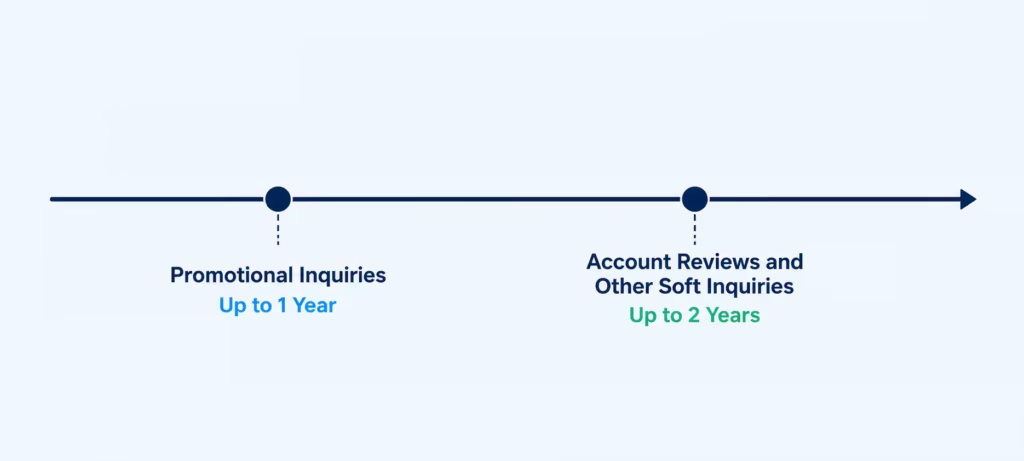
Two things to keep in mind here. First, you may see websites claim a single blanket timeframe, but the one-to-two-year split by type is the more accurate picture. Second, none of this affects your score.
A soft inquiry could sit on your report for the full two years and cost you zero points for every day of it. The duration is a record-keeping detail, not a scoring factor.
How to Identify a Soft Inquiry on Your Credit Report
Ready to look at your own report? Follow these steps:
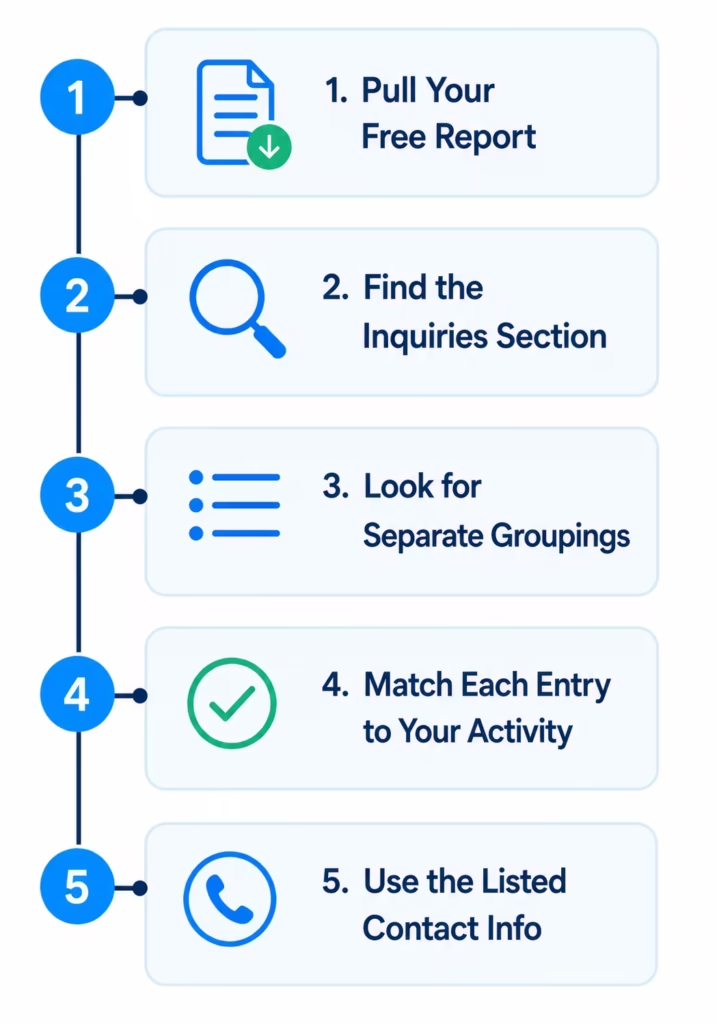
- Pull your free report. Visit AnnualCreditReport.com and request your report from one or all three bureaus. It’s free weekly.
- Find the inquiries section. It usually appears near the end of the report, after your accounts and payment history. It may be labeled “Inquiries,” “Credit Inquiries,” or “Requests for Your Credit History.”
- Look for separate groupings. On the version you pull yourself, soft inquiries are typically listed apart from hard inquiries, sometimes under labels like “inquiries viewed only by you” or “account review,” and “promotional.”
- Match each entry to your activity. Every inquiry lists the company’s name, the date, and often contact information. Cross-reference unfamiliar names against your recent life: rental applications, insurance quotes, limit increases, employer background checks.
- Use the listed contact info. If a company name still doesn’t ring a bell, the report includes an address or phone number for that entry. That’s your starting point for the steps in the next section.
Michael, a finance director at a manufacturing company in Ohio, once found four unfamiliar inquiries on his report and nearly filed fraud disputes on all of them. A quick cross-check showed three came from an insurance quote he’d requested and a landlord screening he’d forgotten about. Ten minutes of matching entries to real events saved him weeks of pointless paperwork.
Can You Dispute or Remove a Soft Inquiry?
The direct answer: legitimate soft inquiries generally can’t be disputed, and there’s no reason to want them gone.
Here’s why. Disputes exist to correct inaccurate or unauthorized information. A legitimate soft inquiry is neither. It didn’t require your consent in the first place; it doesn’t touch your score, and lenders never see it. Removing it would change nothing about how your credit looks or performs. Credit bureaus know this, which is why soft inquiries aren’t disputable in the way hard inquiries are.
⚠️ Mistake to Avoid: Don’t waste time filing disputes against legitimate soft inquiries. The bureau will reject the dispute, and you’ll burn weeks on a non-problem. Save your energy for entries that signal actual fraud.
The one real exception is identity theft. If a soft inquiry connects to fraudulent activity, that’s not a “soft inquiry problem” anymore. It’s a fraud problem, and it deserves the steps below.
What to Do If You Don’t Recognize a Soft Inquiry
If an entry genuinely doesn’t match anything in your life, work through this short path:
- Check the contact info listed with the entry. Your report includes the company’s name and usually an address or phone number.
- Contact the company directly first. Ask why they checked your credit. Many confusing entries turn out to be a bank’s parent company name, a financing partner of a store you visited, or an insurer’s underwriting arm. The name on the report often differs from the brand name you know.
- If the answer points to fraud, contact the credit bureau. Report the entry to the bureau that issued the report (Experian, Equifax, or TransUnion). Explain that you believe the inquiry is tied to unauthorized activity.
- Consider broader protection. A truly fraudulent inquiry can mean someone has your personal information. A fraud alert or credit freeze with all three bureaus is a smart step. Also, filing a report at IdentityTheft.gov provides an official recovery plan.
Most unrecognized entries resolve at step 2. Genuine fraud is the rare case, not the rule.
Frequently Asked Questions (FAQs)
What is a soft inquiry?
A soft inquiry is a credit check that happens without a new application for credit, done for screening, review, or marketing purposes. It has zero impact on your credit score, unlike a hard inquiry tied to a credit application.
Do soft inquiries hurt your credit score?
No, soft inquiries never affect your FICO Score or VantageScore, no matter how many appear on your report. This is because they carry no lending risk signal, unlike hard inquiries, which can drop your score by a few points.
Can I remove soft inquiries from my credit report?
No, legitimate soft inquiries generally can’t be disputed or removed since they don’t require your consent and don’t affect your score. The only exception is when a soft inquiry is tied to identity theft, which should be reported to the credit bureau as fraud.
Should I worry about soft inquiries on my credit report?
No, soft inquiries are harmless and only visible to you, never to lenders, landlords, or employers. Unfamiliar entries usually trace back to things like insurance quotes, landlord screenings, or an existing card issuer’s account review.
Do I need to unlock my credit for a soft inquiry?
No, a credit freeze blocks hard inquiries from new lenders but does not prevent soft inquiries like account reviews or pre-approval screenings. Soft checks can still occur on a frozen file since they carry no lending risk.
What triggers a soft inquiry?
Common triggers include checking your own score, getting pre-qualified for a card, an existing lender reviewing your account, or a landlord or employer running a background check. None of these require your signed application for new credit.
Can I fail a soft credit check?
No, there’s no pass or fail with a soft inquiry since no lending decision is being made. Soft checks are used for pre-approval offers, account reviews, or background screening, not to approve or deny a new credit application.
Do soft inquiries ever go away?
Yes, soft inquiries drop off your report within one to two years, depending on the type. Promotional inquiries typically last about one year, while account reviews and other soft inquiries can remain for up to two years.
Is it bad to have a lot of soft inquiries?
No, having many soft inquiries causes no cumulative damage to your credit score, even if you check your own credit daily. Unlike hard inquiries, which can stack up and lower your score, soft pulls never affect your score regardless of frequency.
Who can see soft inquiries on my credit report?
Only you can see soft inquiries when you pull your own credit report. Lenders receive a version of your report with soft inquiries stripped out, so they never factor into a lending decision.
The Bottom Line
A soft inquiry is a harmless credit check with no score impact, no visibility to lenders, and no action required in almost every case.
Key takeaways:
- Soft checks don’t lower your FICO Score or VantageScore.
- Checking your own credit is always safe.
- Only you can see these entries.
- Unfamiliar entries often come from things like insurance quotes or landlord screenings.
For most readers, simple self-monitoring with free weekly reports works best. It catches real errors early, and the soft inquiries manage themselves.
Know someone afraid to check their credit score? Share this guide with them. It could end years of needless worry in five minutes.